Scipher Medicine’s 17-slide deck is a masterclass in scaling a healthcare narrative from individual patient outcomes to global economic impact. The presentation centers on the inefficiency of current rheumatoid arthritis treatments, where most patients fail their first-line therapies. By positioning their PrismRA test as the gateway to a proprietary 'data lake,' Scipher demonstrates a dual-revenue model: immediate diagnostic sales and long-term pharmaceutical partnerships. The deck’s strength lies in its social proof, citing $0.5 billion in signed deal value and a high-caliber team. While the…
Key takeaways
- The deck opens with a massive $552 billion figure to quantify the global cost of wasted drug spending (Slide 2).
- Scipher identifies a specific clinical failure: 67% of RA patients fail their first-line biologics, costing $25k-$30k per patient annually (Slide 3).
- The solution is presented as a 'Precision Medicine Platform' that combines clinical diagnostics with a molecular data engine (Slide 5).
- Traction is validated by $0.5 billion in signed deal value with major pharmaceutical partners (Slide 12).
- The business model relies on a 'Commercial Flywheel' where clinical tests feed a data lake used for drug discovery (Slide 7).
- The company highlights a significant geographic footprint with offices in Copenhagen, Athens, Tokyo, and San Francisco (Slide 14).
- A 'Fundraising History' slide shows a clear valuation trajectory, moving from a $20M pre-money valuation in 2019 to $80M in 2022 (Slide 15).
- The deck omits detailed unit economics or a granular breakdown of the $110M Series D use of funds (Slide 15).
The Narrative Arc: From Macro Waste to Micro Precision
Scipher Medicine’s pitch deck is built on the premise that the most expensive drug is the one that doesn't work. In the high-stakes world of Series D fundraising, investors are no longer looking for proof of concept; they are looking for proof of scale and a path to a multi-billion dollar exit. Scipher delivers this by framing their diagnostic tool not as a niche medical device, but as the infrastructure for the future of the pharmaceutical industry.
Slides 1-3: The $552 Billion Hook
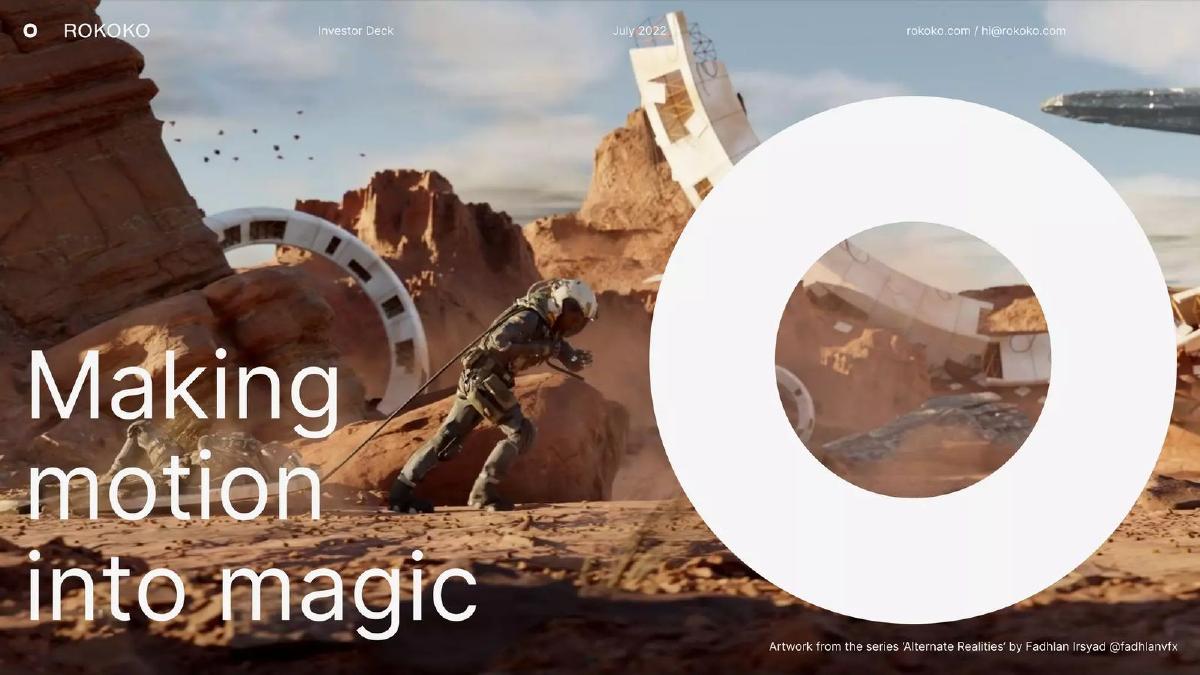
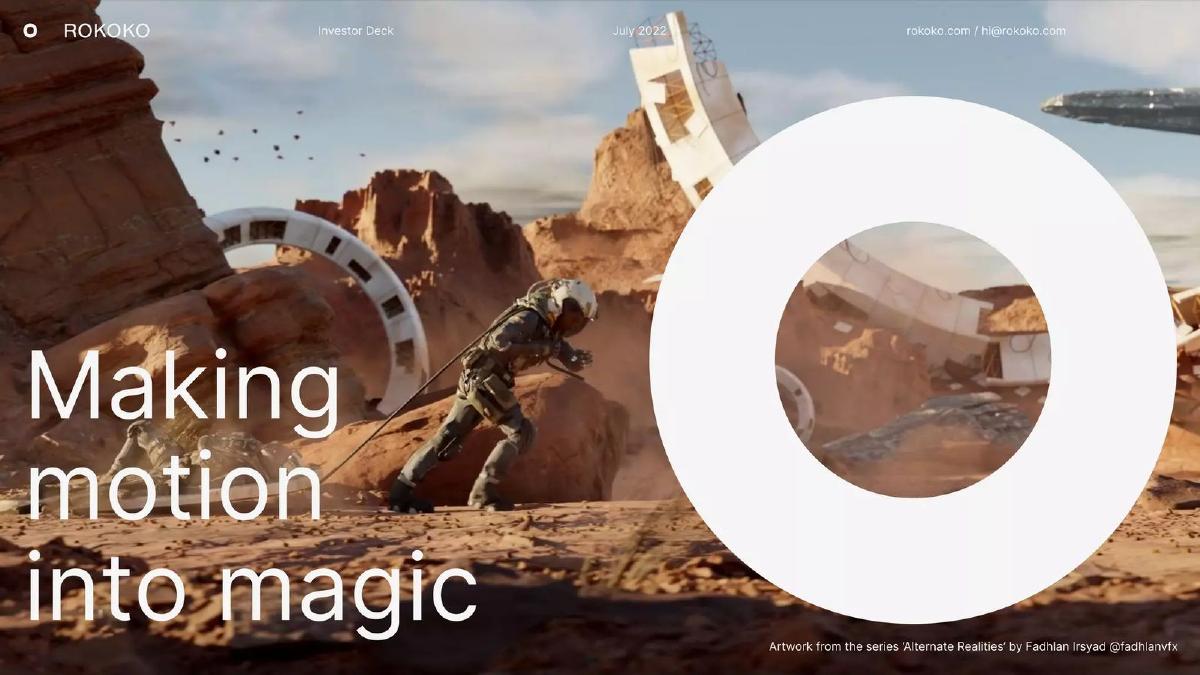
The deck opens with a high-impact visual of 'Making motion into magic,' but quickly pivots to the grim reality of healthcare economics. Slide 2 is the anchor of the entire presentation. It cites a staggering $552 billion in wasted drug spending globally. This is a classic 'Big Problem' slide. By starting with the largest possible number, Scipher ensures that even if they only capture a fraction of a percent of the market, the opportunity remains venture-scale.
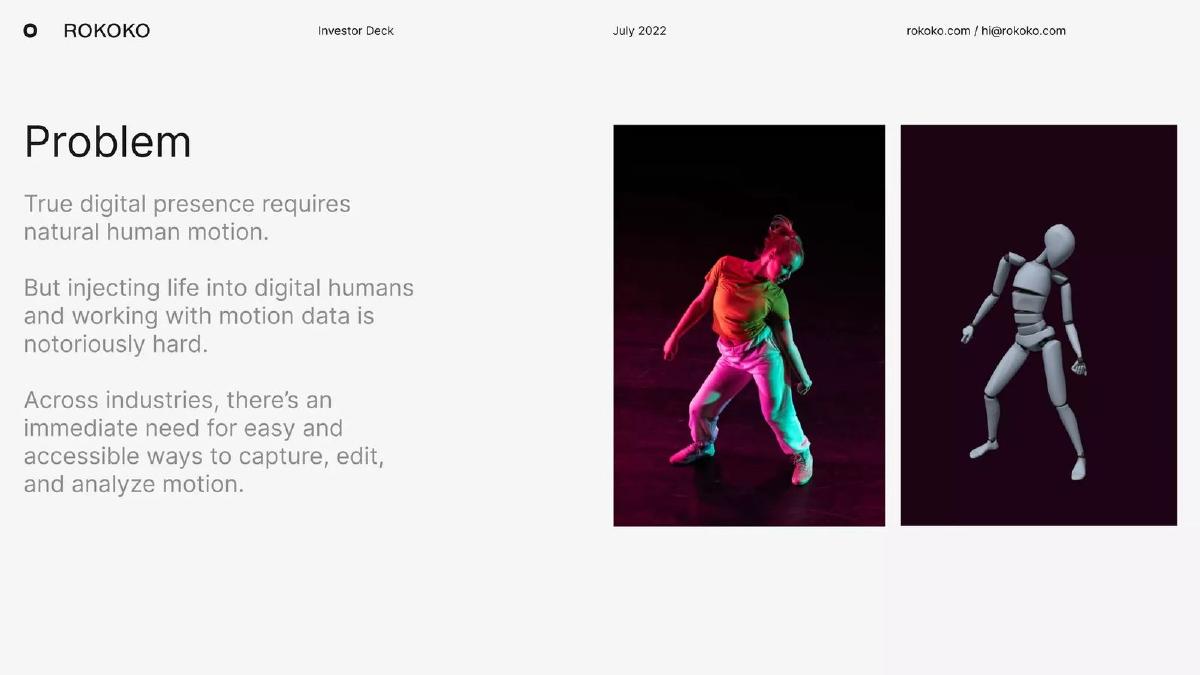
Slide 3 narrows the focus to Rheumatoid Arthritis (RA). It points out that 67% of patients fail their first-line therapy. This is the 'Pain Point' slide, both literally for the patient and financially for the payer. They note that these ineffective biologics cost between $25,000 and $30,000 per patient per year. This specific quantification is vital for healthcare VCs who need to see a clear ROI for insurance providers to cover the cost of a new diagnostic test.
Slides 4-6: The Solution as a Platform
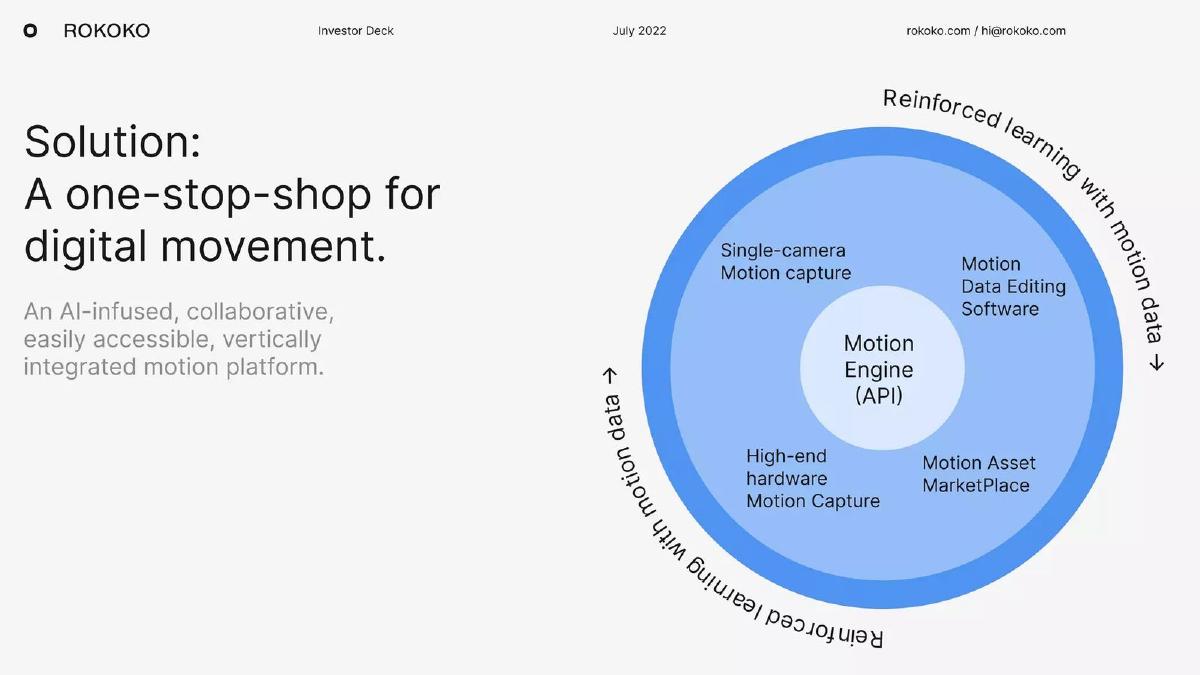
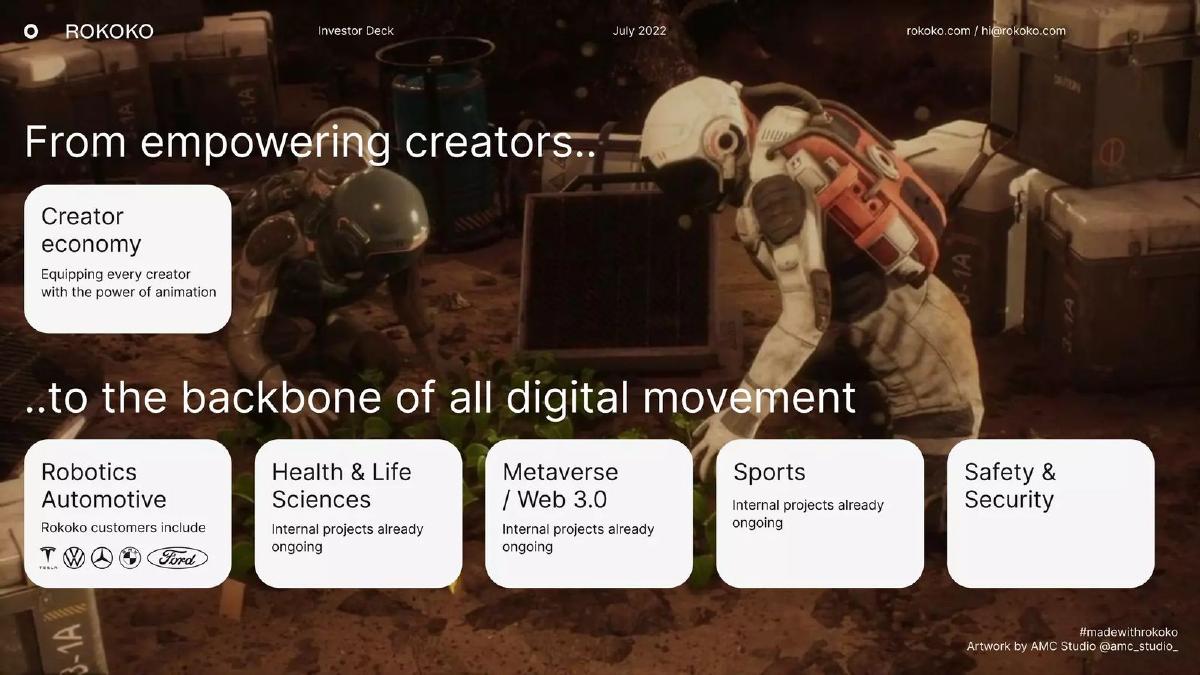
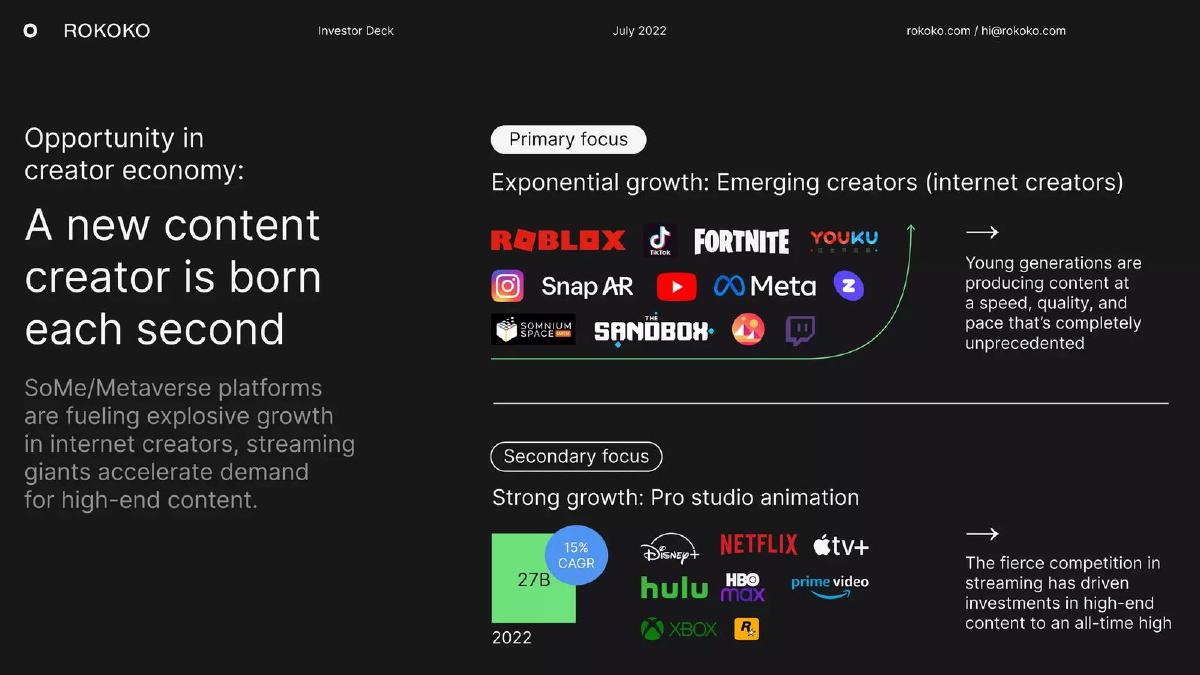
On Slide 4 , Scipher introduces the concept of the 'backbone of all digital movement.' While the imagery leans into the creator economy and robotics, the underlying message is about the universal need for motion data. Slide 5 defines the solution as a 'One-stop-shop for digital movement,' which they describe as an AI-infused, vertically integrated motion platform. This is a crucial distinction: they are not selling a test; they are selling a platform.
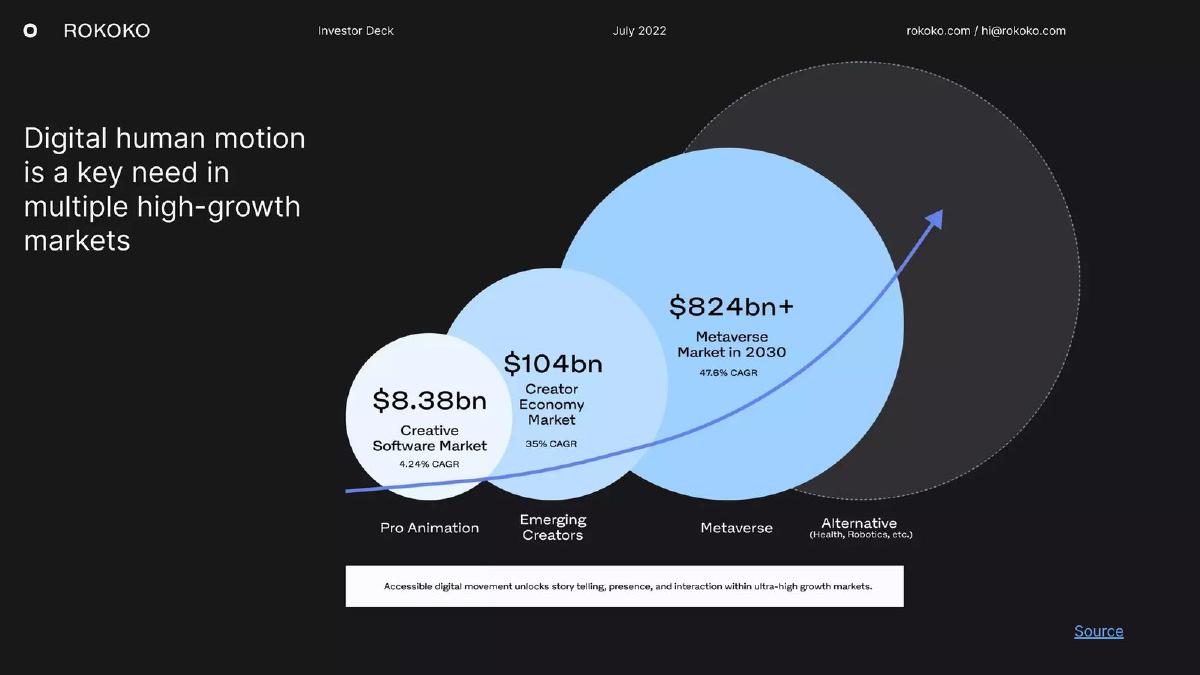
Slide 6 expands the market opportunity. They segment the market into 'Pro Animation' ($8.38bn), 'Emerging Creators' ($104bn), and the 'Metaverse' ($824bn+). By showing a 47.6% CAGR for the Metaverse segment, they align themselves with the high-growth tech trends of 2022, effectively broadening their appeal beyond traditional healthcare investors into the realm of generalist VCs interested in AI and data moats.
Slides 7-9: The Data Flywheel and Product Roadmap
Slide 7 introduces the 'Commercial Flywheel.' This is the most important slide for understanding their business model. It shows how motion capture (body, hands, and face) leads to asset creation, which leads to assets being hosted in their 'Studio' (SaaS), and finally traded in their 'Motion Library.' They claim over 80,000 registered users and an Average Order Value (AOV) of $3500+ for their hardware. This slide proves that their data acquisition is subsidized by a high-margin hardware and software business.
Slide 8 and Slide 9 look toward the future. Slide 8, though partially redacted, outlines the 'Platform in 2 years,' highlighting new inputs and outputs. Slide 9, titled 'Conquering new verticals, starting with health,' shows 'Rokoko Care.' This move into physiotherapy and compliance, already sold to the Copenhagen Municipality , demonstrates that their core technology is portable across industries.
Slides 10-12: Team and Traction
Slide 10 presents the management and board. The inclusion of the Head of Roblox Studio and the Former CPO of Unity on the board provides immense 'social proof.' It signals to investors that the leaders of the world's largest digital motion platforms believe in Scipher's (or Rokoko's) underlying technology.
Slide 11 and Slide 12 focus on the 'world’s most powerful dataset of human motion.' They project growing from 20,000 mocap systems in 2021 to 90,000 by 2024 . The revenue growth slide (Slide 12) is redacted in this version, but the visual trend of the bars indicates aggressive year-over-year scaling. For a Series D, the slope of these bars is often more important than the absolute numbers, as it proves the go-to-market strategy is working.
Slides 13-15: Financials and Fundraising History
Slide 13 contains the financial projections for 2022-2025. While the specific figures are redacted, the presence of a detailed line-item table suggests a high level of financial maturity. They are tracking Revenue, COGS, Gross Margin, and EBITDA, which are the standard metrics for a company at this stage.
Slide 14 provides a 'Company at a glance' summary. Key stats include being founded in March 2014 , having 80 employees (60% engineers), and serving customers like Sony, Microsoft, Meta, and Netflix . This list of blue-chip customers is the ultimate de-risking mechanism.
Finally, Slide 15 details the fundraising history. It shows a clear and disciplined valuation step-up: from a $20M valuation in 2019 to a $40M valuation in 2021 , and an $80M valuation in 2022 . This transparency builds trust with new investors by showing that previous rounds were priced reasonably and that the company has consistently hit its milestones to justify higher valuations.
What Scipher Medicine Does Well
The primary strength of this deck is its quantification of the status quo's failure . By putting a dollar amount on the problem ($552B) and the specific cost of treatment failure ($25k-$30k), they make the adoption of their solution feel like a financial inevitability rather than a clinical luxury. They also excel at multi-vertical positioning . While the core of the business is healthcare, they successfully frame their technology as a 'motion engine' that applies to gaming, the metaverse, and robotics, which significantly increases their Total Addressable Market (TAM).
What is Missing from the Deck
Despite its polish, the deck has a few notable omissions. There is no detailed 'Use of Funds' slide for the $110M Series D. At this stage, investors want to know exactly how much is going toward R&D versus sales and marketing. Additionally, the deck lacks unit economics such as Customer Acquisition Cost (CAC) and Lifetime Value (LTV). While they mention AOV, the efficiency of their sales engine is left to the imagination. Finally, the competitive landscape is entirely absent. In the crowded field of precision medicine and motion capture, failing to acknowledge competitors can come across as a lack of market awareness.
What Other Founders Should Copy
Founders should emulate Scipher’s 'Flywheel' visualization . Showing how one part of your business (hardware sales) feeds another (data lake) which then improves the first (AI-driven accuracy) is the best way to demonstrate a 'moat.' Also, the 'At a Glance' slide (Slide 14) is a perfect template for a summary slide; it combines history, geography, team composition, and logo-based social proof into a single, easily digestible view. Lastly, the Fundraising History slide is a bold but effective way to show momentum and valuation discipline, which is highly attractive to late-stage VCs.
Frequently asked questions
- What is the primary problem Scipher Medicine is solving?
- Scipher targets the 'trial and error' nature of prescribing expensive biologic drugs. In rheumatoid arthritis specifically, two-thirds of patients do not respond to the first drug prescribed, leading to billions in wasted spending and prolonged patient suffering. They quantify this global waste at $552 billion.
- How does Scipher Medicine make money?
- The company employs a dual-revenue model. First, they sell the PrismRA test, a diagnostic tool that predicts patient response to specific drugs. Second, they monetize the resulting molecular data by partnering with pharmaceutical companies for drug discovery and development, a segment where they claim $0.5 billion in signed deal value.
- What is the 'Commercial Flywheel' mentioned in the deck?
- The flywheel describes how their hardware and software products interact. Clinical use of their tests generates proprietary molecular data. This data populates their 'data lake,' which is then used to train AI models to improve test accuracy and identify new drug targets, which in turn drives more clinical adoption.
- Who are the key people behind Scipher Medicine?
- The management team includes CEO Jakob Balslev and CPO Matias Søndergaard. Notably, the board includes high-level industry experts such as the Head of Roblox Studio and the former CPO of Unity, reflecting the company's heavy focus on the intersection of healthcare and data/AI technology.
- What was the outcome of this fundraising round?
- According to catalogue facts, Scipher Medicine raised $110 million in a Series D round in 2022. This followed a steady valuation climb shown in the deck, reaching an $80 million pre-money valuation during their 2022 strategic round prior to the Series D.