Scantinel Photonics' Series A deck is a focused, 10-slide technical narrative that successfully secured $10M in 2024. As a spin-off from ZEISS, the company benefits from immediate institutional credibility, which is prominently displayed alongside backers like Scania and PhotonDelta. The deck eschews traditional 'problem' slides in favor of a technology-first approach, emphasizing Frequency Modulated Continuous Wave (FMCW) LiDAR over legacy Time-of-Flight (ToF) systems. By highlighting a 3x range improvement and immunity to interference, Scantinel positions itself as the 'second wave' of auto…
Key takeaways
- The company leverages its origin as a ZEISS spin-off to establish immediate technical and operational credibility (Slide 2).
- Scantinel claims a range up to 3x higher than current LiDAR systems, providing a clear, quantifiable performance hook (Slide 3).
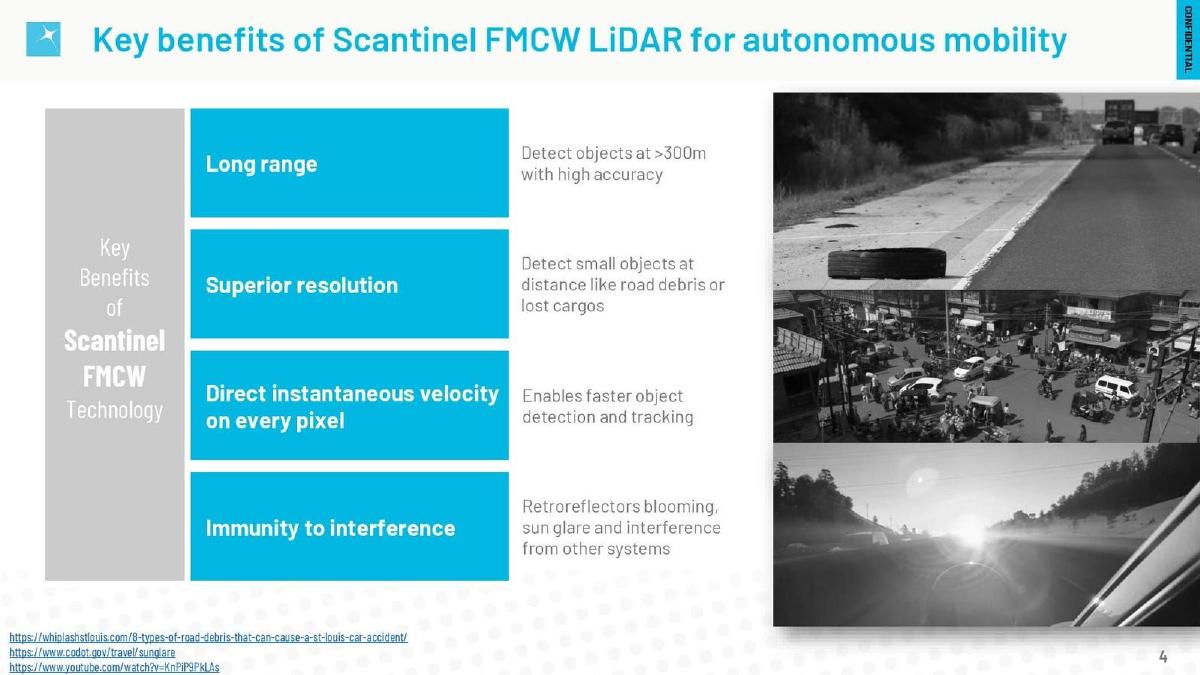
- Technical differentiation is centered on FMCW technology, which offers direct instantaneous velocity per pixel and immunity to solar interference (Slide 4).
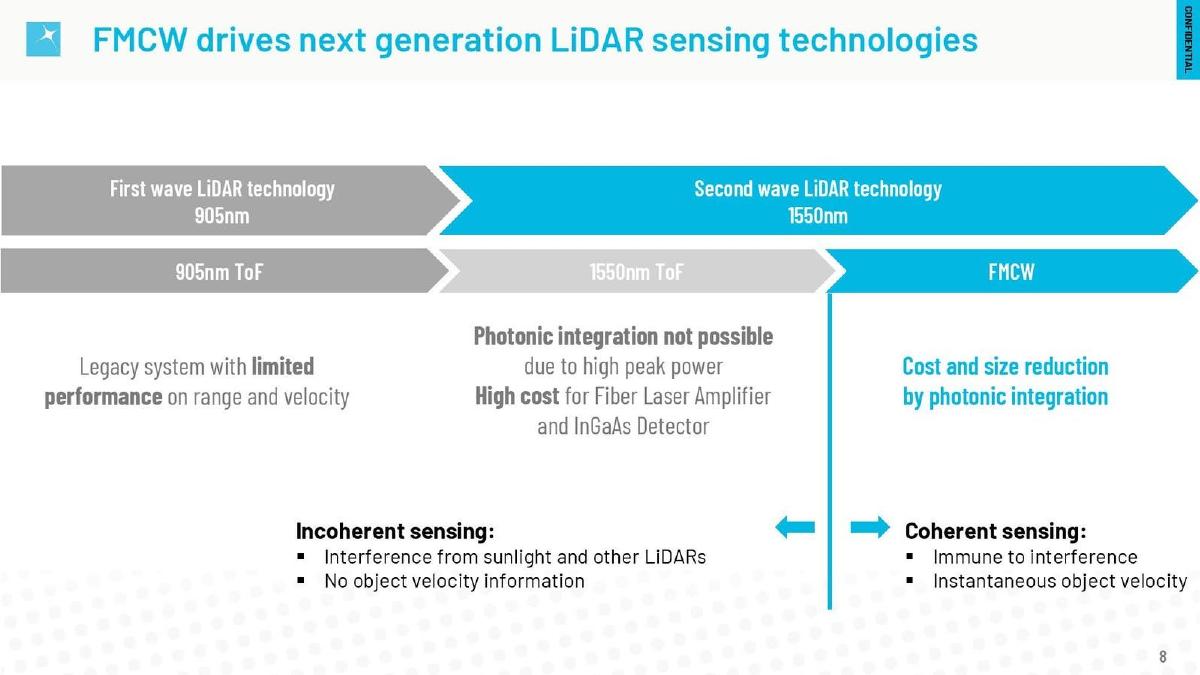
- The deck positions the technology as a 'Second Wave' evolution, moving from 905nm ToF to 1550nm FMCW for cost and size reduction (Slide 5).
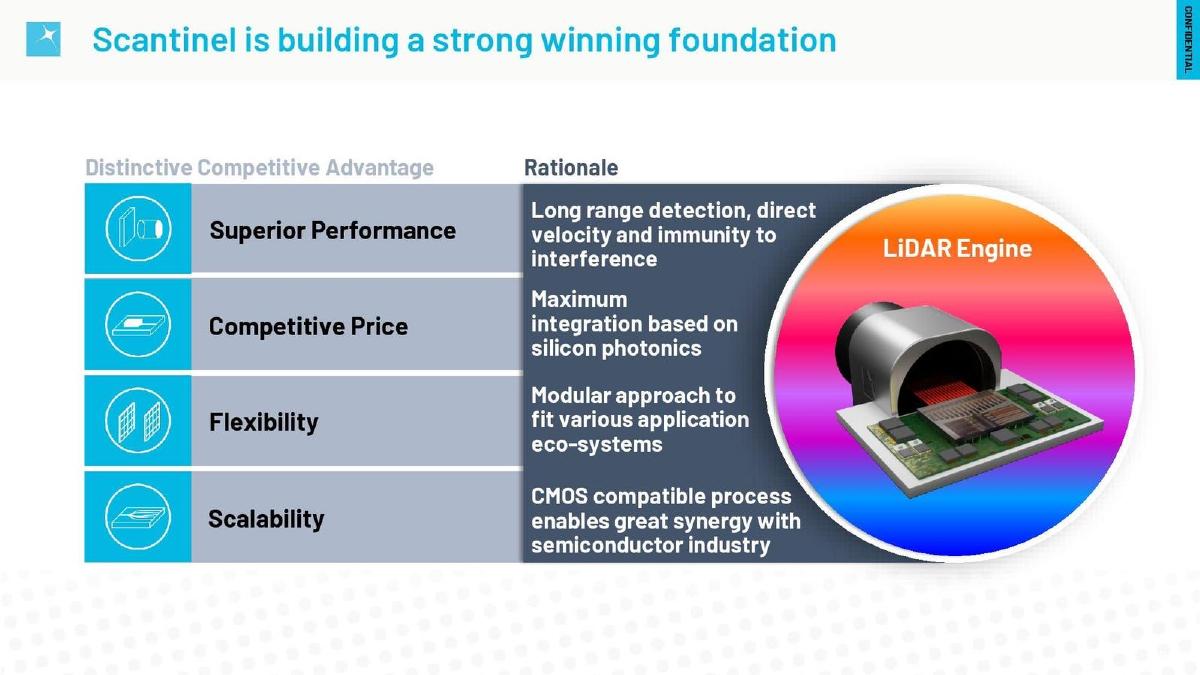
- Scalability is argued through CMOS compatibility, suggesting a clear path to mass semiconductor manufacturing (Slide 6).
- Market reach extends beyond passenger cars to include heavy trucking, robo-taxis, mining, and smart agriculture (Slide 7).
- The deck cites a Total Addressable Market (TAM) of $20 billion by 2032 to justify the scale of the opportunity (Slide 8).
- Validation is provided through a 'Platinum Honoree' award from Laser Focus World, signaling peer-reviewed technical excellence (Slide 9).
The Deep Tech Narrative: Scantinel Photonics Teardown
Scantinel Photonics occupies a specialized niche in the autonomous vehicle stack: the hardware layer. In a market that has seen both massive hype and significant consolidation, Scantinel’s 2024 Series A raise of $10M (as reported by Business Insider) demonstrates that there is still a high premium on fundamental technical breakthroughs. This deck is a lean, 10-slide presentation that prioritizes technical specs and strategic pedigree over flashy marketing.
Slide 1: Title and Context
The cover slide is functional, identifying the Managing Director, Dr. Michael Richter, and the company's location in Ulm, Germany. A small badge at the bottom left indicates they were a 2022 Laser Focus World Innovators Award winner. This immediately signals that the company is recognized within the specialized photonics community.
Slide 2: The Pedigree Slide
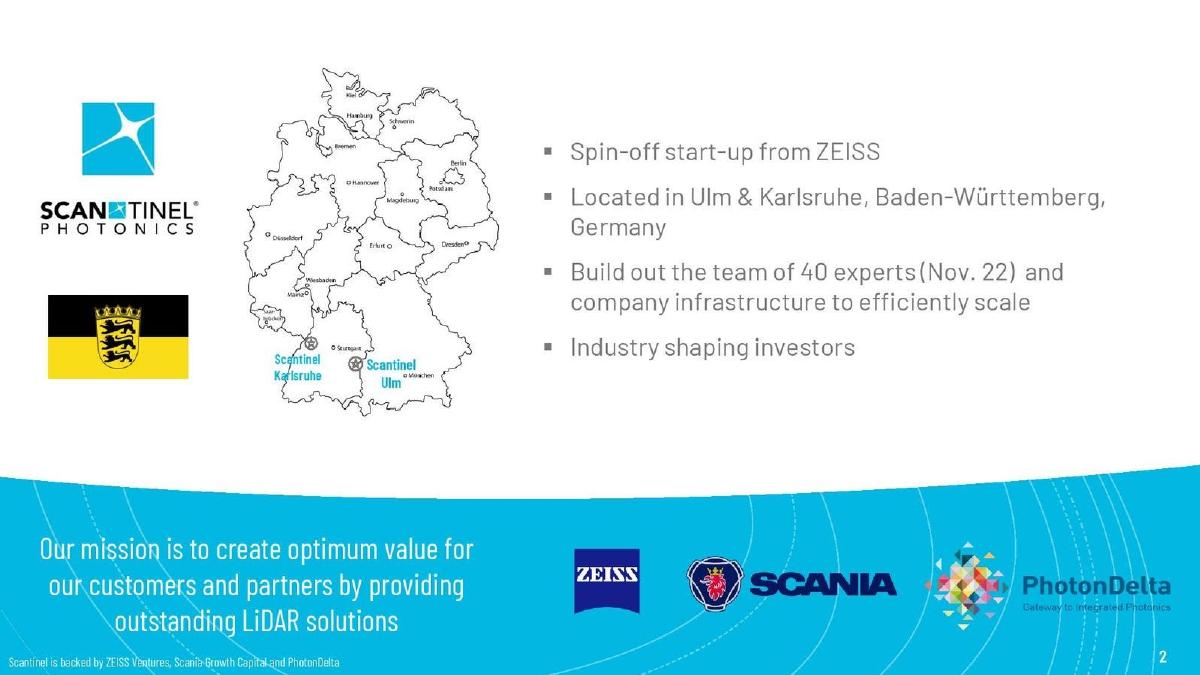
For a hardware startup, credibility is the most expensive currency. Scantinel leads with its origin story: a spin-off start-up from ZEISS . By anchoring the brand to a global leader in optics, they bypass the need to prove they understand precision engineering. The slide also lists a team of 40 experts as of November 2022 and displays logos for ZEISS, Scania, and PhotonDelta. This is a "trust" slide designed to tell investors that the company is already integrated into the European industrial ecosystem.
Slide 3: The Value Proposition
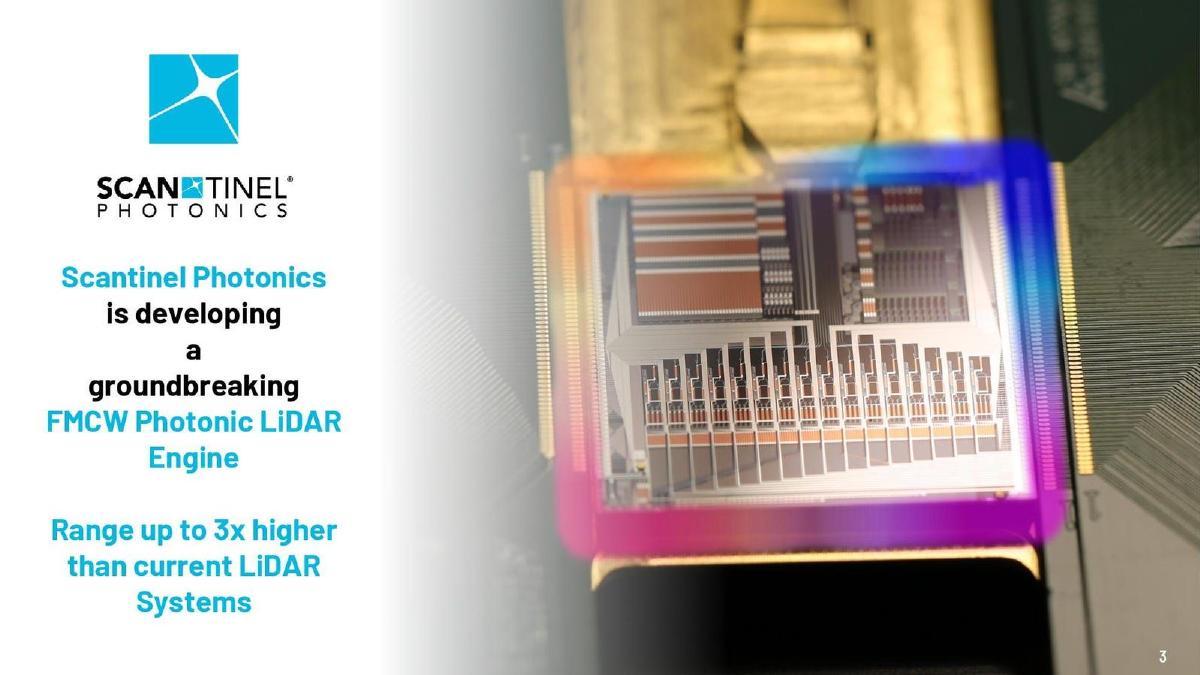
Slide 3 gets straight to the point: Scantinel is developing a "groundbreaking FMCW Photonic LiDAR Engine." The key metric provided is a range up to 3x higher than current LiDAR systems . In the world of autonomous driving, range equals time—the further a vehicle can see, the more time the software has to react. This is a high-impact claim that justifies the rest of the technical deep dive.
Slide 4: Key Benefits for Autonomous Mobility
This slide translates technical features into safety outcomes. It lists four pillars: Long range (>300m), Superior resolution (detecting road debris), Direct instantaneous velocity , and Immunity to interference . The right side of the slide uses high-contrast imagery to show real-world challenges like sun glare and road obstacles. This slide is crucial because it explains why the technology matters to a Car OEM, not just why it is cool to a physicist.
Slide 5: The Technology Roadmap
Slide 5 positions Scantinel as the inevitable future. It charts the evolution of LiDAR from "First wave" (905nm ToF) to "Second wave" (1550nm ToF) to the current frontier: FMCW . It explicitly calls out the flaws of legacy systems—limited performance, high cost for fiber laser amplifiers, and vulnerability to sunlight. By framing FMCW as the solution to "photonic integration," Scantinel makes a case for both better performance and lower manufacturing costs.
Slide 6: Competitive Advantage and Scalability
This slide focuses on the business case for the hardware. It lists four advantages: Superior Performance, Competitive Price, Flexibility, and Scalability. The most important point here is the CMOS compatible process . This tells investors that Scantinel doesn't need to build its own bespoke factories; it can use the same manufacturing processes used for computer chips, which is the only way to achieve the volumes required by the automotive industry.
Slide 7: Target Segments
Scantinel outlines three clear buckets for their Go-To-Market strategy. The first is Automotive (ADAS/AD), targeting Tier 1s and OEMs. The second is Mobility Services (Robo-taxis). The third is Industrial Automation, including mining and smart agriculture. This diversification is a risk-mitigation strategy; if the consumer autonomous car market takes longer to develop, the company can generate revenue from the industrial sector.
Slide 8: Investment Highlights and TAM
This is the 'money' slide. It cites a Total Addressable Market (TAM) of $20 billion by 2032 . It also provides a significant piece of traction: 2 undisclosed Automotive Tier 1 partners and 2 undisclosed industrial partners . Finally, it sets the stage for the future, noting a planned Series B in 2023 to support "product industrialization." This creates a sense of momentum and a clear window for the current round's investors to see their capital put to work.
Slide 9: External Validation
The deck concludes its narrative with a full slide dedicated to the Laser Focus World 2022 Innovators Award (Platinum Honoree) . In deep tech, third-party technical validation is often more persuasive than a standard traction slide. It confirms that the underlying physics of the Scantinel engine are sound according to industry peers.
Slide 10: Contact Information
A standard closing slide with the company's headquarters in Ulm, Germany, and contact details.
What Scantinel Photonics Does Well
The deck is exceptionally disciplined. It understands that its audience for a Series A hardware round consists of specialized VCs and corporate venture arms (like Scania and ZEISS). It doesn't waste time explaining what LiDAR is; instead, it focuses entirely on why FMCW is the superior architecture. The use of the ZEISS pedigree is a masterclass in leveraging brand equity to reduce perceived technical risk. Furthermore, the clear distinction between "First wave" and "Second wave" technology creates a compelling "why now" narrative.
What is Missing from the Deck
The most glaring omission is a Team Slide . While the ZEISS connection is mentioned, investors at the Series A level usually want to see the specific faces and backgrounds of the engineering leadership. There is also a lack of Unit Economics . While they mention "Competitive Price" and "CMOS compatibility," there are no specific targets for what the unit cost of a LiDAR engine will be at scale. Finally, the Use of Funds is vague. A $10M round is a significant amount of capital, and a slide detailing how much is allocated to R&D versus manufacturing setup versus business development would have strengthened the ask.
Founder's Guide: What to Copy
Founders in the hardware or deep tech space should look at Slide 5 as a template for Market Positioning . By creating a timeline of "waves," Scantinel makes their competitors look like legacy technology without having to name them individually. This is a powerful way to frame a market. Additionally, the Target Segments slide (Slide 7) is a great example of how to show a broad market opportunity while remaining specific about which types of customers (Tier 1s vs. OEMs) the company is actually talking to. Finally, if your company is a spin-off or has a high-profile backer, put that information on Slide 2. Don't wait until the end of the deck to build credibility; establish it immediately so the investor views the technical claims through a lens of belief rather than skepticism.
Frequently asked questions
- What is the primary technical advantage Scantinel claims?
- Scantinel focuses on Frequency Modulated Continuous Wave (FMCW) LiDAR. Unlike traditional Time-of-Flight (ToF) systems, FMCW allows for the detection of objects at long ranges (>300m) and provides direct instantaneous velocity for every pixel. Crucially, it is immune to interference from sunlight and other LiDAR systems, which is a significant safety hurdle for autonomous vehicles.
- How does Scantinel address the high cost of LiDAR hardware?
- The deck highlights 'photonic integration' as the key to cost and size reduction. By using a CMOS-compatible process, Scantinel can leverage existing semiconductor industry infrastructure. This allows them to move away from expensive fiber laser amplifiers and InGaAs detectors used in earlier 1550nm systems toward a more scalable silicon photonics approach.
- Who are Scantinel's key investors and partners?
- As reported by Business Insider and shown on Slide 2, the company is a spin-off from ZEISS and is backed by ZEISS Ventures, Scania Growth Capital, and PhotonDelta. Slide 8 also mentions partnerships with two undisclosed Automotive Tier 1 suppliers and two undisclosed industrial partners, indicating significant B2B traction.
- What market segments is the company targeting?
- Scantinel identifies three primary segments: Automotive (Car and Truck OEMs, Tier 1s), Mobility Services (Robo-taxis and Shuttles), and Industrial Automation (Mining, Smart Agriculture, and Smart Infrastructure). This diversified approach suggests they are not solely dependent on the slow-moving consumer automotive production cycle.
- What is missing from this pitch deck?
- The deck is notably missing a dedicated 'Team' slide, which is unusual for a Series A. It also lacks a detailed breakdown of how the $10M will be spent (the 'Use of Funds'), unit economics, and a specific roadmap of milestones leading to their projected 2023 Series B round mentioned on Slide 8.