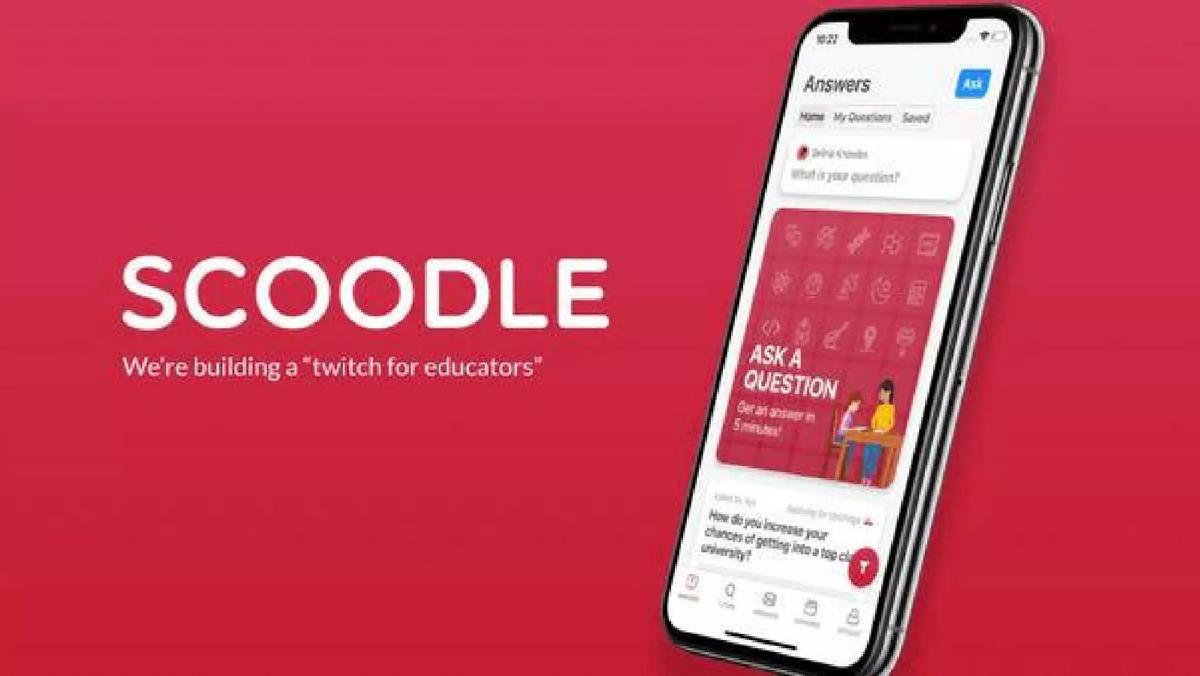
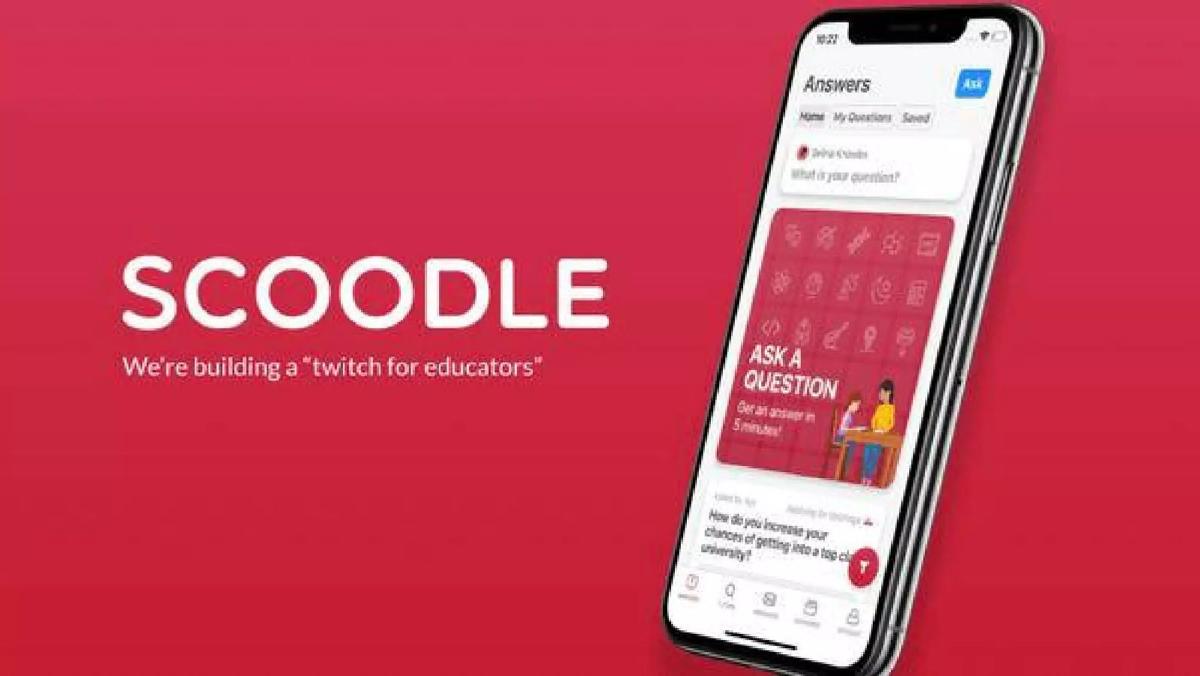
Scoodle’s 19-slide deck positions the company as a 'Twitch for educators,' focusing on building a professional identity for tutors rather than just a booking platform. The core differentiator is a 0% commission model on lessons, shifting monetization to a £10/month subscription for tutors. The deck successfully leverages social proof, highlighting an early investment from Biz Stone and a team with experience at Google and Codecademy. While the market sizing is aggressive—claiming a $5.2 trillion TAM—the traction data is specific, showing 51k users and 20% weekly revenue growth. The deck effec…
Key takeaways
- The company positions itself as a 'Twitch for educators,' emphasizing brand building over simple lead generation (Slide 1).
- Scoodle employs a 0% commission model on lessons, allowing tutors to keep 100% of their earnings to prevent platform leakage (Slide 6).
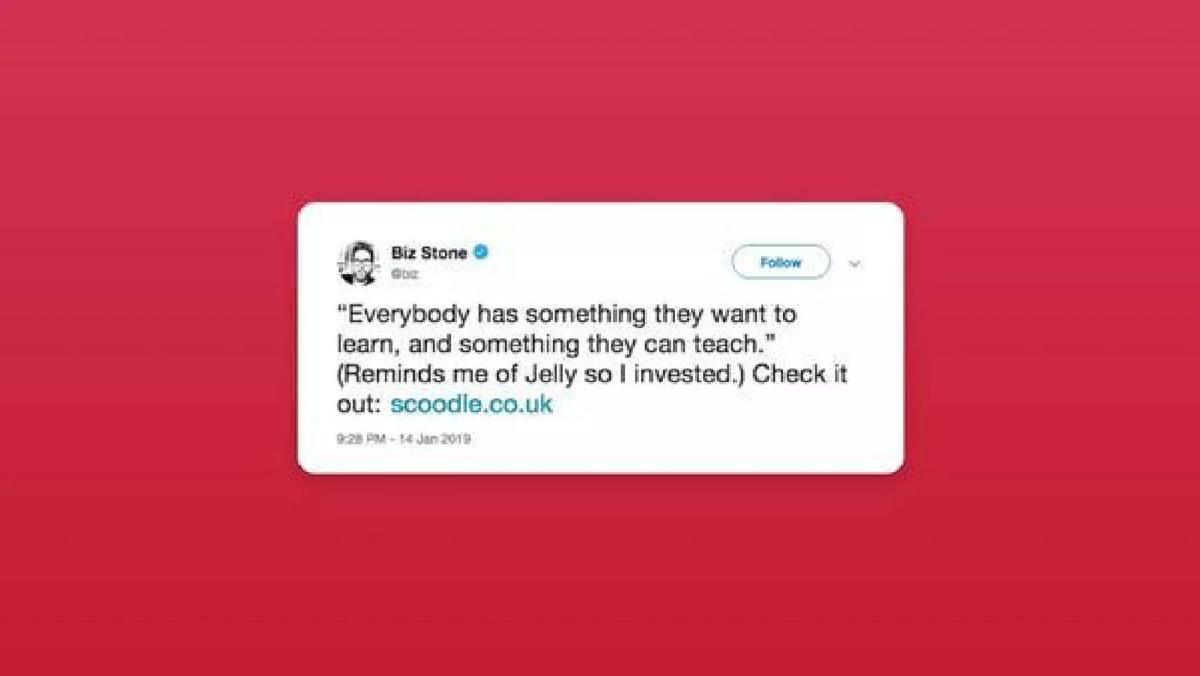
- The deck features a high-profile endorsement from Twitter co-founder Biz Stone, who compares the product to Jelly (Slide 3).
- Traction is demonstrated by a user growth chart showing an increase from 14k to 51k users over four quarters (Slide 9).
- The business model relies on a £10/month subscription for tutors, targeting £12m ARR at a scale of 100k subscribers (Slide 12).
- Revenue growth is reported at 20% weekly between November and April, with 1 in 5 new tutors starting trials (Slide 13).
- The 'Why Now' slide specifically cites the impact of Coronavirus, noting that online learning moved from luxury to necessity (Slide 7).
- The team slide highlights significant prior experience at Google, Codecademy, and Shazam, adding technical and industry credibility (Slide 14).
The Creator Economy Meets EdTech
Scoodle’s pitch deck is a masterclass in positioning. By using the tagline "twitch for educators" on the very first slide, the founders immediately anchor the investor's mind in a high-growth, high-engagement category. This isn't just another tutoring marketplace; it is a platform for the 'celebrity educator.' The deck, spanning 19 slides, moves quickly from vision to validation, leaning heavily on a 0% commission model that solves the perennial marketplace problem of 'leakage'—where users take their transactions off-platform to avoid fees.
The Hook and the Vision (Slides 1-5)
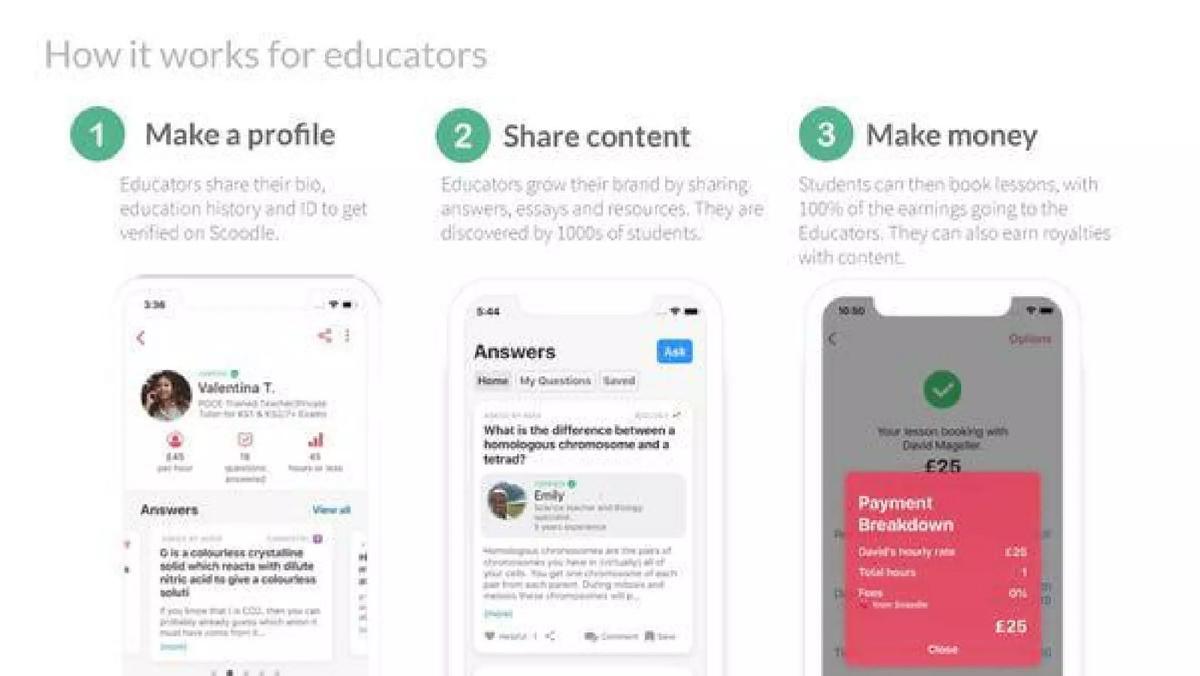
Slide 1 introduces the brand with a clean red aesthetic and the 'Twitch' analogy. This is followed by Slide 2 , which breaks down the educator experience into three steps: Make a profile, Share content, and Make money. Crucially, it mentions that 100% of earnings go to the educators, a point that is expanded upon later as a competitive advantage.
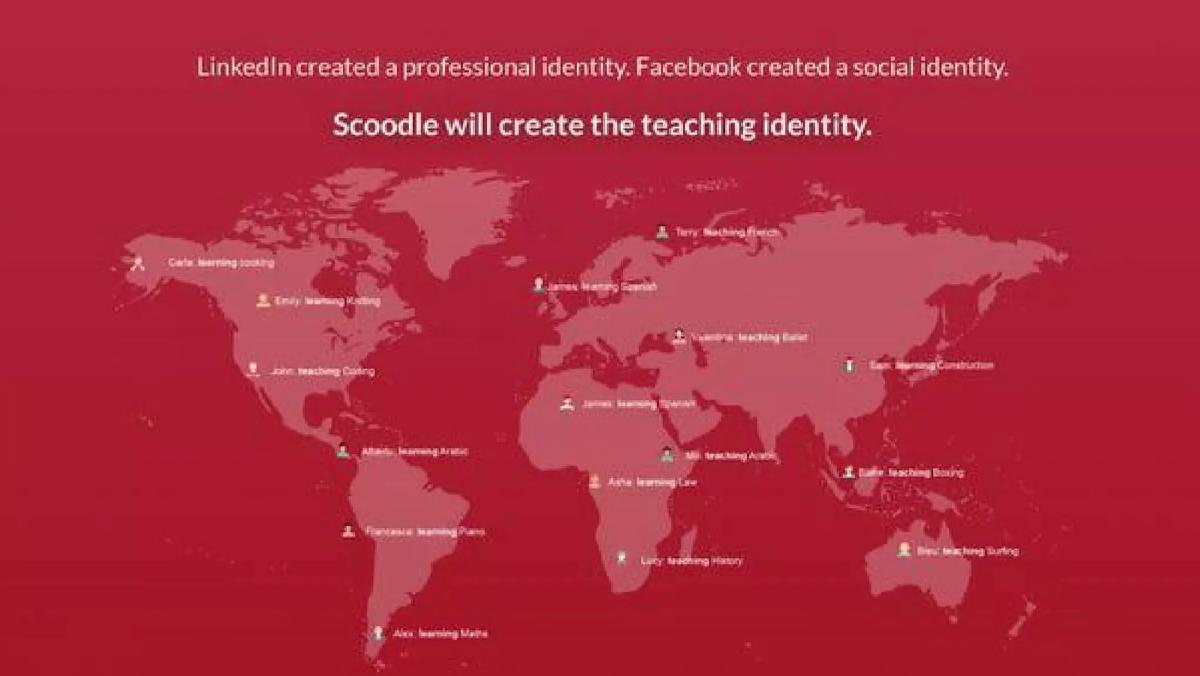
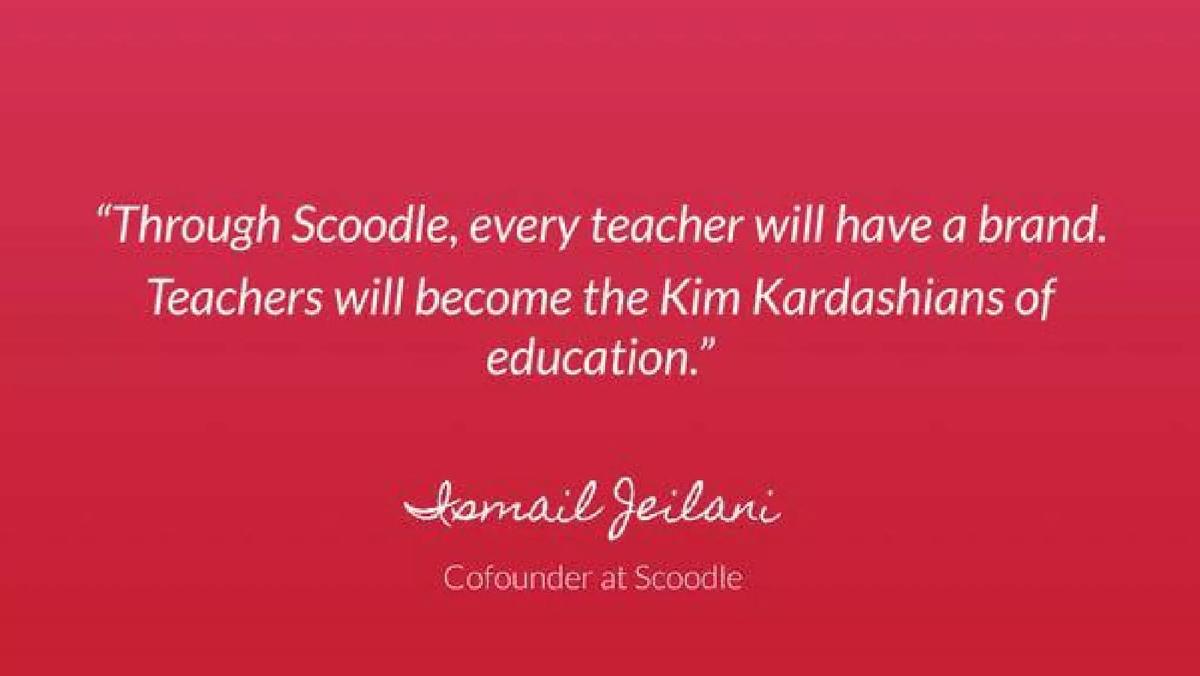
Slide 3 is a pure social proof play. It features a tweet from Biz Stone, co-founder of Twitter, stating, "Reminds me of Jelly so I invested." Having a Silicon Valley titan validate the concept early is a significant de-risking signal for subsequent investors. Slide 4 and Slide 5 elevate the mission. The company compares its goal of creating a 'teaching identity' to how LinkedIn created a professional identity and Facebook a social one. The quote on Slide 5— "Teachers will become the Kim Kardashians of education" —is provocative, but it clearly communicates the shift toward educator-led branding.
Product Differentiation and Market Timing (Slides 6-7)
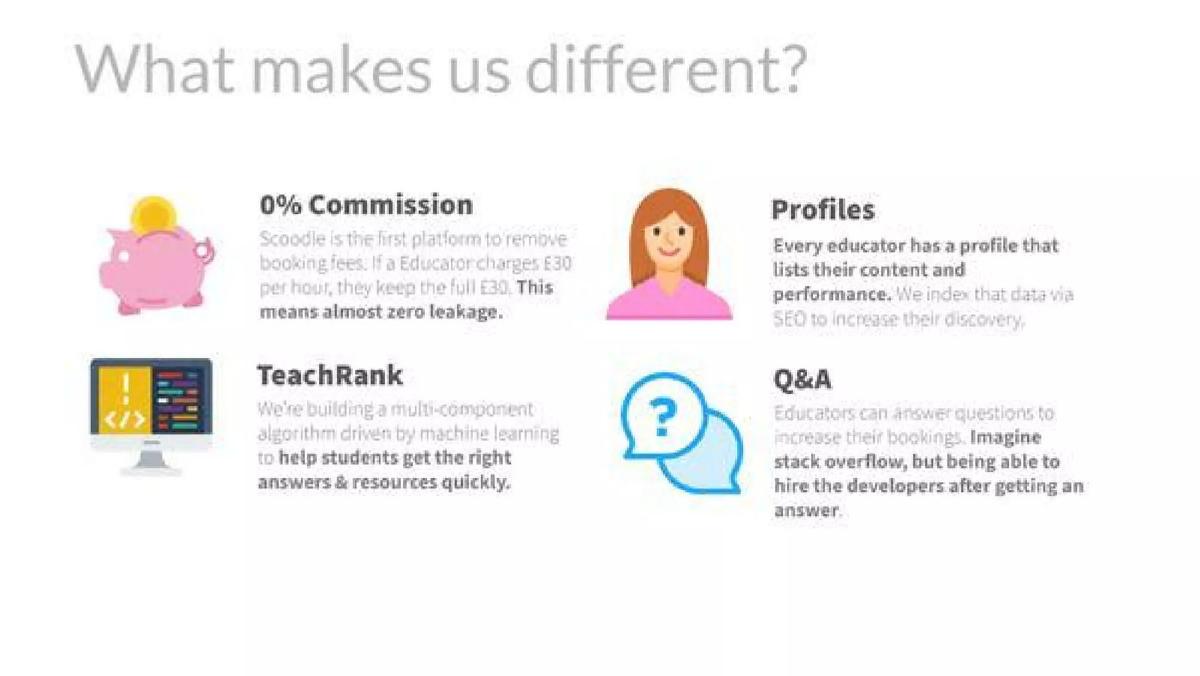
Slide 6 , titled "What makes us different?", is one of the most important slides in the deck. It highlights four key pillars: 0% Commission , Profiles (indexed for SEO), TeachRank (a machine learning algorithm), and Q&A . The Q&A section is described as "Stack Overflow, but being able to hire the developers after getting an answer," which is a brilliant way to explain their lead-generation mechanism.
Slide 7 addresses the "Why now?" question by citing the Coronavirus pandemic. It notes that online learning shifted from a luxury to a necessity in weeks. More impressively, it claims that Scoodle’s CPMs (Cost Per Mille) dropped 3x, from £1.50 to £0.50, allowing them to grow revenue and MAUs with minimal increase in marketing spend. This demonstrates operational agility during a global crisis.
Growth Metrics and Market Size (Slides 8-10)
Slide 8 provides granular data on their growth strategy. They list a Student CAC of £0.70 to £0.90 and an Educator CAC of £2.30 to £3.20 . These are healthy numbers for a seed-stage startup. They also claim a 20% referral uplift. Slide 9 shows a clear upward trajectory in user growth, ending at 51k users in the Jan-Mar quarter. The chart is simple and effective, though it lacks a y-axis for the bars, relying instead on the labels below.
Slide 10 tackles market size using the standard TAM/SAM/SOM framework. While the $5.2 trillion TAM (2.6 billion users) is arguably too broad, the SOM (Serviceable Obtainable Market) of £12.5m or 1m users feels grounded and achievable. Linking the SOM directly to their revenue model makes the figure more believable than a generic trillion-dollar claim.
Business Model and Financial Traction (Slides 11-13)
Scoodle’s monetization strategy is detailed on Slide 11 . They move away from transaction fees to a £10/month subscription . The slide lists the perks: 10x more messages, premium listings, and unlimited resources. Slide 12 shows the math: 100k subscribers at £10/month equals £12m ARR . This is a classic 'venture scale' projection.
Slide 13 provides the most compelling evidence of product-market fit. It shows a revenue graph outperforming a 10% weekly growth target, achieving 20% weekly revenue growth from November to April. It also notes that 1 in 5 new tutors start trials and 4.7% convert to paying users. These conversion metrics are vital for investors to understand the efficiency of the subscription funnel.
Team and Investment History (Slides 14-16)
The team slide ( Slide 14 ) is exceptionally strong. CEO Ismail Jeilani is noted for making £400k from his first teaching business while in university. The broader team includes alumni from Google, Codecademy, Shazam, and Shell . This mix of EdTech experience and big-tech engineering (Rasheed Wihaib, ex-Google) suggests the team has the pedigree to build and scale the product.
Slides 15 and 16 detail their funding history. They raised £180k in an angel round and £680k in a pre-seed round . Listing the specific names of investors from Miniclip and Oxford University, alongside Biz Stone, builds a narrative of consistent, high-quality backing. The pre-seed slide also mentions they helped students 1.5m times, a strong impact metric.
The Ask and Conclusion (Slides 17-19)
Slide 17 states the current round: £1.2m with £800k already committed . This creates a sense of urgency and FOMO (Fear Of Missing Out) for new investors. The milestones are clear: 500k MAUs and £100k MRR. Slide 18 summarizes the pitch with three bullet points, including a claim that the market will be $200bn in 2 years . The deck concludes on Slide 19 with contact information and a repeat of the app mockup.
What Works in This Deck
The 0% Commission Hook: By leading with a model that eliminates marketplace leakage, Scoodle solves a major investor concern about the long-term viability of tutoring platforms. · Social Proof: The Biz Stone tweet is a powerful endorsement that is hard to ignore. · Unit Economics: Providing specific CAC figures for both sides of the marketplace (Slide 8) shows the founders have a firm grip on their acquisition costs. · Clear Positioning: The 'Twitch for educators' analogy is used consistently to frame the product as a creator platform rather than a utility.
What Is Missing From This Deck
Churn and Retention Data: While the deck shows strong user growth and revenue growth, it does not mention tutor or student retention rates. In a subscription model, churn is the most critical metric. · Competitive Landscape: There is no slide comparing Scoodle to incumbents like Chegg, Wyzant, or newer competitors. Investors need to know why a tutor would choose Scoodle over a platform that already has millions of students. · Detailed Use of Funds: While the milestones are listed, a breakdown of how the £1.2m will be spent (e.g., 50% engineering, 30% marketing) is absent.
What a Founder Should Copy
The 'Why Now' Slide: Scoodle does an excellent job of linking a global event (COVID-19) to specific business advantages (lower CPMs and increased necessity). · The Traction vs. Target Graph: Slide 13 shows the actual revenue line significantly above the target line. This visual representation of 'over-performance' is highly persuasive. · The SOM Calculation: Instead of just picking a number, Slide 10 links their SOM to a specific user count (1m) that aligns with their revenue projections. · The 'How it Works' for Creators: Slide 2 is a simple, three-step visualization that makes a complex platform feel intuitive.
Frequently asked questions
- How does Scoodle make money if they charge 0% commission?
- Scoodle operates on a SaaS (Software as a Service) model rather than a marketplace fee model. According to Slide 11, they charge tutors a subscription fee of £10 per month (billed annually). This subscription grants tutors benefits like 10x more messages, premium search listings, zero fees on lessons, and unlimited resources. Slide 12 projects that reaching 100,000 subscribers would result in £12 million in Annual Recurring Revenue (ARR).
- What is Scoodle's primary growth strategy?
- As detailed on Slide 8, the company focuses on three pillars: Digital Marketing, SEO, and a Referral Scheme. They report a Student CAC (Customer Acquisition Cost) of £0.70 to £0.90 and an Educator CAC of £2.30 to £3.20. Their SEO strategy involves indexing educator names and content to drive organic discovery, while their referral scheme claims a 20% uplift, where every 10 downloads result in 2 'free' users.
- Who are the key investors mentioned in the deck?
- Scoodle boasts a strong roster of angel and pre-seed investors. Slide 16 lists Biz Stone (Twitter & Medium founder), Andrin Bachmann (Piton Capital), and Jan-Emmanuel De Neve (Oxford Professor). Slide 15 highlights an earlier £180k angel round supported by executives from Morgan Stanley and Miniclip, including their Chief Advertising Officer and Head of Product Design.
- What specific problem is Scoodle trying to solve for tutors?
- The deck argues that existing platforms treat tutors as commodities. Scoodle aims to create a 'teaching identity' (Slide 4). By providing profiles that index content and performance via SEO (Slide 6), they allow tutors to build a personal brand. Co-founder Ismail Jeilani goes as far as saying tutors will become the 'Kim Kardashians of education' (Slide 5), suggesting a shift toward the creator economy.
- What are the company's immediate goals for the seed funding?
- On Slide 17, Scoodle outlines milestones for their £1.2m raise. Product goals include building a learning resources platform, a video platform, and enhanced data-driven ranking. Marketing milestones include reaching 500k Monthly Active Users (MAUs), achieving £100k Monthly Recurring Revenue (MRR), and creating 10,000 'education influencers' on the platform.