Scopio’s 2017 pitch deck is a masterclass in visual storytelling and market positioning. With only 11 slides, the company managed to raise $50.1 million by identifying a specific pain point: the 'uncanny valley' of traditional stock photography. They positioned themselves as the bridge between 4 billion daily photos and brands like Fitbit and Ferrari. The deck relies heavily on high-impact imagery and sparse text, focusing on the efficiency of their platform to license social media content. While it lacks detailed financial projections or a formal 'ask' slide, the traction metrics—specificall…
Key takeaways
- The deck uses a high-contrast comparison between authentic UGC and staged Getty Images to define the problem (Slide 2).
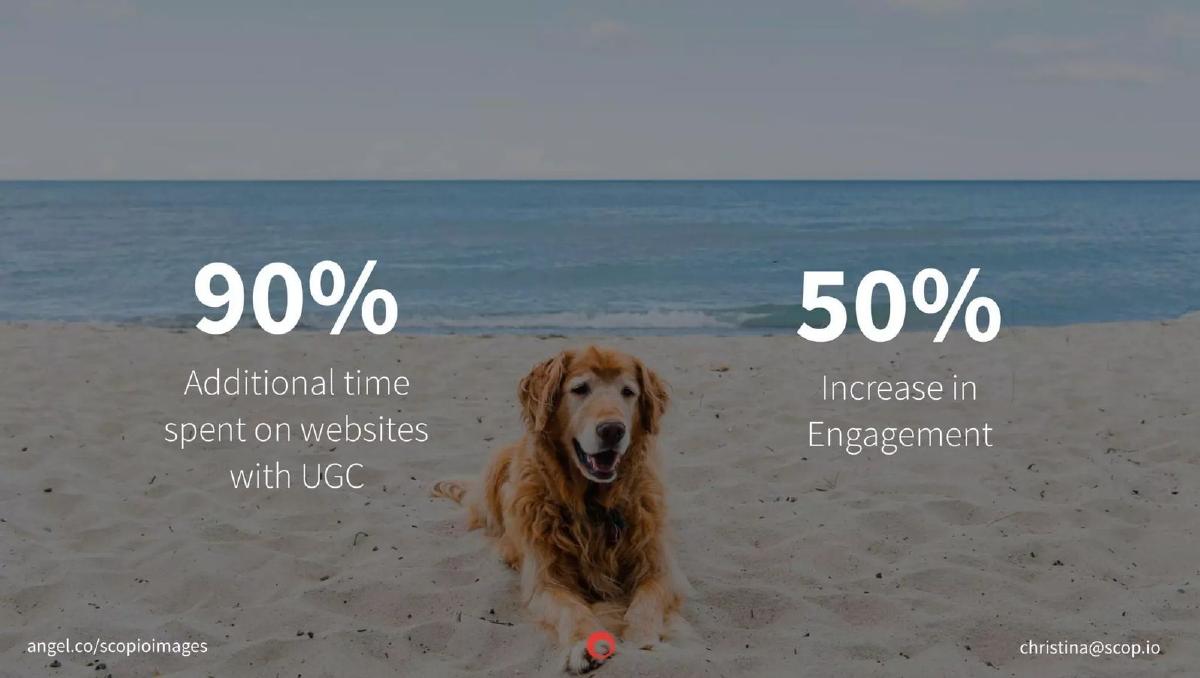
- Scopio claims that websites using UGC see 90% additional time spent and a 50% increase in engagement (Slide 3).
- The platform targets a massive supply side, citing that 4 billion photos are taken every day (Slide 4).
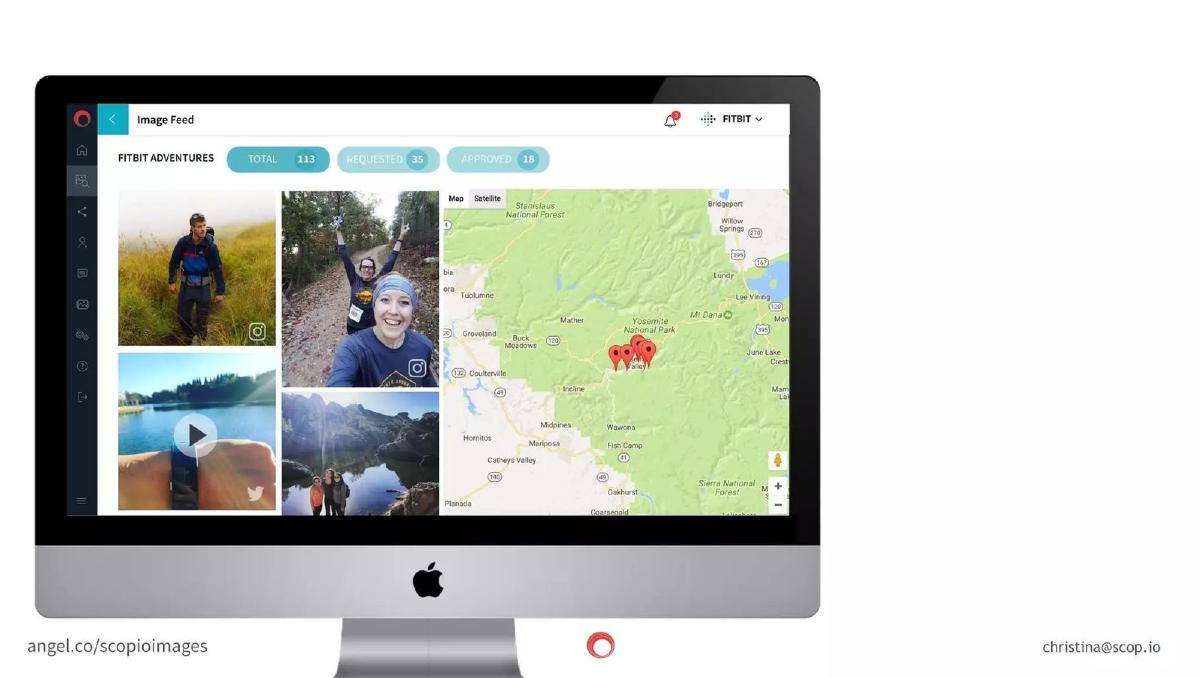
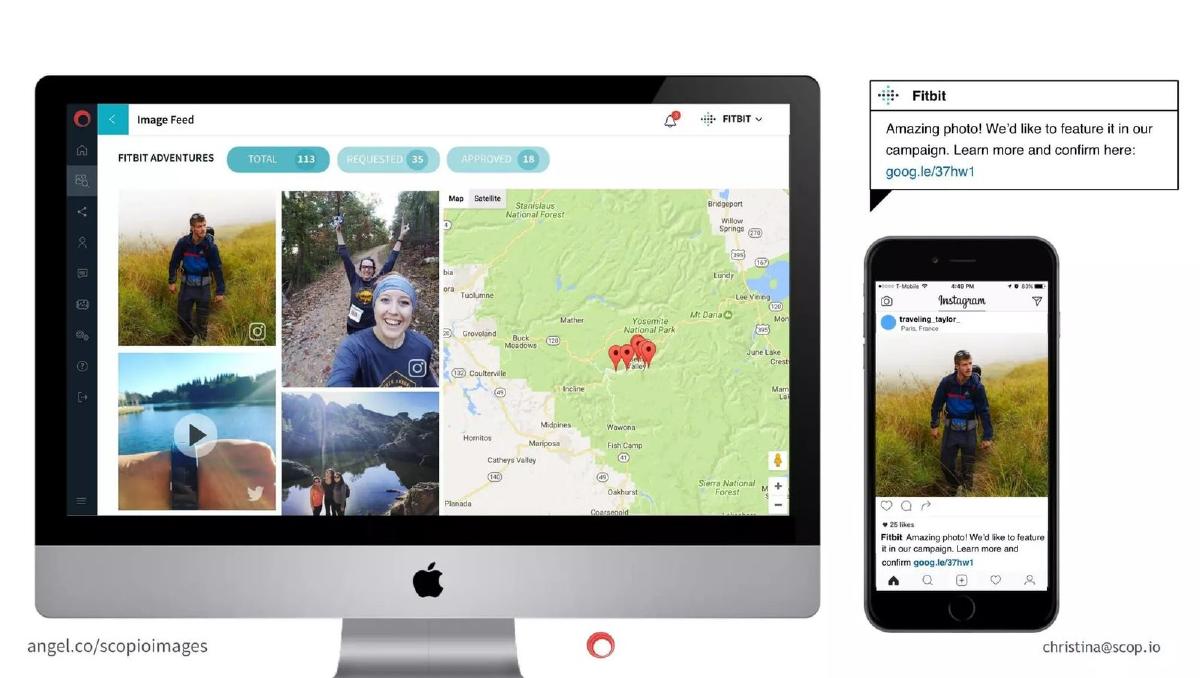
- Product slides demonstrate a seamless workflow for brands to request and approve Instagram content via a dashboard (Slides 5-6).
- The company reported significant early traction with 30+ clients and $875K in the sales pipeline (Slide 8).
- The global image market is valued at $4B with an 8% CAGR, providing a clear TAM for investors (Slide 9).
- The team slide highlights 20 years of experience in NLP, Machine Learning, and Marketing Analytics (Slide 10).
- Strategic advisors include a former Getty Images executive and a Facebook lead, directly addressing the industry vertical (Slide 10).
The $50 Million Visual Narrative
Scopio’s 2017 pitch deck is a lean, 11-slide presentation that prioritizes visual impact over data density. In an industry dominated by giants like Getty Images and Shutterstock, Scopio sought to carve out a niche by licensing the billions of photos generated by everyday social media users. The deck is remarkably light on text, relying instead on the very medium it seeks to monetize: high-quality, authentic imagery. By the time this deck was in circulation, Scopio had already secured a foothold with major brands, allowing them to focus on the 'why' and 'how' of their platform rather than just the 'what.'
Slides 1-2: The Hook and the Contrast
Slide 1 serves as the title card, featuring a high-resolution image of a woman looking over a bridge in Florence. The tagline is bold and comparative: "Getty Images of User Generated Content." This is a classic 'X for Y' positioning strategy that immediately tells an investor exactly where the company fits in the ecosystem. The contact information for CEO Christina Hawatmeh and a link to their AngelList profile are clearly visible, ensuring accessibility.
Slide 2 is perhaps the most effective slide in the deck. It contains no text, only two images side-by-side. On the left is an authentic, slightly messy photo of a father changing a child's diaper in a real home. On the right is a watermarked Getty Images photo of a family in a pristine kitchen, looking directly at the camera with forced smiles. This visual juxtaposition perfectly encapsulates the 'Problem' slide without needing a single bullet point. It highlights the growing consumer distaste for staged photography and the rising demand for authenticity.
Slides 3-4: Quantifying the Value and the Scale
Slide 3 moves into the 'Why Now' phase. It presents two key metrics: "90% Additional time spent on websites with UGC" and "50% Increase in Engagement." By placing these figures over a serene beach photo, the deck argues that UGC isn't just a stylistic choice; it is a performance driver. This slide targets the CMO’s wallet, showing that Scopio’s content leads to better ROI for marketing departments.
Slide 4 addresses the 'Market Size' and 'Supply' side. Over a collage of diverse, global images, the text reads "4 Billion photos a day." This slide establishes the sheer scale of the raw material Scopio has at its disposal. It suggests that while traditional stock photo agencies are limited by their own shoots, Scopio’s library is effectively infinite and grows by billions of assets every 24 hours.
Slides 5-7: The Product and Workflow
Slide 5 provides a look at the Scopio dashboard on a desktop monitor. The interface shows a 'Fitbit Adventures' campaign with a map view and a feed of social media images. The UI indicates that the platform can track location data and aggregate content from multiple social channels (Instagram and Twitter icons are visible). The dashboard tracks 'Total,' 'Requested,' and 'Approved' images, suggesting a structured workflow for brand managers.
Slide 6 expands on this by showing the communication loop. A callout box shows a message from Fitbit to a user: "Amazing photo! We’d like to feature it in our campaign. Learn more and confirm here." Below it, a mobile mockup shows the message appearing on an Instagram post. This slide is crucial because it explains how Scopio handles the legal and logistical hurdle of rights management—turning a random social post into a licensed brand asset.
Slide 7 illustrates the 'Marketing Channels' where this content ends up. It uses simple wireframes to show three use cases: 'Shoppable' (a product page with a 'Buy Now' button next to a UGC photo), 'Digital Marketing' (a mobile ad), and 'Galleries' (a web carousel). This demonstrates that Scopio isn't just a search engine; it's a distribution tool that integrates into existing e-commerce and marketing stacks.
Slides 8-9: Traction and Market Opportunity
Slide 8 is the 'Traction' slide, and it is impressive. It states the company "Launched in August" and already has "30+ Clients," "2 Partnerships with 300+ brands," and "$875K in pipeline." The bottom of the slide features a 'logo wall' including Fitbit, the UN, Vox Media, 20th Century Fox, Fox Sports, Boy Scouts of America, and Ferrari. For a company that had recently launched, these names provide massive social proof and validate the enterprise demand for their service.
Slide 9 defines the 'Global Image Market' at "$4B" with an "8% CAGR." While the $4B figure represents the existing stock photography market, the implication is that Scopio is positioned to disrupt this market by offering a superior, more engaging product. The background image of a person looking over the Grand Canyon reinforces the 'global' theme and the vastness of the opportunity.
Slides 10-11: The Team and The Vision
Slide 10 introduces the leadership. CEO Christine Hawatmeh and CTO Manoj Pooleery are both associated with Columbia University. The slide highlights "20 Years Experience NLP, Machine Learning, & Marketing Analytics," which explains how the company intends to filter and categorize 4 billion daily photos. The inclusion of advisors Barbara Roberts (formerly of Getty Images) and Manohar Paluri (Facebook) is a strategic masterstroke, as it shows they have deep ties to both the industry they are disrupting and the platforms they are sourcing from.
Slide 11 is the closing slide, repeating the traction metrics from Slide 8: "30+ Clients, 2 Partnerships, $875K in pipeline." The central message, "User Generated Images Tell a Better Story," serves as the final takeaway for the investor. It includes the CEO's email and the AngelList link once again.
What Works in This Deck
Visual Proof: The deck practices what it preaches. Every slide uses high-quality photography that feels authentic, reinforcing the brand's core value proposition. · The Comparison Slide: Slide 2 is a perfect example of how to communicate a complex market shift without words. It makes the 'old way' (Getty) look obsolete instantly. · Clear Traction: Mentioning a specific dollar amount in the pipeline ($875K) gives investors a concrete number to model against, rather than vague promises of 'growth.' · Strategic Advisors: Having a Getty Images executive as an advisor directly counters the objection that the incumbents will simply crush the startup.
What is Missing from This Deck
The Ask: There is no slide detailing how much money is being raised, the valuation, or the specific milestones the company intends to hit with the new capital. · Unit Economics: The deck explains how the product works but not how Scopio makes money. Is it a subscription model? A percentage of the licensing fee? A per-image cost? This is a significant omission for a later-stage deck. · Competition: While Getty is used as a foil, there is no mention of other UGC licensing competitors like Olapic or Stackla, which were active during this period. · Financial Projections: There are no charts showing revenue growth over time or projected earnings, which is unusual for a round that eventually totaled over $50 million.
What a Founder Should Copy
The 'X for Y' Tagline: If your startup is entering a well-defined market with a new twist, use a comparison to a market leader to anchor the investor's understanding immediately. · Minimalist Text: Scopio avoids the 'wall of text' trap. They use large fonts for key metrics and let the imagery do the heavy lifting. · Workflow Mockups: Showing the actual interface (Slide 5) and the user experience (Slide 6) makes the technology feel real and ready for scale. · Social Proof: If you have big-name clients, don't just list them—put their logos front and center. The presence of Ferrari and the UN on the same slide suggests a very broad market appeal.
Frequently asked questions
- How much did Scopio raise with this deck?
- According to the catalogue facts, Scopio raised $50,100,000 in 2017. The deck itself does not state the amount being raised, which suggests it may have been used as a teaser or for a round where terms were already being negotiated with lead investors.
- What is Scopio's primary value proposition to brands?
- Scopio positions itself as the 'Getty Images of User Generated Content' (Slide 1). It helps brands move away from staged stock photos toward authentic imagery, which they claim leads to a 50% increase in engagement and 90% more time spent on site (Slide 3).
- Who are Scopio's notable clients mentioned in the deck?
- Slide 8 lists several high-profile clients and partners, including Fitbit, the United Nations, Vox Media, 20th Century Fox, Fox Sports, Boy Scouts of America, Ferrari, and Metric Collective.
- What technical expertise does the founding team possess?
- The team slide (Slide 10) emphasizes 20 years of experience in Natural Language Processing (NLP), Machine Learning, and Marketing Analytics. This technical foundation is likely used to automate the discovery and licensing of the 4 billion photos taken daily.
- What market size does Scopio target?
- Slide 9 defines the Global Image Market as a $4 billion opportunity growing at an 8% Compound Annual Growth Rate (CAGR). By focusing on UGC, Scopio aims to capture a significant portion of this established market by offering a more authentic alternative.