Slice, originally branded as SlicePay, raised $6M in 2018 with a concise 8-slide deck. The presentation is heavily weighted toward market macro-trends, specifically the 'Evolving Indian Experiential Economy' and the rise of digital natives. By positioning themselves as the only platform for Indians without a credit history, Slice addressed a significant gap in the traditional banking sector. While the deck is visually clean and emphasizes the team’s pedigree (IIT, Flipkart, Capital One), it notably lacks specific financial performance data, unit economics, and a clear 'Ask' slide. Instead, it…
Key takeaways
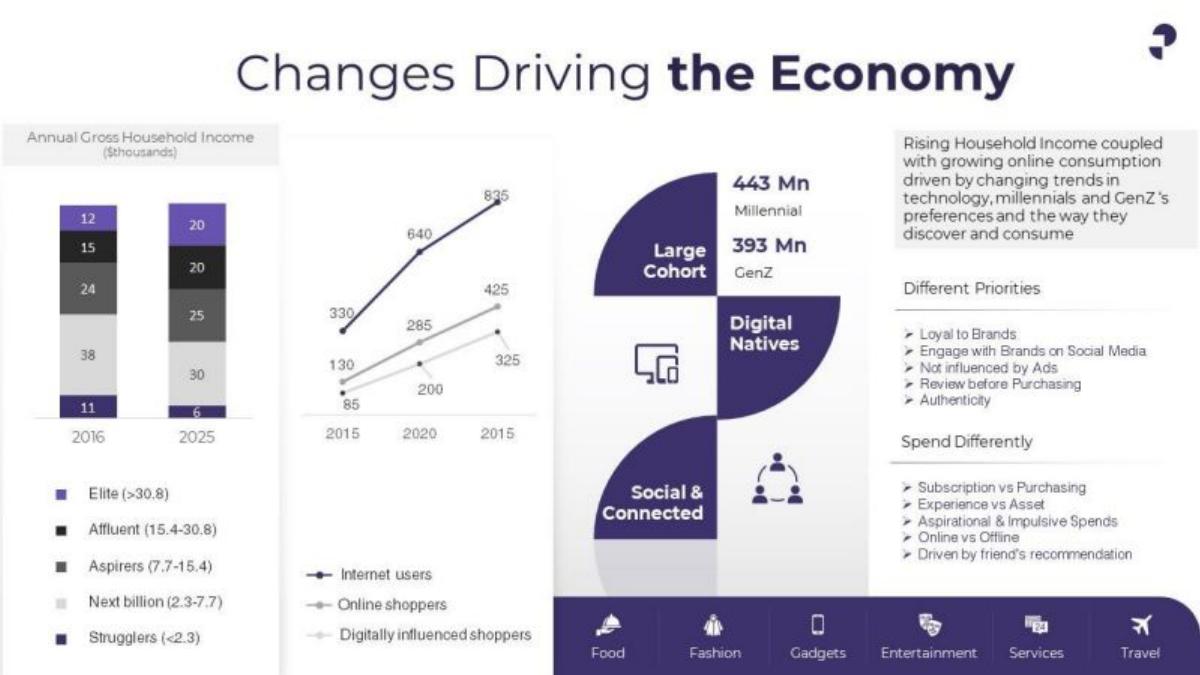
- The deck identifies a massive target audience of 443 million Millennials and 393 million Gen Z individuals in India (Slide 4).
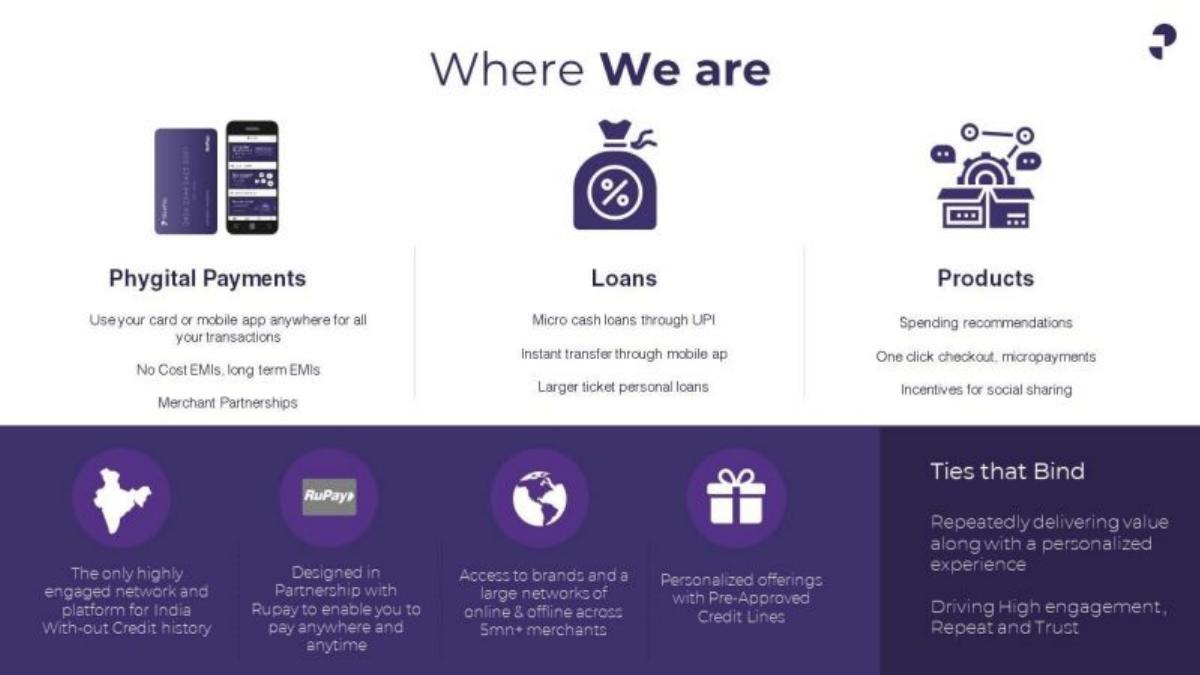
- Slice positions itself as the only highly engaged network for Indians without a credit history (Slide 6).
- The team highlights strong institutional pedigree, including experience at Flipkart, Capital One, and Netapp (Slide 2).
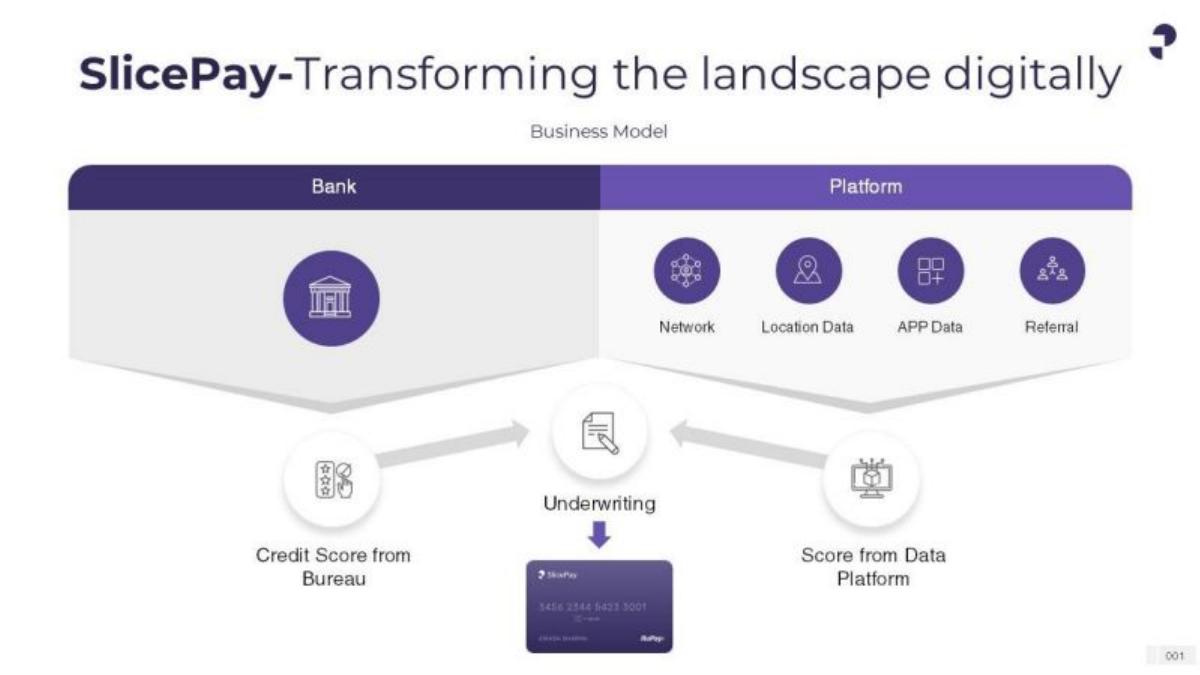
- The business model relies on a dual-input underwriting system: Credit Scores from bureaus and scores from a proprietary Data Platform (Slide 5).
- Market data shows a significant gap in credit card issuance, with over 70% of new cards in Q3 2018 going to those with existing credit history (Slide 7).
- The product offering is 'Phygital,' combining physical cards with a mobile app for EMI and micro-cash loans (Slide 6).
- The deck uses placeholder 'X' values for specific card issuance and penetration metrics, suggesting this version was sanitized for public viewing or early-stage discussions (Slide 7).
- There is no dedicated slide for financial projections, burn rate, or the specific funding amount requested (Omitted).
The 8-Slide Vision for Indian Neobanking
Slice (formerly SlicePay) entered the Indian fintech market at a pivotal moment. In 2018, the combination of cheap data, smartphone penetration, and a massive youth population created a vacuum for credit products. Traditional banks remained focused on the 'Elite' and 'Affluent' segments (as categorized on Slide 4), leaving hundreds of millions of 'Aspirers' and 'Next Billion' consumers without access to formal credit. This teardown examines how Slice framed this opportunity to secure $6M in Series A funding.
Slide 1: Title Slide
The deck opens with the original branding, SlicePay , and the tagline: "Driving the experience economy." The background features a ghosted image of a credit card, immediately signaling the product category. It is a minimalist start that focuses on the brand name rather than a complex value proposition.
Slide 2: Our Team
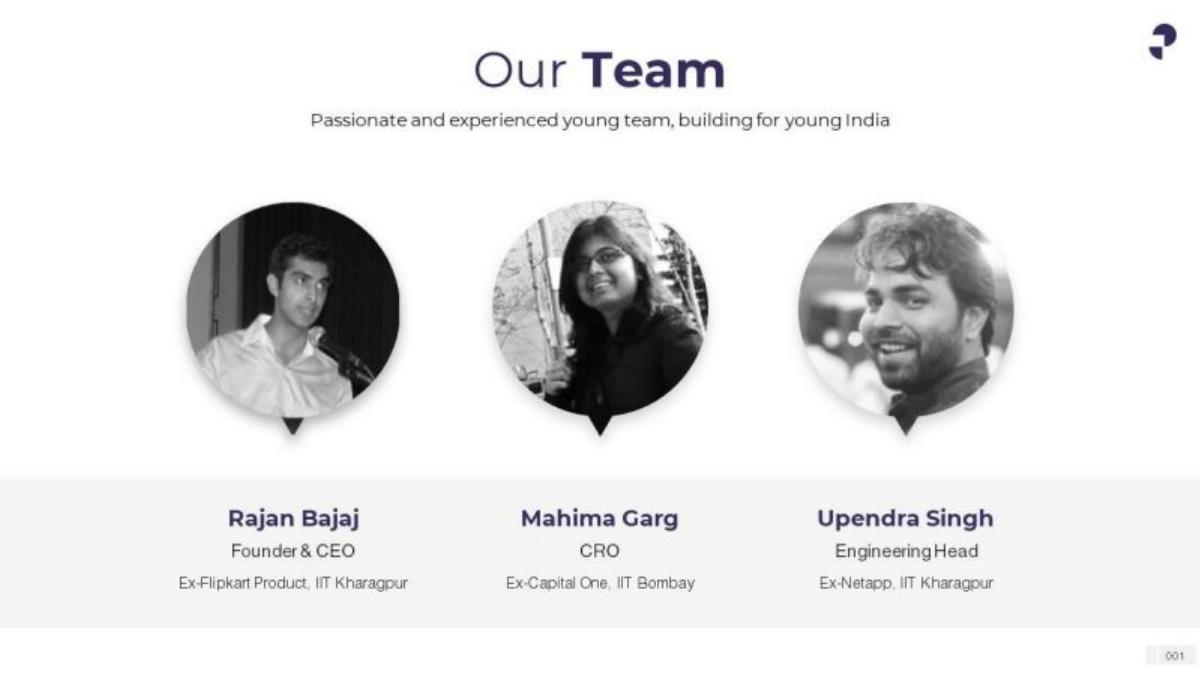
Slice places the team slide early, which is a common tactic for founders with strong pedigrees. Rajan Bajaj (Founder & CEO) is noted as Ex-Flipkart Product and an IIT Kharagpur alumnus. Mahima Garg (CRO) brings institutional credit experience from Capital One and is an IIT Bombay alumna. Upendra Singh (Engineering Head) is listed as Ex-Netapp and IIT Kharagpur. The sub-headline, "Passionate and experienced young team, building for young India," reinforces the founder-market fit: young people building for their own demographic.
Slide 3: Evolving Indian Experiential Economy
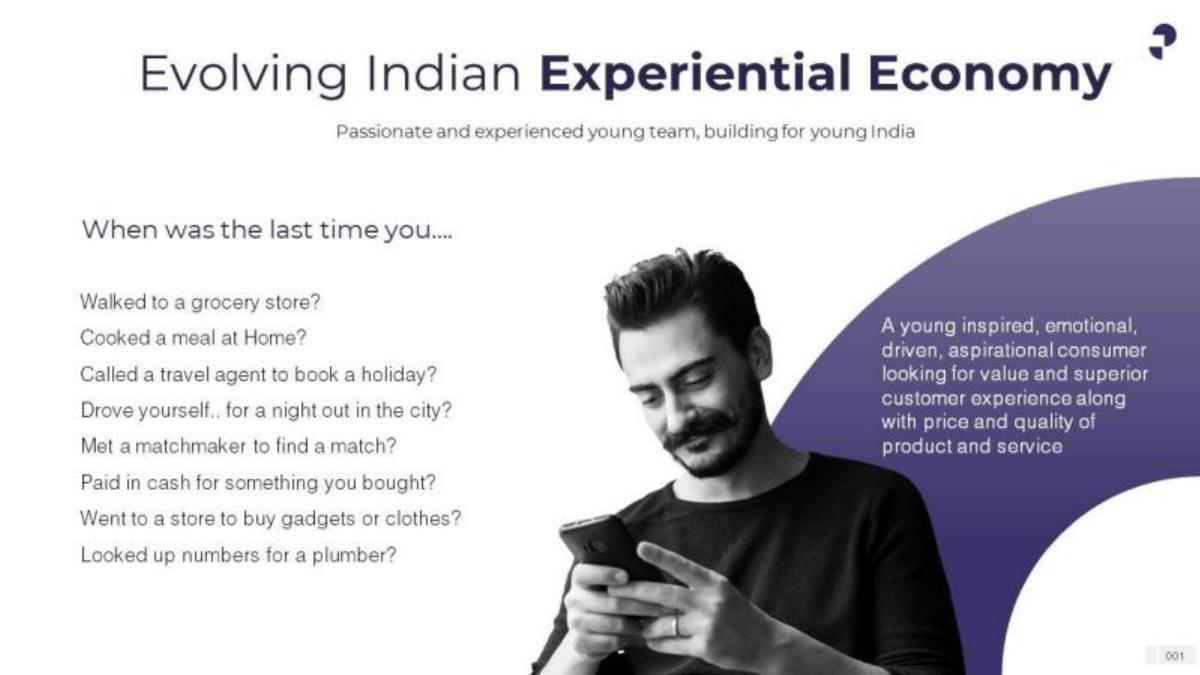
This slide serves as the 'Problem' or 'Context' slide. Instead of listing pain points, it uses a series of rhetorical questions to highlight how digital services have replaced traditional habits. Questions like "When was the last time you... Called a travel agent to book a holiday?" or "Paid in cash for something you bought?" point toward a shift in consumer behavior. The text describes the target as an "inspired, emotional, driven, aspirational consumer looking for value and superior customer experience." This sets the stage for a credit product that facilitates these digital experiences.
Slide 4: Changes Driving the Economy
Slide 4 provides the macro-economic justification for Slice. It includes three key data visualizations:
Annual Gross Household Income: A bar chart showing the shift from 2016 to 2025, where the 'Strugglers' segment ( This slide explains the technical 'moat.' Slice illustrates a dual-input underwriting process. On one side is the Bank (Credit Score from Bureau). On the other is the Platform , which pulls from Network, Location Data, APP Data, and Referrals. These two streams feed into a central Underwriting engine that produces a "Score from Data Platform." This allows Slice to issue a card (shown as a RuPay branded card) to individuals who might be rejected by traditional banks due to a lack of bureau history.
Slide 6: Where We Are
This slide functions as the product overview. It divides the offering into three pillars:
Phygital Payments: Using a card or app anywhere, featuring No Cost EMIs and merchant partnerships. · Loans: Micro cash loans through UPI, instant transfers, and larger ticket personal loans. · Products: Spending recommendations, one-click checkout, and social sharing incentives.
The bottom of the slide emphasizes "Ties that Bind," claiming Slice is the "only highly engaged network and platform for India Without Credit history." It mentions a partnership with Rupay and access to over 5 million merchants.
Slide 7: Driving Credit Card Market
The final content slide focuses on market penetration and the specific target segments. It uses three charts:
New Card Issuance by Origin (Q3'2018): Shows that nearly 80% of new cards are issued to those "With Credit History," highlighting the underserved "Without Credit History" segment. · Average Balance by Risk Tier (Q4'2018): Shows that "Near Prime" customers hold the highest average balances (~35,000), suggesting a lucrative middle-market. · Credit Growth: A bar chart showing rapid increases in transaction value (reaching 200+ billions).
The right side of the slide identifies the "SlicePay Target" as Students, Early Employees, Self-Employed, and Blue-Collared Workforce. Note: The metrics for "Credit Cards," "Target Credit cards," and "Penetration" are listed as XXM , XXXM+ , and X% respectively, which are placeholders likely used to protect sensitive internal targets in the shared version of the deck.
Slide 8: Closing Slide
The deck ends with a promotional slide for the platform where the deck was hosted, rather than a traditional 'Contact Us' or 'The Ask' slide. This confirms that the version of the deck available is a truncated or public-facing version of the Series A pitch.
What Slice Got Right
1. Demographic Focus: The deck does an excellent job of quantifying the 'Young India' opportunity. By citing 836 million potential users across Millennials and Gen Z, the scale of the opportunity is undeniable. 2. Founder-Market Fit: The team slide is positioned early and emphasizes both technical (IIT) and industry (Capital One, Flipkart) expertise. This builds immediate credibility for a fintech play where risk management is as important as product design. 3. Addressing the 'Cold Start' Problem: Slide 5 clearly explains how they solve the lack of credit history. By showing the 'Platform' data inputs (Location, App Data, Referrals), they demonstrate a proprietary approach to a well-known problem in emerging markets.
What Is Missing
1. The Ask: There is no mention of how much capital is being raised, what the milestones for that capital are, or what the previous funding history looks like. 2. Unit Economics: For a credit product, investors need to see Cost of Acquisition (CAC), Lifetime Value (LTV), and specifically, Default Rates. The deck mentions "Risk Tiers" but provides no data on the actual performance of their loan book. 3. Competitive Landscape: India's fintech space in 2018 was already crowded with players like KrazyBee, KreditBee, and traditional banks trying to move down-market. The deck does not explain why Slice's underwriting is superior to these specific competitors. 4. Financial Projections: There are no forward-looking revenue or growth charts. The charts provided are mostly market-level data rather than company-specific performance data.
Founder's Playbook: What to Copy
1. Use Macro Trends to Validate the Problem: Slice doesn't just say "people need credit." They show that the economy is shifting toward digital experiences and that 80% of current credit cards are going to people who already have them. This creates a logical 'gap' that the company fills. 2. Visualize the Tech Stack: Slide 5 is a great example of how to explain a complex backend process (underwriting) using a simple flow chart. It makes the 'secret sauce' feel tangible. 3. Segment the User Base: Instead of a generic 'everyone,' Slide 7 identifies four specific personas (Students, Early Employees, etc.). This helps investors visualize the go-to-market strategy and the specific needs of each group.
Frequently asked questions
- How much did Slice raise with this deck?
- According to the catalogue facts, Slice raised $6M in a Series A round in 2018. The lead investor listed is FinUp. Interestingly, the deck itself does not state the amount being raised or the valuation sought, which is common in decks shared after the round closes.
- Who is the target audience for Slice according to the deck?
- The deck specifically targets 'Young India,' which they define as Millennials (443 million) and Gen Z (393 million). Slide 7 further segments this into students, early employees, the self-employed, and the blue-collared workforce, emphasizing those who typically lack traditional credit history.
- What is the 'Phygital' strategy mentioned in the deck?
- On Slide 6, Slice describes 'Phygital Payments' as the ability to use a physical card or a mobile app anywhere for transactions. This includes features like No Cost EMIs and merchant partnerships, bridging the gap between offline retail and digital-first financial services.
- How does Slice handle underwriting for people without credit scores?
- Slide 5 explains their 'Transforming the landscape digitally' model. They combine traditional bank/bureau credit scores with 'Platform' data, which includes network data, location data, app data, and referral data to create a more holistic underwriting profile for underserved segments.
- What are the major omissions in this pitch deck?
- The deck is missing several standard venture components: a clear 'Ask' slide, detailed unit economics (CAC/LTV), a competitive landscape analysis, and a roadmap for future product development. It functions more as a high-level vision and market-fit document than a deep-dive operational plan.