WePlann’s 10-slide deck from 2012 is a lean, visually-driven presentation that prioritizes market dynamics and unit economics over technical jargon. The deck identifies a specific friction point for Latin American tourists—booking global activities—and presents a localized solution. While it lacks a formal 'Ask' slide and detailed competitor analysis, it compensates with strong traction figures, including $2,000,000+ in gross revenues and a high Lifetime Customer Value of $7,500. By focusing on the 'Trust, Localized, Simple' pillars, the founders successfully communicated their niche in a cro…
Key takeaways
- The deck identifies a $10 billion LatAm travel activities market on slide 8.
- WePlann reports a high Lifetime Customer Value (LTV) of $7,500 against a $32 Customer Acquisition Cost (CAC) on slide 7.
- The company achieved $2,000,000+ in gross revenues by 2015, as stated on slide 7.
- Market growth rates are high in target regions: 60% in Colombia and Argentina, and 35% in Brazil (slide 8).
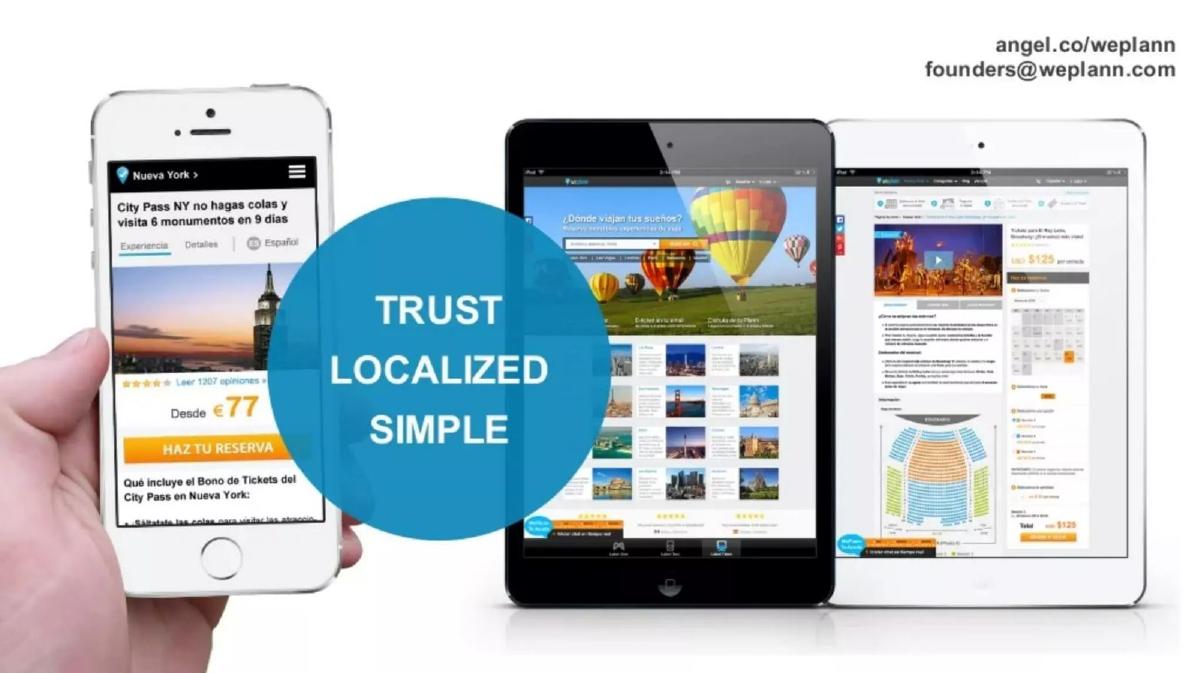
- The value proposition is distilled into three words: Trust, Localized, Simple (slide 6).
- The deck uses a 'Problem/Solution' visual sequence without using those words as headers (slides 2-6).
- Repeat customer spend is noted at $550 on slide 7, indicating strong retention or high-ticket items.
- The team slide (slide 9) uses flags to denote the international background of the founders, reinforcing the 'localized' strategy.
Introduction: The Lean Visual Pitch
The WePlann pitch deck is a 10-slide presentation from 2012 that focuses heavily on the Latin American (LatAm) travel market. At a time when global travel platforms like Expedia and TripAdvisor were dominant in English-speaking markets, WePlann identified a specific gap: the localized needs of the LatAm tourist. The deck is notable for its minimal use of text, relying instead on large-scale photography and bold metrics to tell a story of market friction and digital opportunity.
Slides 1-3: The Hook and the Trust Gap
Slide 1 serves as the title card, featuring a hand holding a smartphone displaying the WePlann interface against a backdrop of Times Square. The tagline is clear: "The Easiest Way for the LatAm Tourist to Book Vacation Activities." This immediately establishes the target demographic and the core service.
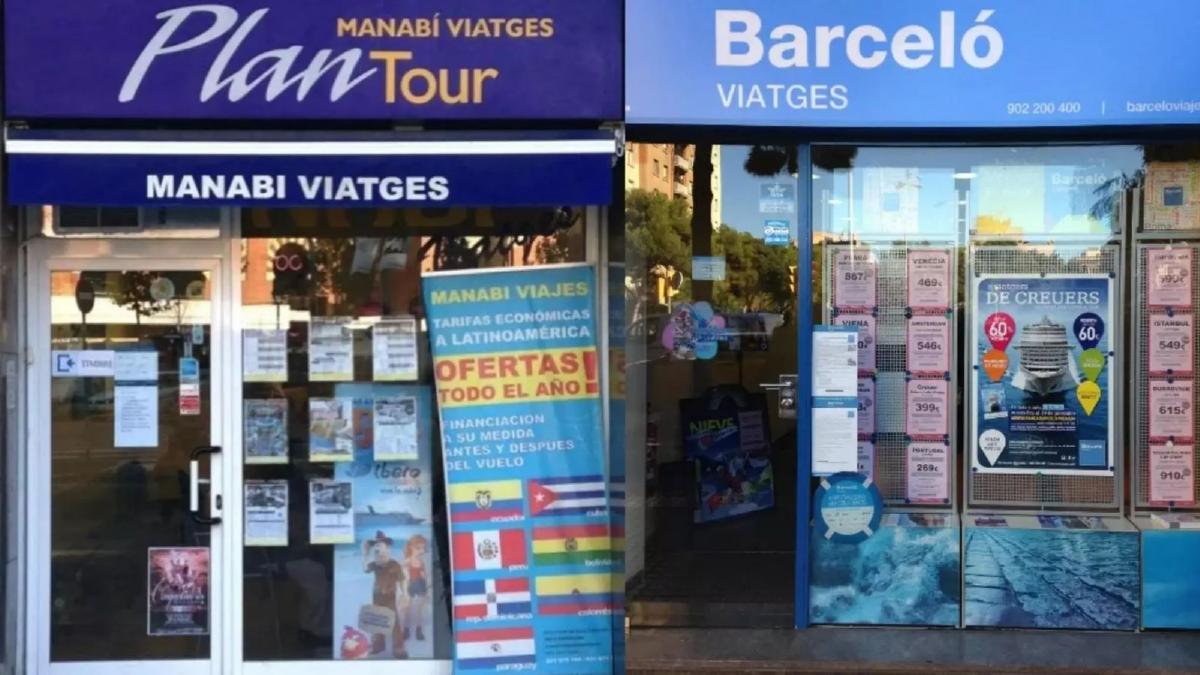
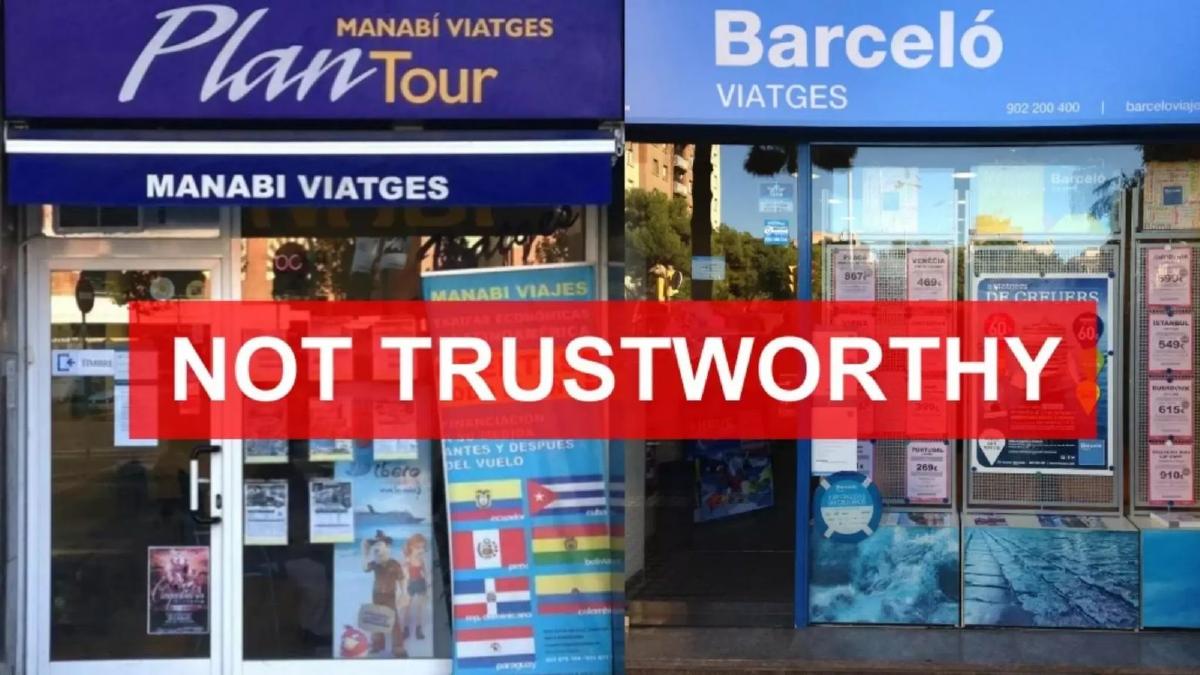
Slide 2 and Slide 3 function as a pair to illustrate the first half of the problem. Slide 2 shows two physical travel agency storefronts in what appears to be a Spanish-speaking region. Slide 3 overlays the text "NOT TRUSTWORTHY" in a bold red banner over the same image. This is a direct attack on the status quo, suggesting that the traditional brick-and-mortar method of booking travel in Latin America is outdated and lacks consumer confidence.
Slides 4-6: The Friction and the Solution
Slide 4 and Slide 5 address the second half of the problem: efficiency. Slide 4 shows a long, crowded queue of tourists at a historic site. Slide 5 overlays the red banner "WASTED TIME." By using these images, WePlann bypasses long descriptions of user pain points and appeals to the universal frustration of standing in line. It sets the stage for a digital solution that offers instant booking.
Slide 6 introduces the solution. It displays the WePlann interface across a smartphone, a tablet, and a laptop, emphasizing a multi-device strategy. A blue circle in the center contains three words: "TRUST, LOCALIZED, SIMPLE." This is the company's core value proposition. The slide includes contact information and an AngelList URL in the top right corner, which is a common practice for decks intended for early-stage investors.
Slide 7: The Unit Economics
Slide 7 is arguably the most important slide in the deck, titled "2015 TRACTION." It presents four staggering figures. First, it claims "$2,000,000+ GROSS REVENUES." Below this, it breaks down the unit economics: a "$7500 Lifetime Customer Value," a "$32 Customer Acquisition Cost," and a "$550 Repeat Customer Spend."
From an analytical perspective, an LTV of $7,500 against a CAC of $32 is an extraordinary ratio. In the context of travel, this likely refers to the total transaction value (Gross Merchandise Volume) rather than the net commission earned by WePlann. However, even as GMV, these numbers suggest a very high-intent customer base. The repeat spend of $550 indicates that once a user trusts the platform for one activity (like a $77 City Pass shown on slide 1), they return for higher-value experiences.
Slide 8: Market Opportunity and Growth
Slide 8 provides the macroeconomic justification for the business. Titled "ANNUAL ONLINE TRAVEL GROWTH & SIZE," it features a map of the Americas with growth percentages. It contrasts the mature US market (10% growth) with the explosive growth in Latin America: Mexico at 30%, Brazil at 35%, and Colombia and Argentina both at 60%.
A large blue circle highlights the "$10 BILLION LATAM TRAVEL ACTIVITIES MARKET." By citing PhocusWright Inc. as the source, the founders add third-party credibility to their claims. This slide effectively argues that while the US is a red ocean, Latin America is a blue ocean of rapid digital adoption.
Slides 9-10: Team and Partnerships
Slide 9 introduces the team: Oliver (CEO/Co-Founder), Dallas (CTO/Co-Founder), and Gina (Chief Creative/Co-Founder). The use of national flags (USA, Colombia, Spain) beneath their photos reinforces the "Localized" pillar of their value proposition. It suggests a team that understands both the technology of the US and the cultural nuances of the Spanish and Portuguese-speaking markets. However, the slide is missing any mention of their professional pedigree or past successes.
Slide 10 is the closing slide, featuring the logos of PayPal and MasterCard next to a laptop and tablet. This is intended to signal payment security and established partnerships, further addressing the "Trust" issue raised in Slide 3. The slide repeats the contact information, providing a clear call to action for interested investors.
What Works
The deck excels at visual storytelling . By using red banners to highlight "NOT TRUSTWORTHY" and "WASTED TIME," the founders create an emotional response to the problem before offering the solution. This is much more effective than a bulleted list of grievances.
The market growth slide is also a high point. It doesn't just say the market is big; it shows that the market is growing significantly faster than the US market, which makes a compelling case for why an investor should look at LatAm specifically. Finally, the traction metrics are presented with extreme clarity. Even if the LTV is based on gross bookings, the low CAC of $32 suggests a highly efficient marketing engine, likely driven by the social media word-of-mouth mentioned in the company's catalogue description.
What is Missing
The most glaring omission is the Ask . The deck never specifies how much capital is being raised or what the valuation expectations are. Furthermore, there is no Use of Funds slide. An investor finishing this deck knows the market is big and the unit economics are good, but they don't know what the founders intend to do with the next $25,000 or $500,000.
The Competitive Landscape is also absent. In 2012, companies like Viator (acquired by TripAdvisor in 2014) and GetYourGuide were already active. WePlann’s defense would likely be their localization (language, currency, local support), but they fail to explicitly map out how they win against global incumbents. Lastly, the Team Slide lacks depth. While the flags show geographic diversity, they don't show technical or operational competence. Investors generally want to see where the founders worked or went to school to gauge their ability to execute.
What a Founder Should Copy
Founders should emulate the simplicity of the value proposition . Distilling a complex e-commerce platform into "Trust, Localized, Simple" makes the brand easy to remember and understand. The use of regional growth data to highlight a specific geographic advantage is also a smart move, especially for startups operating outside of Silicon Valley.
Additionally, the traction slide layout is excellent. By putting the most impressive number ($2M+ Revenue) at the top and supporting it with three key circles of unit economics, the founders provide a snapshot of business health that can be absorbed in five seconds. This "glanceable" data is crucial for decks that are often reviewed quickly by busy analysts.
Conclusion
WePlann’s deck is a product of its time—a lean, Seed-stage presentation designed to capture interest rather than provide a full financial audit. Its strength lies in its focus on a specific, high-growth niche and its ability to communicate pain points through imagery. While it lacks the detail required for a Series A, it serves as a strong example of how to frame a regional opportunity to a global audience of investors.
Frequently asked questions
- What is the core problem WePlann is solving?
- WePlann addresses the lack of trust and efficiency in booking travel activities for Latin American tourists. Slides 2 through 5 use photography to illustrate that current options (physical travel agencies) are 'Not Trustworthy' and that booking in person results in 'Wasted Time' due to long queues. The solution is a localized, digital platform that simplifies the booking process for global attractions like New York City tours.
- How does WePlann justify its focus on the Latin American market?
- Slide 8 provides a regional breakdown of annual online travel growth. It highlights that while the USA is growing at 10%, Latin American markets are expanding much faster: Colombia and Argentina at 60%, Brazil at 35%, and Mexico at 30%. By framing the LatAm travel activities market as a $10 billion opportunity, they position themselves as the dominant player in a high-growth, underserved region.
- What are the key financial metrics presented in the deck?
- On slide 7, titled '2015 Traction,' the company lists four major figures: $2,000,000+ in gross revenues, a $7,500 Lifetime Customer Value, a $32 Customer Acquisition Cost, and a $550 Repeat Customer Spend. These metrics suggest a highly efficient business model with an LTV/CAC ratio of over 200x, which is exceptionally high for e-commerce and likely refers to gross booking value rather than net revenue.
- Who are the founders and what is their background?
- Slide 9 introduces the three co-founders: Oliver (CEO), Dallas (CTO), and Gina (Chief Creative). The slide uses icons of the US, Colombian, and Spanish flags to indicate their cultural and professional ties to the target markets. However, the slide lacks professional biographies, previous company exits, or specific industry experience, relying instead on visual representation of their international alignment.
- What is missing from this pitch deck?
- The deck is missing several standard components: a specific 'Ask' (how much money they want), a 'Use of Funds' breakdown, a competitor matrix, and a detailed product roadmap. It also lacks a slide on unit economics beyond the high-level LTV/CAC. The absence of these elements suggests the deck was designed to be a visual aid for a live pitch rather than a standalone document for deep due diligence.