Cheddar Up’s 16-slide deck is a study in narrative-driven fundraising. Rather than leading with complex fintech architecture, it uses the first four slides to tell a silent story of a parent struggling with paper checks, coffee stains, and lost permission slips. This emotional hook sets the stage for a solution that bridges the gap between digital payments and group administration. The deck effectively leverages early traction—citing hundreds of schools and backing from 500 Startups and Foundry Group—to validate a massive market of 530 million annual K-12 transactions. While it lacks explicit…
Key takeaways
- The deck uses a four-slide visual narrative (Slides 2-4) to establish the emotional pain point of manual school payments without using a single word of body text.
- Slide 5 clearly defines the value proposition: 'the easiest way to collect and track group payments.'
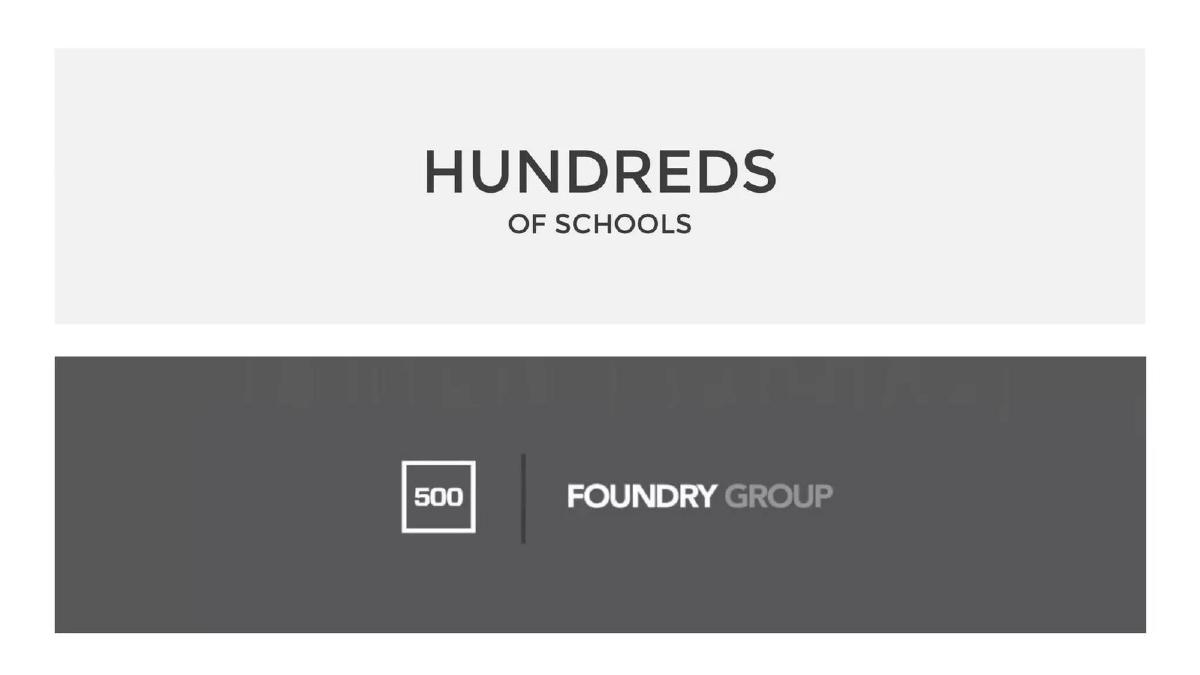
- Traction is validated on Slide 6 by highlighting 'Hundreds of Schools' and logos for 500 Startups and Foundry Group.
- The product is positioned as both a 'Payment Tool' and an 'Admin Tool' (Slide 11), distinguishing it from simple P2P payment apps.
- Slide 8 quantifies the impact of the solution, claiming a 54% increase in parent participation and a 67% increase in amount collected.
- Market sizing is calculated by multiplying 4,000 annual payments per school (Slide 9) by 132,656 K-12 schools to reach 530,624,000 total transactions (Slide 10).
- The team slide (Slide 13) emphasizes corporate pedigree with logos from Accenture, KPMG, HSBC, and Pivotal Labs.
- The deck identifies a secondary market beyond schools on Slide 15, including HOAs, sports teams, and fantasy leagues.
The Power of Visual Empathy in Fintech
The Cheddar Up pitch deck, used during their 2012 fundraising efforts, is a masterclass in establishing empathy before introducing technology. In a crowded payments landscape, the founders chose not to compete on transaction speeds or encryption protocols, but on the specific, messy reality of being a parent. By the time an investor reaches the first text-heavy slide, they have already been reminded of the frustration of lost checks and stained paperwork. This teardown examines how a 16-slide deck successfully navigated the transition from a niche school tool to a broader group payment platform.
Slides 1-4: The Silent Narrative
Slide 1 is a minimalist title slide featuring the company logo—an orange cube pierced by an arrow—and the name 'CHEDDAR UP.' There is no tagline here, which is a bold choice that forces the viewer to move to the next slide to understand the context.
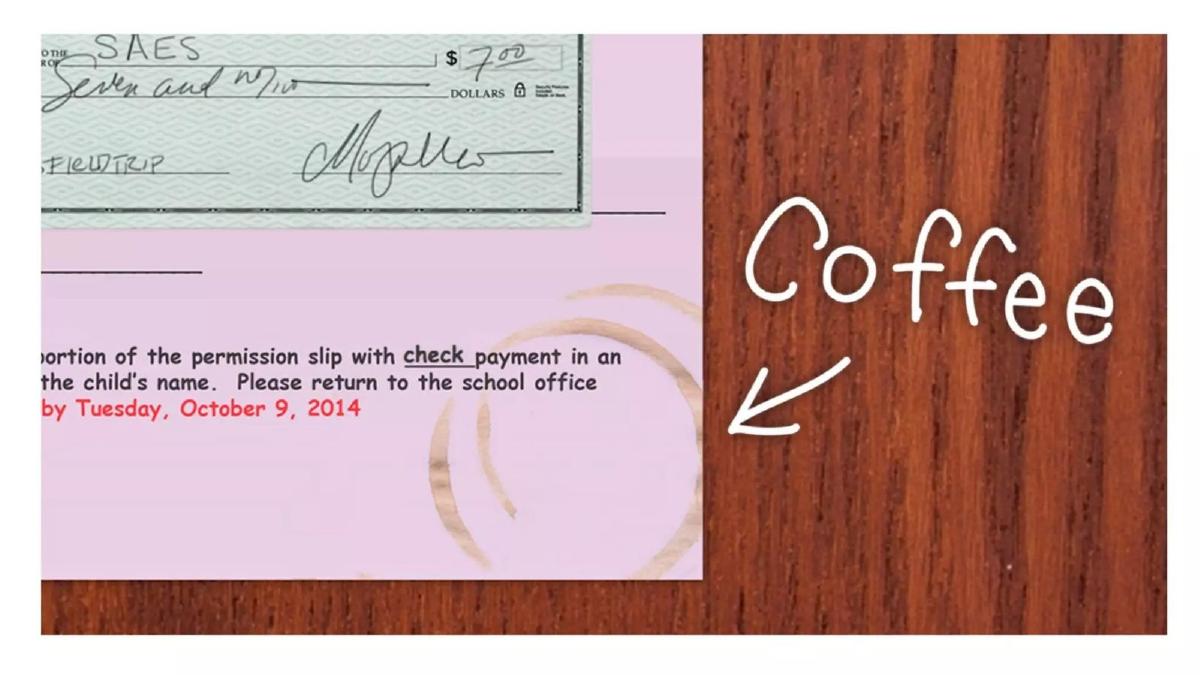
Slides 2, 3, and 4 function as a wordless storyboard. Slide 2 shows a young girl named 'Julia' at what appears to be a school field trip. Slide 3 zooms in on the 'Problem': a permission slip for a field trip due by 'Tuesday, October 9, 2014,' marred by a coffee ring, with a $7.00 check clipped to it. Slide 4 shows a child’s camouflage backpack with an arrow pointing to a side pocket where a check is tucked away. This sequence perfectly encapsulates 'backpack mail'—the unreliable method by which millions of dollars move between parents and schools daily. By showing rather than telling, Cheddar Up establishes a visceral pain point that any parent (or former student) recognizes instantly.
Slides 5-7: The Solution and Early Validation
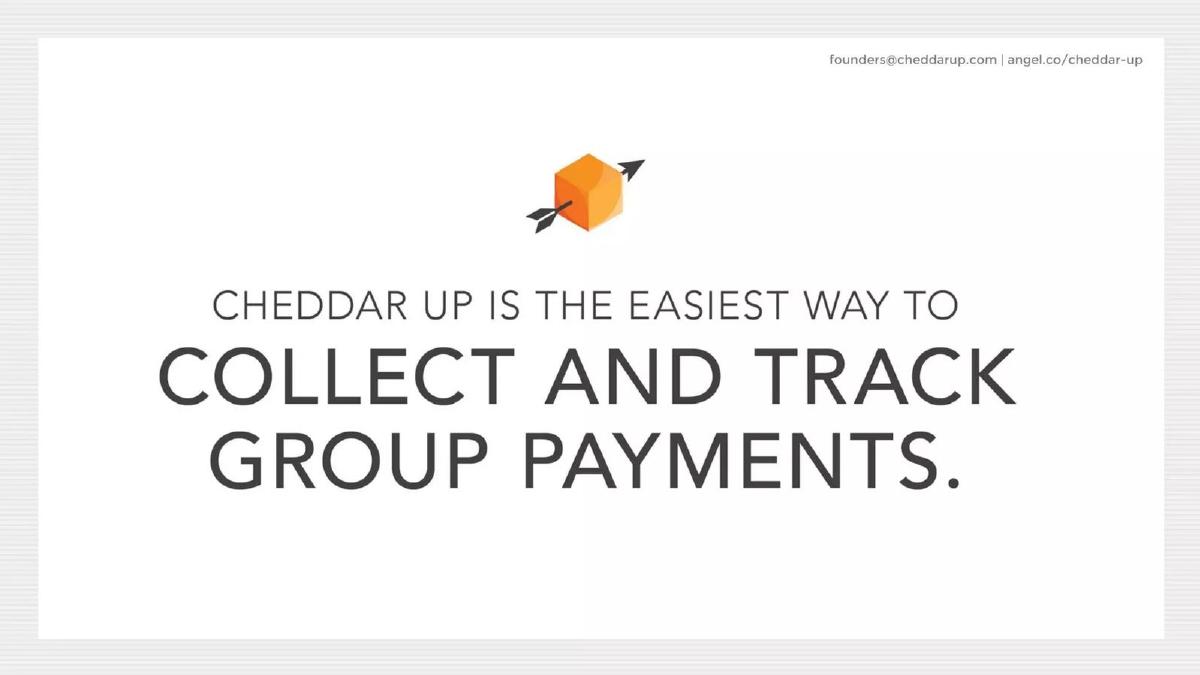
Slide 5 finally delivers the punchline: 'CHEDDAR UP IS THE EASIEST WAY TO COLLECT AND TRACK GROUP PAYMENTS.' The font is large, clean, and authoritative. It positions the product not just as a payment gateway, but as a tracking tool, which hints at the administrative side of the problem.
Slide 6 provides immediate social proof. It mentions 'HUNDREDS OF SCHOOLS' already using the platform and displays the logos for 500 Startups and Foundry Group . For a seed or early-stage deck, having institutional backing from firms of this caliber is often enough to keep an investor engaged through the rest of the presentation.
Slide 7 is a word cloud that illustrates the versatility of the platform. It lists use cases such as 'Yearbooks,' 'PTA dues,' 'Teacher gifts,' 'Spirit wear,' and 'Tournament fees.' This slide serves to expand the investor's mind regarding the frequency of these transactions; it isn't just a once-a-year field trip problem, but a weekly occurrence across multiple school departments.
Slides 8-10: Quantifying the Opportunity
Slide 8 focuses on 'RESULTS.' It uses two badge-style graphics to claim a 54% INCREASE in parent participation and a 67% INCREASE in the amount collected. These are powerful metrics because they suggest that the friction of cash and checks is actually preventing schools from receiving money. Cheddar Up isn't just moving existing payments online; it is unlocking capital that was previously lost to apathy or inconvenience.
Slide 9 begins the market sizing exercise. It states that the 'AVERAGE ELEMENTARY SCHOOL COLLECTS 4000 CHECKS AND CASH PAYMENTS.' This is a specific, verifiable data point that grounds the subsequent 'big number' slide. Slide 10 then does the math: 132,656 K-12 schools multiplied by those 4,000 payments equals 530,624,000 TRANSACTIONS . By focusing on transaction count rather than total dollar volume, Cheddar Up highlights the sheer scale of the administrative headache they are solving.
Slides 11-12: Product and User Experience
Slide 11 breaks the product down into two distinct pillars: a 'PAYMENT TOOL' and an 'ADMIN TOOL.' This is a critical distinction. Most payment apps (like Venmo or PayPal) focus on the sender. Cheddar Up focuses on the collector, providing the 'Admin' functionality needed to manage lists, exports, and tracking.
Slide 12 shows a product mockup on a tablet. The screen displays a 'Team Party for the Tough Cookies' collection, showing $120.00 collected. It lists individual payers like 'Anna Hart' and 'Katy Downhower,' along with their payment methods (Credit Card, e-Check, Cash). The interface looks clean and professional, reinforcing the 'easiest way' claim made earlier in the deck.
Slides 13-16: Team, Social Proof, and Expansion
Slide 13 introduces the team: Nichole Montoya (CEO), Molly DiCarlo (Product), Alex Terletskiy (Engineer), and Alex Shortle (Operations). Below their photos are logos of former employers, including Accenture, KPMG, HSBC, GSD&M, and Pivotal Labs . This communicates that while the problem (school payments) might seem 'small,' the team tackling it has experience in enterprise-grade finance and technology.
Slide 14 features a single, powerful testimonial from a Facebook user named Kat Keim Kirkpatrick: 'Oh dear God, why didn’t they create this years ago? Room moms will scream a collective “yes!”' This reinforces the emotional hook from the beginning of the deck with external validation.
Slide 15 is a collage of photos showing various groups: soccer teams, fantasy leagues, HOAs, and campus clubs. The text lists 'SPORTS TEAMS,' 'MEMBERSHIP DUES,' 'FANTASY LEAGUES,' 'HOAs,' and 'CAMPUS CLUBS.' This slide is the 'Future' slide, indicating that while they are starting with schools, the platform is built for any group that needs to collect money from members.
Slide 16 is the contact slide, providing the founders' email, the website URL, and an AngelList link. Notably, the deck ends here without a specific 'Ask' for a dollar amount or a breakdown of how funds will be used.
What Works in This Deck
The Cheddar Up deck is highly effective because it understands its audience. Investors are often parents themselves, and the visual storytelling in the first four slides bypasses the analytical brain and goes straight to a shared experience of frustration. By the time the deck introduces the market size of 530 million transactions, the investor already believes the problem is real.
The focus on 'Participation' and 'Amount Collected' as key metrics is also brilliant. It moves the conversation away from 'we are a cheaper way to pay' to 'we are a way to get more people to pay.' In the world of non-profits and schools, increasing participation is a much more valuable value proposition than simply saving a few cents on transaction fees.
What Is Missing
Despite its narrative strength, the deck leaves several critical questions unanswered. First, there is no Business Model slide. While it is implied that they take a fee on transactions, the specific take rate or subscription model is never mentioned. Second, there is no Competition slide. In 2012, platforms like PayPal were already dominant, and specialized tools like TeamSnap were emerging. Investors would want to know how Cheddar Up defends its niche.
Finally, the lack of an Ask slide is a significant omission. While this deck may have been used as a 'teaser' or a presentation deck rather than a leave-behind, a standard pitch deck should clearly state how much capital is being raised and what milestones that capital will help the company achieve. We know from catalogue facts that they raised $2.2 million, but the deck itself doesn't explain why that specific amount was needed.
What a Founder Should Copy
Founders should emulate the visual problem-setting found in Slides 2-4. If your product solves a physical-world friction, show that friction. Don't just write 'Manual processes are inefficient' on a slide; show a coffee-stained check in a child's backpack. This creates an immediate connection with the viewer.
Additionally, the bottom-up market sizing on Slides 9 and 10 is a great model. Instead of citing a vague $10 billion industry report, Cheddar Up started with a single unit (one school) and scaled it by a known quantity (total schools). This makes the 'Big Number' feel earned and logical rather than speculative. Finally, the use of pedigree logos on the team slide is a standard but essential tactic for building credibility quickly when the founders themselves might not yet be household names in the tech industry.
Frequently asked questions
- What is the primary problem Cheddar Up aims to solve?
- Cheddar Up targets the friction associated with 'backpack mail'—the manual process of parents sending cash or checks to schools for various activities. Slides 3 and 4 illustrate this through images of coffee-stained permission slips and checks tucked into children's backpacks. The company aims to digitize these small-scale, high-frequency group transactions that are often ignored by larger payment processors.
- How does Cheddar Up prove its market size?
- The deck uses a bottom-up approach to market sizing. Slide 9 states that the average elementary school collects 4,000 checks and cash payments annually. Slide 10 then scales this figure across the 132,656 K-12 schools in the United States, arriving at a total addressable market of over 530 million transactions per year. This focuses on transaction volume rather than just dollar value.
- What metrics does the deck use to show product efficacy?
- Instead of focusing purely on revenue, Slide 8 highlights two key performance indicators: a 54% increase in parent participation and a 67% increase in the total amount collected. These metrics suggest that by removing payment friction, the platform actually grows the 'pie' for the organizations using it, making it an essential tool rather than just a convenience.
- Who are the key investors mentioned in the deck?
- Slide 6 prominently features the logos of 500 Startups (now 500 Global) and Foundry Group. According to catalogue facts, the company raised a total of $2,200,000. The inclusion of these high-profile venture capital logos serves as a powerful signal of institutional validation to other potential investors viewing the deck.
- What is missing from the Cheddar Up pitch deck?
- The deck is notably missing a specific 'Ask' slide detailing how much capital is being raised and how it will be spent. It also lacks a formal competition slide, a business model slide explaining fee structures, and detailed financial projections. It relies heavily on the strength of the problem-solution fit and early traction rather than granular financial modeling.