The Chefs for Seniors pitch deck is a concise, 9-slide presentation that leans heavily on the 'show, don't tell' philosophy. By utilizing full-bleed photography and minimal text, the founders establish a clear emotional connection to the problem—senior malnutrition and isolation—before pivoting to robust business metrics. The deck reports a 97% monthly retention rate and a $4,000 annual revenue per client, suggesting a highly sticky service model. However, the deck is notably missing a formal 'Ask' slide, a detailed competitive landscape, and a clear roadmap for geographic expansion beyond it…
Key takeaways
- The company targets a $20B meals market specifically for the Boomer demographic, who hold more than half of US assets (Slide 2).
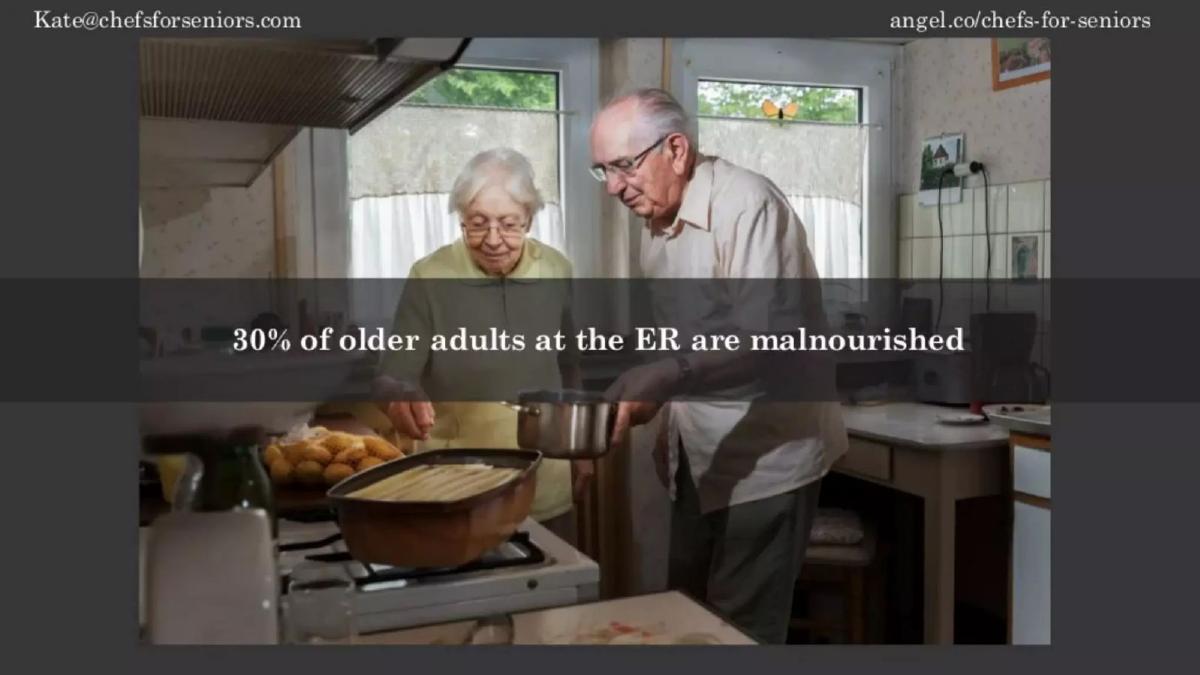
- A critical problem identified is that 30% of older adults at the ER are malnourished, highlighting a health-related urgency (Slide 4).
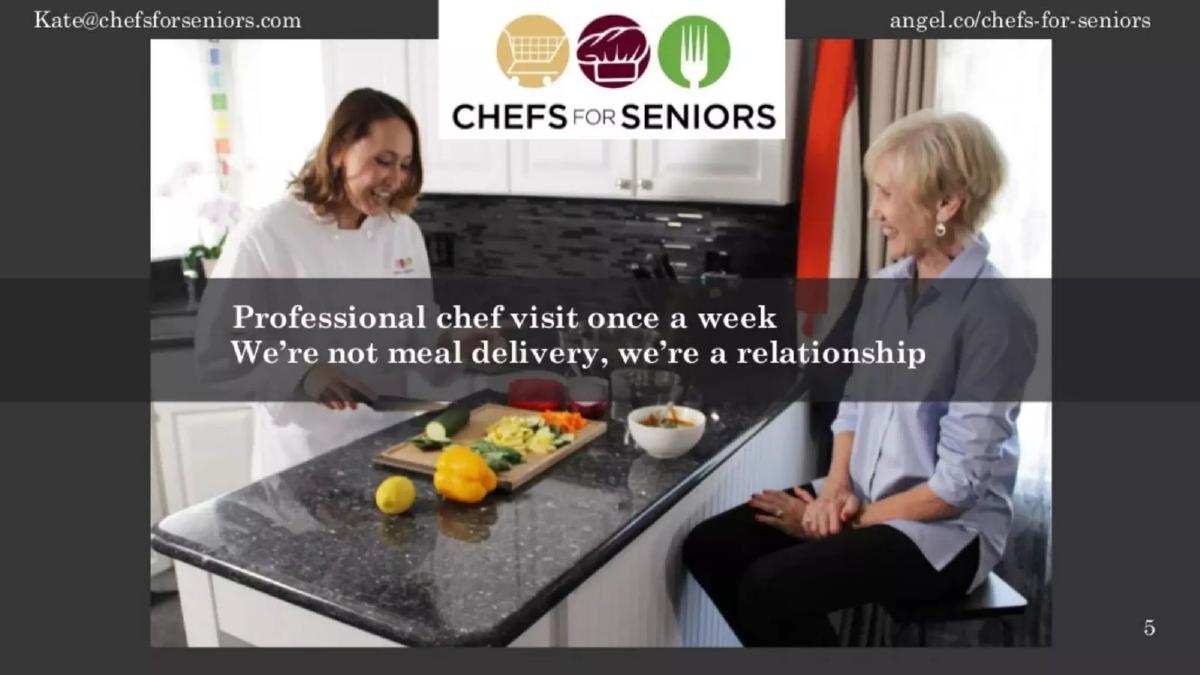
- The service differentiates itself from meal delivery by positioning as a 'relationship' with weekly professional chef visits (Slide 5).
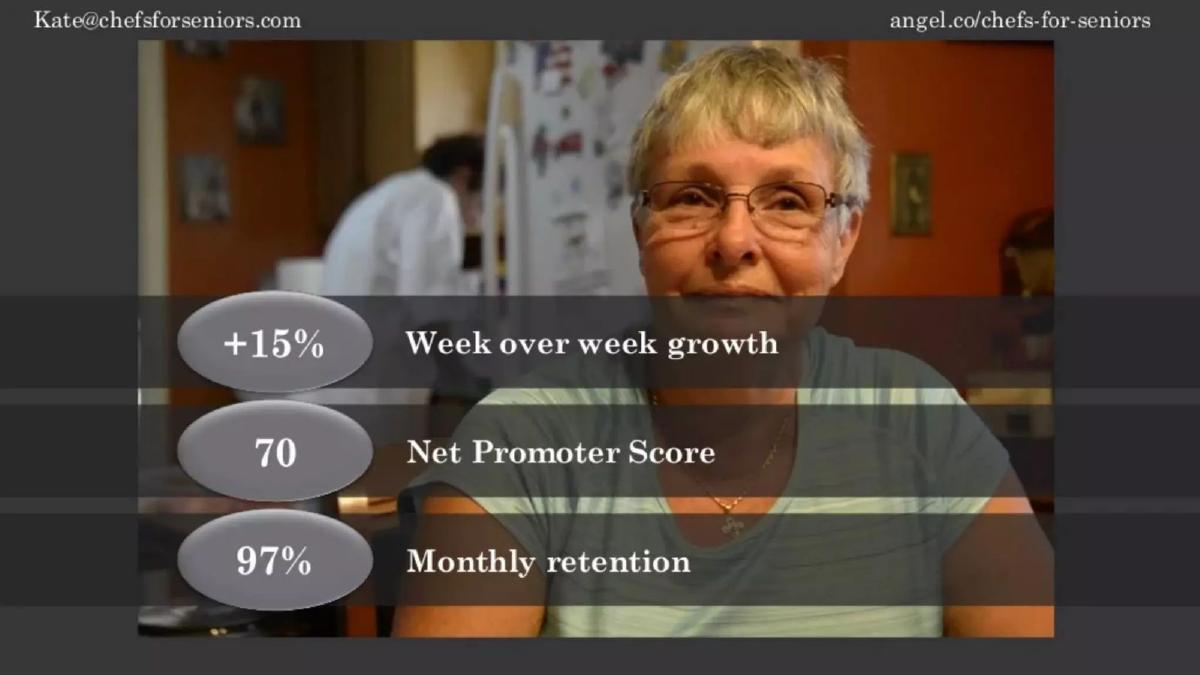
- The business demonstrates strong early traction with +15% week-over-week growth and a Net Promoter Score of 70 (Slide 6).
- Monthly retention is exceptionally high at 97%, indicating a very low churn rate for the service (Slide 6).
- Unit economics are clearly defined: $4,000 annual revenue per client against a $150 Customer Acquisition Cost (Slide 7).
- The company operates with a 40% gross margin, providing a clear path to profitability at scale (Slide 7).
- The leadership team blends high-level strategy (McKinsey, Berkeley Haas) with practical industry experience in restaurant ownership (Slide 8).
Executive Summary: The Power of Simplicity
The Chefs for Seniors pitch deck, used for their 2013 pre-seed round, is a masterclass in minimalist storytelling. At only 9 slides, it manages to convey a deep emotional problem, a clear solution, and impressive unit economics. While many modern decks suffer from 'information density,' this deck uses high-quality imagery to keep the focus on the human element of the business: the seniors themselves. According to catalogue facts, the company raised $125,000 off the back of this narrative, focusing on the Madison, Wisconsin area before expanding.
Slides 1-4: Establishing the Emotional and Market Context
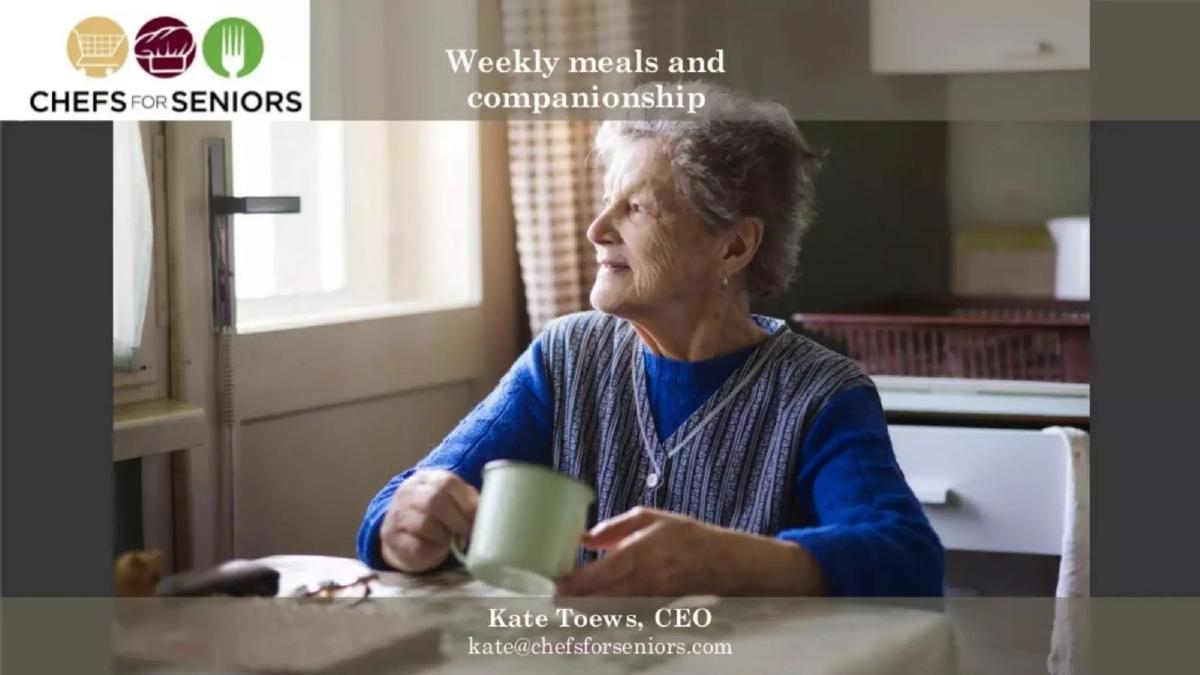
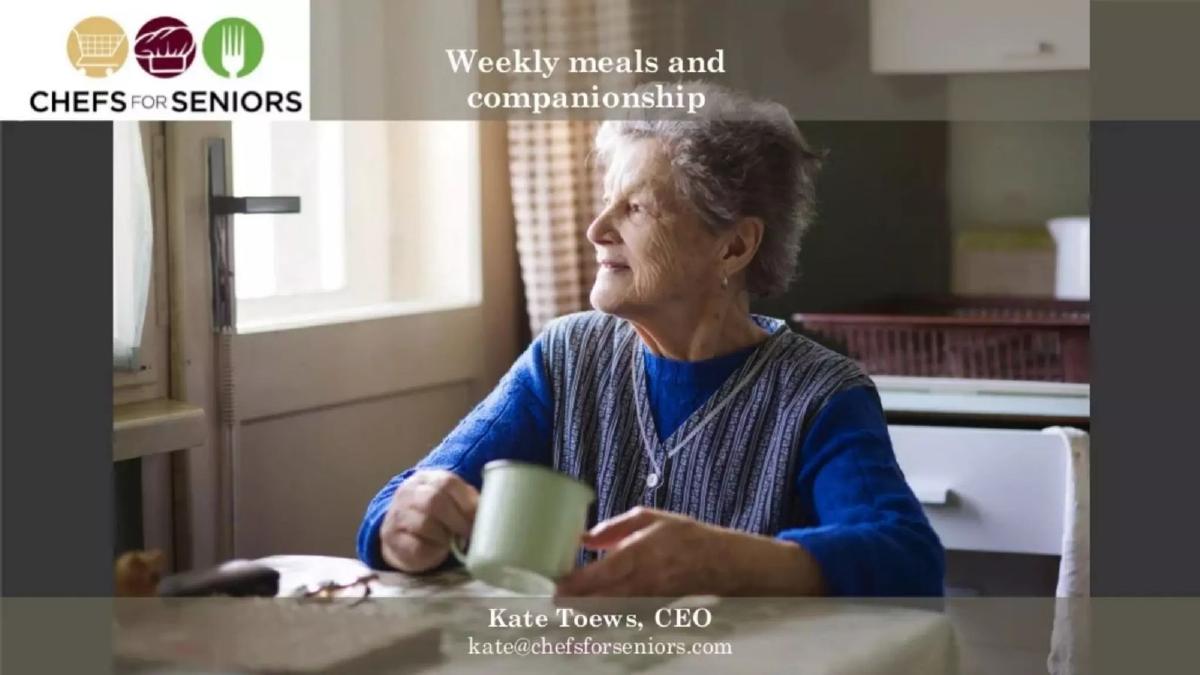
Slide 1 introduces the brand with the tagline 'Weekly meals and companionship.' The inclusion of 'companionship' is a strategic choice; it signals that this is not just a logistics or food company, but a service-oriented business addressing loneliness. The slide features Kate Toews as CEO and provides her direct contact information.
Slide 2 tackles the market size. It identifies the target demographic as 'Boomers' and makes two bold claims: this group holds more than half of US assets, and the meals market specifically for seniors is worth $20 billion. This framing moves the service from a niche 'nice-to-have' to a massive market opportunity targeting the wealthiest demographic in the country.
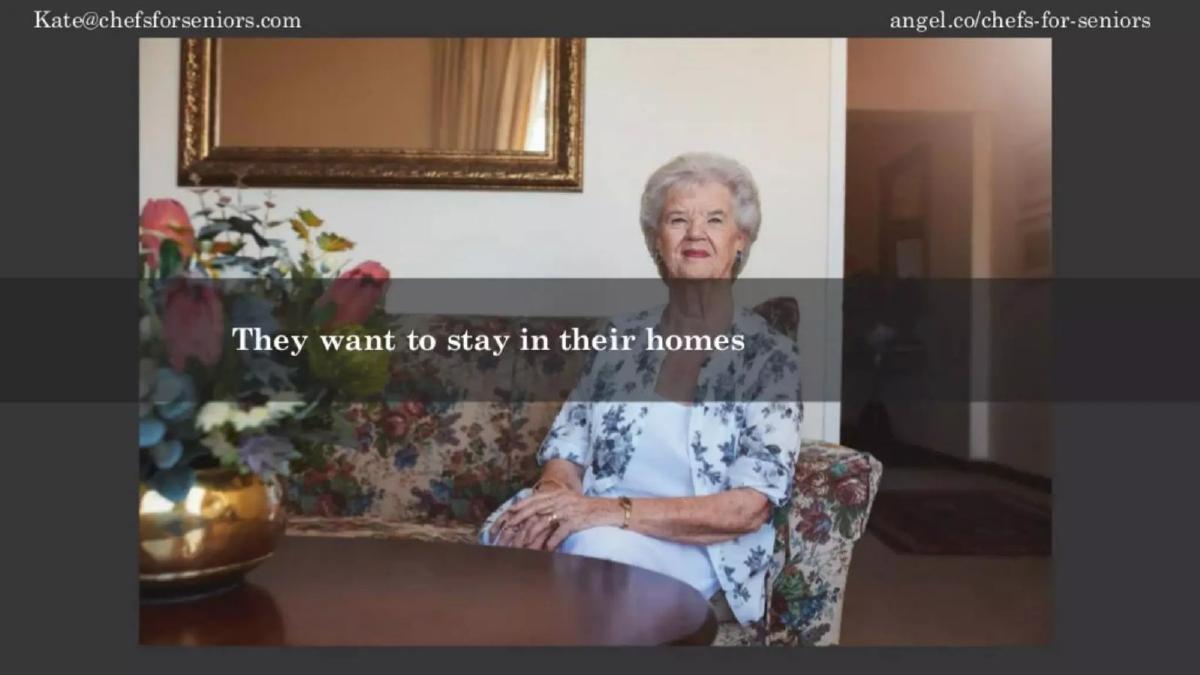
Slide 3 and Slide 4 focus on the 'Why.' Slide 3 uses a simple, evocative image of a senior woman in her living room with the text 'They want to stay in their homes.' This taps into the 'aging in place' movement. Slide 4 provides the 'hard' reason for the service: '30% of older adults at the ER are malnourished.' By linking the service to health outcomes, the founders elevate the business from a convenience play to a health necessity.
Slides 5-7: The Solution and The Math
Slide 5 defines the product. It explicitly states, 'Professional chef visit once a week' and 'We’re not meal delivery, we’re a relationship.' This is a crucial distinction. Meal delivery is a commoditized, low-margin business with high churn. A 'relationship' implies higher switching costs and better retention, which the following slides attempt to prove.
Slide 6 presents the traction metrics. The company claims +15% week-over-week growth, a Net Promoter Score (NPS) of 70, and a staggering 97% monthly retention rate. In the world of early-stage startups, a 97% retention rate is elite. It suggests that once a senior starts the service, they rarely cancel, creating a highly predictable revenue stream.
Slide 7 breaks down the unit economics. The figures are specific and compelling: $4,000 in annual revenue per client, a 40% gross margin, and a $150 Customer Acquisition Cost (CAC). If a client generates $4,000 in revenue at a 40% margin, that is $1,600 in gross profit per year. Against a $150 CAC, the payback period is less than two months, and the LTV/CAC ratio is remarkably high, even if a client only stays for one year.
Slides 8-9: The Team and The Recap
Slide 8 introduces the team. The pedigree is strong: Kate Toews (CEO) has McKinsey & Company and Berkeley Haas on her resume. Barrett Allman (Co-Founder/Chef) provides the 'street cred' for the culinary side, having owned and operated multiple restaurants. Nathan Allman (Co-Founder) rounds out the trio. This combination of 'blue chip' consulting and 'in-the-trenches' restaurant experience addresses both the scalability and the quality control aspects of the business.
Slide 9 is a curious choice for a final slide. It repeats the metrics from Slide 6 (+15% WoW growth, 70 NPS, 97% retention) over a new background image of a chef preparing food. While it reinforces the company's strengths, it misses the opportunity to make a final 'Ask' or provide a vision for the future.
What Works in This Deck
The Unit Economics: Slide 7 is the strongest part of the deck. For a pre-seed investor, seeing a $150 CAC against a $4,000 annual revenue stream is an immediate 'green flag.' It shows the founders understand their numbers and have a model that can theoretically scale profitably.
Emotional Resonance: The use of large, high-quality photos of seniors (Slides 1-4) makes the problem feel real. It forces the investor to think about their own parents or grandparents, creating an emotional hook that data alone cannot achieve.
Clear Differentiation: By explicitly stating 'We’re not meal delivery' on Slide 5, the company avoids being compared to high-burn companies like Blue Apron or HelloFresh. They are selling a service and a relationship, which justifies the higher price point and explains the high retention.
What is Missing
The Ask: This is the most glaring omission. The deck does not state how much money the company is raising, the valuation they are seeking, or what they plan to do with the funds. An investor finishing this deck would have to ask, 'So, what do you want from me?'
Operations and Scaling: The deck explains what the service is, but not how it scales. How do they recruit chefs? How do they ensure food safety? How do they manage scheduling? For a service business, these operational hurdles are usually where the business succeeds or fails.
Competitive Landscape: There is no mention of competitors. Whether it's traditional 'Meals on Wheels,' home health aides who cook, or high-end grocery delivery, the deck acts as if Chefs for Seniors operates in a vacuum. Investors want to know why this model wins against existing alternatives.
What a Founder Should Copy
The 'Metric Trio': Founders should emulate the way Slide 6 groups growth, satisfaction (NPS), and retention. These three numbers together tell a complete story of a healthy, growing business that customers love.
Pedigree Alignment: The team slide (Slide 8) does a great job of showing why this specific team is right for this specific problem . They didn't just list schools; they highlighted restaurant ownership and consulting experience, which are the two pillars of a scalable service business.
Focus on LTV/CAC: Even at the pre-seed stage, having a grasp on your acquisition costs versus your revenue per user (Slide 7) sets you apart from founders who are only focused on 'user growth' without a path to profitability.
Final Thoughts
The Chefs for Seniors deck is a 'lean' pitch. It relies on the strength of its early retention data and the professional background of its founders to carry the weight. While it lacks the polish and comprehensive detail of a Series A deck, its focus on the 'Boomer' market and the high-margin nature of the service makes it a highly effective tool for a $125,000 pre-seed raise. It proves that you don't need 20 slides to get an investor's attention—you just need three great metrics and a clear problem to solve.
Frequently asked questions
- What is the core value proposition of Chefs for Seniors?
- Chefs for Seniors provides weekly in-home meal preparation and companionship. Unlike standard meal delivery services, a professional chef visits the client's home to prepare 10 servings of meals in two hours. This model addresses both nutritional needs—noting that 30% of seniors in the ER are malnourished—and the social isolation often felt by seniors who wish to age in place.
- How does the company justify its market opportunity?
- The deck points to the 'Boomer' demographic, noting they hold more than half of all US assets. It specifically identifies a $20 billion meals market just for seniors. By focusing on the desire of seniors to stay in their own homes, the company positions itself as a necessary service for the 'aging in place' trend rather than a luxury culinary service.
- What are the key financial metrics presented in the deck?
- The deck highlights three primary financial pillars: an annual revenue of $4,000 per client, a 40% gross margin, and a Customer Acquisition Cost (CAC) of $150. With a $4,000 LTV (Life Time Value) implied by the high revenue and 97% retention, the LTV/CAC ratio appears exceptionally strong for a pre-seed stage company.
- Who are the founders and what is their background?
- The team consists of Kate Toews (CEO), who brings experience from McKinsey & Company and an MBA from Berkeley Haas; Barrett Allman (Co-Founder/Chef), who has owned and operated multiple restaurants; and Nathan Allman (Co-Founder), a graduate of the University of Wisconsin-Madison. This mix provides both operational culinary expertise and institutional business strategy.
- What critical information is missing from this pitch deck?
- The deck lacks a 'Fundraising Ask' slide, meaning investors don't know how much capital is being raised or what the milestones are. It also omits a competitor analysis, a detailed marketing strategy, and a technology roadmap. Furthermore, there is no mention of how the service scales operationally (e.g., chef recruitment and training) across different geographies.