emocha health, now known as Scene Health, presents a compelling case for solving medication nonadherence through technology-enabled Directly Observed Therapy (DOT). The deck is heavily weighted toward clinical validation and operational mechanics, specifically targeting the high-stakes transplant market. By citing 15 peer-reviewed studies and showcasing partnerships with institutions like Johns Hopkins and the NIH, the company establishes significant scientific authority. However, the deck is notably silent on traditional venture metrics: there is no slide detailing the specific investment as…
Key takeaways
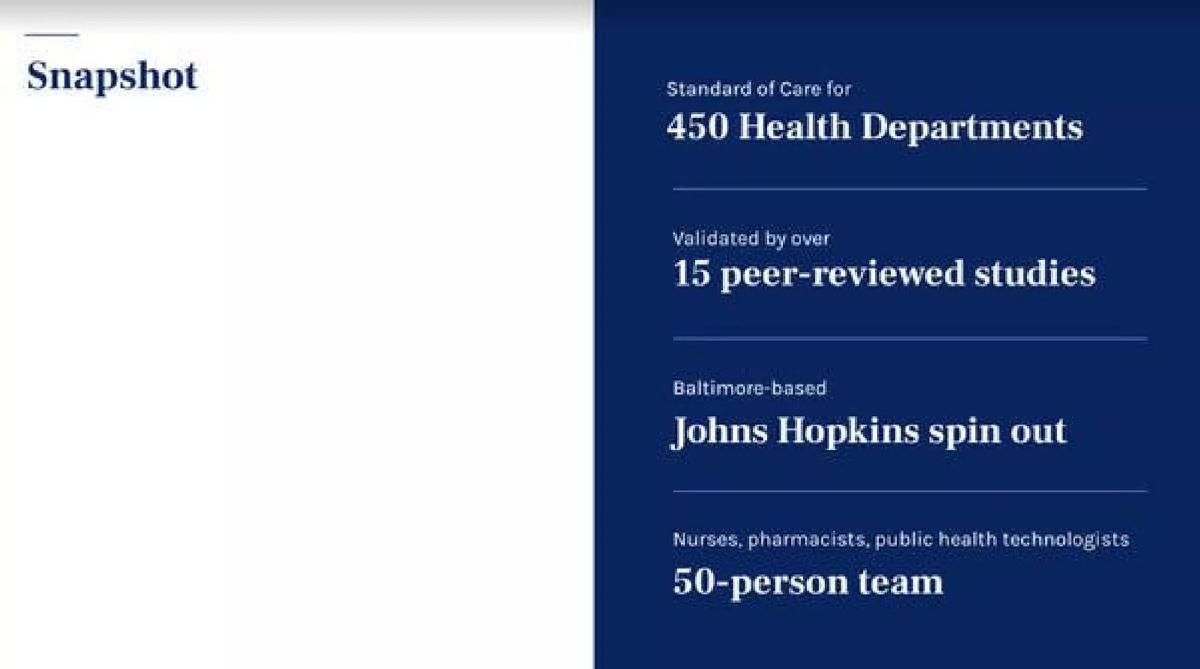
- The company positions itself as a Johns Hopkins spin-out with a 50-person team of clinicians and technologists on slide 2.
- Clinical validation is a core pillar, with slide 12 citing 15 peer-reviewed studies and adherence rates as high as 98% for Hepatitis C patients.
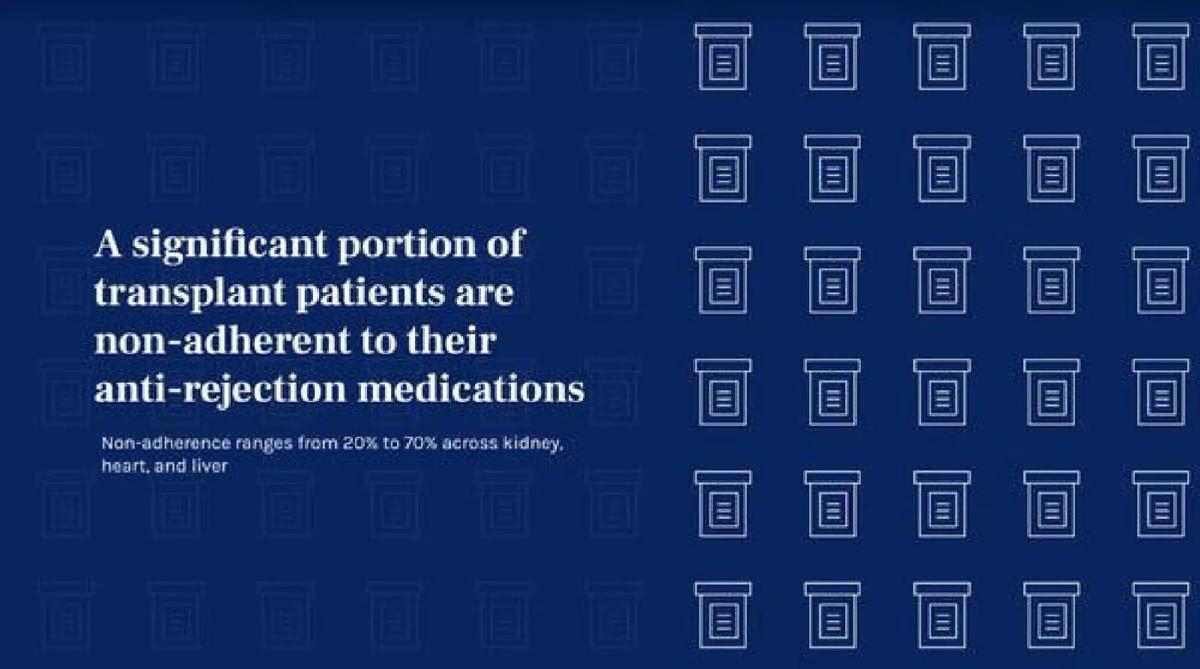
- The deck identifies a specific high-value niche in transplant patients, where non-adherence ranges from 20% to 70% according to slide 5.
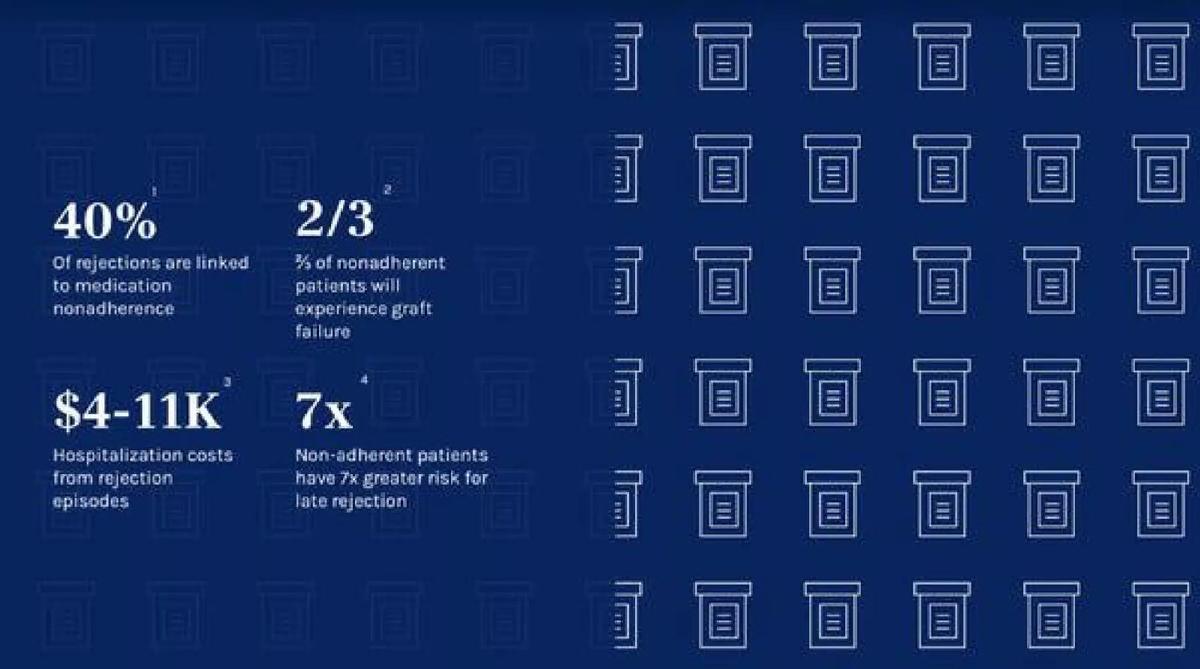
- Financial impact is quantified on slide 6, noting that hospitalization costs from rejection episodes range between $4K and $11K.
- The service model is hybrid, utilizing a 'Transitional Care Team' of pharmacists, nurses, and coaches to review video check-ins as shown on slide 11.
- The platform provides granular data to providers, including a 92% average adherence rate for active patients on slide 16.
- The deck lacks a formal 'Ask' slide, omitting the amount of capital sought and the intended use of funds.
- There is no dedicated team slide featuring individual executive backgrounds or previous successes.
Introduction: The Clinical Approach to Digital Health
emocha health, now operating as Scene Health, presents a deck that is less about 'disruption' and more about 'validation.' In a crowded digital health market, the company differentiates itself by focusing on the gold standard of adherence: Directly Observed Therapy (DOT). The deck, consisting of 18 slides, is a masterclass in using clinical data to justify a service-heavy technology model. While it lacks the aggressive financial forecasting typical of Silicon Valley pitches, it compensates with institutional credibility and hard outcomes data.
The Hook and Institutional Credibility
Slide 1: Title The deck opens with a simple, high-quality image of a healthcare provider and patient, establishing the human-centric nature of the brand. The tagline, 'Support every patient at every dose,' immediately defines the mission as granular and persistent rather than a one-time intervention.
Slide 2: Snapshot This is a high-impact 'why us' slide. It lists four critical facts: emocha is the standard of care for 450 health departments, validated by over 15 peer-reviewed studies, a Johns Hopkins spin-out, and powered by a 50-person team. By placing the Johns Hopkins pedigree and the 15 studies upfront, the company preemptively answers questions about efficacy and scientific rigor.
Defining the Problem and Solution
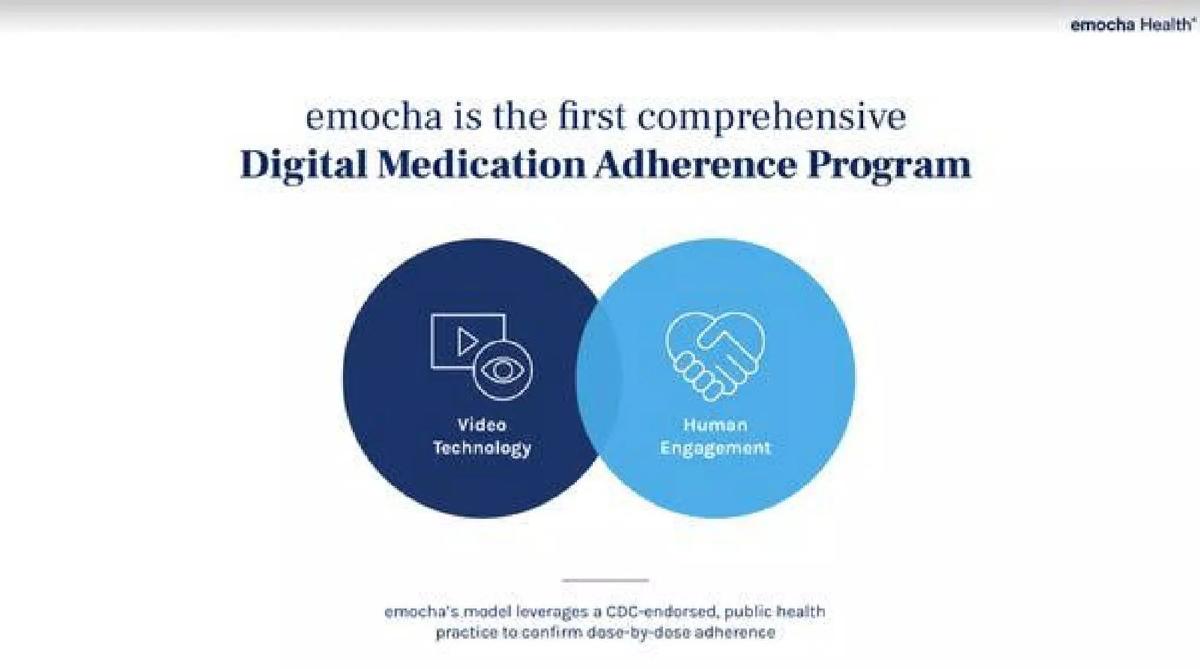
Slide 3: The Program This slide uses a simple Venn diagram to show the intersection of 'Video Technology' and 'Human Engagement.' It explicitly mentions that the model leverages a CDC-endorsed public health practice. This is a strategic move to align a new technology with a pre-existing, trusted methodology.
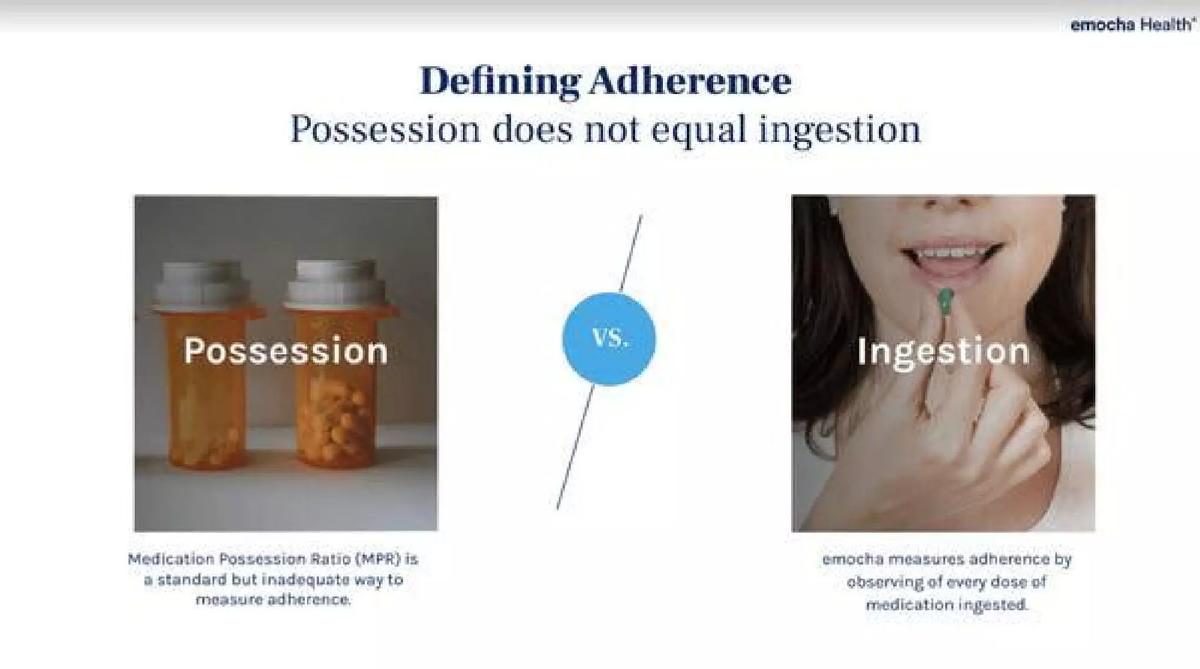
Slide 4: Defining Adherence This is the 'Insight' slide. It contrasts 'Possession' (having the pills) with 'Ingestion' (taking the pills). By stating that 'Possession does not equal ingestion,' emocha identifies the flaw in current pharmacy-based adherence metrics and positions their video-based 'Ingestion' tracking as the only true measurement.
Slide 5: Transplant Focus The deck narrows its focus to transplant patients. It notes that non-adherence in this group ranges from 20% to 70%. This is a smart tactical choice; transplant patients are high-cost, high-risk, and have a clear, measurable outcome (graft survival), making the ROI of an adherence program easier to prove.
Slide 6: The Cost of Failure Here, the company quantifies the problem. 40% of rejections are linked to nonadherence, 2/3 of nonadherent patients experience graft failure, and hospitalization costs range from $4K to $11K. These figures provide the 'economic engine' for the pitch, showing that preventing even a few failures pays for the service.
The Product and Service Model
Slide 7: Challenges A diagram illustrates the complexity of post-transplant life, grouping issues into Medication Problems, Social Determinants of Health, and Human Behavior & Biases. This slide justifies why a simple 'reminder app' isn't enough and why a comprehensive service is required.
Slide 8: Digital Medication Adherence Program This slide introduces the 'who.' It shows a Pharmacist, a Coach, and a Nurse surrounding a patient's video check-in. It outlines a timeline: Pharmacist-led review, 3 months of daily DOT, and ongoing support. It clarifies that this is a managed service, not just a software license.
Slide 9: Platform & Service Overview This slide breaks down the workflow for three personas: Patients (mobile app), Adherence Service (engagement and escalation), and the Transplant Team (analytics). It shows the software interface, proving the product is mature and functional.
Slide 10: Patient-facing Mobile App A product deep-dive listing features like symptom capture, financial incentives, and support for 22 languages. The inclusion of 'Financial Incentives' suggests a sophisticated understanding of behavioral economics in patient adherence.
Slide 11: Transitional Care Team This slide details the roles of the Pharmacists, Adherence Coaches, and Registered Nurses. It emphasizes that this team is designed to 'amplify' rather than replace the existing transplant care teams, a crucial distinction for avoiding friction during sales to hospitals.
Evidence and Outcomes
Slide 12: Clinical Evidence This is the strongest slide in the deck. It presents a row of 'cards' showing adherence rates across different diseases: 92-95% for TB, 98% for Hep C, 92% for Asthma, and 86% for Type 2 Diabetes. Each card features a logo from a major partner like the NIH or CDC. This level of proof is the primary driver for a 'Later' stage round.
Slide 13: References A list of four academic citations. While not visually exciting, this slide reinforces the 'science-first' brand identity established on slide 2.
Slide 14: Title (Repeat) A transition slide that repeats the cover imagery, likely used to signal a shift from 'what we do' to 'the opportunity.'
Slide 15: Transplant Opportunities & Program Value A summary of the value proposition: minimizing avoidable costs, decreasing rejection episodes, and protecting the 'second chance at life.' It appeals to both the CFO's wallet and the clinician's mission.
Partnerships and Data Granularity
Slide 16: Vision & Partners The vision is to make technology-enabled DOT the standard of care. The list of partners includes prestigious institutions like Johns Hopkins, University of Florida, and University of Miami. This slide proves market pull and institutional acceptance.
Slide 17: Detailed Analytics This slide shows the dashboard that providers see. It includes a 92% average adherence rate and a breakdown of 'escalations.' It proves that the system is capable of triaging patients, allowing doctors to focus only on the 6.8% who require intervention.
Slide 18: Scalable Messaging The final slide shows the messaging interface, highlighting 'suggested' responses for coaches. This hints at the scalability of the human element—using technology to make the adherence coaches more efficient through templated, context-aware communication.
What Works in the emocha health Deck
The primary strength of this deck is its unwavering focus on clinical validation . In the digital health space, many companies fail because they cannot prove their 'app' actually improves health outcomes. emocha avoids this by leading with peer-reviewed studies and partnership logos from the NIH and CDC. By the time an investor reaches the end of the deck, the efficacy of the solution is no longer a question.
The segmentation of the problem is also highly effective. By focusing on transplant patients, emocha identifies a high-stakes niche where the cost of failure is catastrophic. This makes the ROI calculation simple for a hospital or insurer: the cost of the emocha service is a fraction of the $11,000 cost of a single rejection episode. This 'high-value niche' strategy is a classic way for later-stage companies to prove their business model before expanding to broader, lower-margin chronic conditions.
What is Missing from the emocha health Deck
For a 'Later' stage deck, there are several glaring omissions that would typically be required for a successful fundraise. First, there is no Financials or Projections slide. Investors need to see revenue growth, burn rate, and a path to profitability. Second, there is no Ask slide. We know from catalogue facts that they raised $17.1M, but the deck itself does not state how much they are looking for or how they plan to spend it (e.g., sales team expansion, R&D, international growth).
Furthermore, the Team slide is generic . While it mentions a '50-person team,' it does not highlight the leadership. In venture capital, the 'who' is often as important as the 'what.' The absence of bios for the CEO, CTO, or Chief Medical Officer is a missed opportunity to build trust. Finally, there is no Competitive Landscape . The deck assumes emocha is the only solution, ignoring other digital pharmacy players or remote patient monitoring (RPM) platforms that might be competing for the same hospital budgets.
What a Founder Should Copy
Founders in regulated industries (HealthTech, EdTech, FinTech) should copy emocha's 'Evidence First' layout . Slide 12, which summarizes outcomes across different use cases with third-party validation, is a perfect template for building trust. It moves the conversation from 'we think this works' to 'the NIH proved this works.'
Another element to emulate is the Persona-Based Workflow shown on Slide 9. By showing exactly what the patient, the coach, and the doctor see, the company demystifies the 'black box' of their technology. It makes the operational reality of the business tangible. Lastly, the use of specific economic figures (like the $4K-$11K hospitalization cost on Slide 6) is a powerful way to anchor the value proposition in reality rather than vague promises of 'efficiency.'
Conclusion
The emocha health deck is a clinical powerhouse that lacks traditional venture flair. It is designed to win over Chief Medical Officers and conservative healthcare investors who prioritize safety and efficacy over 'growth at all costs.' While it leaves many financial questions unanswered, its heavy reliance on institutional partnerships and peer-reviewed data creates a formidable barrier to entry for competitors. For founders, it serves as a reminder that in certain industries, a single slide of hard data is worth ten slides of market size projections.
Frequently asked questions
- What is the primary problem emocha health is solving?
- The company addresses medication nonadherence, specifically the gap between 'possession' and 'ingestion.' Slide 4 argues that simply having a prescription does not guarantee a patient takes it. They focus on high-risk scenarios like organ transplants, where nonadherence leads to graft failure and significant hospitalization costs ($4K-$11K per episode, slide 6).
- How does the technology actually work for the patient?
- Patients use a mobile app to record daily video check-ins of themselves taking their medication (Directly Observed Therapy). Slide 10 highlights features like medication reminders, symptom capture, and asynchronous/live video. This data is then reviewed by a clinical team to confirm ingestion and address barriers related to social determinants of health.
- What clinical evidence does emocha provide to back their claims?
- Slide 12 is the most data-dense, showing adherence rates across various conditions: 92-95% for Tuberculosis, 98% for Hepatitis C, and 86% for Type 2 Diabetes. These results are backed by partners like the NIH and CDC, providing a level of clinical rigor rarely seen in early-stage pitch decks.
- Who are the key stakeholders in the emocha ecosystem?
- The platform serves three groups: patients (via the app), the emocha Adherence Service (coaches and nurses who monitor data), and the Transplant Team (clinical providers who receive analytics and reporting). Slide 9 illustrates this tri-part relationship, ensuring that the primary physician remains informed without being overwhelmed by daily data.
- What is missing from this deck that an investor would typically expect?
- This deck lacks several standard venture components: a clear financial roadmap, a competitive landscape analysis, and a specific funding ask. It also omits a team slide with names and faces, which is unusual for a 'Later' stage deck. It reads more like a clinical partnership proposal than a pure equity fundraising deck.