Encore's 2022 Seed deck is a masterclass in founder-market fit, leveraging the team's 8-year tenure at Spotify to establish immediate credibility. The 24-slide presentation addresses the increasing complexity of modern backend development, moving from simple database connections to the 'spaghetti' of Kubernetes, IAM, and CI/CD. By positioning Encore as a framework that 'understands' the application through static analysis, the founders argue they can reduce cycle times from hours to minutes. The deck successfully balances technical depth with a clear business model, transitioning from a $99/m…
Key takeaways
- Founder credibility is established on Slide 1 by highlighting 8 years spent scaling Spotify Premium.
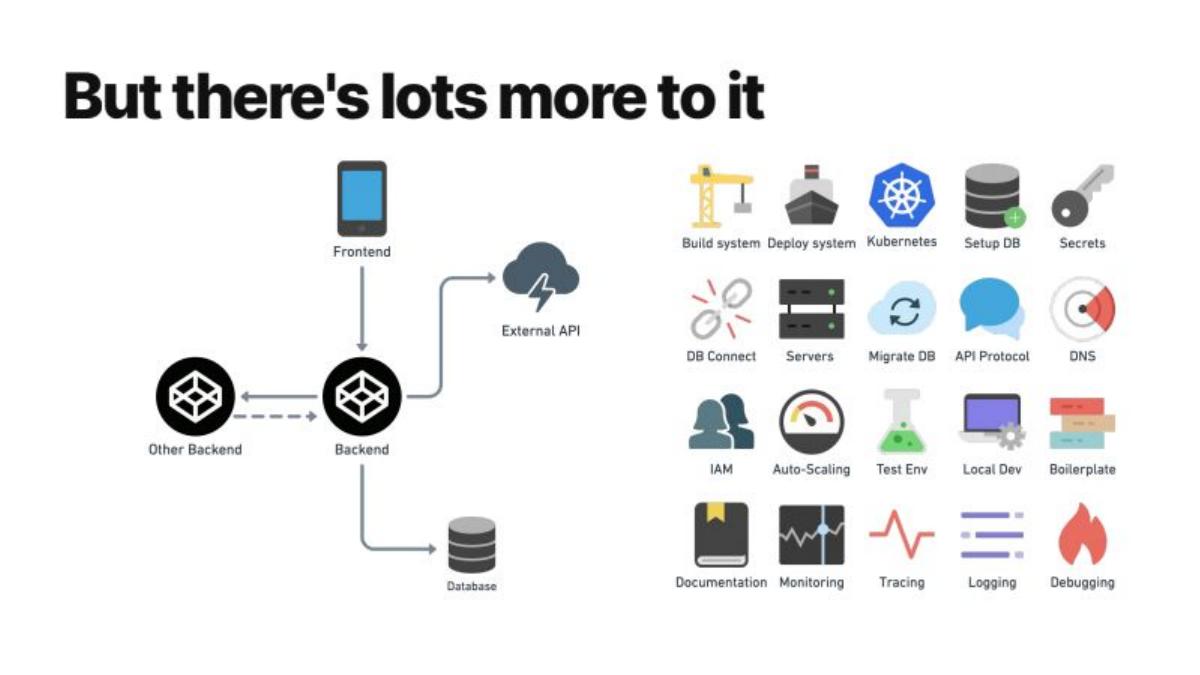
- The problem is visualized on Slide 5 as a chaotic grid of 20+ infrastructure icons including Kubernetes, IAM, and DNS.
- Technical differentiation is explained on Slide 7 through a three-step process: Coding, Parsing (static analysis), and Running.
- Efficiency gains are quantified on Slide 12, claiming a reduction in production loop cycle time from 'hours' to 'minutes'.
- Initial traction is strong, with 2,100+ GitHub stars and 500+ developers cited on Slide 16.
- The business model on Slide 21 starts with a $99/month per developer Pro plan for productivity.
- The go-to-market strategy on Slide 22 utilizes a bottom-up 'Hobbyist' growth loop to reach SMEs and Enterprises.
- The deck omits specific revenue figures, burn rate, and a detailed breakdown of the $3M use of funds.
The Narrative Arc: From Spotify to Infrastructure Automation
Encore’s pitch deck is a highly technical yet accessible argument for the simplification of the cloud. The company raised $3M in a 2022 Seed round led by Crane Venture Partners. The deck’s primary strength lies in its ability to take a complex, 'under-the-hood' problem—backend infrastructure—and present it as a massive productivity bottleneck that only experienced engineers (like those from Spotify) can solve.
Slides 1-3: The Hook and the High-Level Problem
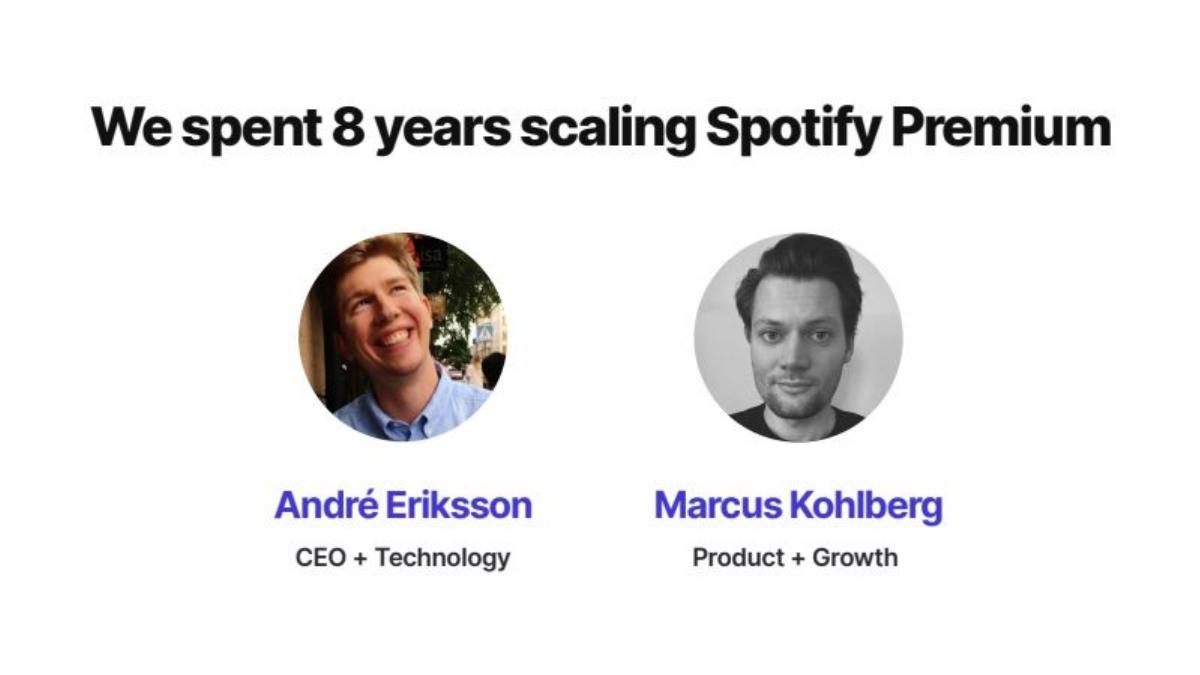
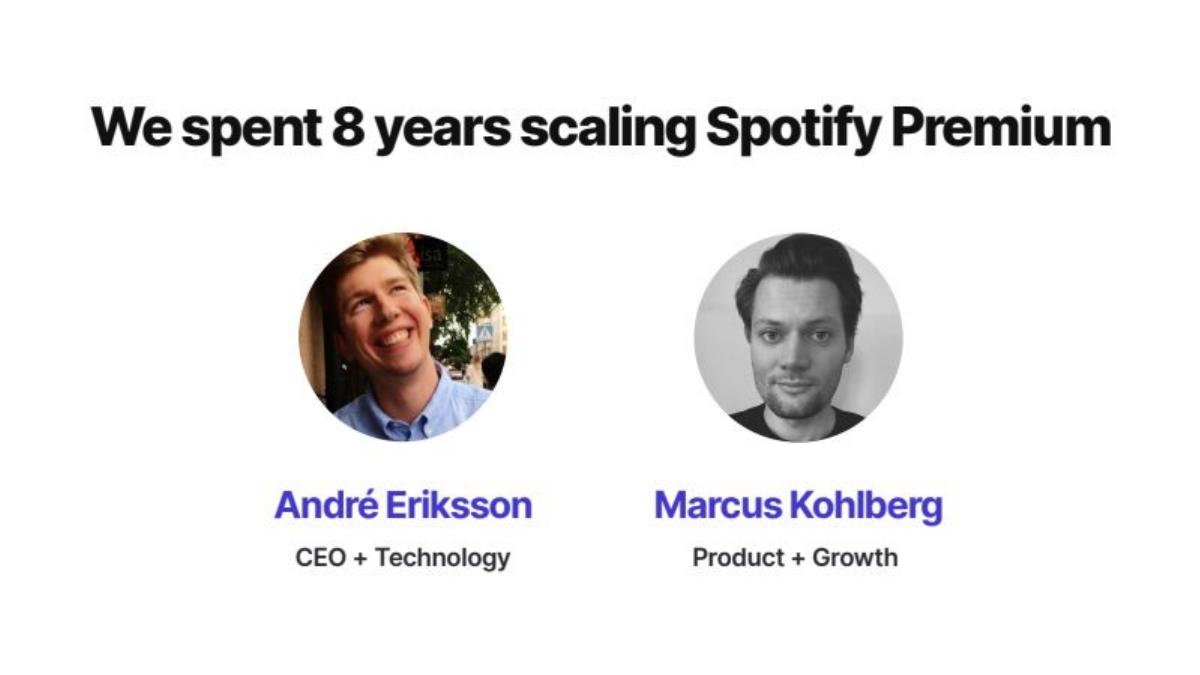
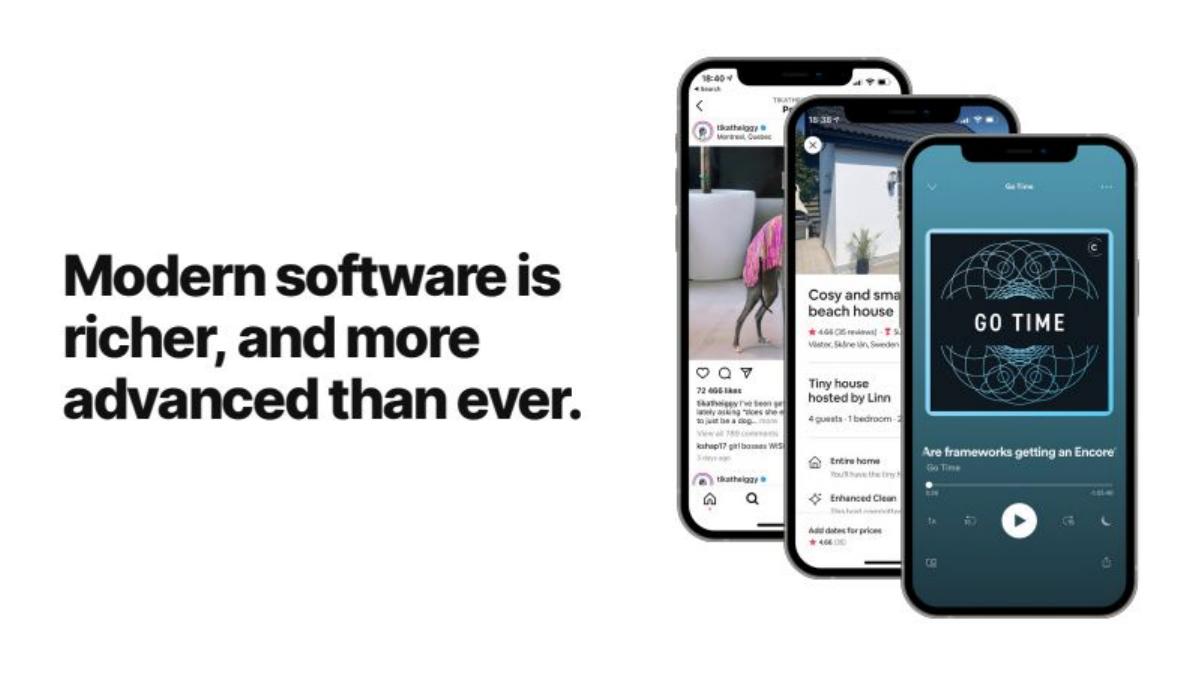
Slide 1 opens with a powerful credibility statement: "We spent 8 years scaling Spotify Premium." This immediately answers the 'Why You?' question. André Eriksson and Marcus Kohlberg position themselves as experts in high-scale systems before even mentioning the product. Slide 2 and Slide 3 set the stage, noting that while modern software is richer than ever, building it remains slow. There are no metrics here, just a shared industry sentiment intended to build rapport with technical investors.
Slides 4-6: Visualizing the 'Plumbing' Problem
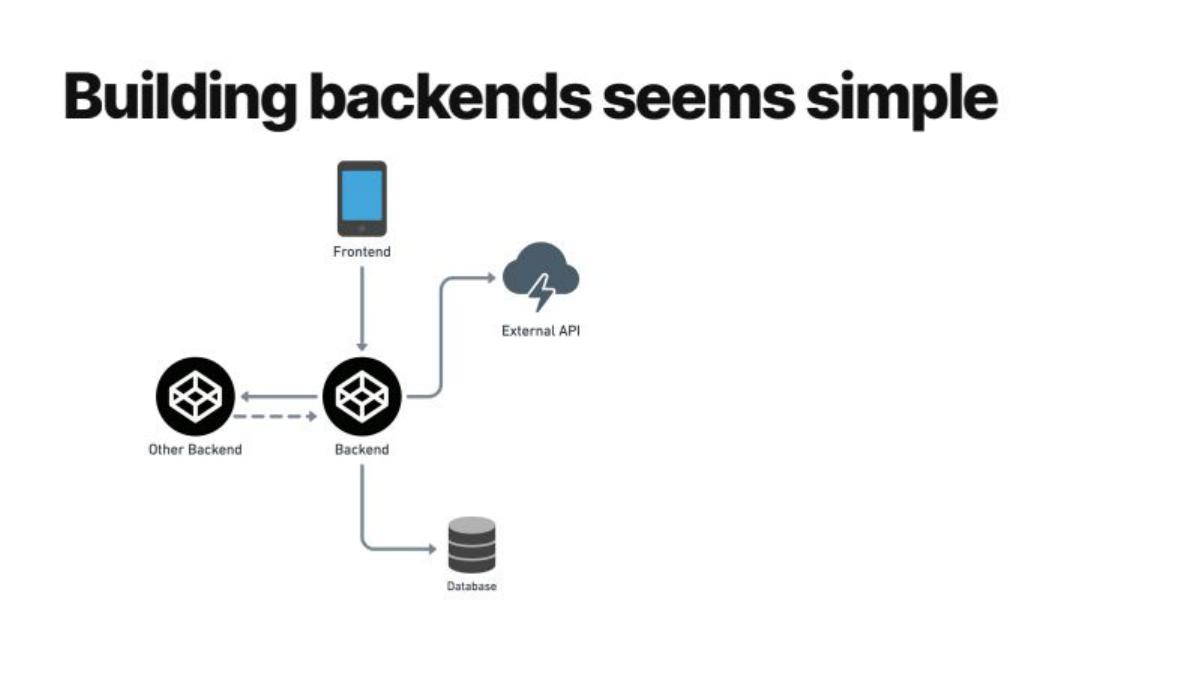
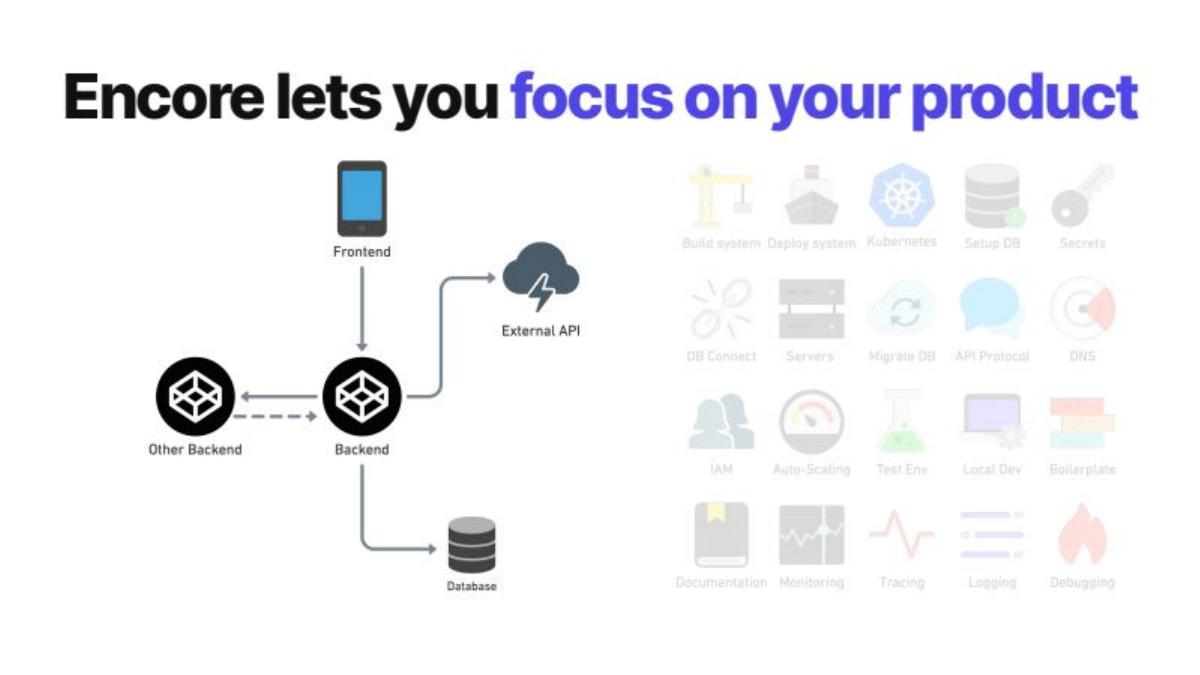
Slide 4 shows a deceptively simple backend diagram (Frontend, Backend, Database). Slide 5 then shatters that simplicity by introducing a grid of 20 icons representing the modern reality: Kubernetes, IAM, DNS, Secrets, Auto-Scaling, and more. This is the 'mess' Encore intends to clean up. Slide 6 introduces the solution: Encore lets you "focus on your product" by fading those 20 icons into the background, leaving only the core application logic visible.
Slides 7-9: The Technical 'How'
Slide 7 is the technical heart of the deck. It explains that Encore isn't just a cloud provider; it's a framework and compiler. By enforcing constraints during Coding , the Encore compiler can Parse the code to create an application model via static analysis. This model then allows the Running phase to automatically set up infrastructure. Slide 8 and Slide 9 emphasize the end-to-end nature of this experience, covering everything from code to debug.
Slides 10-12: Quantifying the Value Proposition
Slide 10 summarizes the developer experience as "best in class productivity." Slide 11 and Slide 12 use a 'Cycle Time' diagram to show the difference between the status quo and the Encore way. On Slide 11, the production loop is measured in "hours." On Slide 12 , labeled "Order of magnitude improvement," those same loops are reduced to "minutes" or "seconds." This is a bold claim that targets the core metric of engineering management: velocity.
Slides 13-15: Abstraction and Product Roadmap
Slide 13 and Slide 14 address a common concern with frameworks: flexibility. The founders argue for a "flexible abstraction level," where developers can use 'real' code for core business logic but move to low-code or no-code for secondary features. Slide 15 provides a 'What's in the box' list, highlighting that users can deploy to their own AWS/Azure/GCP accounts, which reduces vendor lock-in fears.
Slides 16-18: Traction and Social Proof
Slide 16 delivers the 'hard' evidence required for a Seed round. One month after their Open Source launch, they achieved:
2100+ Stars on GitHub · 500+ developers trying the product · 5 startups building products with Encore · 15% signup-to-Slack community conversion
Slide 18 follows up with qualitative 'User feedback,' featuring quotes like "Encore is a new lifestyle" and "I've been looking for something like this for 10 years."
Slides 19-22: Go-To-Market and Business Model
Slide 19 defines the early user personas: Makers, Pragmatists, and Curious Technologists. Slide 21 outlines the pricing: a $99/month per developer Pro plan. This is a classic bottom-up SaaS play. Slide 22 visualizes the growth loop, showing how Hobbyists lead to organic conversion in Startups, which eventually feeds into direct sales for SMEs and Enterprises.
Slides 23-24: The Vision and Conclusion
Slide 23 paints the 5-year vision of becoming the "obvious choice" for cloud software. The deck ends without a formal 'Ask' slide or a detailed use of funds, which suggests this version of the deck may have been used for general presentations or that the specific terms were handled in a separate document. Slide 24 is a standard promotional slide for the platform hosting the deck.
What Works in the Encore Deck
Founder-Market Fit: The Spotify pedigree is the strongest asset in the deck and is used effectively to anchor the technical claims. · Visualizing Complexity: The transition from Slide 4 to Slide 5 is a perfect 'Aha!' moment for anyone who has ever managed a cloud environment. · Quantified Gains: Moving from "hours" to "minutes" in cycle time (Slide 12) gives VCs a clear ROI story to tell their investment committees. · Open Source Traction: The GitHub star count (Slide 16) provides immediate, objective proof of developer interest.
What is Missing
The Financial Ask: There is no slide detailing how much they are raising or the valuation they are seeking (though we know from catalogue facts it was $3M). · Use of Funds: The deck doesn't explain how the $3M will be spent—whether on hiring engineers, marketing, or infrastructure costs. · Competitive Landscape: There is no mention of competitors like Vercel, Netlify, or AWS Amplify, nor a comparison to traditional Infrastructure-as-Code tools like Terraform. · Unit Economics: While the $99/month price point is mentioned, there is no data on Customer Acquisition Cost (CAC) or Lifetime Value (LTV), which is typical for an early Seed round but still a notable omission.
What Other Founders Should Copy
The 'Status Quo vs. New Way' Comparison: Slides 11 and 12 are excellent examples of how to visualize a process improvement. · Leading with Credibility: If you have a background at a 'Gold Standard' company in your industry, put it on Slide 1. · The 'What's in the Box' Slide: Slide 15 is a great way to ground a high-level vision in concrete features, making the product feel 'real' to the investor. · Community Metrics: For technical products, Slack engagement and GitHub stars are often more important than early revenue; Encore highlights these effectively on Slide 16.
Frequently asked questions
- What is Encore's core product offering?
- Encore is a backend development platform that automates infrastructure. As shown on Slide 7, it uses a specialized framework and compiler to perform static analysis on code. This allows the platform to automatically set up infrastructure, instrument tracing, and handle 'plumbing' tasks like service discovery and API documentation, allowing developers to focus 95% of their time on business logic (Slide 14).
- How does Encore plan to make money?
- The company employs a SaaS business model described on Slide 21. It offers a free tier for hobbyists and a 'Pro' plan priced at $99 per month per developer. Future monetization plans include usage-based pricing for organizations and a marketplace for plug-and-play functionality, moving from individual productivity tools to enterprise-wide infrastructure management.
- What evidence of market demand did the founders provide?
- Encore launched as an Open Source project and achieved significant early traction. According to Slide 16, within one month of launch, they secured over 2,100 GitHub stars and had 500+ developers testing the platform. Additionally, 5 startups were already building their products using Encore at the time of the pitch.
- Who are the founders and why are they qualified?
- The deck is led by André Eriksson (CEO + Technology) and Marcus Kohlberg (Product + Growth). Slide 1 explicitly states they spent 8 years scaling Spotify Premium. This background provides the 'founder-market fit' necessary for a technical infrastructure play, as they have firsthand experience with the scaling challenges Encore seeks to solve.
- What is the long-term vision for the company?
- Slide 23 outlines a 5-year vision where Encore becomes the 'obvious choice' for cloud software development. This includes expanding beyond 'real' code into low-code and no-code abstractions (Slide 13), enabling both hardcore developers and 'operators' to build and manage complex cloud systems with minimal manual infrastructure configuration.