Encore’s pitch deck focuses on the friction of modern software development, specifically the 'plumbing' required to build and deploy cloud-native applications. By positioning themselves as a 'Software Development Platform for the Cloud,' they argue that developers should focus on product logic while the platform handles Kubernetes, CI/CD, and database migrations. The deck transitions from a high-level problem statement—'Building modern software is slow'—to a concrete roadmap involving low-code and no-code features. While the provided slides lack a team overview or hard financial metrics, they…
Key takeaways
- The deck opens with a minimalist, high-impact problem statement: 'Building modern software is slow' (Slide 2).
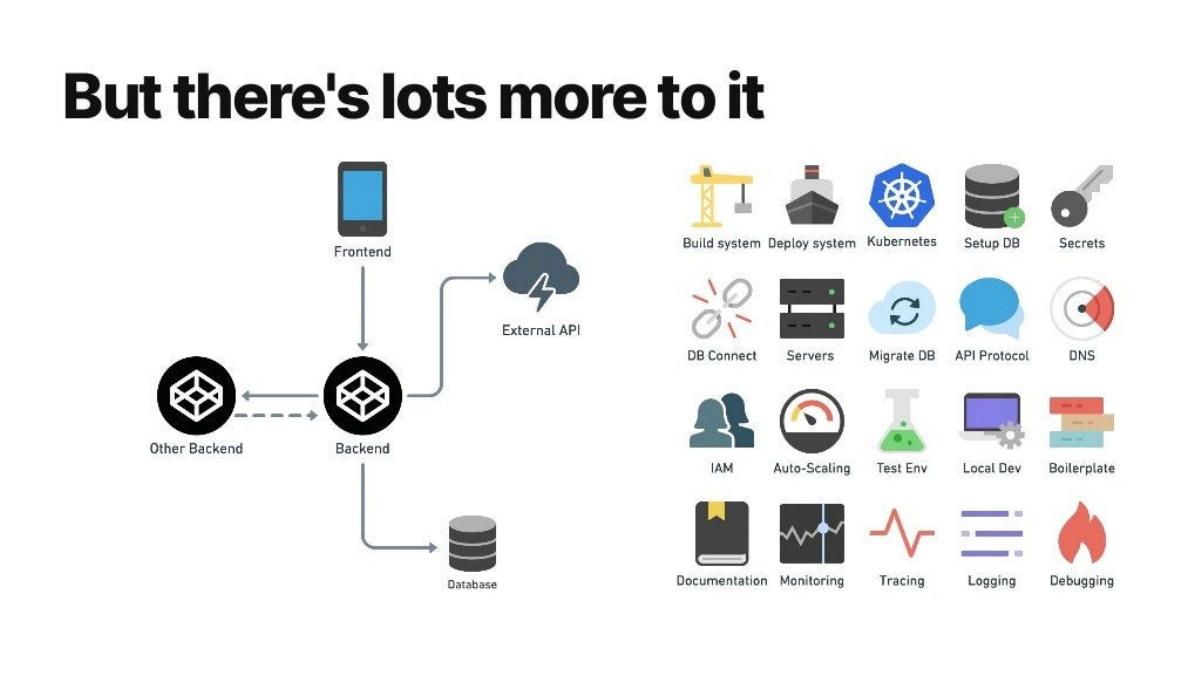
- Encore defines its value proposition as removing the 'plumbing' of backend development, such as Kubernetes, IAM, and auto-scaling (Slide 3).
- The product is positioned not just for developers, but as a tool for building internal tooling for operators (Slide 4).
- A core strategic pillar is the 'Flexible abstraction level,' moving from 'real' backend code to low-code and no-code features (Slide 5).
- The roadmap includes a 'Marketplace for reusable functionality' to create network effects and ecosystem lock-in (Slide 6).
- User feedback is presented as high-conviction quotes, including one user calling it a '10x tool' (Slide 7).
- The business model is a clear SaaS play, starting at $99/month per developer for the Pro plan (Slide 8).
- The deck lacks a team slide, competitive landscape, and historical growth metrics in the provided 8-slide sample.
Introduction: The Developer Experience Play
Encore’s deck is a study in minimalist, developer-centric storytelling. In a crowded market of DevOps tools and cloud providers, Encore raised $3M by promising to make the infrastructure disappear. This teardown covers the first 8 slides of their 24-slide deck, focusing on how they bridge the gap between complex backend engineering and rapid product iteration.
Slide 1: Title Slide
The deck opens with a simple brand mark: Encore in white text against a purple-to-blue gradient background. There is no tagline or subtitle on this slide. It establishes a clean, modern aesthetic that carries through the rest of the presentation.
Slide 2: The Problem Statement
"Building modern software is slow." This slide uses a high-contrast black background with white text. It is a classic 'villain' slide. By keeping the text minimal, the founders force the audience to focus on the weight of the statement. It sets up the 'why' before diving into the 'how.'
Slide 3: The Value Proposition (The 'Plumbing' Slide)
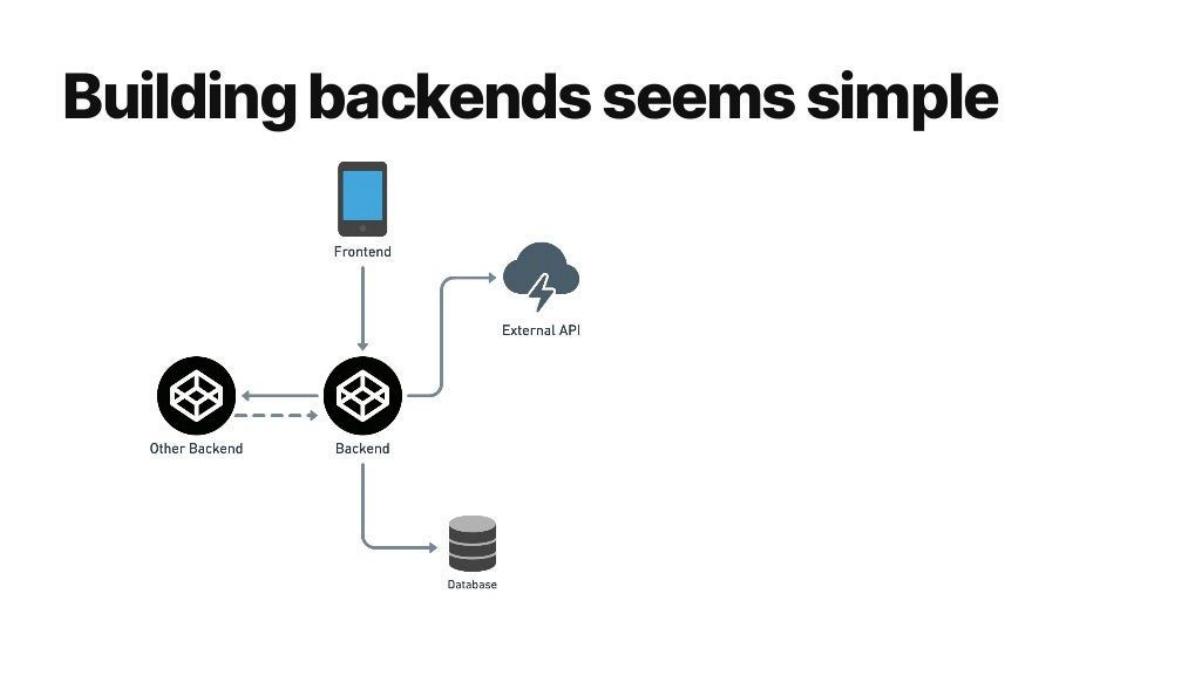
This slide visually separates 'Product' from 'Plumbing.' On the left, a simple diagram shows a Frontend , Backend , Database , and External API . On the right, 20 icons representing infrastructure tasks are faded out. These include Kubernetes , IAM , Auto-Scaling , Secrets , DNS , and CI/CD . The headline, "Encore lets you focus on your product," explicitly states that the platform handles the 20 tasks on the right so the developer can focus on the four components on the left.
Slide 4: Defining the Platform
Slide 4 categorizes Encore as "The Software Development Platform for the Cloud." It breaks the value down into two main pillars:
Fantastic end to end developer experience: Citing 'best in class productivity,' 'faster feedback loops,' and making the process 'more enjoyable.' · Not just for developers: It mentions the opportunity to build 'differentiated internal tooling for operators' with no additional implementation needed for existing users.
Slide 5: Flexible Abstraction Level
This slide addresses the potential limitation of a high-abstraction platform. It explains that Encore is "starting by making 'real' backend development productive." The roadmap for abstraction includes:
Adding low-code features like automatic GraphQL APIs. · Adding no-code functionality like visual scripting.
The slide emphasizes the ability to move "up and down in abstraction level over time," which is a crucial counter-argument to the common developer fear of being 'locked in' to a platform that is too simple for complex use cases.
Slide 6: The Roadmap
The roadmap slide provides a list of eight strategic goals. Key items include "BYOS (Bring your own stack)," which is vital for enterprise adoption where companies have existing cloud investments. It also mentions "Unique collaboration tools" and a "marketplace for reusable functionality," suggesting that Encore intends to build a platform ecosystem rather than just a standalone tool.
Slide 7: User Feedback
Titled "User feedback incredibly positive," this slide uses six quote boxes to demonstrate traction. The quotes are highly emotional and superlative:
"This is what development should be like. WOW." · "I've been looking for something like this for 10 years." · "It really is a 10x tool, can't recommend it enough."
Notably, one quote mentions the language Go , indicating the initial technical focus of the platform.
Slide 8: Business Model
The final slide in this set details the path to revenue. The headline is "Start by charging for productivity, add incredible tools for whole orgs." The current state is a "$99/month per developer Pro plan," while the future includes "usage-based plans" and a "Marketplace for plug-and-play functionality." This shows a clear transition from individual developer seats to organizational-level billing.
What Works in This Deck
Clarity of Mission: The deck does an excellent job of identifying a specific pain point—infrastructure plumbing—and positioning Encore as the singular solution. The visual contrast on Slide 3 is particularly effective at making a complex technical argument easy to understand for a non-technical investor.
Strategic Abstraction: By acknowledging that they will eventually offer low-code and no-code options (Slide 5), the founders show they understand the total addressable market (TAM) is much larger than just senior backend engineers. They are pitching a platform that grows with the user.
Pricing Confidence: Many pre-seed decks shy away from specific pricing. Encore explicitly states a $99/month Pro plan. This gives investors a concrete number to use when modeling potential revenue and shows the team has already tested price sensitivity.
What is Missing from These Slides
The Team: In the 8 slides provided, there is no mention of the founders' backgrounds. For a $3M pre-seed/seed round, the 'why us' is usually as important as the 'what.' Investors need to know if the team has the technical pedigree to build a complex cloud abstraction layer.
Market Size (TAM): While the problem is clear, the deck doesn't quantify how many developers are struggling with this or what the total spend on cloud 'plumbing' currently is. Adding a slide on the growth of the cloud-native ecosystem would strengthen the investment case.
Competitive Landscape: The deck operates in a vacuum. It doesn't mention how Encore differs from existing PaaS (Platform as a Service) providers like Heroku or Vercel, or how it compares to Infrastructure-as-Code (IaC) tools like Pulumi or Terraform.
Founder Takeaways
Use 'Villain' Slides: If your product solves a frustration, don't be afraid to use a single, bold sentence to define that frustration. Slide 2 is a perfect example of setting a mood before presenting a solution.
Visualize the 'Before and After': Slide 3 is the strongest slide in the deck. If you are building a tool that automates a process, list every single manual step you are removing and visually 'fade them out' to show the simplified future you are creating.
Quote the 'Aha!' Moment: When using testimonials, choose quotes that describe the specific impact on the user's workflow (e.g., "10x tool") rather than just generic praise. It helps investors understand the depth of the product's utility.
Frequently asked questions
- What is the primary problem Encore aims to solve?
- According to Slide 2 and Slide 3, the primary problem is that building modern software is slow due to 'plumbing.' The deck lists 20 specific infrastructure tasks—including Kubernetes, IAM, Secrets, and DNS—that distract developers from building their actual product. Encore aims to automate these tasks to provide 'orders of magnitude faster feedback loops.'
- How does Encore plan to expand its user base beyond professional developers?
- Slide 5 outlines a strategy for 'Flexible abstraction levels.' While they start with 'real' backend development for productivity, they plan to add low-code features like automatic GraphQL APIs and eventually no-code functionality like visual scripting. This allows the platform to serve users with varying technical skills as their needs evolve.
- What is Encore's current pricing and monetization strategy?
- As shown on Slide 8, Encore uses a tiered SaaS model. It is currently 'Free for hobbyists' with a '$99/month per developer Pro plan.' Their future monetization strategy includes 'usage-based plans' for whole organizations and a marketplace for 'plug-and-play functionality.'
- What specific technical features are on the Encore roadmap?
- Slide 6 lists several key roadmap items: automatic GraphQL APIs, 'Bring your own stack' (BYOS), radically improved code review, real-time coding insights, and a marketplace for reusable functionality. They also mention 'Enterprise boxes to tick,' suggesting a push toward SOC2 or similar compliance requirements for larger firms.
- Is there evidence of product-market fit in the deck?
- The deck relies on qualitative social proof rather than quantitative data. Slide 7, titled 'User feedback incredibly positive,' features six testimonials. Users claim the tool is what development 'should be like' and describe it as a '10x tool.' One user even notes they are 'falling in love with it' despite barely knowing how to code in Go.