Esusu's 12-slide deck is a masterclass in identifying a massive, underserved market—the 'credit invisible'—and proposing a scalable data-driven solution. The company identifies 22.5 million credit-invisible individuals and calculates a $3 trillion market for deployable capital. By integrating with major property management software like Yardi and AppFolio to report rental data to credit bureaus, Esusu creates a win-win: landlords see higher on-time payments and NOI, while tenants build credit scores. With $1MM+ in ARR and a reach of 200,000+ tenants by 2020, the deck uses third-party validati…
Key takeaways
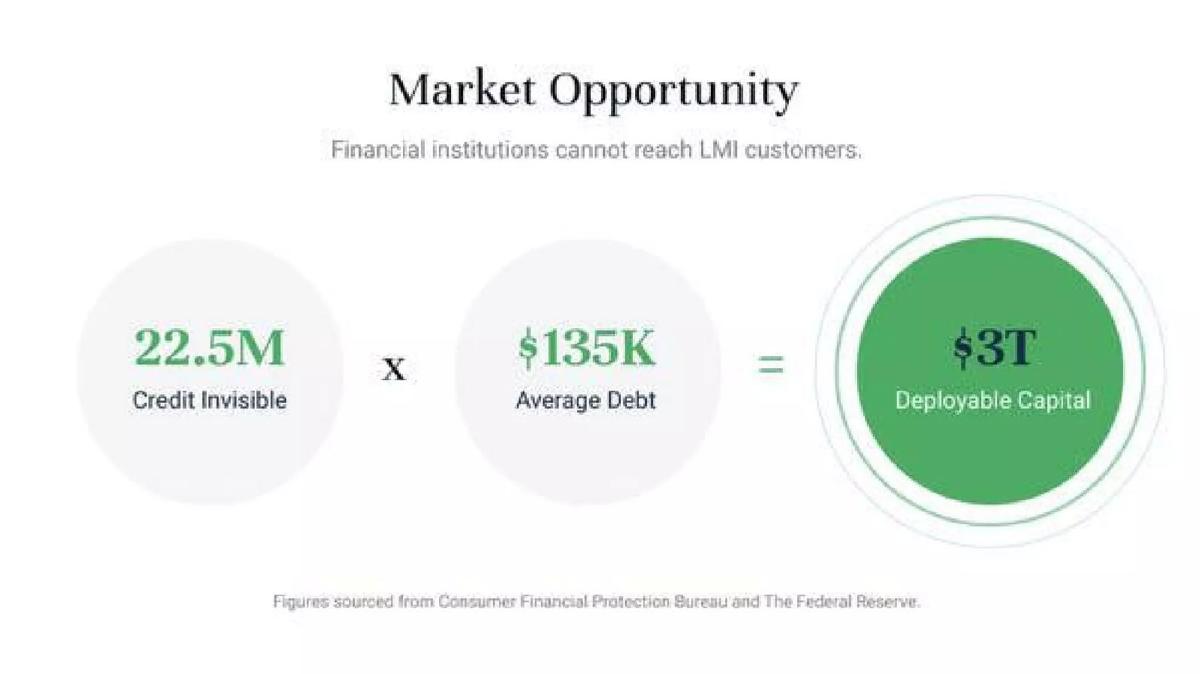
- The market opportunity is defined as 22.5 million credit-invisible individuals multiplied by $135k average debt, totaling $3T in deployable capital (Slide 2).
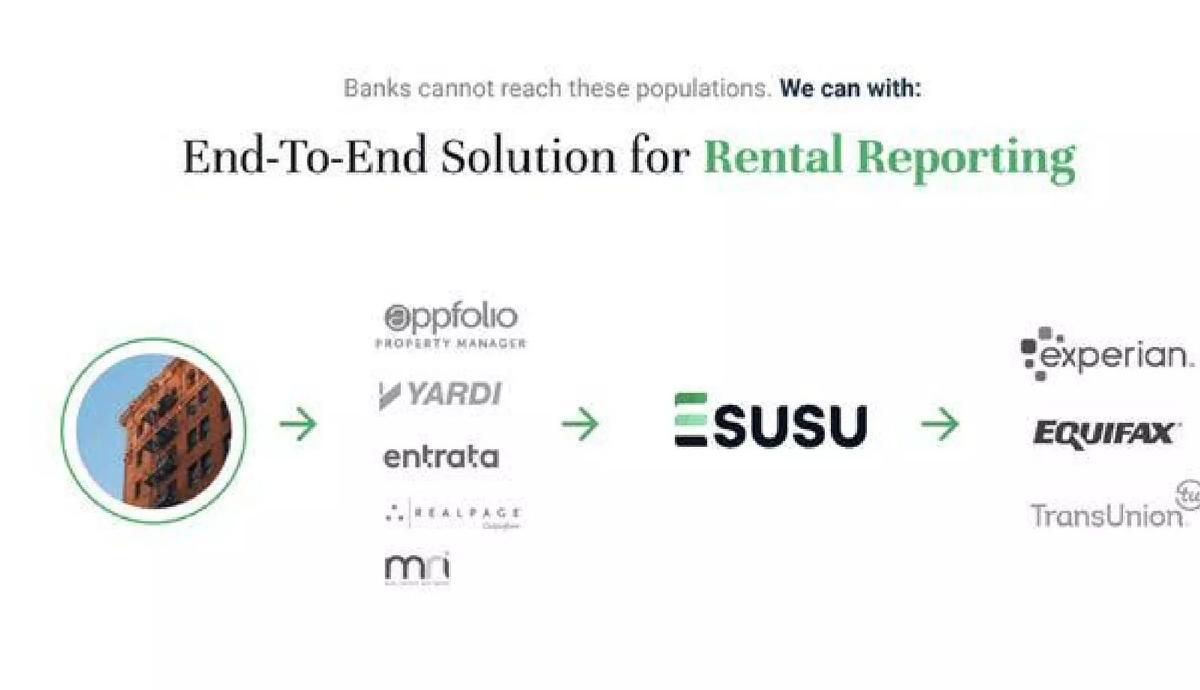
- Esusu positions itself as the bridge between property management software (Yardi, AppFolio, Entrata) and major credit bureaus (Experian, Equifax, TransUnion) (Slide 3).
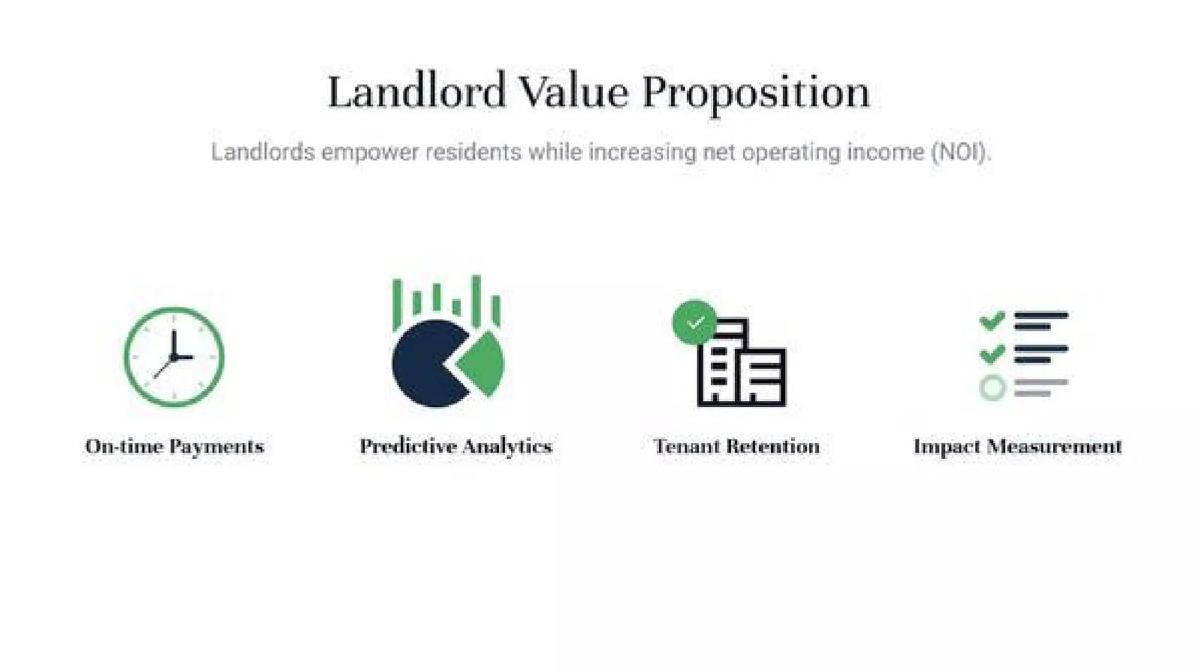
- The landlord value proposition is centered on increasing Net Operating Income (NOI) through on-time payments and predictive analytics (Slide 4).
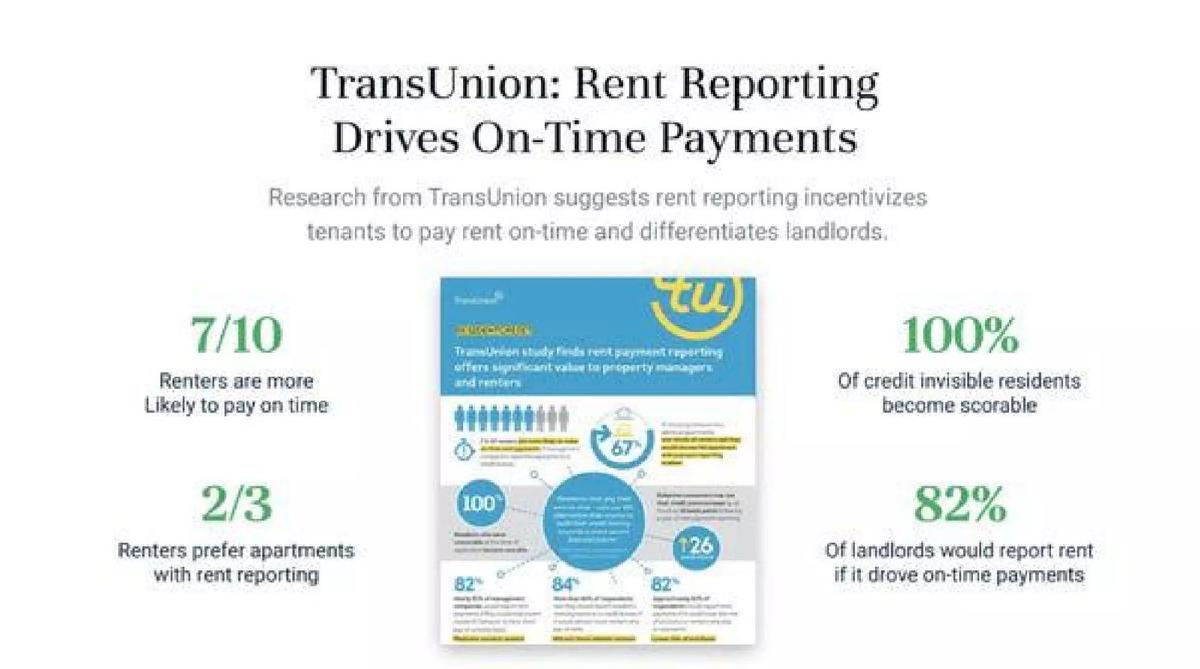
- Third-party research from TransUnion is used to validate that 100% of credit-invisible residents become scorable through rent reporting (Slide 5).
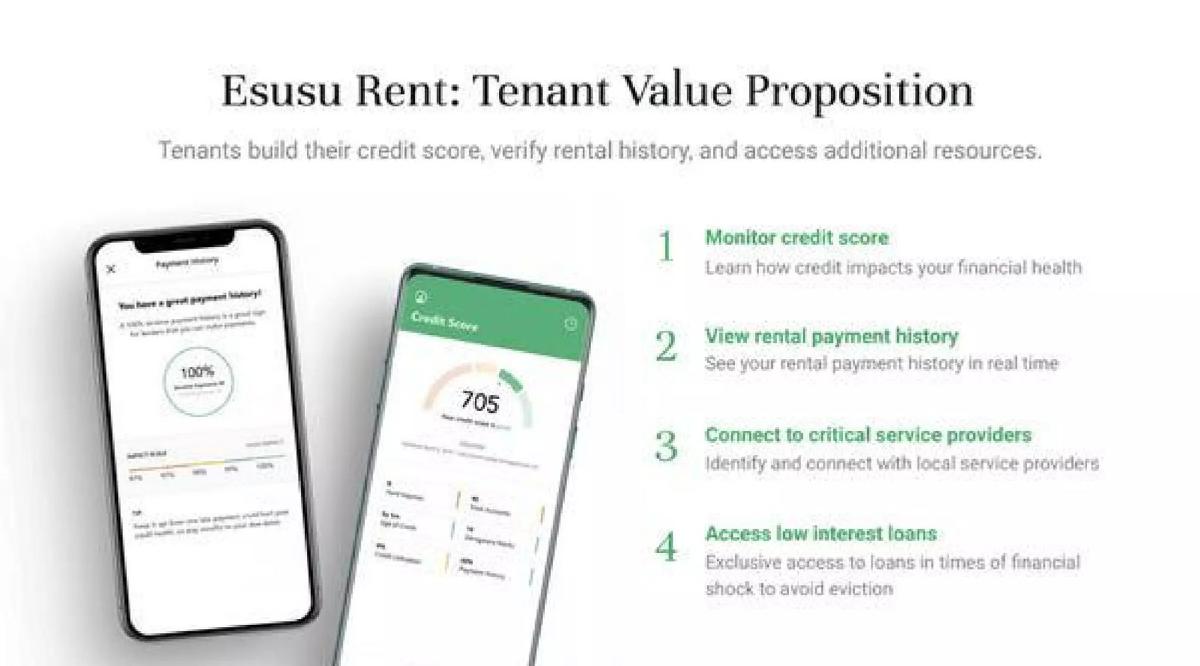
- The tenant app features include credit monitoring, rental history verification, and access to low-interest loans to avoid eviction (Slide 6).
- Go-to-market strategy relies on a 'one-to-many' approach targeting the NMHC Top 50 and property management software integrations (Slide 7).
- Traction metrics show the company reached $1MM+ in ARR and 200k+ tenant reach by 2020 (Slide 8).
- The team slide highlights founders with backgrounds at Goldman Sachs and LinkedIn, supported by staff from PwC, PayPal, and Accenture (Slide 10).
Introduction: The Data Bridge to Financial Inclusion
Esusu's pitch deck is a concise 12-slide presentation that outlines a clear, data-driven path to solving financial exclusion. Founded in 2018 (as per Slide 8), the company targets the 'credit invisible' population by turning rental payments into credit-building events. The deck is structured to appeal to both commercial interests (landlords) and social impact goals (tenant empowerment), a dual-track narrative that likely contributed to their successful $145 million Series B funding round in later years.
The Macro Opportunity (Slides 1-2)
The deck opens with a bold vision on Slide 1: 'Accessing trillions in untapped deployable capital.' This immediately sets the scale of the ambition. Slide 2, titled 'Market Opportunity,' provides the math behind this claim. It identifies 22.5 million 'Credit Invisible' individuals and an average debt of $135k. The resulting calculation is a $3 trillion market of deployable capital. By framing the problem as a loss for financial institutions ('Financial institutions cannot reach LMI customers'), Esusu positions itself not just as a social good, but as a necessary infrastructure for the banking sector.
The Solution and Technical Integration (Slide 3)
Slide 3 explains the 'End-To-End Solution for Rental Reporting.' This is a critical slide because it demonstrates how Esusu avoids the friction of manual data entry. The slide shows a flow from the physical property to property management software (listing AppFolio, Yardi, Entrata, RealPage, and MRI), then through Esusu, and finally to the three major credit bureaus: Experian, Equifax, and TransUnion. This visualizes Esusu as the essential middle layer that translates property data into financial identity.
The Landlord Value Proposition (Slides 4-5)
To scale, Esusu must convince landlords to adopt the platform. Slide 4 lists four key benefits: On-time Payments, Predictive Analytics, Tenant Retention, and Impact Measurement. The slide explicitly mentions that these factors increase Net Operating Income (NOI), which is the primary metric for real estate investors. Slide 5 reinforces this with third-party validation from TransUnion. It cites specific stats: 7/10 renters are more likely to pay on time with reporting, 2/3 prefer apartments with reporting, and most importantly, 100% of credit-invisible residents become scorable. Using an external authority like TransUnion adds significant credibility to the company's claims.
The Tenant Experience (Slide 6)
Slide 6 shifts to the user-facing side of the product. The 'Esusu Rent: Tenant Value Proposition' slide shows a mobile interface where tenants can monitor their credit scores and view rental payment history in real-time. It also highlights two additional services: connecting to critical service providers and accessing low-interest loans to avoid eviction. This indicates that Esusu intends to be more than just a reporting tool; they are building a broader financial health platform for renters.
Go-To-Market and Traction (Slides 7-8)
Slide 7 outlines a 'one-to-many' go-to-market approach. By targeting the NMHC (National Multifamily Housing Council) Top 50, property management software, and fintech apps, Esusu can acquire large blocks of consumer data without high individual acquisition costs. Slide 8 provides the 'Traction' metrics as of 2020: $1MM+ in ARR and a tenant reach of 200k+. It also lists previous investors, including Acumen Fund and Kleiner Perkins, which signals to new investors that the company has already passed the due diligence of top-tier firms.
Impact and Team (Slides 9-10)
Slide 9, 'Our Impact,' quantifies the social benefit. It claims that reporting rental data can lead to up to $200k in lifetime savings for tenants by lowering interest rates and reducing barriers to homeownership. Slide 10 introduces the team, which is a mix of high-finance experience (Goldman Sachs) and tech pedigree (LinkedIn, PayPal, Accenture). Having founders with Goldman Sachs backgrounds (Abbey Wemimo and Albert Owusu-Asare) is particularly relevant for a company operating at the intersection of real estate and credit markets.
The Commitment and Contact (Slides 11-12)
Slide 11, 'The Esusu Commitment,' focuses on operational excellence, using phrases like 'Add value, not effort' and 'Outcome oriented.' This is likely intended to soothe landlord concerns about the difficulty of implementation. The deck concludes on Slide 12 with contact information for the two co-founders, Abbey Wemimo and Samir Goel.
What Works in This Deck
Clear Value Exchange: The deck does an excellent job of explaining why every stakeholder wins. Landlords get higher NOI, tenants get better credit, and banks get a larger pool of scorable customers. This 'triple win' is the hallmark of a successful platform business.
Third-Party Validation: The inclusion of the TransUnion study (Slide 5) is the strongest part of the deck. It moves the conversation from 'we think this will happen' to 'this is a proven industry fact.' For a startup in a regulated space like credit reporting, this level of proof is essential.
Scalable GTM: The 'one-to-many' strategy (Slide 7) shows that the founders understand how to scale a B2B2C business. They aren't trying to sell to millions of tenants one by one; they are selling to the few dozen entities that control the data of millions.
What Is Missing
The Ask: There is no slide stating how much capital the company is looking to raise or the terms of the round. While this is common in decks shared publicly after the fact, it is a critical omission for a live fundraising pitch.
Unit Economics: While the deck mentions $1MM+ ARR, it doesn't explain the revenue model. Is it a per-unit fee paid by the landlord? A subscription paid by the tenant? A data licensing fee? Without this, it is hard to judge the quality of the revenue.
Competitive Landscape: The deck does not mention other rent reporting services or alternative credit scoring startups. Acknowledging competitors and explaining the 'moat' (likely the deep integrations shown on Slide 3) would have strengthened the case.
What a Founder Should Copy
The 'Problem Math' (Slide 2): Founders should emulate how Esusu took a vague social problem (credit invisibility) and turned it into a specific, massive dollar figure ($3T). Investors buy into big numbers backed by logical math.
Integration Visuals (Slide 3): If your product relies on an ecosystem, show it. The logos of Yardi and Experian on the same slide as Esusu's logo create an immediate sense of legitimacy and technical readiness.
Focus on ROI for the Buyer: Even though Esusu is a mission-driven company, they lead with 'increasing net operating income' for the landlord (Slide 4). Founders should always lead with the economic driver that will make the customer say 'yes,' even if the social mission is the ultimate goal.
Conclusion Esusu's deck is a lean, professional presentation that prioritizes market scale and partnership credibility. By positioning themselves as the infrastructure for a $3 trillion opportunity, they successfully transitioned from a social impact startup to a major fintech player. The lack of financial detail is a drawback, but the strength of the partnerships and the clarity of the problem-solution fit clearly resonated with the market.
Frequently asked questions
- What is the core problem Esusu is solving?
- Esusu addresses the issue of 'credit invisibility,' where millions of people lack the credit history necessary to access traditional financial products. According to Slide 2, there are 22.5 million credit-invisible individuals. By reporting rental payments—typically a tenant's largest monthly expense—to credit bureaus, Esusu helps these individuals establish credit scores, which the deck claims can lead to up to $200k in lifetime savings (Slide 9).
- How does Esusu generate value for landlords?
- Landlords benefit from increased Net Operating Income (NOI). Slide 5 cites TransUnion research showing that 7 out of 10 renters are more likely to pay on time when rent is reported. This reduces the risk of delinquency and eviction. Additionally, Slide 4 mentions that Esusu provides predictive analytics and impact measurement, helping landlords differentiate their properties and improve tenant retention.
- What is Esusu's integration strategy?
- Esusu uses a 'one-to-many' go-to-market approach. Instead of selling to individual tenants, they integrate directly with major property management software providers like AppFolio, Yardi, Entrata, RealPage, and MRI (Slide 3). This allows them to capture data from entire portfolios at once, reaching the 'NMHC Top 50' largest apartment owners efficiently (Slide 7).
- What traction had the company achieved at the time of this deck?
- By 2020, Esusu reported having founded the company in 2018, reaching over $1 million in Annual Recurring Revenue (ARR), and achieving a tenant reach of over 200,000 (Slide 8). The deck also notes that they had already raised $2 million+ from notable investors including Acumen Fund, Kleiner Perkins, and Sinai VC.
- What critical information is missing from the deck?
- The deck is notably missing a slide detailing the specific 'Ask' (how much money they are currently raising) and the intended 'Use of Funds.' It also lacks a detailed slide on unit economics (CAC/LTV) and a multi-year financial forecast. While it mentions $1MM+ ARR, it does not break down the pricing model or how revenue scales with tenant growth.