Fungible’s pitch deck is a masterclass in high-level architectural persuasion, focusing on a fundamental shift from compute-centric to data-centric infrastructure. Despite raising $310.9 million, the 12-slide deck is remarkably light on traditional venture metrics. There is no team slide, no financial projections, no competitive landscape, and no specific funding ask. Instead, the deck relies entirely on a technical thesis: that Moore's Law has plateaued and a new class of microprocessor—the DPU—is required to handle the 'insatiable demand' for AI and cloud storage. By illustrating how the DP…
Key takeaways
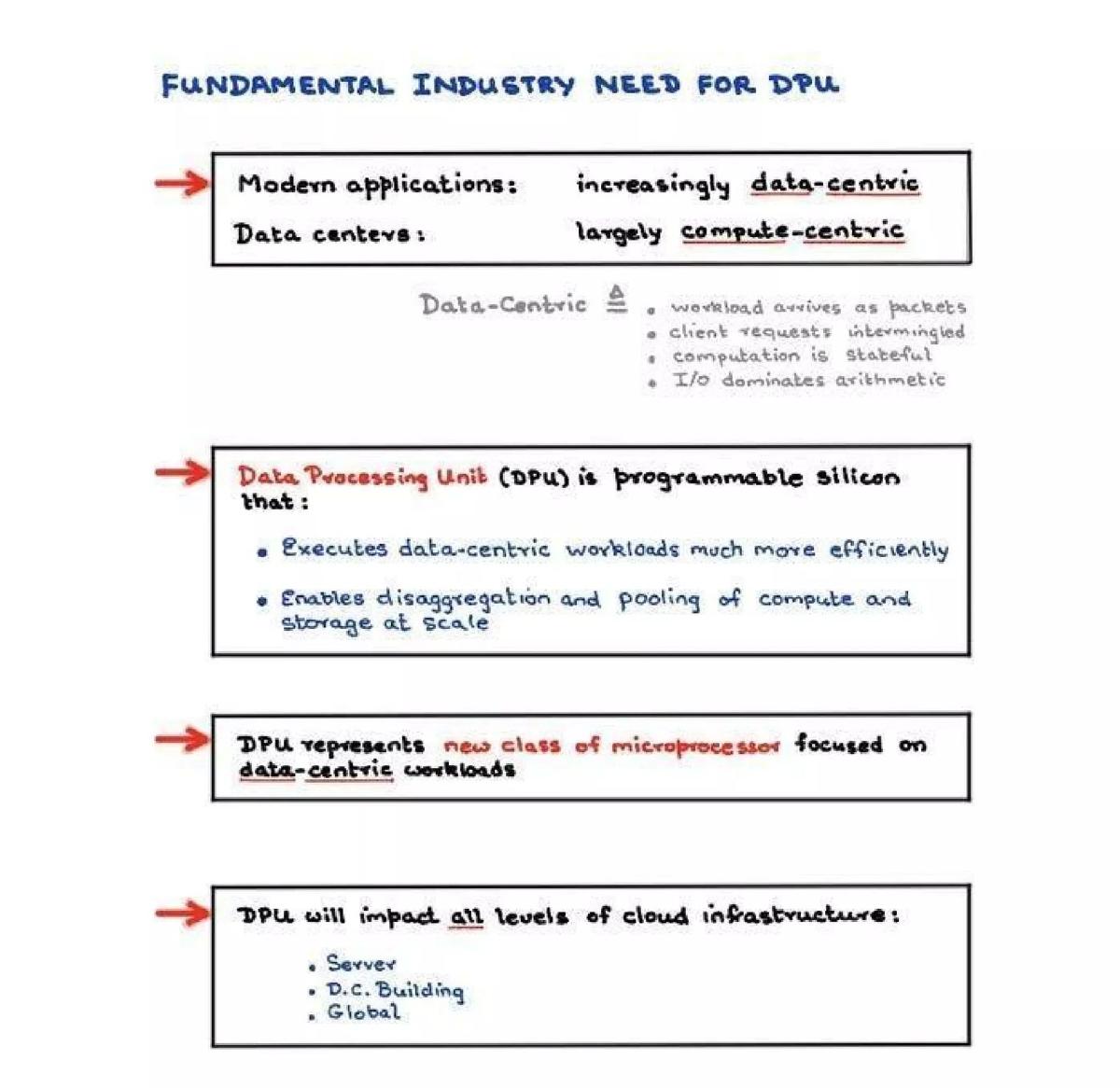
- The deck defines a new category of hardware, the Data Processing Unit (DPU), as a 'new class of microprocessor' on slide 6.
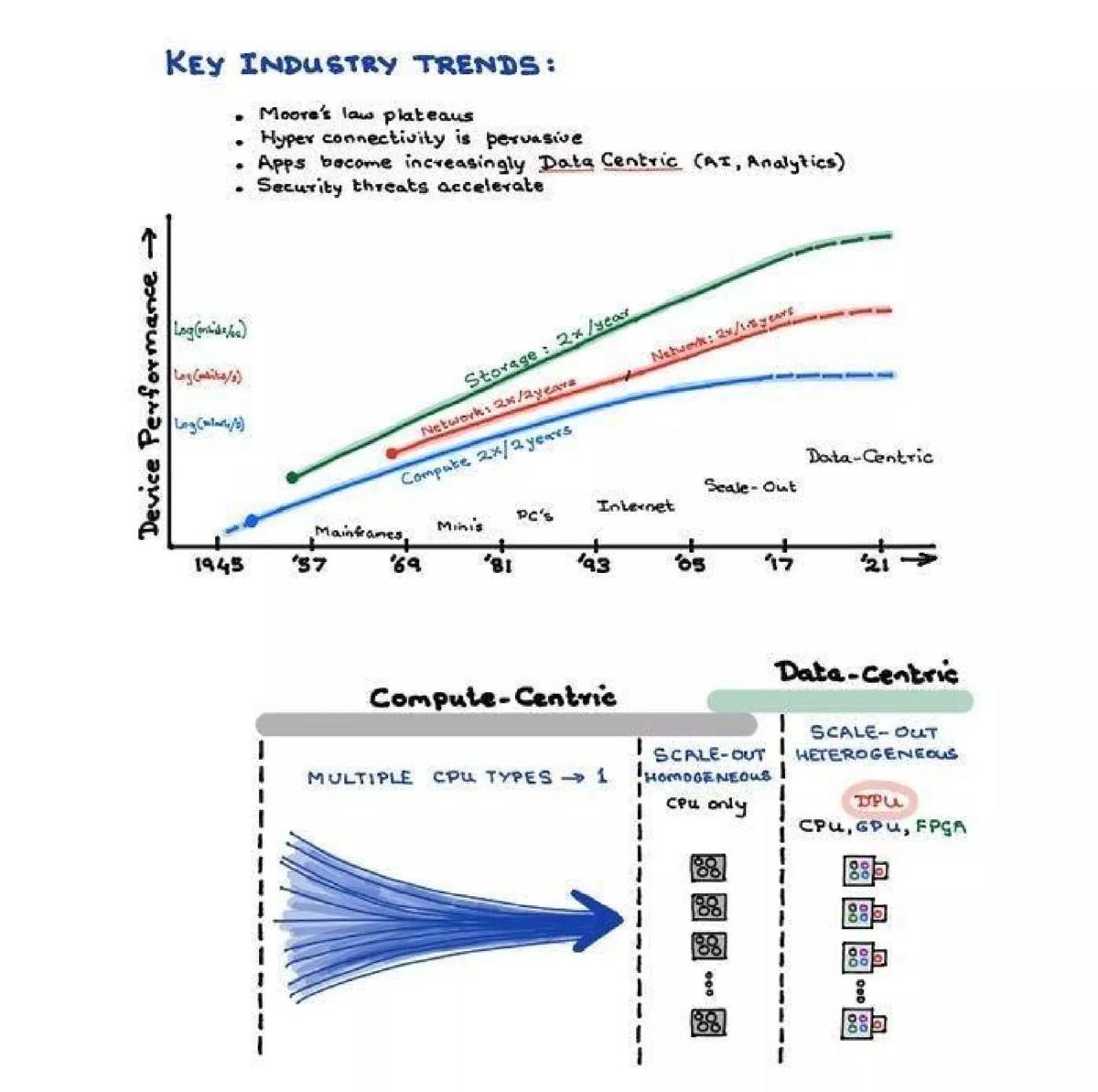
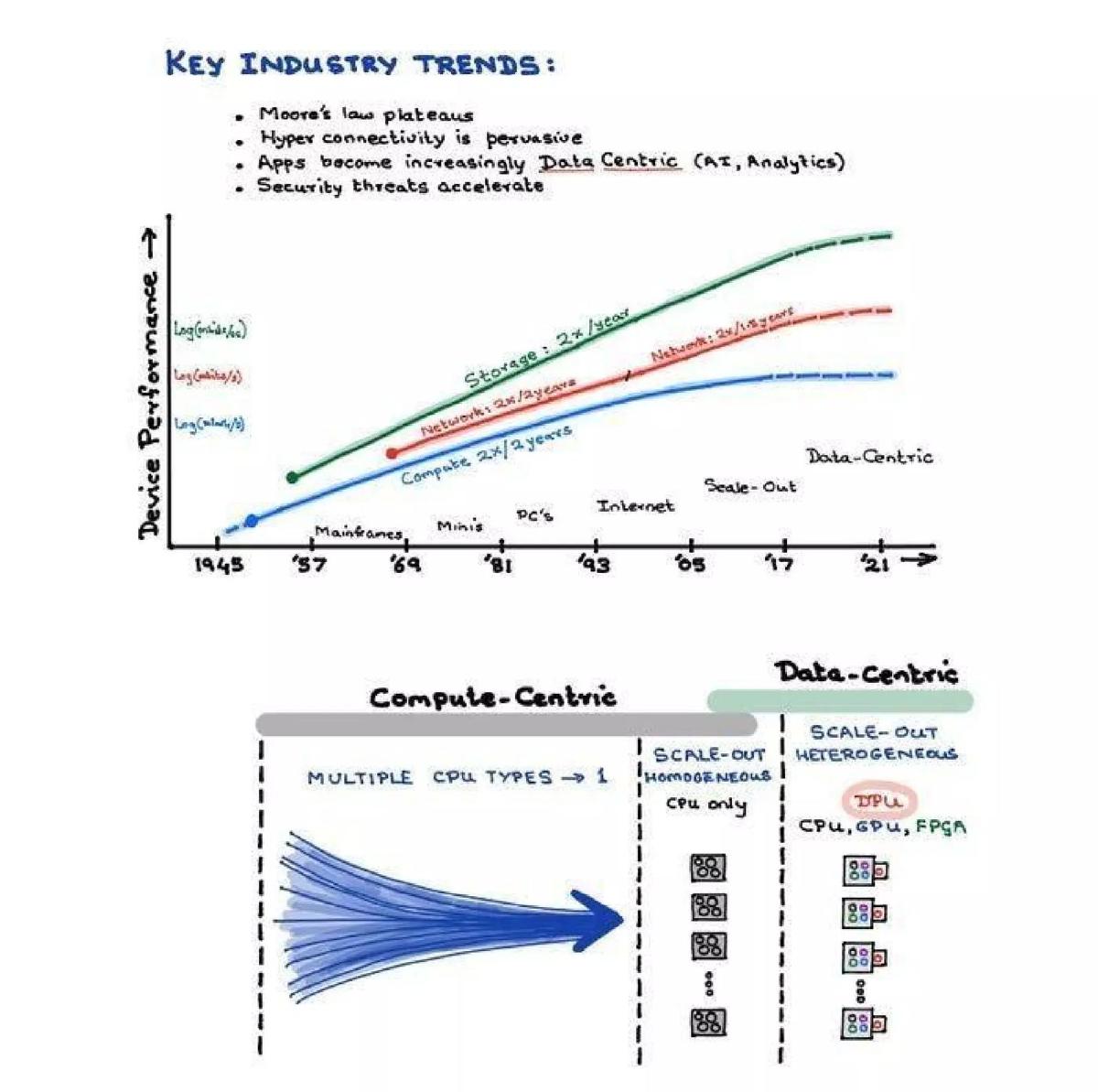
- It identifies a critical industry bottleneck: Moore's Law is plateauing while demand for compute, storage, and networking grows exponentially (slide 3).
- The company claims the DPU will impact 90% of servers, 90% of data center buildings, and 90% of regions within five years (slides 8, 9, and 10).
- Fungible argues that modern applications are 'data-centric' while current data centers remain 'compute-centric,' creating an architectural mismatch (slide 6).
- The deck uses a 'before and after' visual strategy to show the transition from complex multi-tier networks to a 'simple flat fabric' (slide 9).
- Ease of adoption is a core value proposition, stating the technology requires 'no changes in application code' or 'server design' (slide 11).
- The presentation completely omits a team slide, despite the catalogue listing noting the founders have a significant track record in networking and silicon.
- There are no financial metrics, customer logos, or unit economics presented in the 12-slide sequence.
The Visionary Architecture of Fungible
Fungible’s pitch deck is an anomaly in the world of venture capital. While most startups are pressured to show month-over-month growth, CAC/LTV ratios, and competitive moats, Fungible raised $310,900,000 based on a fundamental architectural thesis. The deck, consisting of 12 hand-drawn slides, focuses entirely on the evolution of the data center. It argues that the industry is at a breaking point where traditional CPU-centric models can no longer keep up with the data-heavy demands of AI and cloud computing.
Slides 1-2: The Mission and The Philosophy
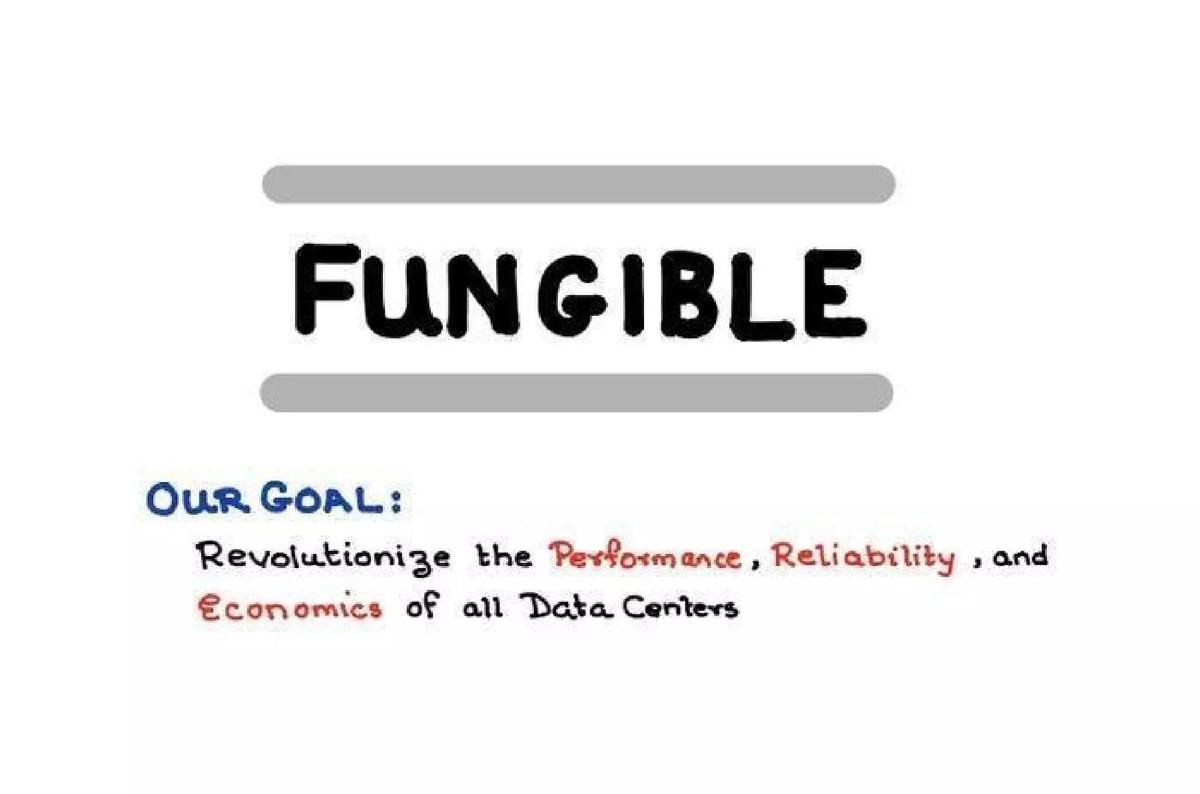
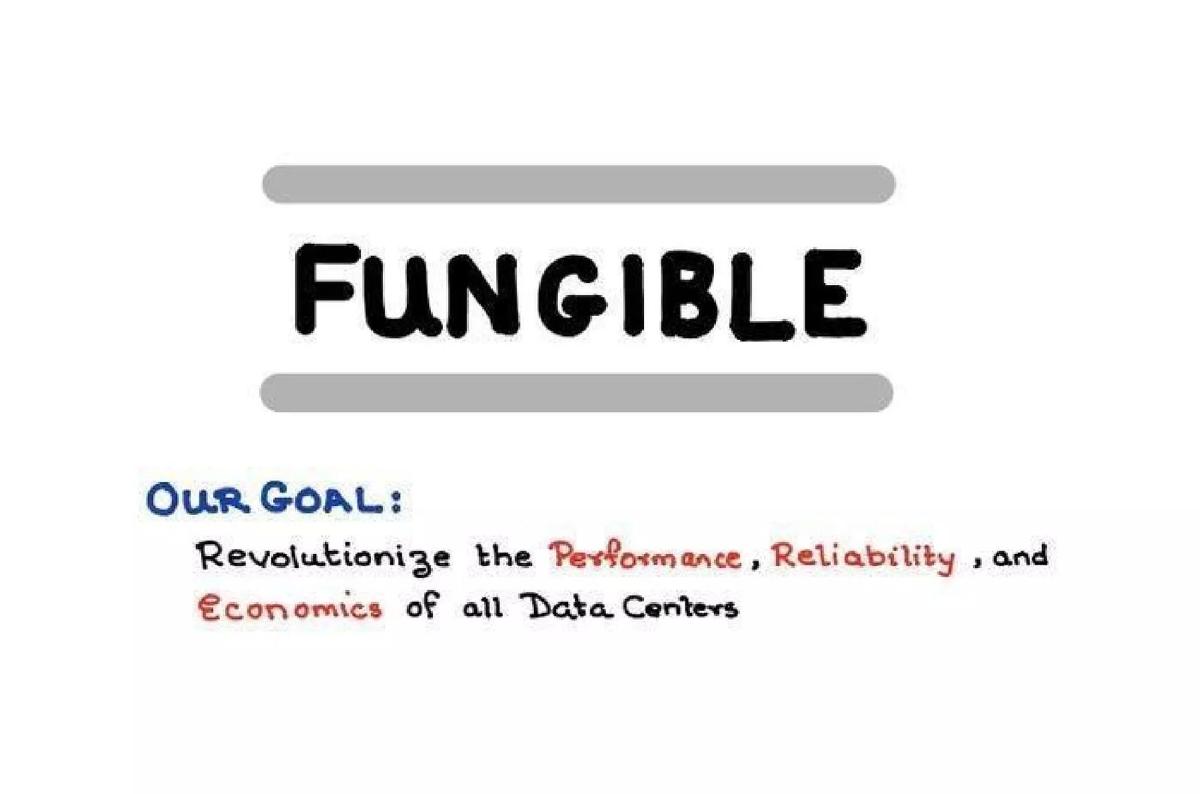
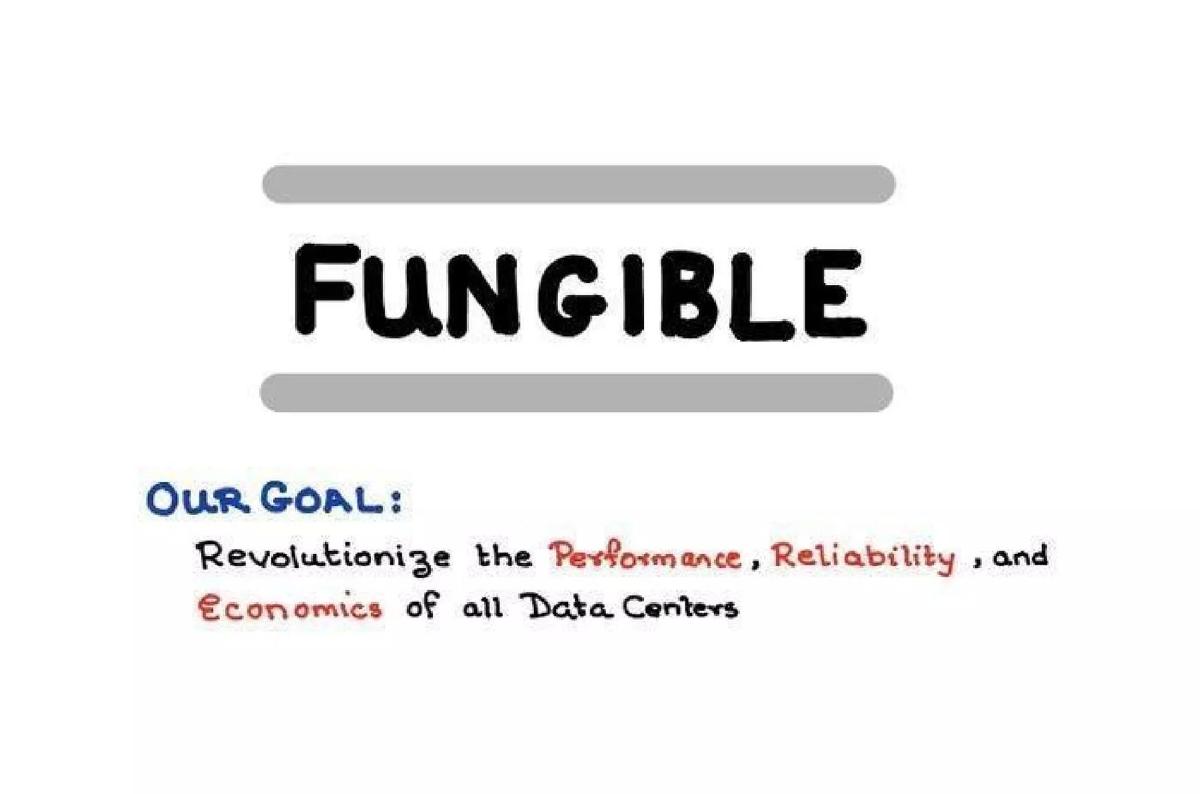
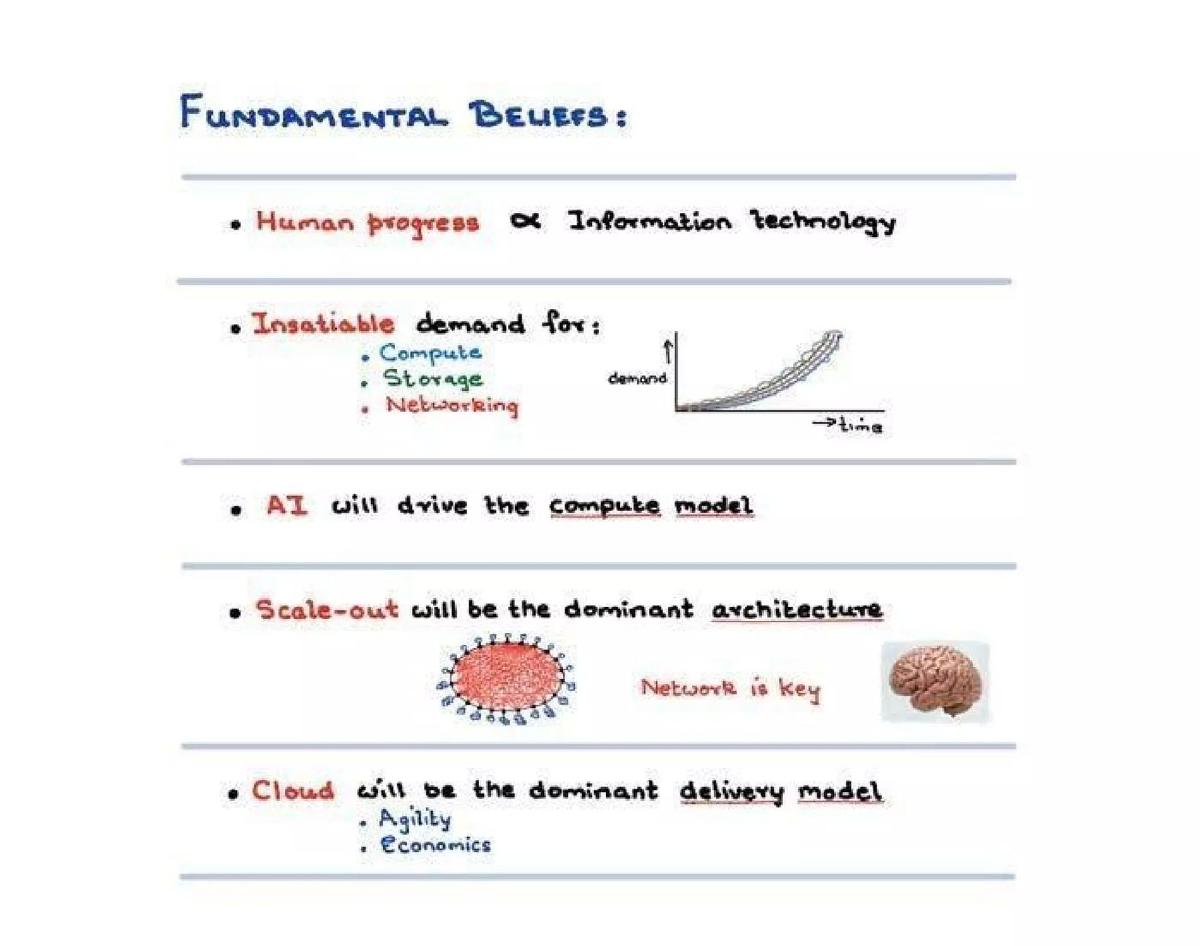
The deck opens with a simple title slide (Slide 1) stating the goal: 'Revolutionize the Performance, Reliability, and Economics of all Data Centers.' This is a massive, horizontal ambition. Slide 2, titled 'Fundamental Beliefs,' sets the stage for the entire argument. It uses a proportionality symbol to link human progress to information technology and includes a small graph showing exponential demand for compute, storage, and networking. By establishing that 'AI will drive the compute model' and 'Scale-out will be the dominant architecture,' Fungible forces the investor to agree with their worldview before ever seeing a product.
Slides 3-5: The Industry Inflection Point
Slide 3 and its duplicate, Slide 4, visualize 'Key Industry Trends.' The primary takeaway here is the plateauing of Moore's Law. A graph shows device performance for compute, network, and storage. While storage and network are shown growing at 2x every 1.5 to 2 years, the compute line (blue) is visibly flattening. This creates a 'performance gap' that Fungible intends to fill. The bottom half of these slides introduces the transition from 'Compute-Centric' (multiple CPU types converging to one) to 'Data-Centric' (Scale-out heterogeneous architectures involving CPUs, GPUs, FPGAs, and the DPU). The DPU is highlighted in red as the missing piece of this new puzzle.
Slides 6-7: Defining the DPU
Slide 6, 'Fundamental Industry Need for DPU,' is the most text-heavy slide in the deck. It defines the Data Processing Unit (DPU) as 'programmable silicon' that executes data-centric workloads more efficiently. It explicitly states that the DPU represents a 'new class of microprocessor.' This is a bold claim—positioning the company alongside the inventors of the CPU and GPU. The slide notes that in a data-centric world, 'I/O dominates arithmetic,' meaning the movement of data is now a bigger problem than the calculation of data. Slide 7 is a duplicate of this definition, reinforcing the DPU's impact on servers, buildings, and global infrastructure.
Slides 8-10: The 90% Impact Projections
The deck then moves into a series of 'Impact' slides, all carrying a bold prediction: a 90% shift within five years. Slide 8 shows 'Server Impact,' contrasting a CPU-led server where the CPU acts as a 'traffic cop' (marked with a red X) against a DPU-led server where the DPU handles the data-centric workload (marked with a green check). Slide 9, 'Data Center Impact,' shows the transition from a 'complex multi-tier network' to a 'simple flat fabric.' The visual depicts a messy web of connections being replaced by a streamlined, resource-pooling architecture. Slide 10, 'Global Impact,' argues that 90% of regions will move from centralized massive data centers to a hybrid model including micro-DCs and edge-DCs, enabled by the DPU's lower latency and cost.
Slides 11-12: The Summary and The Omissions
Slide 11 provides a summary of the breakthrough benefits: economics, security, reliability, performance, and agility. Crucially, it addresses a major hurdle for new hardware: 'Ease of insertion.' Fungible claims their solution requires 'No changes in Application code,' 'No changes to network,' and 'No changes to server design.' This is a vital de-risking statement for investors worried about adoption friction. The deck ends on Slide 12 with a simple 'Thank You!'
What Works in This Deck
Category Creation: Fungible does not compare itself to existing networking cards. By calling the DPU a 'new class of microprocessor,' they elevate the company's valuation potential to that of Intel or Nvidia. They aren't selling a component; they are selling the next era of computing.
The 'Before and After' Visuals: Slides 8, 9, and 10 are highly effective. They use simple diagrams to show how the DPU simplifies complex, inefficient systems. The use of green checkmarks and red Xs makes the 'obviousness' of their solution feel undeniable, even to a non-technical investor.
The Whiteboard Aesthetic: The hand-drawn style (likely created on a tablet or scanned from a whiteboard) gives the impression of a high-level strategy session. It suggests that the founders are 'architects' rather than just 'vendors.' This style works well for deep-tech companies where the intellectual property is the primary asset.
What Is Missing from This Deck
The Team: This is the most glaring omission. Raising over $300 million requires an elite team. While the catalogue facts mention a 'track record leading and impacting the networking, silicon and software industries,' none of that is on the slides. In a standard pitch, the absence of a team slide is a red flag; here, it suggests the deck was used in contexts where the founders' reputations preceded them.
Financials and Traction: There are no revenue figures, no cost-per-chip estimates, and no pilot program results. There is no mention of the $310.9 million raised or how it will be spent. This is a 'vision deck' rather than an 'execution deck.'
Competition: The deck ignores the existence of Mellanox (acquired by Nvidia), Broadcom, or Intel’s own infrastructure processing units (IPUs). By omitting the competition, Fungible avoids a feature-war and stays focused on the architectural shift.
What a Founder Should Copy
The 'Fundamental Beliefs' Slide: Every founder should have a slide that outlines the 'truths' they believe about the future. If you can get an investor to agree to your premises (e.g., 'AI will drive the compute model'), the conclusion (e.g., 'Therefore, you need my product') becomes much easier to sell.
Focus on the Bottleneck: Fungible identifies a specific, growing pain point—the CPU being overwhelmed by data movement. By focusing on a single, massive bottleneck, they make their solution feel like a necessity rather than a luxury.
Simplifying the Complex: Even if you are building something as complex as a programmable silicon chip, your deck should be understandable by a smart teenager. Fungible’s use of simple diagrams to explain 'disaggregation and pooling of compute and storage' is a great example of technical storytelling.
Final Thoughts
Fungible’s deck is a reminder that at the highest levels of venture capital, you are often selling a thesis rather than a product. The lack of traditional slides (team, ask, competition) indicates that this deck was likely a visual aid for a conversation rather than a standalone document sent via email. It succeeded by framing the DPU not as a new product, but as an inevitable evolution of the data center, positioning Fungible as the only company ready to lead that transition.
Frequently asked questions
- How did Fungible raise $310M without a team slide?
- While this specific deck omits a team slide, the catalogue facts note that the founders have a significant track record in the networking and silicon industries. In deep-tech hardware, the reputation of the founding team (which included Pradeep Sindhu, founder of Juniper Networks) often does the heavy lifting, allowing the deck to focus purely on the technical 'why now' and the architectural vision.
- What is the core technical problem Fungible aims to solve?
- Fungible identifies that CPUs are being overwhelmed by 'traffic cop' duties—managing data movement rather than running applications. Slide 8 shows that in a compute-centric model, the CPU is burdened by traffic, whereas in Fungible's model, the DPU handles the data-centric workload, freeing up the CPU, GPU, and FPGA for pure application processing.
- Why is the deck hand-drawn?
- The hand-drawn style is a deliberate choice to make high-level architectural concepts feel like a 'whiteboard session.' It helps investors focus on the logic of the system flow rather than getting bogged down in photorealistic hardware renders or dense spreadsheets. It signals a 'big picture' vision common in Series-stage infrastructure pitches.
- What are the 'Fundamental Beliefs' mentioned in the deck?
- Slide 2 outlines five core assumptions: human progress is proportional to IT, there is insatiable demand for compute/storage/network, AI will drive the compute model, scale-out is the dominant architecture, and cloud is the dominant delivery model. These beliefs serve as the foundation for why the DPU is an inevitable requirement for the future.
- Does the deck mention any competitors?
- No. The deck does not name any competitors or alternative solutions like SmartNICs or existing silicon providers. It frames the DPU as a 'new class of microprocessor,' effectively positioning the company in a blue ocean where the only competition is the outdated 'compute-centric' status quo.