Fyllo's Series A deck is a masterclass in positioning a startup as an infrastructure layer for a volatile industry. By focusing on the 'Compliance Cloud' rather than just being a media agency, Fyllo addressed the primary pain point of the cannabis sector: regulatory risk. The deck outlines four core products—Compliance Automation, Media Activation, Regulatory Database, and Data Marketplace—designed to help marketers navigate complex laws. While the deck is notably light on financial metrics and specific traction data, it leans heavily on the pedigree of its leadership team and board, featurin…
Key takeaways
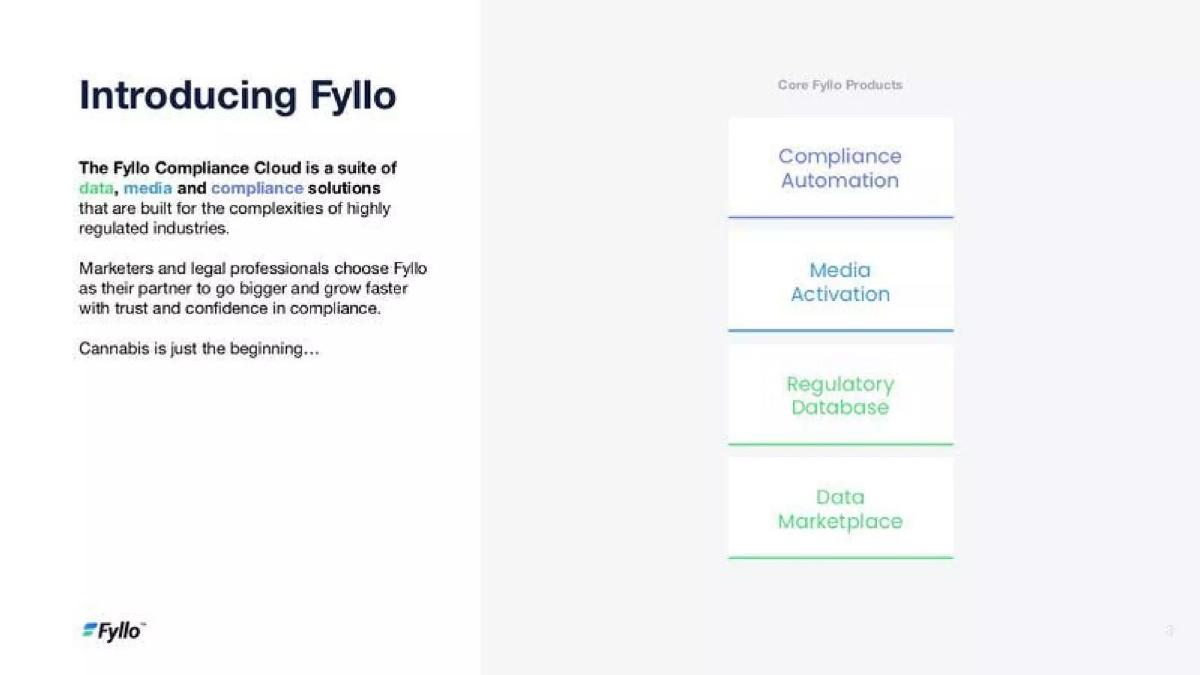
- The company positions its 'Compliance Cloud' as a suite for data, media, and compliance solutions built for highly regulated industries (Slide 3).
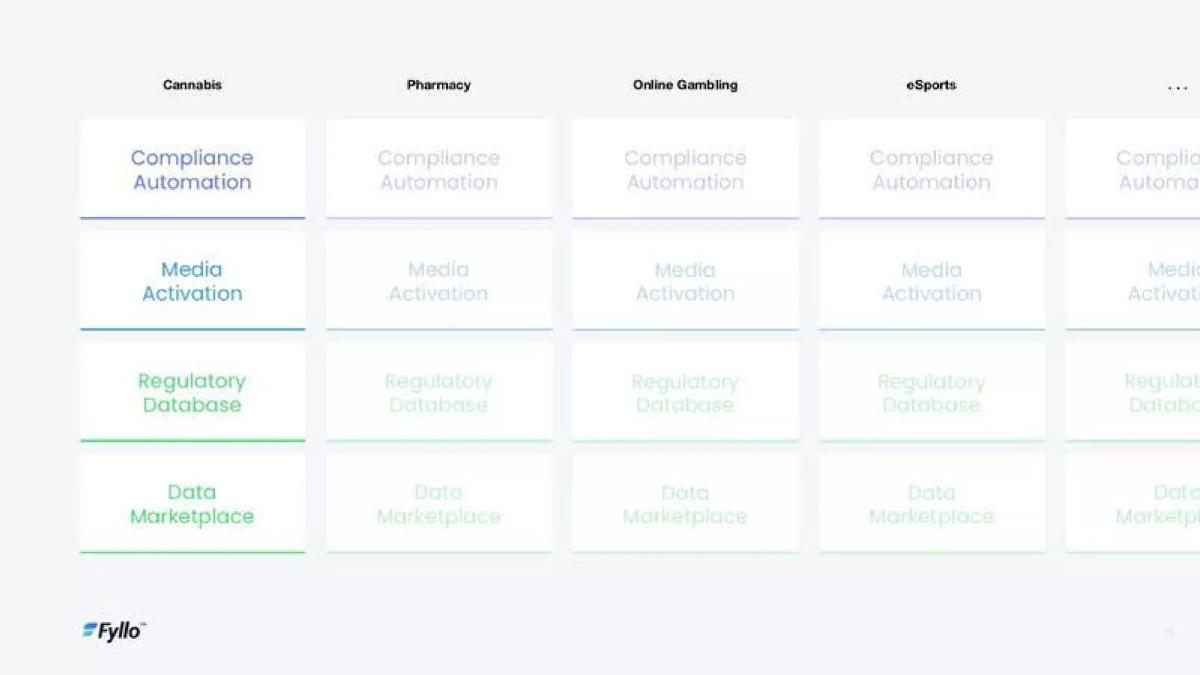
- Fyllo explicitly states that 'Cannabis is just the beginning,' signaling intent to expand into Pharmacy, Online Gambling, and eSports (Slide 4).
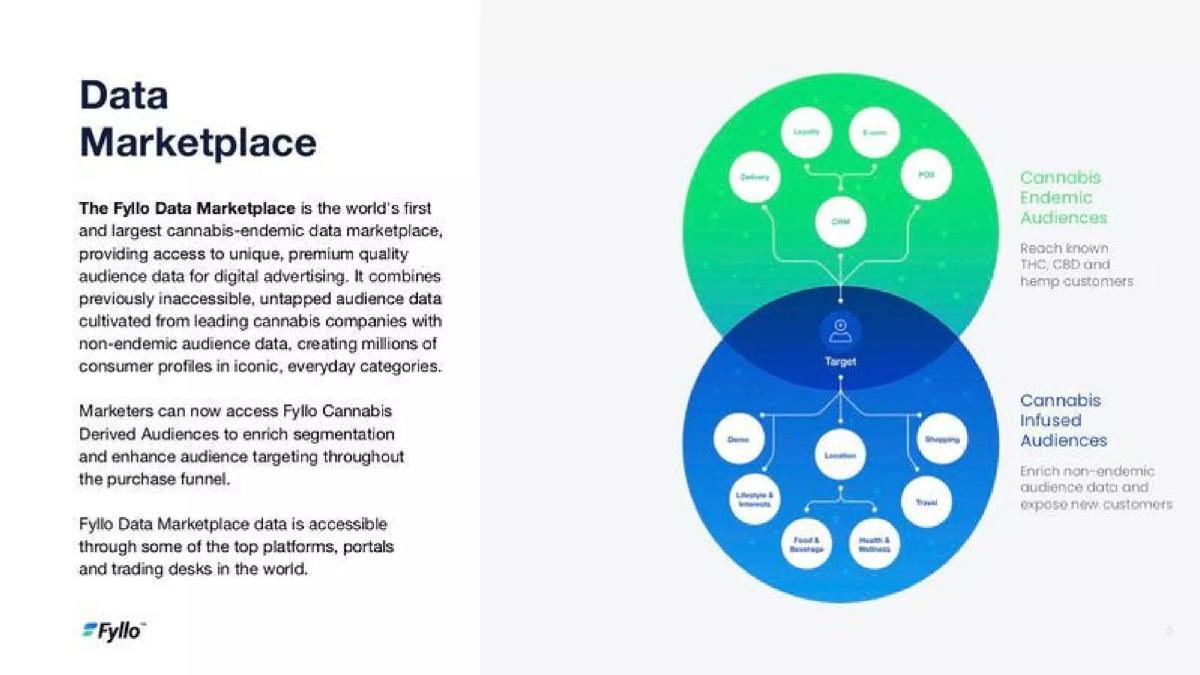
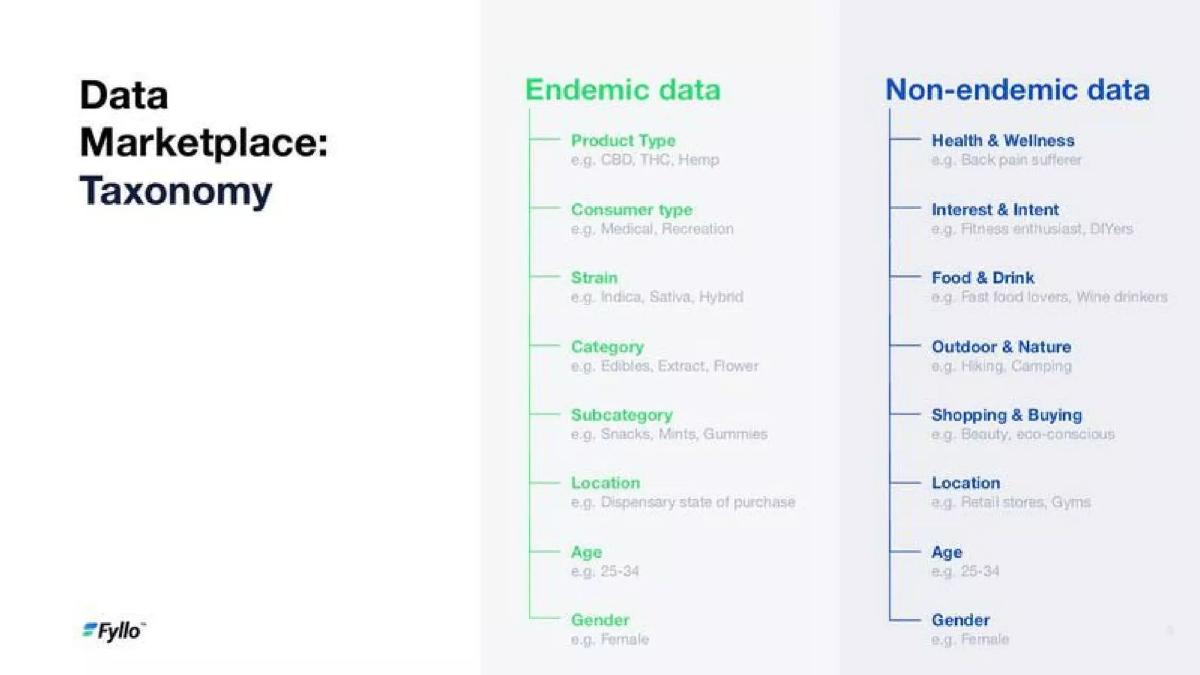
- The Data Marketplace product combines 'endemic' cannabis data with 'non-endemic' consumer profiles like health and wellness or outdoor interests (Slide 6).
- The Regulatory Database, branded as CannaRegs, aggregates research from over 4,000 sources across 1,300 jurisdictions (Slide 8).
- Compliance Automation uses AI and image recognition to detect non-compliant content in marketing creative based on jurisdictional rules (Slide 10).
- The deck relies heavily on team pedigree, listing eight management members with backgrounds at firms like Amobee, UBS, and Publicis (Slide 12).
- The Board of Members slide includes high-profile industry figures from Twitter, Kellogg, and Cronos (Slide 13).
- There is a complete absence of a 'The Ask' slide, financial projections, or current revenue figures within the 14-slide deck.
Introduction: The Infrastructure of Regulated Markets
Fyllo’s 2018 Series A deck is a strategic document that seeks to professionalize the cannabis advertising space. At the time of this raise, the cannabis industry was often viewed by institutional investors as a 'wild west' of fragmented state laws and high risk. Fyllo’s response was to pitch not a media company, but a compliance-first software suite. By framing their offering as the 'Compliance Cloud,' they positioned themselves as the essential bridge between mainstream brands and the cannabis consumer.
Slides 1-2: Branding and Structure
The deck opens with a minimalist title slide featuring the Fyllo logo on a solid blue background. Slide 2 is a simple 'Company Overview' transition slide. The lack of a tagline on the cover is a bold choice, suggesting that the company name itself is intended to carry weight, or that the deck was designed to be presented alongside a verbal narrative. The aesthetic is clean and corporate, signaling to Series A investors that this is an enterprise-grade solution, not a lifestyle brand.
Slides 3-4: The Vision and Vertical Expansion
Slide 3 introduces the 'Fyllo Compliance Cloud.' It defines the product as a suite of data, media, and compliance solutions built for highly regulated industries. Crucially, the slide ends with the phrase: 'Cannabis is just the beginning...' This is a classic venture capital hook, suggesting that while the current focus is cannabis, the Total Addressable Market (TAM) is much larger.
Slide 4 visualizes this expansion. It shows a grid where Fyllo’s four core products—Compliance Automation, Media Activation, Regulatory Database, and Data Marketplace—are applied to Cannabis, Pharmacy, Online Gambling, and eSports. This slide is vital for a Series A round because it demonstrates a clear path to becoming a multi-billion dollar platform rather than a niche industry tool.
Slides 5-7: The Data Marketplace
Slide 5 dives into the Data Marketplace. It claims to be the 'world's first and largest cannabis-endemic data marketplace.' The slide uses a Venn diagram to show how Fyllo targets two distinct groups: 'Cannabis Endemic Audiences' (known THC/CBD customers) and 'Cannabis Infused Audiences' (non-endemic customers who share lifestyle traits with cannabis users). This distinction is important for mainstream brands who may not sell cannabis but want to reach that demographic.
Slide 6 provides a 'Taxonomy' of the data. It lists 'Endemic data' points like product type (CBD, THC), strain (Indica, Sativa), and location (dispensary state). On the right, it lists 'Non-endemic data' like interests in fitness, food and drink, and shopping habits. This level of detail proves that Fyllo has moved beyond basic demographic targeting into sophisticated behavioral segmentation.
Slide 7 outlines specific use cases. For endemic brands, use cases include product promos and cross-selling. For traditional brands, the focus is on brand awareness and product launches (e.g., targeting organic CBD skincare users to convert them to non-cannabis products). This slide helps investors visualize exactly how the software generates value for a client.
Slides 8-9: Regulatory Database and Media Activation
Slide 8 focuses on 'CannaRegs,' Fyllo's regulatory database. It states the platform aggregates research from 4,000 sources across 1,300 jurisdictions in 15 states. The slide highlights 'Advanced tracking' and 'Powerful search' capabilities. By emphasizing the complexity of the data (ballot measures, zoning updates, legislative updates), Fyllo reinforces the 'moat' they have built—it would be incredibly difficult for a competitor to replicate this database from scratch.
Slide 9 covers 'Media Activation.' It promises access to top publishers across IAB categories like Food & Drink and Health & Wellness. The slide features logos of major media entities and tech partners, including Vice, Refinery29, Healthline, and PubMatic. This provides social proof, showing that established media players are willing to work within Fyllo's ecosystem.
Slide 10: Compliance Automation
This slide represents the 'secret sauce' of the Fyllo platform. It describes 'Fyllo Compliance Recognition Technology,' which uses AI, image recognition, and NLP to analyze marketing creative. The visual shows a mockup of a 'THC Gummy' ad being scanned for violations like 'Appeals to Minors' or 'Curative Claims.' This is a high-value feature because it automates a process that previously required expensive legal teams to perform manually. It turns compliance from a bottleneck into a competitive advantage.
Slides 11-13: The Team and The Board
Slide 11 is a transition slide for the 'Leadership Team.' Slide 12 introduces the management team. The pedigree here is exceptional for a Series A startup. CEO Chad Bronstein was formerly the CRO of Amobee; Nicole Cosby came from Publicis; Arjuna Reddy came from William Blair. The slide lists eight executives, suggesting a very heavy top-tier management structure, which is likely why they needed a $26M round.
Slide 13 presents the Board Members. Again, the names are high-profile: Katie Ford (Twitter), Clive Sirkin (Kellogg), and Lorne Gertner (Cronos). For an investor, this board provides a massive amount of confidence. If executives from Twitter and Kellogg are willing to attach their names to a cannabis-focused startup, it suggests the company has successfully navigated the reputational risks associated with the industry.
Slide 14: Conclusion
The deck ends as it began, with a simple logo slide. There is no 'Ask' slide, no 'Use of Proceeds,' and no 'Financial Projections.' This is highly unusual for a Series A deck and suggests that this version of the deck may have been a 'teaser' or a 'leave-behind' rather than the full pitch used in the room, or that the founders preferred to handle the financials in a separate data room.
What Works in This Deck
The 'Compliance-First' Narrative: By leading with compliance rather than just 'ads for weed,' Fyllo solves the biggest objection any institutional investor would have. · Visualizing the Moat: Slide 8 (Regulatory Database) and Slide 10 (Compliance Automation) clearly show why this isn't just a service business. There is real, proprietary technology and data at the core. · The Pedigree: The management and board slides are the strongest part of the deck. In a new industry, investors bet on the people who have 'been there, done that' in adjacent industries like ad-tech and CPG. · Vertical Scalability: Slide 4 effectively argues that Fyllo is a platform for all regulated industries, not just one. This significantly increases the perceived ceiling for the company's valuation.
What is Missing from This Deck
Traction Metrics: There are no mentions of revenue, growth rates, or even the number of active customers. For a Series A, investors usually expect to see a 'hockey stick' growth chart. · The Ask: The deck does not state how much money they are looking for or what they plan to do with it. While we know from external data it was $26M, a pitch deck should ideally state the funding goal. · Unit Economics: There is no information on Customer Acquisition Cost (CAC) or Lifetime Value (LTV). It is unclear how profitable each media activation or software subscription is for the company. · Competitive Landscape: The deck assumes Fyllo is the only player in the space. A slide comparing their 'Compliance Cloud' to traditional ad-tech stacks or other cannabis data players would have been helpful.
What a Founder Should Copy
The 'Just the Beginning' Strategy: If you are starting in a niche or controversial market, always include a slide (like Slide 4) showing how your technology applies to larger, more traditional markets. · Clean, Corporate Design: Fyllo avoids all the cliches of the cannabis industry (no green leaves, no counter-culture imagery). They look like a software company, which is exactly what a Series A investor wants to see. · Use Case Tables: Slide 7 is an excellent way to explain a complex product. By breaking it down by 'Objective' and 'Target Segment,' they make the product tangible. · Highlighting the Board: If you have high-profile advisors or board members, give them their own slide. It acts as a powerful form of 'borrowed credibility.'
Frequently asked questions
- What is Fyllo's core product offering?
- Fyllo offers the 'Compliance Cloud,' which consists of four integrated pillars: Compliance Automation, Media Activation, a Regulatory Database (CannaRegs), and a Data Marketplace. Together, these tools allow brands to run digital advertising campaigns that are automatically vetted against local and federal laws, specifically in the cannabis sector.
- How does Fyllo plan to scale beyond the cannabis industry?
- Slide 4 of the deck shows a grid where Fyllo's four core products are replicated across other verticals including Pharmacy, Online Gambling, and eSports. The strategy is to build the compliance infrastructure for any industry where advertising is restricted by complex, fragmented regulations.
- What role does AI play in Fyllo's technology?
- Fyllo uses AI in two main ways: first, to power the 'CannaRegs' database for advanced multivariate searches across 1,300 jurisdictions (Slide 8); and second, for 'Compliance Recognition Technology' which uses image recognition and natural language processing to flag non-compliant marketing creative in seconds (Slide 10).
- Who are the key people behind Fyllo?
- The management team is led by CEO Chad Bronstein (formerly CRO at Amobee). Other key leaders include Nicole Cosby (formerly SVP at Publicis) and Jeff Ragovin (formerly Co-Founder of Buddy Media). The board includes Katie Ford (Head of Global Brands at Twitter) and Clive Sirkin (formerly Chief Growth Officer at Kellogg).
- What metrics are missing from this pitch deck?
- This deck is surprisingly devoid of hard numbers. It does not list current Annual Recurring Revenue (ARR), customer count, churn rates, or specific growth percentages. It also lacks a slide detailing how much capital is being raised or how the funds will be allocated, though catalogue data confirms the round was $26M.