Hazel’s 2021 pitch deck is a masterclass in category repositioning. By framing incontinence not as a medical ailment but as a natural part of the 'ever-evolving woman’s' lifestyle, the founders successfully moved the conversation from 'diapers' to 'fashionable femme care.' The deck highlights a massive $13 billion market where 70% of customers are dissatisfied with current solutions (Slide 4). With a team boasting deep experience at consumer giants like Plated, Zola, and Johnson & Johnson, Hazel makes a compelling case for a patented, non-white-labeled product (Slide 11). While the deck is li…
Key takeaways
- The deck identifies a $13 billion global incontinence market that is growing at a 9% CAGR (Slide 15).
- Hazel claims that 70% of women in this category are currently unsatisfied with existing 'diaper-like' solutions (Slide 4).
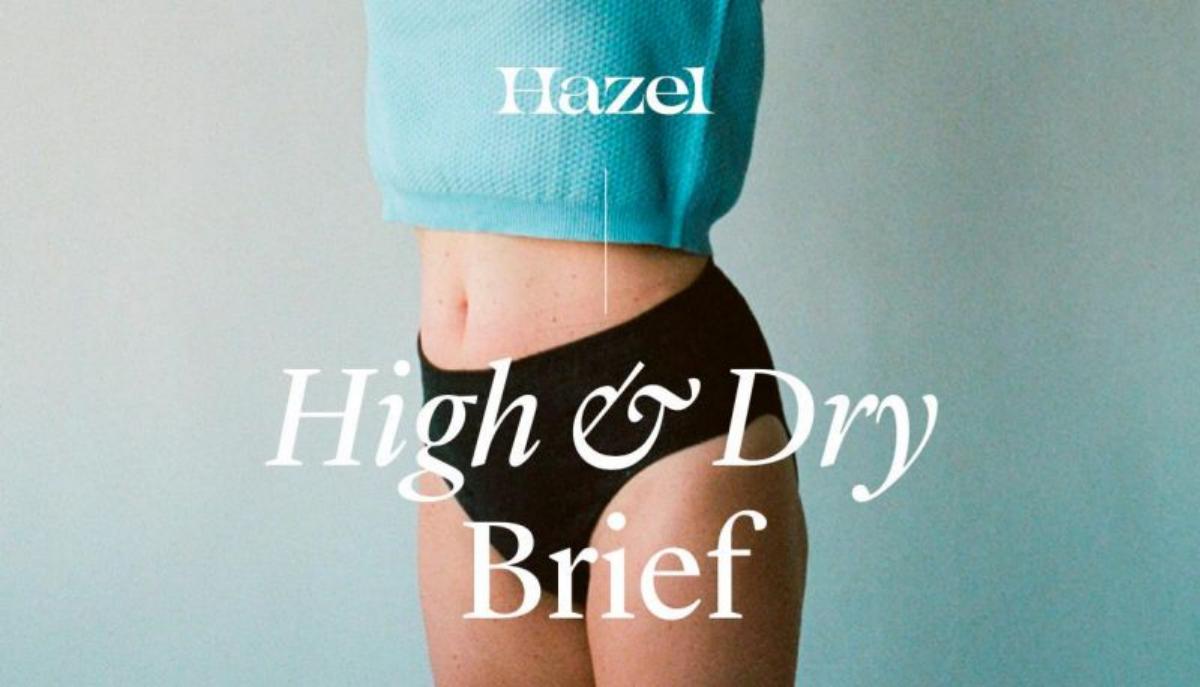
- The product, the 'High & Dry Brief,' is positioned as a fashion-first item developed with designers to eliminate visible panty lines (Slide 10).
- Hazel emphasizes that their design is patented and specifically not a white-labeled product, which is a common pitfall in the D2C space (Slide 11).
- The founders highlight the massive $15 trillion buying power of menopause-aged women to prove this is not a niche category (Slide 14).
- The team slide showcases significant exit experience, including a co-founder who was part of the $300M sale of Plated to Albertsons (Slide 18).
- The deck defines a new market segment called the 'leakproof economy,' spanning periods, postpartum, and menopause (Slide 21).
- There is a total absence of financial projections, burn rate, or specific use of funds in the provided slides.
The Narrative Strategy: From Stigma to Style
Hazel’s pitch deck is a textbook example of how to use branding to disrupt a 'boring' or 'stigmatized' category. The incontinence market has historically been dominated by medical-grade aesthetics and pharmacy-aisle branding. Hazel’s deck immediately counters this on Slide 1 with the tagline: 'Femme care for the ever-evolving woman.' By using high-fashion photography and a sophisticated color palette, they signal to investors that they are building a lifestyle brand, not a medical supply company.
Slides 1-5: Defining the Problem and the Persona
The deck opens with a strong focus on the user. Slide 2 introduces 'Kay,' a 62-year-old HR executive. This is a critical move. By giving the problem a face—one that is active, stylish, and digitally savvy—they debunk the myth that incontinence products are only for the elderly or infirm. Slide 3 provides the 'Why now?' by stating that 1 in 2 women over 50 experience urinary leakage due to childbirth and menopause. Slide 4 hits the investor with the first major metric: a $13 Billion Market where 70% aren't satisfied with existing solutions. The slide features a photo of a traditional bulky diaper, labeled 'Because they're baby diapers,' creating a clear 'enemy' for the brand to fight against. Slide 5 summarizes the mission: empowering women with 'innovative femme care and the elevated experience she so deserves.'
Slides 6-11: Product and Technology
Slides 6 through 10 introduce the 'High & Dry Brief.' The deck focuses on three pillars: Fit, Function, and Aesthetics. On Slide 8, they highlight that the product was designed for how a woman's body changes as she ages, featuring a high-waist control top. Slide 9 emphasizes the 'Function,' noting that the product is leakproof, moisture-wicking, and disposable for hygiene. Slide 10 leans into 'Aesthetics,' boasting an ultra-thin design with no visible panty lines, made from natural fibers and spandex. Slide 11 is perhaps the most important for defensibility; it details the 'No-Leak Chic Technology.' It explicitly states that the design is patented and not a white-labeled product . This is a direct response to investor fears about D2C companies that simply slap a logo on a generic manufacturer's product.
Slides 12-15: Market Dynamics and Competitive Advantage
Slide 12 discusses a 'Reimagined Manufacturing Process,' claiming that control over the supply chain allows for economies of scale and agility. Slide 13 provides a competitive breakdown, arguing that legacy brands lack incentive to innovate and newer brands only serve the 'light leakage' niche (10% of the market). Slide 14, titled 'Not A Niche Category,' provides a powerful macro-economic argument: menopause-aged women have $15 Trillion in buying power . Slide 15 visualizes the growth of the $13B incontinence market, showing a 9% CAGR and comparing it to the global razor and blade market ($14.2B) to illustrate the scale of the opportunity.
Slides 16-17: Customer Validation
Slide 16 uses social proof, stating the team talked to '100s of women' through surveys and focus groups. It includes quotes like 'I want an absorbent underwear that looks & feels good. Not a diaper. They’re humiliating.' This reinforces the emotional pain point identified earlier. Slide 17 compares the incontinence opportunity to other successful 'taboo' categories like Erectile Dysfunction ($4.4B) and Hair Loss ($5.3B), showing that incontinence is actually a larger market ($13B) than both combined, yet remains 'overlooked.'
Slides 18-21: Team and Vision
The team slides (18 and 19) are exceptionally strong. Co-founder Steven Cruz is credited with leading strategy at Plated (sold for $300M), while Aubrey Hubbell has experience at Rockets of Awesome and Zola. The supporting team includes an R&D consultant with a PhD and veterans from Avon, Johnson & Johnson, and J.P. Morgan. This mix of high-growth startup experience and deep corporate R&D gives the deck significant credibility. Slide 20 outlines their 'Strengths & Beliefs,' focusing on being customer-driven and having a flexible supply chain. Finally, Slide 21 introduces the concept of the 'leakproof economy,' showing a roadmap that extends from periods and pregnancy to menopause and beyond, suggesting a long-term platform play rather than a single-product company.
What Hazel Does Well
Category Creation: The deck successfully rebrands a medical issue as a lifestyle category. The term 'leakproof economy' is a clever way to expand the TAM in the minds of investors.
Visual Storytelling: The use of high-quality, aspirational photography (Slides 6, 7, 14) is intentional. It forces the investor to view the product through the lens of fashion rather than pharmacy, which justifies a higher price point and better brand loyalty.
Addressing Defensibility: By explicitly stating the product is patented and not white-labeled (Slide 11), Hazel addresses the biggest risk in D2C: the lack of a 'moat.' They are positioning themselves as a technology and materials science company, not just a marketing firm.
What is Missing from the Hazel Deck
Unit Economics: There is no mention of Customer Acquisition Cost (CAC), Lifetime Value (LTV), or contribution margins. For a $25M Seed round, investors usually want to see a clear path to profitability or at least a highly efficient growth engine.
Traction Metrics: The deck is heavy on 'what we will do' and 'what we heard,' but light on 'what we have done.' There are no sales figures, waitlist numbers, or pilot results included in these slides.
The Ask: The provided slides do not include a formal 'Ask' slide. We know from the catalogue facts that they raised $25M, but the deck itself doesn't specify the amount sought or the milestones that capital would achieve.
Founder Takeaway: Copy the 'Kay' Strategy
If you are building in a category that is traditionally seen as 'unsexy' or 'embarrassing,' copy Hazel’s approach to the user persona. Instead of showing a patient, show a customer. Slide 2 ('Meet Kay') does more work than five slides of data could. It tells the investor exactly who the customer is, why she has money, and why she is currently being ignored by the market. By the time you get to the $13B market slide, the investor is already rooting for Kay to have a better product. This emotional connection, backed by the founders' impressive pedigree (Slide 18), is what likely drove the massive $25M valuation.
Frequently asked questions
- How much did Hazel raise with this deck?
- According to the catalogue facts, Hazel raised $25 million in a Seed round in 2021. This is an exceptionally large Seed round, likely driven by the founders' previous exit experience and the massive total addressable market (TAM) they identified in the incontinence space.
- What is Hazel's core product innovation?
- Hazel's core product is the 'High & Dry Brief.' As shown on slides 8 through 11, the innovation lies in combining 'No-Leak Chic Technology' with natural fibers and spandex. The goal was to create a disposable product that looks and feels like real underwear, featuring a high-waist control top and ultra-thin profile to avoid visible panty lines.
- Who is the target demographic for Hazel?
- The deck uses a persona named 'Kay,' a 62-year-old stylish HR executive who enjoys Pilates (Slide 2). While the product covers the 'leakproof economy' from periods to postpartum, the deck heavily emphasizes women over 50, noting that 1 in 2 women in this age group experience urinary leakage (Slide 3).
- Does the deck mention any competitors?
- Slide 13 addresses the competitive landscape broadly. It notes that 'Legacy brands' have no incentive to innovate, while 'Newer brands' are either reusable (serving only 10% of the market with light leakage) or white-labeled (failing to solve the 'diaper-like' feel). It does not name specific companies like Thinx or Depend.
- What is missing from the Hazel pitch deck?
- The deck is missing several standard venture components, including a detailed 'Ask' slide (how much they are raising and why), a financial roadmap, unit economics (CAC/LTV), and specific traction metrics like current subscriber counts or monthly recurring revenue (MRR).