Lance’s 2021 Seed deck is a masterclass in narrative-driven FinTech storytelling. Rather than leading with complex banking infrastructure, the deck focuses on the emotional and financial friction of being self-employed. It identifies a massive TAM of over 60M Americans and uses stark statistics—like the $6,500 lost annually in missed deductions—to justify its existence. The product solution is presented as a 'set it and forget it' framework that automates the most painful parts of freelancing: taxes, salary, and savings. While the deck is light on historical traction, it compensates with a cl…
Key takeaways
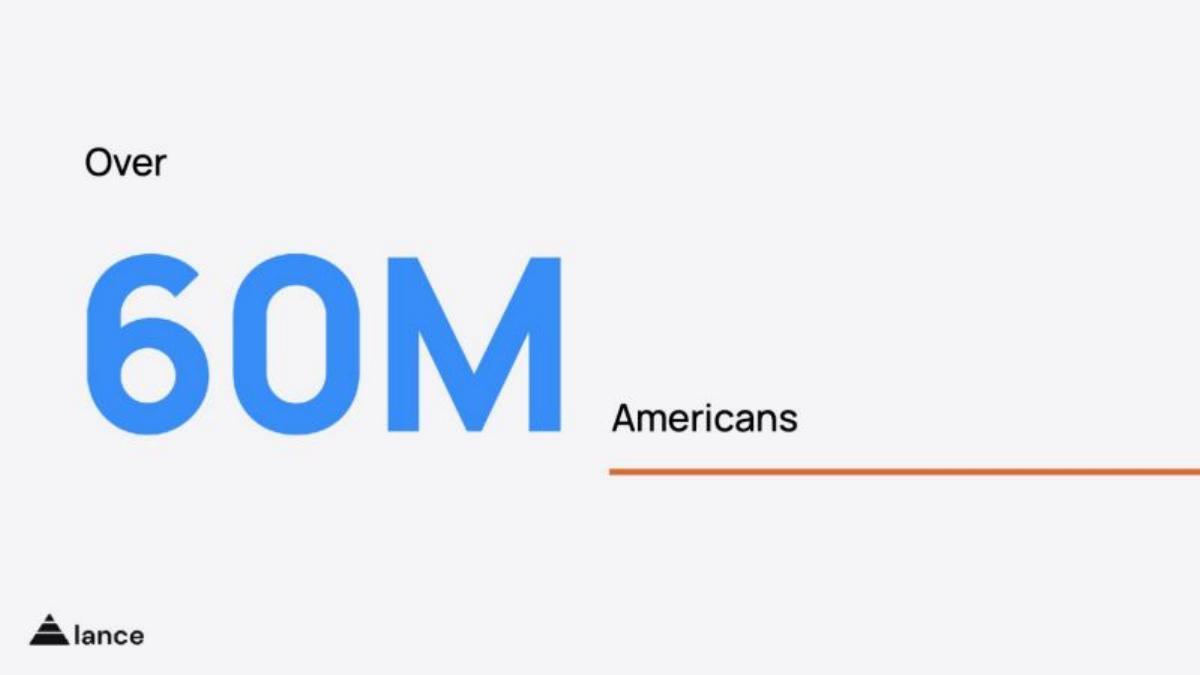
- The deck identifies a massive market of over 60 million Americans who are currently self-employed (Slide 3).
- Lance highlights a significant pain point: freelancers lose an average of $6,500 annually in unclaimed tax deductions (Slide 11).
- The product is positioned as the first 'Smart Bank Account' specifically designed for the self-employed (Slide 13).
- The core value proposition is 'Automated Allocations,' which splits income into salary, tax, savings, and expenses (Slide 17).
- The business model is diversified, combining a monthly SaaS subscription fee with banking interchange and partner revenue (Slide 20).
- The deck projects aggressive growth, targeting $10M in revenue by 2023 (Slide 20).
- The team slide features founders with backgrounds from high-profile companies including Microsoft, Taboola, and Riskified (Slide 21).
- The deck lacks a specific 'Ask' slide detailing the exact terms of the $2.8M round or the planned use of funds.
The Narrative Arc: From Freedom to Friction
The Lance pitch deck is structured as a classic hero's journey where the freelancer is the protagonist. It begins by validating the lifestyle choice of the self-employed before quickly pivoting to the systemic financial hurdles they face. This approach is highly effective for Seed-stage FinTechs because it establishes empathy before introducing technical solutions.
Slides 1-6: Market Size and Sentiment
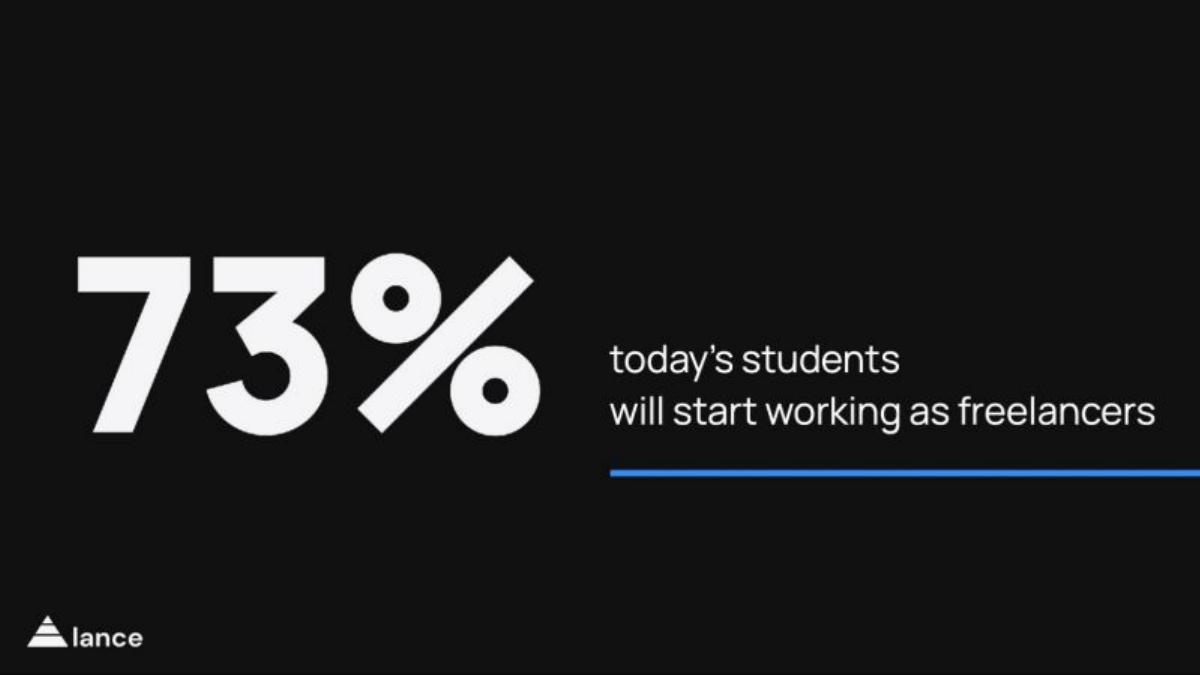
The deck opens with a minimalist title slide: "Smart Business Banking for the Self-Employed" (Slide 1). This immediately defines the category. Slides 2 through 6 build the macro case for the business. Slide 3 states there are "Over 60M Americans" in this category, and Slide 4 adds a growth signal: "73% of today's students will start working as freelancers."
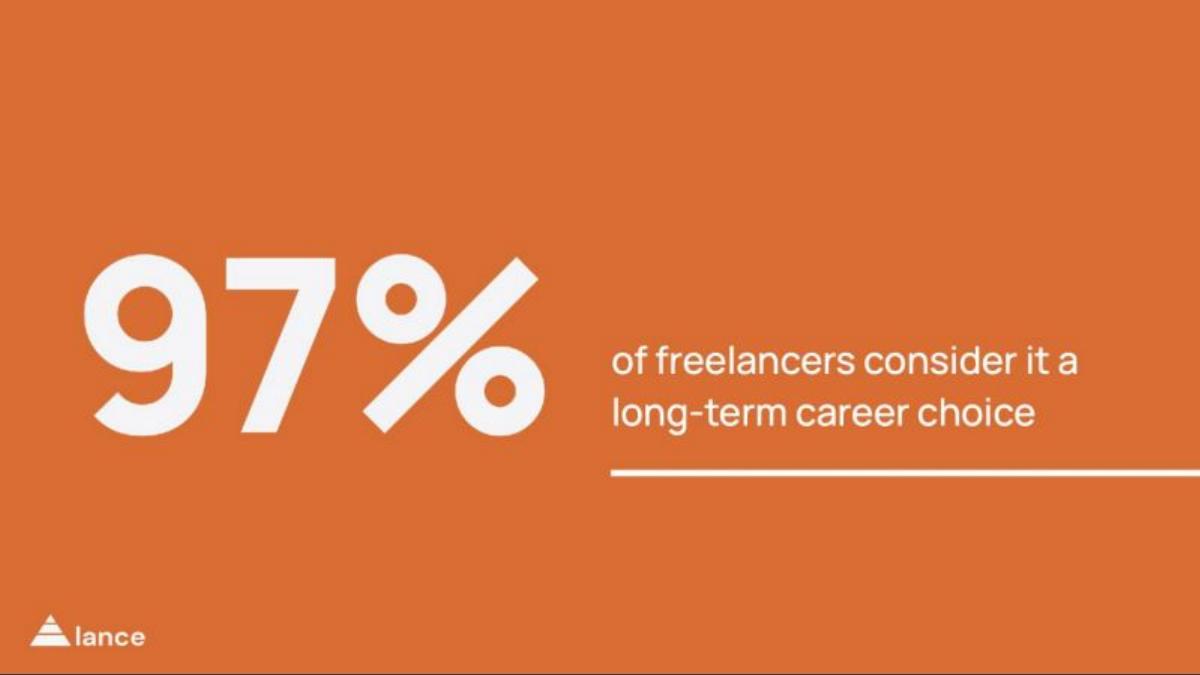
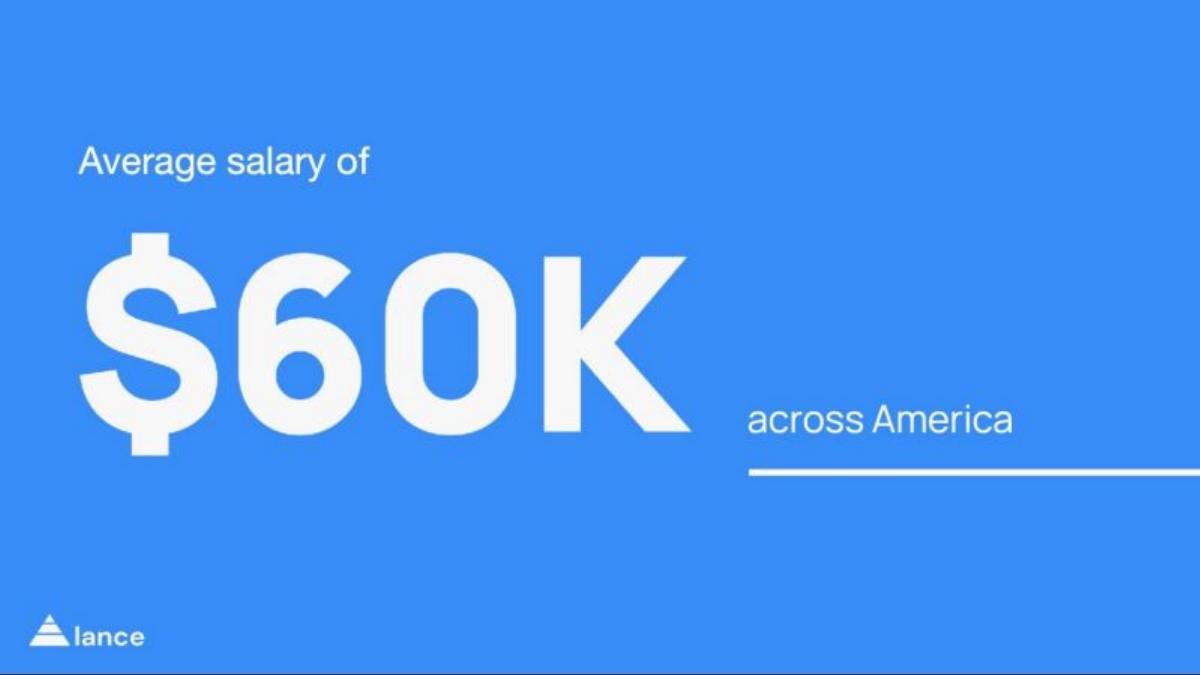
By Slide 5, the deck establishes the 'stickiness' of the sector, noting that "97% of freelancers consider it a long-term career choice." Slide 6 provides the economic context, citing an "Average salary of $60K across America." These slides work together to prove that the target audience is large, growing, committed, and has enough cash flow to justify a paid financial tool.
Slides 7-12: The Problem of 'Mental Load'
The tone shifts on Slide 7 with a photo of a stressed child and the caption: "But Managing a Business is Still So Confusing." Slides 8 and 9 contrast W-2 employees with the self-employed. While both worry about their careers, the self-employed have an additional layer of complexity. Slide 10 lists these burdens: paying taxes, maximizing deductions, tracking profit, and smoothing cash flow.
Slide 11 is the 'anchor' slide of the problem section. It quantifies the pain with three specific data points: freelancers "Lose $6,500 annually in deductions," "Suffer from inconsistent monthly cash flow," and "Lack even $400 in emergency savings." This slide is crucial because it transforms a vague feeling of 'stress' into a concrete financial loss that Lance can claim to recover for the user.
Slides 13-18: The Solution and Product Mechanics
Slide 13 introduces the product: "The First Smart Bank Account for the Self-Employed." The visual shows a sleek mobile interface with a net profit graph and transaction list. Slide 14 emphasizes the "Modern Online Banking Experience" with features like "$0 fees" and "24/7 support."
The core innovation is explained in Slides 15 through 17. Slide 15 identifies the "Basic Financial Components of Freelancing" (Salary, Taxes, Expenses, Savings). Slide 16 introduces "Lance's Targeted Financial Framework," a diagram showing money flowing into a central 'Lance' node and being distributed to those four components. Slide 17 shows the UI for these "Automated Allocations," which they call "Stacks." This is the 'Aha!' moment of the deck—showing how the software replaces the freelancer's manual spreadsheet or mental math.
Slides 19-21: Business Strategy and Team
Slide 19 lists "Competitive Advantages," claiming to be "First to Market" for integrated banking and accounting. It emphasizes a "Set It + Forget It" user experience. Slide 20 outlines the "Business Model." It is a multi-pronged approach: a "Monthly accounting subscription fee" (SaaS), "Interchange rates" (Banking), and "Tax, incorporation and other partner revenue" (Services). The accompanying chart shows a revenue projection scaling from near zero in 2021 to "$10M" by 2023.
The "Our Team" slide (Slide 21) features four founders: Oona Rokyta (CEO), Gilad Uziely (COO), Oren Reuveni (CTO), and Tom Reuveni (CPO). The slide highlights previous experience at Microsoft, Aleph, Flex, Taboola, Riskified, and Juno. This is a strong signal of execution capability, particularly in the Israeli and US tech ecosystems.
What Works in the Lance Deck
Specific Pain Quantification: Many decks fail by being too general about the problem. Lance’s mention of the $6,500 lost in deductions (Slide 11) gives an investor a clear 'Return on Investment' story for the customer. If the app costs $10-20 a month but saves $6,500 a year, the churn should theoretically be very low.
Visual Simplicity: The deck uses a high-contrast black-and-white theme with pops of blue and orange. It avoids dense text blocks, opting for large numbers and clear icons. This makes it easy to digest in a 3-minute first pass.
The 'Stacks' Concept: By naming their feature 'Stacks' (Slide 17), Lance creates a proprietary vocabulary for a common financial task. This helps in brand building and makes the product feel like a new category rather than just another checking account.
What is Missing from the Lance Deck
Historical Traction: The revenue chart on Slide 20 is purely forward-looking. There are no slides showing current user growth, Waitlist numbers, or Transaction Volume (GTV) from a beta period. For a Seed round, investors usually want to see some evidence of early product-market fit, even if it is just qualitative feedback.
Competitive Landscape: While Slide 19 mentions being 'First to Market,' it ignores existing players like Lili, Novo, or even established tools like QuickBooks Self-Employed. A sophisticated investor would want to know how Lance wins against incumbents who already have the user's data.
The Ask: The deck ends abruptly with the team slide. It does not state how much capital is being raised (though we know from catalogue facts it was $2.8M) or how that capital will be allocated between engineering, marketing, and regulatory compliance.
Founder's Guide: What to Copy
The 'Contrast' Strategy: Founders should copy the way Lance contrasts the W-2 experience with the self-employed experience (Slides 8-9). It highlights a gap in the market that is often overlooked by traditional banks designed for corporations or standard employees.
The Framework Visual: Slide 16 is an excellent example of a 'System Map.' It explains a complex backend process (automated withholding and distribution) in a single, simple diagram. If your product does 'magic' in the background, you need a slide like this.
The Multi-Stream Revenue Model: Showing that you aren't reliant solely on interchange fees is vital in the current FinTech climate. By leading with SaaS revenue (Slide 20), Lance positions itself as a software company first and a bank second, which typically commands higher valuation multiples.
Frequently asked questions
- How much did Lance raise with this deck?
- According to the catalogue facts, Lance raised $2.8M in a Seed round in 2021. The deck itself focuses on the market opportunity and product mechanics rather than the specific financial terms of the raise.
- What is the primary problem Lance is solving?
- Lance addresses the 'confusion' and 'constant stress' of managing business finances for freelancers. Specifically, it targets the lack of emergency savings, inconsistent cash flow, and the $6,500 in annual tax deductions that freelancers typically lose due to poor tracking (Slides 11-12).
- What is the 'Lance Financial Framework'?
- It is an automated system that takes incoming revenue and instantly allocates it into four distinct 'stacks': Salary, Taxes, Expenses, and Savings. This removes the manual work of calculating tax withholdings or setting aside profit (Slide 16).
- How does Lance make money?
- The company employs a hybrid revenue model. Primary revenue comes from a monthly accounting subscription fee (SaaS). Secondary revenue streams include banking interchange rates (APY) and partner revenue from services like tax filing and incorporation (Slide 20).
- Who are the competitors mentioned in the deck?
- The deck does not include a traditional competitive matrix or name specific rivals. Instead, it claims a 'First to Market' advantage for integrated business banking and accounting, positioning itself against the status quo of manual management (Slide 19).