Landis presents a compelling case for a 'compassionate' proptech model that addresses the 30 million aspiring homeowners in the U.S. (Slide 8). Their Series A deck focuses heavily on the human element, using case studies and client photos to validate a complex financial product: buying homes for clients and renting them back until they are mortgage-ready. While the deck is light on specific financial performance—redacting revenue and market size figures (Slide 8)—it excels at explaining a multi-step operational process. By positioning themselves as the 'central hub' for major real estate brok…
Key takeaways
- The company identifies a massive addressable market of 30 million households who want to own but currently rent (Slide 8).
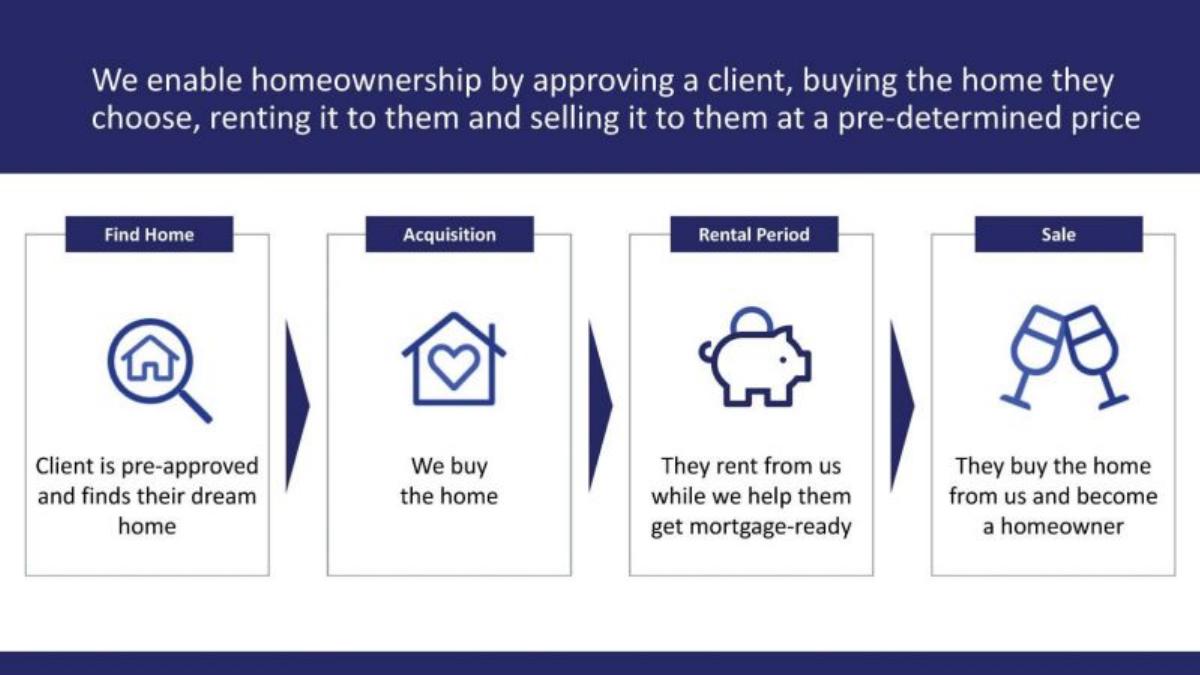
- Landis operates a four-stage model: Find Home, Acquisition, Rental Period, and Sale (Slide 4).
- The platform targets a specific credit score requirement of 550+ to help those barred from traditional lending (Slide 13).
- Strategic partnerships with major real estate brands like Century 21 and Coldwell Banker serve as their primary referral engine (Slide 10).
- The median income of their target client base is stated as $44,000 (Slide 12).
- The deck emphasizes coaching as a core differentiator, providing monthly calls to help clients manage debt and credit (Slide 7).
- Geographic focus is currently limited to 11 states, primarily in the Midwest and Southeast (Slide 9).
- The mission is explicitly stated as being both 'innovative and compassionate' (Slide 2).
The Mission-Driven Proptech Narrative
Landis enters the crowded proptech space with a narrative that leans heavily on social mobility and financial inclusion. In a sector often criticized for institutionalizing home ownership at the expense of individuals, Landis positions itself as a bridge. The deck is structured to move from the emotional 'why' to the operational 'how,' using a clean, corporate aesthetic that prioritizes clarity over flashiness.
Slides 1-2: Identity and Mission
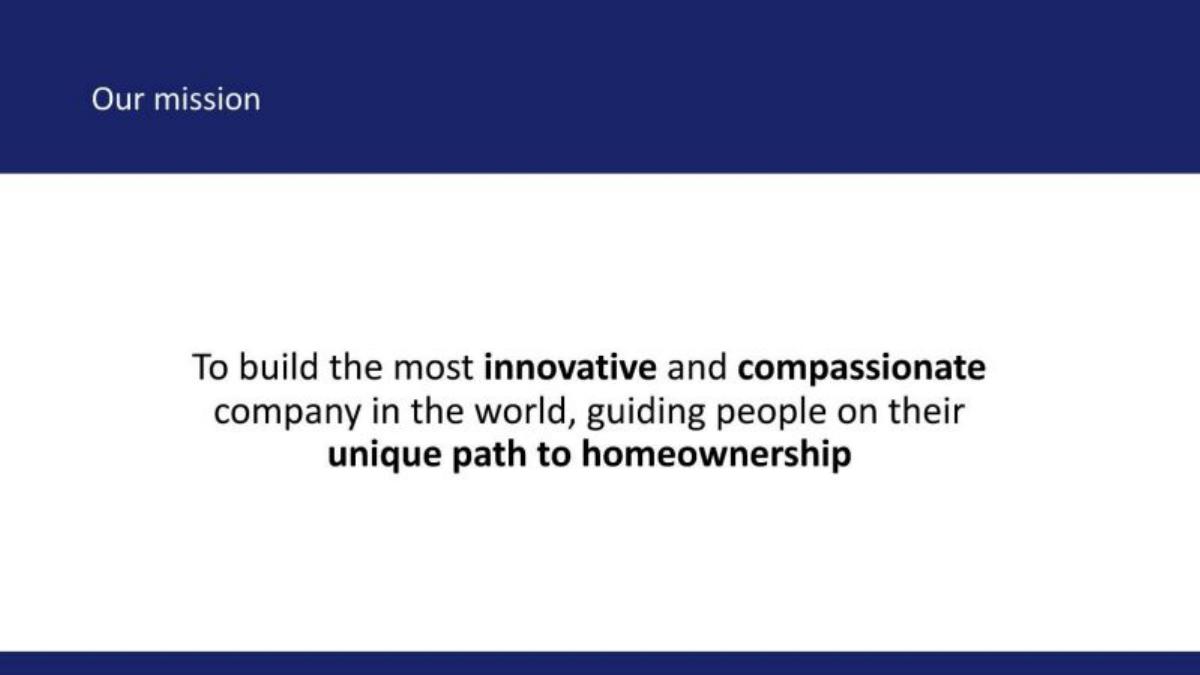
The deck opens with a minimalist title slide (Slide 1) featuring the Landis logo—a stylized roofline—and the company's URL. This is immediately followed by a Mission Slide (Slide 2) that sets the tone for the entire presentation. By using the words "innovative and compassionate," Landis signals to investors that they are not just a mortgage alternative, but a social impact vehicle. The focus on a "unique path to homeownership" suggests a personalized approach to a traditionally rigid financial process.
Slides 3-5: The Problem and the Process
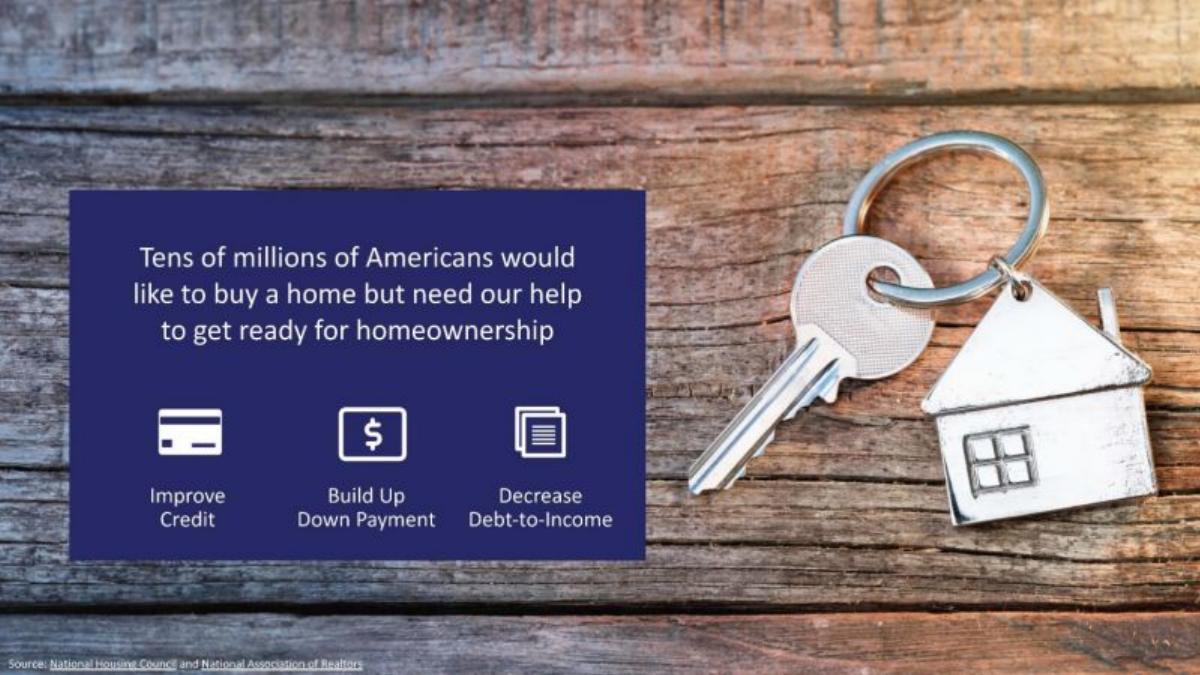
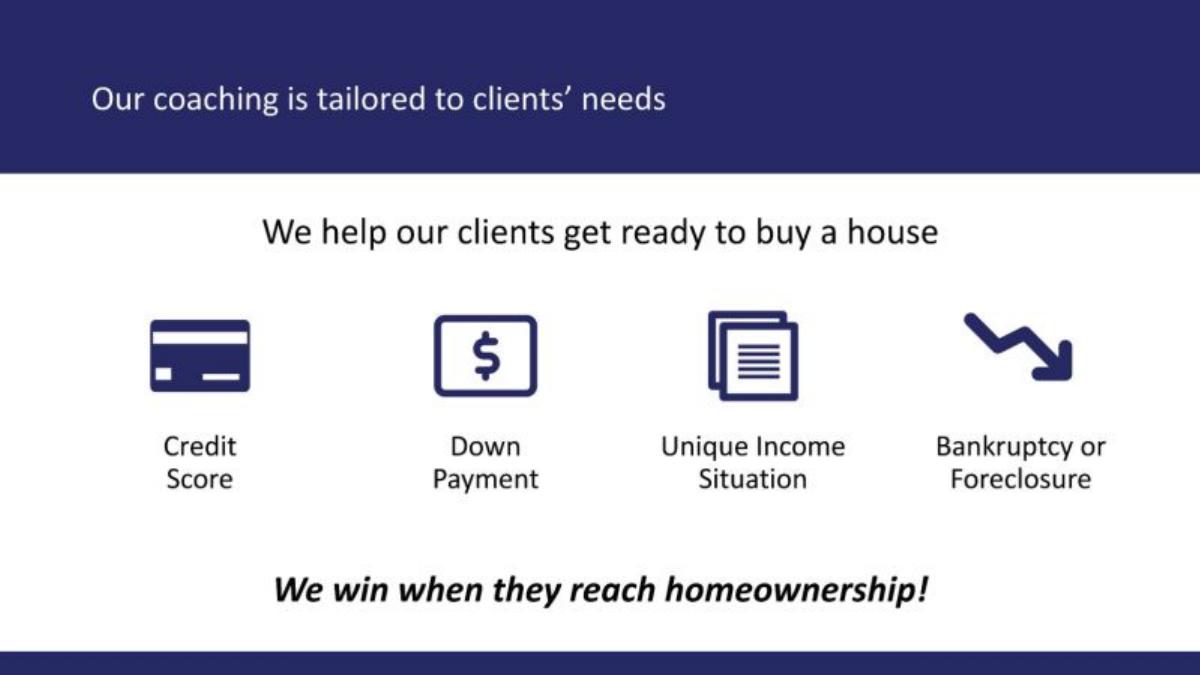
Slide 3 identifies the core obstacles for "tens of millions of Americans": credit scores, down payments, and debt-to-income ratios. This slide is effective because it uses simple iconography to represent complex financial hurdles. Slide 4 is the most critical operational slide in the deck. It breaks the Landis journey into four distinct phases: Find Home, Acquisition, Rental Period, and Sale . This linear progression demystifies the business model, showing exactly where Landis takes title to the property and where the client eventually transitions to ownership. Slide 5 reinforces the 'coaching' aspect, emphasizing that Landis only 'wins' when the client reaches homeownership, aligning the company's incentives with the user's success.
Slides 6-7: Case Studies and Product Depth
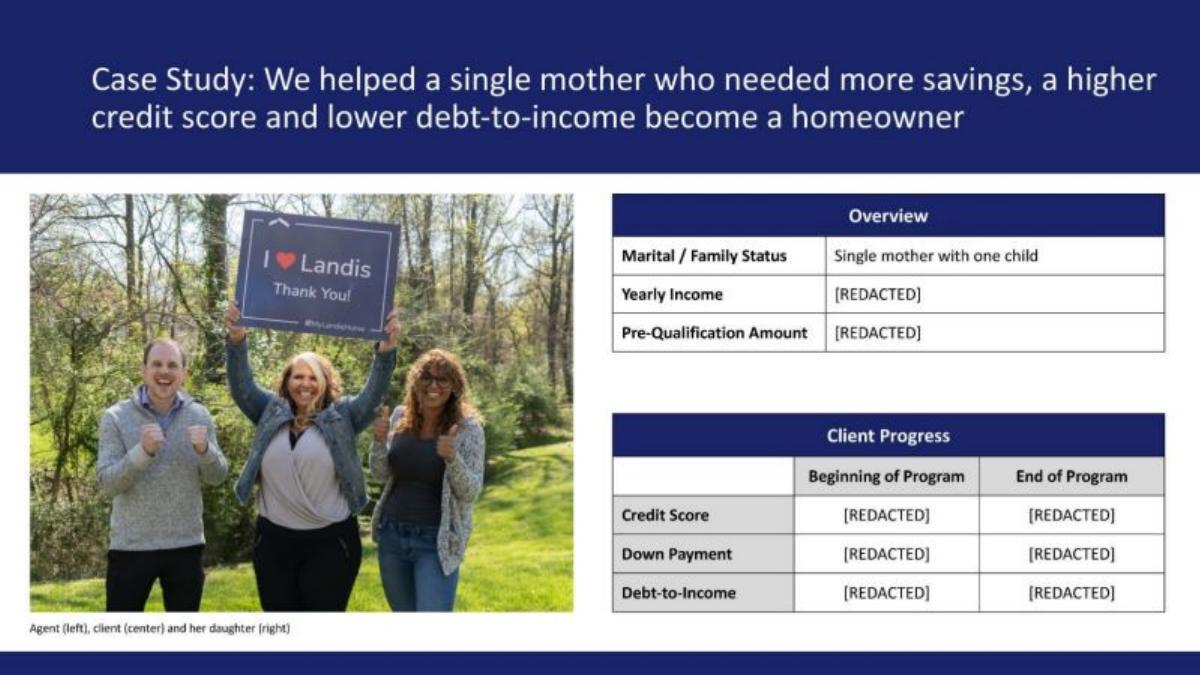
Slide 6 provides a case study of a single mother, though the financial specifics—Yearly Income, Pre-Qualification Amount, and Credit Score progress—are [REDACTED] . Despite the missing numbers, the inclusion of a photo with a real estate agent and the client adds a layer of human proof. Slide 7 dives deeper into the 'how,' mentioning that they have built technology to "automate parts of the client underwriting process." This is a key 'VC' point, as it suggests the business can scale without a proportional increase in manual labor. The mention of monthly coaching calls and tailored programs highlights the high-touch nature of their service during the rental period.
Slides 8-9: Market Size and Geography
Slide 8 attempts to quantify the opportunity. It starts with 127 million US households and filters down to 32 million renting households who want to own. Landis identifies 4.8 million households as currently eligible for their program. However, like the case study, the Average Revenue and total Market Size figures are [REDACTED] . Slide 9 shows their current footprint in 11 states. The map indicates a strong presence in the Eastern and Midwestern US, with a stated plan to go national. This geographic concentration suggests they have mastered the regulatory and real estate nuances of these specific markets before attempting a wider rollout.
Slide 10: The Referral Engine
Slide 10 is perhaps the most impressive 'traction' slide for a Series A company. It displays the logos of nearly every major real estate brokerage in the country, including Keller Williams, RE/MAX, Century 21, and Coldwell Banker . By positioning Landis as the "central hub" for these partners, they demonstrate a low-cost customer acquisition strategy. Real estate agents are incentivized to refer clients to Landis because it allows them to close a deal today that would otherwise be lost due to the client's lack of financing.
Slides 11-13: Asset Quality and Social Impact
Slide 11 showcases the types of properties Landis buys, with prices ranging from $115,000 to $224,000 . This confirms their focus on the 'affordable' segment of the market rather than luxury real estate. Slide 12 connects the business back to macroeconomics, quoting The Economist on homeownership as the "#1 creator of personal wealth." They disclose that their clients' median income is $44,000 , further cementing their role as a provider for the underserved. Slide 13 addresses the COVID-19 environment, noting that they help those who lost mortgage qualification status and highlighting their 550+ credit score requirement , which is significantly lower than traditional lenders.
Slides 14-17: Social Proof and Legalities
Slides 14 and 15 are dedicated to client testimonials and photos. The reviews emphasize the emotional relief of the process, with one client stating they "never would of thought that I would be living in a beautiful house." These slides serve to humanize the data. Slide 16 is a dense legal disclaimer, common in real estate and fintech decks, and Slide 17 is a standard closing slide from the source library.
What Landis Does Well
The Landis deck is a masterclass in process transparency . Many fintech companies hide their complexity behind buzzwords, but Landis uses Slide 4 and Slide 7 to walk the investor through the actual mechanics of the transaction. They also excel at stakeholder alignment ; by showing how they help real estate agents (Slide 10) and renters (Slide 12), they prove that their growth is beneficial to the existing ecosystem rather than disruptive in a predatory way. The use of a 550+ credit score as a specific 'hook' (Slide 13) gives investors a concrete understanding of their risk appetite and target niche.
What is Missing
The most glaring omission is a Team Slide . For a Series A round of $165M, the background of the founders and their experience in real estate or credit risk is vital. Also missing are Unit Economics . While we see the house prices, we don't see the spread Landis makes on the rent, the appreciation share (if any), or the fee structure. The redaction of revenue and market size on Slide 8 makes it difficult to assess the actual scale of the business at the time of the pitch. Finally, there is no Competitor Slide ; the deck acts as if Landis is the only player in the rent-to-own space, ignoring companies like Divvy Homes or Home Partners of America.
Founder's Playbook: What to Copy
Founders should emulate the Partner Hub strategy shown on Slide 10. If your startup can turn an industry's 'trash' (unqualified leads) into 'treasure' (closed commissions), you create a self-sustaining growth engine. Additionally, the Step-by-Step Process slide (Slide 4) is a great way to explain a business that involves multiple transactions. Finally, the Macro-to-Micro framing on Slide 12—using a reputable source like The Economist to validate your mission—is a powerful way to build authority before presenting your own company's data.
Frequently asked questions
- What is the core business model of Landis?
- Landis operates a rent-to-own model where they purchase a home selected by a pre-approved client. The client then rents the home from Landis while receiving financial coaching to become mortgage-ready. Once the client qualifies for a mortgage, Landis sells the home back to them at a pre-determined price, as outlined on Slide 4.
- How does Landis acquire its customers?
- Instead of direct-to-consumer advertising, Landis positions itself as a 'central hub' for real estate partners. Slide 10 shows logos for major firms including Keller Williams, RE/MAX, and Berkshire Hathaway HomeServices, indicating that real estate agents refer clients who cannot currently qualify for a traditional mortgage to Landis.
- What are the specific requirements for a Landis client?
- According to Slide 13, Landis requires a minimum credit score of 550+. Slide 12 notes that their clients' median income is $44,000, categorizing them as low-to-moderate income households who need assistance with credit improvement, down payment savings, or debt-to-income ratio reduction.
- Where does Landis currently operate?
- Slide 9 features a map showing operations in 11 states. The highlighted regions include states such as Ohio, Pennsylvania, Kentucky, Tennessee, North Carolina, South Carolina, Georgia, Alabama, Maryland, West Virginia, and Indiana.
- What is missing from the Landis pitch deck?
- The deck is notably missing a dedicated team slide and specific unit economics. While it mentions 'automated underwriting' on Slide 7, it does not detail the technology stack. Furthermore, all revenue, market size totals, and specific case study financial figures are redacted on Slides 6 and 8, leaving the actual profitability of the model unclear.