Nokod Security’s 22-slide Seed deck is a masterclass in establishing founder-market fit and urgency. By positioning the 'citizen developer' trend as a massive security liability, the team—led by founders with exits to Ping Identity and Thoma Bravo—successfully raised $8M. The deck utilizes a 'top-down' and 'bottom-up' TAM analysis to justify a multi-billion dollar opportunity, while relying on qualitative validation from Fortune 50 CISOs to prove demand. While the deck redacts specific financial and competitive details in this public version, the narrative flow from the 'inflation of LCNC app…
Key takeaways
- The founding team features deep domain expertise, including a CEO with a previous exit to Ping Identity and a CTO who co-founded Imperva (Slide 2).
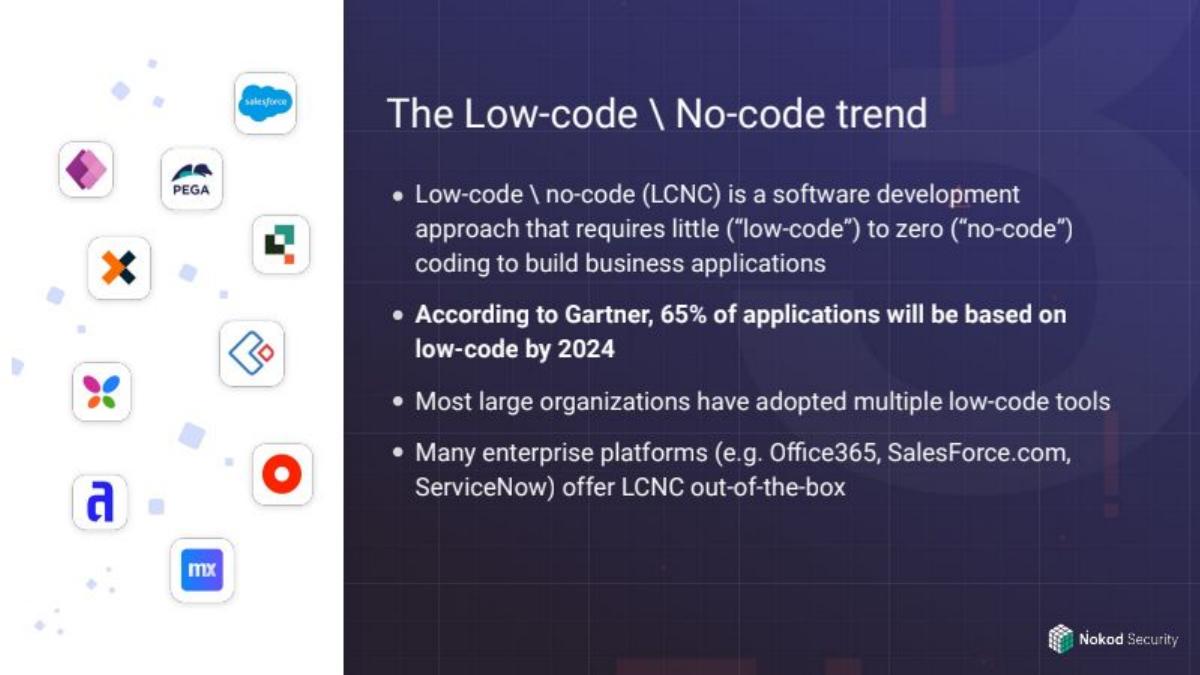
- Nokod identifies a massive shift in software development, citing Gartner's projection that 65% of applications will be low-code by 2024 (Slide 5).
- The problem is framed as a lack of visibility and testing, where apps go directly to production without engineering-grade security processes (Slide 7).
- The solution is presented as a centralized 'Nokod NCLC Analyzer' that detects malicious, vulnerable, and non-compliant apps (Slide 11).
- Market sizing is approached from three angles, estimating an Appsec-specific TAM of $6.07B by 2023 (Slide 13).
- Go-to-market strategy focuses on direct sales to CISOs and Directors of Appsec in mid-market and enterprise organizations (Slide 16).
- Validation is provided through direct quotes from CISOs at Top 50 global banks and Fortune 50 healthcare companies (Slide 18).
- The 2023-2025 timeline sets a clear path from a 4-person MVP team to a 25-person Series A-ready organization (Slide 20).
Introduction and Team Pedigree
The Nokod Security deck opens with a clear, minimalist title slide (Slide 1) that immediately identifies their niche: "Securing your Low-code \ No-code Applications." This sets the stage for a highly specialized cybersecurity play.
The Power of Founder-Market Fit
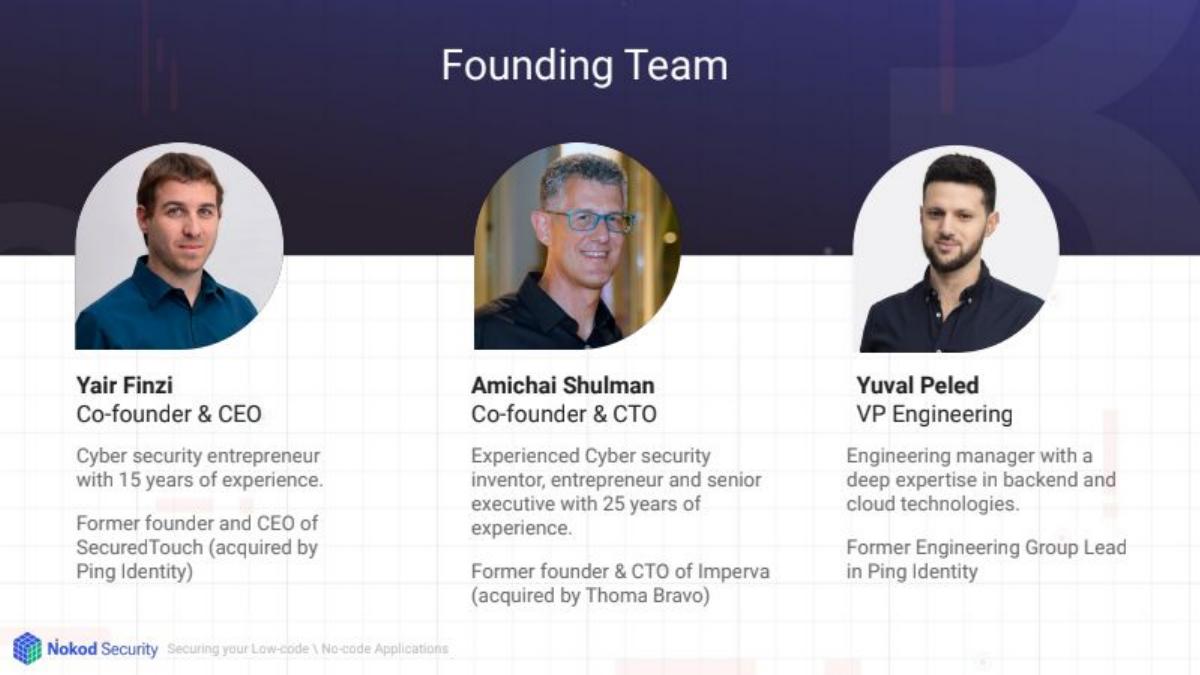
Slide 2 is perhaps the most important slide in a Seed-stage deck: the Founding Team. Nokod excels here by showcasing extreme domain expertise. CEO Yair Finzi is a 15-year cyber veteran whose previous company, SecuredTouch, was acquired by Ping Identity. CTO Amichai Shulman brings 25 years of experience and was the co-founder of Imperva, a massive name in the space acquired by Thoma Bravo. VP Engineering Yuval Peled rounds out the trio with a background at Ping Identity. For an $8M Seed round, this level of 'been-there-done-that' pedigree is a primary driver of investor confidence.
The Market Shift: The Rise of the Citizen Developer
Defining the Scope
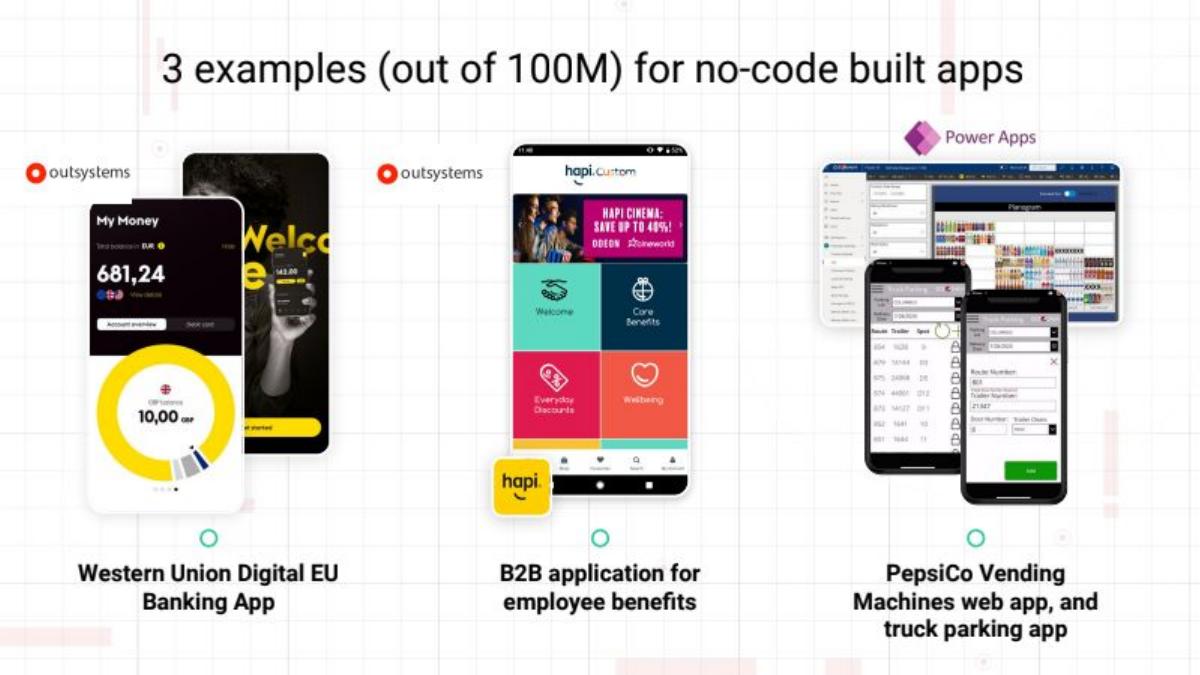
Slides 3 and 4 provide concrete examples of the problem's scale. They cite that there are 100 million no-code apps and show high-stakes examples: a Western Union banking app, a PepsiCo vending machine web app, and employee benefit portals. Slide 4 lists a 'who's who' of enterprise logos—from Goldman Sachs to Coca-Cola—proving that low-code is not a hobbyist trend but an enterprise reality.
The Gartner Validation
Slide 5 provides the 'Why Now?' by quoting Gartner: "65% of applications will be based on low-code by 2024." This creates a sense of impending urgency. If the majority of software is moving to these platforms, the security industry must move with it. The slide also notes that many enterprise platforms like Office365 and Salesforce offer these tools out-of-the-box, meaning the 'attack surface' is already inside the building.
The Problem: A Security Vacuum
Threats and Attacks
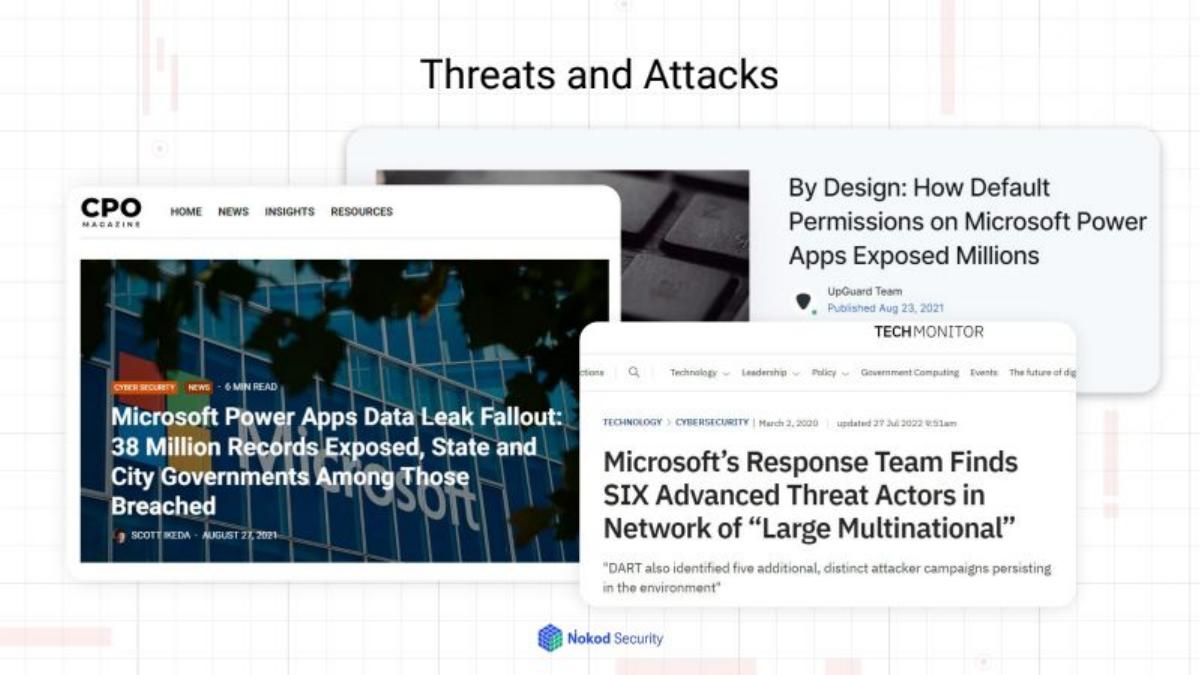
Slides 6 and 8 use 'fear, uncertainty, and doubt' (FUD) effectively by showing real-world headlines. They highlight a Microsoft Power Apps data leak that exposed 38 million records. This isn't theoretical; it is a documented vulnerability. Slide 8 reinforces this with a Forrester quote predicting that citizen development will lead to major data breaches in 2023.
The Six Core Challenges
Slide 7 breaks down the technical problem into six digestible points. The most salient points are the "democratization and decentralization of apps creation" and the fact that "apps can go directly to the production environment." In traditional software, code goes through a rigorous CI/CD pipeline with security scans. In low-code, a marketing manager can publish an app that touches sensitive data without a single security check. This is the 'gap' Nokod intends to fill.
Attack Vectors
Slide 9 categorizes the risks into three buckets: Malicious Apps (account takeovers), Vulnerable Apps (injection attacks), and Non-compliant Apps (PII storage). This slide speaks the language of a CISO, categorizing the problem in a way that fits into existing security frameworks.
The Solution and Architecture
The Mission and the Cube
Slide 10 states the mission: "Empower organizations with tools and intelligence for preventing cyber attacks and data breaches through low-code \ no-code applications." Slide 11 uses a Rubik's Cube-style visual to represent the 'Nokod NCLC Analyzer.' It shows the product sitting between the various platforms (Salesforce, ServiceNow, etc.) and the security team, providing an 'Appsec Portal' and 'SOC Alerts.'
Technical Integration
Slide 12 provides the high-level architecture. It shows a clean flow: data is pulled from platforms like OutSystems and Salesforce into a Nokod data lake, processed through an 'appsec engine' and 'appsec model,' and then delivered via a portal. This slide is crucial for technical due diligence, as it explains how the product actually functions as a middleware security layer.
Market Sizing: The Multi-Billion Dollar Opportunity
Three Approaches to TAM
Nokod provides three different ways to look at their Total Addressable Market (TAM), which is a sophisticated way to handle market sizing.
Approach #1 (Slide 13): Based on the Appsec market size, projecting a $6.07B opportunity in 2023 by assuming 65% of apps will be low-code. · Approach #2 (Slide 14): Based on the LCNC platform market size ($26.72B), assuming 15% is spent on security, resulting in a $4B TAM. · Approach #3 (Slide 15): A bottom-up approach. While the specific deal size and final TAM are redacted in this version, the methodology is sound: 350,000 large companies x 20% adoption x average deal size.
Go-To-Market and Validation
The Sales Strategy
Slide 16 outlines a standard enterprise SaaS GTM. They are starting with North America and EMEA, using direct sales. Their target is mid-market and up, specifically organizations that already have a dedicated Appsec team. The business model is a subscription based on the number of protected apps, which is a highly scalable metric.
The 'Blue Ocean'
Slide 17 claims the competition is a "blue ocean." While the specific competitors are redacted, the positioning is clear: traditional Appsec tools don't look at low-code, and low-code platforms don't have deep security features. Nokod is positioning itself as the first-mover in the intersection of these two circles.
Social Proof
Slide 18 is a 'Validation' slide featuring quotes from high-level executives. A CISO from a "Top 50 global bank" admits their team "just can't follow the high pace of new low-code apps." This is the ultimate validation—a direct admission of a pain point from a target buyer with a massive budget.
Roadmap and Future
The Execution Plan
Slide 20 provides a 24-month timeline. It shows the company's growth from 4 to 25 employees and the transition from an MVP to a Series A-ready product. This slide gives investors a clear understanding of how the $8M Seed round will be deployed to reach the next valuation inflection point.
What Works, What's Missing, and What to Copy
What Works
Founder Credibility: The deck leads with the team, which is the right move when the founders have multiple successful exits in the same industry. · Third-Party Validation: Using Gartner and Forrester data alongside quotes from Fortune 50 CISOs makes the problem feel inevitable and urgent. · Clear Market Segmentation: By focusing specifically on LCNC, they avoid competing directly with giants like Snyk or Palo Alto Networks, at least for now.
What is Missing
Unit Economics: While this is a Seed deck, there is no mention of expected LTV, CAC, or payback periods, though these may have been in the redacted sections. · Product Deep Dive: The deck is very high-level. There are no screenshots of the actual 'Appsec Portal' or examples of a specific alert, which would help ground the 'Analyzer' concept in reality. · The 'Ask': The deck mentions the $8M Seed in the timeline, but there is no formal 'Ask' slide detailing exactly what the funds will be used for (e.g., % to R&D vs. % to Sales).
What a Founder Should Copy
The Multi-Pronged TAM: Don't just give one number for your market. Show how you calculated it from the top-down and the bottom-up. It shows you understand the mechanics of your industry. · The 'Why Now' Slide: Slide 5 is a perfect example of using a macro trend (low-code adoption) to justify a new category of software. · Qualitative Validation: If you don't have revenue yet, get quotes from the highest-level people you can find. A quote from a Fortune 50 CISO is worth more than a dozen 'letters of intent' from small startups.
Frequently asked questions
- What is the core problem Nokod Security is solving?
- Nokod addresses the security risks associated with Low-Code/No-Code (LCNC) platforms. As citizen developers build business-critical apps on platforms like Salesforce or ServiceNow, these apps often bypass traditional security testing. Nokod identifies challenges such as the 'inflation' of these apps, lack of monitoring, and the fact that they often go straight to production without any security analysis (Slide 7).
- How does Nokod's technology integrate with existing enterprise tools?
- The architecture slide (Slide 12) shows that Nokod sits between major LCNC platforms—specifically ServiceNow, Salesforce, Microsoft PowerApps, and OutSystems—and the enterprise security stack. It feeds data into a proprietary 'Nokod data lake' and uses an 'appsec engine' to provide alerts to SOC teams and a dedicated Appsec portal for management.
- Who is the target buyer for this security solution?
- According to the Go-To-Market slide (Slide 16), the primary buyers are the CISO (Chief Information Security Officer) and the Director of Appsec. However, they also identify 'Digital Transformation Managers' as a key entry point, as these individuals are often the ones driving the adoption of low-code tools within the organization.
- What is Nokod's business model?
- Nokod operates on a B2B subscription model. The pricing is directly correlated with the number of protected applications (Slide 16). This aligns their revenue growth with the 'inflation of LCNC apps' trend they highlight earlier in the deck, ensuring that as a customer builds more, Nokod's value and cost scale accordingly.
- What are the key milestones on Nokod's roadmap?
- The timeline (Slide 20) outlines a 24-month path. It starts with 4 FTEs and an MVP ready for design partners. By month 13, they aim to scale to 15 FTEs. By month 24, they plan to have 25 FTEs and be ready for a Series A round, having significantly expanded their customer base and revenue (though specific figures are redacted).