Pomo’s seed deck is a masterclass in 'Team-First' fundraising. By leading with founders who have nearly a decade of experience at Google DeepMind, Meta, and Databricks, the company establishes immediate technical credibility in the crowded AI marketing space. The narrative focuses on the 'broken' state of marketing operations, where fragmented data and slow experimentation lead to $63B in wasted media spend. Pomo proposes a single, agentic platform that handles execution—from brief generation to automated campaign optimization—allowing teams to focus on strategy. While the deck is light on cu…
Key takeaways
- The team slide (Slide 2) is positioned early to leverage high-pedigree backgrounds from Google DeepMind, Meta, and Databricks.
- Pomo identifies a $1.04 trillion global advertising market as their primary playground (Slide 3).
- The problem is defined by inefficiency: 65% of organizations struggle with data integration and A/B tests take 3+ months (Slide 4).
- The product vision is an 'end-to-end' platform that automates brief creation, audience targeting, and performance optimization (Slide 7).
- Pomo targets four specific budget buckets: paid media, martech software, labor, and agencies (Slide 8).
- The business model uses a hybrid approach: a monthly base price ($49 to $499+) plus a percentage of managed ad spend (1% to 2%) (Slide 11).
- The technical moat is reinforced by Slide 12, showcasing published research on diffusion models and text-to-image rankings.
- The initial ask was for $3M to grow the engineering team and agentic infrastructure (Slide 13), though they ultimately raised $4.5M.
The Narrative: From Fragmented Tools to Autonomous Agents
Pomo’s pitch deck is built on the premise that the current marketing technology stack is a liability rather than an asset. By framing the problem as a combination of 'wasted media spend' and 'slow experimentation,' they position their AI agents as the logical successor to the manual, dashboard-heavy workflows of the last decade. The deck moves quickly from a high-level market opportunity to a deep dive into the technical pedigree of the founders, which is clearly the 'hook' for this $4.5M seed round.
Slide 1: Title Slide
The deck opens with a minimalist title slide. The logo is central, accompanied by the tagline: "AI Agents that help marketing teams move faster." It sets a clean, professional tone that persists throughout the presentation.
Slide 2: The Team
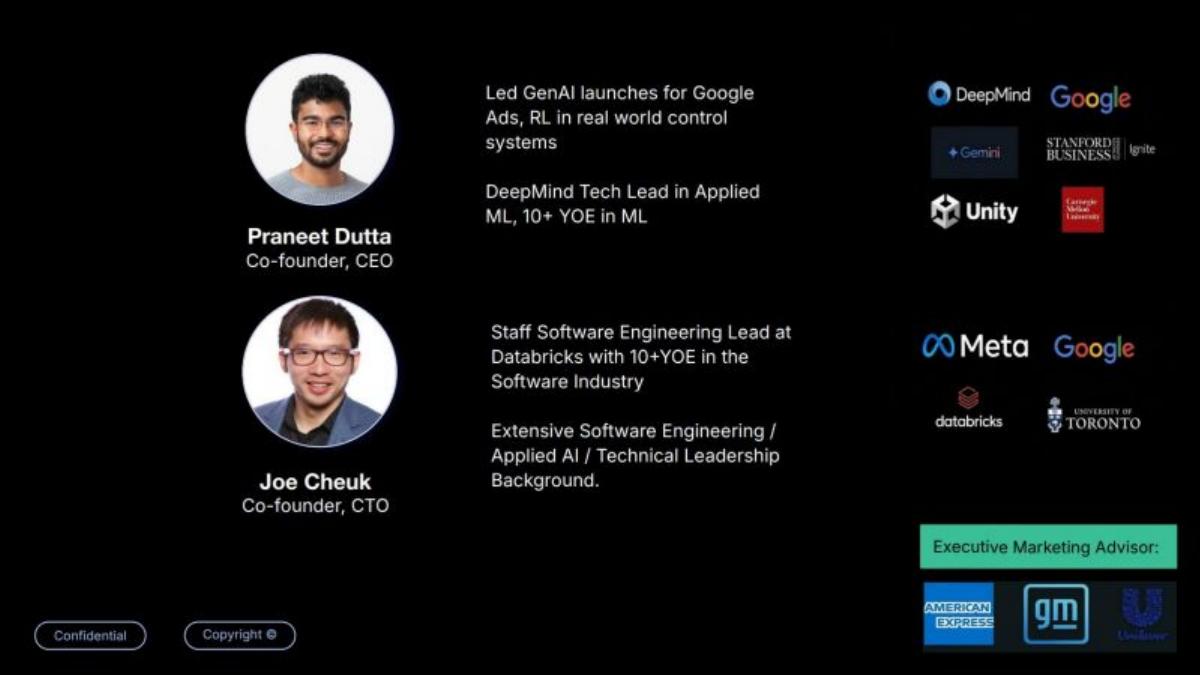
Unusually, Pomo places its team slide second. This is a strategic choice often made by founders with 'blue chip' backgrounds. Praneet Dutta (CEO) is highlighted as a former DeepMind Tech Lead who led GenAI launches for Google Ads. Joe Cheuk (CTO) is listed as a former Staff Software Engineer at Databricks with experience at Meta and Google. The slide also lists an 'Executive Marketing Advisor' with logos from American Express, GM, and Unilever, providing the necessary industry balance to their heavy technical expertise.
Slide 3: Massive, Growing Market
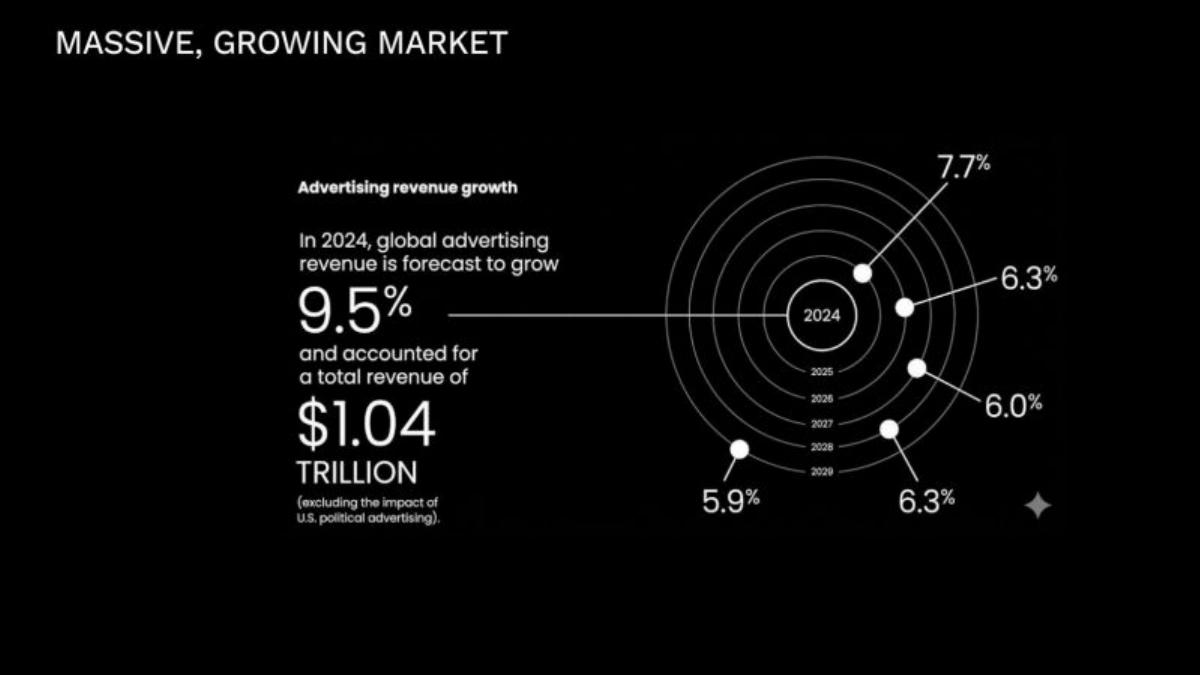
This slide establishes the TAM (Total Addressable Market). It cites a forecast that global advertising revenue will grow 9.5% in 2024 to reach $1.04 trillion. A concentric circle graphic shows projected growth rates through 2029, ranging from 5.9% to 7.7%. This slide serves to prove that even a small slice of this market represents a multi-billion dollar opportunity.
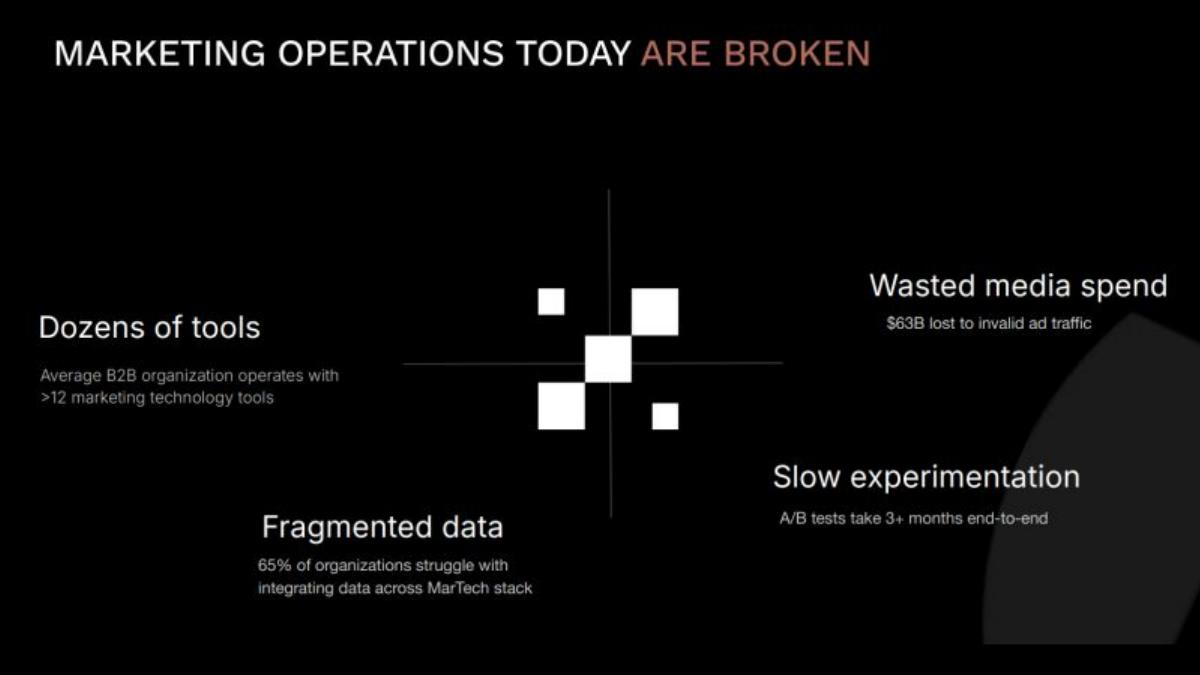
Slide 4: Marketing Operations Today Are Broken
Pomo defines the 'broken' state of the industry through four pillars: Dozens of tools (average B2B org uses >12), Fragmented data (65% struggle with integration), Wasted media spend ($63B lost to invalid traffic), and Slow experimentation (A/B tests take 3+ months). This slide effectively builds the 'villain' of the story: inefficiency.
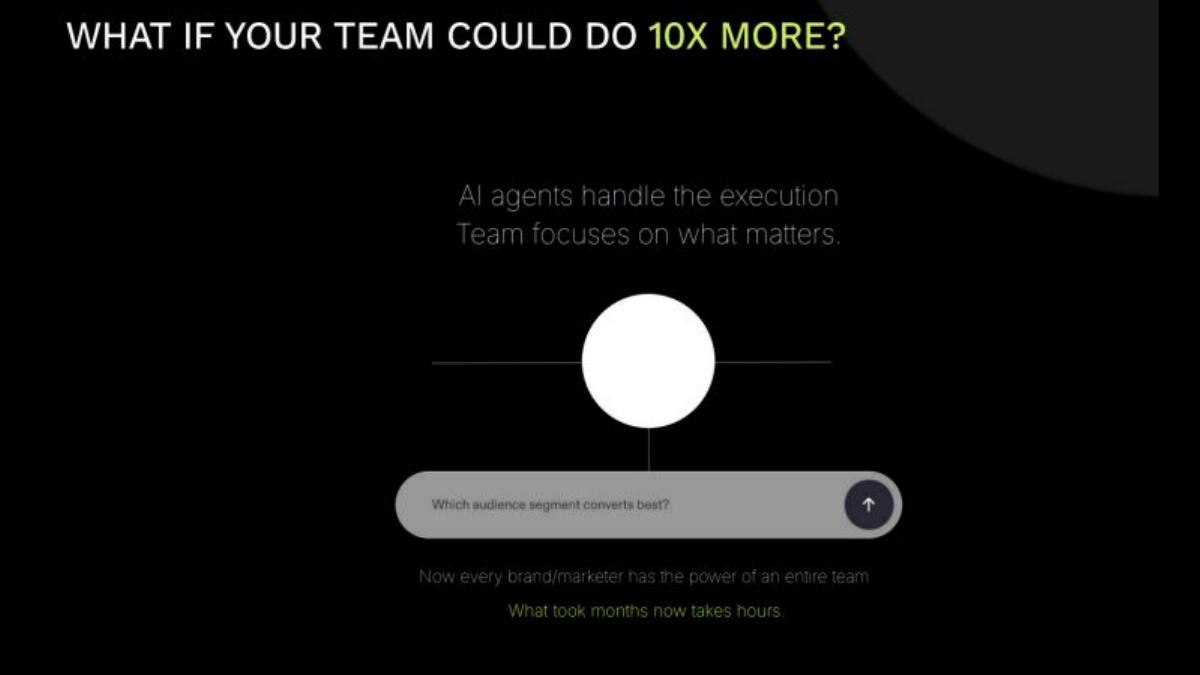
Slide 5: The Value Proposition
The headline asks, "What if your team could do 10x more?" It introduces the concept of AI agents handling execution while the human team focuses on strategy. A mockup of a chat interface asks, "Which audience segment converts best?" with the promise that "What took months now takes hours."
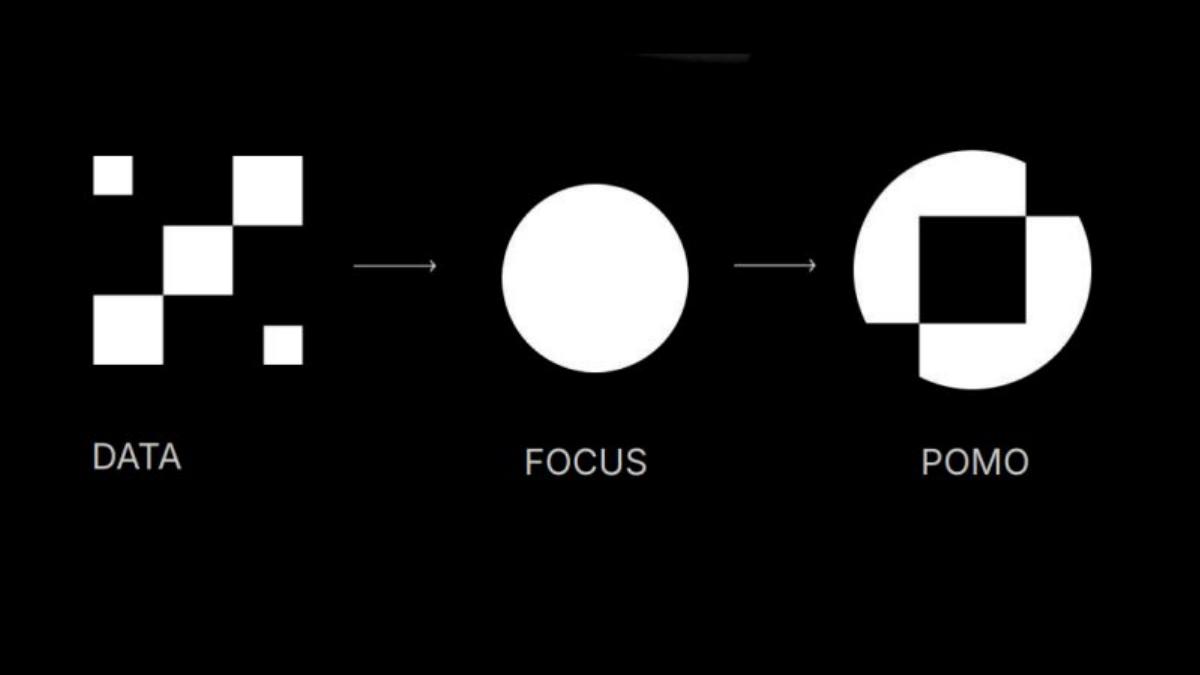
Slide 6: The Conceptual Shift
This is a transitional graphic slide showing 'Data' (scattered squares) moving through 'Focus' (a solid circle) to 'Pomo' (a stylized logo). It is a visual metaphor for the platform’s ability to synthesize raw information into actionable marketing results.
Slide 7: A Single End-to-End Platform
This slide details the product's functional capabilities. It breaks the marketing lifecycle into four stages: Create (briefs, PDPs, MRDs), Understand (real-time audience/competitor insights), Launch (targeted campaigns), and Optimise (automatic performance improvement). This is the 'How it Works' slide, emphasizing the 'Low Effort' for marketers and 'High Impact' for brands.
Slide 8: Where the Budget Lies
Pomo identifies exactly whose lunch they are eating. They break down marketing spend into Paid Media (31%), Martech & Software (22%), Labor/Personnel (21%), and Agencies (21%). By stating that "POMO optimizes across all," they are signaling to investors that their software can capture budget currently allocated to both human headcounts and legacy software subscriptions.
Slide 9: The 'As Is' vs. 'Pomo' Comparison
A classic comparison slide. It contrasts 'Campaign launch takes days/weeks' with 'Launch in minutes' and 'Growth limited by team size' with 'Growth limited by ambition.' This slide is designed to make the transition to Pomo feel like an inevitability for any competitive brand.
Slide 10: Product UI Mockup
The deck includes a high-fidelity mockup of the platform. It shows a dashboard with 'Market Alerts' (e.g., "Competitor 'VitaHealth' is Out of Stock on Magnesium") and 'New Trends.' This visualizes the 'Agentic' nature of the product—it isn't just a tool you use; it's a system that alerts you to opportunities.
Slide 11: Business Model
Pomo presents a clear, tiered pricing table. Starter ($49/mo + 2% of spend), Growth ($199/mo + 1.5% of spend), and Scale ($499/mo + 1% of spend). This hybrid model is attractive to VCs because it provides predictable SaaS revenue alongside the massive upside of a 'tax' on ad spend as customers scale.
Slide 12: Technical Moat
To defend against the 'wrapper' critique (the idea that they are just a thin layer over ChatGPT), Pomo showcases their research. They display a published paper on 'Large Scale Image Recontextualization' and a screenshot showing Google Imagen 3 at #1 on a leaderboard. The caption: "Building AI systems for almost a decade."
Slide 13: The Ask
The company seeks $3 million for their Seed round. The allocation is clear: 65% for research, engineering, and agentic infrastructure; 25% for marketing and user scaling; and 10% for foundational growth. Note: The catalogue facts indicate they actually closed $4.5M, suggesting high investor demand.
Slide 14: Closing
The final slide is a standard call to action for the BestPitchDeck.com library, not part of the original Pomo presentation materials.
What Pomo Does Well
Team Credibility: In the current AI 'gold rush,' technical pedigree is the strongest currency. Pomo leads with their DeepMind and Databricks roots, which justifies a higher valuation and a larger seed round. · Budget Specificity: Slide 8 is excellent. Instead of just saying "marketing is expensive," they break down the four specific buckets of spend they intend to disrupt. This shows a deep understanding of how a CMO thinks. · Hybrid Revenue Model: By combining a subscription fee with a percentage of ad spend, they align their own success with the customer's growth while maintaining a high revenue floor.
What is Missing from the Deck
Traction: There are no slides showing current user numbers, revenue, or pilot results. While common in 'pre-seed' or 'technical seed' rounds, it leaves a gap regarding product-market fit. · Case Studies: While the UI mockup is clean, the deck lacks a specific story of a brand that used Pomo to achieve the '10x' results promised on Slide 5. · The 'Agent' Architecture: For a technical team, they stay very high-level on how the 'agents' actually work. Investors might want to see a more detailed diagram of their proprietary infrastructure versus third-party LLMs.
Founder's Playbook: What to Copy
The 'As-Is' Comparison: Slide 9 is a perfect template for any founder building a 'replacement' technology. It clearly defines the old world versus the new world in simple, punchy bullets. · The Research Slide: If you have a technical moat, don't just say it—show the papers, the leaderboards, and the citations. Slide 12 does this effectively without being overly academic. · Pricing Transparency: Many seed decks hide their pricing. Pomo puts it front and center, which helps qualify the right investors and demonstrates that they have a clear go-to-market strategy.
Frequently asked questions
- What is Pomo's core product offering?
- Pomo is an AI-agent-powered marketing platform designed to handle the entire marketing lifecycle. According to Slide 7, the platform automates the creation of briefs and product detail pages, provides real-time market insights, deploys targeted campaigns across multiple channels, and continuously optimizes performance without manual intervention. It aims to replace the 'fragmented stack' of 12+ tools typically used by B2B organizations.
- How does Pomo make money?
- Pomo employs a SaaS-plus-take-rate business model. As shown on Slide 11, they offer three public tiers: Starter ($49/mo), Growth ($199/mo), and Scale ($499/mo). In addition to the base fee, they charge a 'Usage Fee' based on managed ad spend, ranging from 2% for smaller brands down to 1% for larger ones. They also offer a custom Enterprise White-label tier for agencies.
- Who are the founders and why are they qualified?
- The team is highly technical. CEO Praneet Dutta was a Tech Lead at DeepMind with 10+ years in ML, specifically leading GenAI launches for Google Ads. CTO Joe Cheuk was a Staff Software Engineering Lead at Databricks with a background at Meta and Google. Slide 12 further highlights their expertise with citations of published research in diffusion models and leadership in text-to-image arenas like Google Imagen.
- What specific market problem is Pomo solving?
- Slide 4 and Slide 8 outline the problem: marketing operations are 'broken' due to tool fatigue (12+ tools per org), fragmented data, and slow experimentation cycles. Pomo points to $63B lost to invalid ad traffic and the fact that 78% of marketers say manual tasks consume their time. They aim to reallocate the 21% of budgets currently spent on labor and agencies into their automated platform.
- What was the result of this pitch deck?
- The deck originally requested $3 million for a Seed round (Slide 13). According to the catalogue facts, the company successfully raised $4.5 million from a high-profile group of investors including Databricks Ventures, SV Angel, and 645 Ventures, along with angels like Scott Belsky.