Polyflint is a niche social and professional platform designed specifically for the 3D modeling and printing community. The deck identifies a clear pain point: the difficulty for specialized 3D artists to stand out on generalist platforms like Behance or Dribbble. By targeting a market projected to reach $8.4 billion by 2025, Polyflint positions itself as the dedicated hub for creators in gaming, medicine, and aerospace. The presentation is light on financial specifics and team credentials but heavy on vision and timeline. With a modest ask of $200,000 for a 12-month runway, the company focus…
Key takeaways
- The company is seeking $200,000 in funding to cover a 12-month operating period as shown on slide 7.
- Polyflint identifies its core value proposition as 'Create. Share. Get Hired.' on the title slide.
- The deck projects the 3D printing market will reach $8.4 billion by 2025 on slide 5.
- A 'Never seen before commenting system' is highlighted as a key product differentiator on slide 4.
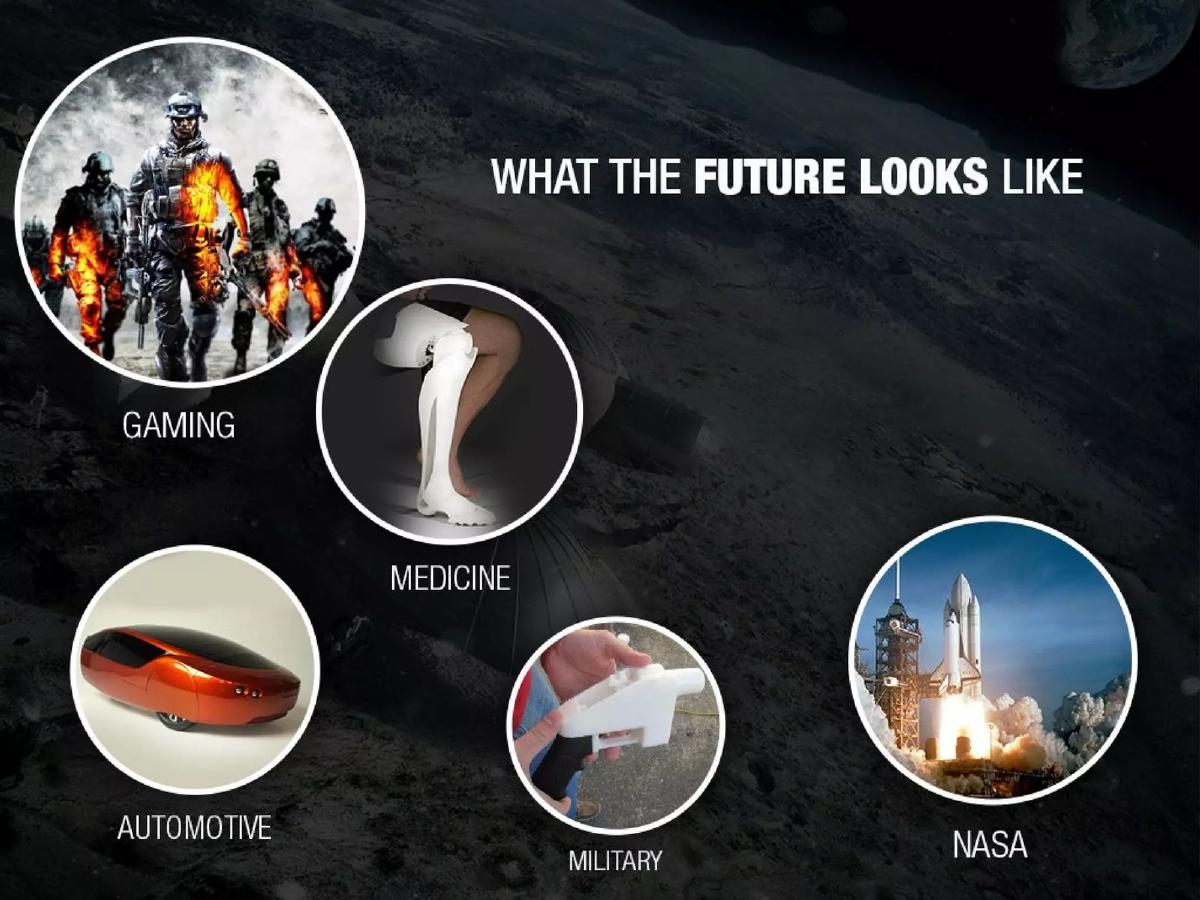
- The platform targets five specific industries: Gaming, Medicine, Automotive, Military, and NASA/Aerospace on slide 3.
- The competitive landscape includes generalist sites like Behance and Dribbble, and niche forums like Polycount and 3DTotal, as listed on slide 6.
- The development timeline on slide 7 indicates a Private Beta launch scheduled for November.
- The deck claims a market growth rate of 14.4% between 2011 and 2015 on slide 5.
Executive Summary
Polyflint is a specialized portfolio and recruitment platform tailored for the 3D design and printing industry. The deck positions the company as a necessary evolution for a market that has outgrown generalist creative platforms like Behance. By focusing on the unique needs of 3D artists—such as specialized commenting systems and industry-specific networking—Polyflint aims to become the central hub for a 30-million-strong user base. The funding request is a modest $200,000, intended to bridge the gap from development to a private beta launch.
Slide 1: Title and Tagline
The opening slide introduces the Polyflint brand with a clean, minimalist logo. The tagline, "CREATE. SHARE. GET HIRED." , clearly defines the platform's three-pillar value proposition: a tool for creation, a social network for sharing, and a marketplace for employment. The inclusion of a general contact email (info@polyflint.com) suggests this deck was intended for broad distribution or initial outreach.
Slide 2: The Problem Statement
Using a background image of 'Minions' characters, the slide states it is "HARD TO FIND AND BE SEEN IN A SATURATED SPACE..." . This is a classic 'noise vs. signal' problem statement. It implies that on massive platforms, high-quality 3D work is buried under millions of unrelated 2D designs, making it difficult for both artists to get noticed and recruiters to find specific talent.
Slide 3: Market Verticals
Titled "WHAT THE FUTURE LOOKS LIKE," this slide identifies the specific industries where 3D modeling is critical. It lists Gaming, Medicine, Automotive, Military, and NASA . By showcasing high-stakes applications like medical prosthetics and aerospace engineering, Polyflint signals that its platform is not just for digital art, but for industrial and scientific 3D applications that carry significant economic value.
Slide 4: Product Differentiator
This slide features a tablet mockup with the text "NEVER SEEN BEFORE COMMENTING SYSTEM." While the image is dark and the specific mechanics of the system are not detailed in the text, it suggests a technical innovation in how users interact with 3D assets. In the context of 3D design, this often implies the ability to leave feedback on specific coordinates of a 3D model, a feature lacking in standard 2D portfolio sites.
Slide 5: Market Opportunity
Polyflint provides three data points to justify the scale of the opportunity:
8.4 BILLION: The projected size of the 3D printing market by 2025. · 14.4%: The market growth rate recorded between 2011 and 2015. · 30M +: The estimated number of 3D software users globally.
These figures attempt to show both the current user base and the future financial upside of the industry Polyflint intends to serve.
Slide 6: Competitive Landscape
The deck categorizes competitors into two groups. "MIXED MEDIA PORTFOLIO SITES" includes industry giants Behance and Dribbble . "OUTDATED FORUMS" lists 3dtotal.com and polycount . The implication is that the former are too broad and the latter are technologically stagnant, leaving a 'goldilocks' zone for Polyflint to occupy as a modern, specialized platform.
Slide 7: The Ask and Roadmap
The final slide in the provided set reveals the financial goal: "RAISING $200,000" for a "12 MONTHS" runway. A horizontal timeline shows the project's progress:
May: First Paying Customers (notably, this suggests the company already had some form of early monetization). · June: Promo video & Landing page. · July: Wireframing. · August: UI Completed. · September - October: Development. · November: PRIVATE BETA.
This roadmap provides a clear look at the execution plan, though it places the funding ask at a relatively early stage of the technical build.
What Polyflint Does Well
The deck is visually focused and avoids the 'wall of text' trap that plagues many early-stage presentations. By using high-contrast imagery and large typography, it ensures that the core message—that 3D artists need a better home—is delivered instantly. The market slide (Slide 5) is particularly effective because it combines user count (30M+) with market value ($8.4B), giving investors a sense of both the community size and the commercial potential. Furthermore, the competitive analysis (Slide 6) is honest; it acknowledges that while Behance is a giant, its lack of specialization is a weakness that a niche player can exploit.
What is Missing from the Deck
The most significant omission in the provided slides is a Team Slide . In a seed-stage round of $200,000, investors are primarily buying into the founders' ability to execute. Without knowing if the team has backgrounds in 3D design, software engineering, or recruitment, the 'Never seen before commenting system' remains a vague promise rather than a credible technical claim. Additionally, there is no Business Model slide. While the timeline mentions 'First Paying Customers' in May, the deck does not explain how the platform makes money—whether through subscriptions, recruitment fees, or a marketplace commission. Finally, the Unit Economics are absent; there is no mention of customer acquisition costs (CAC) or the lifetime value (LTV) of a user, which are critical for evaluating a social/professional network's long-term viability.
Founder's Takeaway: What to Copy
Founders should emulate Polyflint's industry-specific positioning . Instead of trying to be 'LinkedIn for everyone,' they identified a high-growth, high-technicality niche (3D design) and built a narrative around why generalist tools fail that specific group. The Roadmap Slide (Slide 7) is also a good template to follow; it clearly links the funding ask to specific development milestones, giving investors a clear picture of what their capital will 'buy' in terms of product progress. Lastly, the use of clear market verticals (Slide 3) helps ground a digital product in real-world industries, making the 'future' of the company feel more tangible and less like a speculative social media play.
Frequently asked questions
- What is the primary problem Polyflint aims to solve?
- According to slide 2, the primary problem is that it is 'hard to find and be seen in a saturated space.' The deck suggests that generalist portfolio platforms are too crowded for 3D artists to gain meaningful visibility, necessitating a specialized platform that caters specifically to their technical and professional needs.
- How does Polyflint define its target market size?
- On slide 5, the company cites three key metrics: an $8.4 billion 3D printing market by 2025, a historical market growth rate of 14.4% (2011-2015), and a user base of over 30 million 3D software users. This suggests a large top-of-funnel audience for a specialized professional network.
- What is the specific funding ask and its intended use?
- Slide 7 states the company is raising $200,000. While a detailed line-item budget is not provided, the slide indicates this capital is intended to fund 12 months of operations, covering the transition from UI completion and development into a private beta phase.
- Who are Polyflint's main competitors?
- Slide 6 identifies two categories of competitors. The first are 'Mixed media portfolio sites' including Behance and Dribbble. The second are 'Outdated forums' specifically naming 3dtotal.com and Polycount. Polyflint positions itself as a modern alternative to these existing solutions.
- What industries does Polyflint expect to serve?
- Slide 3, titled 'What the future looks like,' identifies five high-value sectors for 3D modeling: Gaming, Medicine (prosthetics), Automotive, Military, and Aerospace (NASA). This indicates the platform is intended for professional-grade industrial and entertainment design rather than just hobbyist use.