The Doorbot deck, representing the early stages of what would become Ring, is a study in organizational maturity rather than product features. Unlike typical consumer hardware pitches that focus on user pain points, this 14-slide presentation (of which 7 are analyzed here) focuses heavily on the internal 'regrouping' and the technical complexity required to win in a mature industry. By highlighting a team growth of over 6x to 40 members, including 28 engineers, the deck argues that success in smart home hardware is an engineering and operations challenge, not just a design one. It positions t…
Key takeaways
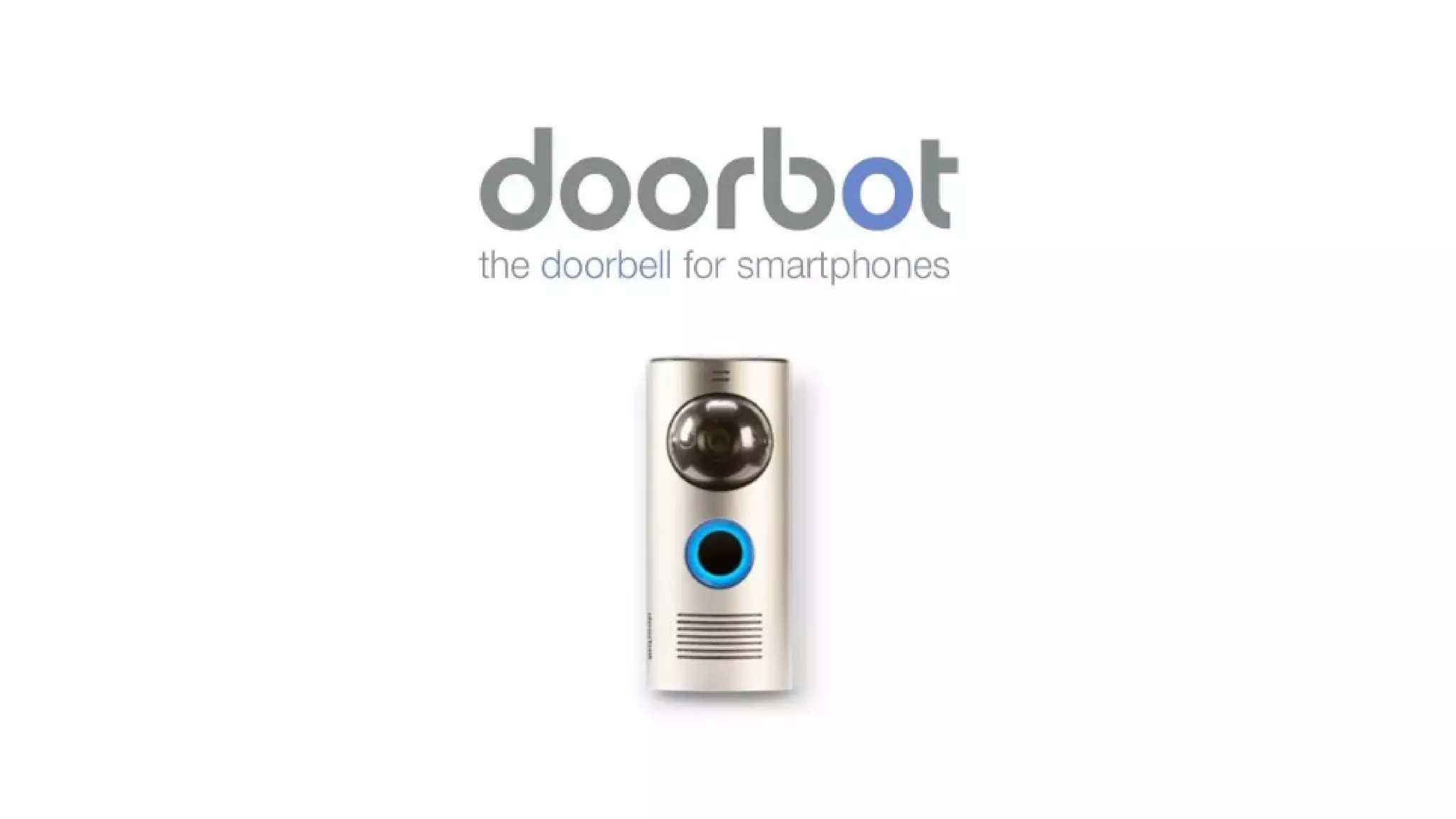
- The company positions itself as 'the doorbell for smartphones' on the title slide (Slide 1).
- The deck acknowledges that hardware is a 'mature industry,' implying that simple innovation is no longer enough to win (Slide 3).
- A screenshot of an iPhone 5s Amazon review from April 25, 2014, is used to illustrate consumer expectations for high-standard technology (Slide 4).
- The company underwent a significant internal shift, stated simply as 'In January we regrouped' (Slide 5).
- Expertise is distributed across 10 distinct categories, with Electrical, Firmware, Industrial Design, and Mechanical each holding an 11% share of the priority (Slide 6).
- The team grew over 6x to reach 40 members, with a heavy skew toward technical talent (28 engineers) (Slide 7).
- The strategy involves a long-term approach of 7-10 years, contrasting with shorter 1/2-1 year cycles (Slide 7).
- Management identifies Apple and Samsung as the only relevant competition until the company reaches scale (Slide 7).
The Doorbot Transition: Engineering a Category
The Doorbot deck is a fascinating artifact from the pre-Amazon acquisition era of Ring. It does not look like a typical seed-stage pitch deck. There are no slides detailing the 'problem' of burglars or the 'solution' of a video feed. Instead, this deck appears to be a mid-stage update or a bridge round presentation designed to prove that the company has moved past the 'hobbyist' phase and into a professionalized hardware organization. The focus is almost entirely on the team, the expertise, and the long-term strategic positioning against the world's largest consumer electronics companies.
Slide 1: Title and Branding
The opening slide introduces the product as 'doorbot: the doorbell for smartphones.' The visual is a high-resolution render of the original silver cylindrical device. The branding is clean, using a lowercase sans-serif font that was popular in the early 2010s. Notably, the 'o' in 'bot' is highlighted in blue, mirroring the LED ring on the physical device. This establishes the core identity: a hardware product that is an extension of the mobile phone.
Slide 2: The Blackout
Slide 2 is a solid black frame. In a live presentation, this is typically used as a 'stage reset' to allow the speaker to tell a story or transition between the product introduction and the market reality without the distraction of a visual aid. It forces the audience to focus on the narrative rather than the slide.
Slide 3: The Market Reality
Slide 3 contains a single, provocative statement: 'hardware is a mature industry.' This is a sophisticated framing. By calling the industry 'mature,' the founders are telling investors that they aren't just playing with new gadgets; they are entering a brutal, established market where only those with operational excellence and deep technical stacks survive. It sets the stage for the 'expertise' slides that follow.
Slide 4: The Consumer Bar
To illustrate what 'mature' means, Slide 4 shows an Amazon listing for an iPhone 5s (dated September 20, 2013) and a review from April 25, 2014. The review, titled 'Good phone but could be better,' highlights that consumers have incredibly high standards for hardware, mentioning Touch ID sensors and camera improvements. The inclusion of this slide suggests that Doorbot knows its customers will compare their $200 doorbell to their $700 iPhone. The bar for quality is not set by other doorbells, but by the best consumer electronics in the world.
Slide 5: The Pivot Point
Slide 5 states, 'In January we regrouped.' This is a rare moment of transparency in a pitch deck. It implies that prior to January, things may not have been going perfectly. This 'regrouping' serves as the dividing line between the old Doorbot and the new, engineering-led organization. It signals to investors that the company has learned from early mistakes and has restructured for scale.
Slide 6: The Complexity of Success
Slide 6 is a pie chart titled 'Critical expertise areas for success.' It breaks down the company's focus into ten areas: Electrical (11%), Firmware (11%), Industrial Design (11%), Mechanical (11%), Cloud Systems (9%), Mobile UX/UI (9%), Video Processing (9%), Customer Service (9%), E-Commerce (9%), and QA (8%). This slide is designed to combat the 'it's just a camera in a box' dismissal. It shows that the company views its success as a balanced distribution of highly technical disciplines. It is a defense of their burn rate and their hiring plan.
Slide 7: The Strategic Roadmap
The final slide in this set, titled 'What we are doing (not teachings),' provides five key pillars of their current operations. First, they emphasize 'hyper focus on a clear long term vision.' Second, they mention 'faster iteration by leveraging active field units,' which suggests they are using data from devices already in customers' homes to improve the product. Third, they commit to a 'long term approach 7-10 years,' acknowledging that hardware cycles are slow (1/2 to 1 year). Fourth, they identify Apple and Samsung as their only real competition. Finally, they reveal their scale: the team has grown 6x to 40 members, with 28 of them being engineers. This is the 'traction' slide, but the traction is measured in human capital and engineering capacity rather than just sales figures.
What Works in This Deck
The Engineering Focus: By explicitly stating that 28 out of 40 employees are engineers (Slide 7), the deck builds immediate credibility. In hardware, the biggest risk is 'bricking' the product or failing to ship. A team that is 70% engineering suggests a product-first culture that is focused on solving the hard technical problems of video latency and battery life.
Market Realism: Most startups try to claim they have no competition. Doorbot does the opposite on Slide 7 by claiming their only competition is Apple and Samsung. This is a 'punching up' strategy. It tells investors that the founders have a massive vision—they aren't looking to be a small accessory, they want to be a household name on par with the giants.
The 'Regroup' Narrative: Admitting to a 'regroup' (Slide 5) is a sign of founder maturity. It suggests that the leadership is capable of self-correction. Investors often prefer a team that has hit a wall and figured out how to climb over it rather than a team that claims to have had a perfect trajectory.
What Is Missing
Unit Economics: There is no mention of the Bill of Materials (BOM), retail price, or margins. For a hardware company, these are critical metrics. Investors need to know if the company can actually make money on each unit sold, especially in a 'mature industry' where price wars are common.
Sales and Distribution: While Slide 6 mentions 'E-Commerce,' the deck lacks data on how many units have been sold or which retail partners (like Best Buy or Home Depot) they are targeting. The 'active field units' mentioned on Slide 7 imply there are customers, but the scale is left to the imagination.
The 'Why Now': While the deck mentions the smartphone, it doesn't explicitly lay out the tailwinds of the smart home market. It assumes the investor already believes that 'the doorbell for smartphones' is a category worth winning.
Lessons for Founders
Quantify your team's DNA: If you are a technical company, don't just say you have a 'great team.' Break down the percentages of expertise as Doorbot did on Slide 6. It shows you understand the multi-disciplinary nature of your business. · Own your pivots: If your company has changed direction or restructured, frame it as a 'regrouping' for success. It shows you are data-driven and willing to make hard choices. · Set a long horizon: Especially in hardware or deep tech, claiming you will exit in two years can look naive. Doorbot’s 7-10 year outlook (Slide 7) signals that the founders are builders, not just flippers. · Benchmark against the best: Don't compare yourself to the weak incumbent in your niche. Compare yourself to the gold standard of consumer experience (Slide 4). It raises the perceived value of your brand.
Frequently asked questions
- What was the original name of Ring?
- As shown on Slide 1, the company was originally branded as 'Doorbot,' with the tagline 'the doorbell for smartphones.' The 'bot' branding is consistent throughout the deck's corner logos.
- How many engineers did Doorbot have at the time of this deck?
- According to Slide 7, the company had 28 engineers out of a total team of 40 members. This represents a significant technical focus, with 70% of the staff dedicated to engineering.
- What is Doorbot's competitive philosophy?
- Slide 7 explicitly states that 'Apple/Samsung/Etc is our only competition until we are BIG.' This suggests the founders viewed themselves as a major platform player rather than a niche accessory maker.
- How does the deck address the difficulty of hardware?
- Slide 3 labels hardware as a 'mature industry.' Slide 6 further emphasizes this by breaking down 'critical expertise areas' into ten different technical and operational silos, showing that a doorbell requires more than just a camera.
- What is the stated long-term vision for the company?
- Slide 7 outlines a 'long term approach' of 7-10 years. It emphasizes 'hyper focus on a clear long term vision' and 'faster iteration by leveraging active field units' to achieve this.