Sword Health’s pitch deck is a highly effective example of how to sell a complex health-tech solution by focusing on clear market pain points and superior clinical outcomes. The deck establishes urgency by showing that musculoskeletal (MSK) costs now exceed cancer and mental health spending combined. It then positions Sword as the only 'clinical-grade' virtual solution, backed by proprietary sensor technology that is 4x more accurate than the human eye. With a reported 8x revenue growth from 2020 to 2021 and a 9/10 patient satisfaction rating, the deck balances aggressive growth metrics with…
Key takeaways
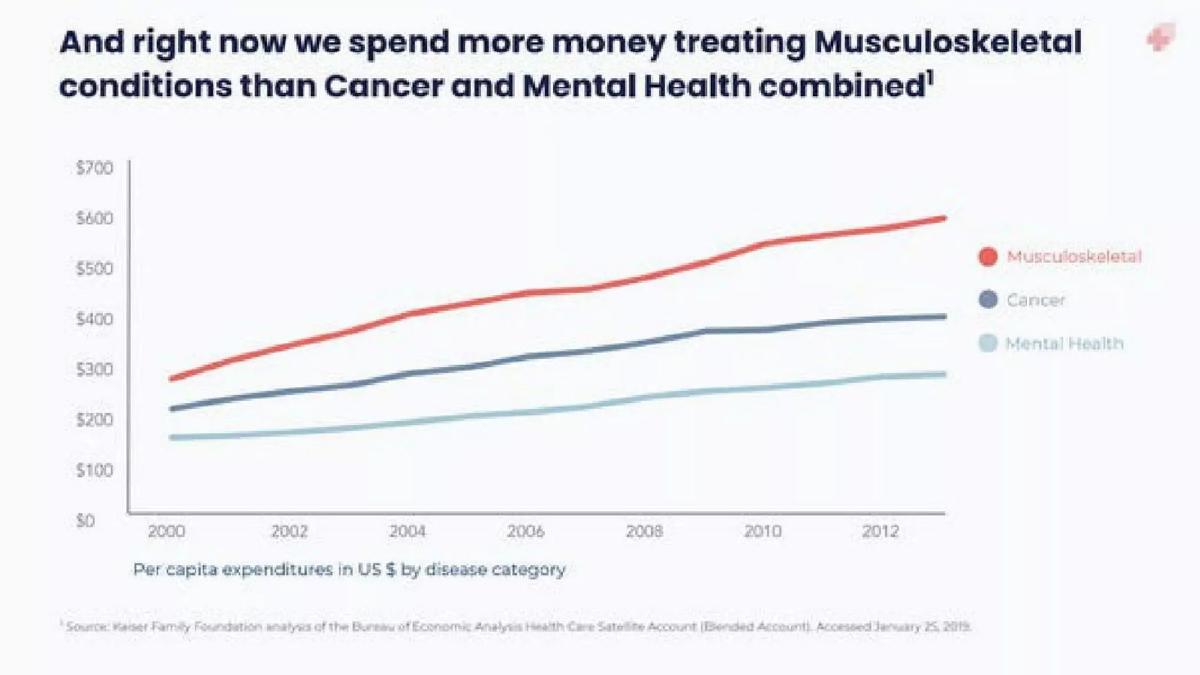
- Musculoskeletal conditions cost more to treat than cancer and mental health combined, according to slide 3.
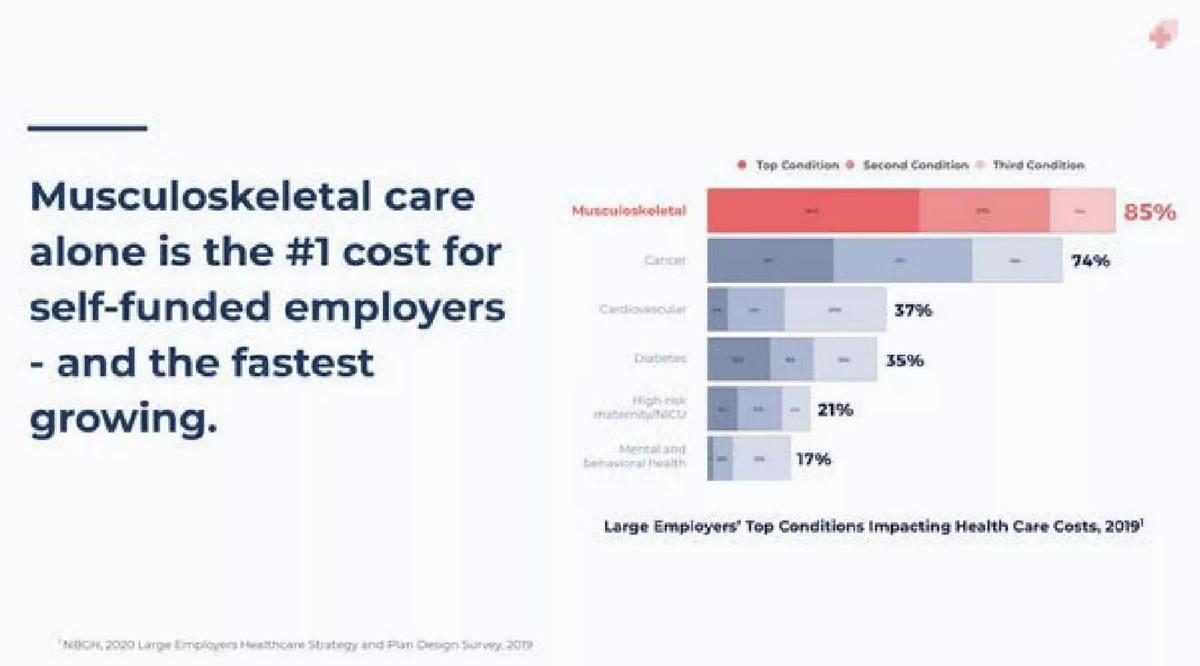
- MSK care is the #1 cost for 85% of self-funded employers, as shown on slide 4.
- Sword Health claims its sensor-based technology is up to 4x more accurate than the human eye (slide 10).
- The company owns 70% of all digital MSK patents, covering over 200 movements (slide 10).
- Sword reported an 8x increase in revenue from 2020 to 2021 (slide 17).
- Patient outcomes include a 70% reduction in pain and a 64% reduction in surgery intent (slide 15).
- The treatment completion rate for Sword is 89%, compared to just 30% for traditional physical therapy (slide 14).
- The deck highlights a global presence with launches in Europe (2015), Australia (2018), and the US (2019) on slide 7.
Introduction: The High Stakes of Musculoskeletal Care
Sword Health entered the market in 2015 with a mission to solve one of the most expensive problems in healthcare: musculoskeletal (MSK) pain. This teardown examines the 19-slide deck that helped the company secure a total of $323.5 million in funding. The deck is a masterclass in establishing market urgency, proving technical superiority, and validating results through hard clinical data. It moves quickly from the 'why' to the 'how,' positioning the company not just as a software play, but as a clinical-grade medical intervention.
Slides 1-4: Establishing the Problem and Market Urgency
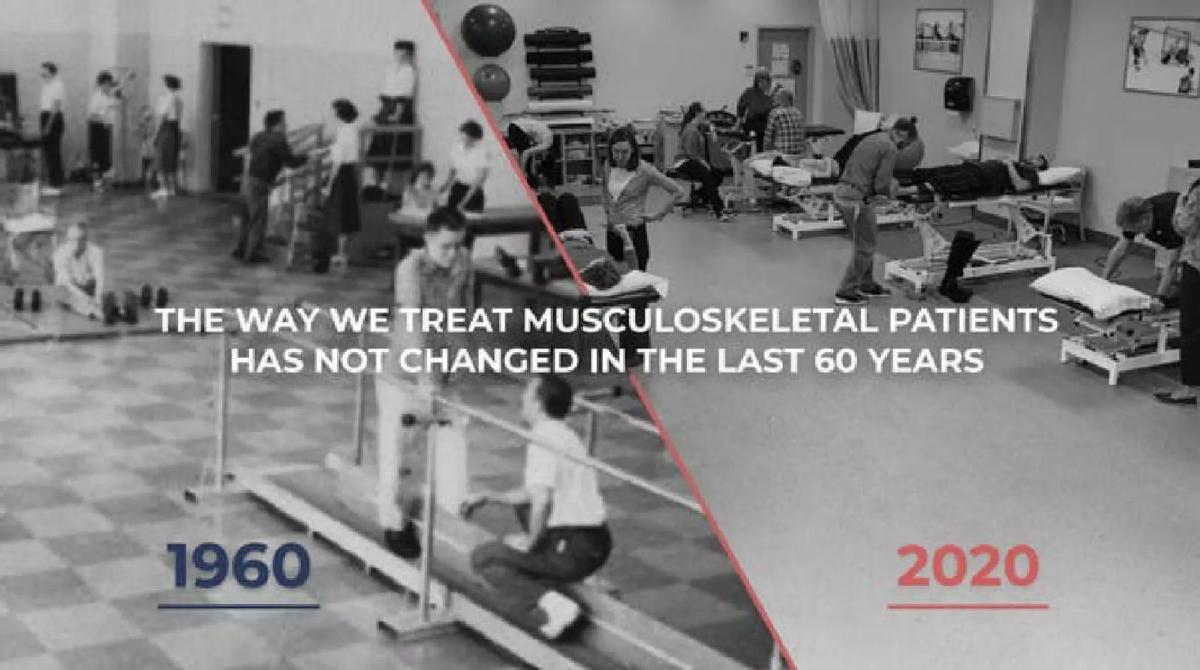
The deck opens with a clean title slide featuring Founder and CEO Virgilio Bento, PhD. The inclusion of the PhD title immediately signals that this is a science-led organization. Slide 2 uses a powerful visual comparison, showing a physical therapy clinic in 1960 alongside one in 2020. The caption, 'THE WAY WE TREAT MUSCULOSKELETAL PATIENTS HAS NOT CHANGED IN THE LAST 60 YEARS,' highlights a stagnant industry ripe for disruption.
Slide 3 provides the economic 'shock' factor. It features a line graph showing that per capita expenditures for MSK conditions have climbed to approximately $600, surpassing both Cancer and Mental Health. The slide explicitly states that we spend more on MSK than Cancer and Mental Health combined. Slide 4 narrows the focus to the buyer: self-funded employers. It notes that MSK is the #1 cost for 85% of these employers and is the fastest-growing expense category. By the end of slide 4, the investor is convinced that the problem is massive, expensive, and underserved.
Slides 5-7: The Sword Health Solution and Global Footprint
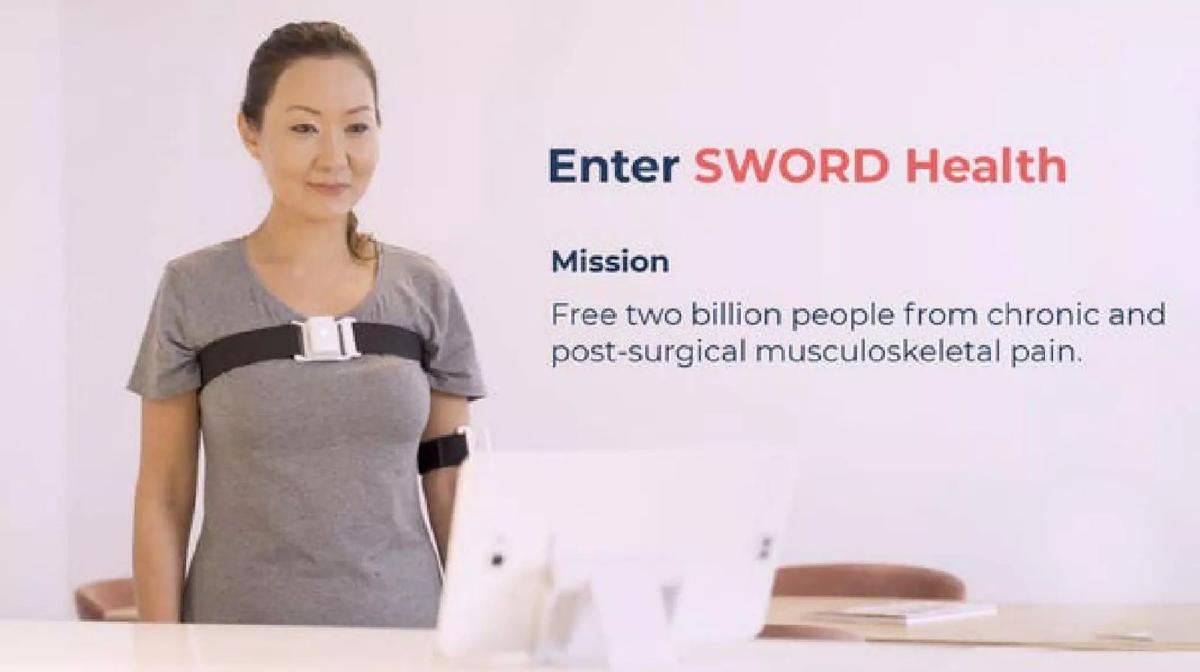
Slide 5 introduces the mission: 'Free two billion people from chronic and post-surgical musculoskeletal pain.' This is an incredibly ambitious 'North Star' metric that sets the scale of the company's vision. Slide 6 serves as a transition, defining the category as 'Clinical-grade Musculoskeletal care made virtual.' The use of the term 'clinical-grade' is a deliberate jab at 'wellness' or 'fitness' apps that lack medical rigor.
Slide 7 provides a 'Snapshot of SWORD Health,' showing their global expansion. It lists their founding in Europe (2015), entry into Australia (2018), and the United States (Dec 2019). The slide is adorned with regulatory logos, including FDA, HIPAA, HITRUST, SOC2, and CE/GDPR. This builds immediate trust, showing that the company has already cleared the significant legal and regulatory hurdles required to operate in major global markets.
Slides 8-11: Technology and The 'IP Moat'
This section explains why Sword is better than its competitors. Slide 8 breaks the solution into three pillars: Licensed Physical Therapists, Sensor-based tech, and universal joint coverage. Slide 9 emphasizes the 'Human Touch,' noting that 100% of care is delivered by Doctors of Physical Therapy (DPTs) with an average of 4.5 years of prior experience. This counters the fear that 'virtual' means 'automated' or 'low-quality.'
Slide 10 is perhaps the most important slide for a technical investor. It claims the technology is 'Up to 4x more accurate than the human eye.' More importantly, it states that 'SWORD owns 70% of all digital MSK patents,' enabling them to track over 200 different movements. This represents a massive barrier to entry for competitors. Slide 11 uses a donut chart to show the distribution of therapies across the body, highlighting that Sword covers areas like the shoulder (21%) and neck (11%) that competitors often struggle to treat effectively. It also introduces a new 'Wrist' therapy for 2021.
Slides 12-16: Outcomes and Patient Validation
After explaining the tech, the deck moves to results. Slide 12 and 16 feature patient testimonials from 'Sara' and 'Arthur,' adding a human element to the data. Slide 14 focuses on engagement, a key metric for digital health. It shows an 89% treatment completion rate for Sword, compared to 73% for other digital solutions and a dismal 30% for traditional physical therapy. A standout stat on this slide is that '1 in 2 members did their exercises on Christmas Day 2020,' proving extreme user stickiness.
Slide 15 delivers the clinical 'knockout' punch with six key metrics: a 70% reduction in pain, 64% reduction in surgery intent, 48% reduction in medication consumption, 52% reduction in depression, 35% reduction in anxiety, and a 32% increase in productivity. By showing that MSK treatment improves mental health and work performance, Sword justifies its premium positioning to employers.
Slides 17-19: Growth, Team, and Conclusion
Slide 17 shifts to business performance. It highlights an '8x increase in revenue from 2020 to 2021' and notes that 2 million+ digital PT minutes were delivered in 2020. This demonstrates that the company is no longer in the 'experiment' phase but is scaling rapidly. Slide 18 introduces the team, which is a 'who's who' of digital health and tech giants. Leaders come from Virta Health, Clover Health, Airbnb, Uber, and Rally Health. This gives investors confidence that the management team has the experience to handle hyper-growth.
The deck concludes on slide 19 with a simple 'Thank You' and contact information for the CEO. Notably, there is no slide asking for a specific dollar amount, which is common for companies in 'Later' stages (as identified in the catalogue facts) where the deck serves more as a high-level introduction or a leave-behind for a pre-negotiated round.
What Works in This Deck
The IP Moat: Stating that you own 70% of the patents in your space (Slide 10) is a powerful way to shut down questions about competition. · Comparative Economics: Comparing MSK costs to Cancer and Mental Health (Slide 3) immediately re-frames the size of the opportunity for investors who might otherwise view physical therapy as a niche market. · Clinical Rigor: The constant use of terms like 'Clinical-grade' and 'Doctors of Physical Therapy' separates Sword from the crowded field of wellness apps. · Engagement Data: The 'Christmas Day' stat (Slide 14) is a memorable anecdote that proves the product is actually being used, which is the biggest hurdle in digital health.
What is Missing from This Deck
The Ask: There is no slide detailing how much money is being raised or what the specific milestones for the next 18-24 months are. · Unit Economics: While revenue growth is mentioned, there is no mention of Customer Acquisition Cost (CAC), Lifetime Value (LTV), or gross margins. · Competitive Landscape: While they mention 'competitors' on slide 11, they don't name them or provide a feature-by-feature comparison matrix. · Financial Projections: The deck looks backward at 2020 and 2021 but does not provide a forward-looking roadmap for hitting profitability or specific revenue targets.
What a Founder Should Copy
The 'Problem' Visuals: Use side-by-side historical comparisons (like Slide 2) to show why the current status quo is outdated. · Regulatory Badging: If you have FDA or HIPAA compliance, put those logos front and center (Slide 7). It acts as a 'permission to play' in healthcare. · Outcome-First Storytelling: Don't just say your tech works; show the specific percentage reductions in pain and surgery intent (Slide 15). · Team Pedigree: If your team comes from successful unicorns, list their former titles clearly (Slide 18). It transfers the credibility of those established brands to your startup.
Frequently asked questions
- What is Sword Health's core value proposition?
- Sword Health provides clinical-grade virtual musculoskeletal (MSK) care. Unlike competitors that may rely solely on video or chat, Sword uses proprietary wearable sensors and licensed Doctors of Physical Therapy (DPTs) to provide real-time feedback and personalized treatment. This approach aims to reduce the need for surgeries, imaging, and opioids while lowering costs for employers.
- How does Sword Health differentiate itself from other digital MSK providers?
- The deck emphasizes three main differentiators: 100% of care is delivered by licensed physical therapists, their sensor technology is 4x more accurate than human observation, and they possess a massive IP moat, owning 70% of all digital MSK patents. They also highlight a broader range of treated joints compared to competitors, including new wrist therapies.
- What are the key clinical outcomes reported in the deck?
- Sword Health reports significant clinical improvements: a 70% reduction in pain, a 64% reduction in surgery intent, and a 48% reduction in medication consumption. Additionally, they cite a 52% decrease in depression and a 35% decrease in anxiety among patients, alongside a 32% increase in workplace productivity.
- Who is the target customer for Sword Health?
- While the deck mentions insurers and health systems, the primary focus is on self-funded employers. Slide 4 notes that MSK care is the top cost for 85% of these employers. By reducing surgery intent and improving productivity, Sword positions itself as a high-ROI benefit for corporate HR and benefits departments.
- What is missing from the Sword Health pitch deck?
- The deck is notably missing a specific 'Ask' slide detailing how much capital is being raised and the intended use of funds. It also lacks a detailed slide on unit economics (LTV/CAC) and a formal three-to-five-year financial projection, which are standard for many venture decks, though common to omit in high-level overview versions.