UtilizeCore’s 9-slide Seed deck is a focused exercise in defining a three-sided marketplace where the middle player—the service management brokerage—is the primary payer. The company successfully raised $5.3M by showcasing massive early traction, including 2.3 million work orders processed and $1.3B+ in managed services. The deck excels at visualizing the transition from chaotic, manual 'dual entry' processes to a streamlined, automated ecosystem. While it lacks a formal 'Ask' slide or detailed financial projections, the sheer scale of the platform metrics and the deep industry expertise of t…
Key takeaways
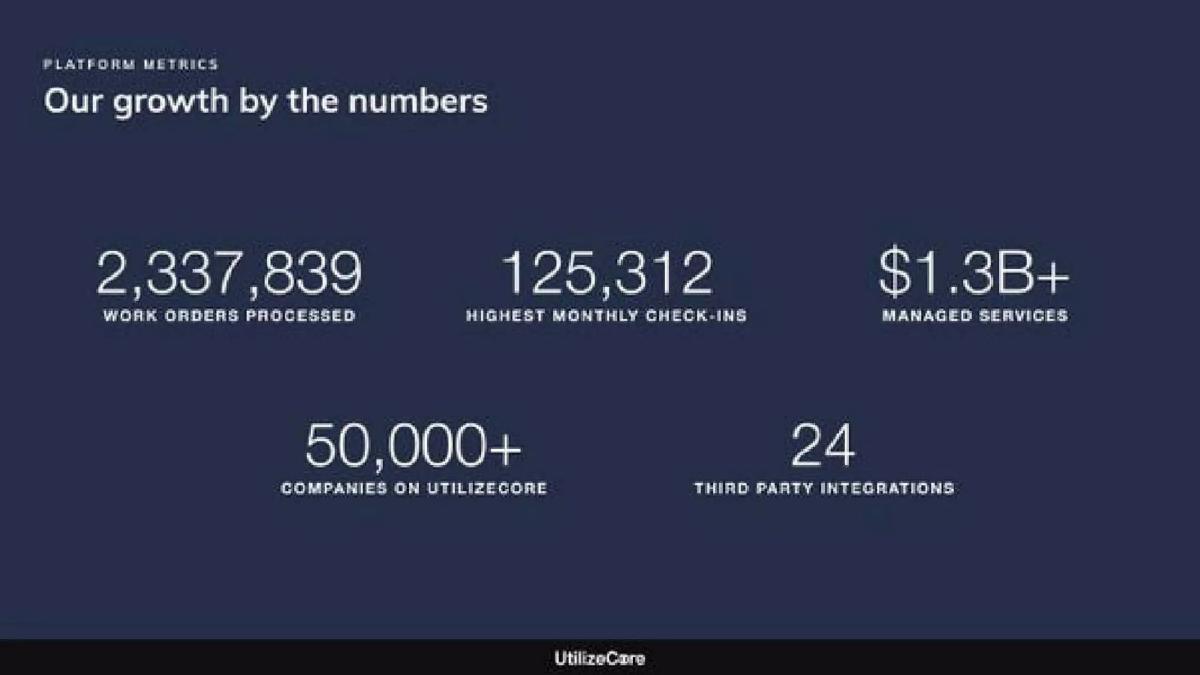
- The platform has already processed 2,337,839 work orders, indicating significant pre-seed or early-seed scale (Slide 5).
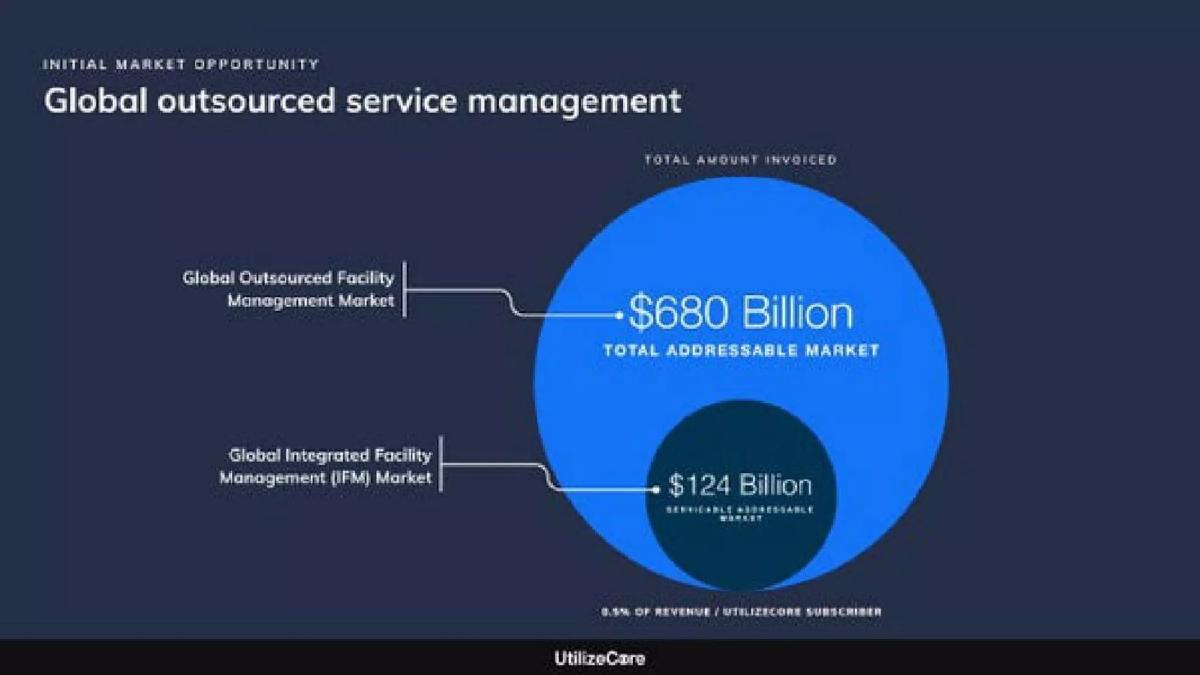
- UtilizeCore targets a $680 Billion Total Addressable Market within global outsourced facility management (Slide 6).
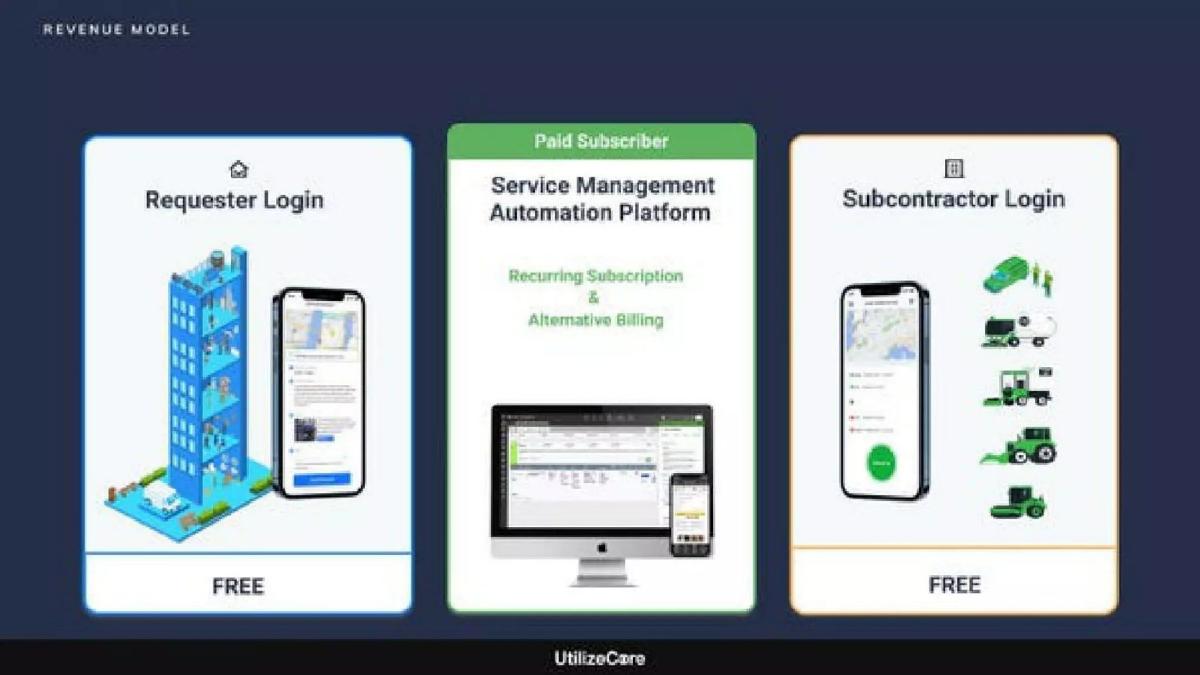
- The revenue model is a 'freemium' network where service assets and subcontractors use the tool for free while the management company pays for the automation platform (Slide 4).
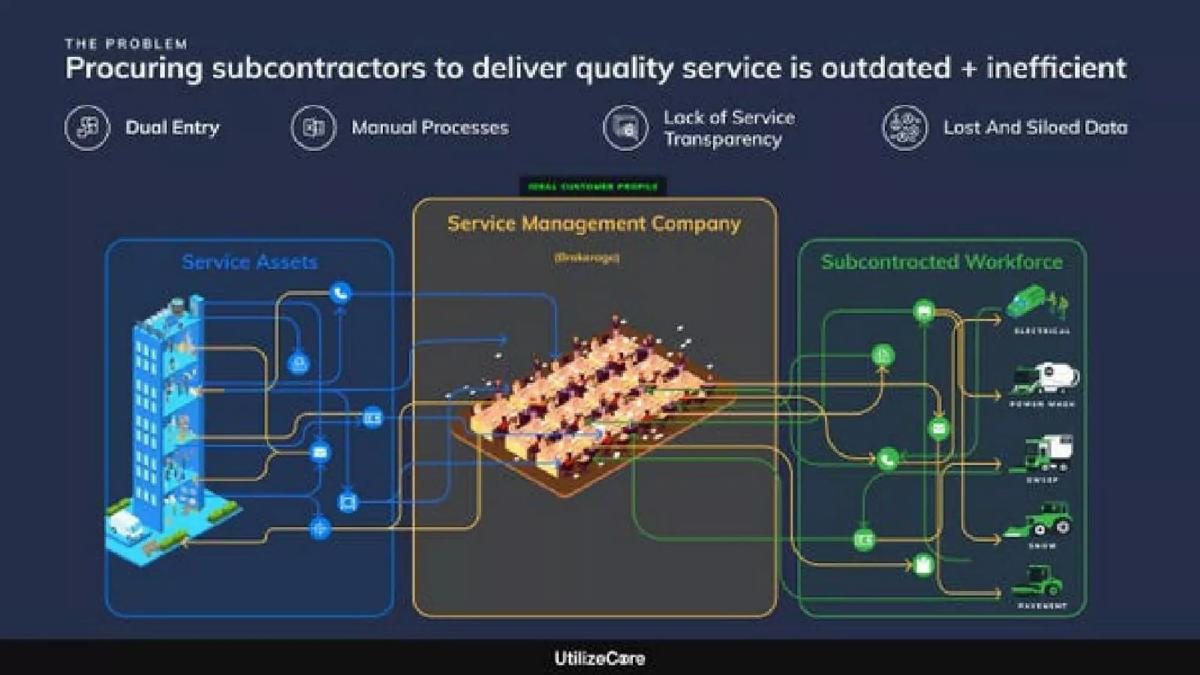
- The 'Problem' slide effectively uses a complex spaghetti diagram to visualize the inefficiency of manual procurement (Slide 2).
- The team includes a Chairman who previously built ServiceChannel's ARR from $0 to $30M (Slide 7).
- The platform boasts 24 third-party integrations, suggesting it is designed to sit at the center of an existing tech stack (Slide 5).
- Managed services on the platform exceed $1.3B+, showing the high dollar volume flowing through the system (Slide 5).
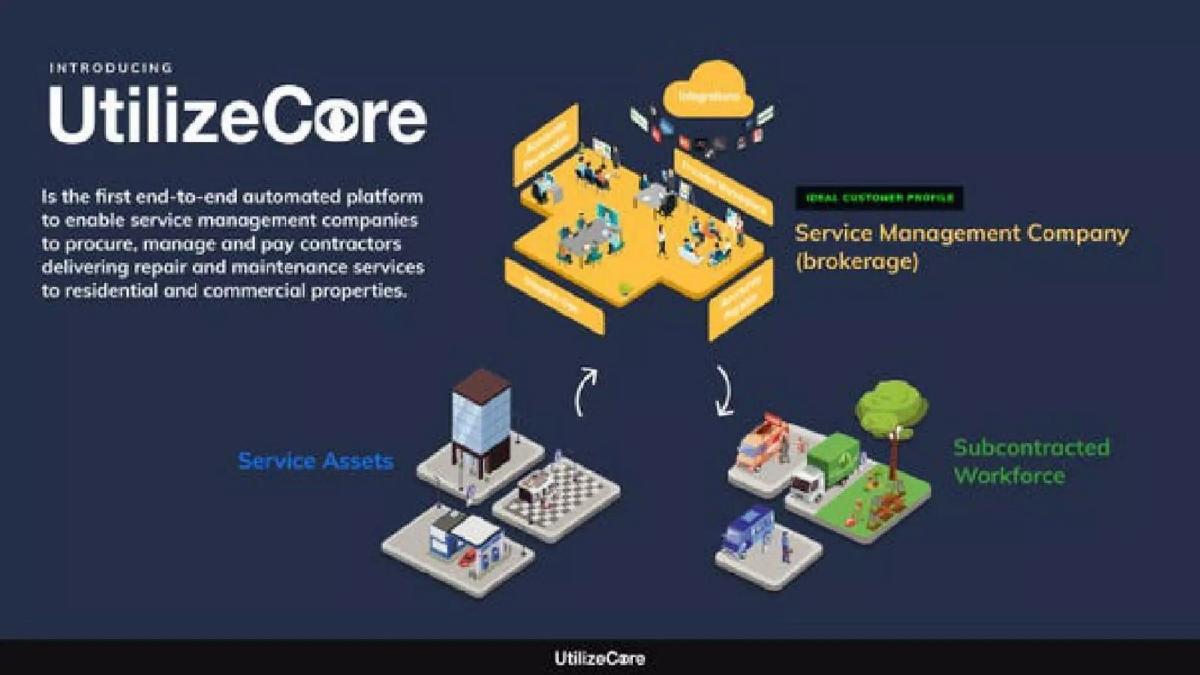
- The deck identifies 'Service Management Company (brokerage)' as the Ideal Customer Profile (Slide 1).
The Strategic Core of a $5.3M Seed Round
UtilizeCore’s pitch deck is a lean, 9-slide presentation that relies heavily on two things: massive existing traction and deep domain expertise. In the world of B2B SaaS, particularly in the unglamorous sector of facility management and subcontracting, investors look for founders who understand the 'hair on fire' problems of the middleman. UtilizeCore identifies this middleman as the 'Service Management Company' or brokerage. By focusing on the entity that coordinates between the property owner and the technician, UtilizeCore positions itself as the essential operating system for the entire service supply chain.
Slides 1-3: The Ecosystem and the Chaos
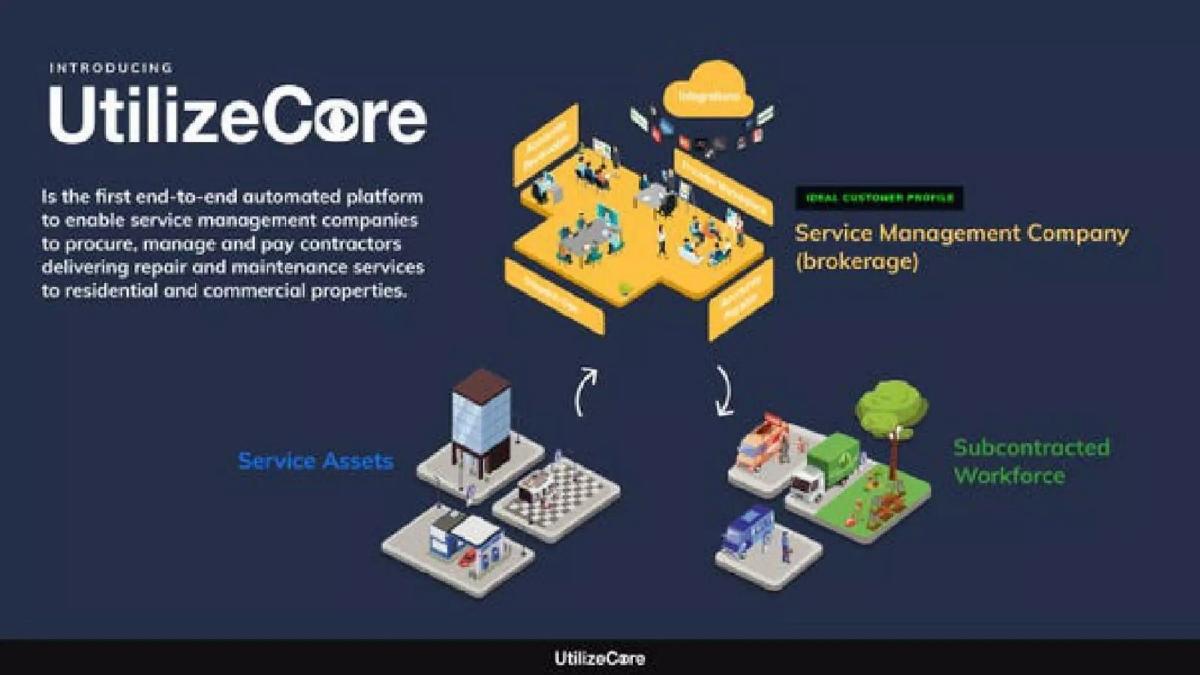
Slide 1: Introducing UtilizeCore The deck opens with a clear value proposition: an end-to-end automated platform for service management companies to procure, manage, and pay contractors. It immediately identifies the Ideal Customer Profile (ICP) as the 'Service Management Company (brokerage).' The isometric illustration introduces the three pillars of their world: Service Assets, the Management Company, and the Subcontracted Workforce. This is a classic three-sided marketplace setup, but with a clear focus on who the 'hero' of the story is.
Slide 2: The Problem This slide is a textbook example of 'visualizing the mess.' It uses a 'spaghetti diagram' to show how information currently flows—or fails to flow—between assets and workers. The slide lists four specific killers of efficiency: Dual Entry, Manual Processes, Lack of Service Transparency, and Lost and Siloed Data. By showing icons for phone calls and emails tangled in a web, the founders make the case that the current status quo is unsustainable for a scaling brokerage.
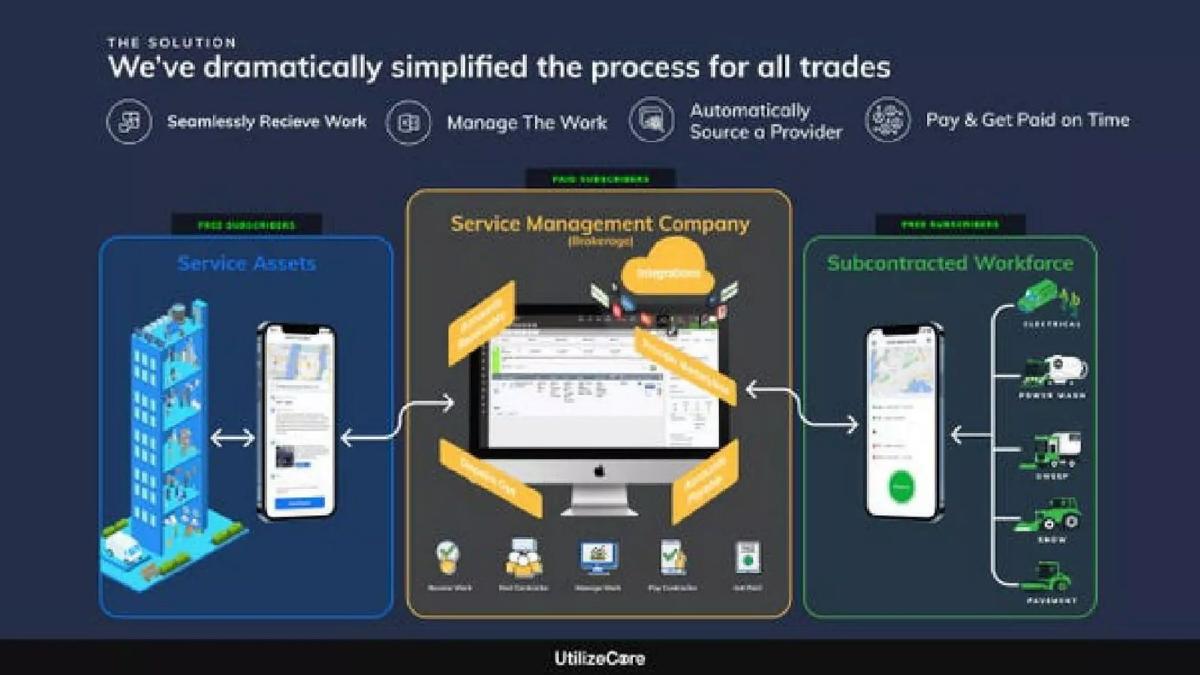
Slide 3: The Solution The solution slide mirrors the problem slide but replaces the chaos with a clean, centralized interface. It highlights four key outcomes: Seamlessly Receive Work, Manage The Work, Automatically Source a Provider, and Pay & Get Paid on Time. The visual shows the 'Paid Subscribers' (the management company) at the center, using a desktop interface, while the 'Free Subscribers' (assets and workforce) interact via mobile devices. This reinforces the 'network' aspect of the SaaS—it’s not just a tool for one office; it’s a portal for an entire ecosystem.
Slides 4-6: Monetization, Traction, and Market Size
Slide 4: Revenue Model UtilizeCore’s business model is a 'Network SaaS' play. Slide 4 explicitly states that the 'Requester Login' and 'Subcontractor Login' are FREE . The revenue is generated from the 'Service Management Automation Platform' via a 'Recurring Subscription & Alternative Billing.' This is a strategic move to reduce friction for the supply and demand sides of the marketplace, ensuring that the paying customer (the brokerage) has a high-utility network to manage.
Slide 5: Platform Metrics This is the 'shock and awe' slide of the deck. For a Seed-stage company in 2020, the numbers are staggering: 2,337,839 work orders processed and $1.3B+ in managed services. It also notes 50,000+ companies on the platform and 24 third-party integrations. These metrics suggest that the product was already deeply embedded in the industry before this specific pitch, likely through early partnerships or a previous iteration of the business. It proves product-market fit beyond a doubt.
Slide 6: Initial Market Opportunity The deck narrows its focus to 'Global outsourced service management.' It cites a Total Addressable Market (TAM) of $680 Billion for the Global Outsourced Facility Management Market and a Serviceable Addressable Market (SAM) of $124 Billion for the Global Integrated Facility Management (IFM) market. A small note at the bottom mentions '0.5% of Revenue / UtilizeCore Subscriber,' which hints at their take-rate or pricing strategy relative to the total volume of invoices processed.
Slides 7-9: The Pedigree and the Network
Slide 7: Meet the Team The team slide is exceptionally strong. It doesn't just list titles; it lists specific industry achievements. Most notably, Steven Gottfried (Chairman) is credited with building ServiceChannel’s ARR from $0 to $30M. CEO Ryan Gottfried and President Jason Kwait are listed as '3rd Generation in the Service Industry,' signaling deep 'founder-market fit.' The inclusion of former ServiceChannel executives (Tom Edwards, Steven Gottfried) suggests that this team is essentially the 'A-Team' of this specific niche, returning to solve a problem they have conquered before.
Slide 8: Meet Our Advisors The advisor slide is split into 'SaaS Focused' and 'FM & Service Industry Focused.' It includes heavyweights like Bill Macaitis (former CMO/CRO at Slack, Zendesk, and Salesforce) and executives from companies like WeWork, TripActions, and CBRE. This slide serves to de-risk the investment by showing that the founders have access to the best minds in both software scaling and facility management operations.
Slide 9: Closing The deck ends simply with the logo and the tagline: 'Automated Service Management Platform.' There is no 'Ask' slide in this version, which is common in decks shared publicly or used as a teaser, though it is a notable omission for a formal pitch.
What Works in This Deck
The 'Network' Visualization: By clearly labeling who pays and who gets the tool for free, UtilizeCore explains a complex three-sided marketplace in seconds. · Massive Traction: Leading with $1.3B+ in managed services is an immediate attention-grabber that separates this from 'idea-stage' startups. · Founder-Market Fit: The '3rd Generation' label and the connection to ServiceChannel (a major player in the space) provide instant credibility. · Simplicity: The deck avoids jargon and uses consistent iconography to explain the flow of work and money.
What is Missing
The Ask: There is no mention of how much money is being raised or what the milestones for the next 18 months are. · Unit Economics: While we see the revenue model, we don't see the CAC (Customer Acquisition Cost) or LTV (Lifetime Value) for the paying brokerages. · Competition: The deck does not address existing incumbents or how they differ from legacy players like ServiceChannel or newer startups. · Product Deep-Dive: We see screenshots, but we don't see the specific 'magic' of the automation—how exactly does it 'automatically source a provider'?
What a Founder Should Copy
The Problem/Solution Mirror: Use the same layout for both slides to show exactly how your product 'untangles' the current mess. · The ICP Callout: Explicitly stating the 'Ideal Customer Profile' on the first slide helps investors immediately categorize the business. · The Advisor Split: If you are in a specialized industry, split your advisors into 'Domain Experts' and 'Functional Experts' (like SaaS scaling) to show you have all bases covered. · High-Level Metrics: If you have volume (work orders, check-ins, GMV), lead with it. It proves the system works even if the revenue is still catching up.
Frequently asked questions
- How does UtilizeCore make money?
- According to Slide 4, UtilizeCore employs a SaaS subscription model targeting the 'Service Management Company.' While the 'Service Assets' (property owners) and 'Subcontracted Workforce' (vendors) receive free logins to interact with the network, the central brokerage pays a recurring subscription fee and potentially 'Alternative Billing' fees for the automation platform.
- What is the current scale of the platform?
- Slide 5 reports high-volume traction: over 2.3 million work orders processed, 125,312 highest monthly check-ins, and more than 50,000 companies active on the platform. Most notably, the platform manages over $1.3 billion in service volume, which is a significant figure for a Seed-stage startup.
- Who are the key people behind the company?
- The leadership team, shown on Slide 7, consists of Co-founders Ryan Gottfried (CEO), Jason Kwait (President), and Johnny Zhu (COO). They are supported by a heavy-hitting board, including Steven Gottfried, who is credited with scaling ServiceChannel to $30M in ARR, and Tom Edwards, a former CFO of ServiceChannel.
- What specific problem does the software solve?
- Slide 2 identifies four core pain points: Dual Entry, Manual Processes, Lack of Service Transparency, and Lost/Siloed Data. The visual representation shows a chaotic web of phone calls, emails, and manual data entry between property managers and subcontractors that UtilizeCore seeks to automate.
- Is there a specific 'Ask' or valuation in the deck?
- No. The 9-slide deck provided does not include a slide detailing the amount of capital being raised, the valuation, or the specific use of funds. This information was likely handled in a separate document or during the verbal pitch, though catalogue data confirms they raised $5.3M in 2020.