Amixr is an incident management platform designed to optimize IT problem-solving through deep integration with collaboration tools like Slack. In 2018, the company raised $500,000 using a 16-slide deck that relies heavily on emojis and minimalist graphics rather than dense data tables. The deck highlights a significant market opportunity, citing over 190,000 DevOps engineers in the US and a $25 billion Total Addressable Market (TAM). Key performance indicators shown include a 300x reduction in noise and a 12x improvement in incident response times. While the deck succeeds in communicating a c…
Key takeaways
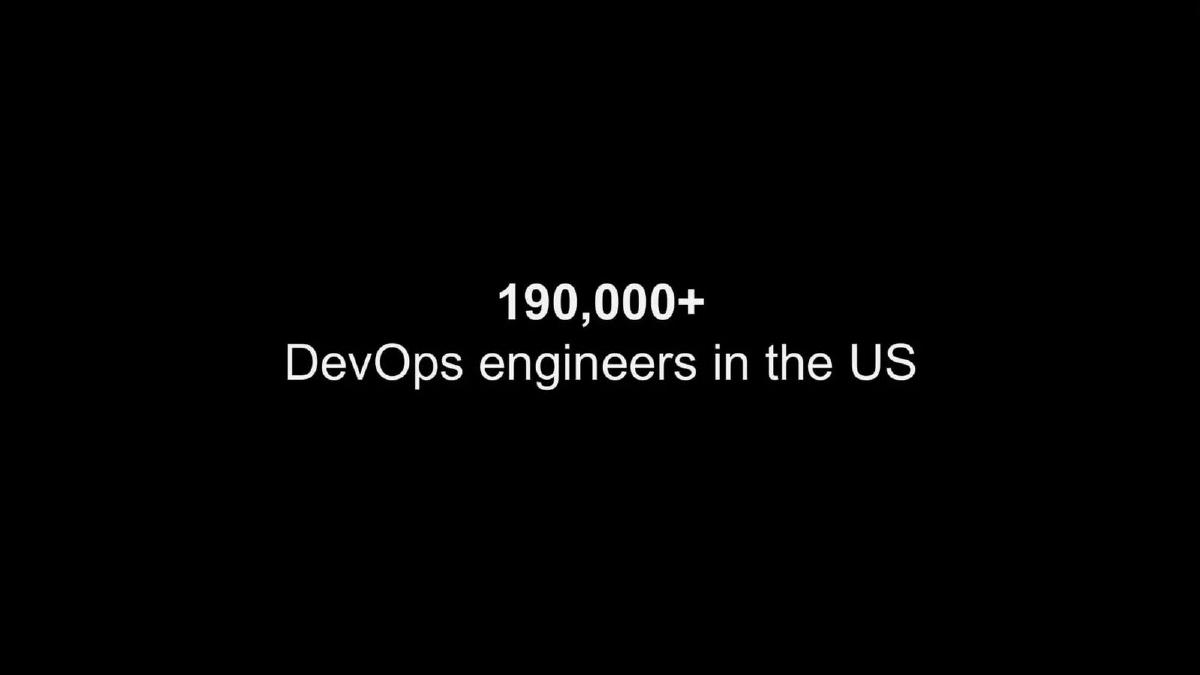
- The deck identifies a target audience of 190,000+ DevOps engineers in the US on slide 4.
- Amixr claims to reduce notification noise by up to 300x as shown on slide 11.
- Incident response times improved by 12x according to the data visualization on slide 12.
- The platform integrates with Slack, Microsoft Teams, and Mattermost as illustrated on slide 8.
- The company reported doubling its Monthly Active Users (MAU) in the month prior to the deck, per slide 13.
- The Total Addressable Market (TAM) is valued at $25 billion on slide 15.
- Both founders, Matvey Kukuy and Ildar Iskhakov, bring 7+ years of experience from Cisco (slide 14).
- The deck lists 20 early customers, including Tele2 and Blue Bottle Coffee, on slide 10.
Introduction: The Minimalist Narrative of Amixr
Amixr’s 2018 pitch deck is a study in minimalism. In an era where many founders over-index on text-heavy slides, Amixr opted for a 16-slide presentation that relies on emojis, large-scale typography, and simple diagrams. The company, which raised $500,000, positions itself as an 'Intelligent Incident Management' layer for DevOps teams. By focusing on the friction of existing workflows and the relief provided by their automation, the deck attempts to sell a feeling of efficiency as much as a technical product.
Slides 1-4: Setting the Stage and the User Persona
Slide 1 is a standard title slide featuring the Amixr logo and the tagline 'Intelligent Incident management.' The branding is stark—white text on a black background—setting a professional, developer-centric tone.
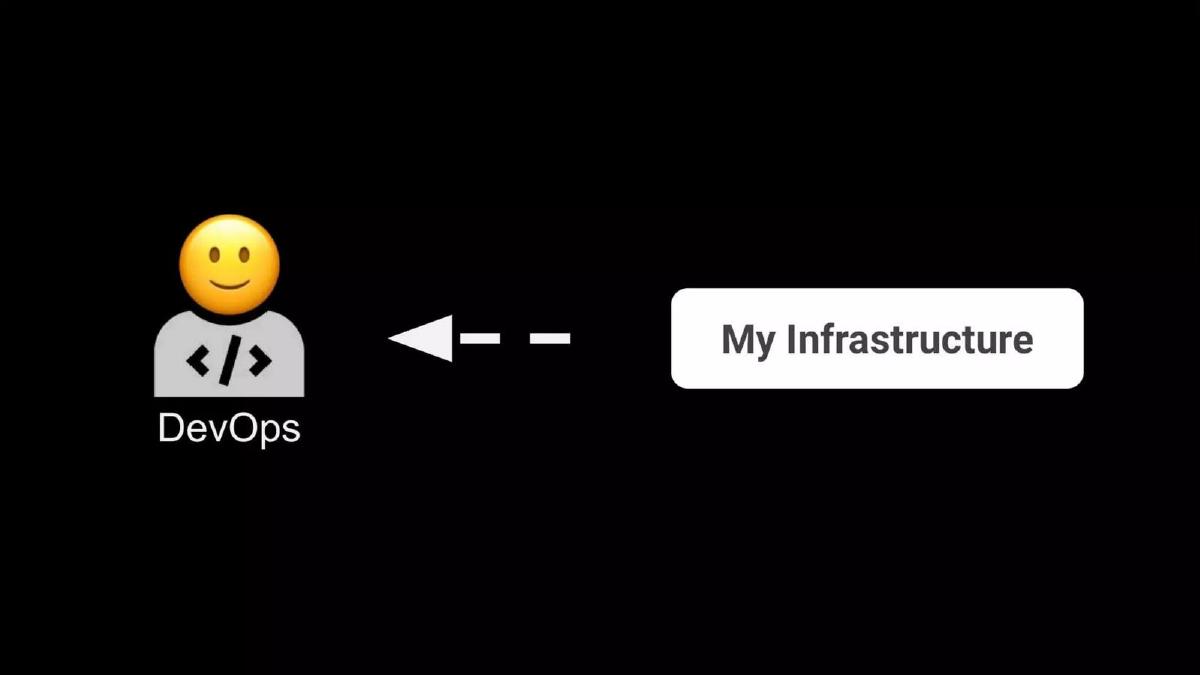
Slide 2 introduces the protagonist: the DevOps engineer. Using a simple emoji-based icon, it shows a connection between 'My Infrastructure' and the engineer. This is the baseline state of the industry.
Slide 3 is a curious choice for a pitch deck, featuring a dark, cinematic image of a person sleeping. In the context of the following slides, this represents the 'on-call' nightmare where incidents occur while the engineer is off-duty. It is a visceral way to highlight the stakes of the problem without using words.
Slide 4 provides the first hard data point: '190,000+ DevOps engineers in the US.' This slide defines the immediate user base. While not a TAM (Total Addressable Market) figure in dollars, it establishes the scale of the human problem Amixr is solving.
Slides 5-7: The Problem of Alert Fatigue
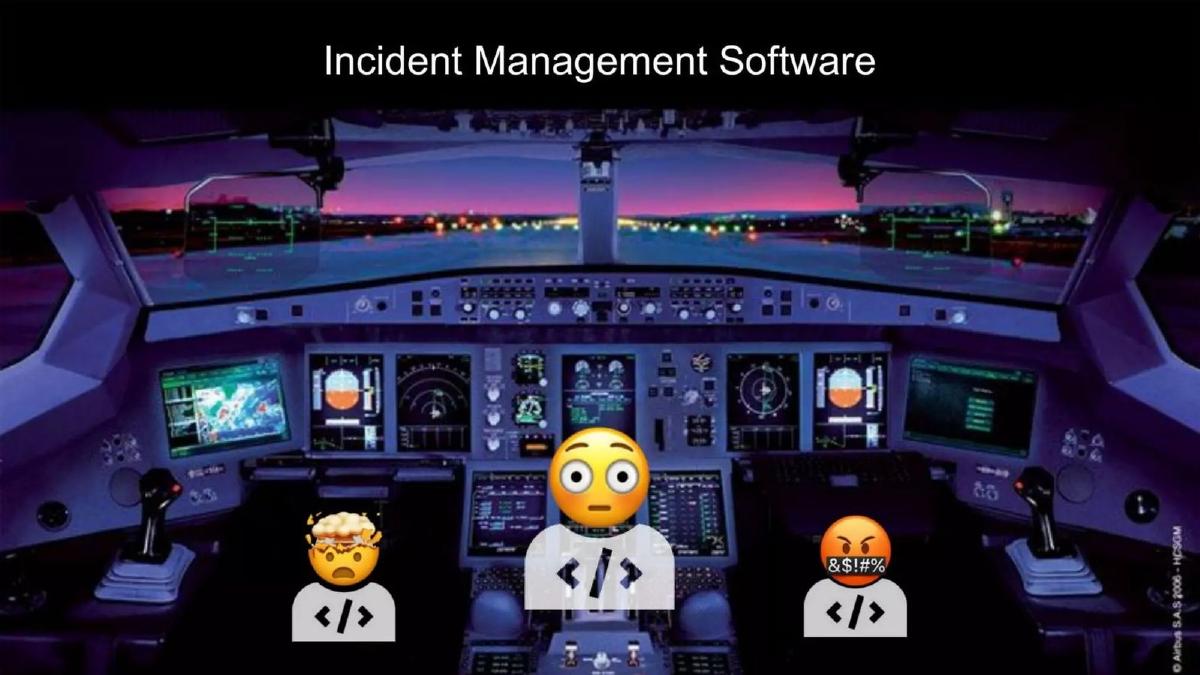
Slide 5 uses a cockpit metaphor to illustrate 'Incident Management Software.' The slide shows three DevOps icons overwhelmed by a complex array of screens, using emojis for 'mind-blown,' 'shocked,' and 'angry.' The message is clear: current tools are too complex and cause emotional distress to the users.
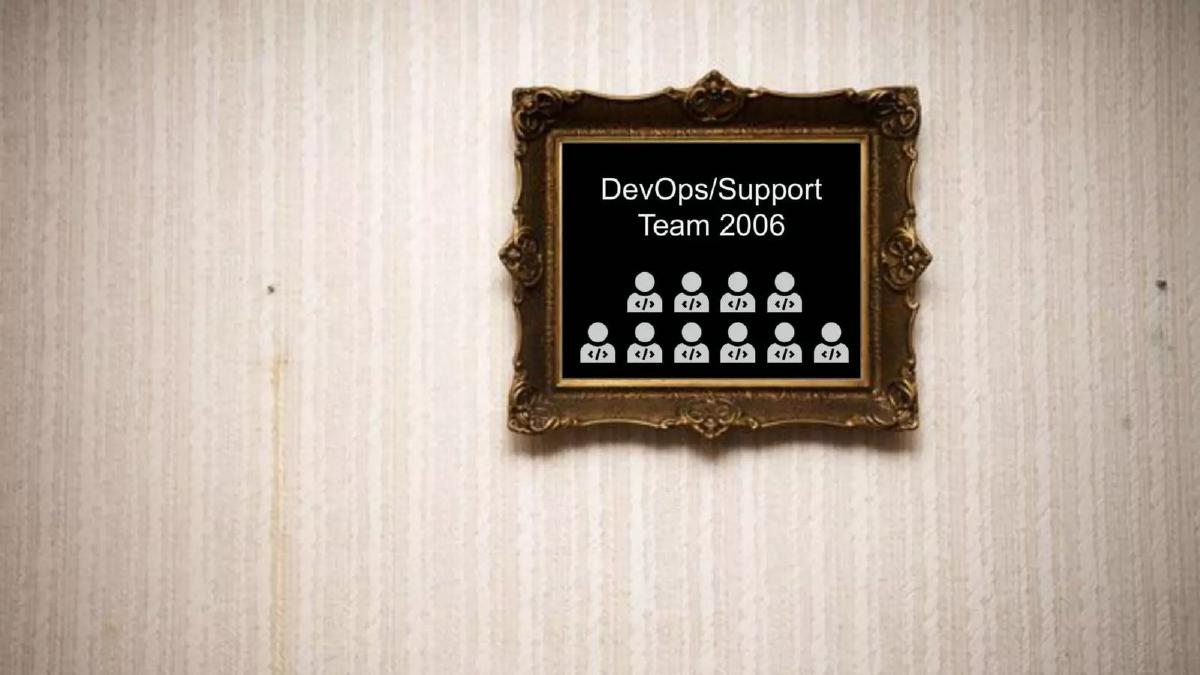
Slide 6 contrasts the current chaos with the 'DevOps/Support Team 2006.' It shows a framed picture of a small, organized team. This implies that as infrastructure has scaled, the human ability to manage it using legacy methods has broken down.
Slide 7 introduces the transition to modern communication. It shows a Slack-like interface with the DevOps icons, one of whom is still overwhelmed. This sets up the need for a tool that lives inside the chat interface rather than a separate, complex dashboard.
Slides 8-9: The Solution and Machine Learning
Slide 8 is the primary product reveal. It shows the Amixr interface functioning as a bot within Slack. The screenshot shows a 'Test notification from Grafana' with buttons to 'Acknowledge' or 'Resolve.' Below the main image are logos for Slack, Microsoft Teams, and Mattermost, confirming the platform's cross-compatibility with major chat tools.
Slide 9 explains the 'intelligence' part of the value proposition. The slide notes that the tool 'Learns from people' by tracking:
A screenshot shows the bot inviting a specific user (@Matvey) because they 'fixed a similar incident before.' This demonstrates a proactive, data-driven approach to incident routing.
Slides 10-13: Traction and Performance Metrics
Slide 10 displays social proof. It mentions '20 early customers' and includes logos for Tele2 and Blue Bottle Coffee. Several other logo placeholders are left blank, which may indicate undisclosed clients or a work-in-progress slide.
Slide 11 makes a bold efficiency claim: 'Up to X300 less noise.' A downward arrow reinforces the idea of reduction. In the world of DevOps, where 'alert fatigue' is a leading cause of burnout, a 300x reduction is a significant selling point.
Slide 12 provides a scatter plot of 'Median Resolve Time.' The graph shows a sharp decline from over 8 hours in early May 2019 to consistently low levels by mid-June 2019. The headline claims 'X12 times faster Incident response.' This is the most technical evidence of value in the deck.
Slide 13 is a single-sentence traction slide: 'x2 MAU last month.' Doubling Monthly Active Users is a classic venture capital growth signal, though the slide lacks the absolute numbers to provide full context.
Slides 14-16: Team, Market, and Contact
Slide 14 introduces the founders. Matvey Kukuy (CEO) and Ildar Iskhakov (CTO) are both listed with '7+ years' of experience and the Cisco logo. This establishes 'founder-market fit,' suggesting the team has spent years dealing with the exact infrastructure problems they are now solving.
Slide 15 defines the market opportunity with a 'TAM: $25B.' The visual shows an overwhelmed engineer icon transforming into a happy one, linking the financial opportunity directly to the resolution of the user's pain.
Slide 16 is a simple contact slide with the CEO’s email address.
What Works
Clarity of Persona: The deck never loses sight of who the user is. By using the DevOps icon throughout, Amixr makes it clear that they are building a tool for engineers, not just for 'the enterprise.' This focus is essential for bottom-up SaaS adoption.
Visual Metaphor: The use of the cockpit (Slide 5) and the sleeping engineer (Slide 3) effectively communicates the 'pain' of the current state without requiring the investor to be a DevOps expert. It translates a technical problem into a human one.
Integration-First Strategy: By showing the product inside Slack (Slide 8), the deck proves it understands modern developer workflows. It doesn't ask users to change their behavior; it enhances the behavior they already have.
What is Missing
Business Model: There is no information on how Amixr makes money. Is it per seat, per incident, or a flat monthly fee? Investors need to know if the $25B TAM is reachable through a viable pricing strategy.
Competitive Landscape: The incident management space is crowded with giants like PagerDuty and VictorOps (now part of Splunk). The deck fails to mention these competitors or explain why a Slack-first approach is a defensible moat against them.
The Ask: The deck ends without a request for capital. While the catalogue states they raised $500,000, the slides themselves do not specify the amount sought, the valuation, or the intended use of funds. This makes the deck feel more like a product demo than a financial instrument.
Unit Economics: While MAU growth is mentioned, there is no data on Customer Acquisition Cost (CAC) or Lifetime Value (LTV). For a 'Later' stage deck (as categorized in the catalogue), these omissions are notable.
What a Founder Should Copy
The 'Noise Reduction' Metric: If you are building a tool that filters data, find a way to quantify the 'noise' you are removing. Amixr’s '300x less noise' (Slide 11) is a punchy, memorable stat that sticks in an investor's mind.
Founder-Market Fit Visualization: Slide 14 is a perfect example of how to show credibility. By highlighting years of experience at a relevant industry giant (Cisco), the founders immediately answer the question: 'Why are you the right people to build this?'
Minimalist Slide Design: For a live pitch, this deck is excellent. It doesn't distract the audience with paragraphs of text. It forces the investor to listen to the founder while the slides provide emotional and visual reinforcement of the narrative.
Conclusion
Amixr’s deck is a high-signal, low-noise presentation that mirrors the product it describes. It successfully identifies a massive market and a specific, painful problem. However, as a standalone document, it leaves too many commercial questions unanswered. It is a deck designed to get a second meeting, not to close a deal on its own merits.
Frequently asked questions
- What is the primary problem Amixr is solving?
- Amixr addresses the 'noise' and inefficiency in incident management for DevOps teams. Slide 5 uses a cockpit metaphor to show how engineers are overwhelmed by alerts. The solution, as described in the catalogue and slides 8-9, is an intelligent platform that routes alerts to the right person via Slack, learning from past resolutions to reduce response times.
- How does Amixr demonstrate product-market fit?
- The deck uses three main signals: a list of 20 early customers including recognizable brands like Blue Bottle Coffee (slide 10), a metric showing they doubled their Monthly Active Users in a single month (slide 13), and a graph showing a drastic reduction in median resolve time from over 8 hours to near-zero over a two-month period (slide 12).
- What integrations does the platform support?
- Slide 8 explicitly shows the Amixr interface working within Slack, while also displaying logos for Microsoft Teams and Mattermost. This indicates a strategy of meeting DevOps engineers where they already communicate, rather than forcing them into a new, proprietary dashboard.
- Who are the founders and what is their background?
- The team consists of CEO Matvey Kukuy and CTO Ildar Iskhakov. As detailed on slide 14, both have over 7 years of experience in DevOps and Cloud expertise, respectively, and both previously worked at Cisco. This establishes strong technical credibility for a developer-tooling startup.
- What critical information is missing from this deck?
- The deck is missing several standard fundraising components: a business model/pricing slide, a competitive landscape analysis, detailed financial projections, and a 'The Ask' slide detailing how much capital is being raised and how it will be spent. It is a narrative-heavy deck that requires a speaker to fill in the commercial gaps.