Holidog’s 14-slide deck from 2012 presents a compelling case for a dominant European pet services platform expanding into physical goods. The company highlights a massive community of 1 million pet owners, dwarfing regional competitors like Dog Buddy and Gudog. The core of their narrative is efficiency: they achieved a 35% margin and launched a subscription box service, 'HappyBox,' that reached 1,000 shipments in its first month with a $0 acquisition budget. While the deck is visually sparse and lacks a formal team slide or detailed financial projections, it relies heavily on big-number tract…
Key takeaways
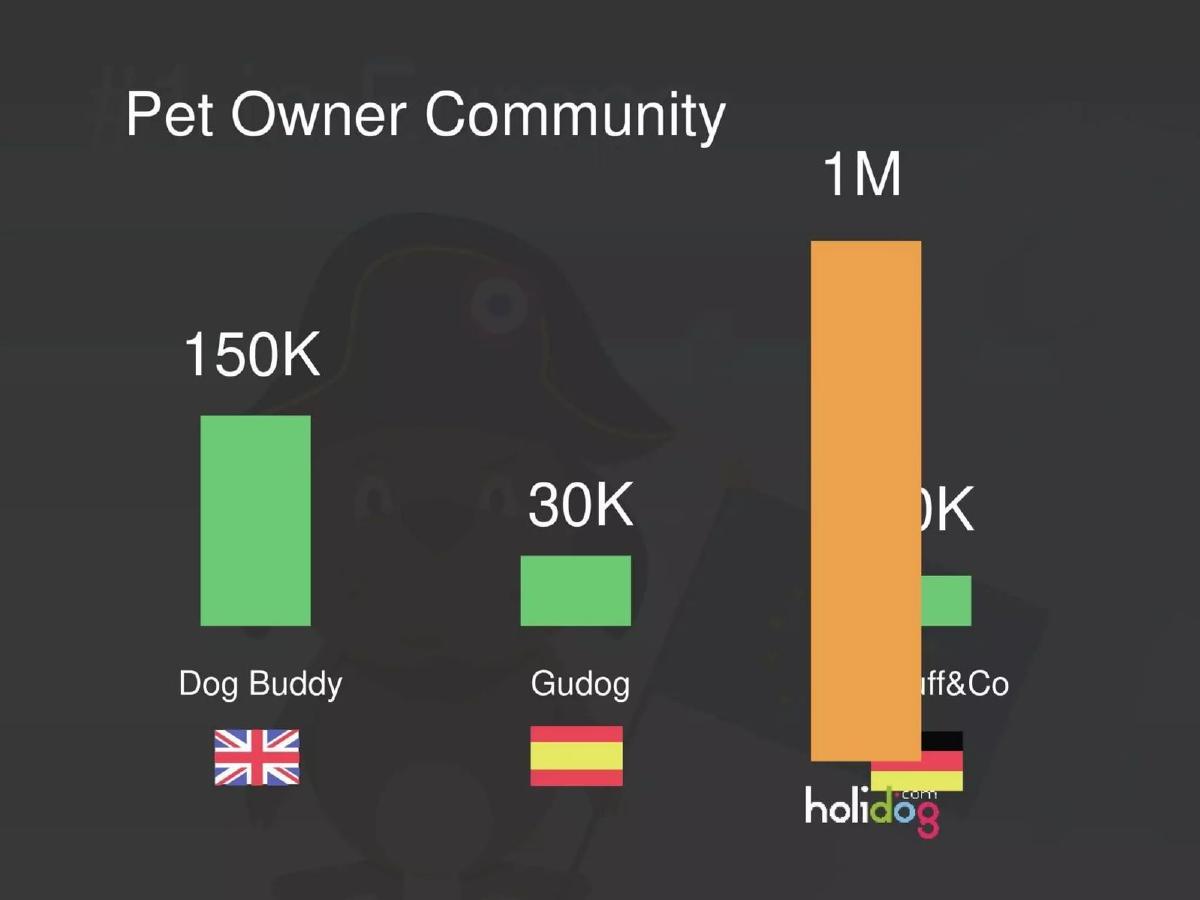
- Holidog claims a pet owner community of 1 million, significantly larger than UK-based Dog Buddy (150k) or Spain-based Gudog (30k) (Slide 2).
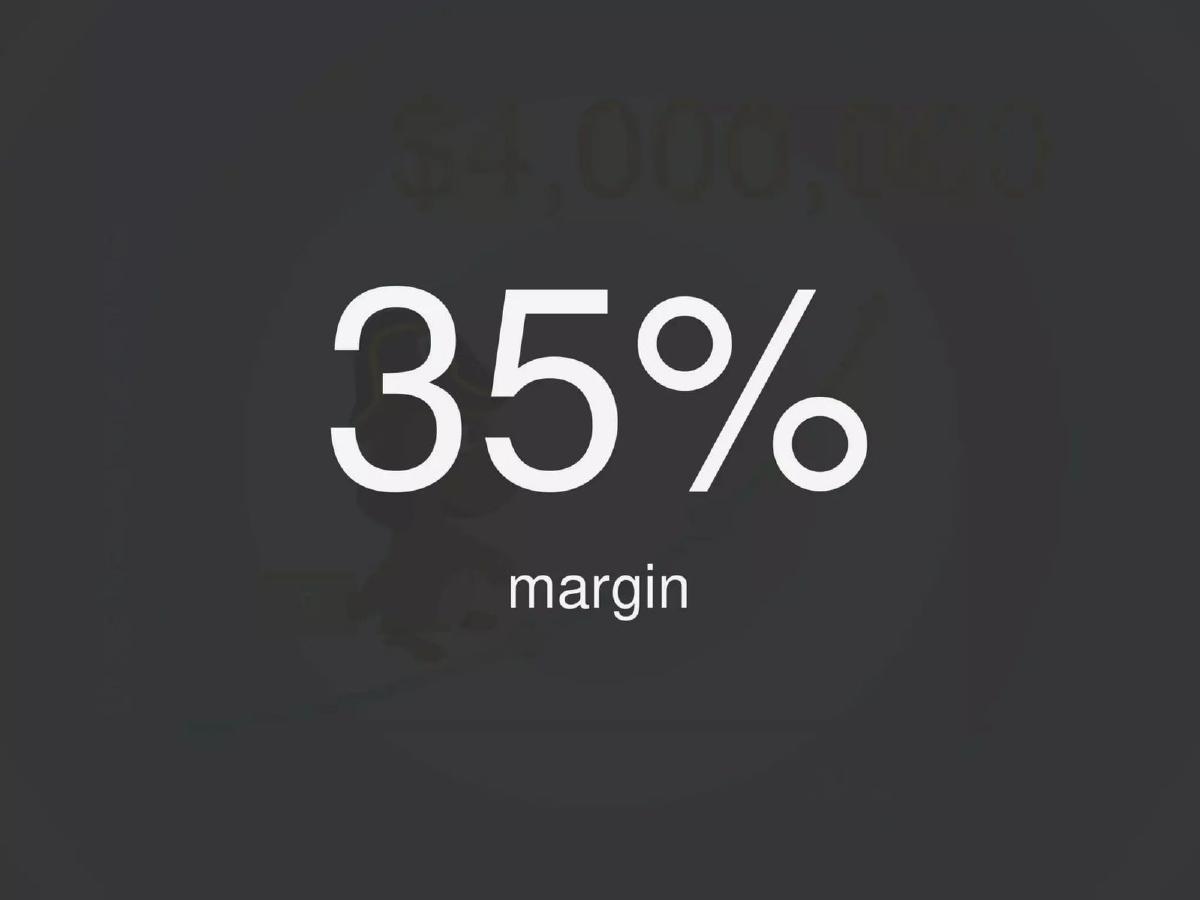
- The business operates at a 35% margin (Slide 3).
- The platform is growing at a rate of over 1,000 new members per month (Slide 4).
- The 'HappyBox' subscription service costs $24 to the public with a COGS of only $7, implying a 70% gross margin on physical goods (Slide 7).
- Holidog achieved 1,000 box shipments in the first month and 2,000 subscribers per month with a $0 acquisition budget (Slides 7, 8, 9).
- The total addressable pet market is cited as $100 billion (Slide 10).
- The company is diversifying revenue through 'GoHoliday' (services) and 'HappyBox' (products) to increase revenue per user (Slides 11, 12).
- The deck introduces 'Tindog,' a social discovery app for dogs, as a top-of-funnel engagement tool (Slide 13).
The Traction-First Teaser
Holidog’s 2012 pitch deck is a product of its era—minimalist, heavy on big-font metrics, and light on dense text. At 14 slides, it moves quickly from market dominance to product expansion. The core thesis is simple: we have already captured the European pet owner market for services, and now we are using that leverage to sell them high-margin physical goods for free (in terms of marketing spend). This teardown looks at how they used massive community numbers to justify their expansion into the 'HappyBox' and 'Tindog' sub-brands.
Slides 1-4: Market Dominance and Margins
Slide 1 is a simple branding slide featuring the Holidog logo and three colorful icons of pets wearing sunglasses. It establishes a playful, consumer-facing tone immediately.
Slide 2 is the 'hook.' Titled 'Pet Owner Community,' it uses a bar chart to compare Holidog against regional competitors. It lists Dog Buddy (UK) at 150k, Gudog (Spain) at 30k, and Holidog at a staggering 1M. The visual of a dog dressed as Napoleon in the background reinforces their 'conquest' of the European market. By showing a 10x lead over some competitors, they effectively de-risk the investment by proving they are the category leader.
Slide 3 gets straight to the point on profitability: '35% margin.' While it doesn't specify if this is net or gross margin for the overall business, in the context of a marketplace, a 35% take-rate or operating margin is a strong signal of a healthy business model. Slide 4 follows up with growth velocity, showing '1,000+ new members per month.' The text on this slide is slightly garbled due to a layering error ('NEW MEMBERS PER MONTH' is overlaid with other text), but the message of consistent growth remains clear.
Slides 5-9: The Subscription Pivot (HappyBox)
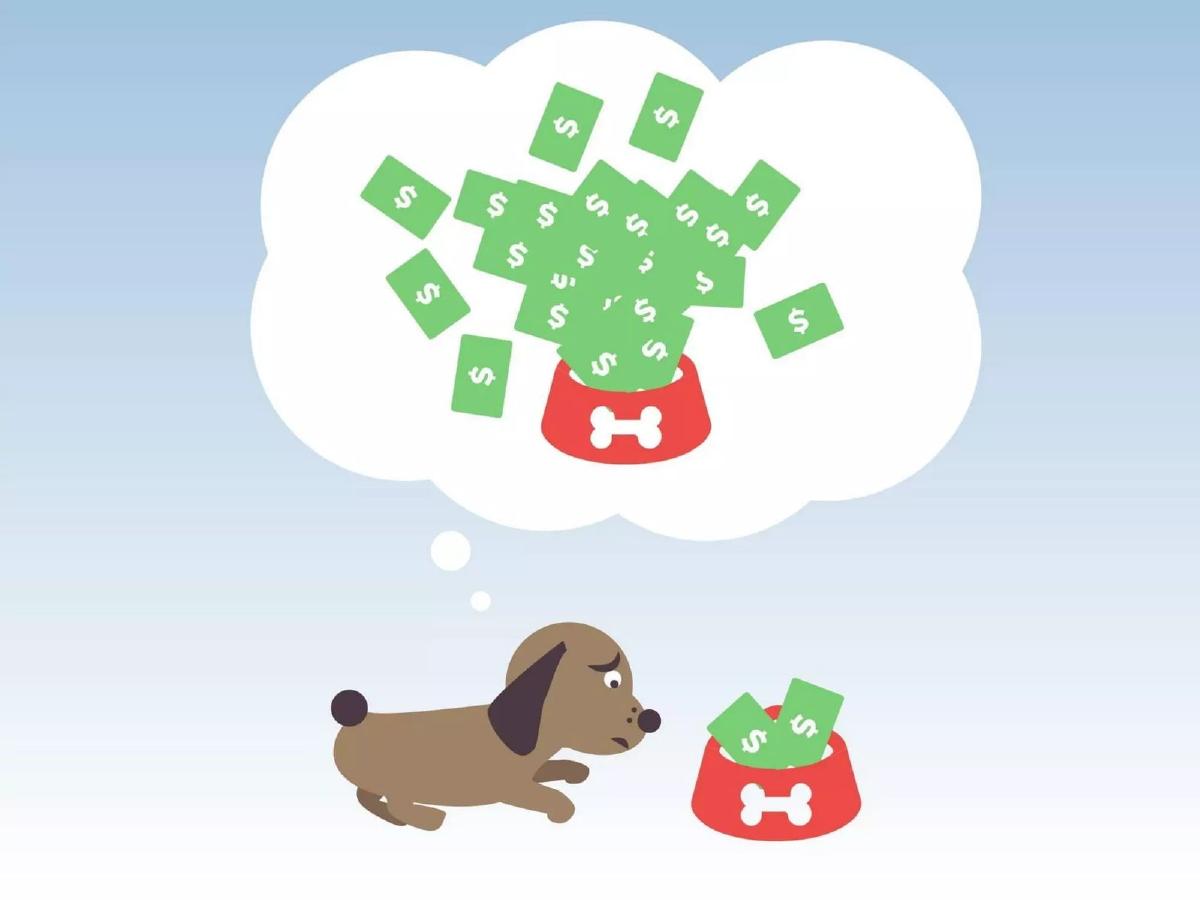
Slide 5 and 6 use illustrations to set up a problem/solution narrative. Slide 5 shows a dog dreaming of a bowl full of money, while Slide 6 shows a pet owner on a boat leaving their dog behind. This likely refers to the 'holiday' aspect of the business—owners needing care while they travel.
Slide 7 introduces 'HappyBox,' a monthly delivery box for dogs. This is a critical slide because it breaks down the unit economics: a $24 price point against a $7 COGS. This 70% gross margin on physical goods is significantly higher than many e-commerce plays. It also notes that 1,000 boxes were shipped in the first month, proving immediate product-market fit within their existing user base.
Slide 8 shows the growth of this new segment: '2,000 subscribers per month.' This suggests a doubling of the initial first-month volume. Slide 9 provides the 'mic drop' moment for any investor: '$0 acquisition budget.' By leveraging their 1 million existing members (from Slide 2), they can launch new products without the heavy Facebook or Google ad spend that typically kills subscription box margins. This is a powerful demonstration of ecosystem leverage.
Slides 10-12: Market Size and Strategy
Slide 10 is a standard TAM (Total Addressable Market) slide, citing a '$100B pet market.' While large, it lacks the granularity of how much of that is reachable in their specific European territories. However, it serves the purpose of showing the 'ceiling' is very high.
Slide 11 visualizes the two pillars of the business: 'GoHoliday' (the service side) and 'HappyBox' (the product side). This clarifies the brand architecture for investors who might be confused by the different names. Slide 12 explains the 'Why' behind this dual approach: 'We’re increasing repeat transactions and revenue per user.' This is the classic marketplace evolution—moving from a low-frequency service (pet sitting for vacations) to a high-frequency product (monthly subscription boxes).
Slides 13-14: Mobile Social and Contact
Slide 13 introduces 'Tindog.' It shows a smartphone interface that mimics Tinder but for dogs. The slide includes a photo of a 500 Startups presentation, signaling that the company has been through a reputable accelerator program. Tindog represents the 'top of the funnel'—a way to acquire users through a free, viral social app who can later be converted into 'GoHoliday' or 'HappyBox' customers.
Slide 14 is the closing slide. It shows a 'match' screen from the Tindog app and provides the founder's contact information and an AngelList (angel.co) link. Notably, there is no 'Ask' slide. The deck ends without telling the investor how much money is being raised or what the valuation expectations are.
What Holidog Does Well
Traction over Theory: The deck doesn't spend time explaining why people love pets. It assumes the market is there and uses the 1M user figure to prove they have won it. · Economic Clarity: Slide 7 is the strongest in the deck. Providing the $24/$7 price-to-COGS ratio gives investors an immediate understanding of the profitability potential. · Zero-Cost Acquisition: The claim of $0 acquisition cost for a new product line is the most compelling part of the narrative. It proves that their first business (pet sitting) is a powerful lead-generation engine for their second business (subscription boxes). · Visual Simplicity: The deck is not cluttered. Each slide has one job and one primary number.
What is Missing from the Holidog Deck
The Team: There is no team slide. Investors at the 'Later' stage (as categorized) usually want to see the pedigree of the leadership team, especially when managing multi-product lines across different countries. · The Ask: The deck never specifies how much capital is being raised. This is a significant omission that forces the investor to ask for basic deal terms. · Financial Projections: While they show current margins and growth, there is no forward-looking P&L or projection of where the 2,000 subscribers/month will be in two years. · Competitive Landscape (Products): While they compare themselves to other sitting services on Slide 2, they do not compare 'HappyBox' to other pet subscription boxes (like BarkBox), which were already gaining traction in 2012.
What You Should Copy for Your Own Deck
The 'Unfair Advantage' Slide: If you have an existing user base and are launching a new product, use a slide like Slide 9 ($0 acquisition budget) to show how your existing business makes your new business cheaper to run than a competitor's. · Direct Unit Economics: Don't hide your margins. If your COGS are low, put them in big font like Slide 7. It builds immediate trust. · Ecosystem Mapping: Slide 12 is a great way to show how different products (Service A and Product B) work together to increase the Lifetime Value (LTV) of a single customer. · Comparative Scale: If you are the leader in your market, use a bar chart like Slide 2 to show the gap between you and the 'next best' options. It framing the investment as a 'winner-takes-all' opportunity.
Frequently asked questions
- What is Holidog's primary competitive advantage according to the deck?
- Holidog’s primary advantage is its scale and acquisition efficiency. Slide 2 shows they have 1 million users, which is 6.6x larger than their nearest cited competitor, Dog Buddy. This massive existing community allowed them to launch a secondary subscription box business with a $0 acquisition budget, as shown on Slide 9, by cross-selling to their existing database.
- How does Holidog make money?
- The deck highlights two main revenue streams: pet services (boarding/sitting) and physical products. Slide 7 details the 'HappyBox' subscription model, priced at $24 with a $7 COGS. Slide 12 explicitly states their strategy is to increase repeat transactions and revenue per user by moving customers from the 'GoHoliday' service side to the 'HappyBox' product side.
- What are the unit economics of their subscription box?
- The unit economics for 'HappyBox' are very strong. According to Slide 7, the box retails for $24 and has a Cost of Goods Sold (COGS) of $7. This results in a $17 gross profit per box, or roughly a 70% margin. When combined with the $0 customer acquisition cost mentioned on Slide 9, the contribution margin is exceptionally high.
- Is there a clear exit strategy or 'ask' in this deck?
- No. The deck is notably missing a slide detailing how much capital they are raising or what the specific terms are. It also lacks an exit slide or a three-to-five-year financial forecast. It functions more as a 'traction teaser' designed to secure a meeting rather than a comprehensive investment memorandum.
- What is 'Tindog' and why is it included?
- Tindog is presented on Slide 13 as a mobile app for dog social discovery (a play on Tinder). It is included to demonstrate Holidog's ability to capture the 'social' and 'mobile' aspects of the pet owner journey. By providing a fun, high-frequency app, they can keep users engaged in their ecosystem even when they don't immediately need a pet sitter.