Hologram’s Series B deck is a study in clarity and restraint. Raising $65M in 2021, the company positioned itself not just as a SIM provider, but as a software layer for the physical world. The deck follows a classic problem-solution-traction arc, utilizing high-quality photography to ground the abstract concept of 'connectivity' in real-world use cases like agtech and healthcare. While this version of the deck uses placeholders (X, Y, Z) for its most sensitive financial data, the structure reveals a heavy emphasis on cohort expansion and net dollar retention—the holy grails of SaaS-style IoT…
Key takeaways
- The deck uses a specific 'Turning Connectivity into Software' tagline to reposition a hardware-adjacent business as a scalable SaaS platform (Slide 1).
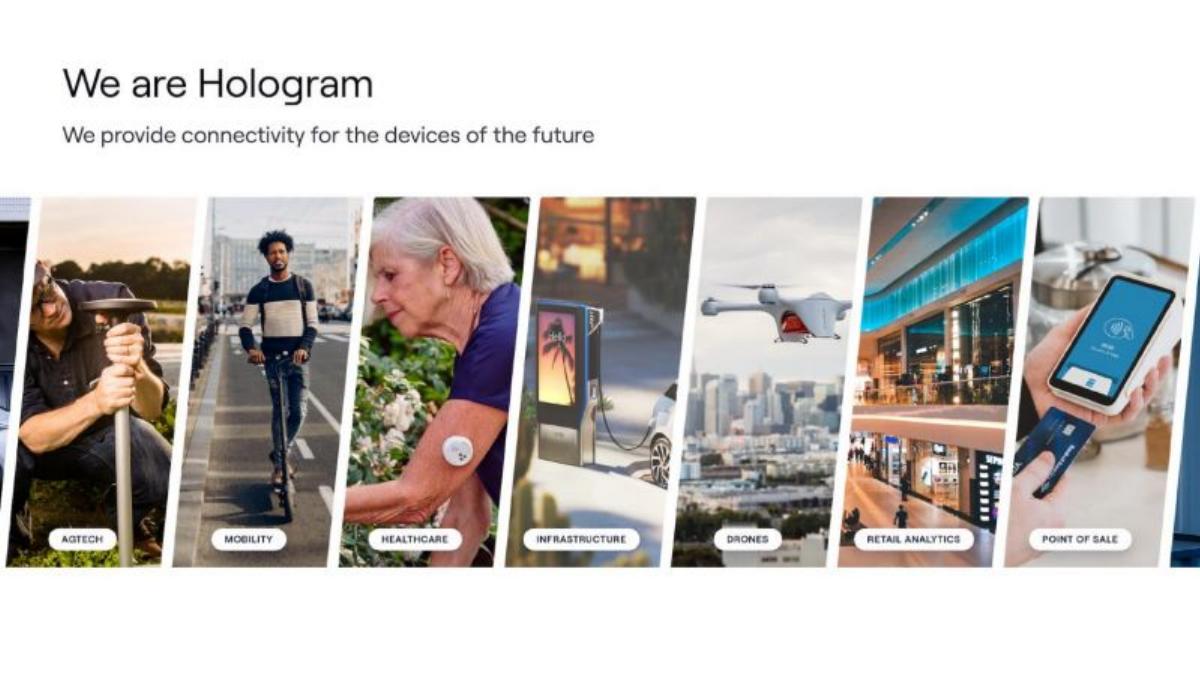
- Visual proof of market breadth is established early by showcasing seven distinct industries, from Drones to Point of Sale (Slide 2).
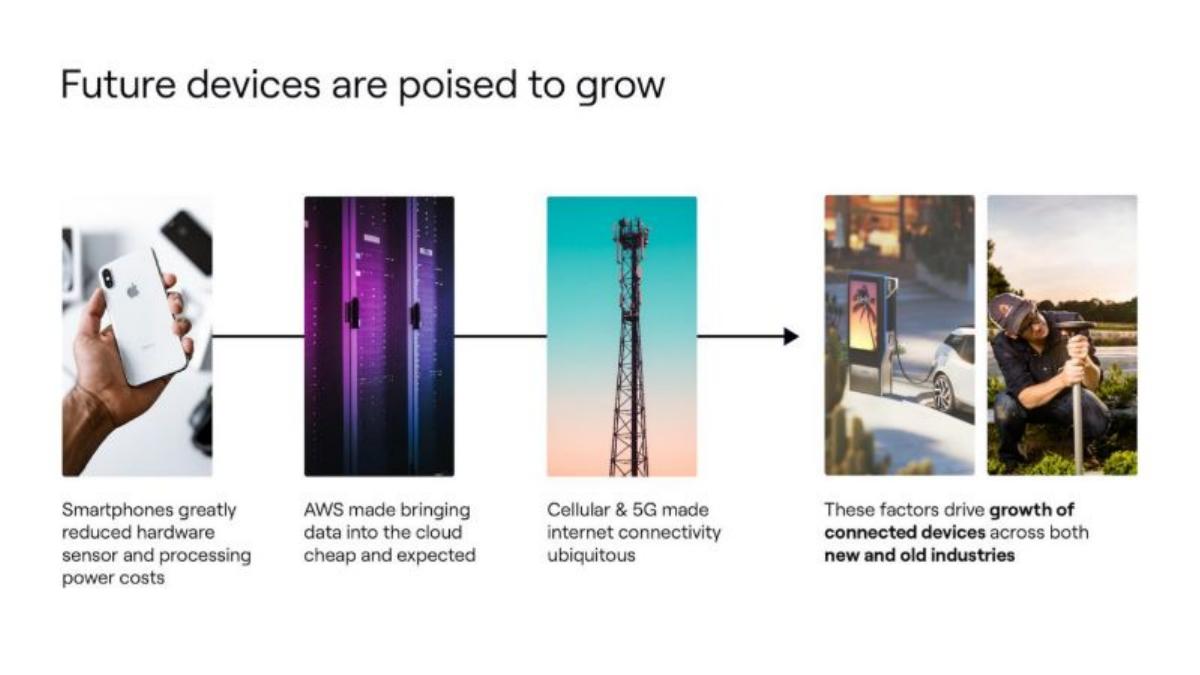
- The 'Why Now' slide links the growth of IoT to three specific technological shifts: smartphone hardware cost reduction, cloud ubiquity via AWS, and 5G (Slide 3).
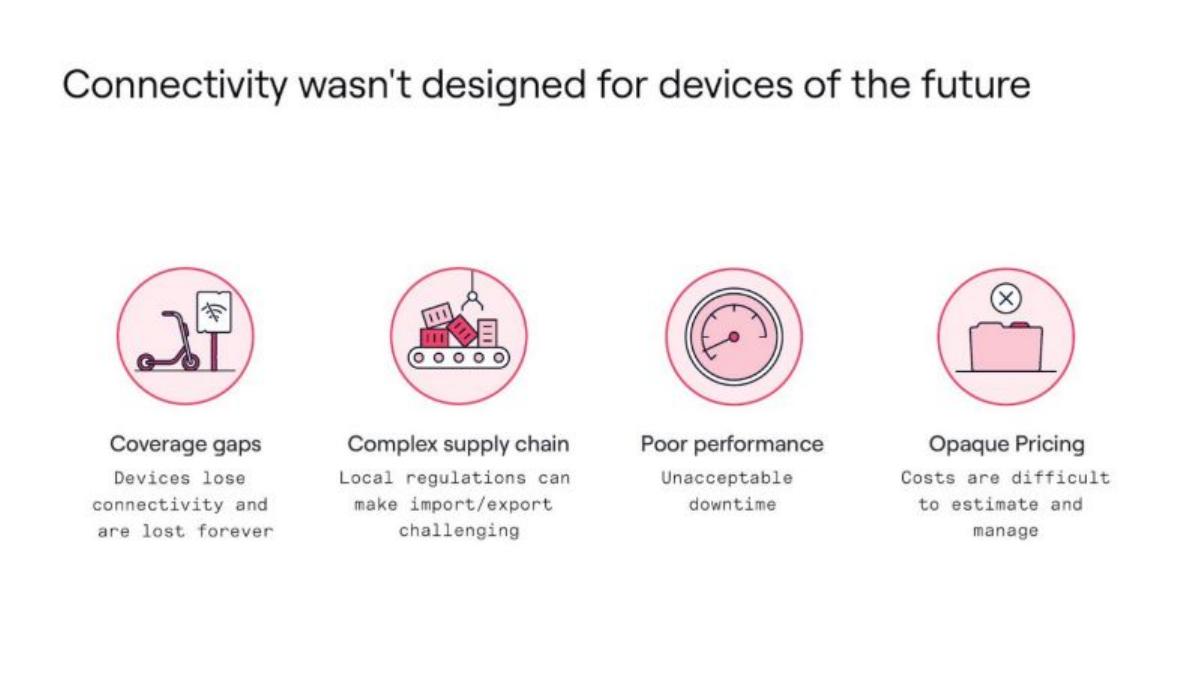
- Hologram identifies four specific pain points in legacy connectivity: coverage gaps, complex supply chains, poor performance, and opaque pricing (Slide 5).
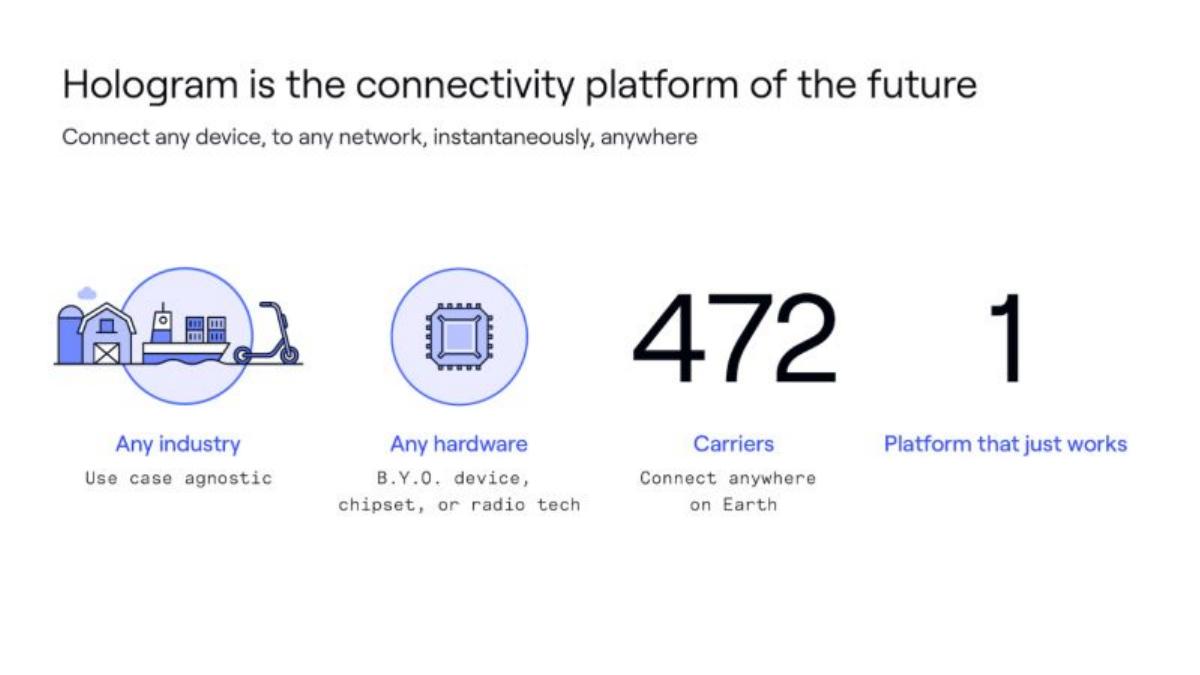
- The solution is quantified by a network of 472 carriers accessible through a single platform (Slide 6).
- Product-market fit is demonstrated through a dashboard preview highlighting 'Automatic Carrier Switching' and 'Single API' management (Slide 7).
- The team slide emphasizes 'scale' by highlighting a CPO with three successful exits and a CFO from Fidelity (Slide 8).
- Growth metrics are presented as placeholders (X, Y, Z), but the focus on 'avg cohort expansion' suggests a land-and-expand business model (Slide 11).
The Narrative of Connectivity as Software
Hologram’s Series B deck, which facilitated a $65M raise in 2021, is a textbook example of how to sell a complex infrastructure play. The core challenge for any IoT (Internet of Things) company is avoiding the 'commodity trap'—being viewed as just a provider of SIM cards or data plans. Hologram avoids this by immediately framing their offering as a software platform. The tagline on Slide 1 , "Turning Connectivity into Software," sets the tone for the entire presentation. It tells the investor that this is a high-margin, scalable technology business, not a low-margin hardware reseller.
Slides 1-2: The Hook and the Horizon
Slide 1 is minimalist, featuring the company logo and the central thesis. By Slide 2 , the deck moves quickly to establish the breadth of the opportunity. Titled "We are Hologram," it uses a montage of seven vertical industries: Agtech, Mobility, Healthcare, Infrastructure, Drones, Retail Analytics, and Point of Sale . This is a strategic move to show that the company is not dependent on a single market segment, reducing the perceived risk for Series B investors.
Slides 3-4: The Macro Thesis and Market Size
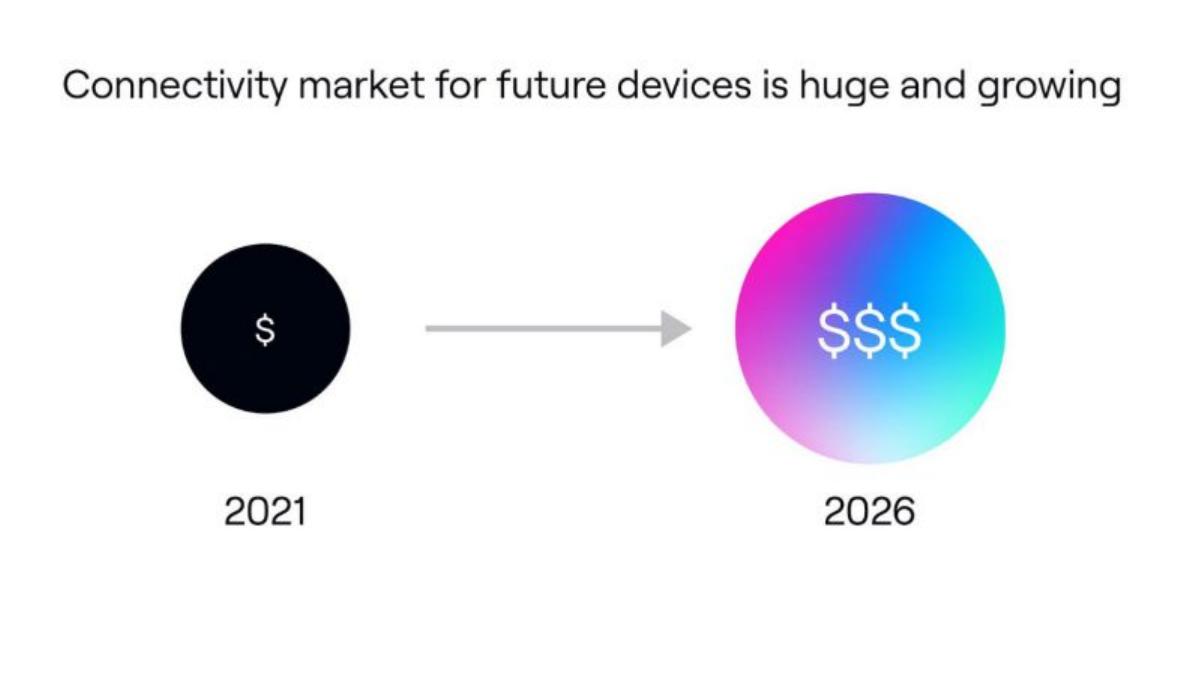
Slide 3 , "Future devices are poised to grow," provides the 'Why Now' logic. It traces a linear progression from Smartphones (which reduced sensor costs) to AWS (which made cloud data cheap) to Cellular & 5G (which made connectivity ubiquitous). The conclusion is that these factors drive "growth of connected devices across both new and old industries." This builds a logical bridge to Slide 4 , which uses a simple bubble chart to show the market expanding from 2021 to 2026 . While the specific dollar amounts are represented by symbols, the visual intent is to show a massive, accelerating TAM (Total Addressable Market).
Slide 5: Defining the Friction
Every great pitch deck needs a villain. On Slide 5 , the villain is legacy connectivity. Hologram identifies four specific pain points: Coverage gaps (devices lost forever), Complex supply chain (local regulations), Poor performance (unacceptable downtime), and Opaque Pricing (difficult to estimate costs). By naming these four specific problems, Hologram sets up a checklist that their solution must fulfill in the following slides.
Slides 6-7: The Platform Solution
Slide 6 introduces the platform as the antidote to the problems listed previously. It highlights three key numbers: 472 Carriers , 1 Platform , and the ability to connect "any device, to any network, instantaneously, anywhere." This is the 'magic' of the business—abstracting away the complexity of global telecom into a single interface. Slide 7 provides the visual proof with a screenshot of the Hologram dashboard. It lists three value propositions: Single SIM connectivity, Single API management, and Automatic Carrier Switching . This slide is critical because it proves the product is real and operational, moving beyond theoretical slides into tangible software utility.
Slide 8: The Team Built for Scale
By the Series B stage, investors are betting on the leadership's ability to manage a large organization. Slide 8 , "Team is built for scale," highlights a heavy-hitting executive bench. Benjamin Forgan (CEO) is noted for launching companies on 3 continents, and Pat Wilbur (CTO) is described as a "Hypervisor author" and "Phone Phreaker." The addition of Annie Rosen (CFO) from Fidelity and Mike Georgoff (CPO) with three exits signals that the company has 'adult supervision' and exit experience. The inclusion of "68 FTEs Total" and a 5.0 Glassdoor rating further reinforces the idea of a stable, high-performing culture.
Slides 9-12: The Traction and Unit Economics
The final section of the deck (Slides 9-12) focuses on the 'Machine.' Slide 9 shows a bar chart of device deployments from 2015 to 2022 . Even with placeholders (X, Y, Z), the hockey-stick shape of the graph is clear. Slide 10 claims "Engagement is exceptional," citing "X% Gross MRR Churn" and "Yx platform usage." Slide 11 is perhaps the most important for a Series B: "Hologram enables our customers business models." It shows a chart of "X% avg cohort expansion," proving that once a customer starts using Hologram, they spend more over time as their own fleets grow. Finally, Slide 12 summarizes the investment thesis with three key metrics: Net Dollar Retention (A%) , LTV/CAC (B) , and Magic Number (C) . These are the standard metrics for high-growth SaaS, and their inclusion confirms that Hologram wants to be valued as a software company, not a utility.
What Hologram Does Exceptionally Well
The Hologram deck excels at category repositioning . By using the language of software (APIs, Dashboards, Cohorts, Net Dollar Retention) to describe what is essentially a telecommunications service, they move the business into a higher valuation multiple. The visual design is also highly professional—using consistent iconography and high-quality photography to make a 'boring' infrastructure product look modern and essential. The logical flow is also seamless: it moves from the macro trend (IoT growth) to the micro friction (carrier complexity) to the specific solution (Hologram platform).
What is Missing from the Deck
While the deck is strong, there are a few notable omissions that a founder should be aware of. First, there is no explicit competition slide . While they mention 'legacy connectivity,' they don't name specific competitors or explain how they win against other IoT MVNOs (Mobile Virtual Network Operators). Second, the 'Ask' slide is missing in this version. While we know from the catalogue that they raised $65M, the deck doesn't specify how that capital will be allocated (e.g., R&D, sales expansion, international growth). Finally, there is very little detail on the underlying technology . While they mention a 'Single SIM,' they don't explain the technical hurdles of eUICC or multi-IMSI technology, which are the actual moats in this industry.
Founder's Playbook: What to Copy
Use 'Why Now' to create urgency: Slide 3 is a perfect template for any founder. Don't just say your market is big; explain why the technological stars have finally aligned to make your solution possible today. · Sell the 'Platform,' not the 'Product': If you have a hardware component, follow Hologram's lead. Focus 90% of your deck on the software management layer and the data, as these are the elements that investors find most attractive and scalable. · Highlight Cohort Expansion: For Series B and beyond, showing that existing customers spend more every year is the most powerful way to prove product-market fit. Slide 11's focus on 'growing as they grow' is a compelling narrative for any B2B company. · Quantify the Team's 'Scale' Potential: Don't just list titles. Use the team slide to prove you have the specific expertise needed for the next phase of growth, whether that's international expansion, M&A, or institutional financial management.
Frequently asked questions
- Why are there letters like X, Y, and Z instead of real numbers in this deck?
- This is a common practice for decks shared publicly after a round closes. Founders often scrub sensitive financial data (ARR, Churn, LTV) to protect trade secrets while still demonstrating the *shape* of their growth to the public. In the actual room with investors, these placeholders would be replaced with exact figures to prove the company's $65M valuation.
- How does Hologram differentiate itself from traditional telecom providers?
- Hologram positions itself as a 'software' company rather than a telecom carrier. Slide 6 and 7 emphasize that they aggregate 472 carriers into a single API and a single SIM. This removes the 'complex supply chain' and 'opaque pricing' problems mentioned on Slide 5, allowing developers to manage global fleets without negotiating individual carrier contracts.
- What is the significance of the 'Why Now' slide in this deck?
- Slide 3 is crucial because it justifies the timing of the Series B. By citing the reduced cost of sensors (thanks to smartphones) and the maturity of cloud infrastructure (AWS), Hologram argues that the barriers to IoT have finally fallen, creating a massive tailwind for their connectivity platform that didn't exist five years ago.
- What stage of company is this deck designed for?
- This is a Series B deck. We know this because the focus has shifted from 'what is the product' to 'how does the machine scale.' Slides 9 through 12 focus almost entirely on accelerating growth, cohort expansion, and unit economics (LTV/CAC), which are the primary concerns for growth-stage investors.
- How does the deck handle the 'Team' slide differently than a seed deck?
- Instead of just listing education, Slide 8 focuses on 'built for scale.' It highlights specific executive experience, such as 'three successful startup exits' and 'decades of experience including Tripadvisor.' It also includes cultural validation like 'Inc. Best Workplaces' and a 5.0 Glassdoor rating to show the company can attract top talent.