HomeFit is a fitness consulting platform that positions itself as a 'concierge' service, matching users with personal trainers, yoga instructors, and dietitians based on personality and goals. The deck targets a specific high-income demographic—households earning over $100,000—and proposes both B2C and B2B revenue streams, including corporate on-site programming. While the deck provides clear service definitions and a specific marketing plan, it lacks a dedicated slide for current revenue, unit economics, or a detailed competitive landscape beyond a brief mention of gym retention rates. The $…
Key takeaways
- The company defines its solution as a concierge platform matching users with instructors based on needs, goals, location, and personality (Slide 2).
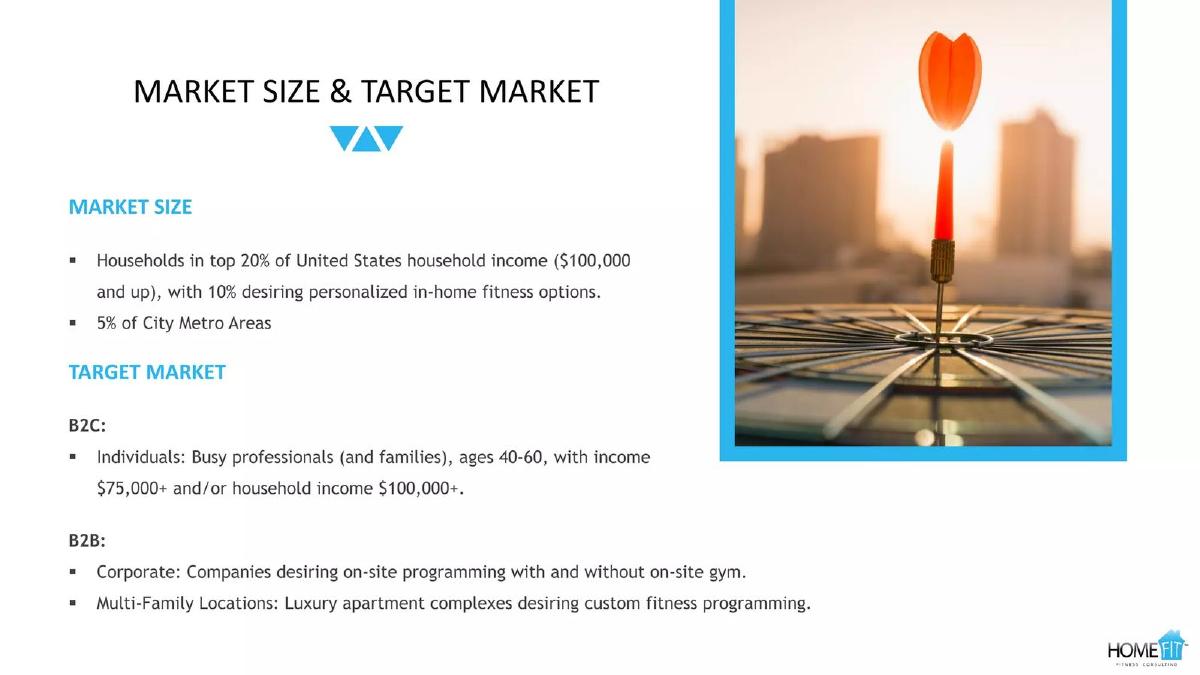
- HomeFit targets the top 20% of U.S. household incomes, specifically those earning $100,000 and up (Slide 3).
- The business model includes a B2B component targeting luxury apartment complexes and corporate offices (Slide 3).
- A key metric cited is a 12-month average client lifespan, which the company claims is double the 4-6 month average for gym members (Slide 4).
- Service offerings extend beyond physical training to include DNA testing for health awareness and lifestyle consulting (Slide 5).
- The marketing strategy relies heavily on geo-fencing and partnerships with 'parallel clientele' brands like Lululemon (Slide 6).
- The management team consists of three individuals with backgrounds in Exercise Science, Sports Management, and military service (Slide 7).
- The financing request is for $150,000, intended for marketing, branding, talent acquisition, and paying off short-term debt (Slide 8).
HomeFit Pitch Deck Analysis
The HomeFit pitch deck presents a localized, high-touch service model aimed at the premium segment of the fitness market. By labeling itself as 'Fitness Consulting' rather than just a training app, the company attempts to distance itself from the low-cost, high-churn digital fitness market. The deck focuses heavily on the quality of the match between professional and client, suggesting that the 'human element' is their primary product.
Slide 1: Title and Vision
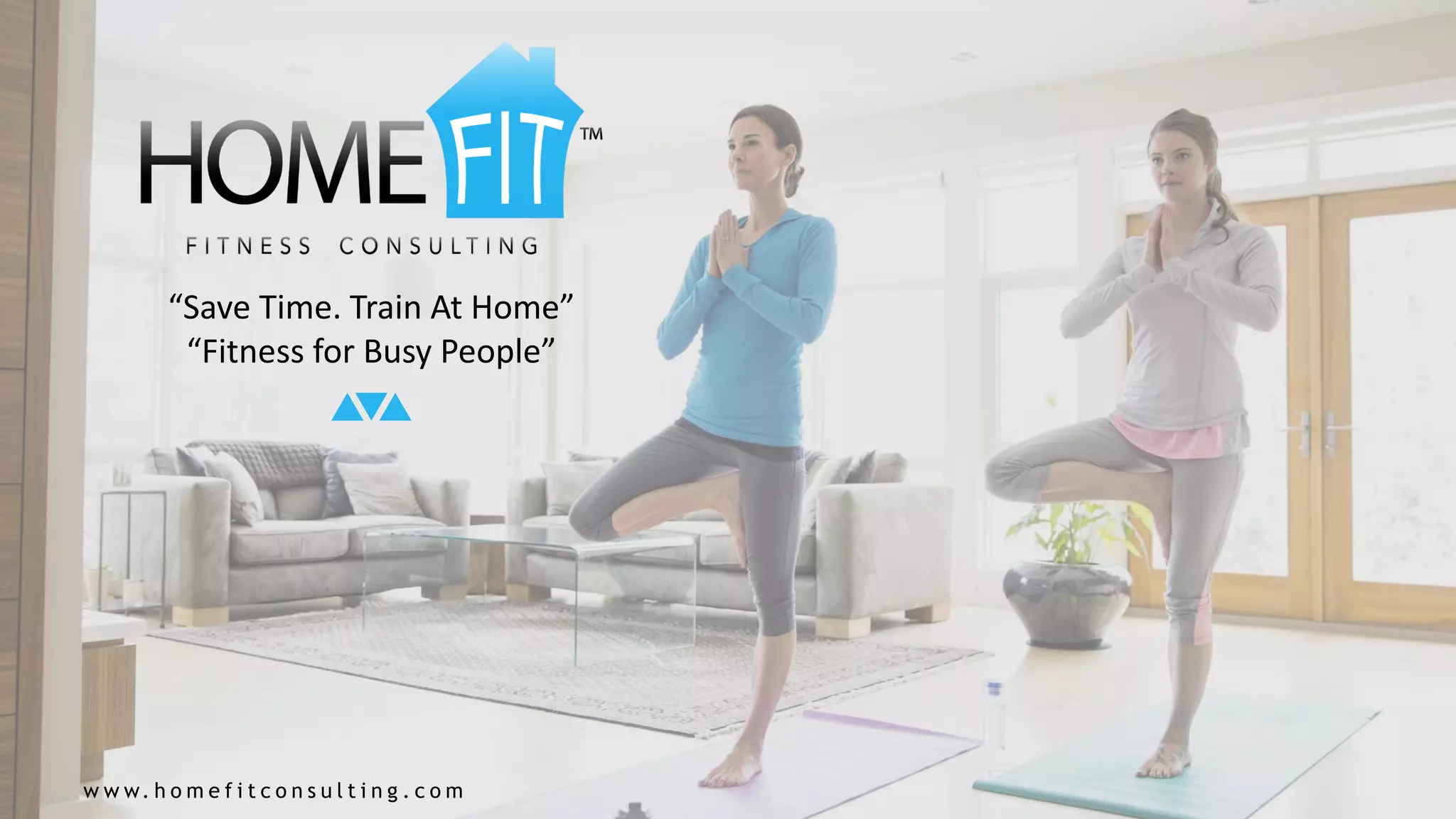
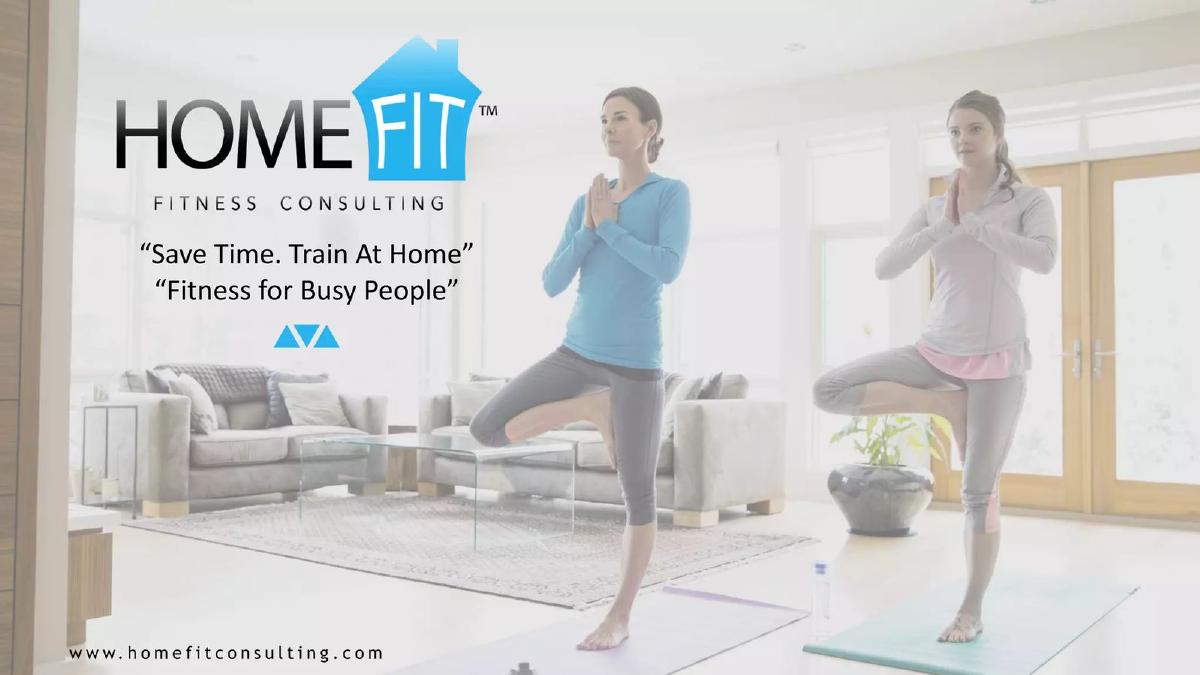
The cover slide introduces the brand with the taglines 'Save Time. Train At Home' and 'Fitness for Busy People.' The imagery of two women practicing yoga in a well-lit, modern living room immediately signals the target demographic: affluent individuals who value the convenience of their own space. The inclusion of the URL 'homefitconsulting.com' suggests the business operates under a consulting framework rather than a pure marketplace model.
Slide 2: The Solution
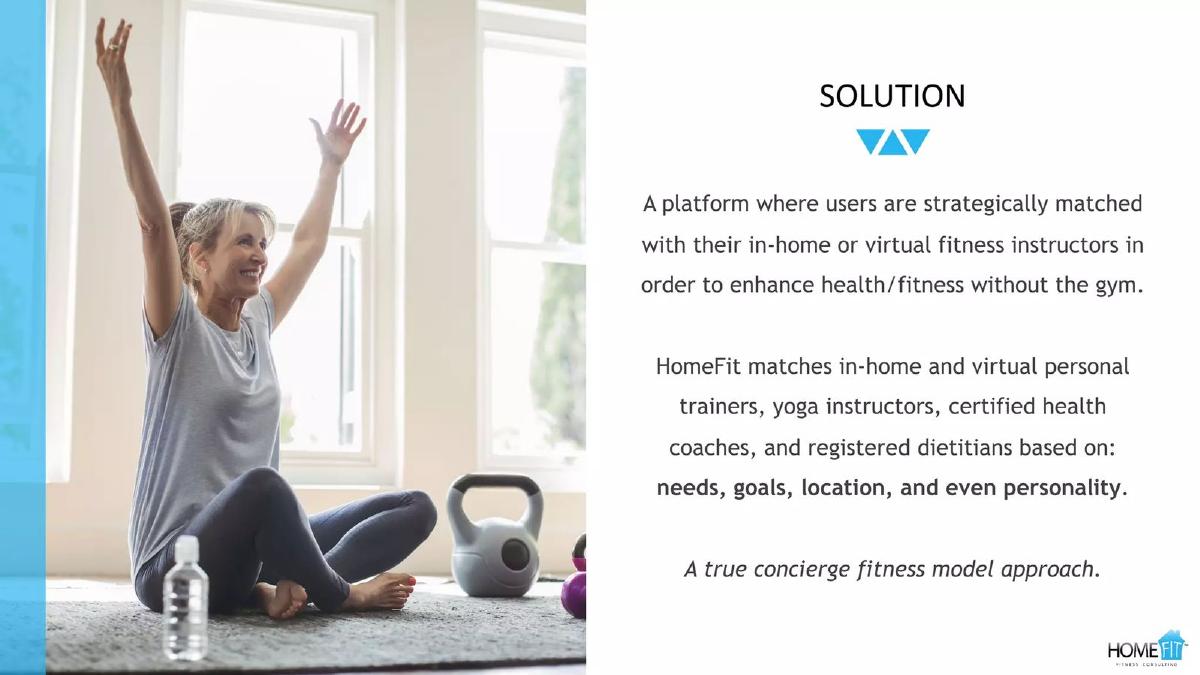
Slide 2 defines the platform's core function: strategically matching users with in-home or virtual instructors. The deck lists four types of professionals: personal trainers, yoga instructors, certified health coaches, and registered dietitians. The criteria for matching—needs, goals, location, and personality—highlight the 'concierge' aspect. This slide establishes that HomeFit is not just a directory, but a curated matching service designed to 'enhance health/fitness without the gym.'
Slide 3: Market Size & Target Market
This slide provides a specific, albeit narrow, view of the market. HomeFit targets the top 20% of U.S. households by income ($100,000+). They estimate that 10% of this group desires personalized in-home options. The B2C target is further refined to individuals and families aged 40-60. Interestingly, the slide also introduces a B2B strategy, targeting corporations for on-site programming and luxury apartment complexes. This dual-track approach suggests the company is looking for high-volume contracts to supplement individual client acquisitions.
Slide 4: Competitive Edge
The 'Competitive Edge' slide focuses on retention metrics. HomeFit claims an average client lifespan of 12 months, with 10% of clients staying for over three years. They contrast this with a stated gym industry average of 4-6 months. The slide attributes this success to their 'In-Depth Consulting Approach' and a monthly subscription model that 'enhances frequency and sustainable lifestyle change.' By focusing on retention, the deck argues for a higher Customer Lifetime Value (LTV) than traditional fitness models.
Slide 5: Services
Slide 5 uses iconography to detail five service pillars: In-Home Personal Fitness Training, Virtual (Live Video) Training, Online Coaching, Lifestyle & Nutrition Consulting, and DNA testing. The inclusion of DNA testing is a significant differentiator, suggesting a move toward 'precision wellness.' This indicates the company intends to use biological data to customize training programs, which could serve as a high-margin upsell or a powerful lead magnet.
Slide 6: Marketing Plan
The marketing plan is tactical and focused on digital and local reach. It lists Facebook targeted ads, Google Ads with geo-fencing, and LinkedIn for professional outreach. More importantly, it mentions 'Parallel Clientele Businesses' like Lululemon. Partnering with premium brands that already own the target demographic's attention is a standard but effective strategy for high-end service businesses. The mention of geo-fencing suggests a localized rollout strategy, focusing on specific affluent neighborhoods.
Slide 7: Management Team
The team slide features three individuals: Cody Robinson (Founder/CEO), Lynda Ratliff (COO), and Matthew Foster (CMO). The credentials listed are heavy on domain expertise: Exercise Science degrees, Master of Public Health, and various certifications (Exercise Physiologist, Health Coach, Master Trainer). Two of the three members are military veterans. While the team is strong on fitness and operations, the deck does not highlight any previous startup exits or deep technical engineering backgrounds, reinforcing the idea that this is a service-first business.
Slide 8: Financing
The final slide in this set reveals a $150,000 ask. This is a relatively small seed round, particularly for a company describing itself as a 'platform.' The use of proceeds includes marketing, branding, and talent acquisition. Notably, it includes 'Payoff short-term debt.' While honest, listing debt repayment as a primary use of seed funds can be a red flag for some investors who prefer their capital to go exclusively toward growth levers. The ask suggests the company is looking for a bridge to reach a specific operational milestone rather than a massive national launch.
What Works in the HomeFit Deck
The deck is highly focused on a specific, profitable demographic. By targeting households earning $100k+, HomeFit avoids the 'race to the bottom' pricing common in the fitness app space. The emphasis on 'personality' matching addresses a common pain point in personal training: the lack of chemistry between trainer and client. Furthermore, the retention data (12-month average lifespan) is a compelling metric that suggests the model has achieved some level of product-market fit, even if the total scale isn't disclosed.
What is Missing from the HomeFit Deck
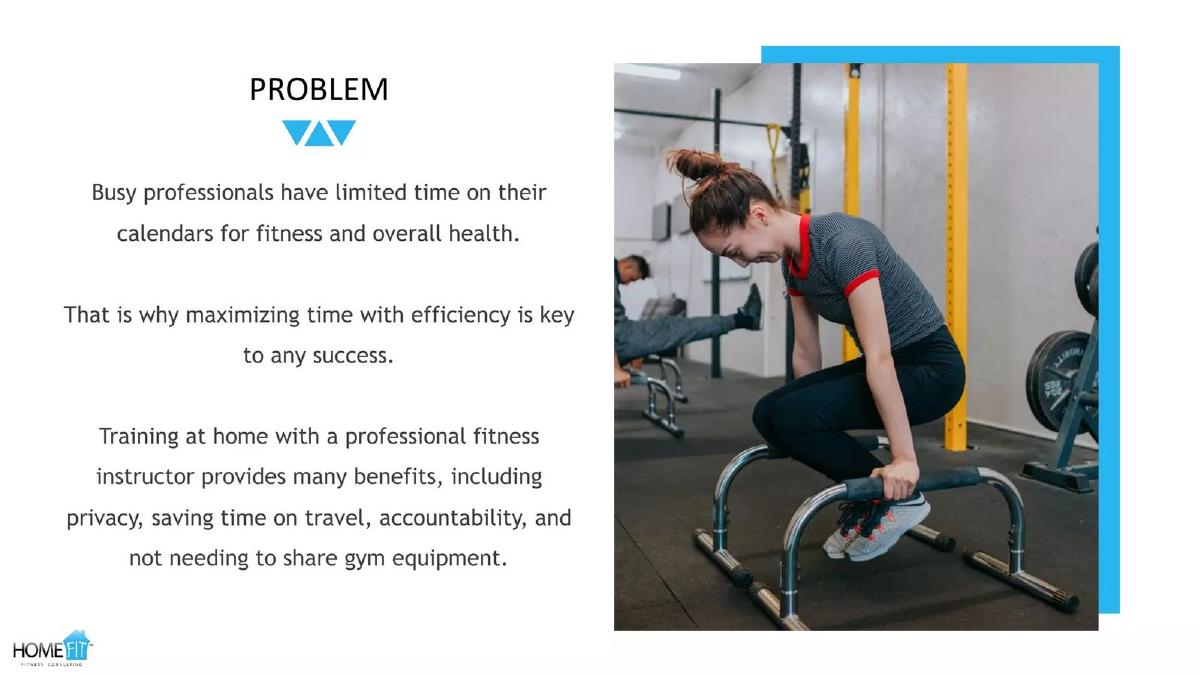
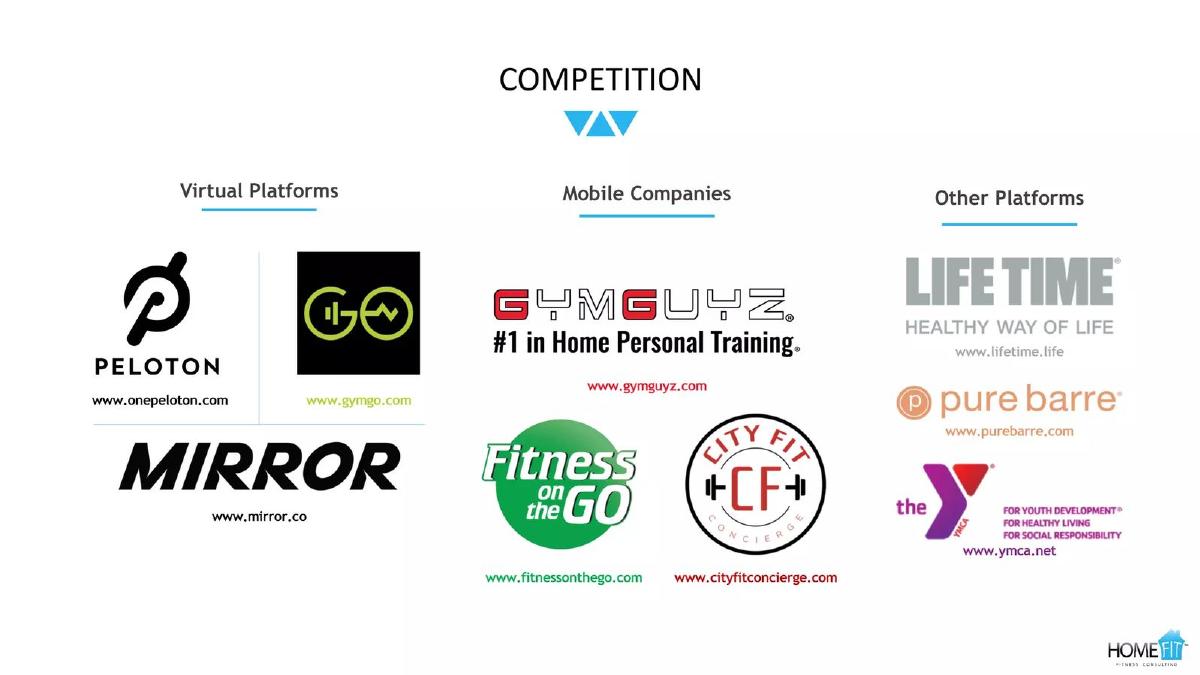
The most glaring omission is a clear financial slide showing current revenue, growth trends, or unit economics (CAC vs. LTV). While retention is mentioned, the deck doesn't state how many active clients they currently have or what the average monthly subscription price is. There is also no 'Problem' slide in this set; it jumps straight to the solution. Without a clearly defined problem (e.g., 'Gyms are intimidating' or 'Busy executives lack time'), the solution lacks context. Finally, the competitive landscape is ignored. In a post-Peloton and post-Mirror world, an in-home fitness company must explain how it competes with high-end hardware and established digital platforms.
Founder Takeaways: What to Copy
Specific Demographic Targeting: Don't just say 'everyone who wants to be fit.' HomeFit’s focus on the top 20% of earners and the 40-60 age bracket makes their marketing plan much more believable. · Retention as a Moat: If your startup has better-than-average retention, lead with it. In the subscription economy, churn is the enemy, and a 12-month average lifespan is a strong selling point. · B2B/B2C Hybrid: Showing that your service can be sold to both individuals and large entities (apartments/corporations) demonstrates multiple paths to scale. · Domain Expertise: The team slide clearly links the founders' education and certifications to the business they are building. This builds immediate trust in the quality of the service.
Founder Takeaways: What to Avoid
Vague 'Platform' Claims: If you are raising $150,000, calling yourself a 'platform' can be misleading. That amount of capital is usually insufficient to build and scale a robust two-sided marketplace. Be clear if you are a service business using technology, or a technology business providing a service. · Debt Repayment in Use of Proceeds: Unless it is a very specific type of strategic debt, listing 'payoff short-term debt' as a reason for a seed round can signal financial instability to investors. · Omitting the Competitive Landscape: Investors know the fitness market is crowded. Ignoring competitors makes a founder look either uninformed or defensive. Always acknowledge the competition and explain why your 'concierge' approach wins.
Frequently asked questions
- What is the primary value proposition of HomeFit?
- HomeFit positions itself as a 'concierge fitness model.' Unlike generic fitness apps, it focuses on strategic matching between clients and professionals—including trainers, dietitians, and health coaches—based on personality and specific goals. The goal is to provide a high-touch, personalized experience that removes the need for a traditional gym environment while maintaining professional accountability.
- How does HomeFit define its target market?
- The deck is very specific about its demographic: households in the top 20% of U.S. income ($100,000+). Specifically, they target busy professionals aged 40-60. They also identify a B2B market consisting of luxury multi-family housing and corporations that want on-site fitness programming for employees, regardless of whether those locations have existing gym facilities.
- What are the key services offered by the platform?
- HomeFit offers five core services: In-home personal training, virtual live video training, online coaching, lifestyle and nutrition consulting, and DNA testing. This multi-pronged approach suggests they are trying to capture the full spectrum of wellness data and interaction, moving from physical movement into biological insights and dietary management.
- What is the requested funding and how will it be used?
- HomeFit is seeking $150,000. The use of proceeds is split across six categories: a marketing push (social media and local events), branding, talent acquisition via platforms like ZipRecruiter, fitness professional support (onboarding), working capital, and the repayment of existing short-term debt. The inclusion of debt repayment is a notable detail that investors will scrutinize.
- Does the deck provide evidence of traction or financial performance?
- The deck is light on hard financial traction. It mentions an average client lifespan of 12 months and notes that 10% of clients exceed three years of training. However, it does not list current revenue, number of active users, total trainers on the platform, or specific growth rates. This makes it more of a 'vision and model' deck than a 'growth and scale' deck.