June Homes presents a compelling case for an asset-light PropTech model, positioning itself as the 'world's largest housing company without owning a single property.' The deck effectively balances the pain points of both tenants and 'mom-and-pop' landlords, offering a solution that renovates distressed units in under 72 hours. By leveraging a digital-first leasing process—where 94% of leases occur without in-person tours—the company demonstrates significant operational efficiency. The Series B deck is particularly strong in its use of recovery data, showing a 'super V-shaped' occupancy reboun…
Key takeaways
- The company operates an asset-light model, aiming to scale without owning any real estate (Slide 1).
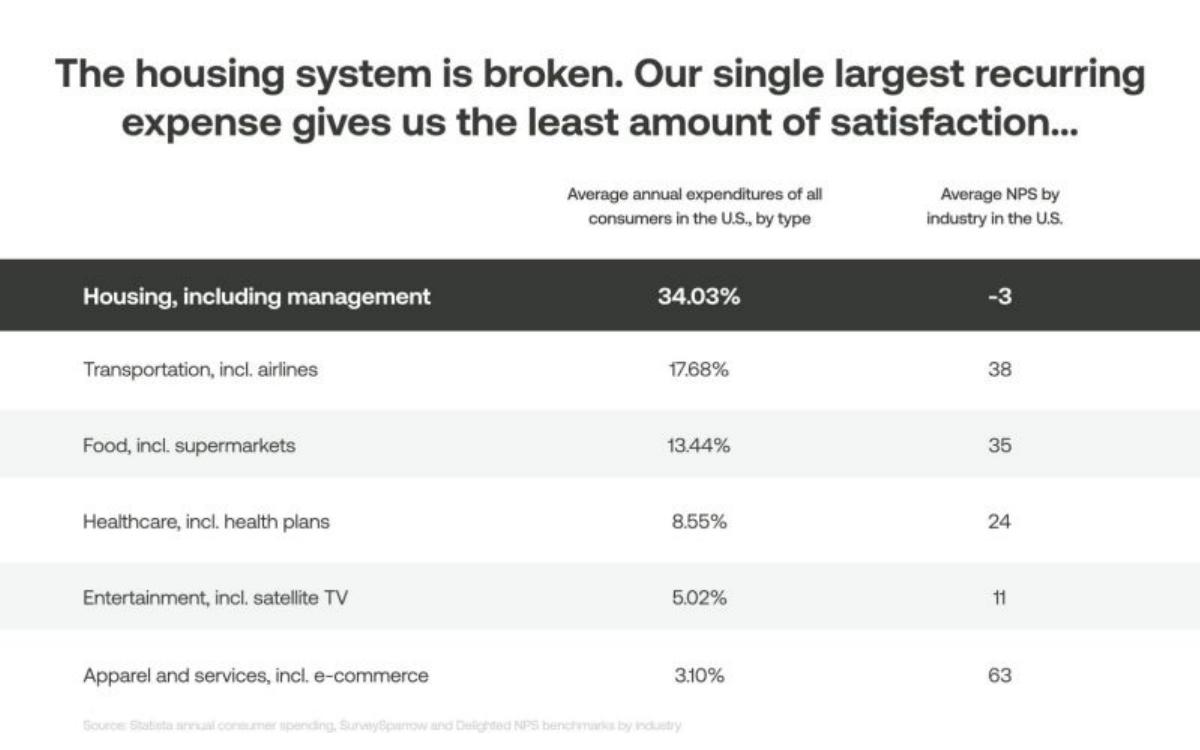
- Housing is identified as the largest recurring expense with the lowest satisfaction, citing a -3 NPS for the industry (Slide 2).
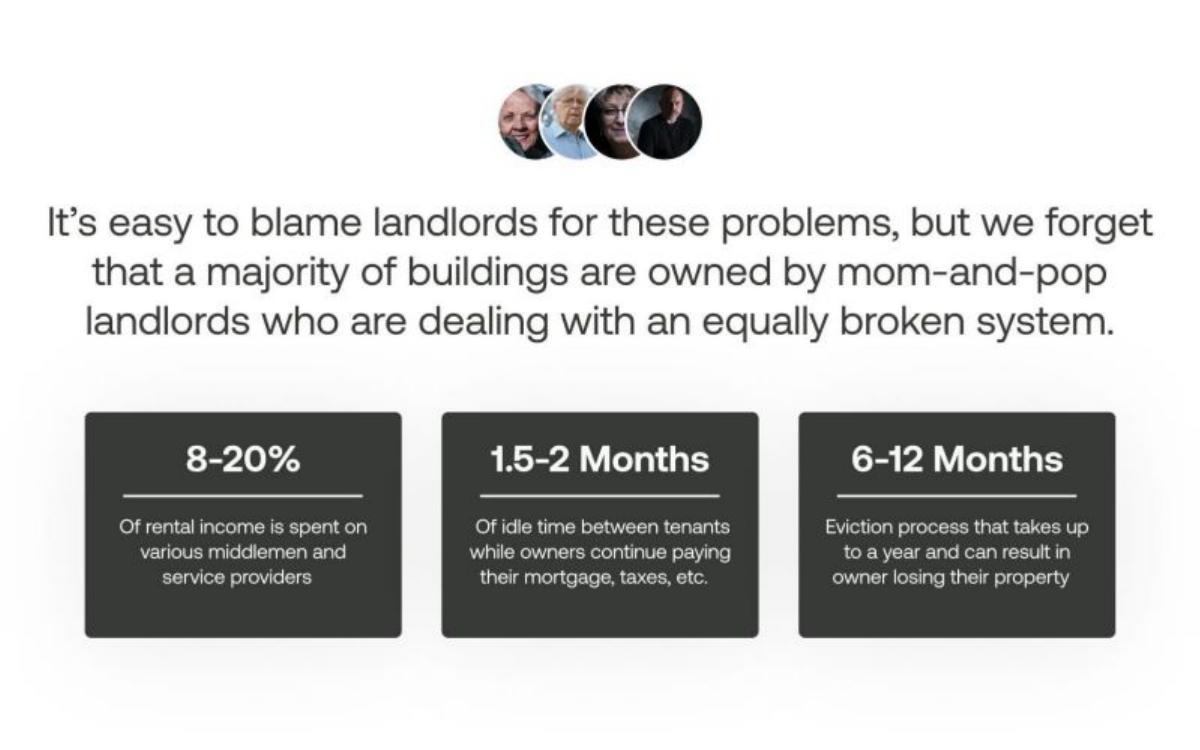
- Small landlords lose 8-20% of rental income to middlemen and face 1.5-2 months of idle time between tenants (Slide 4).
- June Homes claims the ability to inspect, renovate, and list units for rent in just under 72 hours (Slide 13).
- The digital leasing process is highly efficient, with 94% of leases signed without an in-person tour (Slide 16).
- The Total Addressable Market (TAM) for U.S. rentals is valued at $518B, with a specific target SOM of $6.9B (Slide 17).
- Occupancy Sold Rate (OSR) showed a sharp recovery from a low of 59.0% in early 2020 to 91.1% by January 2021 (Slide 19).
- Tenant underwriting standards resulted in a default rate of <0.2% in 2020, significantly lower than the >5% legacy market average (Slide 21).
Executive Summary: The Asset-Light PropTech Play
June Homes' Series B pitch deck is a masterclass in positioning a service-heavy business as a scalable technology platform. By explicitly stating on Slide 1 that they are building the world's largest housing company "without owning a single property," the founders immediately signal to investors that this is a high-margin, asset-light venture rather than a traditional real estate investment trust (REIT). The deck focuses heavily on operational velocity and the removal of friction for both sides of the rental marketplace.
The Problem: A Broken System for Two Audiences
The narrative begins by quantifying the dissatisfaction in the housing market. Slide 2 uses a comparative table to show that while housing accounts for 34.03% of U.S. consumer expenditure, it carries a Net Promoter Score (NPS) of -3. This is contrasted against industries like apparel (63 NPS) and transportation (38 NPS), highlighting a clear gap between spend and value.
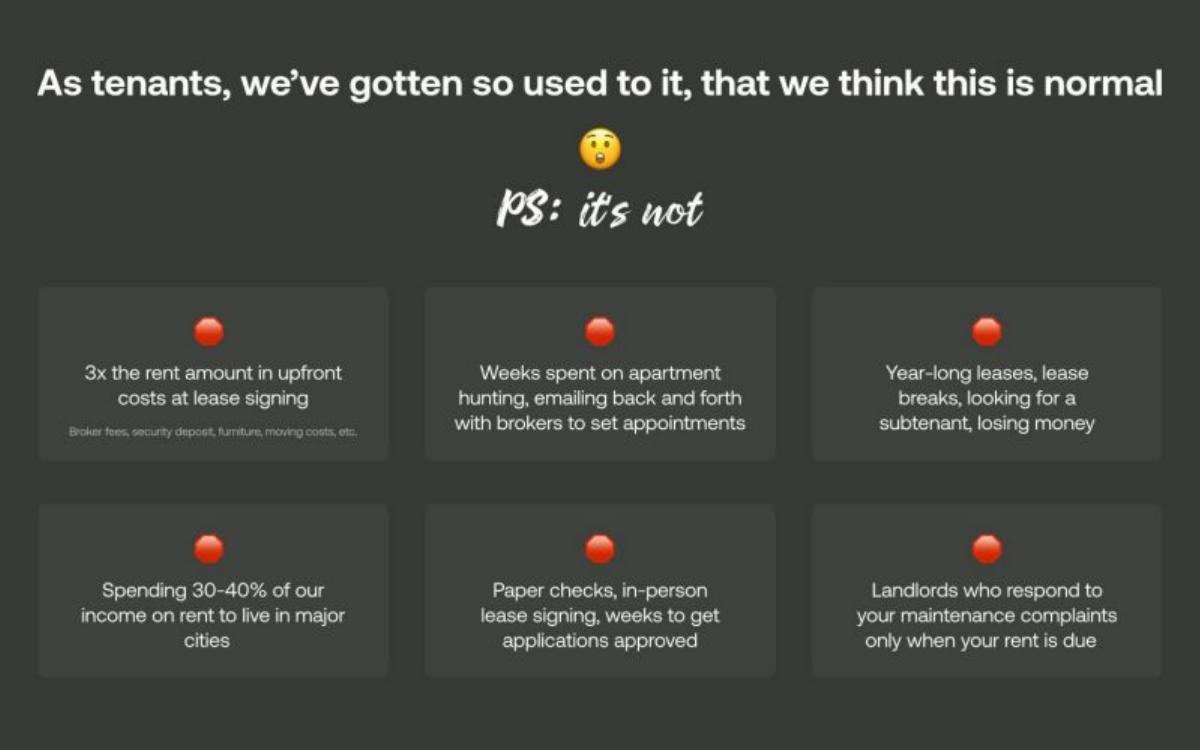
Slide 3 and Slide 4 bifurcate the problem. For tenants, the issues are upfront costs (3x rent), long lease durations, and poor maintenance response. For the "mom-and-pop" landlords who own the majority of buildings, the pain points are financial: 8-20% of income lost to middlemen, 1.5-2 months of vacancy between tenants, and a risky eviction process that can take up to a year. By addressing both personas, June Homes positions itself as a necessary mediator in a fragmented market.
The Solution: Redefining the Tenant Experience
Slide 7 introduces the core tenant value proposition: customizable furnishing, 1-18 month flexible leases, high-speed WiFi, vetted roommates, 24/7 support, and pre-set utilities. This is a "housing-as-a-service" model designed for a mobile, younger generation. Slide 10 emphasizes the "Customizable apartment renting experience," allowing users to toggle between furnished and unfurnished options via a digital interface.
The efficiency of this solution is highlighted on Slide 11 , which showcases the "All-in-one Interface." The platform handles everything from 3D tours and digital applications to e-signing contracts and digital keys. The success of this digital-first approach is validated on Slide 16 , which states that 94% of leases are signed without an in-person tour, a metric that likely appealed strongly to investors during the 2021 fundraising environment.
Business Model and Operational Velocity
The most impressive claim in the deck appears on Slide 13 : an algorithm-driven process that can inspect, upgrade, renovate, and list a unit in "just under 72 hours." This velocity is the company's primary competitive advantage. Slide 14 and Slide 15 provide visual evidence of these "Refurbished Spaces," showing before-and-after transformations that occur within that 72-hour window. The deck notes that these improvements are made at "no cost to owners," which serves as a powerful acquisition hook for landlords.
Slide 16 breaks down the distribution formula. By posting to 23 platforms in real time and offering 7-day-a-week leasing, June Homes claims to lease units 10x faster than the market average. While the specific "avg. time on market" and "CAC/LTV ratio" figures are blurred in this version of the deck, the surrounding context suggests a highly optimized funnel where over 50% of leads come from direct channels.
Market Size and Growth Strategy
Slide 17 presents the standard TAM/SAM/SOM circles. The Total Addressable Market is a massive $518B, representing the total U.S. rental market. The company narrows this down to a $138B multifamily market (SAM) and a $6.9B target (SOM). The growth strategy, outlined on Slide 18 , is opportunistic. The company planned to capitalize on COVID-19 market fluctuations, where rents dropped 20-40% YoY, to sign 10,000 new units and lock in "unprecedented COVID discounts."
Traction and Financial Performance
The traction slides are the strongest part of the Series B pitch. Slide 19 shows the Occupancy Sold Rate (OSR) over time. After a precipitous drop to 59.0% in early 2020, the company achieved a "super V-shaped recovery," climbing back to 91.1% by January 2021. This resilience in the face of a global pandemic is a high-signal metric for Series B investors.
Slide 20 projects significant growth, aiming for ~$100M in net revenue with contribution margins exceeding 45%. The bar charts show Gross Rental Income and Net Revenue growing year-over-year, though specific dollar amounts for 2022 and 2023 are projections. Slide 21 addresses risk management, showing a default rate of 5%, suggesting that June Homes' tenant underwriting algorithm is significantly more effective than traditional methods.
Team and Omissions
The team slide ( Slide 22 ) features a mix of entrepreneurial grit and corporate experience. CEO Daniel Mishin's "dropped out" status from Kingston Business School is listed alongside executives from Audible, KPMG, Casper, IBM, and Expedia. This suggests a balance of disruptive thinking and operational maturity.
However, the deck has notable omissions. There is no slide detailing the competitive landscape (e.g., Common, Bungalow, or traditional property managers). There is also no explicit "Ask" slide detailing the $27M round or a "Use of Funds" breakdown. While these may have been handled in a separate document or during the live pitch, their absence in the main deck leaves the final narrative somewhat open-ended.
What June Homes Does Well
Clarity of Model: The "asset-light" messaging is consistent and clear from the first slide to the last. · Dual-Sided Value: The deck does an excellent job of explaining why both tenants and landlords need this service. · Operational Proof: The 72-hour renovation claim is a specific, measurable, and impressive operational milestone. · Risk Mitigation: The default rate comparison (Slide 21) directly addresses the biggest fear in residential real estate: non-payment.
What is Missing from the Deck
Competition: The deck operates in a vacuum, failing to mention other co-living or PropTech competitors. · Unit Economics Detail: While contribution margins are mentioned, a detailed breakdown of CAC, LTV, and payback period (which are blurred on Slide 16) would be essential for a Series B. · The Ask: The deck ends abruptly with the team slide, lacking a clear call to action or funding requirement. · Regulatory Risk: Residential real estate is highly regulated; the deck does not address how the company navigates local zoning or tenant laws.
Founder's Playbook: What to Copy
Use Industry Benchmarks: Comparing your industry's NPS to others (Slide 2) is a powerful way to illustrate a "broken" market. · Quantify the Recovery: If your business was hit by a macro event (like COVID), showing a V-shaped recovery chart (Slide 19) is more persuasive than just showing current high performance. · Visual Proof: The before-and-after renovation photos (Slide 15) make a technical process feel tangible and real. · Focus on Velocity: In PropTech and Logistics, speed is often the best proxy for technology. Highlight your fastest operational cycles.
Frequently asked questions
- What is the core business model of June Homes?
- June Homes operates an asset-light PropTech platform. They do not own the properties. Instead, they partner with 'mom-and-pop' landlords to identify apartments in disrepair, renovate them using templated designs in under 72 hours, and manage the rental process. They provide tenants with flexible lease terms (1-18 months), furnished or unfurnished options, and a fully digital application and move-in experience.
- How did June Homes perform during the COVID-19 pandemic?
- According to slide 19, the company experienced a significant dip in its Occupancy Sold Rate (OSR) to 59.0% during the initial stages of the pandemic. However, they demonstrated a 'super V-shaped recovery,' reaching 91.1% OSR by January 2021. They also maintained a tenant default rate of less than 0.2% during 2020, compared to over 5% in the legacy market.
- What are the primary benefits for landlords?
- Landlords benefit from reduced vacancy and lower management costs. The deck notes that traditional landlords lose 1.5-2 months of income between tenants and spend 8-20% on middlemen. June Homes eliminates these costs by taking over the management, performing renovations at no cost to the owner, and leasing units 10x faster than the market average.
- What is the scale of the market June Homes is targeting?
- The deck identifies a massive opportunity in the U.S. rental market. The Total Addressable Market (TAM) is $518B, the Serviceable Addressable Market (SAM) for multifamily rentals is $138B, and June Homes' specific Serviceable Obtainable Market (SOM) target is $6.9B. They aim to sign 10,000 new units within 24 months of the deck's presentation.
- Who is leading the company?
- The leadership team includes Founder & CEO Daniel Mishin, who is noted as a Kingston Business School dropout. The executive suite features individuals with experience from major corporations, including CFO Daneel Siddiky (Audible, KPMG), Chief People Officer Jennifer Gardner (Casper, Coach), and CTO Ivan Zolotukhin, PhD (Mail.ru Group).