MediaKits successfully raised a $1M pre-seed round in 2021 by identifying a specific, painful bottleneck in the creator economy: the static media kit. Their 33-slide deck (17 of which are analyzed here) moves quickly from the problem of manual data entry to a product-centric solution that leverages real-time API integrations. The deck relies heavily on visual proof, showcasing clean UI/UX that contrasts sharply with the 'bad options' like Canva or Fiverr. While the deck is light on financial projections and unit economics in this selection, it compensates with a high-signal advisor and invest…
Key takeaways
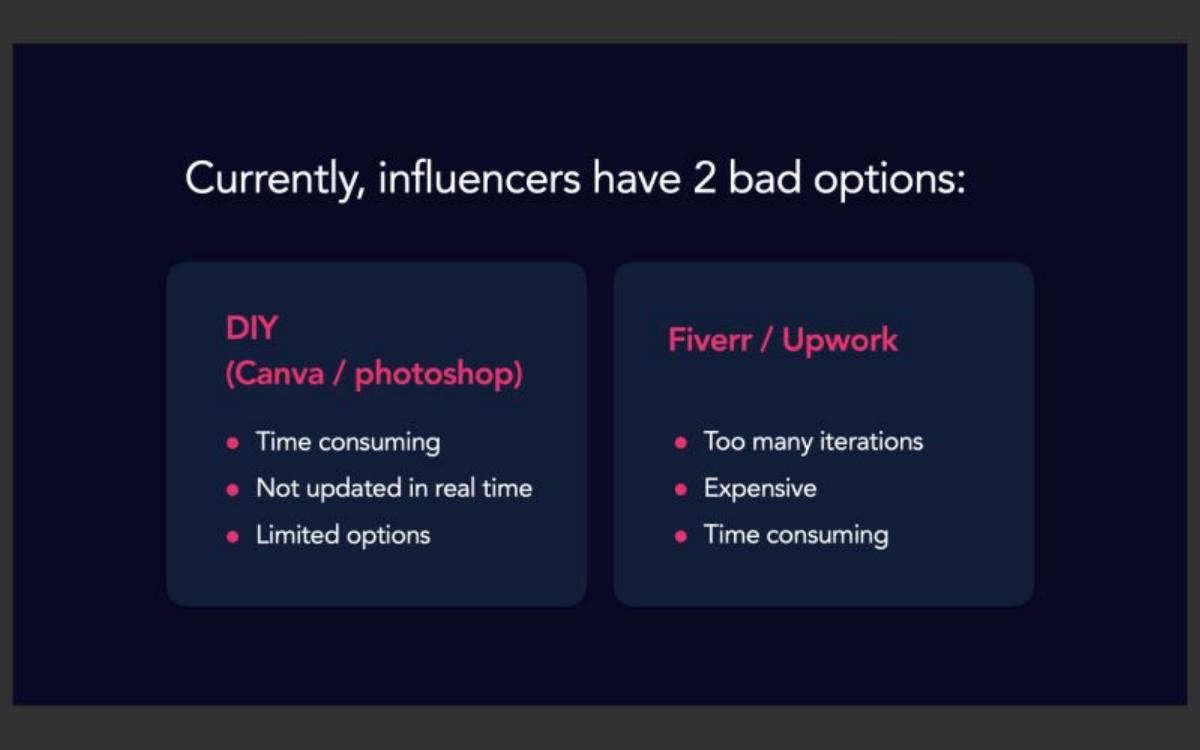
- The problem is defined as a lack of real-time data in current 'DIY' or 'Outsourced' media kit solutions (Slide 3).
- The product automates data collection, pulling profile pictures from Instagram and video backgrounds from YouTube (Slide 9).
- The 'Total Addressable Market' is segmented by platform, including 3.14M Instagram influencers and 7M Twitch streamers (Slide 12).
- The team includes a CTO with 4 previous tech exits and a Product Design Director with experience at Google and Fiverr (Slide 13).
- The advisor and investor slide features high-profile names like Steven Galanis (CEO of Cameo) and Balaji Srinivasan (Slide 14).
- The funding ask is $1MM, allocated toward product development, user acquisition, marketing, and legal (Slide 11).
- The vision is to move from a creation tool to becoming the 'most trusted source for influencer marketing data' (Slide 16).
- The deck uses a 'Customer Journey' slide to simplify a three-step process: Create, Use/Share, and Get Discovered (Slide 15).
The Hook: Defining the Media Kit
Slide 1: Title Slide
The deck opens with a minimalist title slide featuring the MediaKits logo. The branding uses a play button icon merged with an 'M' shape, utilizing a purple-to-pink gradient that aligns with the aesthetic of the creator economy and social platforms like Instagram.
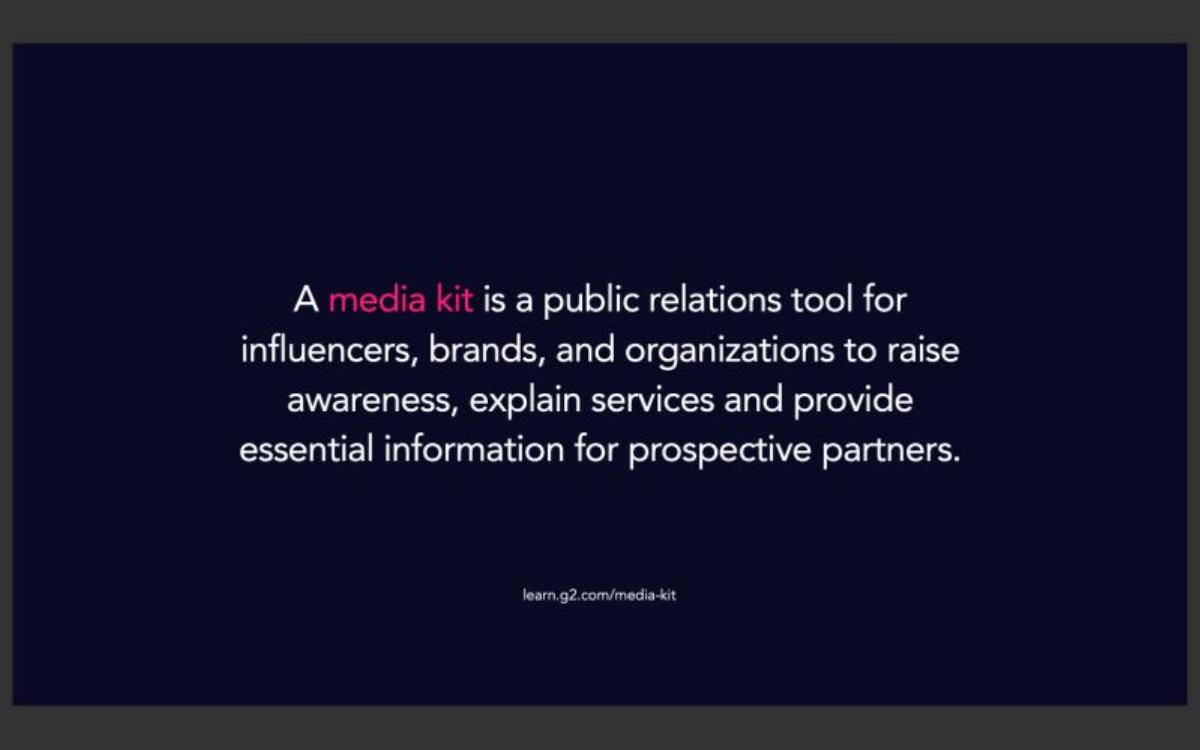
Slide 2: The Definition
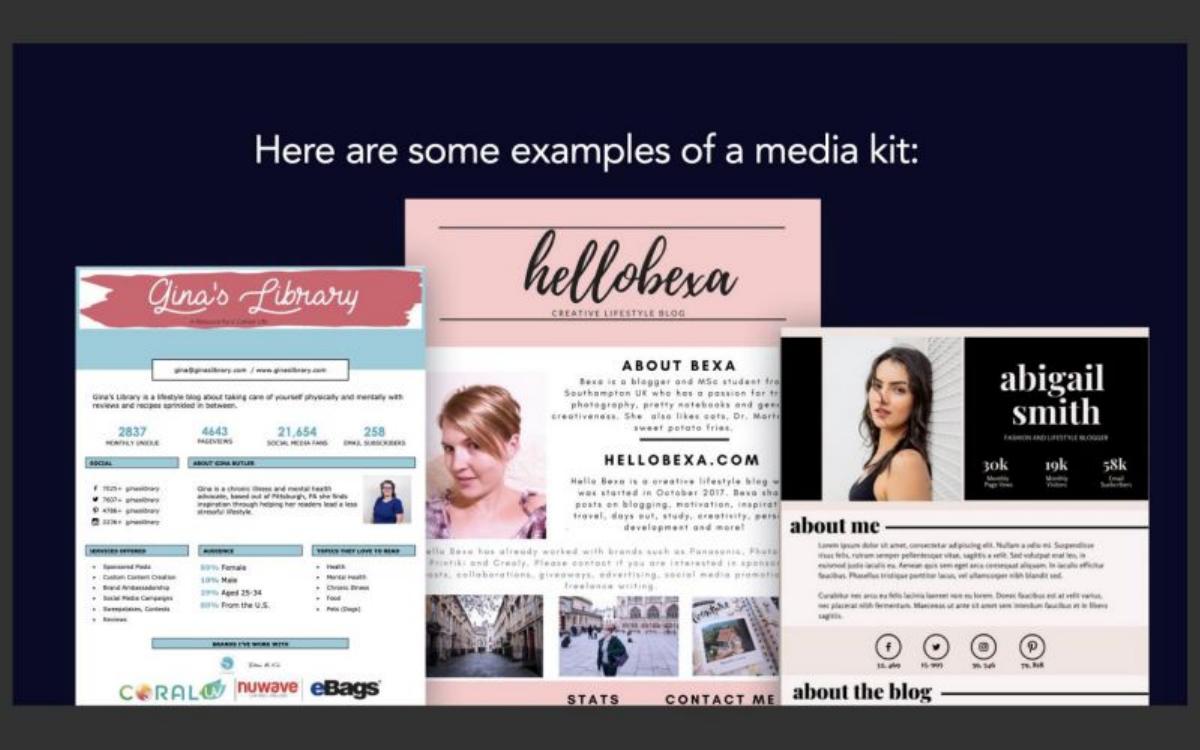
Slide 2 provides a foundational definition: 'A media kit is a public relations tool for influencers, brands, and organizations to raise awareness, explain services and provide essential information for prospective partners.' By citing learn.g2.com/media-kit , the founders establish that they are solving a recognized industry need rather than inventing a new category.
The Problem: Static Data in a Real-Time World
Slide 3: The 'Bad Options'
The deck identifies two current 'bad options' for creators. The first is DIY (Canva / Photoshop) , which is criticized for being time-consuming and not updated in real-time. The second is Fiverr / Upwork , which is labeled as expensive and prone to too many iterations. This slide effectively sets up the 'Goldilocks' position for MediaKits: automated and affordable.
Slide 4 & 5: Visualizing Friction
Slide 4 uses a meme-style image of a frustrated creator looking at disparate analytics screens. Slide 5 reinforces this by showing complex, enterprise-grade analytics software (Source: BOARD, Qlik) that is clearly not built for the individual creator. The message is clear: the data exists, but it is hard to aggregate and present.
Slide 6: The Discovery Gap
Slide 6 highlights the lack of a 'good library of media kits for brands.' It uses a desert image to symbolize the emptiness of the current market for brand managers looking to discover creators through verified data. This hints at the future marketplace potential of the platform.
The Solution: Automated, Real-Time Resumes
Slide 7: The Product Reveal
This slide shows a full-page preview of a MediaKit for 'JR Garage.' It displays an Overall Reach of 1,975,126 fans and highlights YouTube as the primary platform with an Avg. Engagement Rate of 23.98%. The UI is dark, modern, and data-dense but readable.
Slide 8: Frictionless Onboarding
Slide 8 shows the 'Create An Account' screen. The copy 'The Easiest Way To Create A Media Kit' emphasizes the low barrier to entry. The visual shows that even the signup process is integrated with the product's clean design language.
Slide 9 & 10: Feature Breakdown
Slide 9 is a 'feature callout' slide. It explains that the Profile Picture is automatically brought from Instagram and the Video Background is pulled from YouTube. It also mentions Real Time Social Media Analytics and Top Rated Tags . Slide 10 provides a clean, unobstructed view of the final product on a laptop, emphasizing its professional appearance.
The Business Case: Market and Money
Slide 11: Funding Needed
The company states a clear 'Funding Needed' of $1MM . The use of funds is listed as: Continued product development, Initial user acquisition, Marketing, and Legal. There are no specific milestones or 'runway' months mentioned on this slide.
Slide 12: Total Addressable Market
The TAM slide is granular. It lists specific counts of influencers with 10k+ followers across YouTube (1.2M) , Instagram (3.14M) , Twitter (533K) , and TikTok (3.1M) . It also includes 7M Active Twitch streamers and 5M Recording artists on Apple Music . This demonstrates a massive, multi-vertical user base.
The People: High-Signal Team and Backers
Slide 13: Product Team
The team slide lists six members. Key highlights include Sagi S. (Product Design Director) with logos for SimilarWeb, Google, and Fiverr, and Braydon B. (CTO) who is credited with 4X tech exits . The inclusion of a Computer Science Student at Princeton University (Robert O.) adds academic pedigree to the engineering team.
Slide 14: Advisors + Investors
This is arguably the strongest slide in the deck. It features Steven Galanis (CEO of Cameo), Arthur Leopold (CBO of Cameo), Balaji Srinivasan (Former CTO of Coinbase), and Kendrick Nguyen (CEO of Republic). For a pre-seed round, this level of industry validation is a significant signal to other investors.
The Vision: From Tool to Authority
Slide 15: Customer Journey
This slide simplifies the user experience into three steps: 1. Create a media kit, 2. Using and sharing the media kit, 3. Getting discovered by brands. This confirms the business model moves from a SaaS tool to a discovery platform.
Slide 16: The Vision Statement
The deck concludes with a vision to become the 'authority in media kit creation' and the 'most trusted source for influencer marketing data.' It positions MediaKits as the infrastructure layer for influencer marketing profitability.
What MediaKits Does Well
Visual Contrast: The deck does an excellent job of showing, not just telling, the difference between 'bad' current solutions and their 'good' product. The contrast between the cluttered analytics in Slide 5 and the sleek dashboard in Slide 7 is a powerful persuasive tool.
Social Proof: The advisor slide is exceptional. By securing the founders and executives of the platforms that creators already use (Cameo, Republic), they prove they have the 'insider' network necessary to scale in this specific niche.
Granular TAM: Instead of a vague 'influencer marketing is a $15B industry' stat, they broke the market down by platform and follower count. This shows they understand exactly who their initial target users are.
What is Missing from the Deck
Business Model: While the 'Customer Model' is listed in the catalogue as 'Website,' the slides themselves do not explain how MediaKits makes money. Is it a monthly SaaS subscription for creators? A fee for brands to access the library? A freemium model? This is a significant omission for a $1M ask.
Unit Economics: There is no mention of Customer Acquisition Cost (CAC) or Lifetime Value (LTV). While this is common in pre-seed decks, the 'Initial user acquisition' line in the use of funds (Slide 11) would be more compelling if backed by early testing data.
Competitor Grid: While they mention Canva and Fiverr, they don't address other 'Link in Bio' or creator-tech competitors like Linktree or Beacons, which were already moving into data-sharing features in 2021.
Founder's Playbook: What to Copy
The 'Feature Callout' (Slide 9): Founders should copy the way MediaKits uses lines to point directly to UI elements and explain the underlying technology (e.g., 'Automatically brought from Instagram'). This removes the mystery of how the product works.
The Problem Meme (Slide 4): Using a relatable image of a frustrated user helps humanize the problem. It makes the 'pain point' feel real rather than just a bullet point on a slide.
Granular TAM (Slide 12): If you are building for a multi-platform audience, break your market down by those platforms. It shows you have done the work to understand your user segments.
Frequently asked questions
- What specific problem does MediaKits solve?
- MediaKits addresses the fact that traditional media kits are static PDFs created in tools like Canva or Photoshop. These documents are time-consuming to make and become obsolete the moment an influencer's follower count or engagement rate changes. MediaKits automates this by pulling real-time data directly from social platforms.
- How does the company define its market size?
- Rather than a single 'trillion-dollar' figure, Slide 12 breaks down the market by creator type. It targets 1.2M YouTube influencers, 3.14M Instagram influencers, 3.1M TikTok creators (all with 10k+ followers), plus millions of Spotify artists, Twitch streamers, and Apple Music recording artists.
- Who are the key people behind MediaKits?
- The product team (Slide 13) features Sagi S. (Product Design Director with Google/Fiverr pedigree) and Braydon B. (CTO with 4 exits). The investor/advisor list is particularly strong for a pre-seed round, including the founders of Cameo and the CEO of Republic.
- What is the primary use of the $1M investment?
- According to Slide 11, the $1M pre-seed round is designated for four areas: continued product development, initial user acquisition, marketing, and legal expenses. The deck does not provide a specific percentage breakdown for these categories.
- What is the long-term vision for the company?
- While it starts as a utility for creators, Slide 16 reveals a broader ambition: to become the 'authority in media kit creation' and the 'most trusted source for influencer marketing data' for brands. This suggests a pivot or expansion into a B2B data platform.