Path's 2019 seed deck is a masterclass in establishing immediate credibility in a high-stakes clinical category. By leading with an 'Advisors and Backers' slide featuring leaders from Blue Cross Blue Shield, Disney, and the American Society of Addiction Medicine, the company bypassed the skepticism usually reserved for early-stage healthcare startups. The deck focuses heavily on the 'broken' patient experience, specifically citing 2-to-3-week wait times and a sub-30% success rate for retail rehab. While the deck is notably missing a traditional team slide, financial projections, and a specifi…
Key takeaways
- The deck leads with a heavy-hitting 'Backers' slide featuring 12 industry leaders to establish instant clinical and corporate authority (Slide 2).
- Path quantifies the problem by stating Substance Use Disorders (SUD) affect 10% of the population and cost society $740 billion annually (Slide 3).
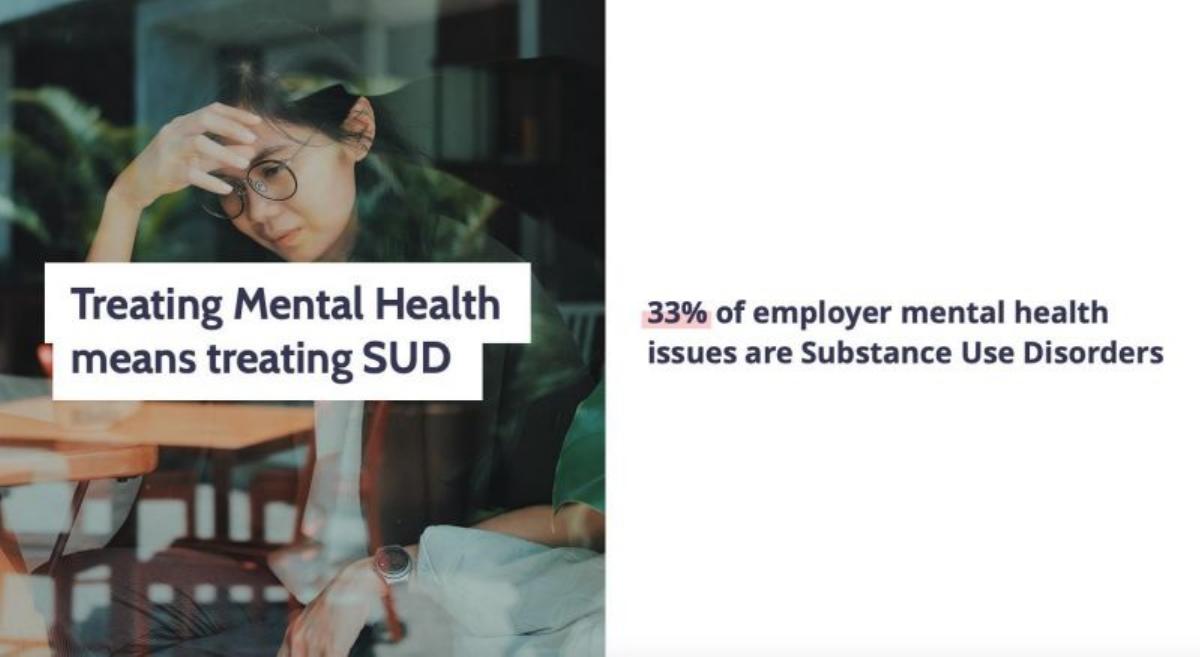
- The company identifies a specific market gap: 33% of employer mental health issues are actually SUDs, yet only 10% of people receive treatment (Slide 4).
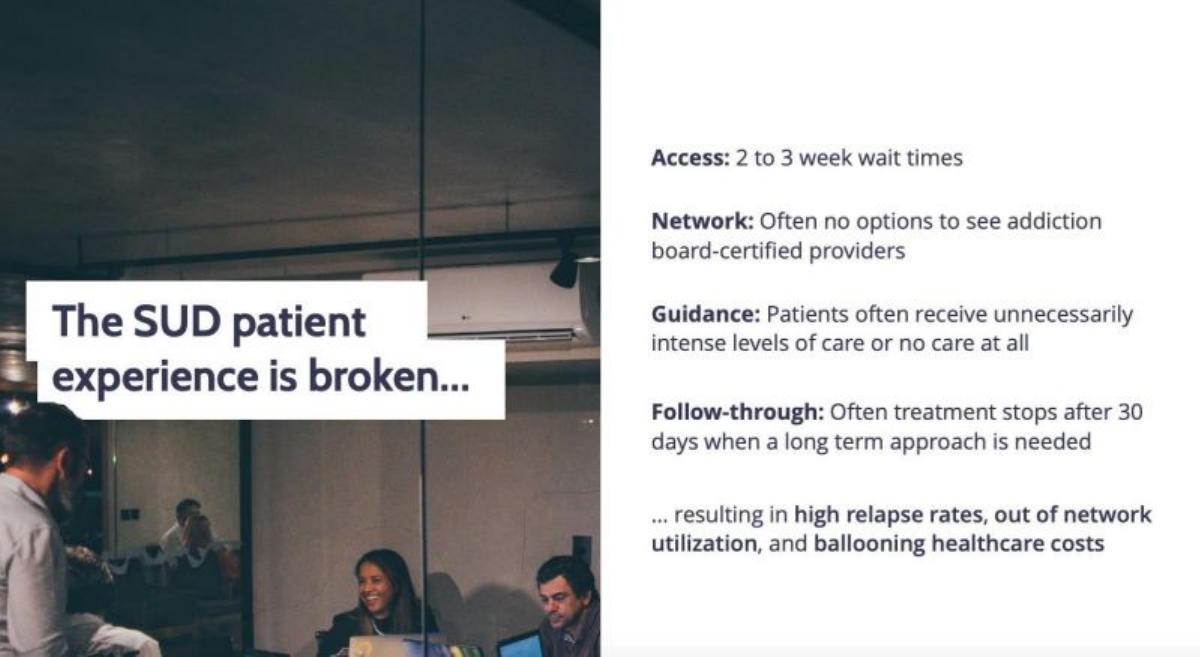
- Path highlights a critical friction point in current care: a 2-to-3-week wait time for patients needing immediate help (Slide 5).
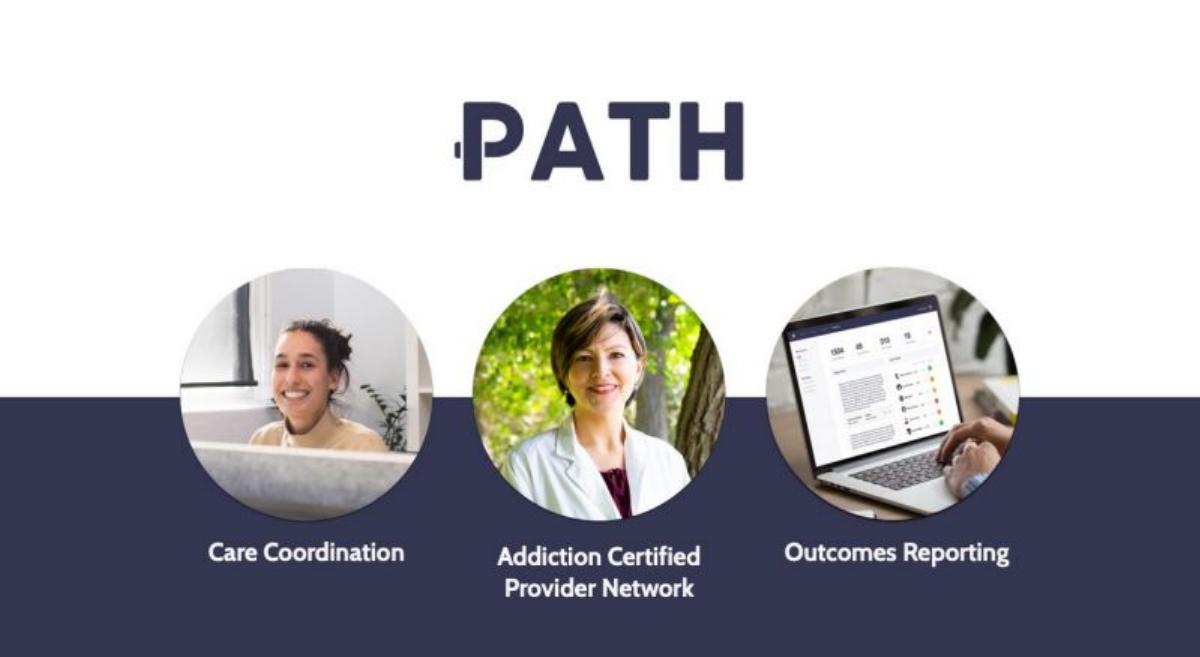
- The solution is built on three pillars: Care Coordination, an Addiction Certified Provider Network, and Outcomes Reporting (Slide 7).
- Path promises to reduce the time to start treatment from weeks to less than 48 hours (Slide 8).
- The product utilizes a multi-modal data approach, collecting provider-reported data, patient-reported data, and longitudinal outcomes (Slide 9).
- The deck completely omits a slide for the founding team, relying instead on advisors and backers for human capital validation (Slide 2).
Path Pitch Deck Teardown: Solving the Addiction Crisis via the Employer Channel
Path’s 2019 seed deck is a focused, 11-slide presentation that successfully raised $5.35M. The deck is notable for its restraint; it does not over-explain the science of addiction, but rather focuses on the logistical and financial failures of the current healthcare system. By positioning Substance Use Disorder (SUD) as a massive, unmanaged employer expense, Path transforms a social issue into a clear business opportunity.
Slide 1: Title and Mission
The cover slide is minimalist, featuring the Path logo and the tagline: "Comprehensive addiction treatment, designed for employers." This immediately identifies the customer. Path is not a direct-to-consumer app; it is a corporate benefit. The inclusion of the URL pathccm.com and a contact email provides the necessary administrative baseline.
Slide 2: The Credibility Play
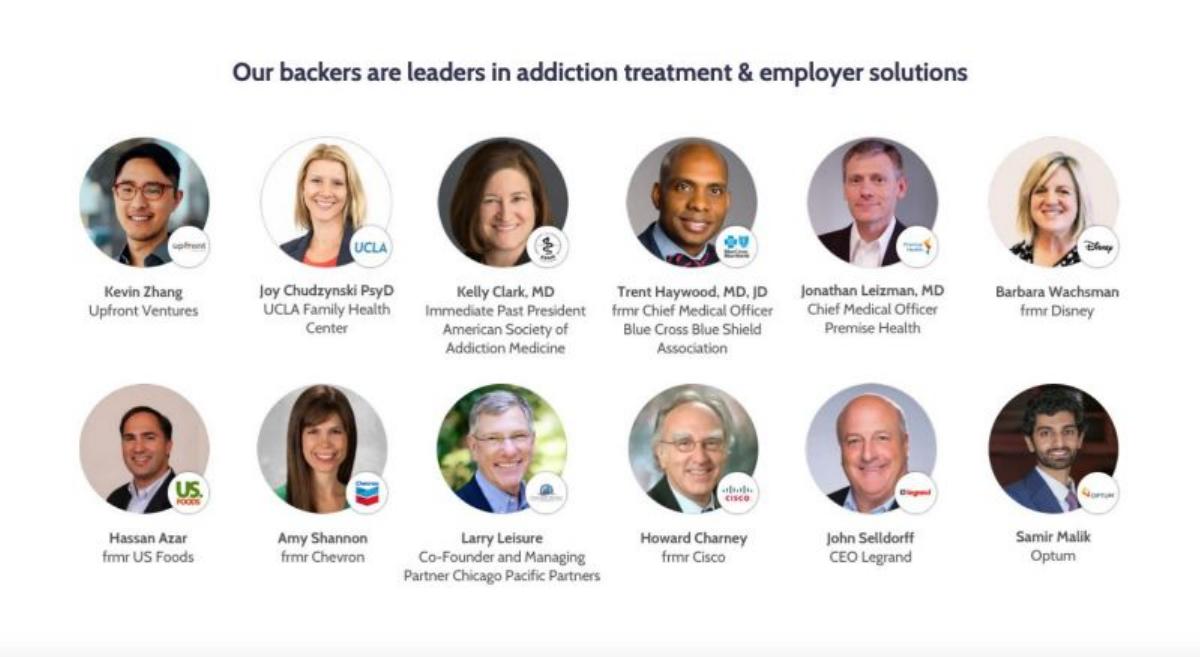
Unusually, Path places its "Backers" slide second. This is a strategic move to establish authority. The slide features 12 individuals, including Kevin Zhang (Upfront Ventures) , Kelly Clark, MD (Past President of the American Society of Addiction Medicine) , and Trent Haywood, MD (former CMO of Blue Cross Blue Shield Association) . By showing ties to major insurers (Blue Cross), major employers (Disney, Chevron, US Foods), and clinical bodies, Path answers the 'Why you?' question before the investor even asks it.
Slide 3: The Macro Problem
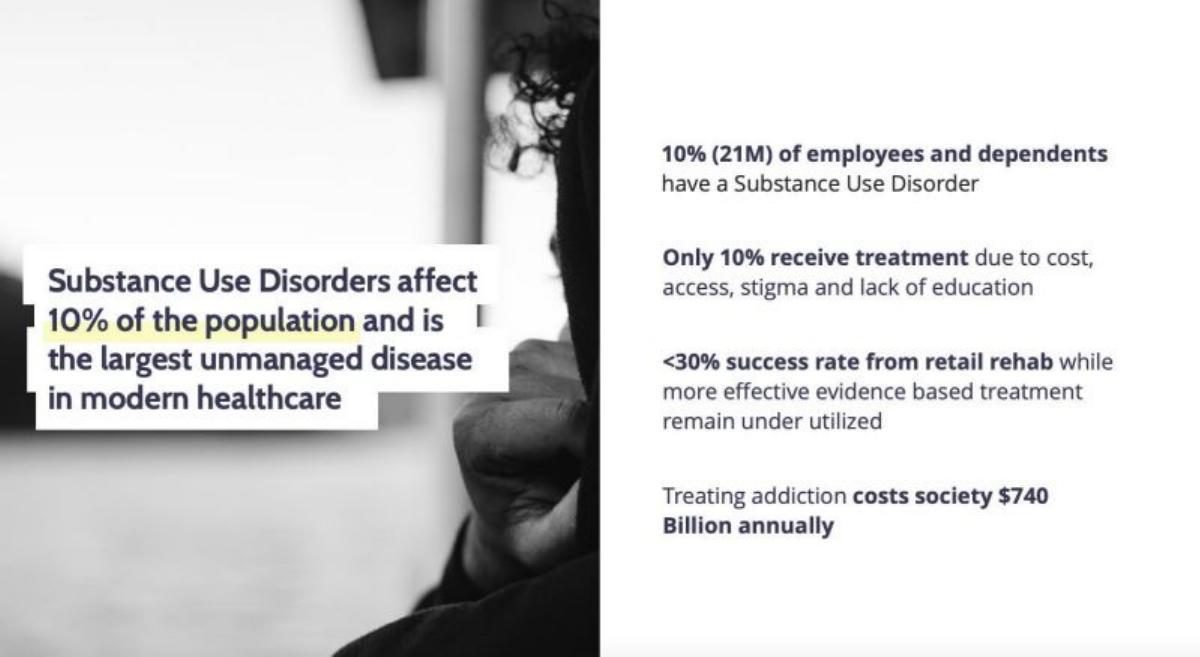
Slide 3 defines the scale of the crisis. It states that "Substance Use Disorders affect 10% of the population" and represents the "largest unmanaged disease in modern healthcare." The slide provides four key data points: 21 million employees/dependents are affected, only 10% receive treatment, retail rehab has a "<30% success rate," and the annual cost to society is "$740 Billion." This slide establishes the Total Addressable Market (TAM) through the lens of societal cost.
Slide 4: The Employer Connection
Path narrows the focus to the workplace. It claims that "33% of employer mental health issues are Substance Use Disorders." This is a crucial pivot. It tells the investor that while employers might think they are paying for general stress or depression, a third of that spend is actually going toward untreated addiction. It turns a general healthcare problem into a specific budgetary leak for the target customer.
Slide 5: The Broken Patient Journey
This slide identifies four specific friction points in the current 'broken' experience:
Access: 2 to 3 week wait times. · Network: Lack of addiction board-certified providers. · Guidance: Patients receive either too much or too little care. · Follow-through: Treatment stops after 30 days when long-term care is needed.
The slide concludes that these failures result in "high relapse rates" and "ballooning healthcare costs."
Slide 6: The Solution Overview
Slide 6 introduces the Path platform through three visual pillars: Care Coordination , Addiction Certified Provider Network , and Outcomes Reporting . It uses photography to humanize the service, showing a coordinator, a doctor, and a software interface. This balances the 'high-tech' and 'high-touch' aspects of the business.
Slide 7: The Three Pillars Detailed
This slide provides the 'how' for the three pillars introduced previously:
Care Coordination: Uses 'Patient Intercept' and 'ASAM-PPC Assessment' to ensure the correct level of care. · SUD Provider Network: Offers 'Immediate Access,' promising that a patient is seen within 48 hours . · Outcomes Reporting: Collects 'Longitudinal Data' and monitors 'Critical Events' compared to a baseline.
The 48-hour promise is the 'killer feature' here, directly contrasting the 2-to-3-week wait time mentioned on Slide 5.
Slide 8: The 48-Hour Workflow
Slide 8 visualizes the patient journey. It shows a linear path from 'Treatment Need Realized' to 'Intake' and 'Provider Matching,' all occurring within 48 hours . It then shows the 'Ongoing' phase, which includes a multidisciplinary team: Addiction Boarded MD, Peer Support, Care Coordinator, Psychotherapy, and Recovery Coach. This slide effectively communicates that Path is a comprehensive ecosystem, not just a referral directory.
Slide 9: Data and Monitoring
Path emphasizes its software capabilities here. The slide shows mobile and desktop interfaces for Provider Reported Data , Patient Reported Data , and Outcomes Monitoring . In a Seed deck, this proves the product is more than a service business; it is a data-driven platform capable of proving its ROI to the employers paying for it.
Slide 10: The Path Impact
The final content slide lists the outcomes: Healthier employees , Lower out of network utilization , Lower relapse rates , Long term engagement , and a Lower risk profile . This is the 'Value Proposition' slide, summarizing why an employer would sign a contract with Path.
What is missing from the Path deck?
While the deck was successful in raising $5.35M, it omits several standard components that founders should be aware of:
No Team Slide: The deck features advisors and backers but does not list the founders or their specific backgrounds. This is highly unusual and suggests the founders relied on the credibility of their board (Slide 2) to carry the day. · No Unit Economics: There is no mention of how much Path charges per user or per employer. The business model is implied but not stated. · No Financial Projections: The deck contains no revenue targets or growth milestones. · No Competition Slide: Path does not name other addiction recovery startups or traditional rehab centers as competitors, choosing instead to focus on the 'broken' status quo. · No Ask: The deck does not state how much money is being raised or what the funds will be used for.
What founders should copy from this deck
The 'Credibility First' Strategy: If you are in a highly regulated or clinically sensitive industry like healthcare, moving your advisors/backers slide to the front can be a powerful way to disarm skepticism. Path used this to prove they weren't just 'another app' but a clinically-backed solution.
Specific Pain Point Quantification: Path didn't just say wait times are 'long.' They said they are '2 to 3 weeks' and promised to reduce them to '48 hours.' These specific numbers give investors a tangible metric to track success.
The B2B2C Pivot: Instead of trying to find addicts on the open market (which is expensive and difficult), Path identified the employer as the party with the most to lose financially. Founders should look for who 'owns' the cost of the problem they are solving, rather than just who 'has' the problem.
Conclusion
Path’s deck is a lean, professional presentation that prioritizes institutional trust over flashy graphics or complex financial modeling. By focusing on a specific, high-cost niche within the mental health space—Substance Use Disorder—and offering a clear, time-bound improvement (48 hours vs. 3 weeks), they created a compelling case for a $5.35M seed round. The omission of a team slide is a gamble that worked here, likely due to the overwhelming strength of the advisory board shown on Slide 2.
Frequently asked questions
- Why did Path lead with a Backers slide instead of a Problem slide?
- In healthcare, especially addiction treatment, trust is the primary barrier to entry. By showing logos from UCLA, Blue Cross Blue Shield, and Disney on Slide 2, Path signals to investors that they have already passed the vetting process of major institutions. This reduces the perceived risk of the 'Problem' and 'Solution' slides that follow, as the audience assumes the clinical validity has been pre-verified.
- What is the significance of the 48-hour treatment window mentioned on Slide 8?
- Speed is a critical clinical metric in addiction recovery. Slide 5 notes that the current industry standard is a 2-to-3-week wait time. By promising a sub-48-hour start to treatment, Path isn't just offering a 'better' experience; they are offering a life-saving intervention that prevents patients from relapsing or losing motivation during the traditional waiting period.
- How does Path define its target customer?
- The deck explicitly targets employers. Slide 1 states 'designed for employers,' and Slide 4 notes that 33% of employer mental health issues are SUDs. This indicates a B2B2C model where Path sells to HR and benefits departments as a way to lower their 'risk profile' and 'out of network utilization' (Slide 10).
- Is the lack of a Team slide a red flag?
- While unusual, Path compensates for the lack of a founder slide by showcasing 12 high-profile advisors and backers on Slide 2. For a seed round, this suggests the founders may be first-time entrepreneurs or are leaning heavily on the 'institutional' feel of their board to secure the $5.35M investment.
- What business model does the deck imply?
- Though Slide 11 is a placeholder for the deck source, the preceding slides suggest a service-plus-software model. They provide 'Care Coordination' (service) and 'Outcomes Reporting' (software). They likely generate revenue through a per-member-per-month (PMPM) fee from employers or a share of the claims processed through their certified provider network.