Party Round’s 10-slide seed deck is a study in extreme minimalism and brand-led storytelling. Eschewing traditional charts, financial projections, and competitive matrices, the deck relies entirely on a clear analogy—'Venmo for fundraising'—and a vibrant, claymation-inspired visual identity. The narrative focuses on the emotional and logistical friction of modern fundraising, positioning the product as a three-step mobile solution for founders to collect smaller checks from their existing networks. While it lacks standard metrics like TAM, CAC, or a detailed roadmap, the deck successfully com…
Key takeaways
- The deck uses a powerful 'X for Y' analogy on Slide 2, immediately anchoring the product's utility to Venmo.
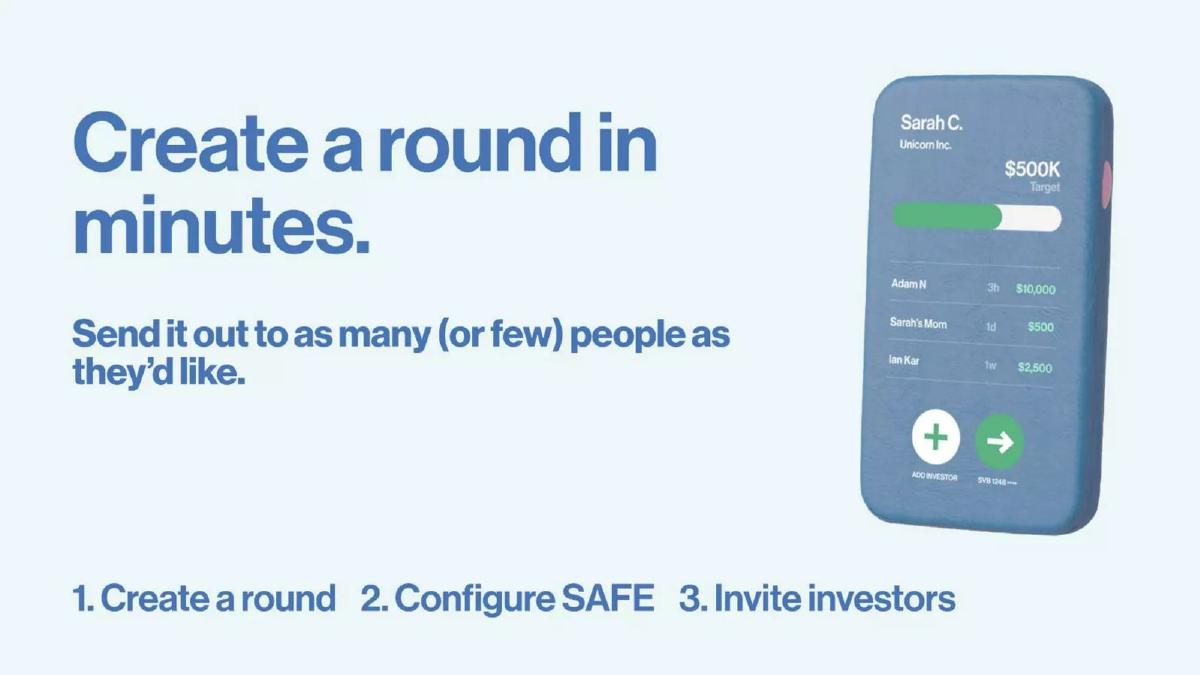
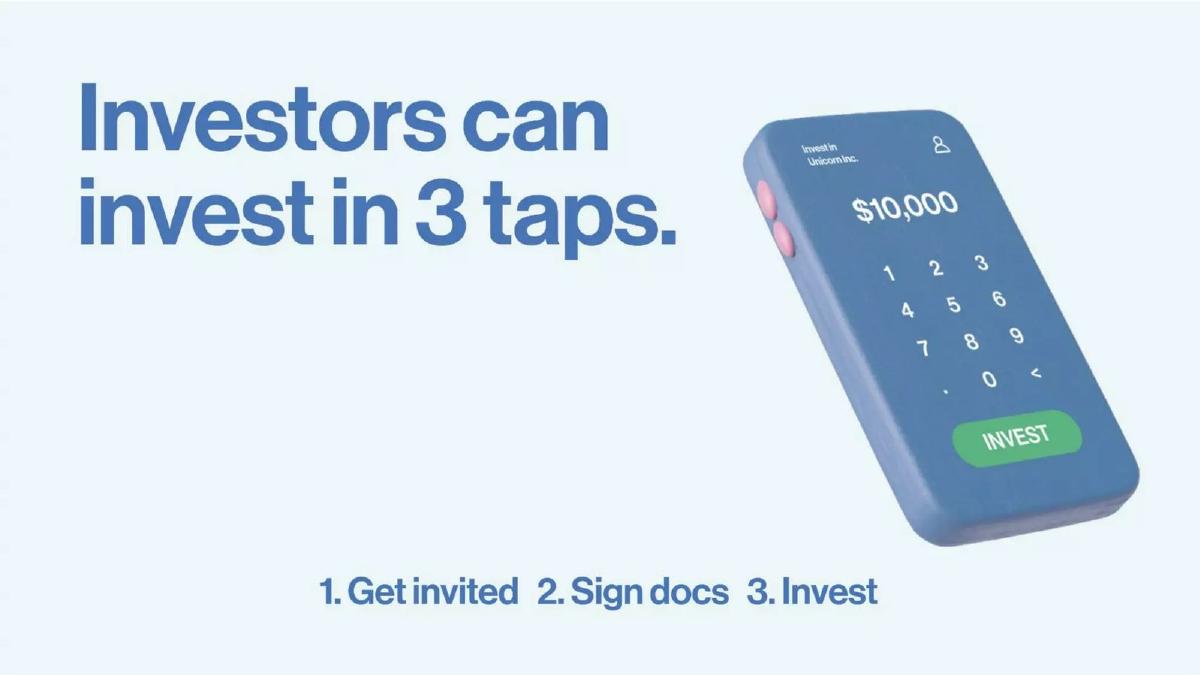
- It frames the solution as a simple three-step process for both founders (Slide 4) and investors (Slide 5).
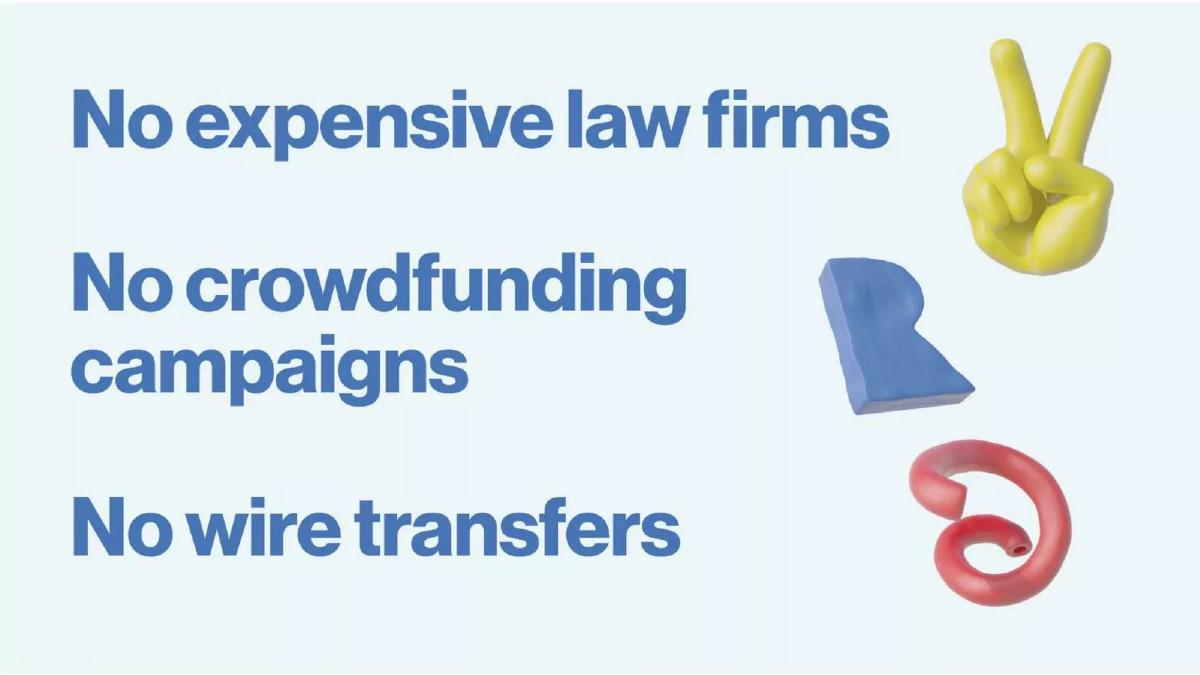
- The problem is defined by what the product removes: expensive law firms, crowdfunding campaigns, and wire transfers (Slide 6).
- Market validation is shown through a list of social investing peers like Robinhood, Coinbase, and Republic on Slide 7.
- The founders position themselves as 'entrepreneurs and investors building the tool we wish we had' on Slide 9.
- Sarah Chase is highlighted as an investor and advisor in 50+ companies, providing significant domain authority (Slide 9).
- The deck completely omits financial projections, market size figures, and a specific funding ask.
- The visual identity is cohesive and high-fidelity, using custom claymation assets to stand out from typical corporate decks.
The Power of the High-Concept Seed Deck
Party Round’s 2021 seed deck is a polarizing example of modern startup fundraising. It contains only 10 slides, very few words, and zero spreadsheets. In an era where many founders feel pressured to provide 30-page decks with exhaustive data, Party Round raised $7M by doing the exact opposite. They focused on brand, friction reduction, and a singular analogy . By positioning themselves as the 'Venmo for fundraising,' they bypassed the need to explain complex fintech infrastructure and instead focused on the user experience of moving money.
Slide 1: The Brand Statement
The cover slide features a vibrant, multi-colored wavy pattern with the logo centered. The tagline is simple: "Invest in friends." This immediately sets a tone that is social rather than transactional. It reframes the high-stakes world of venture capital into something approachable and community-driven. There are no mentions of 'disruption' or 'synergy'—just a human-centric goal.
Slide 2: The Anchor Analogy
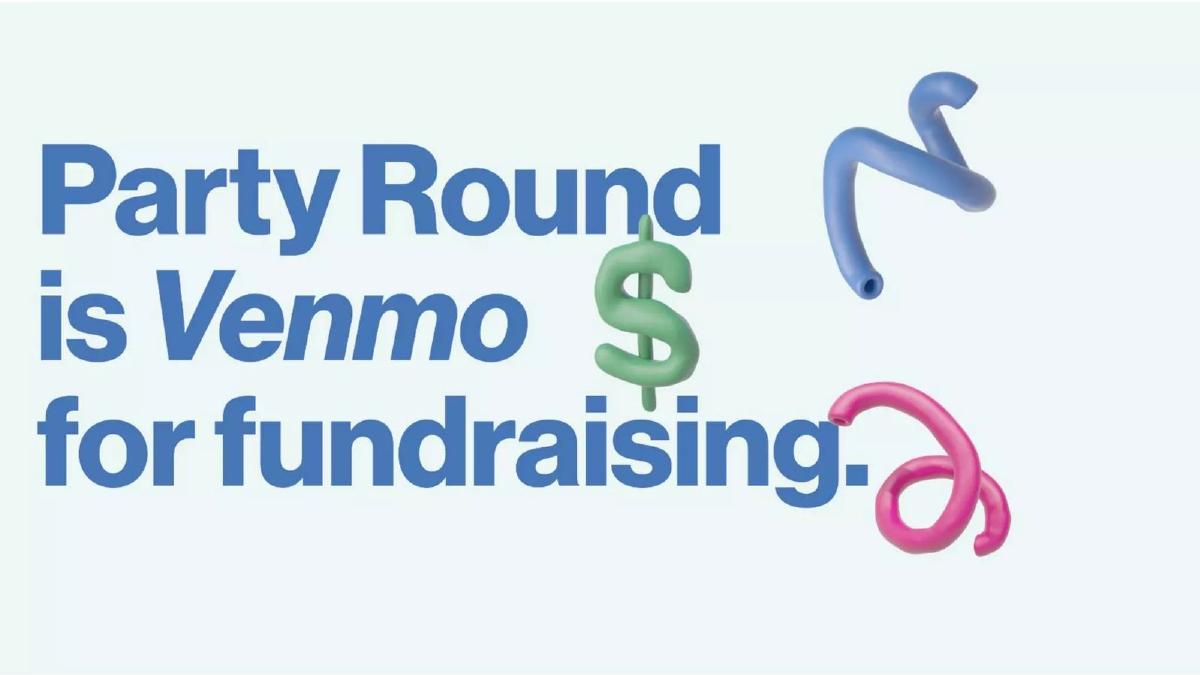
Slide 2 delivers the most important line in the deck: "Party Round is Venmo for fundraising." This is a classic 'X for Y' pitch. By using Venmo as the anchor, the founders instantly communicate three things: it is mobile-first, it is social, and it is incredibly easy to use. The visual of a claymation dollar sign and abstract shapes reinforces the playful, non-corporate identity of the brand.
Slide 3: The Core Value Proposition
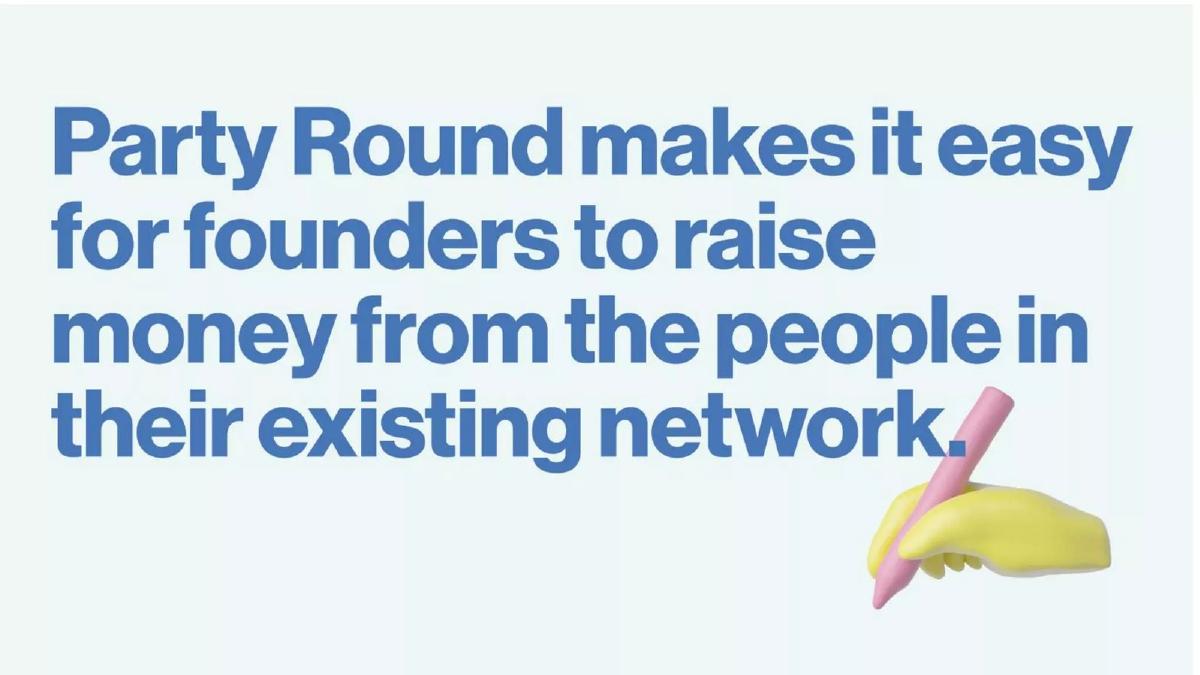
Slide 3 states: "Party Round makes it easy for founders to raise money from the people in their existing network." This slide defines the target user (founders) and the source of capital (existing networks). It subtly differentiates the product from cold-outreach platforms or traditional VC databases, focusing instead on the 'warm' capital that often goes untapped due to administrative friction.
Slide 4: The Founder Experience
This slide breaks down the product into a three-step process: "1. Create a round 2. Configure SAFE 3. Invite investors." The text claims founders can "Create a round in minutes" and send it to "as many (or few) people as they’d like." The accompanying claymation phone mockup shows a 'Target' of $500K and a list of investors contributing amounts as small as $500. This is a crucial detail—it signals that the platform is designed to handle the 'long tail' of a cap table.
Slide 5: The Investor Experience
Mirroring the previous slide, Slide 5 focuses on the other side of the marketplace. "Investors can invest in 3 taps." The steps are "1. Get invited 2. Sign docs 3. Invest." By reducing the investment process to three taps, Party Round is promising to solve the biggest hurdle for angel investors: the paperwork and wire transfer logistics that often delay or kill small deals.
Slide 6: The 'Anti-Problem' Slide
Instead of a traditional problem slide showing a 'broken' industry, Party Round uses a 'No' list. They promise: "No expensive law firms," "No crowdfunding campaigns," and "No wire transfers." This is a direct attack on the status quo. By listing these three specific pain points, they are speaking directly to the frustrations of every founder who has ever spent $10,000 on legal fees just to close a $50,000 check.
Slide 7: Market Context and Tailwinds
Slide 7 addresses the 'Why Now?' question. It states, "Because the way we invest is changing. Investing is social, mainstream, and accessible." At the bottom, it lists logos for Robinhood, Public, StockX, Coinbase, Republic, Rally Rd., and Top Shot. This slide places Party Round in the context of the 'consumerization of finance' trend, suggesting that if people are buying fractional shares of stocks and NFTs, they should also be able to easily invest in startups.
Slide 8: The Product Requirements
Slide 8 summarizes what the market needs: "Founders need better tools to access funding." It lists three requirements: "Faster, mobile-first experience," "More, smaller checks," and the ability to "Easily raise from your whole network, but not the whole world." This last point is a clever nod to regulatory and social preferences—founders want the money, but they don't necessarily want a public-facing campaign.
Slide 9: The Team
The team slide is minimal but effective. Jordi Hays is listed as a "Serial founder and angel," and Sarah Chase is described as an "Investor and advisor in 50+ companies, previously founded CPGD." This provides the necessary credibility. They aren't just developers; they are people who have lived the problem they are solving. The claymation handshake icon reinforces the 'Invest in friends' theme.
Slide 10: The Closing
The final slide features the claymation characters from throughout the deck and the phrase "Welcome to the Party." It includes a single contact email: jordi@partyround.co. There is no 'Thank You' slide or 'Q&A' slide—just a continuation of the brand experience.
What Works in the Party Round Deck
The primary strength of this deck is its clarity of vision . By the fifth slide, any investor understands exactly what the product does and who it is for. The use of claymation is a brilliant tactical choice; it makes the deck memorable in a sea of flat-design SaaS presentations. Furthermore, the focus on 'friction' as the enemy is highly relatable to the target audience. By promising to eliminate law firms and wire transfers, they are selling a 'superpower' to founders.
What is Missing
While the deck was successful, it is important to note what it lacks. There is no mention of market size (TAM) . While the 'social investing' trend is mentioned, there are no figures on the total volume of angel investments or the potential revenue from transaction fees. There is also no competitive analysis . Companies like AngelList or Carta are obvious competitors in the cap table and fundraising space, but they are not addressed. Finally, there is no financial roadmap . Investors are left to assume that the $7M will be used for product development and user acquisition, but the deck provides no specifics on how that capital will be deployed.
Lessons for Founders
Embrace the Analogy: If your product can be described as 'The X for Y,' use it. It saves time and creates an immediate mental model for the investor. · Design is a Signal: The high-fidelity, custom claymation in this deck signals that the founders care about user experience and brand. In a consumer-facing or 'prosumer' fintech space, brand is a competitive advantage. · Focus on the 'How': By breaking the process down into three steps for both founders and investors, Party Round made a complex financial transaction feel like a simple app interaction. · Know Your Round: This is a Seed deck. At this stage, you are selling a vision and a team. Party Round leaned into that, knowing that the hard data would follow once they had the capital to build the network.
Frequently asked questions
- How much did Party Round raise with this deck?
- According to catalogue facts from failory.com, Party Round raised $7M in a Seed round in 2021. The investors included a mix of Venture Capital firms and Angel Investors. Interestingly, the deck itself does not state the amount being raised or the valuation sought, which is common in high-hype seed rounds where the 'ask' is handled in conversation.
- What is the core business model of Party Round?
- The company operates as a B2B SaaS platform within the FinTech and Venture Capital sectors. Based on Slide 4 and Slide 6, the product automates the creation of fundraising rounds, the configuration of SAFEs (Simple Agreement for Future Equity), and the collection of funds, effectively replacing traditional legal and banking hurdles.
- Who are the founders mentioned in the deck?
- Slide 9 introduces two key figures: Jordi Hays, described as a 'Serial founder and angel,' and Sarah Chase, described as an 'Investor and advisor in 50+ companies' and the previous founder of CPGD. Their backgrounds suggest a deep understanding of the friction points in early-stage capitalization.
- What major components are missing from this pitch deck?
- This is a non-traditional deck that omits several 'standard' slides. There is no Total Addressable Market (TAM) analysis, no competitive landscape matrix, no financial projections or unit economics, and no specific use-of-funds breakdown. It relies entirely on the strength of the product vision and the team's pedigree.
- How does Party Round differentiate itself from crowdfunding?
- Slide 6 explicitly states 'No crowdfunding campaigns.' The differentiation, as noted on Slide 8, is the ability to 'Easily raise from your whole network, but not the whole world.' This suggests a focus on private, invite-only rounds rather than public solicitation, maintaining the 'Invest in friends' ethos established on the cover.