Temporal raised an $18.75M Series A in 2021 using a deck that prioritizes conceptual clarity over raw data. The presentation is notable for its lack of traditional financial metrics, focusing instead on the technical 'pain' of modern distributed systems. By using recognizable UI metaphors—like the shift from manual 'Save' buttons to 'Autosaving'—Temporal illustrates a fundamental shift in how developers handle application state. The deck relies heavily on social proof from high-scale engineering teams like Uber and Snap to validate its technical claims. While it lacks a team slide or detailed…
Key takeaways
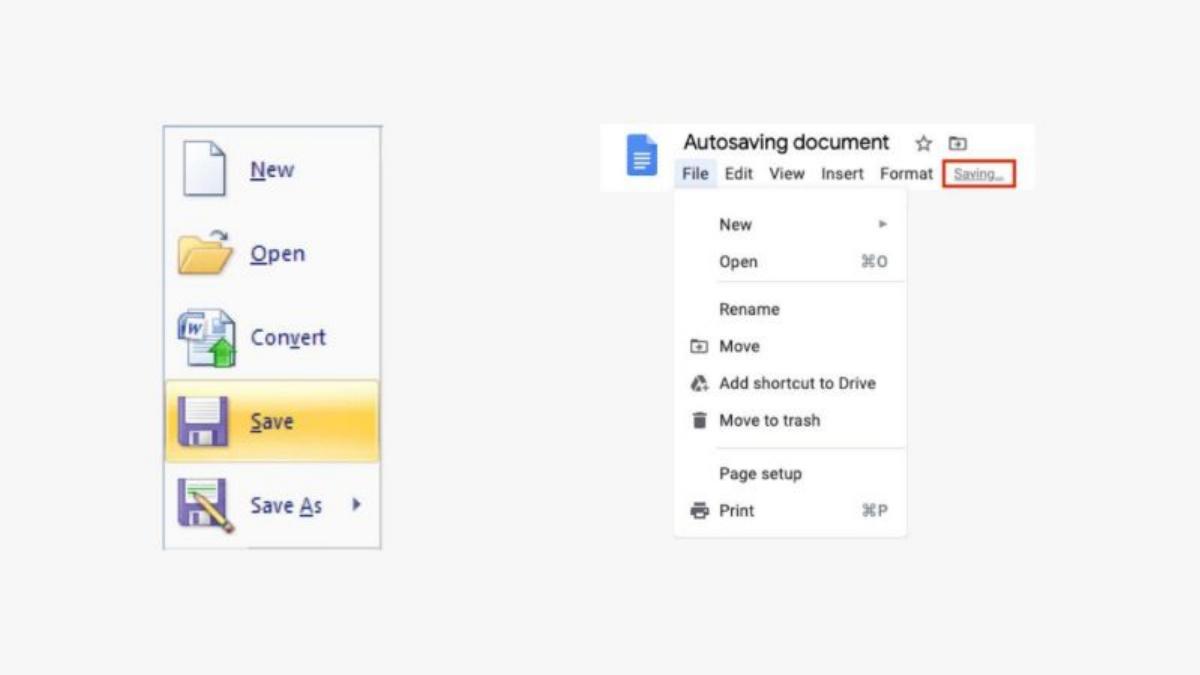
- The deck uses a 'Save' vs. 'Autosaving' metaphor on slide 2 to explain the shift from manual state management to durable execution.
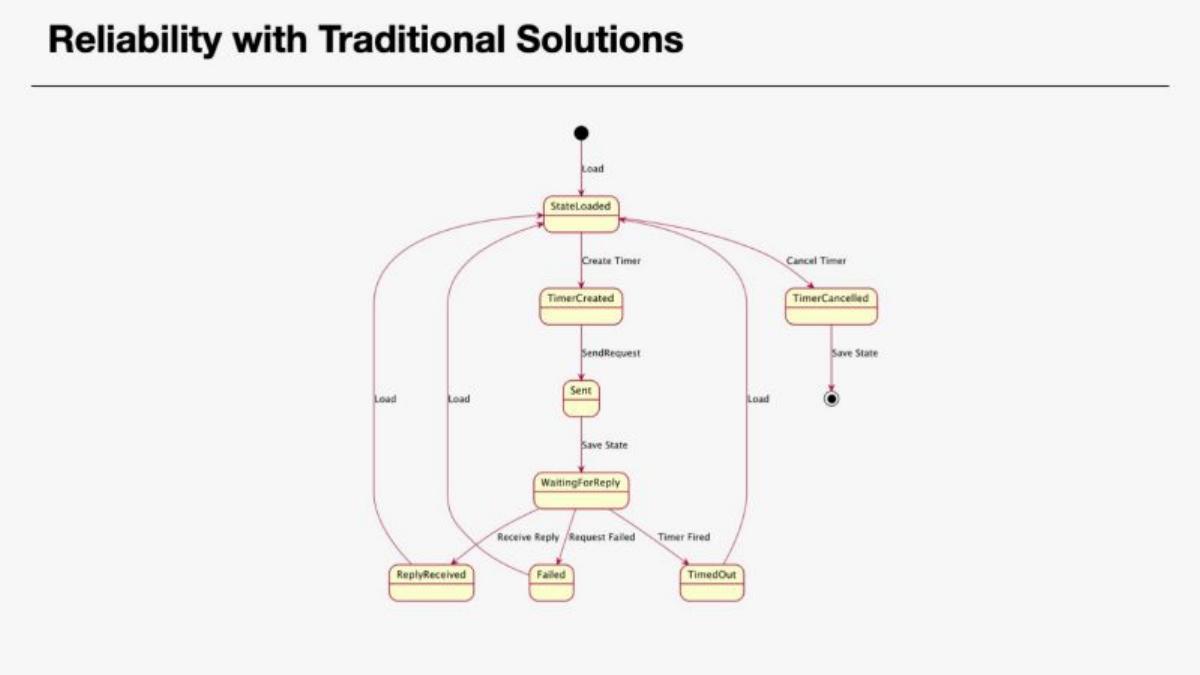
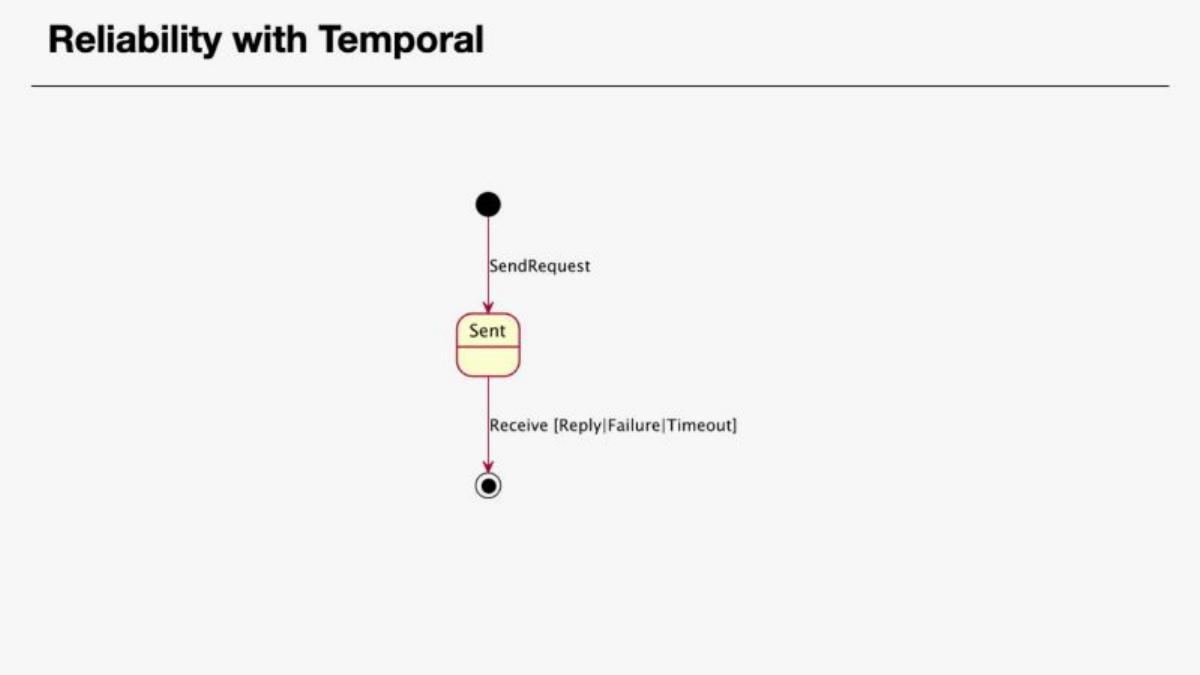
- Slide 3 and 4 provide a direct visual comparison of reliability, showing a complex state machine reduced to a single linear flow.
- Temporal positions itself as a replacement for 'duct-taped' infrastructure involving Redis, RabbitMQ, and MySQL on slide 8.
- The product is framed as a complementary layer to Kubernetes and Docker, rather than a competitor, on slide 9.
- A timeline on slide 10 places Temporal at the end of an evolution starting in 2004 with early AWS services.
- Slide 16 showcases significant enterprise adoption with logos from Uber, Box, Coinbase, DoorDash, and Checkr.
- The deck omits a traditional team slide, relying instead on the product's origin story at Uber (implied via slide 14).
- The 'Ask' is framed as a '3 Year Runway' with specific goals for 10x people growth in 2021 on slide 18.
Introduction: The Power of Visual Metaphor
Temporal’s Series A deck is a rare example of a highly technical product explained through simple, almost primitive, visual metaphors. In the world of enterprise software, founders often fall into the trap of over-explaining architecture. Temporal does the opposite: they show the chaos of the status quo and the order of their solution. This teardown examines how they used 19 slides to turn a complex backend orchestration engine into a clear investment thesis.
Slides 1-2: The Hook and the Metaphor
Slide 1 is a minimalist title slide: the logo and the tagline "Build invincible applications." It sets a high-stakes tone. If an application is "invincible," it implies that current applications are fragile.
Slide 2 is the most important slide in the deck for non-technical investors. It shows a legacy Microsoft Word 'Save' icon next to a Google Docs 'Saving...' status. This is a brilliant use of a universal UI experience to explain a backend concept. It signals that Temporal is moving the world from manual, checkpoint-based state management to a world where state is inherent and automatic. It frames the product as an inevitable evolution of software behavior.
Slides 3-5: Visualizing Complexity
Slide 3 , titled "Reliability with Traditional Solutions," shows a spaghetti-like state machine diagram. It is intentionally difficult to read, representing the burden developers face when trying to make a system reliable. Slide 4 provides the contrast: "Reliability with Temporal." It shows a single, straight line. The message is clear: Temporal removes the 'boilerplate' of failure handling.
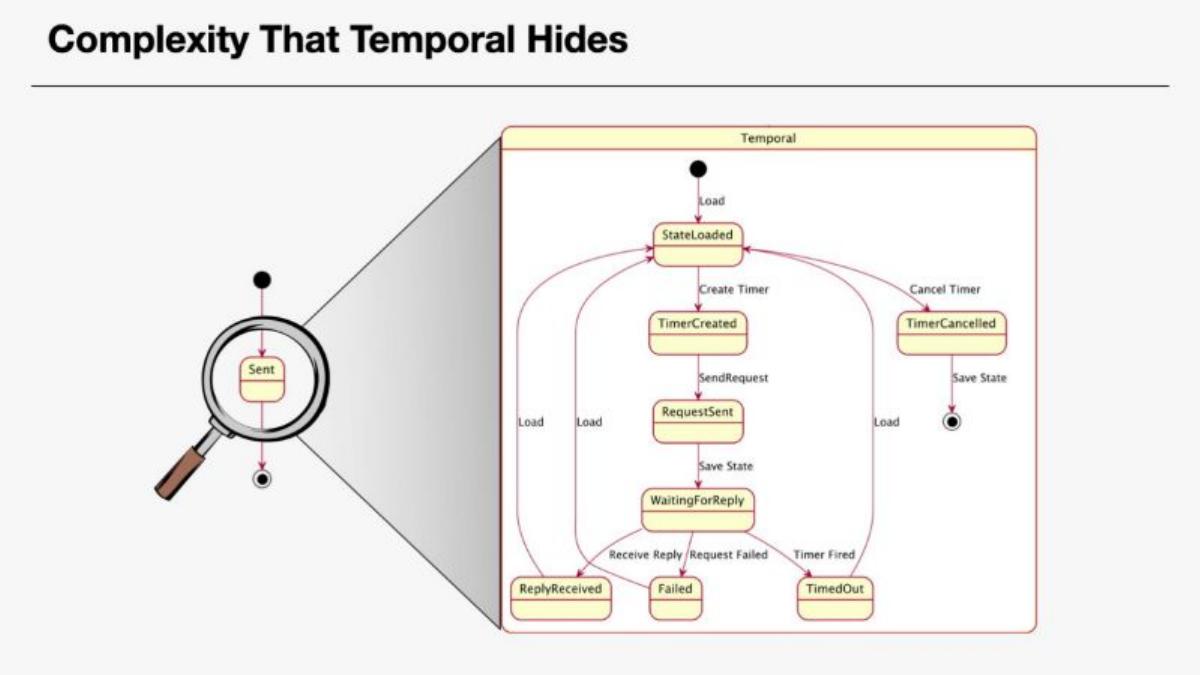
Slide 5 , "Complexity That Temporal Hides," uses a magnifying glass graphic to show that the complexity hasn't disappeared—it has simply been moved inside the Temporal platform. This is a sophisticated way to handle the 'too good to be true' objection from technical auditors. It admits the work is hard but claims Temporal is the one doing it.
Slides 6-8: The Product and the 'Duct Tape' Problem
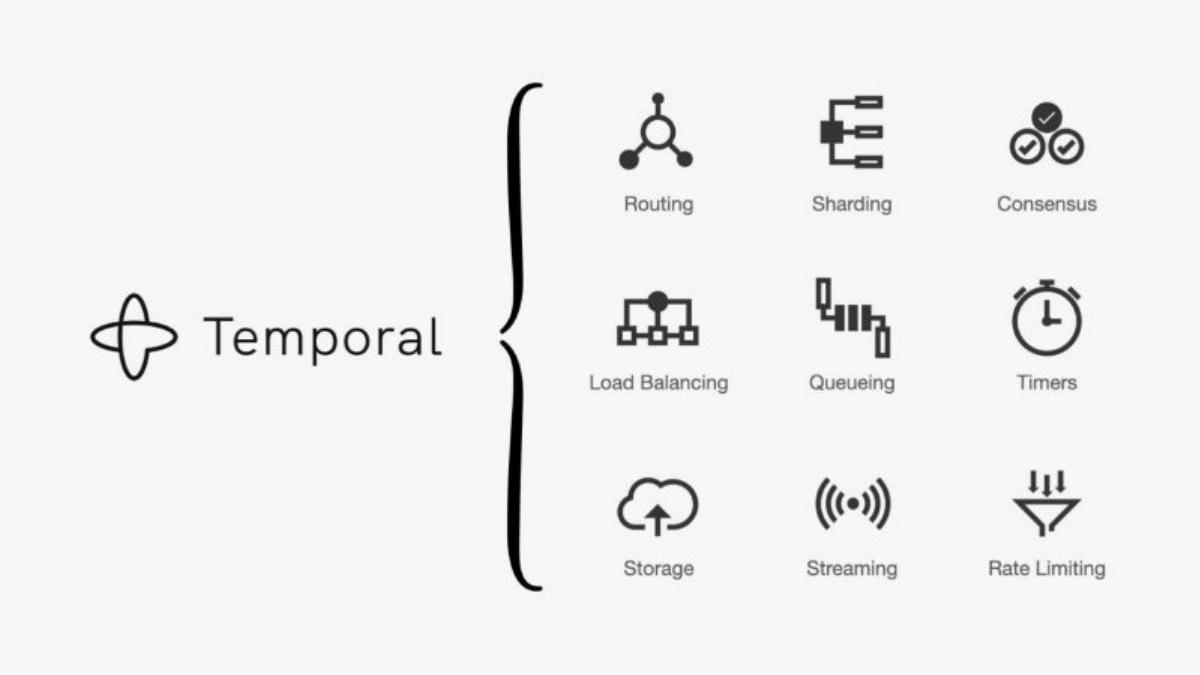
Slide 6 lists the primitives Temporal manages: Routing, Sharding, Consensus, Load Balancing, Queueing, Timers, Storage, Streaming, and Rate Limiting. By grouping these under the Temporal logo, they position themselves as a comprehensive 'distributed operating system.'
Slide 7 uses a 'Today' vs. 'Temporal' comparison. The 'Today' side shows icons for Redis, RabbitMQ, MySQL, and Amazon S3 literally duct-taped and chained together. This is a visceral representation of 'technical debt.' The 'Temporal' side shows a clean, suburban-style grid of houses and roads, suggesting that Temporal provides the 'infrastructure' (roads) so developers can focus on the 'applications' (houses).
Slides 9-10: Market Positioning and Lineage
Slide 9 is a defensive slide. It uses a 'Vs' with a red X and a '+' with a green checkmark to show that Temporal is not a replacement for Kubernetes, AWS Lambda, or Docker. Instead, it is an additive layer. This is crucial for Series A investors who might worry about Temporal fighting an uphill battle against established cloud giants.
Slide 10 provides a timeline starting in 2004. It places Temporal at the end of a lineage of cloud innovation. This gives the company a sense of historical 'rightness'—suggesting that after the industry solved compute and storage, the next logical step is solving workflow orchestration.
Slides 11-15: Use Cases and Origin Story
Slide 11 uses three icons (a developer, a faucet, and an open-source logo) to represent their community-led, open-source growth model. Slides 12 and 13 use Uber’s UI to show real-world applications: service orchestration for tipping a driver and 'always running workflows' for loyalty programs like Uber Rewards. This grounds the abstract technical claims in a product everyone in the room has used.
Slide 14 references 'Cadence,' the open-source project at Uber that Temporal's founders created. This is their 'Team' slide by proxy. It proves the founders have already built this at a massive scale before starting the company. Slide 15 shows a music playlist metaphor, likely representing a media processing or synchronization use case, though it is less explicitly labeled than the Uber slides.
Slides 16-17: Social Proof and Validation
Slide 16 is the 'Logo Slide.' It is impressive for a Series A. Featuring Coinbase, DoorDash, Box, and HashiCorp—alongside 'Censored' Fortune 100 logos—it demonstrates that the 'smart money' and 'smart engineering' teams have already made their choice. The numbers '100+ apps' and '900' (likely referring to the number of workflows or developers at a specific firm) provide the only real 'traction' data in the deck.
Slide 17 provides testimonials from Checkr and Snap. The Checkr quote highlights 'developer happiness,' which is a leading indicator of retention in dev-tooling. The Snap quote focuses on 'efficiency,' validating the business value of the technical simplification shown in slides 3 and 4.
Slides 18-19: The Roadmap and the Ask
Slide 18 is the 'Future' slide. It lists goals for 2020 and 2021, including a 'Hosted service' (their monetization path) and 'Market education.' The '3 Year Runway' note is a bold way to frame the 'Ask.' It tells investors exactly how long their capital will last and what the headcount growth (10x in 2021) will look like. It focuses on 'Product and Eng' as the primary investment areas.
What Works in This Deck
The Contrast Strategy: The visual difference between the 'Spaghetti' (Slide 3) and the 'Line' (Slide 4) is the most effective way to communicate a technical value proposition to a non-technical partner at a VC firm. · The Duct Tape Metaphor: Slide 7 identifies a specific pain point that every engineering manager recognizes. It turns a technical choice into an emotional one. · Validation via Association: By showing the Uber and HashiCorp logos, Temporal inherits the 'engineering excellence' reputation of those companies without needing to spend five slides on founder resumes. · Clarity of Evolution: Slide 10 makes the investment feel like a 'macro' bet on the direction of the internet, rather than a 'micro' bet on a specific tool.
What is Missing
Financials: There is zero mention of revenue, pricing models, or contract values. While common for open-source companies at this stage, it leaves the 'business' side of the business entirely to the imagination. · Market Size (TAM): There is no slide showing how many billions of dollars are spent on the 'duct tape' solutions they aim to replace. They assume the investor already knows the cloud infrastructure market is massive. · Competitive Landscape: Aside from the 'additive' slide (Slide 9), they don't address other workflow engines like AWS Step Functions or Airflow. They rely on the 'invincible' branding to set them apart. · Direct Team Slide: While the Cadence/Uber connection is clear, a slide with the founders' faces and specific backgrounds is a standard expectation that is omitted here.
What Founders Should Copy
Use UI Metaphors for Backend Tech: If you are building 'plumbing,' use a 'faucet' metaphor. Temporal’s use of the Google Docs 'Saving' icon is a masterclass in making the invisible visible. · Show, Don't Just Tell, Complexity: Don't just say your tool is 'simple.' Show a diagram of how hard it is to do it the old way. The visual weight of the 'Old Way' makes the 'New Way' feel like a relief. · Focus on 'Developer Happiness': In the modern enterprise, developers are the kingmakers. Highlighting that your tool makes engineers 'happy' (Slide 17) is often more persuasive than claiming it saves 10% on server costs. · Frame the Ask as 'Runway and People': Instead of just asking for '$X million,' show what that money buys in terms of time (3 years) and talent (10x growth). It makes the investment feel like a fuel for a machine that is already built.
Frequently asked questions
- How much did Temporal raise with this deck?
- According to the catalogue facts, Temporal raised $18.75M in their Series A round in 2021. While the editorial context mentions a later $103M round raised without a deck, this specific 19-slide presentation was used to communicate the core vision during their earlier growth phase.
- What is the primary problem Temporal is solving?
- Temporal addresses the complexity of distributed systems. Slides 3 and 5 illustrate that traditional 'Reliability' requires developers to build massive, error-prone state machines to handle failures. Temporal 'hides' this complexity, allowing developers to write simple code while the platform handles retries, state, and timers in the background.
- Who are Temporal's main customers according to the deck?
- The deck highlights high-scale technology companies. Slide 16 specifically lists Uber, Box, Coinbase, DoorDash, and Checkr. It also mentions 'Fortune 100' companies (censored) and shows use cases for Uber (service orchestration) and Snap (asynchronous API systems).
- Does the deck include financial projections or revenue?
- No. This is a common trait in 'bottom-up' developer tool decks. Instead of revenue, Temporal focuses on adoption metrics (100+ apps at Uber, 900+ at another firm) and technical validation. There are no slides covering ARR, MRR, or CAC/LTV.
- What is the 'Ask' in the presentation?
- The ask is detailed on slide 18. Rather than a specific dollar amount, they outline a plan for a '3 Year Runway.' This includes tripling the team by the end of 2020, 10x growth in 2021, and investing in a 'Hosted Service' and 'Market education.'