Thrive Global raised $7M in 2016 using a deck that leans heavily on the personal brand of Arianna Huffington and a star-studded board of directors. The presentation focuses on the 'global pandemic of stress' and positions Thrive as a multi-channel solution spanning corporate workshops, e-learning, and consumer e-commerce. While the deck lacks specific revenue figures, unit economics, or a clear 'Ask' slide, it compensates with massive market validation and social proof. The strategy was to frame wellness not as a luxury, but as a critical driver of corporate ROI, citing specific costs of burn…
Key takeaways
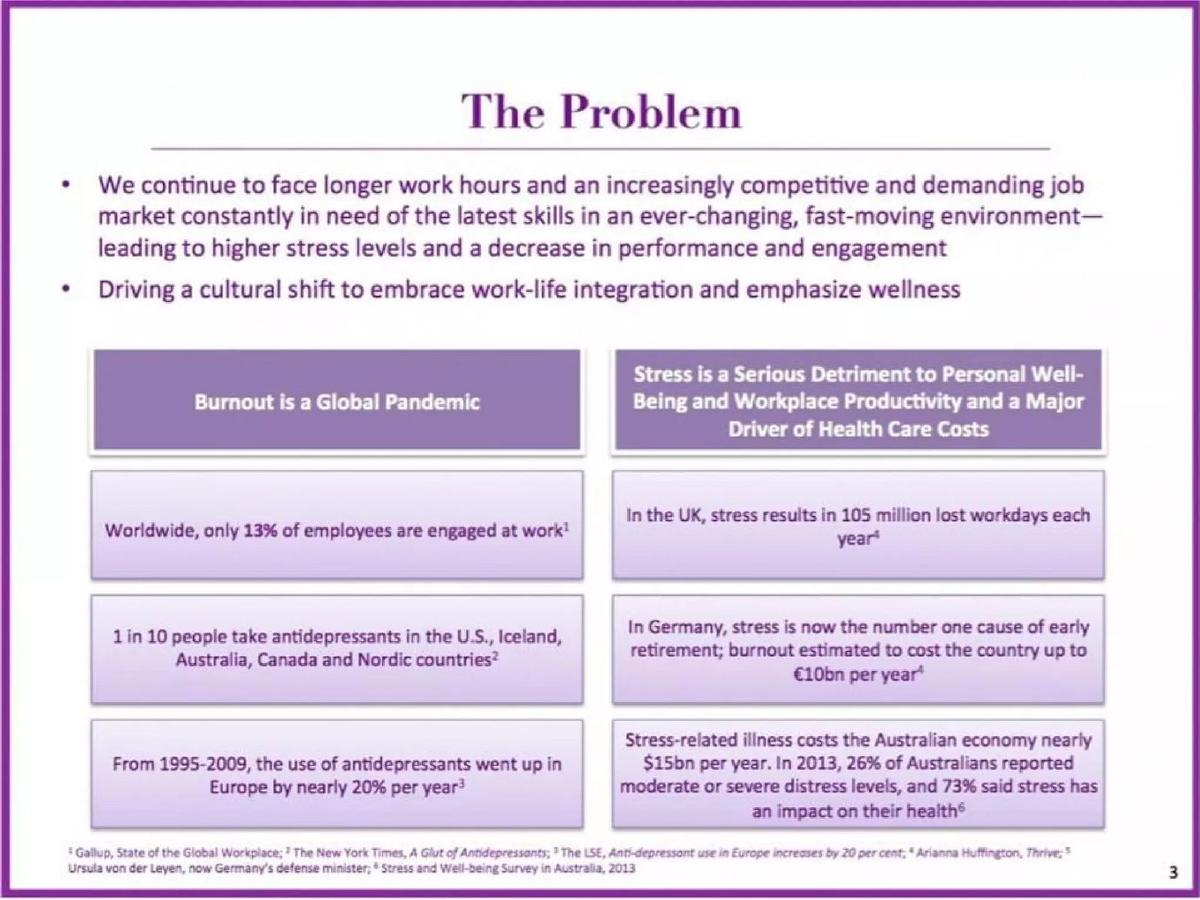
- The deck frames burnout as a global economic crisis, citing that stress costs the Australian economy nearly $15bn per year (Slide 3).
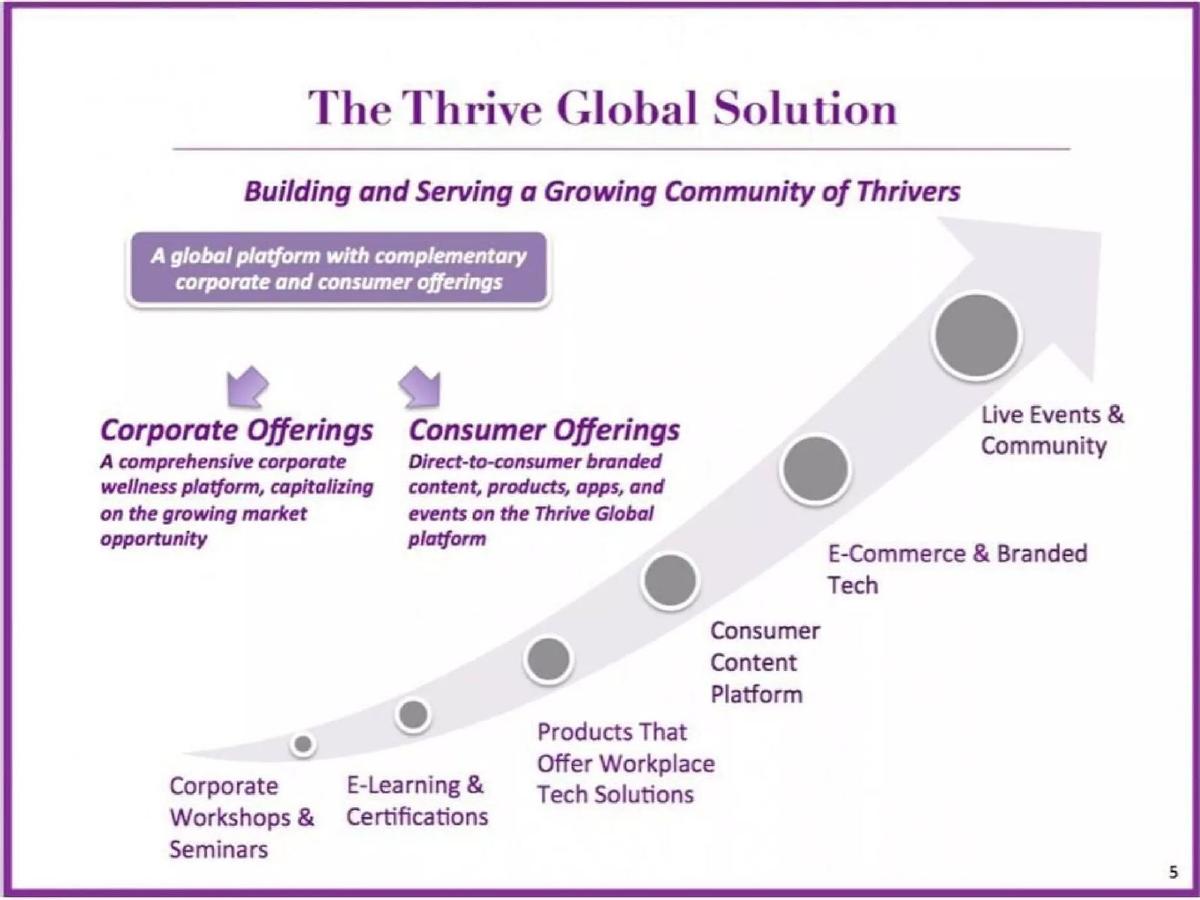
- Thrive Global positions itself as a dual-track platform serving both corporate and consumer markets simultaneously (Slide 5).
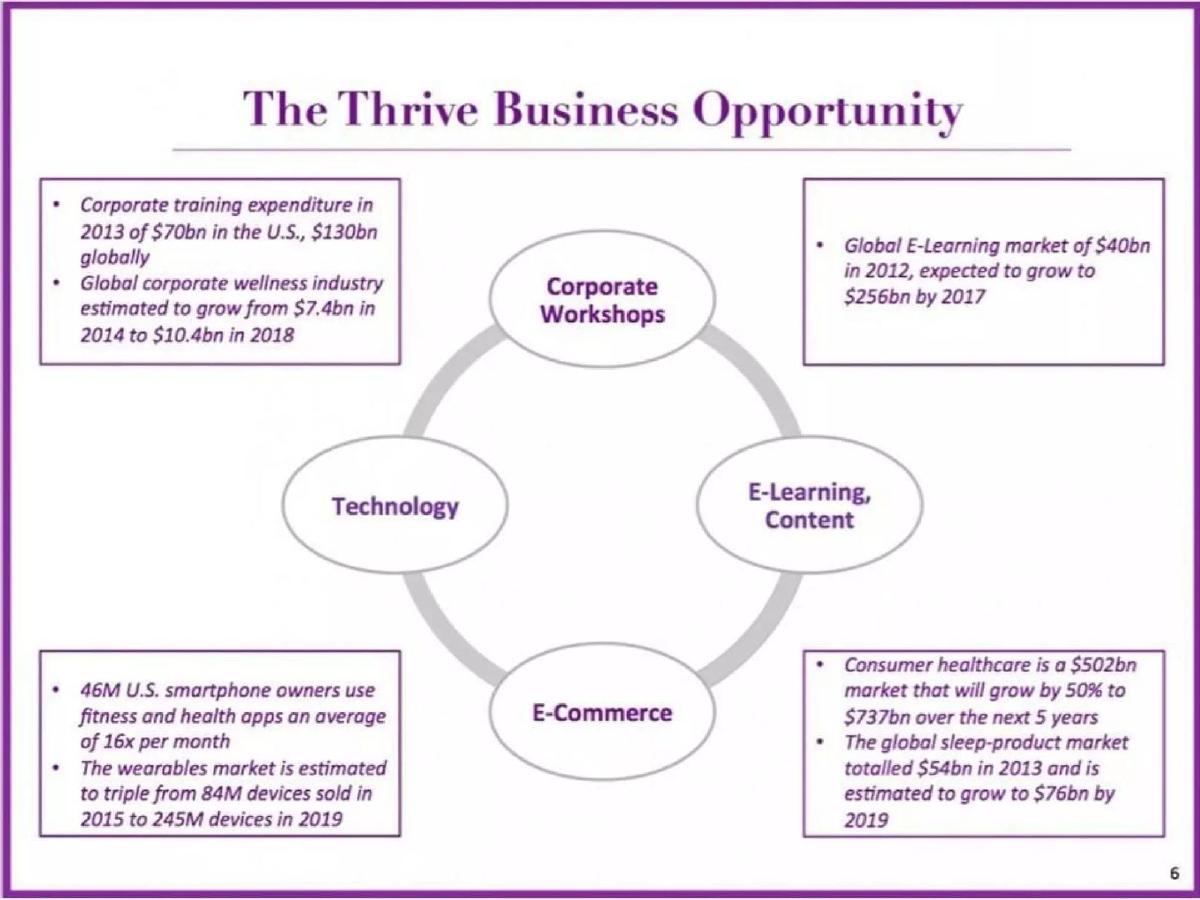
- The business opportunity is validated by a global e-learning market projected to grow to $256bn by 2017 (Slide 6).
- The corporate offering includes a 'Thrive Certified' designation to ensure sustainable transformational impact (Slide 10).
- Consumer monetization is planned through brand partnerships, commissions, native advertising, and a freemium subscription model (Slide 13).
- The deck utilizes extreme social proof, featuring photos of Arianna Huffington with Sheryl Sandberg and Kobe Bryant (Slides 11, 15).
- The advisory board and directors include high-level executives from Google, Accenture, LinkedIn, and Aetna (Slides 17, 18).
- There is no specific 'Ask' slide detailing the amount being raised or the intended use of funds within the 19 slides.
Introduction: The Power of the Celebrity Founder
Thrive Global’s 2016 Series A deck is an outlier in the world of venture capital presentations. While most Series A companies are expected to show rigorous traction metrics and unit economics, Thrive Global leans into a different kind of currency: brand equity and social proof. Founded by Arianna Huffington following her departure from The Huffington Post, the company entered the market with immediate name recognition and a high-level network that most founders spend a decade building.
The deck, consisting of 19 slides, focuses on the macro-economic problem of burnout and positions Thrive as the definitive solution for the 'stress pandemic.' It is less a pitch for a software product and more a pitch for a cultural movement led by a proven media mogul. For founders, this teardown illustrates how to frame a broad vision and leverage an elite advisory board to secure a $7M round.
The Vision and the Problem (Slides 1-4)
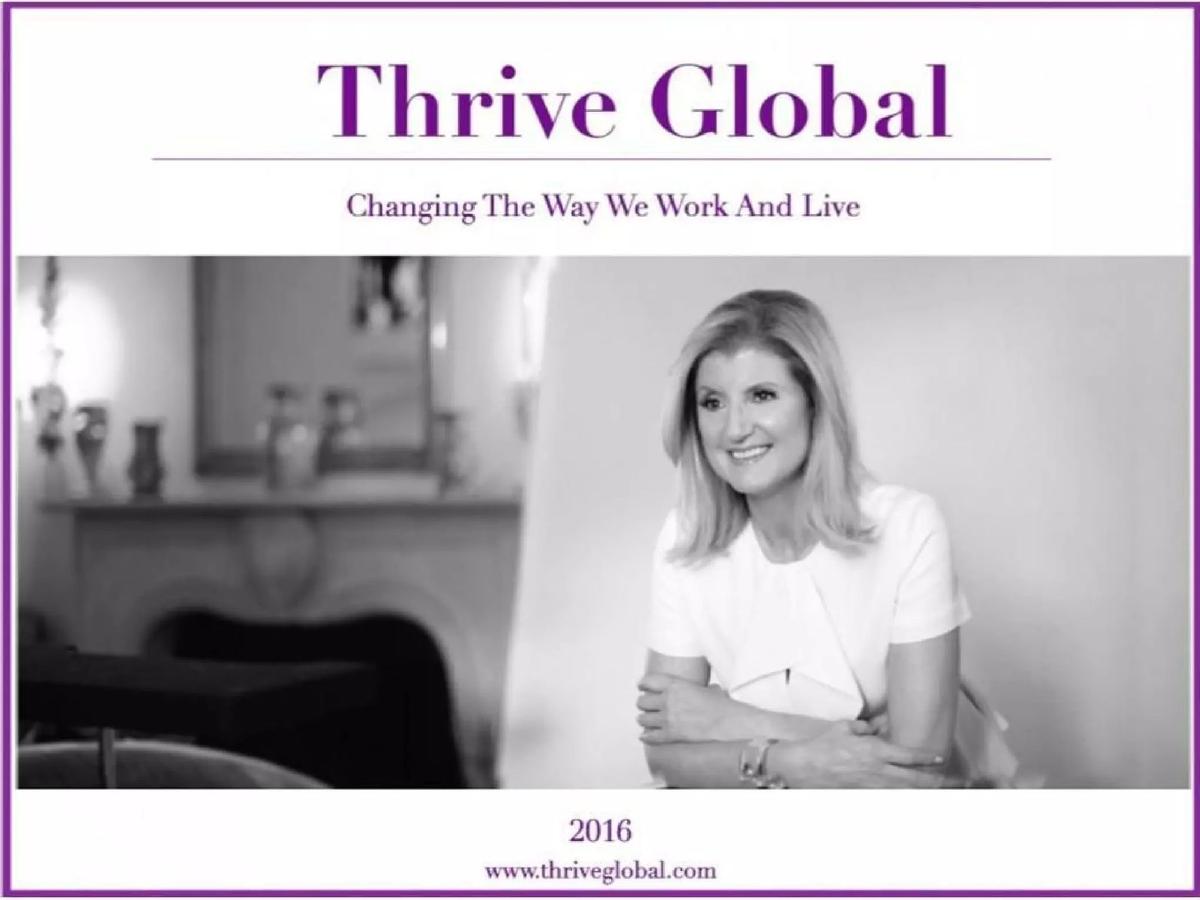
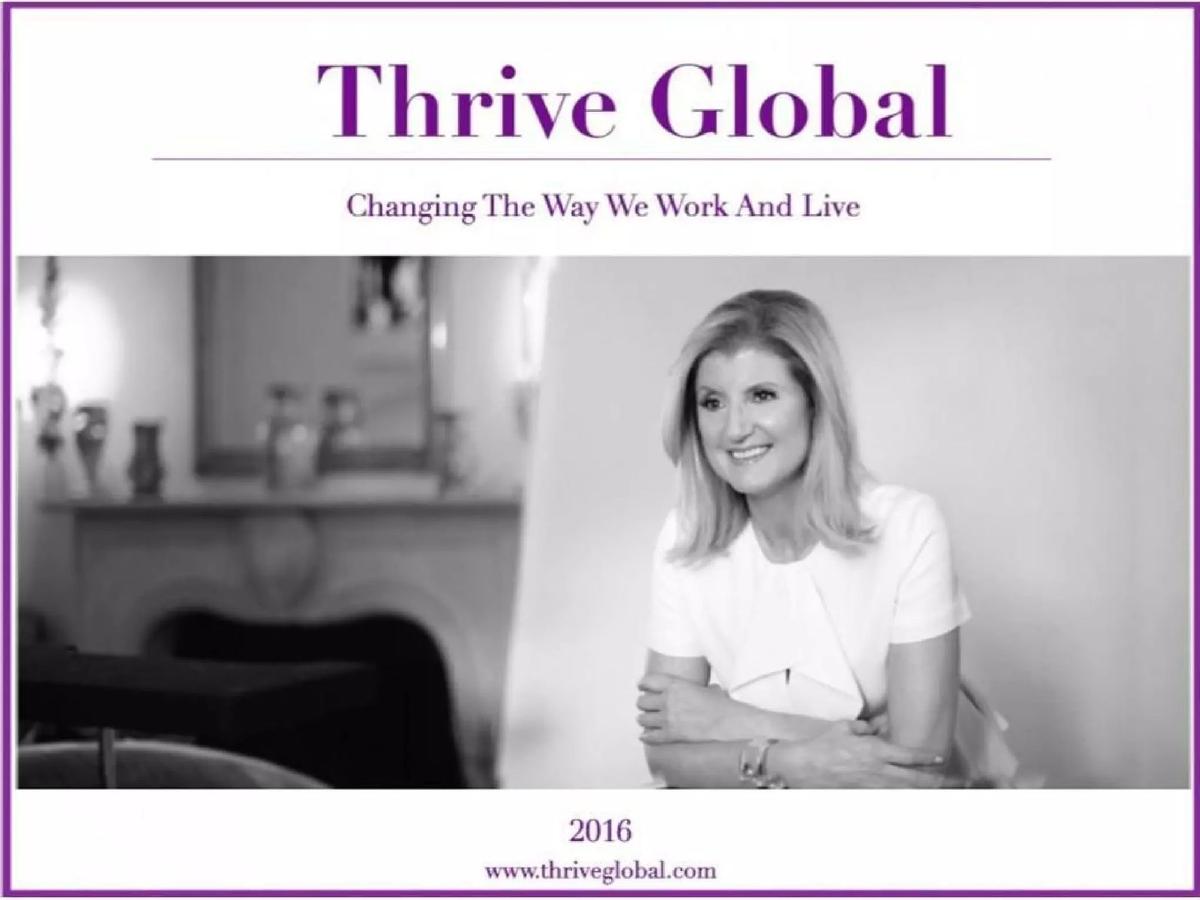
Slide 1: Title The cover is minimalist, featuring the company name, the tagline 'Changing The Way We Work And Live,' and a professional black-and-white portrait of Arianna Huffington. The inclusion of the founder's image on the cover is a deliberate move to signal that the investment is, in large part, an investment in her personal brand and leadership.
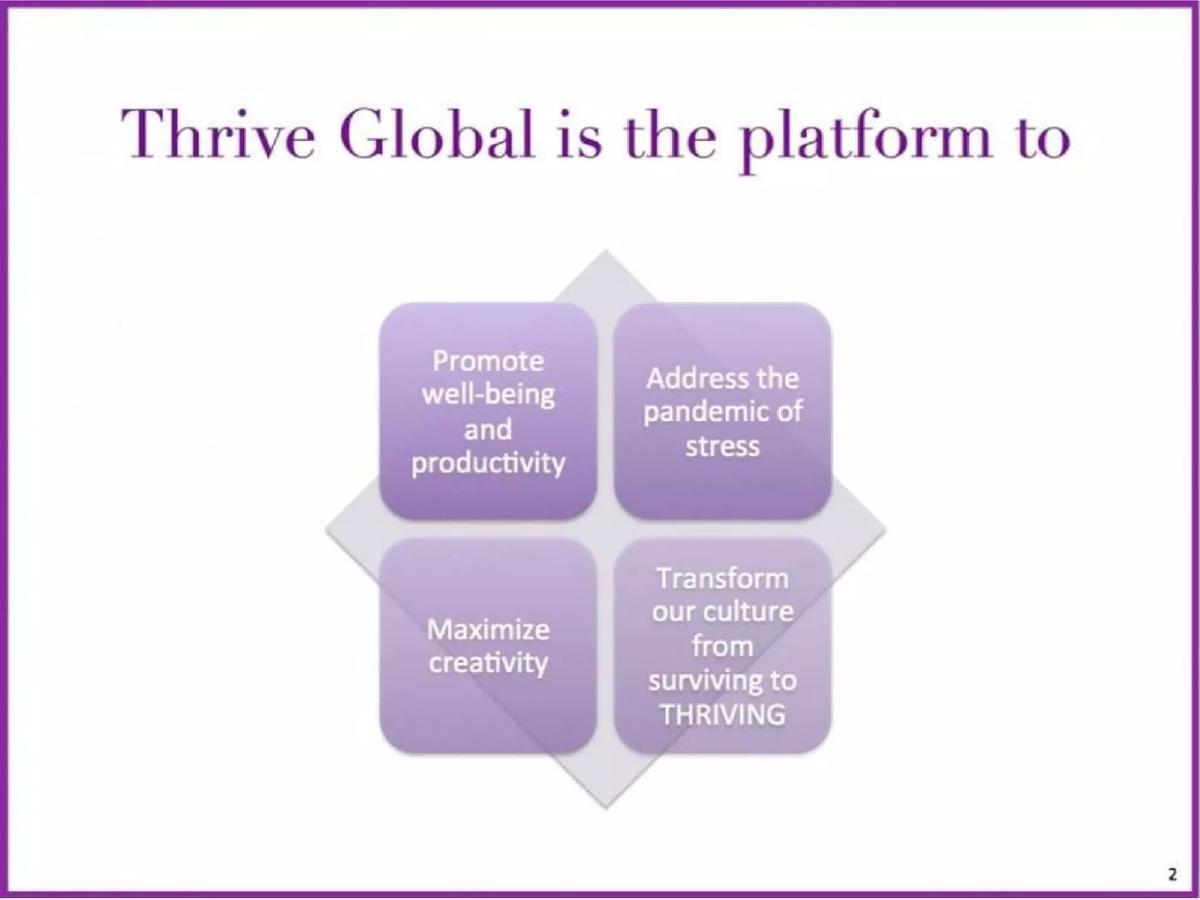
Slide 2: The Platform This slide introduces a four-quadrant graphic defining Thrive Global’s purpose: Promote well-being and productivity, Address the pandemic of stress, Maximize creativity, and Transform culture from surviving to THRIVING. It establishes the company as a 'platform' rather than a single-point solution.
Slide 3: The Problem Thrive does an excellent job of quantifying an abstract problem. They cite specific, alarming statistics: only 13% of employees are engaged at work globally, and stress-related illness costs the Australian economy nearly $15bn per year. By citing figures from the UK, Germany, and the US, they justify the 'Global' in their name and prove that the market for a solution is worldwide.
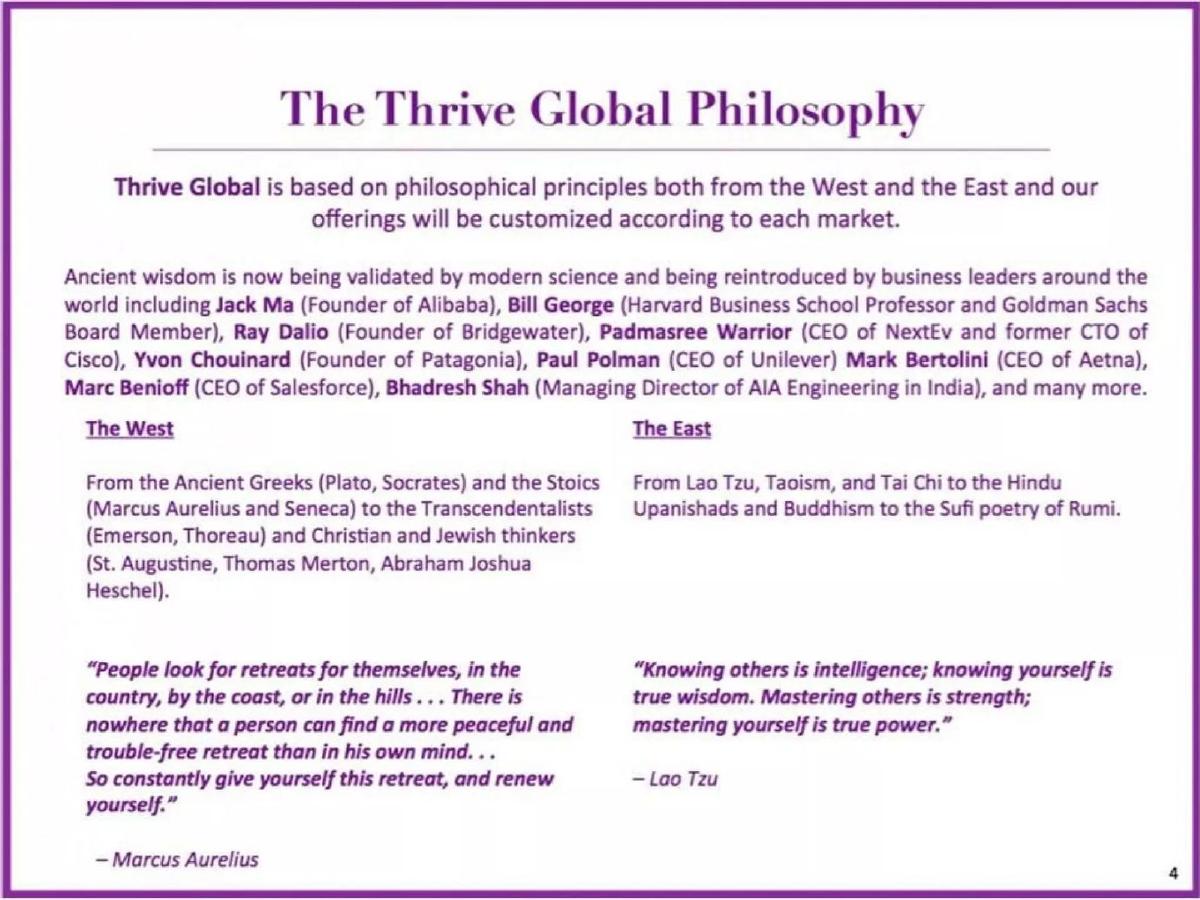
Slide 4: The Thrive Global Philosophy This slide bridges the gap between ancient wisdom and modern business. It lists high-profile business leaders who validate these principles, including Jack Ma, Ray Dalio, and Marc Benioff. By quoting Marcus Aurelius and Lao Tzu, the deck attempts to give the brand a sense of timelessness and intellectual depth that goes beyond a standard wellness app.
The Solution and Market Opportunity (Slides 5-7)
Slide 5: The Thrive Global Solution This is the core architecture of the business. It shows an upward-sloping arrow representing the growth of a 'Community of Thrivers.' The business is split into Corporate Offerings (workshops, e-learning) and Consumer Offerings (content, e-commerce, events). This dual-revenue stream approach is designed to show investors multiple paths to a return.
Slide 6: The Thrive Business Opportunity Thrive presents four massive market segments to justify their valuation. They cite a $130bn global corporate training market, a $256bn e-learning market, a $245M wearables market, and a $737bn consumer healthcare market. While these are 'top-down' numbers that don't reflect Thrive's specific capture, they serve to show that the company is playing in a very large pond.
Slide 7: Global Scope This slide addresses the 'Why Now?' factor. It argues that in an era of easy talent poaching via online hiring platforms, companies need wellness incentives to retain valued employees. It positions Thrive as a retention tool, which is a high-value proposition for HR departments.
Deep Dive: Corporate Offerings (Slides 8-11)
Slide 8-9: Workshops and Seminars The corporate side of the business starts with high-touch services. Slide 9 mentions partnerships with academic institutions to provide data-driven outcomes. A visual of a Harvard Business Review cover ('How to Be Productive Without Burning Out') provides additional third-party validation.
Slide 10: E-Learning & Certifications To scale beyond physical workshops, Thrive introduces e-courses. A key detail here is the 'Thrive Certified' status for companies. This creates a 'moat' and a recurring reason for companies to stay within the Thrive ecosystem to maintain their certification.
Slide 11: Ongoing Support This slide highlights the 'sophisticated media strategy' applied to HR. It also mentions proprietary tech solutions like a 'sleep app' and a tool to manage vacation email. The slide features a photo of Arianna Huffington with Facebook COO Sheryl Sandberg, reinforcing the company’s access to the highest levels of corporate America.
Deep Dive: Consumer Offerings (Slides 12-15)
Slide 12-13: Consumer Hub The consumer side is described as a hub for education and tech tools. Monetization is clearly defined here: brand partnerships, commissions, native advertising, and a freemium subscription model. This shows that the company isn't just relying on B2B contracts.
Slide 14: E-Commerce and E-Courses Thrive lists a wide range of physical products, from sleep kits to mattresses and pillows. This suggests a 'Goop-like' ambition for the wellness space. The e-courses are mentioned as being 'customized for international markets,' emphasizing the global scale again.
Slide 15: Live Events and Custom Content Social proof reaches its peak here. The slide mentions partnerships with athletes like Kobe Bryant and Andre Iguodala. Photos of these celebrities with Arianna Huffington serve as a powerful 'unfair advantage' that few other startups could claim.
Partners, Advisors, and Board (Slides 16-18)
Slide 16: Thrive Global Partners The deck lists existing partnerships with Thrive Market, Altus, and the David Lynch Foundation. This demonstrates that the company is already integrated into the existing wellness ecosystem.
Slide 17: Thrive Global Advisors The advisory board is exceptionally strong, featuring professors from Oxford and Wisconsin-Madison, alongside HR leaders from Google (Karen May), Accenture (Ellyn J. Shook), and LinkedIn (Pat Wadors). This addresses potential concerns about the scientific validity of the product.
Slide 18: Board of Directors The board includes heavy hitters like Mark Bertolini (CEO of Aetna) and Kenneth Lerer (Co-founder of The Huffington Post). For a Series A company, this level of governance is rare and signals to investors that the company is 'de-risked' from a leadership perspective.
Conclusion: The 'Why Thrive' Summary (Slide 19)
Slide 19: Why Thrive Global? The final slide summarizes the investment thesis: large disparate markets with no leader, the leverage of Arianna Huffington’s brand, and a focus on 'action and change, not just information.' It reiterates that the company has diversified revenue sources, which is a final nod to financial sustainability.
What Works in This Deck
Extreme Social Proof: The deck uses photos and names of global icons (Sandberg, Bryant, Ma) to create an aura of inevitability. · Macro-Problem Definition: By framing stress as a multi-billion dollar economic drain, they move wellness from a 'nice-to-have' to a business necessity. · Diversified Revenue Streams: Showing both B2B (workshops/SaaS) and B2C (e-commerce/subscriptions) models suggests a high ceiling for growth. · Elite Governance: The Board and Advisory slides are among the strongest in any startup deck, providing instant credibility.
What Is Missing
The Ask: There is no slide stating how much capital is being raised or what the specific milestones for the next 18 months are. · Traction Metrics: The deck contains no data on current revenue, number of corporate clients signed, or user engagement figures for the apps. · Unit Economics: There is no mention of the cost to acquire a corporate client versus the lifetime value of that contract. · Product Roadmap: While many 'offerings' are listed, it is unclear which are live and which are future concepts.
What a Founder Should Copy
The Problem Slide: Copy the way Thrive uses global economic data to validate the size of the problem they are solving. · The 'Why Now' Logic: The argument on Slide 7 about talent poaching making wellness a retention tool is a brilliant way to align a product with a current pain point for HR. · Visual Hierarchy: The deck is clean, uses a consistent color palette (purple), and doesn't overcrowd slides with text, making it easy to digest during a pitch. · Leveraging Advisors: If you have high-profile advisors, don't just list their names; list their specific titles and how their expertise validates your product (as seen on Slide 17).
Frequently asked questions
- How does Thrive Global justify its market size?
- Thrive Global uses a multi-sector approach to justify a massive TAM. On Slide 6, they aggregate figures from corporate training ($130bn globally), corporate wellness ($10.4bn by 2018), e-learning ($256bn by 2017), and consumer healthcare ($737bn over five years). By positioning the company at the intersection of these four industries, they present a nearly limitless ceiling for growth.
- What is the primary revenue model described in the deck?
- The revenue model is diversified. For corporates, it includes workshops, seminars, and e-learning certifications (Slides 9-10). For consumers, Slide 13 outlines a mix of brand partnerships, affiliate commissions, native advertising, and a freemium subscription model for proprietary apps. Slide 14 also mentions e-commerce revenue from curated products like sleep kits and mattresses.
- How much weight is given to the founder's personal brand?
- Significant weight. The cover slide features a large portrait of Arianna Huffington, and Slide 19 explicitly states that a key reason to invest is that the company 'leverages the brand and success of Arianna Huffington as the face of the platform.' Her best-selling books, Thrive and The Sleep Revolution, are cited as the foundational research for the product.
- Does the deck include a product demo or technical architecture?
- No. The deck is conceptual and vision-oriented. It shows a mockup of a 'Thrive Tribe' platform on Slide 10 and an iPhone app interface on Slide 13, but there are no details on the underlying technology, data privacy, or software integrations. The focus remains on the 'Philosophy' and the 'Solution' rather than the technical 'How'.
- What is missing from this Series A deck compared to standard startups?
- This deck omits almost all standard Series A metrics. There is no slide for Monthly Recurring Revenue (MRR), Customer Acquisition Cost (CAC), Lifetime Value (LTV), or churn rates. It also lacks a roadmap with specific milestones and a clear 'Use of Proceeds' slide. It relies entirely on the strength of the team and the scale of the problem.