Tia’s Series B pitch deck is a strategic argument for the 'rebundling' of women’s healthcare. Moving away from the fragmented 'point solutions' that defined early femtech, Tia positions itself as a full-stack, hybrid platform combining virtual and in-person care. The deck relies heavily on a three-pillar framework: Brand Experience, Care Model, and Tech & Ops. It effectively uses social proof through user-generated content and a clear competitive matrix that highlights the limitations of virtual-only players. While the provided slides lack specific revenue figures or unit economics, the narra…
Key takeaways
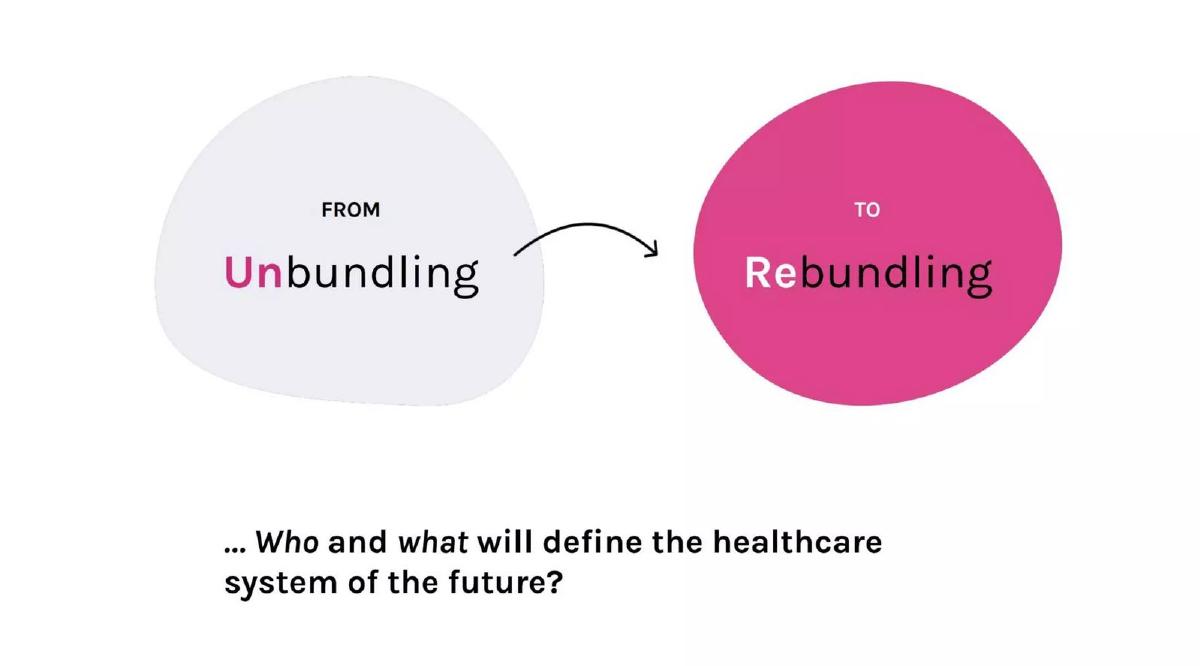
- The deck defines the future of healthcare as 'rebundling' rather than the 'unbundling' of specific conditions (Slide 2).
- Tia positions itself as a 'full-stack care delivery platform' that integrates online and in-person services (Slide 4).
- The 'Whole Person Care' model is contrasted against 'Femtech point solutions' like fertility or mental health apps (Slide 8).
- A competitive moat is built around physical procedures, noting that Pap smears and IUDs cannot be performed virtually (Slide 9).
- The proprietary 'three screens' tech platform is highlighted as a tool for clinical transparency and collaboration (Slide 10).
- Clinical decision support features are used to 'level up' mid-level providers like Nurse Practitioners (Slide 11).
- The market opportunity is framed by the $2.8 trillion in annual U.S. healthcare spend controlled by women (Slide 13).
- The team is strategically split into 'Healthcare Insiders' from One Medical and Oscar, and 'Outsiders' from Uber and SoulCycle (Slide 15).
The Strategy of Rebundling: A Teardown of Tia’s Series B Deck
Tia’s Series B pitch deck is a sophisticated example of how to pitch a capital-intensive, hybrid business model in a market often dominated by asset-light software. By 2021, the 'femtech' space was crowded with apps for period tracking, fertility, and mental health. Tia’s deck seeks to move past these 'point solutions' to argue for a comprehensive, physical-plus-digital 'medical home.' The following is a slide-by-slide analysis of the 15 slides provided from their 29-slide deck.
Slide 1: Title and Vision
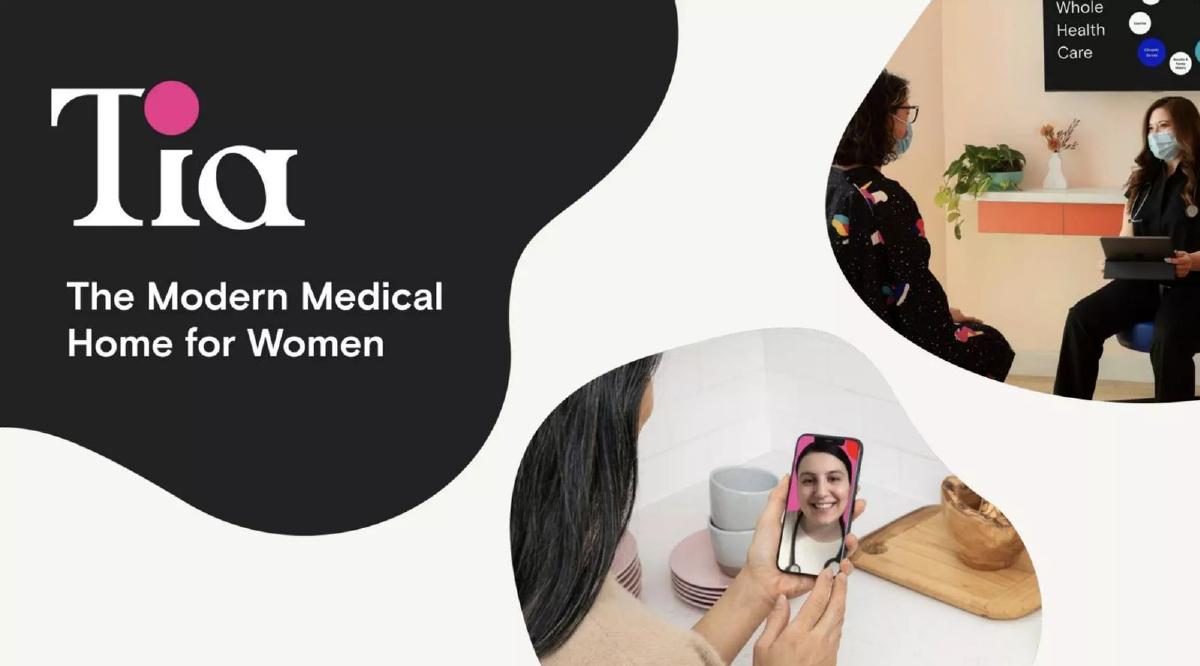
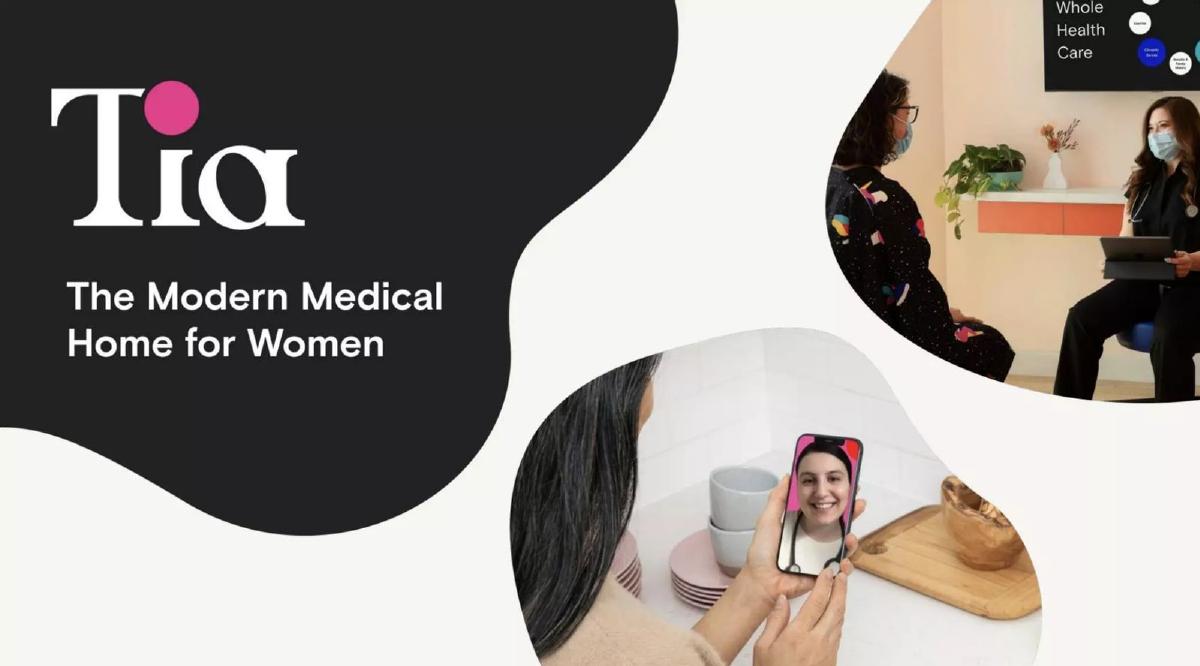
The cover slide establishes Tia as 'The Modern Medical Home for Women.' The imagery is split between a physical clinic setting and a virtual consultation on a smartphone. This immediately communicates the hybrid nature of the business. The branding is clean and high-contrast, signaling a premium consumer experience that differs from traditional, clinical healthcare environments.
Slide 2: The Macro Shift
Slide 2 introduces the core thesis of the fundraise: a shift from 'Unbundling' to 'Rebundling.' This is a classic venture capital narrative. The company argues that the previous era of healthcare was defined by breaking services apart, but the future belongs to those who can bring them back together under one roof. It poses the question: 'Who and what will define the healthcare system of the future?'
Slide 3: The Thesis
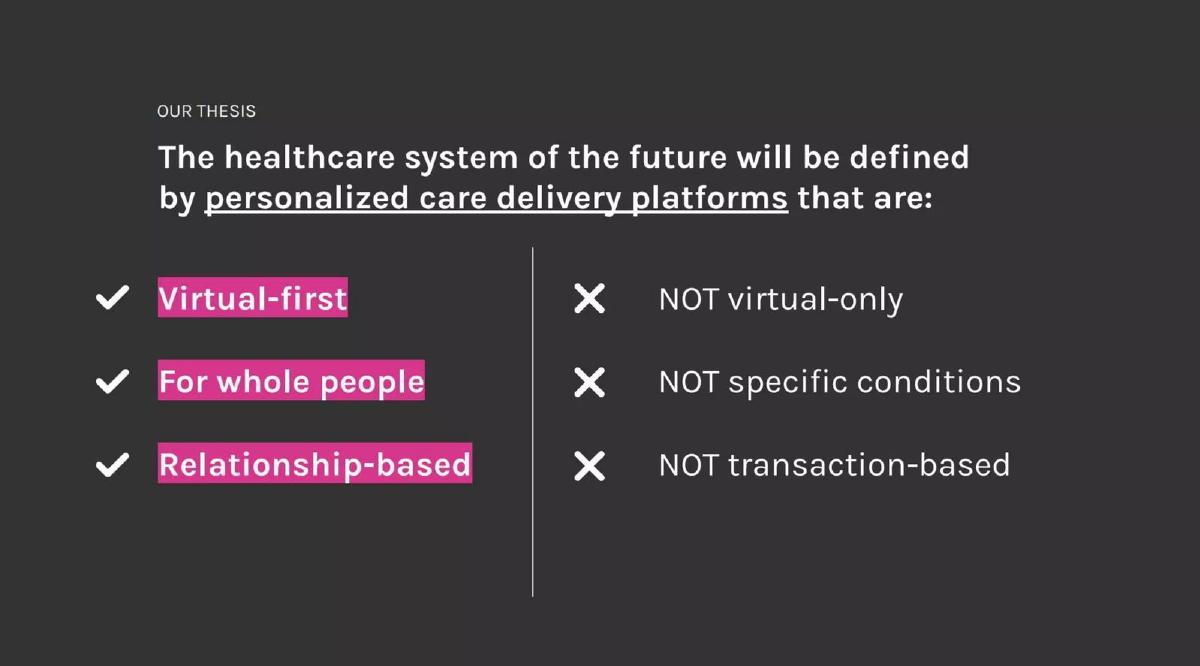
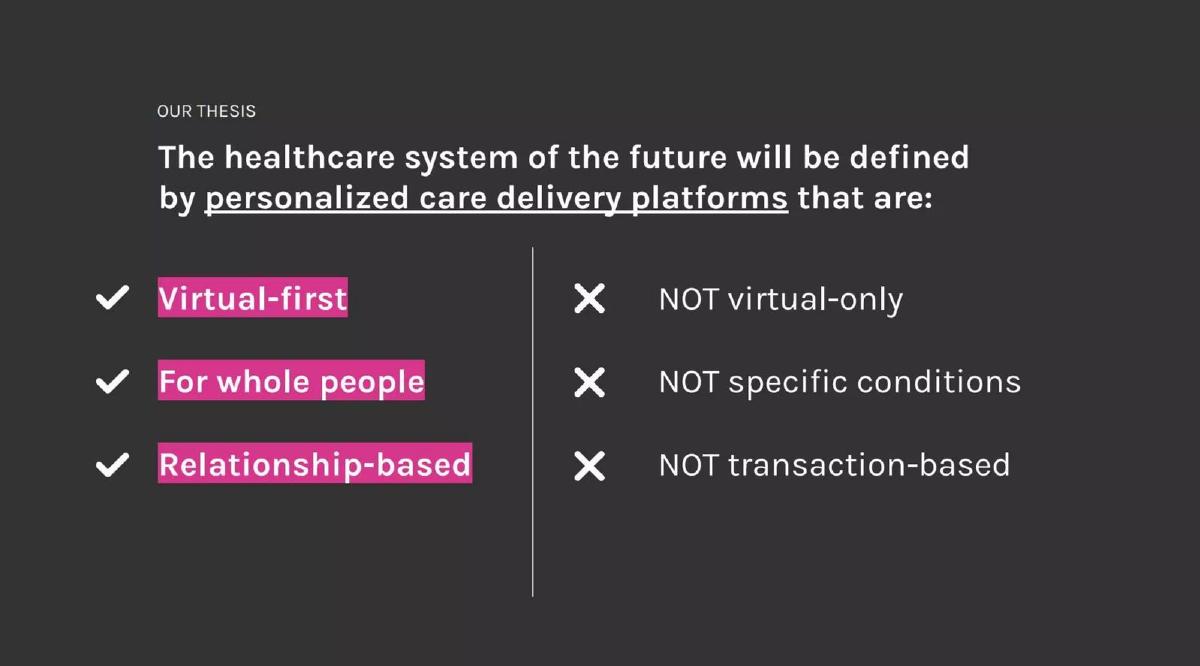
Tia answers its own question on Slide 3. They define the future as 'personalized care delivery platforms' that are Virtual-first (but not virtual-only), For whole people (not specific conditions), and Relationship-based (not transaction-based). This slide is critical because it sets the criteria for success in a way that only Tia meets, effectively disqualifying competitors who focus solely on telehealth or single-issue care.
Slide 4: The Care Continuum
Slide 4 defines Tia as a 'full-stack care delivery platform.' It introduces 'The Tia Care Continuum,' a visual flow showing a patient moving from a mobile app to a physical clinic and back to a virtual doctor. This reinforces the 'first place women turn' messaging, positioning Tia as the primary entry point for all healthcare needs.
Slide 5: Defining Healthcare for Women
This slide uses a Venn diagram to show the breadth of Tia’s services. On one side are clinical services: Primary Care, Gynecology, and Therapy. On the other are wellness services: Acupuncture, Nutrition, and Lifestyle. Tia sits in the intersection. This 'one-stop-shop' approach is the practical application of the 'rebundling' thesis mentioned earlier.
Slide 6 & 7: Brand Experience and Social Proof
Slide 6 is a simple transition slide for 'Brand Experience.' Slide 7 follows up with 'viral UGC' (User Generated Content). It features screenshots of social media posts from women praising the service. One quote stands out: 'I cried for the rest of the day because they listened to me. That’s rare.' This slide proves that Tia has achieved 'mindshare' and high emotional engagement, which are key drivers for organic customer acquisition.
Slide 8: Whole Person vs. Point Solutions
Slide 8 is perhaps the most important competitive slide in the deck. It features a side-by-side illustration. On the left, a 'Femtech point solutions' model shows a woman’s body fragmented into labels like 'Thyroid,' 'Fertility,' and 'Mental Health.' On the right, the Tia model shows a unified pink glow around the entire body. The text explicitly states that Tia treats everything 'from anxiety to endometriosis.' This frames competitors as incomplete and Tia as the only holistic option.
Slide 9: The Physical Moat
Slide 9 addresses the 'virtual-only' trend head-on. It reminds investors that 'you can’t get a Pap smear (or an IUD, an ultrasound, and much more) on the Internet.' By highlighting these essential physical procedures, Tia justifies its investment in brick-and-mortar clinics. It frames physical care not as a burden, but as a necessary component for 'bottom line' growth and better health outcomes.
Slide 10: The Three Screens
Moving into 'Tech & Ops,' Slide 10 introduces the 'three screens' of Tia. This homegrown platform is designed for 'transparency, collaboration, and continuity.' The visual shows a patient’s phone, a provider’s tablet, and a shared health record. This suggests that Tia isn't just a clinic group, but a tech-enabled ecosystem that owns the data and the user interface at every touchpoint.
Slide 11: Clinical Decision Support
Slide 11 focuses on quality control. It shows a tablet interface with a red alert for a 'PHQ-9 Score is 18 (Moderately Severe).' The deck claims this technology allows them to 'level up' mid-level providers like Nurse Practitioners. This is a subtle but important point for margins; if technology can help NPs provide the same quality of care as more expensive MDs, the business becomes significantly more scalable.
Slide 12 & 13: Scaling and Market Size
Slide 12 transitions to 'How Tia Is Scaling From B2C -> B2C2B.' Slide 13 provides the 'why' behind this strategy. It notes that women control '>80% of the total U.S. healthcare dollars,' which equates to '$2.8 trillion in annual spend.' By capturing the woman as a patient, Tia argues it becomes the 'front door' to the spending for their partners, children, and parents as well. This massively expands the Total Addressable Market (TAM) beyond just women's health.
Slide 14 & 15: The Team
Slide 14 introduces the team section. Slide 15 presents the 'multidisciplinary dream team.' The founders are notably absent from this specific slide, which instead focuses on 10 key executives. They are categorized into 'Healthcare Insiders' (from One Medical, Oscar Health, Blue Cross Blue Shield) and 'Healthcare Outsiders' (from SoulCycle, Uber, GE, Harvard). This tells investors that the company has the clinical depth to be safe and the consumer tech experience to be disruptive.
What Works in This Deck
Strong Narrative Arc: The deck moves logically from a macro trend (rebundling) to a specific solution (Tia) to a massive market opportunity ($2.8T spend). It feels like an inevitable progression.
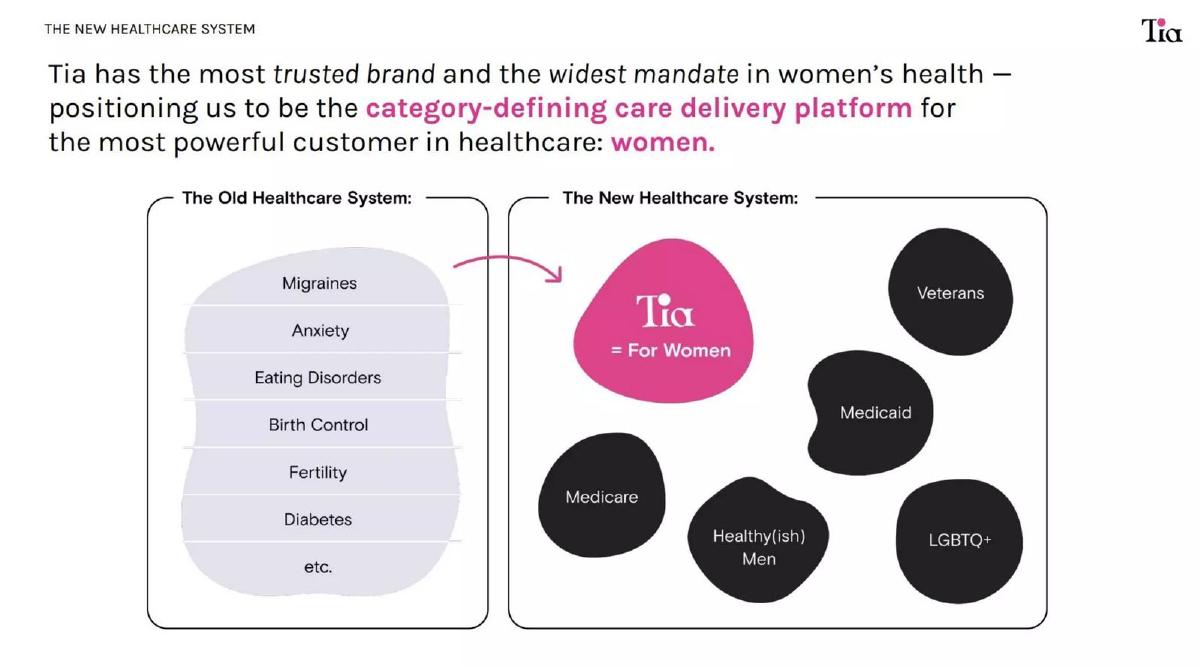
Visual Differentiation: The use of illustrations to contrast 'point solutions' against 'whole-person care' is highly effective. It simplifies a complex healthcare argument into a single, memorable image.
Addressing the 'Asset-Heavy' Critique: By emphasizing that essential care (IUDs, Pap smears) requires physical locations, Tia turns its clinics from a liability into a competitive moat that virtual-only startups cannot cross.
What is Missing
Unit Economics: In the provided 15 slides, there is no mention of Customer Acquisition Cost (CAC), Lifetime Value (LTV), or the payback period for a physical clinic. For a Series B, these are usually mandatory metrics.
Revenue and Growth: There are no charts showing historical revenue growth or patient volume. While the deck mentions 'acquisition and engagement flywheels,' it doesn't provide the numbers to prove they are spinning.
The 'Ask': The specific amount being raised and the intended use of funds are not included in these slides. While the catalogue facts state they raised $100M, the deck itself (in this selection) does not outline the roadmap for that capital.
Founder Takeaways
Categorize Your Team: If you are in a complex industry like healthcare or fintech, follow Tia’s lead by grouping your team into 'Insiders' and 'Outsiders.' It proves you have both the domain expertise and the fresh perspective needed to innovate.
Own the 'Rebundling' Argument: If your startup offers multiple services, don't just list them. Frame the current market as 'fragmented' or 'unbundled' and position your company as the 'integrator' that saves the customer time and money.
Use Social Proof Visually: Instead of just saying 'customers love us,' show the actual tweets and Instagram stories. It makes the claim feel authentic and demonstrates that your brand has a life of its own outside of your marketing department.
Frequently asked questions
- What is Tia's core business model according to the deck?
- Tia operates as a hybrid healthcare provider, which the deck calls a 'full-stack care delivery platform.' It combines virtual care with physical clinics to provide comprehensive services including primary care, gynecology, therapy, and wellness services like acupuncture and nutrition. This 'whole-person' approach is designed to be the primary 'medical home' for women.
- How does Tia differentiate itself from other Femtech companies?
- Tia explicitly contrasts itself with 'point solutions'—apps or services that only treat one condition like fertility or breastfeeding. Slide 8 uses a visual comparison to show Tia covering the 'whole person.' Furthermore, Tia differentiates from 'virtual-only' players by highlighting that essential gynecological procedures require a physical presence, which Tia provides through its clinics.
- What is the 'B2C2B' scaling strategy mentioned in the deck?
- While the slides don't detail the mechanics, the 'B2C to B2C2B' transition suggests moving from a direct-to-consumer model to one that leverages consumer demand to secure partnerships with businesses or insurers. By becoming the 'front door' for women who control 80% of healthcare spending, Tia positions itself as an essential partner for larger healthcare systems.
- How does Tia use technology to improve clinical outcomes?
- Tia utilizes a homegrown tech platform called the 'three screens' to enable collaboration between patients and providers. A key feature is 'clinical decision support,' which flags relevant data (like PHQ-9 depression scores) during appointments. This is intended to standardize quality and allow Nurse Practitioners to provide high-level care efficiently.
- Why is the team slide structured with 'Insiders' and 'Outsiders'?
- This structure addresses the dual challenge of healthcare innovation: navigating complex regulations (Insiders) while providing a superior consumer experience (Outsiders). By hiring from both traditional healthcare (Blue Cross Blue Shield, One Medical) and consumer-tech giants (Uber, SoulCycle), Tia signals to investors that they have the expertise to scale a regulated business with a premium brand.