The WorkLife pitch deck is not for a startup, but for a venture capital fund. It successfully raised $10M by focusing on the 'consumerization of the enterprise' and the GP's unique ability to access competitive deals. Brianne Kimmel uses the deck to prove three things: she has a distinct investment thesis, she has a proprietary source of deals (SaaS School), and she is already winning alongside top-tier firms like a16z and Accel. The deck relies heavily on social proof, featuring testimonials from founders and screenshots of high-engagement social media posts. It outlines a clear Fund I strat…
Key takeaways
- The fund targets a $3M raise with a $5M cap, focusing on 30 investments over 24 months (Slide 2).
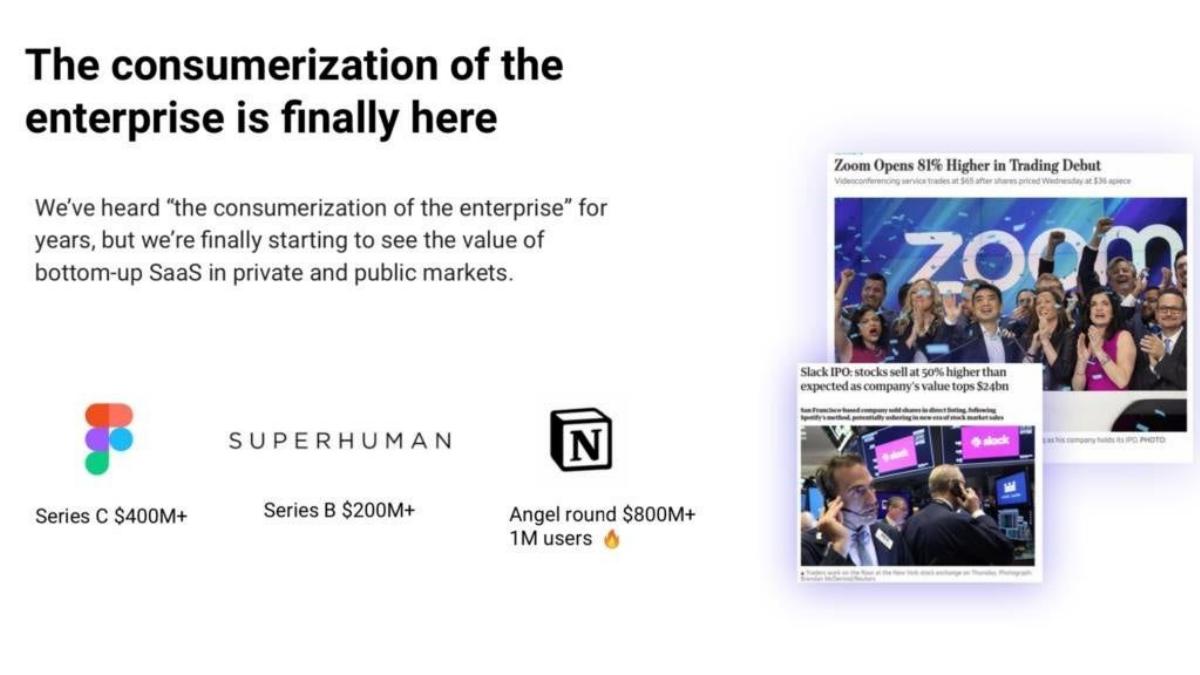
- The investment thesis centers on the 'consumerization of the enterprise,' citing Figma, Superhuman, and Notion as examples (Slide 4).
- Proprietary deal flow is driven by SaaS School, an invite-only program seeing 200+ applications per batch (Slide 3).
- The GP demonstrates 'strike zone' competence by listing co-investments with Accel, NEA, and Founders Fund (Slide 10).
- Social media presence is quantified as a strategic asset, with 20K followers and 3M monthly impressions (Slide 16).
- Roughly 40% of future fund investments are projected to come directly from the SaaS School program (Slide 18).
- The fund structure includes standard VC terms: 20% carry and a 2% management fee (Slide 18).
- LPs are offered co-investment opportunities as the GP secures larger allocations in 'hot companies' (Slide 18).
The Fund Pitch: Selling a Vision of Work
The WorkLife pitch deck is a rare look at how a solo General Partner (GP) raises capital for a venture fund. Unlike a startup deck that sells a product, this deck sells a network, a thesis, and access . Brianne Kimmel positions herself as the 'GTM Angel' with a specific focus on the future of work, leveraging her background at Zendesk and her creation of SaaS School to prove she can find and win deals that larger firms might miss.
Slide 1: Title Slide
The deck opens with a minimalist blue slide. It identifies WorkLife as 'A future of work focused fund' and provides the GP's contact information. It is clean and professional, establishing the brand immediately.
Slide 2: Overview
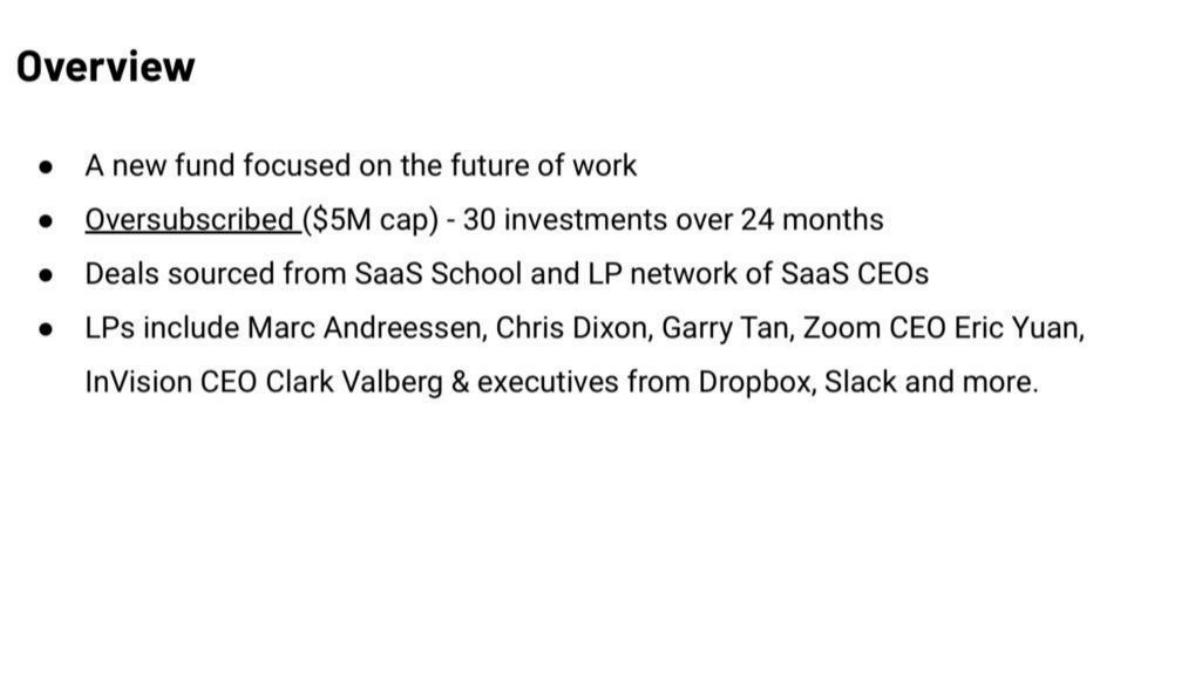
This slide functions as an executive summary for LPs. It states the fund is oversubscribed with a $5M cap and plans to make 30 investments over 24 months . Crucially, it lists high-profile LPs including Marc Andreessen, Chris Dixon, and Eric Yuan . This immediate name-dropping serves to de-risk the investment for other potential LPs.
Slide 3: About the General Partner
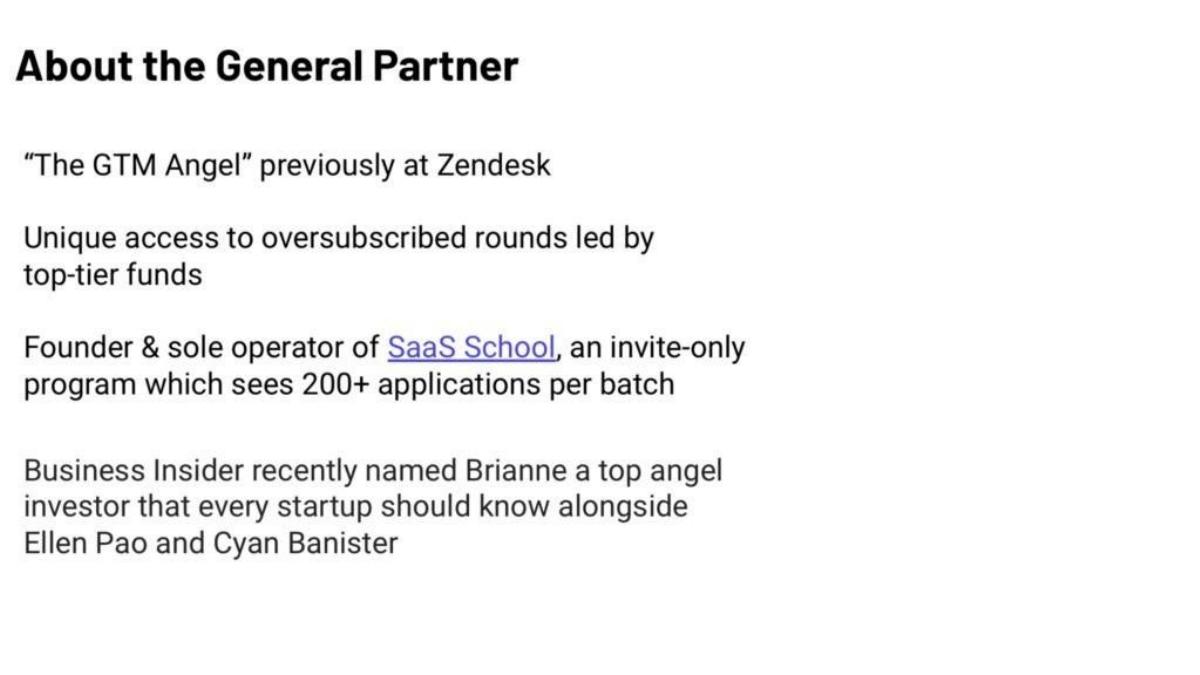
Kimmel defines her 'edge' here. She refers to herself as 'The GTM Angel' and highlights her role as the founder of SaaS School , which receives 200+ applications per batch . This slide establishes her as a specialist rather than a generalist, which is a key selling point for micro-funds.
Slide 4: The Consumerization of the Enterprise
This is the 'Why Now' slide. It argues that bottom-up SaaS is the new standard, citing the IPOs of Zoom and Slack . It also lists Figma (Series C $400M+), Superhuman (Series B $200M+), and Notion (Angel round $800M+) as evidence of the massive value being created in this specific sector.
Slide 5: Workplace Software Adoption (BYOT)
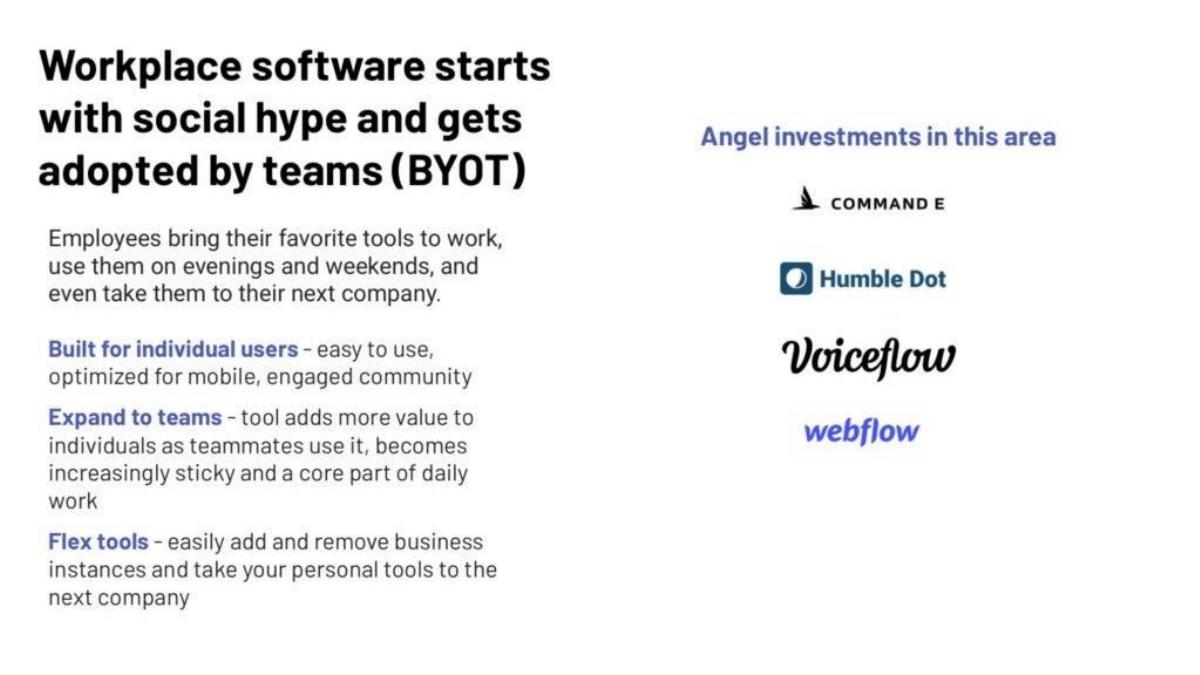
Kimmel introduces the concept of 'Bring Your Own Tool' (BYOT). She explains that software now starts with social hype and moves from individuals to teams. She lists her angel investments in this area, including Webflow and Voiceflow , to show she is already executing on this thesis.
Slide 6: Reimagining Work Opportunities
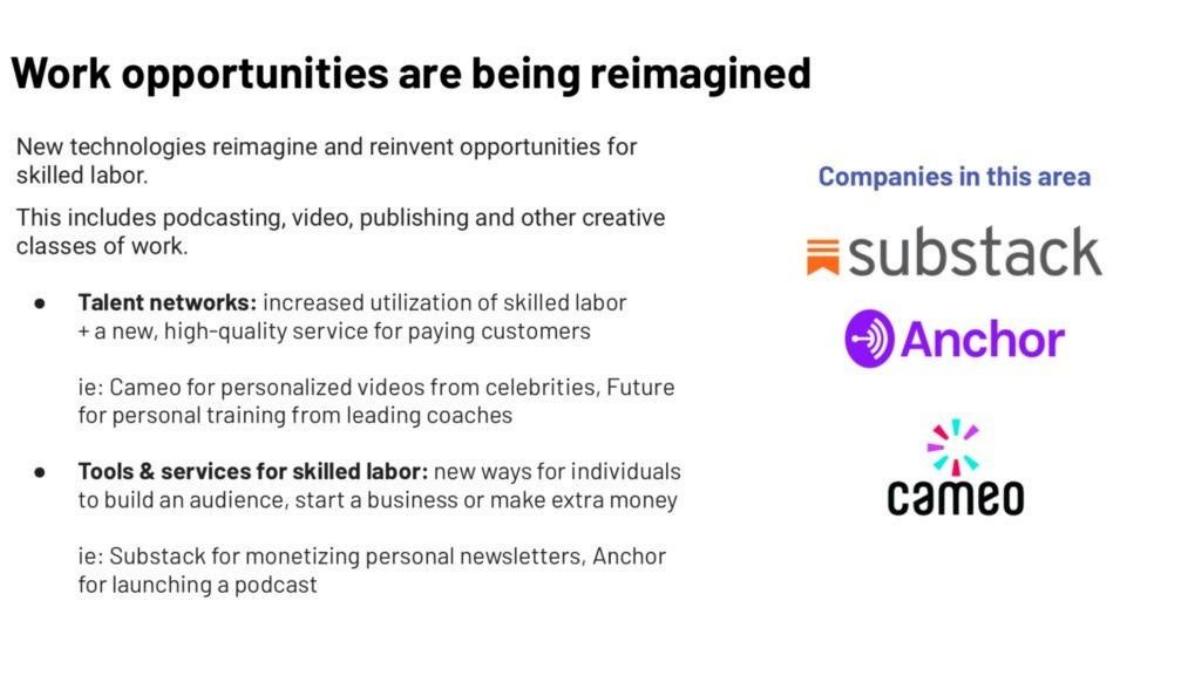
The thesis expands beyond software into 'skilled labor.' This slide identifies Substack, Anchor, and Cameo as companies reimagining how individuals monetize their talents. This demonstrates that the fund's scope includes the 'Creator Economy' before that term became ubiquitous.
Slide 7: Brand and Social Signals
This slide argues that software is now a lifestyle choice. It uses imagery of Figma tote bags and Superhuman's 'diamond' branding to show that community and hype are now primary drivers of enterprise software adoption. It’s a sophisticated take on how B2B marketing has changed.
Slide 8: Work as Identity
Citing the 2019 Edelman Trust Barometer , this slide claims the employer is the most trusted institution. It suggests that because people spend 1/3 of their lives at work, the tools they use are part of their identity. This reinforces the 'WorkLife' brand name.
Slide 9: The Fund Model
Kimmel explicitly states she is building a fund 'maniacally focused on the modern workplace.' She claims a first-mover advantage and lists three pillars: Curated dealflow, Strategic positioning, and Community. Screenshots of tweets from David Sacks and Aaron Levie are used to validate the 'Startup Software' category.
Slide 10: Angel Investment Track Record
This is the 'proof of work' slide. It lists 10 companies, including Webflow, Work OS, and Girlboss . Most importantly, it lists co-investors like Accel, Y Combinator, and Lightspeed . This proves that Kimmel can get into the same deals as the world's best firms despite being a solo angel at the time.
Slide 11: Personal Brand Strategy
Kimmel highlights her marketing efforts: the Venture Stories podcast , keynote speaking at SaaStr , and being named a top angel by Business Insider . For a solo GP, the person is the product, and this slide sells her visibility.
Slide 12: Awareness and Coverage
A collage of media appearances and social media mentions. It includes a screenshot of a First Round Capital event and various podcast appearances. It’s a visual representation of 'top of mind awareness' in the SaaS ecosystem.
Slide 13: SaaS School as a Strategic Program
This slide goes deeper into the fund's primary 'unfair advantage.' It notes that SaaS School provides exposure to 200+ companies per year. It lists alumni like Loom (Series A by Kleiner Perkins) and Superhuman , showing that the program attracts high-quality founders early.
Slide 14: Testimonial
A single quote from the co-founder of Instabug calling SaaS School 'the best experience I've had since YC.' Testimonials are rare in pitch decks but highly effective for service-based or community-based models.
Slide 15: Multi-Prong Sourcing Strategy
Kimmel breaks down her deal flow sources: 1) SaaS School, 2) Angel Network (monthly dinners), 3) Founder referrals, and 4) Social media. She notes 20K Twitter followers and 3M monthly impressions , quantifying her reach.
Slide 16: Reputation Validation
This slide features screenshots of private emails from Peter Lauten (a16z) and Cadran Cowansage (Elpha) . These emails praise her helpfulness to founders. In the competitive world of VC, being 'founder-friendly' is a critical credential.
Slide 17: The 'Strike Zone'
Kimmel defines exactly what a 'WorkLife deal' looks like: Workplace collaboration, post-product, some users . She uses Tandem (a YC company that raised from a16z) as the archetype. This helps LPs understand the specific stage and profile of her targets.
Slide 18: Fund I Strategy and Terms
The 'Ask' slide. It details the $3M target/$5M cap , $50-150K check sizes , and a 20% carry / 2% fee structure. It also notes that 40% of deals will come from SaaS School, providing a clear roadmap for how the capital will be deployed.
Slide 19: Closing Slide
A standard closing slide with a call to action to browse more decks at bestpitchdeck.com (likely added by the hosting platform).
What Works in the WorkLife Deck
1. Proprietary Deal Flow: The emphasis on SaaS School is the deck's strongest point. Most new VCs claim to have 'good networks,' but Kimmel shows a repeatable, structured program that generates proprietary leads. This is the 'moat' that LPs look for in a solo GP fund.
2. Social Proof as a Weapon: The deck doesn't just say Kimmel is well-connected; it proves it with screenshots of tweets, emails, and co-investment tables. Seeing names like Andreessen and Sacks throughout the deck creates an aura of inevitability.
3. Specificity of Thesis: By focusing narrowly on the 'consumerization of the enterprise,' Kimmel avoids the trap of being a 'generalist seed fund.' This makes it easier for LPs to slot her into their portfolio as a specialized satellite investment.
What is Missing
1. Portfolio Construction Details: While the deck mentions 30 investments, it doesn't go deep into the math of follow-on reserves or how the fund plans to handle ownership targets. For a $5M fund, ownership is usually low, and LPs might want to know how that impacts the return profile.
2. Back-Office Operations: Raising a fund as a solo GP involves significant administrative work (tax, legal, reporting). The deck doesn't mention if she has a fund admin or any support staff, which can be a concern for institutional LPs regarding operational risk.
3. Exit Assumptions: The deck lists many 'hot' companies, but it doesn't discuss the exit environment for these types of tools. While the thesis is strong, a slide on the M&A appetite of incumbents (Microsoft, Google, Salesforce) for these bottom-up tools would have rounded out the argument.
What Founders (and GPs) Should Copy
1. The 'Strike Zone' Concept: Every founder should have a slide like Slide 17. Defining exactly what is in your 'strike zone' (and by extension, what isn't) shows maturity and focus. It tells investors you aren't just chasing everything, but are waiting for the right pitch.
2. Quantifying Influence: If your business relies on a community or a brand, don't just say you are 'influential.' Use Slide 15 as a template: list your followers, your impressions, and the specific high-signal sources of your growth.
3. Visualizing the 'Why Now': Slide 4 is a perfect example of using current market leaders to validate a future trend. By showing the valuation and stage of companies like Notion and Figma, Kimmel makes her thesis feel like a proven reality rather than a risky bet.
Frequently asked questions
- What is the primary investment thesis of WorkLife?
- WorkLife focuses on the 'consumerization of the enterprise.' This thesis suggests that modern workplace software is increasingly adopted bottom-up by individual employees before being purchased by the company. The deck highlights that software is no longer bought purely on functionality, but on brand, community, and social signals, much like consumer products.
- How does the GP source deals differently than other funds?
- The GP uses a multi-prong strategy, with the primary engine being 'SaaS School.' This is an invite-only program for founders to learn from executives at companies like Airtable and Slack. By running this program, the GP gets early exposure to over 200 companies per year and can vet them before they reach the broader venture market.
- What kind of social proof does the deck use?
- The deck is heavy on social proof, including screenshots of tweets from industry leaders like David Sacks and Aaron Levie, press mentions from Business Insider, and direct email praise from a16z investors. It also lists a portfolio of angel investments that have already been validated by follow-on rounds from top-tier venture firms.
- What are the specific fund mechanics mentioned?
- For Fund I, the deck outlines a $3M target ($5M cap) with an 18-24 month investment period. The check sizes are relatively small, ranging from $50K to $150K per deal. The economic structure is a standard 2% management fee and 20% carried interest, with the added benefit of co-investment rights for LPs.
- Who are the notable LPs mentioned in the deck?
- The deck lists a high-profile group of Limited Partners including Marc Andreessen, Chris Dixon, Garry Tan, Zoom CEO Eric Yuan, and InVision CEO Clark Valberg. This list serves to validate the GP's standing within the Silicon Valley ecosystem and suggests a strong network for portfolio companies to tap into.