WorkLife Fund 2, led by Brianne Kimmel, utilized this 21-slide deck to raise $35M by emphasizing a unique 'creator-friendly' venture model. The deck moves quickly past traditional fund metrics to focus on 'SaaS School,' a proprietary program that accounts for 40% of their deal flow. With a Fund 1 performance boasting a 141.7% Net IRR and 7 unicorns in just 1.5 years, the narrative is built on the strength of a high-signal operator network including CEOs from Zoom, Slack, and Figma. The deck serves as a blueprint for solo GPs or small funds to prove they can access and win competitive deals th…
Key takeaways
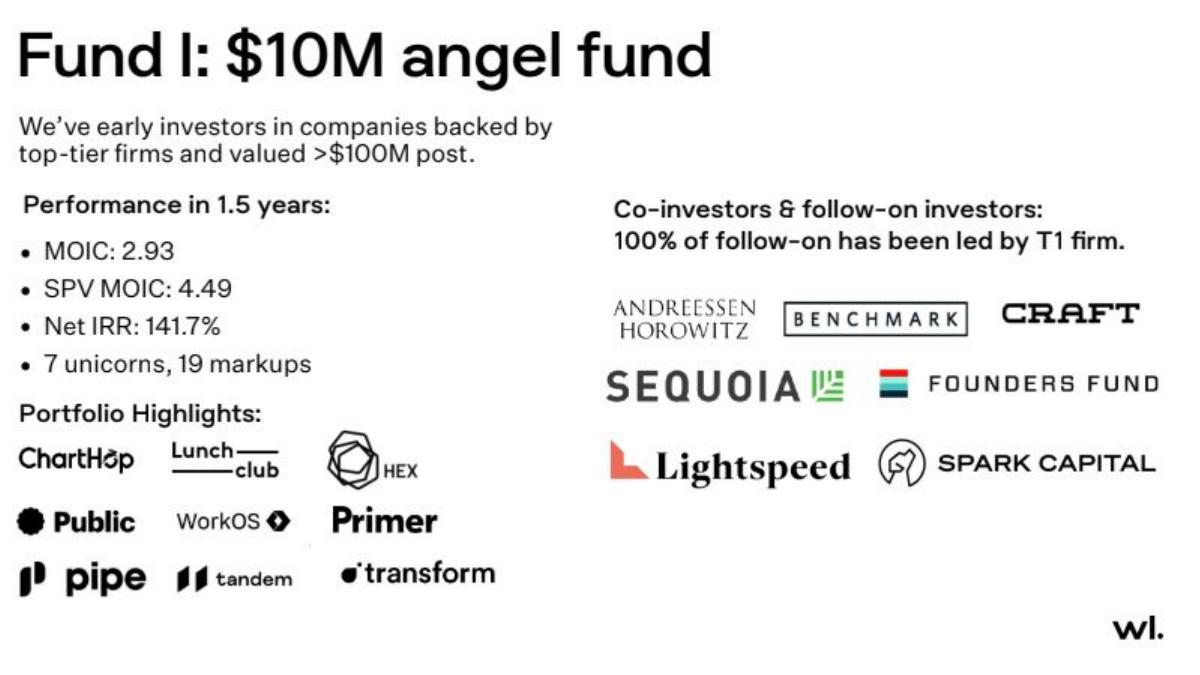
- Fund 1 achieved a 2.93 MOIC and 141.7% Net IRR within 1.5 years (Slide 5).
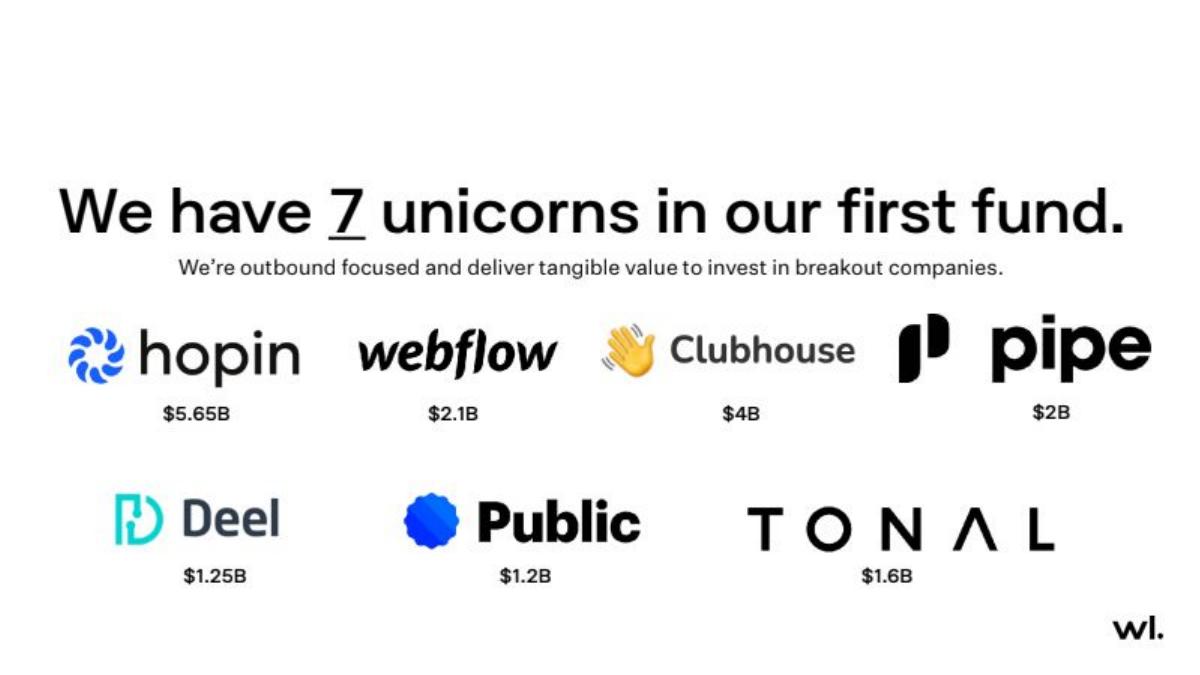
- The portfolio includes 7 unicorns: Hopin, Webflow, Clubhouse, Pipe, Deel, Public, and Tonal (Slide 4).
- Proprietary sourcing via 'SaaS School' accounts for 40% of all deals (Slide 9).
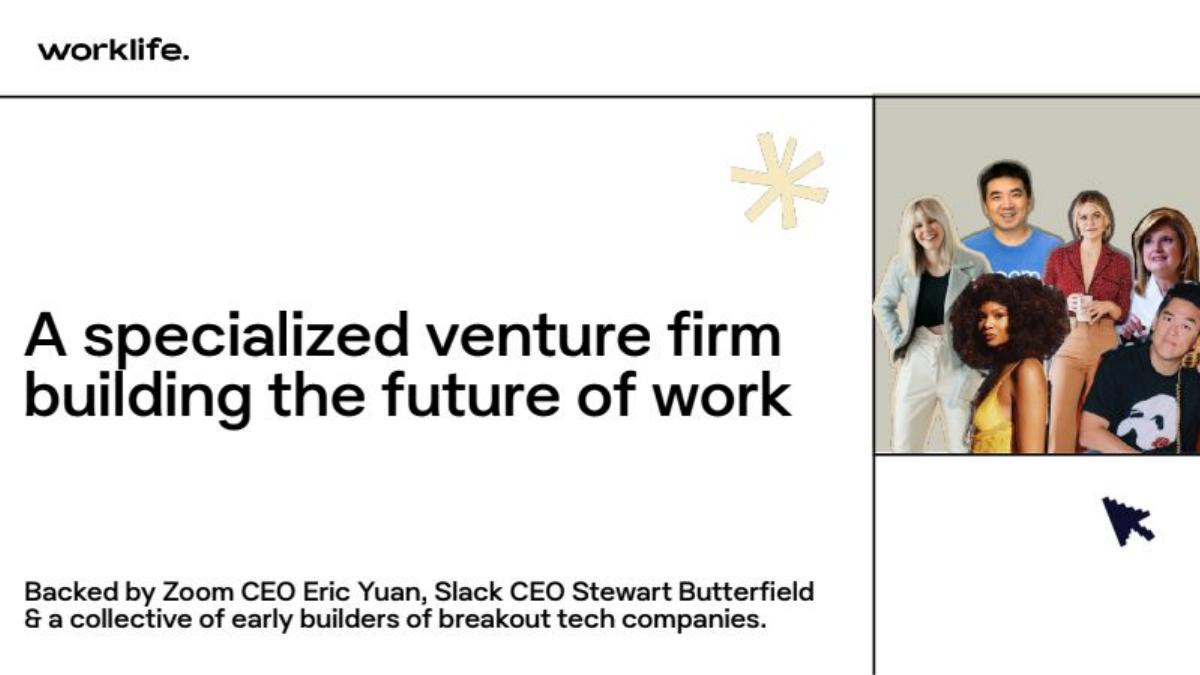
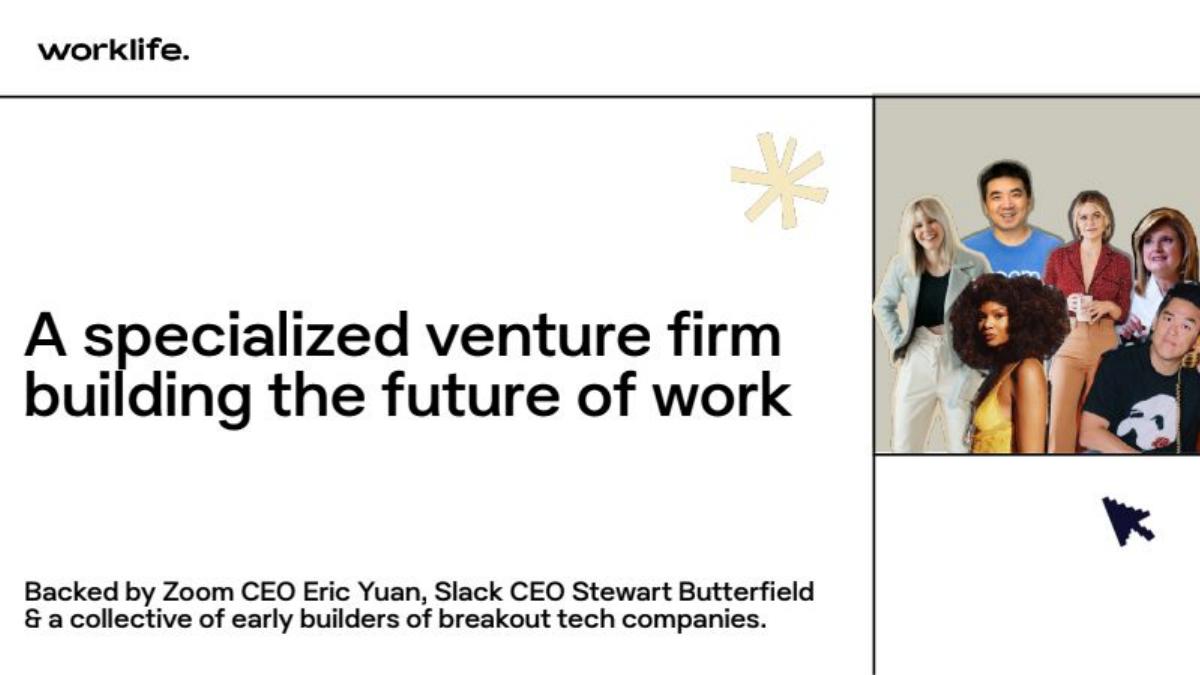
- The fund is backed by high-profile tech CEOs including Eric Yuan (Zoom) and Stewart Butterfield (Slack) (Slide 1).
- 100% of follow-on investments in Fund 1 were led by Tier 1 firms like Sequoia, Benchmark, and Andreessen Horowitz (Slide 5).
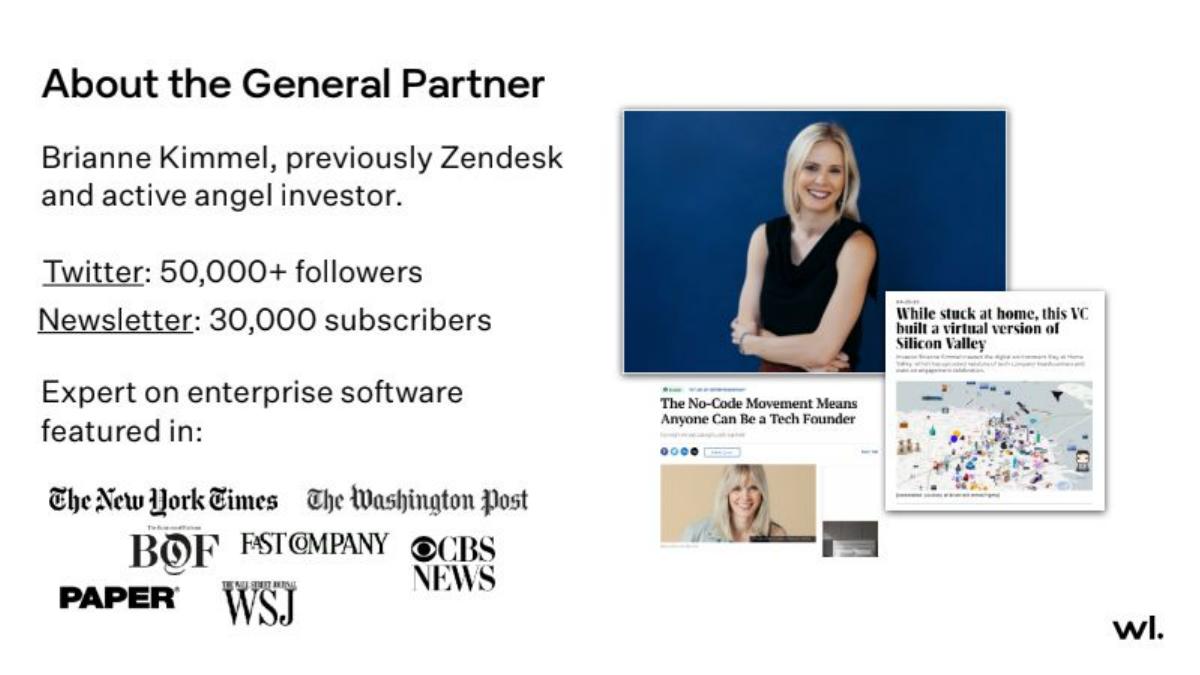
- The GP maintains a significant top-of-funnel reach with 50,000+ Twitter followers and 30,000 newsletter subscribers (Slide 6).
- The strategy relies on 'on-demand content and actionable playbooks' to win oversubscribed rounds (Slide 10).
- The deck provides extensive social proof through screenshots of emails and tweets from founders and Tier 1 investors (Slides 12-14).
Executive Summary: The Rise of the Solo GP
The WorkLife Fund 2 deck is a definitive example of the 'Solo GP' era of venture capital. Rather than relying on a large team of associates to find deals, Brianne Kimmel presents a model where community, content, and a proprietary education engine (SaaS School) do the heavy lifting. The deck is less about financial modeling and more about access and selection . By showing that 100% of their follow-on rounds are led by Tier 1 firms, WorkLife positions itself as the ultimate 'kingmaker' for early-stage SaaS and creator tools.
Slides 1-3: The Hook and the Pedigree
Slide 1 opens with a clear mission statement: "A specialized venture firm building the future of work." It immediately leverages high-signal social proof, noting that the fund is backed by Eric Yuan (Zoom CEO) and Stewart Butterfield (Slack CEO). This establishes credibility before a single metric is shown.
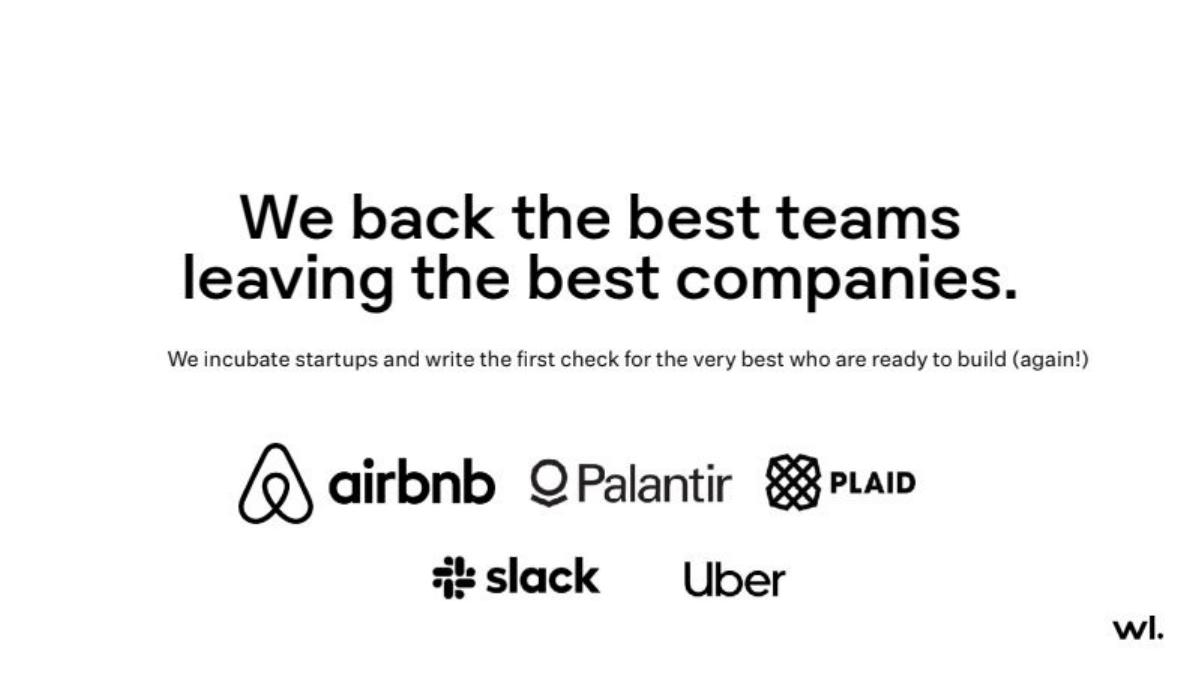
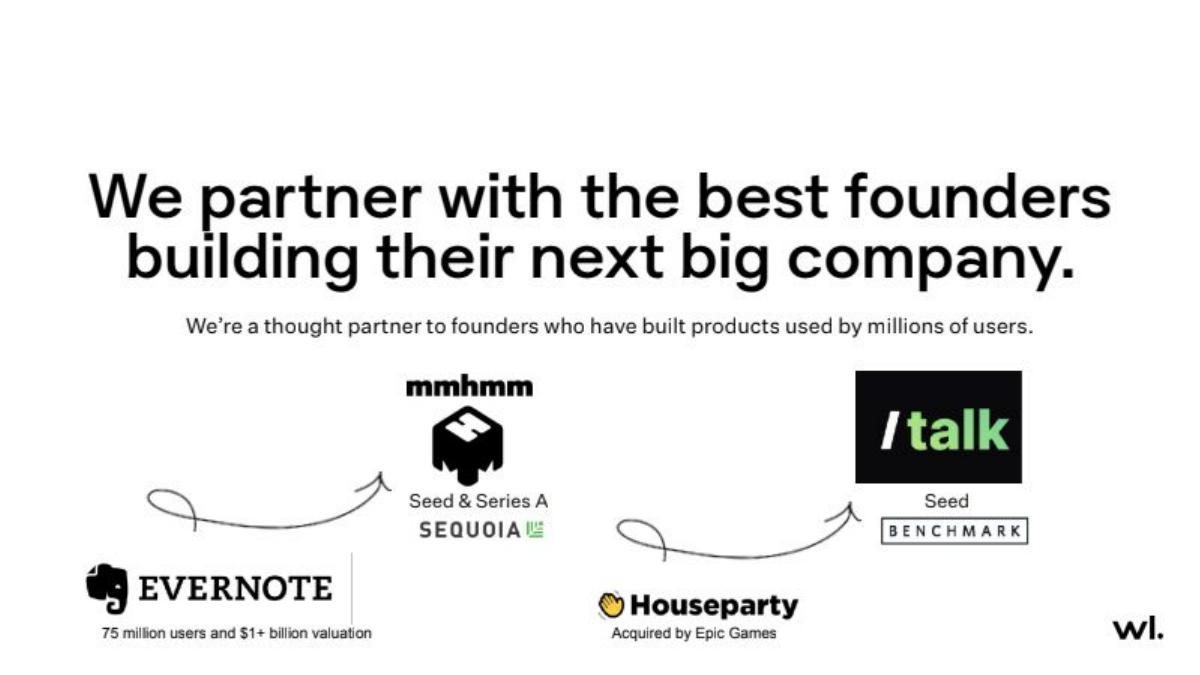
Slide 2 defines the target founder profile: "the best teams leaving the best companies." By displaying logos of Airbnb, Palantir, Plaid, Slack, and Uber, the fund signals it is looking for 'second-time' or high-pedigree builders. Slide 3 reinforces this by showing 'next big company' transitions, such as the founder of Evernote moving to mmhmm (backed by Sequoia) and the Houseparty team moving to /talk (backed by Benchmark).
Slides 4-5: Performance and the 'Unicorn' Proof
Slide 4 is the 'money slide.' It claims 7 unicorns in the first fund: Hopin ($5.65B), Webflow ($2.1B), Clubhouse ($4B), Pipe ($2B), Deel ($1.25B), Public ($1.2B), and Tonal ($1.6B). For a fund only 1.5 years old at the time of the deck, this is an extraordinary hit rate.
Slide 5 provides the hard data for Fund I, which was a $10M angel fund. The metrics are specific: 2.93 MOIC, 4.49 SPV MOIC, and a 141.7% Net IRR. Crucially, it notes that "100% of follow-on has been led by T1 firm," listing Andreessen Horowitz, Benchmark, Sequoia, and Founders Fund. This tells LPs that WorkLife’s entry price is validated by the smartest money in the industry shortly thereafter.
Slides 6-8: The GP and the Network
Slide 6 focuses on Brianne Kimmel’s personal brand. It highlights her 50,000+ Twitter followers and 30,000 newsletter subscribers. In modern VC, distribution is a competitive advantage, and this slide proves Kimmel has it. Slide 7 showcases the "best operators & angels" in the network, featuring a grid of 16 high-profile tech leaders. This isn't just a list of names; it's a promise of the 'supercharged network' mentioned on Slide 8 .
Slides 9-11: The Proprietary Sourcing Engine
Slide 9 introduces 'SaaS School.' This is the core of WorkLife’s differentiation. By running a program that sees 300+ applications and selecting 30, the fund gets a first look at deals. The slide claims 40% of deals are sourced here. Slide 10 lists the 'growth engine' content, such as "How to build a self-service SaaS business." This content establishes the fund as a thought leader, making them a preferred choice in oversubscribed rounds. Slide 11 lists specific 'wins' through this programming, including Almanac, OpenPhone, and Hex.
Slides 12-14: Social Proof and 'The Trenches'
These slides move away from logos and into the 'receipts.' Slide 12 shows emails from CEOs like Michael Grinch (WorkOS) and Abhinav Asthana (Postman) vouching for Kimmel’s ability to get into oversubscribed rounds. Slide 13 features a testimonial from an a16z investor, Peter Lauten, stating that founders proactively mentioned Kimmel as a "super helpful angel investor." Slide 14 continues this theme with more screenshots, emphasizing that WorkLife is a "modern institution" built on trust and brand.
Slides 15-20: Community and Global Impact
Slide 15 breaks down the investment sectors: Creators, Designers, Developers, Moneymakers, Scientists, and Teams. Slide 16 highlights the reach of their curated discussions, featuring a Washington Post clipping. Slide 17 notes they hosted over 50 community events in less than a year with a "100% attendance rate" from top-tier execs. Slide 18 describes their annual meeting as "Sun Valley meets SXSW," emphasizing the cultural impact of the fund. Slides 19 and 20 focus on diversity and talent, showing how the fund helps portfolio companies hire diverse engineers and designers.
What WorkLife Fund 2 Does Well
Extreme Social Proof: The deck uses screenshots of actual emails and tweets. This is much more persuasive than a simple list of logos because it shows the quality of the relationship between the GP and the founders. · Clear Sourcing Advantage: Most funds say they have 'proprietary deal flow.' WorkLife proves it with the SaaS School metrics (Slide 9). · Validation via Follow-on: The fact that 100% of follow-ons are led by Tier 1 firms (Slide 5) removes the 'signaling risk' often associated with solo GPs. · Brand as a Moat: The deck successfully argues that Brianne Kimmel’s personal brand and distribution (Slide 6) allow the fund to win deals that larger, more established firms might miss.
What is Missing from the Deck
Fund 2 Specifics: There is no mention of the target fund size, the expected number of investments, or the typical check size for Fund 2. · Team Structure: The deck focuses almost entirely on Brianne Kimmel. While she is the GP, there is no mention of back-office support, venture partners, or associates who help manage the 50+ events and the SaaS School. · Exit Data: While there are many unicorns and markups, there is no mention of realized exits or DPI (Distributed to Paid-In Capital). Given the fund's age (1.5 years), this is expected, but still an omission. · Risk Factors: The deck is purely optimistic. It does not address the risks of a solo GP model or the potential for 'creator economy' fatigue.
What Founders and GPs Should Copy
The 'Receipts' Approach: Instead of just saying you are helpful, show the email from a founder saying how you were helpful. Slides 12 and 13 are excellent examples of this. · The Education-to-Investment Pipeline: Building a program like SaaS School (Slide 9) is a brilliant way to create a 'top of funnel' that provides value to founders before asking for equity. · Focus on 'Winning' Rounds: In a competitive market, LPs want to know you can get into the best deals. WorkLife's emphasis on being "vouched for" to invest in oversubscribed rounds (Slide 12) is a powerful narrative. · Visual Consistency: The deck uses a clean, minimalist aesthetic with high-quality photography and consistent branding ('wl.' logo in the corner). It feels like a modern tech product, not a financial document.
Frequently asked questions
- What is the primary investment thesis of WorkLife Fund 2?
- The fund invests in 'tools and services for the modern workplace,' specifically targeting the intersection of work and the creator economy. As stated on Slide 15, they invest in tools for creators, designers, developers, moneymakers, scientists, and teams. The goal is to back the first check for top talent leaving major tech companies like Airbnb, Slack, and Uber.
- How does WorkLife differentiate its deal sourcing from other VC firms?
- WorkLife uses a proprietary program called 'SaaS School' to source 40% of its deals. According to Slide 9, this program receives over 300 applications per session and selects 30 companies. This creates a 'growth engine' where technical founders learn go-to-market strategies, allowing the fund to build relationships before a formal fundraise begins.
- What are the key performance metrics of WorkLife's first fund?
- Slide 5 reports that Fund 1 was a $10M angel fund that achieved a 2.93 MOIC and a 141.7% Net IRR in 1.5 years. It produced 7 unicorns and 19 markups. Additionally, the SPV (Special Purpose Vehicle) MOIC is listed at 4.49, indicating strong performance in concentrated follow-on bets.
- Who are the notable individuals in the WorkLife network?
- The network includes a high concentration of 'operator-angels.' Slide 7 lists individuals such as Eric Yuan (Zoom), Stewart Butterfield (Slack), Dylan Field (Figma), Nat Friedman (GitHub), and executives from Stripe, Notion, and Airtable. These individuals serve as both LPs (Limited Partners) and sources of expertise for portfolio companies.
- Does the deck mention the specific terms of Fund 2?
- No. While the catalogue facts state the fund raised $35M in 2021, the deck itself does not list the target fund size, management fees, carry structure, or specific deployment timeline. It focuses almost entirely on the track record of Fund 1 and the strength of the sourcing ecosystem.