Georgiamune’s Series A deck is a clinical-heavy presentation that successfully bridges the gap between complex immunology and market opportunity. By focusing on Regulatory T cells (Tregs), the company addresses the >85% failure rate of current checkpoint inhibitors in cancer patients, as noted on slide 9. The deck stands out for its 'Pipeline First' approach, showcasing 11 distinct programs ranging from target identification to IND-enabling stages on slide 5. With a leadership roster featuring former executives from Pfizer, BMS, and Verily, the deck leverages institutional credibility to just…
Key takeaways
- The deck identifies a massive market gap: checkpoint inhibitors are a $33B market but fail in >85% of treated cancer patients (Slide 9).
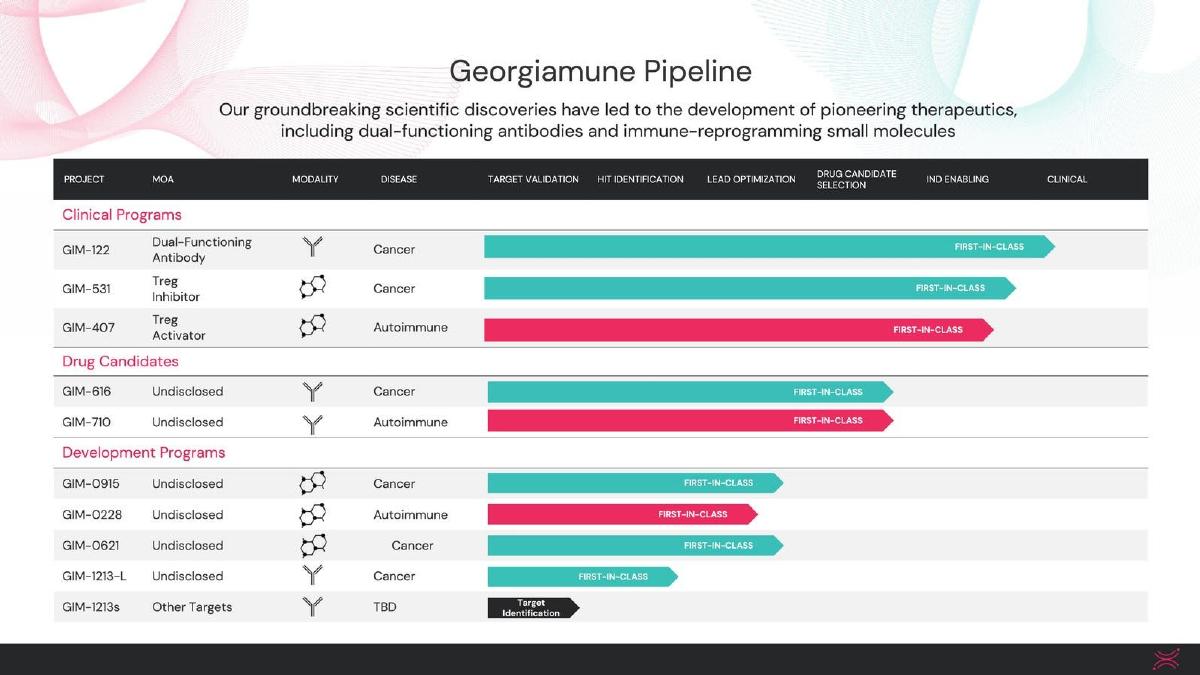
- Georgiamune presents a diversified pipeline of 11 programs, with three lead clinical programs (GIM-122, GIM-531, GIM-407) labeled as first-in-class (Slide 5).
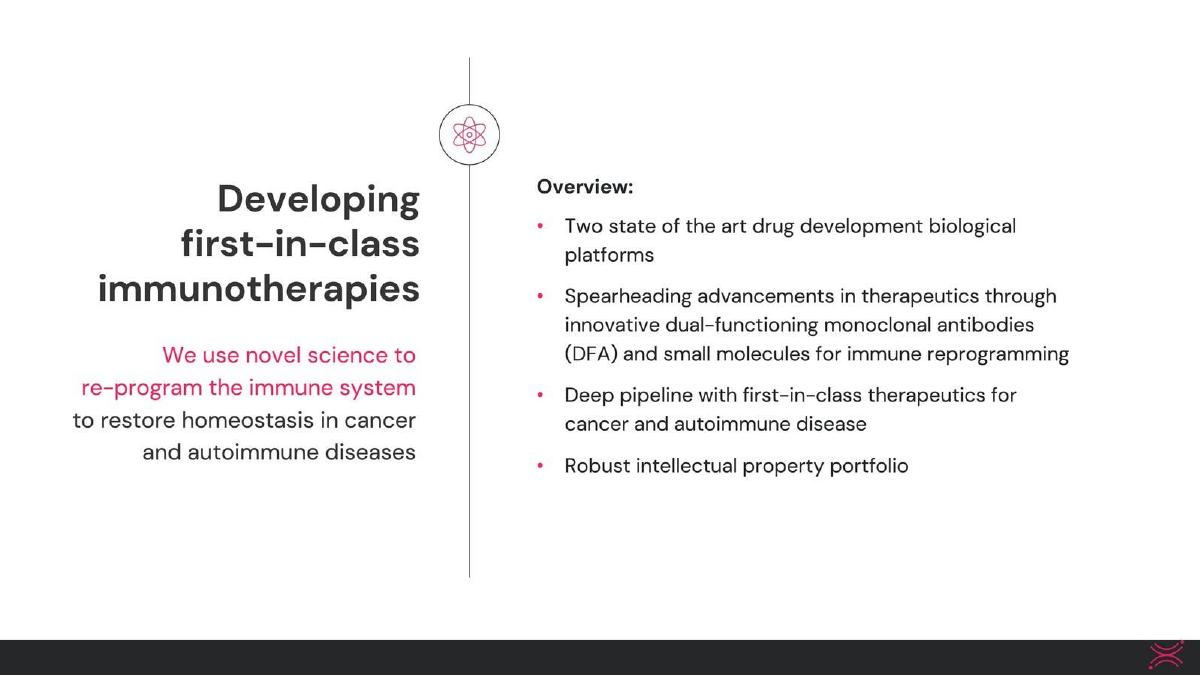
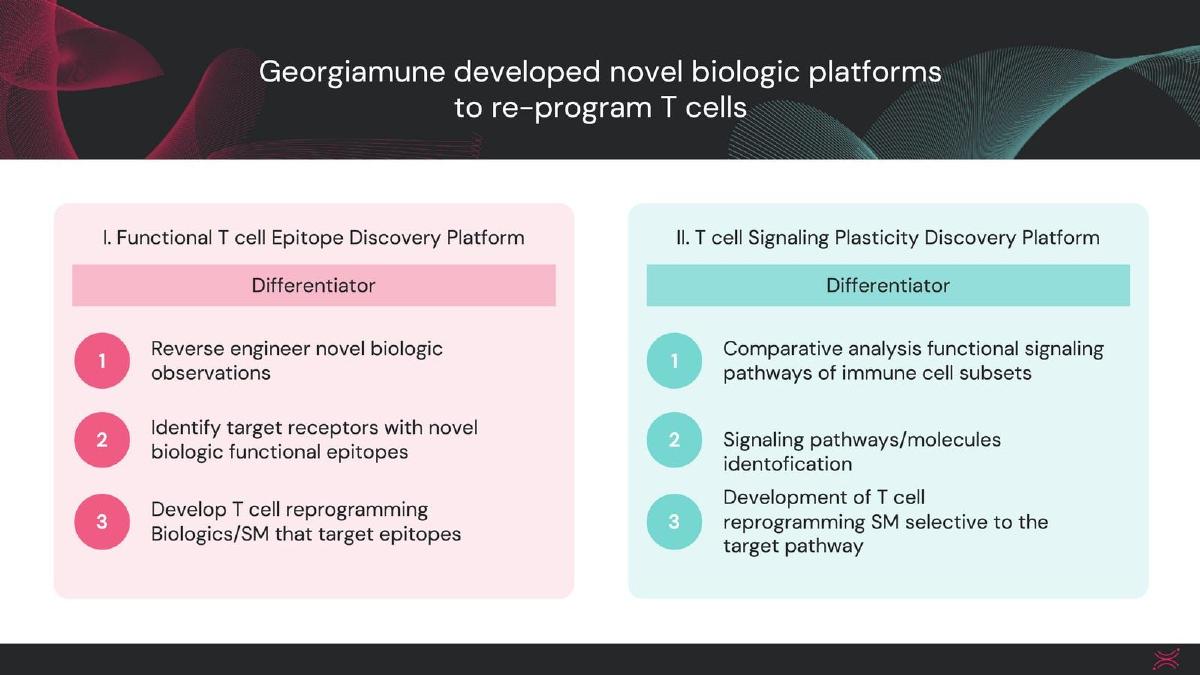
- The company utilizes a dual-platform strategy, developing both dual-functioning antibodies and immune-reprogramming small molecules (Slide 4).
- Leadership credibility is a primary pillar, featuring a CEO with 110+ patents and a board including Sean Parker and former FDA Deputy Commissioner Amy Abernethy (Slide 7).
- A strategic partnership with Verily is highlighted to demonstrate an edge in biomarker discovery and clinical trial efficiency (Slide 11).
- The technical core focuses on 'selectivity,' claiming that current Treg therapies are not selective and cause off-target effects that hinder immune responses (Slide 16).
- Market potential is quantified by US prevalence for specific cancers, such as 1.3M for Melanoma and 730K for Lung Cancer (Slide 17).
- The deck lacks a formal 'Ask' slide or use-of-funds breakdown, typical of highly confidential or late-stage private biotech rounds.
The Homeostasis Narrative: Balancing Cancer and Autoimmunity
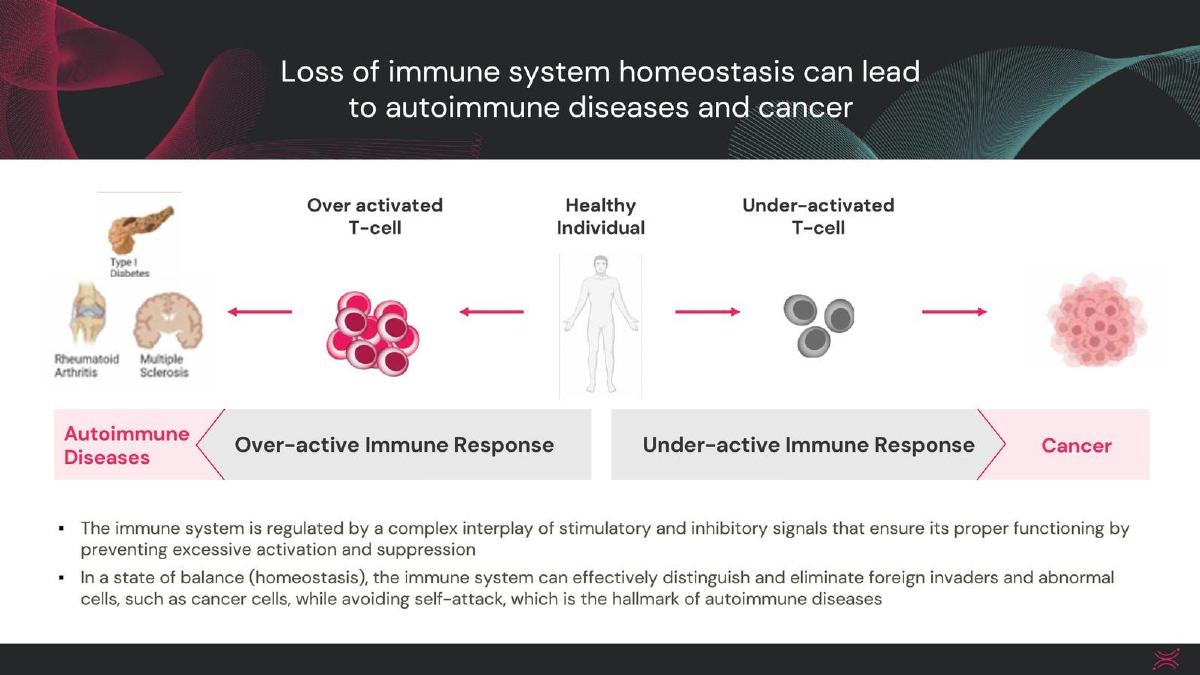
Georgiamune’s pitch deck begins not with a product, but with a biological philosophy. Slide 3, titled 'Loss of immune system homeostasis can lead to autoimmune diseases and cancer,' sets the stage for a platform-based investment. By visualizing the immune system as a scale, the company positions itself to capture two massive, distinct markets using the same underlying expertise in T-cell reprogramming. This slide is a masterclass in simplifying complex immunology for a generalist VC audience while maintaining scientific rigor.
Slide 1-4: The Vision and Platform
The deck opens with a clean, high-contrast design. Slide 2 defines the mission: 'Developing first-in-class immunotherapies.' Slide 4 introduces the 'novel biologic platforms,' which include both antibodies and small molecules. This is a critical strategic move; by not being wedded to a single modality, Georgiamune suggests their platform is versatile enough to address various targets with the most effective chemical or biological tool available.
Slide 5: The Pipeline Powerhouse
Slide 5 is arguably the most important slide for a Series A biotech company. It lists 11 distinct projects. The 'Clinical Programs' section highlights three lead assets: GIM-122 (Dual-Functioning Antibody for Cancer), GIM-531 (Treg Inhibitor for Cancer), and GIM-407 (Treg Activator for Autoimmune). All three are marked as 'First-in-Class' and are shown in the 'IND Enabling' stage. This indicates that the $75M raise is likely intended to push these three assets into Phase 1 clinical trials. The depth of the 'Drug Candidates' and 'Development Programs' further down the slide suggests a long-term 'company-building' play rather than a single-asset 'project-finance' play.
Slide 6-7: Institutional Credibility
In biotech, the team is the collateral. Slide 7, 'Innovative and Experienced Leadership,' is a 'who's who' of the pharmaceutical industry. The inclusion of Samir N. Khleif, MD (110+ patents), Sean Parker (Parker Institute), and Mace Rothenberg (Former CMO, Pfizer) provides an immediate stamp of approval. For an investor, this roster reduces execution risk—these are individuals who have successfully navigated the FDA and large-scale clinical trials before.
Slide 8-10: The Oncology Problem Statement
Slide 9 provides the 'Why Now?' factor. It acknowledges that Checkpoint Inhibitors (ICIs) are a $33B market but highlights a glaring weakness: they are ineffective for many patients, with a failure rate of >85% . Slide 10 positions GIM-122 as the solution to this resistance. By framing the product as a necessary evolution of a proven $33B market, Georgiamune makes the commercial upside feel tangible and urgent.
Slide 11: The Verily Partnership
Slide 11 highlights a strategic partnership with Verily (an Alphabet company). This is a significant 'moat' slide. It explains how Georgiamune uses Verily’s molecular and real-world evidence solutions to discover biomarkers and drive efficient clinical development. In an era where clinical trial costs are skyrocketing, showing a tech-enabled path to efficiency is a strong selling point for Series A investors.
Slide 12-20: Technical Deep Dive into Tregs
The final third of the deck focuses on the specific mechanism of action (MoA) regarding Regulatory T cells (Tregs). Slide 16 is particularly effective, contrasting Georgiamune’s 'selective' approach with 'current Treg depleting agents' that cause off-target effects. It argues that existing therapies (targeting CTLA4, CCR8, or CCR4) eliminate favorable effector T cells, whereas Georgiamune’s targets are 'highly selective to Tregs and not other cell types' (Slide 15). Slide 17 quantifies the oncology opportunity by US prevalence, citing 1.3M Melanoma cases and 730K Lung Cancer cases, grounding the science in market reality.
What Georgiamune Does Well
1. The Dual-Market Strategy: By using the same T-cell expertise to target both cancer (inhibition) and autoimmune disease (activation), Georgiamune creates a 'hedge' for investors. If one therapeutic area faces regulatory hurdles, the other provides a path forward.
2. Visualizing the 'Gap': Slide 9’s use of the >85% failure rate for ICIs is a powerful way to frame the problem. It doesn't attack the current standard of care; it identifies the massive population the standard of care leaves behind.
3. Heavyweight Endorsements: The board and advisor slides are not just names; they are strategic assets. Having a former FDA Deputy Commissioner (Amy Abernethy) on the board is a clear signal that the company is prepared for the regulatory gauntlet.
What is Missing from the Deck
1. The 'Ask' and Use of Funds: There is no slide detailing how much capital is being raised or how it will be allocated across the 11 pipeline programs. While we know from external reports that they raised $75M, the deck itself is silent on the financial requirements.
2. Clinical Data: While the deck mentions 'groundbreaking scientific discoveries,' it lacks specific data plots (e.g., mouse model tumor shrinkage or T-cell activation assays) in this summary version. Investors in a $75M round would typically see a much larger technical appendix with raw data.
3. Intellectual Property Detail: Although the CEO’s 110+ patents are mentioned, a specific slide detailing the patent estate (filing dates, jurisdictions, and coverage for lead assets GIM-122/531/407) is absent.
Founder's Guide: What to Copy
1. The Pipeline Graphic: Copy the layout of Slide 5. It clearly distinguishes between 'Clinical Programs,' 'Drug Candidates,' and 'Development Programs,' giving the impression of a mature, multi-asset company even at the Series A stage.
2. The 'Homeostasis' Framework: If your technology can be applied to multiple industries or disease states, use a 'balance' or 'spectrum' visual like Slide 3 to show how one platform solves two different problems.
3. The Partnership Slide: If you have a partnership with a major player (like Verily), don't just put their logo on a 'Partners' slide. Dedicate a full slide (like Slide 11) to explaining exactly how that partnership accelerates your development or reduces your risk.
Frequently asked questions
- What is the primary biological mechanism Georgiamune is targeting?
- Georgiamune focuses on Regulatory T cells (Tregs). As shown on slides 12 through 20, the company develops selective inhibitors to deplete Tregs in cancer (allowing the immune system to attack tumors) and selective activators to boost Tregs in autoimmune diseases (suppressing overactive immune responses).
- How does Georgiamune differentiate itself from existing checkpoint inhibitors?
- Slide 9 notes that current checkpoint inhibitors (ICIs) fail to activate the antitumor immune response in over 85% of patients. Georgiamune’s lead candidate, GIM-122, is presented as a dual-functioning antibody designed to overcome these specific resistance mechanisms.
- Who are the key people behind Georgiamune?
- The team is led by Founder/CEO Samir N. Khleif, MD, who holds over 110 patents. The board and advisors include high-profile figures like Sean Parker (Parker Institute), Mace Rothenberg (former CMO of Pfizer), and Amy Abernethy (former Deputy Commissioner of the FDA).
- What is the status of their drug pipeline?
- According to slide 5, Georgiamune has three lead clinical programs. GIM-122 and GIM-531 are in the IND-enabling phase for cancer, while GIM-407 is in the IND-enabling phase for autoimmune diseases. Several other candidates are in lead optimization or target identification.
- Does the deck mention a specific fundraising goal?
- No, the provided slides do not include an 'Ask' slide or a specific dollar amount. However, publisher-reported data from Business Insider confirms the company raised $75 million in a Series A round in 2023.