The Gestoos pitch deck is a masterclass in brevity, relying on visual cues and high-level social proof rather than dense technical specifications. With only 9 slides, the company successfully communicated its value proposition in the computer vision space, highlighting a $520,000 booking figure from the previous year and projecting a massive leap to $12.5 million by 2019. While the deck lacks traditional sections like unit economics, a detailed competitive landscape, or a specific funding 'ask,' it compensates with a strong 'Team' slide featuring elite academic credentials and a 'Traction' sl…
Key takeaways
- The deck relies heavily on visual metaphors, using a still from Minority Report on slide 2 to immediately anchor the product's futuristic utility.
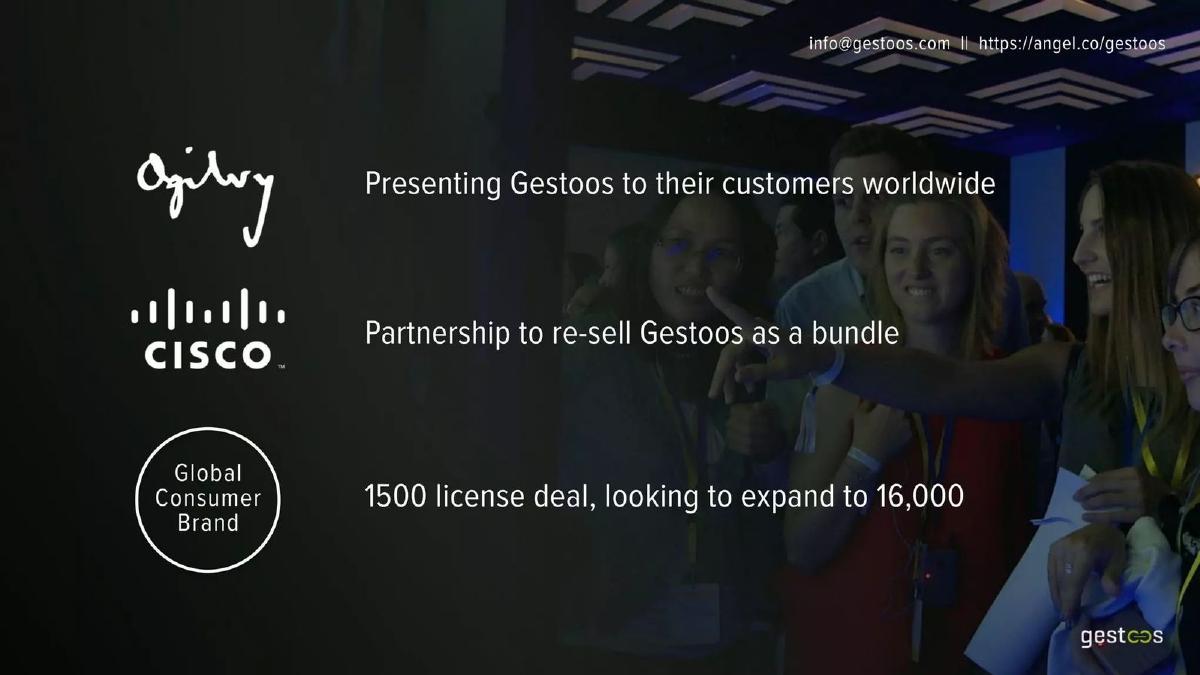
- Traction is validated through high-profile partnerships, specifically citing a 1,500 license deal with a global consumer brand on slide 4.
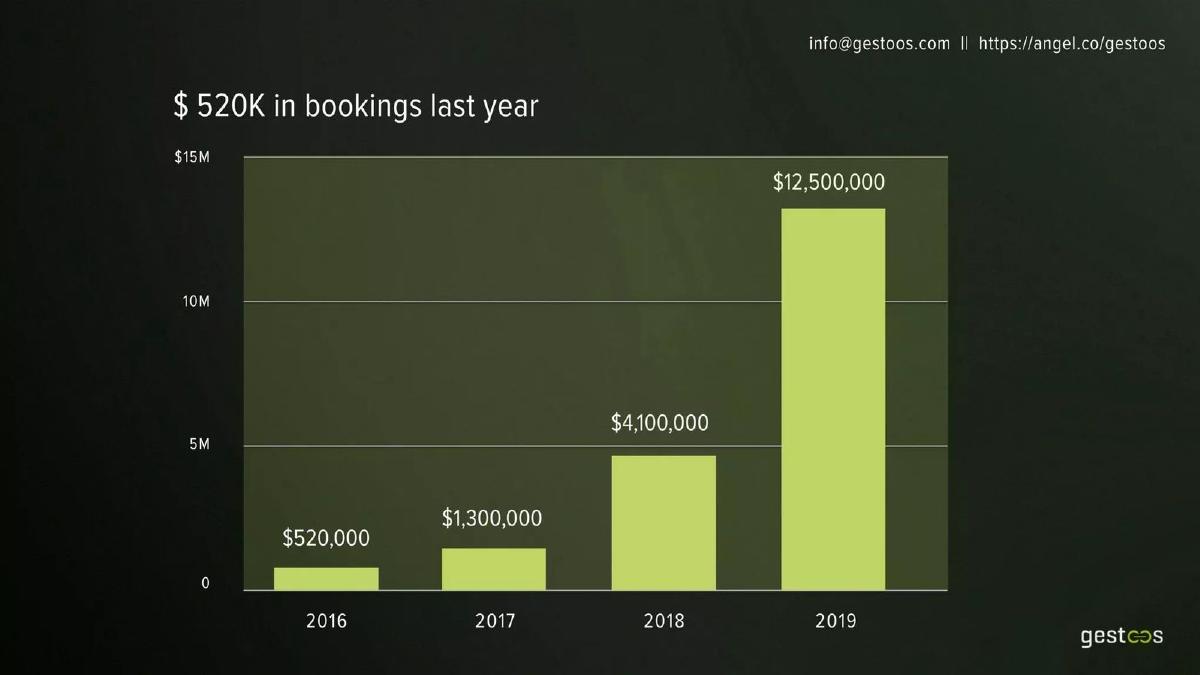
- Revenue projections are aggressive, showing a jump from $520,000 in 2016 to $12,500,000 in 2019 on slide 6.
- The market opportunity is framed by a $48 billion computer vision market projection for 2022 with a 32% CAGR on slide 7.
- The team slide (slide 8) emphasizes academic pedigree, displaying logos for Wharton, Princeton, and Harvard.
- The deck completely omits a formal 'Ask' slide, failing to specify the amount of capital being raised or the intended use of funds.
- There is no mention of unit economics, burn rate, or specific hardware requirements for the software to function.
- The presentation ends with a call to action for a live demo on slide 9, suggesting the deck is intended as a teaser for a physical product interaction.
The Lean Approach to Deep Tech Fundraising
The Gestoos pitch deck is an anomaly in the world of deep tech. Usually, companies dealing with computer vision and artificial intelligence feel the need to overwhelm investors with white papers, architectural diagrams, and technical benchmarks. Gestoos took the opposite path. With only 9 slides, this deck is designed to move fast, establish credibility through logos, and get to the demo as quickly as possible.
Raised in 2015, this $3,000,000 round came at a time when computer vision was transitioning from a laboratory curiosity to a viable commercial tool for retail and digital signage. The deck reflects this transition by focusing heavily on enterprise partnerships rather than technical minutiae.
Slides 1-3: The Vision and The Visual
Slide 1 is a standard title slide featuring the logo and the tagline: "Redefining Human Interaction Through Intelligent Vision." It includes contact information and a link to their AngelList profile, which was a common practice for startups in the mid-2010s.
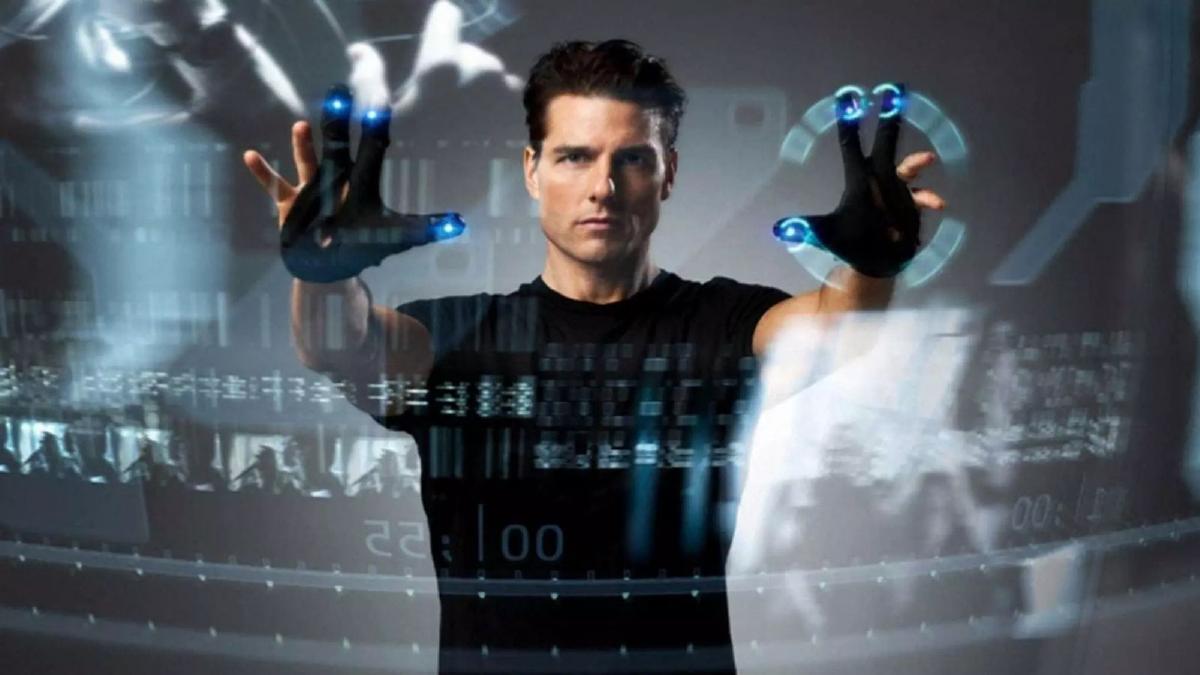
Slide 2 is perhaps the most daring slide in the deck. It features a high-resolution image of Tom Cruise from the film Minority Report . There is no text on this slide. The purpose is purely psychological: it anchors the investor's mind in a specific science-fiction future that Gestoos claims to be making a reality. While using copyrighted movie stills is generally discouraged in professional decks, here it serves as a shorthand for "gesture-based interface.”
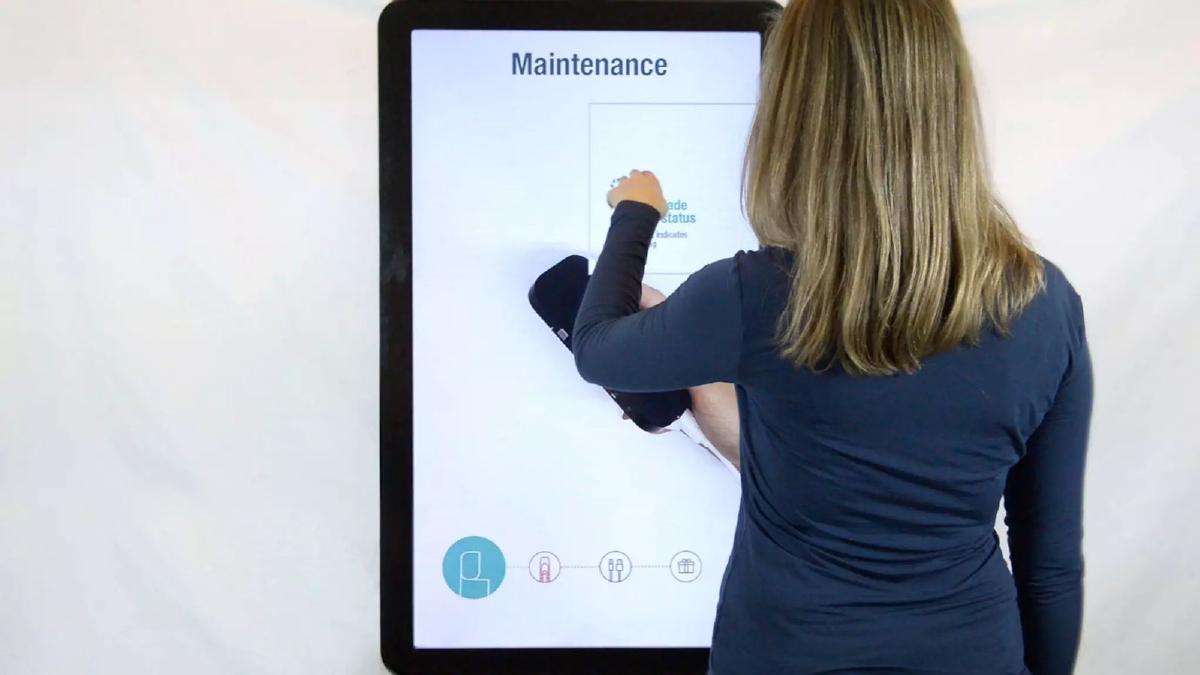
Slide 3 provides the reality to follow the fiction. It shows a woman interacting with a large vertical screen. This is the first glimpse of the product in a real-world setting. Again, the slide is devoid of text, forcing the presenter to explain the mechanics of the interaction. This suggests the deck was never meant to be read as a standalone PDF; it is a backdrop for a narrative.
Slides 4-5: Traction and Social Proof
Slide 4 is where the business case begins. It lists three major points of traction. First, it mentions Ogilvy is "Presenting Gestoos to their customers worldwide." Second, it notes a "Partnership to re-sell Gestoos as a bundle" with Cisco . Third, it claims a "1500 license deal, looking to expand to 16,000" with an unnamed "Global Consumer Brand." This slide is the heavy hitter of the deck, providing the necessary social proof to justify a $3M raise.
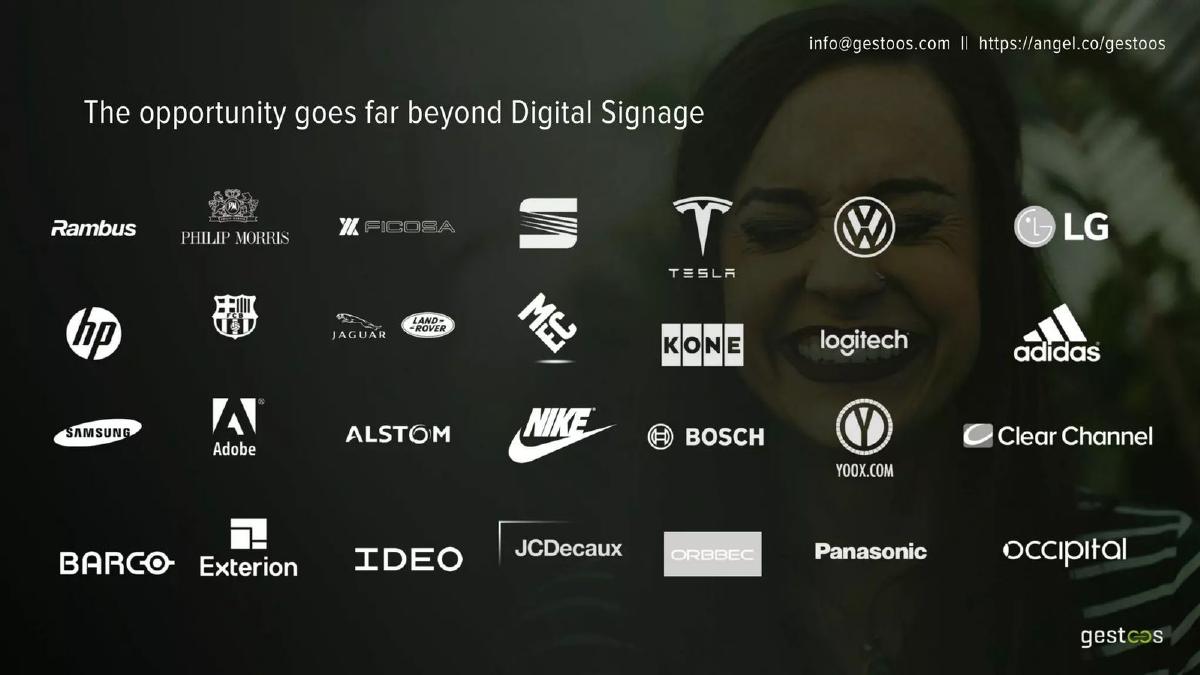
Slide 5 expands on the potential market reach. Titled "The opportunity goes far beyond Digital Signage," it displays a wall of logos including Tesla, Volkswagen, LG, Adidas, Nike, Bosch, and Samsung . It is important to note that the slide does not claim these are current customers. Instead, it positions them as the "opportunity." This is a common tactic to show the breadth of the Total Addressable Market (TAM) across automotive, retail, and consumer electronics sectors.
Slides 6-7: The Numbers and The Market
Slide 6 presents a bar chart of projected bookings. It states the company had "$520K in bookings last year" (referring to 2016, though the deck was used for a 2015 raise, suggesting these were forward-looking or year-end estimates). The projections are incredibly steep: $1,300,000 in 2017, $4,100,000 in 2018, and $12,500,000 in 2019 . The deck provides no explanation for how this 24x growth in three years will be achieved, which would be a primary point of friction in a due diligence process.
Slide 7 defines the macro environment. It cites a "$48B Computer Vision Market (2022)" and a "32% CAGR 2017-2022." By placing this slide after the revenue projections, Gestoos is attempting to show that even their aggressive $12.5M target is just a tiny fraction of a massive, fast-growing pie.
Slides 8-9: The Team and The Call to Action
Slide 8 introduces the team: Todd Stein, Germán León, Dr. Marcel Alcoverro, Pau Molinas, Andrea Halfpap, and Eliott Jones. The slide leans heavily on academic prestige, featuring logos for Wharton, UPC, Princeton, Umea University, and Harvard . For a deep tech company, showing that the leadership has roots in top-tier research institutions is a critical trust-building step.
Slide 9 is the conclusion. It simply says "COME TRY OUR DEMO" and repeats the contact information. This reinforces the idea that the technology is the star of the show and that the slides were merely the opening act.
What Works in the Gestoos Deck
Visual Clarity: The deck is not cluttered. It uses high-quality imagery and minimal text, which keeps the audience focused on the speaker. · Big Name Validation: By leading with Cisco and Ogilvy, Gestoos bypasses the need to prove their technology works; the implication is that if Cisco is reselling it, the tech is already vetted. · Academic Pedigree: The team slide effectively uses university logos to signal high intellectual capital without needing to list every patent or publication.
What is Missing from the Gestoos Deck
The Ask: There is no slide stating how much money they are raising, at what valuation, or what the milestones for the next 18 months are. · Competition: The deck ignores the existence of competitors. In 2015, companies like Leap Motion and various Intel-backed projects were active in this space. Omitting them is a significant gap. · Product Mechanics: The deck never explains how it works. Is it a camera? Is it software that works with any camera? Does it require a depth sensor? These are fundamental questions left unanswered. · Unit Economics: There is no mention of the cost of goods sold (COGS), the price per license, or the customer acquisition cost (CAC).
What a Founder Should Copy
The Traction Slide Layout: Slide 4 is a perfect example of how to present B2B traction. It names the partner, defines the relationship (reseller vs. customer), and gives a specific number (1,500 licenses) to ground the claim. · Market Context: Using a CAGR (Compound Annual Growth Rate) alongside a total market size (Slide 7) is the best way to show that a market is not just big, but moving fast. · The "Opportunity" Wall: If your product is horizontal (applicable to many industries), a logo wall like Slide 5 is an effective way to spark an investor's imagination about potential exit opportunities or pivot points.
Frequently asked questions
- How much did Gestoos raise with this deck?
- According to the catalogue listing from pitchdeckhunt.com, Gestoos raised $3,000,000 in 2015. The deck itself does not state the amount raised or the specific terms of the round, which is common for decks used as visual aids during in-person presentations.
- What is the primary product Gestoos is selling?
- Gestoos sells computer vision software that enables devices to understand and respond to human gestures and movements. Slide 4 highlights a '1500 license deal,' indicating a B2B licensing model where their AI is integrated into third-party hardware or digital signage solutions.
- Who are the key partners mentioned in the deck?
- Slide 4 explicitly names Ogilvy and Cisco as partners. Ogilvy is described as presenting Gestoos to customers worldwide, while Cisco is engaged in a partnership to re-sell Gestoos as a bundle. A 'Global Consumer Brand' is also mentioned but not named.
- What market size does Gestoos target?
- On slide 7, Gestoos identifies the Computer Vision Market as reaching $48 billion by 2022. They cite a Compound Annual Growth Rate (CAGR) of 32% between 2017 and 2022 to demonstrate the rapid expansion of the sector.
- Does the deck include a competitive analysis?
- No. The deck completely omits a competitor slide. It focuses entirely on Gestoos' own traction, team, and market opportunity. This is a risky strategy that assumes the investor is already sold on the uniqueness of the technology or will save those questions for the Q&A.