The GetLinks pitch deck from 2015 is a lean, 15-slide presentation that prioritizes momentum over exhaustive detail. Operating in the competitive recruitment space, the company differentiated itself through a 'curated' model, claiming to accept only 5-7% of applicants. The deck is notable for its early disclosure of revenue—$12,000 monthly—and a consistent 47% month-over-month growth rate. While it lacks traditional sections like a detailed competitor matrix or unit economics breakdown, it compensates with strong social proof, listing key accounts like Google, Uber, and Facebook. This teardow…
Key takeaways
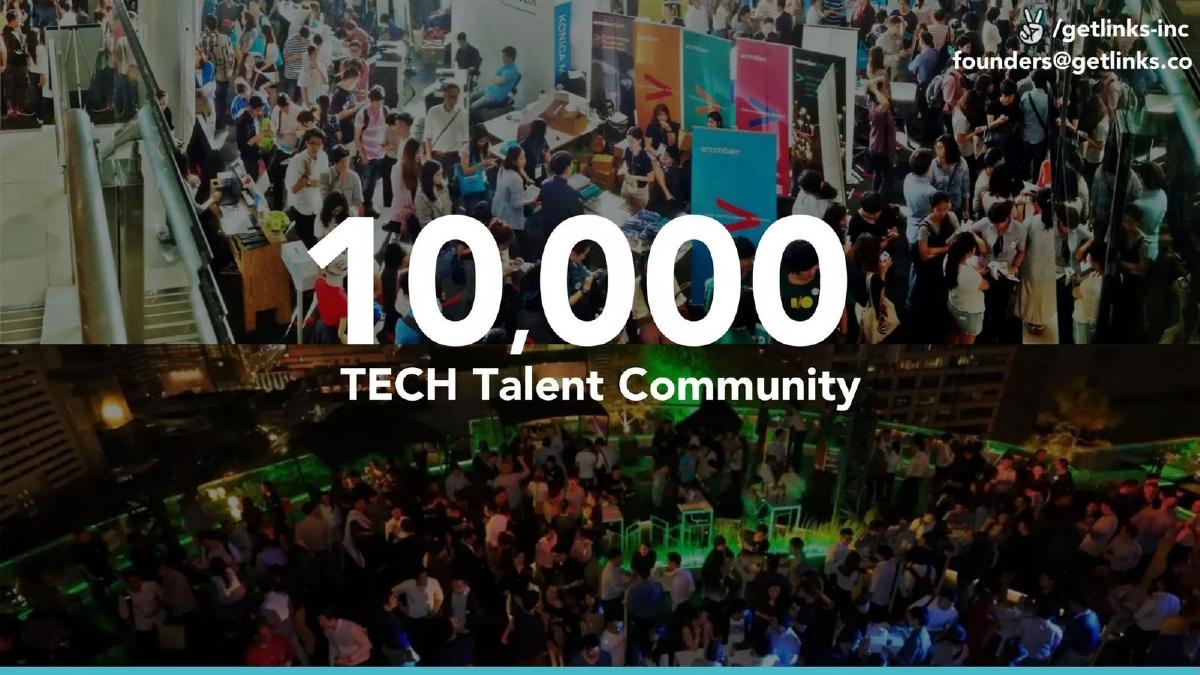
- The deck leads with community size, citing a 10,000-strong tech talent pool on slide 2.
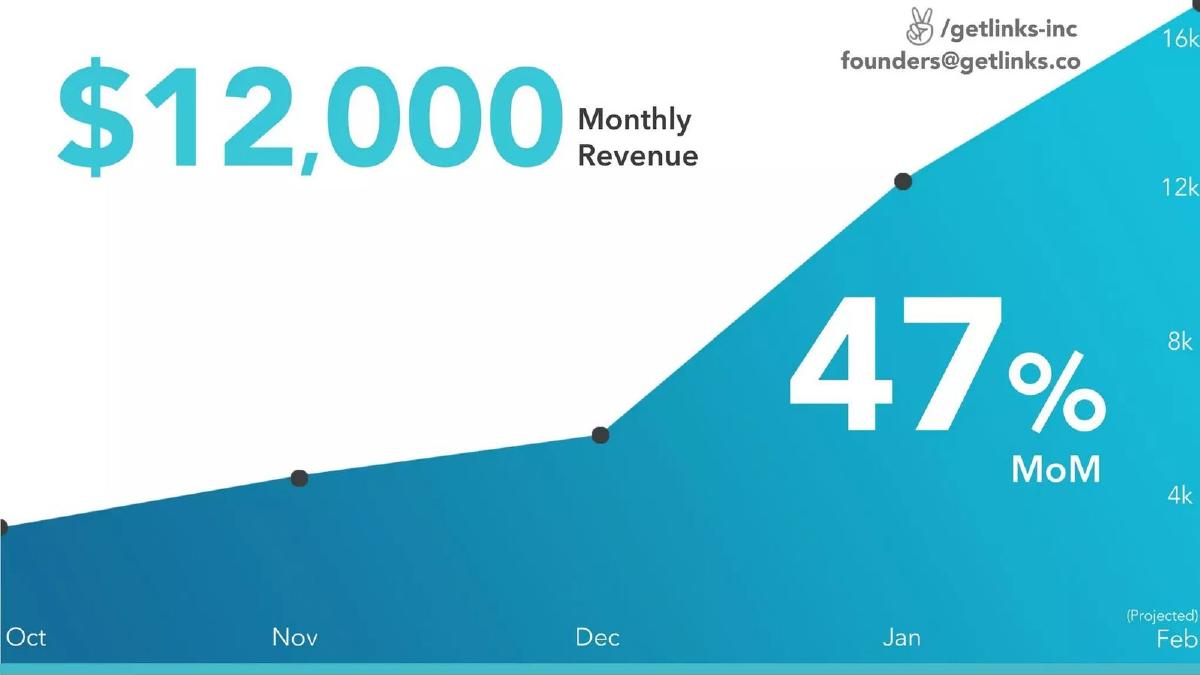
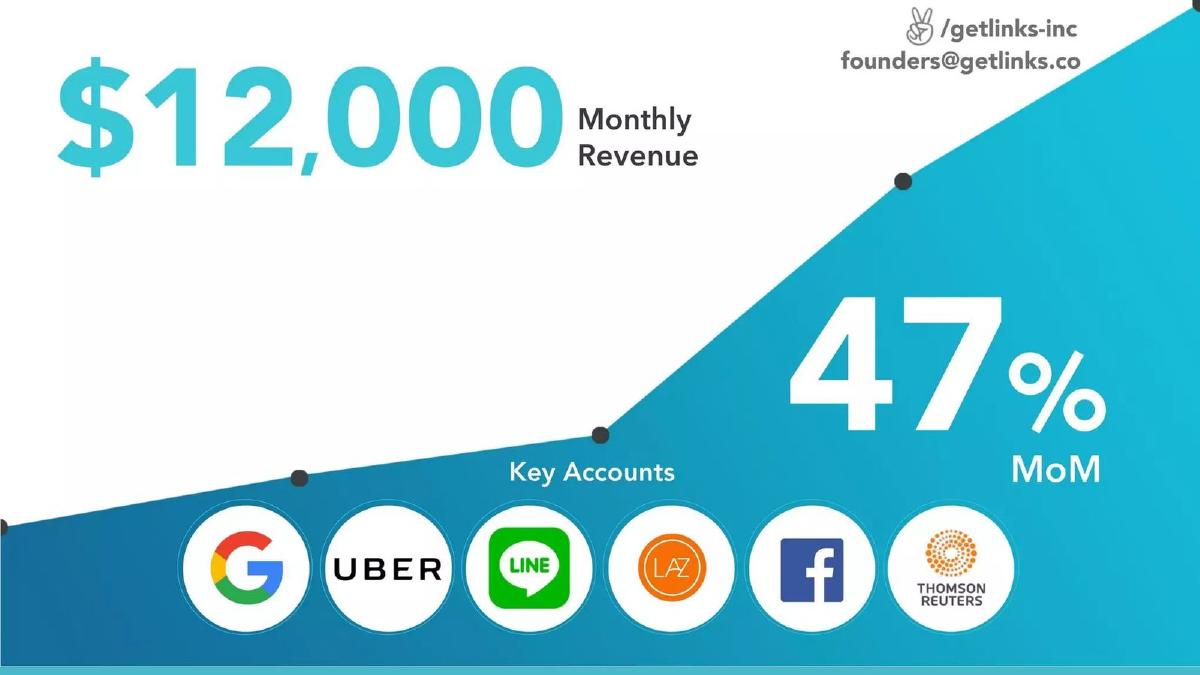
- Revenue is disclosed early and prominently, showing $12,000 in monthly revenue on slide 4.
- Growth is the central theme, with a stated 47% month-over-month increase highlighted on slides 4 and 5.
- The business model relies on curation, filtering out 93-95% of talent to maintain quality, as shown on slide 9.
- Monetization is straightforward: a 10% fee on the annual salary of a successful hire, per slide 10.
- Social proof is heavy, featuring logos from Google, Uber, Line, Lazada, Facebook, and Thomson Reuters on slide 5.
- The leadership team highlights pedigree from Rocket Internet, Google, and Lazada on slide 12.
- The deck concludes by reiterating its $700k seed round milestone and expansion plans for Q2-Q3 on slides 13 and 14.
The GetLinks Pitch Deck Teardown
GetLinks entered the market during a pivotal moment for the Southeast Asian tech ecosystem. In 2015, the region was seeing a surge in venture capital and a corresponding explosion in the need for technical talent. This deck is a product of that era: fast-paced, visually driven, and focused almost entirely on the 'up and to the right' narrative. With only 15 slides, the founders chose to ignore the minutiae of product features in favor of proving that they had captured lightning in a bottle.
Slides 1-3: The Hook and the Macro Trend
The deck opens with a minimalist title slide (Slide 1) that clearly defines the category: "Curated TECH Hiring Marketplace for Asia." This is followed immediately by a high-energy photo montage (Slide 2) claiming a "10,000 TECH Talent Community." By placing this figure on the second slide, GetLinks establishes that they have already solved the hardest part of a two-sided marketplace: supply.
Slide 3 moves to the macro environment, stating "ASIA TECH Industry is BOOMING" with a "300% Growth Yearly" figure. While the source of this 300% figure isn't cited on the slide, it serves to validate the timing of the investment. It tells the investor that the market is moving fast, and GetLinks is the vehicle to capture that movement.
Slides 4-5: The Traction and Social Proof
Slides 4 and 5 are arguably the most important in the deck. Slide 4 presents a revenue chart showing a climb to "$12,000 Monthly Revenue" with a "47% MoM" (Month-over-Month) growth rate. The chart includes a projected jump for February, a common tactic to show immediate forward momentum. The specific dollar amount is modest, but the growth percentage is what attracts venture interest.
Slide 5 overlays this growth chart with "Key Accounts." Seeing logos for Google, Uber, Line, Lazada, Facebook, and Thomson Reuters provides massive credibility. For a seed-stage startup, having these names as active users suggests that the product quality meets the standards of the world's most demanding tech employers. It effectively answers the question: "Does this actually work?"
Slides 6-8: Market Opportunity and Regional Focus
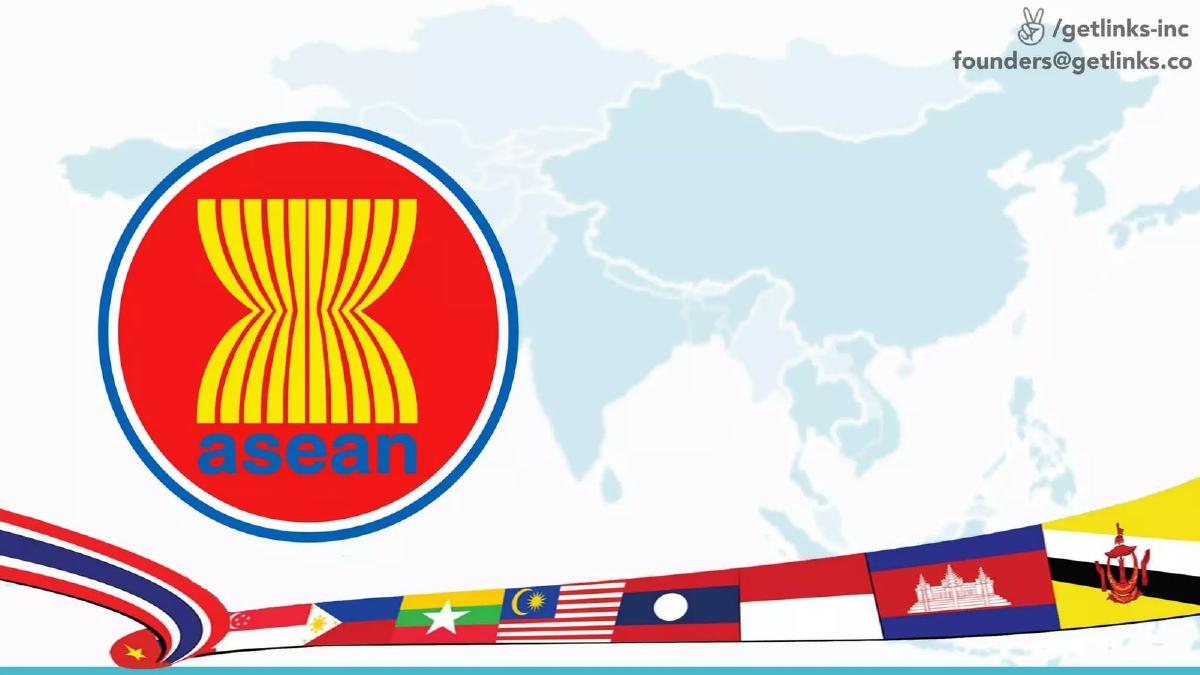
GetLinks leans heavily into its identity as a regional player. Slide 6 and 7 use the ASEAN branding to signal their intent to dominate Southeast Asia. Slide 7 is particularly interesting as it shows a specific growth path: "20k [Vietnam]" moving toward "100k [Singapore]." This suggests a scalable playbook where they enter a lower-cost market to build supply before moving into high-value hubs like Singapore.
Slide 8 puts a dollar value on the opportunity: a "$9B Asia Tech Recruitment Market in 2015." By narrowing the TAM (Total Addressable Market) specifically to 'Tech Recruitment' rather than 'Recruitment' as a whole, the founders show they understand their niche and that the niche itself is large enough to support a venture-scale business.
Slides 9-11: The Business Model and Product
The deck finally explains how the platform works on Slide 9 and 10. The process is broken down into four steps: Attract, Curate, Select, and Pay. The "Curate" step is the differentiator; they claim to accept only "5-7% of applied TECH talents." This positioning moves them away from being a 'job board' (which is a commodity) and toward being a 'talent filter' (which is a value-add).
Slide 10 reveals the monetization strategy: a "10% of Annual Salary" fee for successful hires. This is a standard contingency recruitment model. While not as high-margin as a SaaS subscription, it is a proven revenue generator in the HR space. Slide 11 provides a brief look at the UI on both desktop and mobile, emphasizing that the platform is ready for use and already featured in major publications like TechCrunch and Forbes.
Slides 12-15: Team and The Ask
Slide 12 introduces the leadership team. The founders emphasize their previous experience at high-growth companies like Google, Rocket Internet, and Lazada. In the Southeast Asian ecosystem of 2015, being a "Rocket Internet Alum" was a significant signal of operational competence. The team appears balanced with a CEO, CMO, CTO, and CFO.
The deck concludes with a celebration of their progress. Slide 13 and 14 mention a "$700k Raised - Seed Round" dated February 2016. This is slightly different from the catalogue data of $625,000, which may reflect fluctuations in exchange rates or different closing tranches. Slide 14 maps out the "Asia Expansion" for Q2-Q3, showing pins across the regional map. The final slide (Slide 15) summarizes the key metrics: $12k revenue, 47% MoM growth, and the $700k seed round, leaving the investor with the most impressive numbers fresh in their mind.
What GetLinks Does Well
Traction First: The deck doesn't wait until slide 10 to show numbers. It puts revenue and growth on slide 4. This immediately qualifies the lead for the investor. · Extreme Curation: By highlighting the 5-7% acceptance rate, they turn a potential weakness (smaller scale) into a strength (higher quality). · Social Proof: The use of global tech logos is aggressive and effective. It’s hard to argue with a platform that Google and Facebook are using to find talent. · Regional Narrative: They successfully pitch themselves as an ASEAN play, not just a Thai or Vietnamese play. This increases the perceived market size significantly.
What is Missing from the GetLinks Deck
Competitive Landscape: There is no mention of competitors. In 2015, companies like Hired.com were gaining traction globally, and local job boards were still dominant. Investors would want to know how GetLinks defends its territory. · Unit Economics: While they show revenue, they don't show the cost of acquisition (CAC) for these talents. If it costs $500 to acquire a talent that generates a $1,000 fee once every two years, the business model might struggle at scale. · Product Depth: The deck is very light on how the 'curation' actually happens. Is it manual? Is there an algorithm? Investors usually want to see the 'secret sauce' behind the vetting process. · Detailed Use of Funds: The deck mentions expansion but doesn't provide a breakdown of how the $700k will be spent (e.g., 40% engineering, 40% sales, 20% ops).
What a Founder Should Copy
The 'Big Number' Slide: Slide 2 is a great example of using a single, impressive metric to grab attention immediately. · Visual Consistency: The deck uses a consistent color palette and clean typography, which makes the brand feel professional and established. · The Summary Slide: Ending with a recap of the three strongest metrics (Slide 15) is a powerful way to ensure the investor remembers the 'why' behind the deal. · Pedigree Alignment: If your team has worked at relevant 'mafia' companies (like Rocket Internet or Google), make sure those logos are as large as your headshots. It acts as a shorthand for talent.
Frequently asked questions
- What is the primary value proposition of GetLinks?
- GetLinks positions itself as a 'Curated TECH Hiring Marketplace for Asia.' Unlike broad job boards, it focuses on quality control. Slide 9 specifies that they only accept 5-7% of applied tech talents. This curation is designed to save employers time by providing a pre-vetted pipeline of candidates, which they refer to as a 'Quality TECH Talent Pipeline' on slide 11.
- How does GetLinks make money according to the deck?
- The revenue model is a success-based commission. Slide 10 explicitly states that employers 'Pay only for a successful hire.' The fee is set at 10% of the candidate's annual salary. This is a standard recruitment agency model applied to a digital marketplace, providing a low-risk entry point for companies to test the platform.
- What markets does GetLinks target?
- The deck focuses heavily on the ASEAN region. Slide 6 and 7 use the ASEAN logo and flags of member nations to define their territory. Slide 7 specifically highlights a growth trajectory from 20k talents in Vietnam to a target of 100k in Singapore, indicating a regional expansion strategy rather than a single-country focus.
- Is there a competitive analysis in the GetLinks deck?
- No. The 15-slide deck completely omits a competitor slide. It does not mention other regional players or global platforms like LinkedIn or Hired. Instead, it relies on its own growth metrics (47% MoM) and high-profile client logos to imply a dominant or unique position in the market.
- What traction does the company show to justify its seed round?
- The company shows three main pillars of traction: community size, revenue, and client quality. They claim a 10,000-person talent community (slide 2), $12,000 in monthly revenue with 47% MoM growth (slide 4), and active hiring accounts with global tech giants like Google and Facebook (slide 5).