Cardlife entered the market in 2015, targeting the burgeoning problem of unmanaged business subscriptions. Their 11-slide deck is a study in brevity, focusing heavily on the 'pain point' of visibility. The deck claims that 93% of businesses do not know how many subscriptions they have or how much they are spending. With a lean team featuring experience from GetTaxi, Fiverr, and Oracle, Cardlife demonstrated significant early momentum, reporting over 1,000 businesses joined within six weeks of launch. While the deck is strong on problem identification and early traction, it lacks detailed fina…
Key takeaways
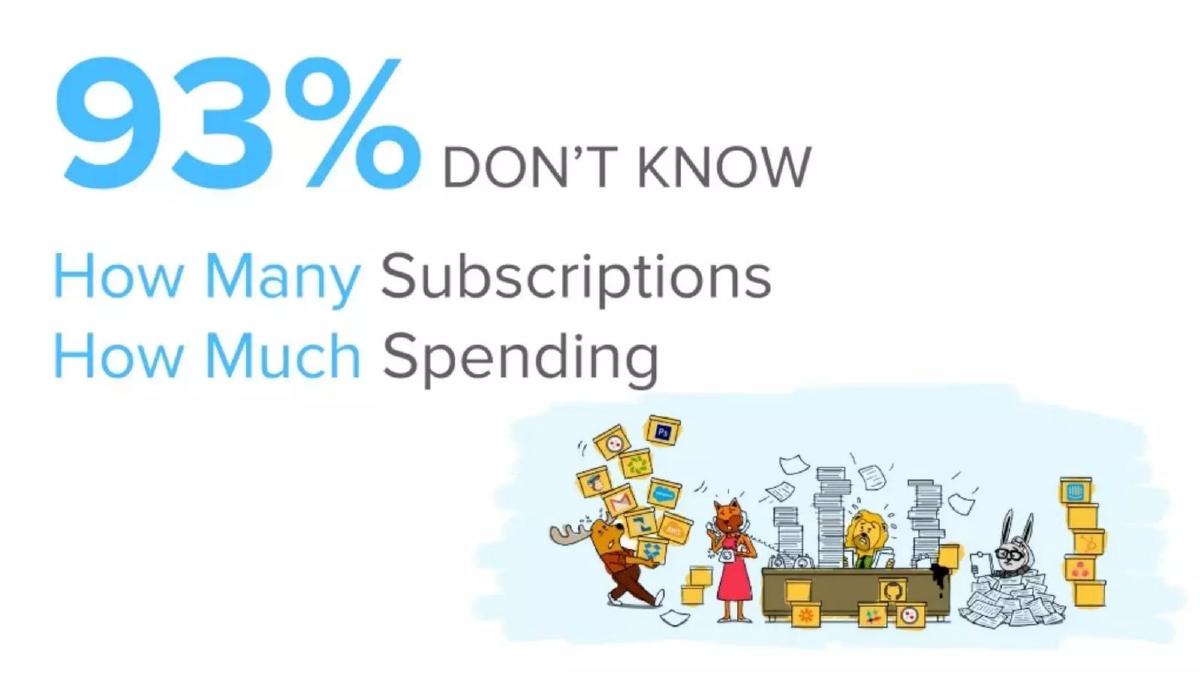
- The deck identifies a massive visibility gap, stating 93% of businesses are unaware of their total subscription count (Slide 2).
- Cardlife positions itself as a 'Controller' product that automates SaaS dashboards and alerts users to overcharges (Slide 7).
- Early traction was significant, with the company reporting 1,000+ businesses signed up within six weeks of launch (Slide 8).
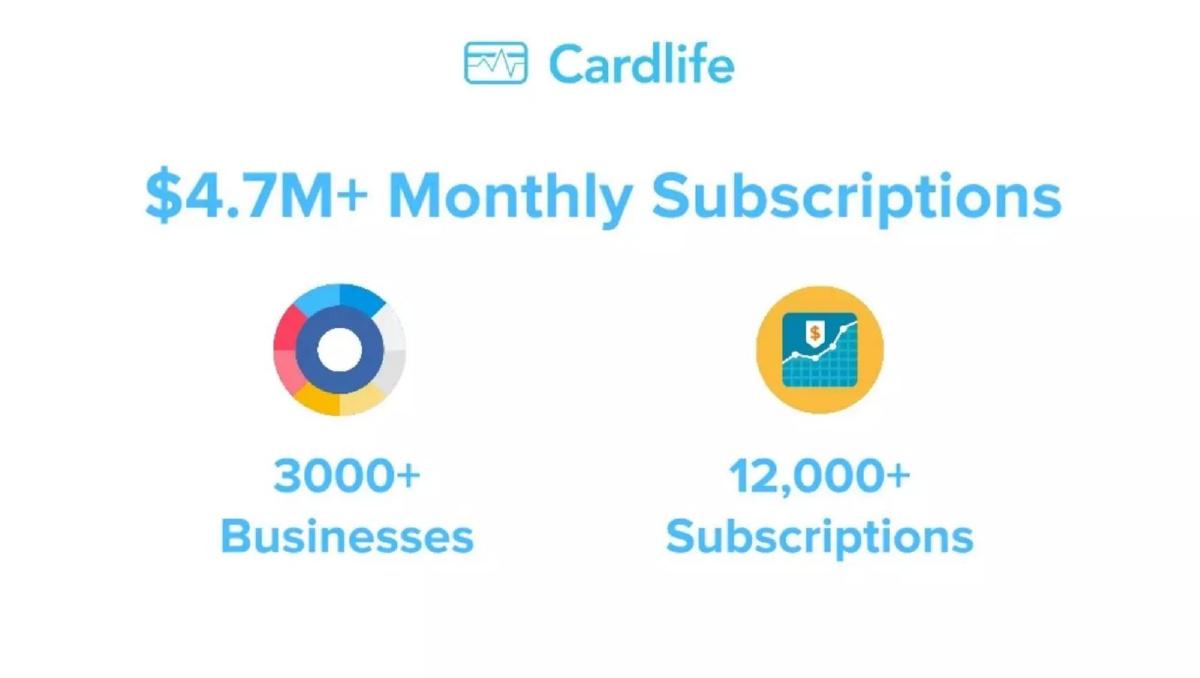
- The platform was managing over $4.7 million in monthly subscriptions across 3,000+ businesses at the time of the deck (Slide 5).
- Market growth is a central theme, citing Gartner data that predicted a rise to $37.7 billion by 2016 (Slide 4).
- The team slide highlights previous experience at high-growth companies like Fiverr and GetTaxi (Slide 6).
- Social proof is leveraged through a 'Top 5 SaaS Product of All Time' ranking on Product Hunt (Slide 9).
- The deck completely omits a business model slide, leaving the monetization strategy to the investor's imagination.
The 2015 Vision for SaaS Management
Cardlife's pitch deck is a product of its time, arriving right as the 'SaaS explosion' began to create administrative headaches for small and medium-sized businesses. The deck is minimalist, using high-contrast visuals and large typography to drive home a single point: businesses are losing money because they cannot track their software. While the deck is visually clean, it operates more as a teaser than a comprehensive business plan, omitting several critical sections that modern investors would expect to see in a seed round.
Slides 1-3: The Problem and the 'Dirty Secret'
Slide 1 is a standard title slide featuring the Cardlife logo and the tagline 'Take Control of your business subscriptions.' It establishes the brand identity immediately with a blue and white color palette.
Slide 2 moves straight into the hook. It uses a large '93%' figure to claim that the vast majority of businesses do not know their subscription count or total spend. The use of a cartoon illustration showing overwhelmed office workers adds a relatable, if slightly informal, tone to the problem statement. This slide is designed to create a sense of urgency and shared pain.
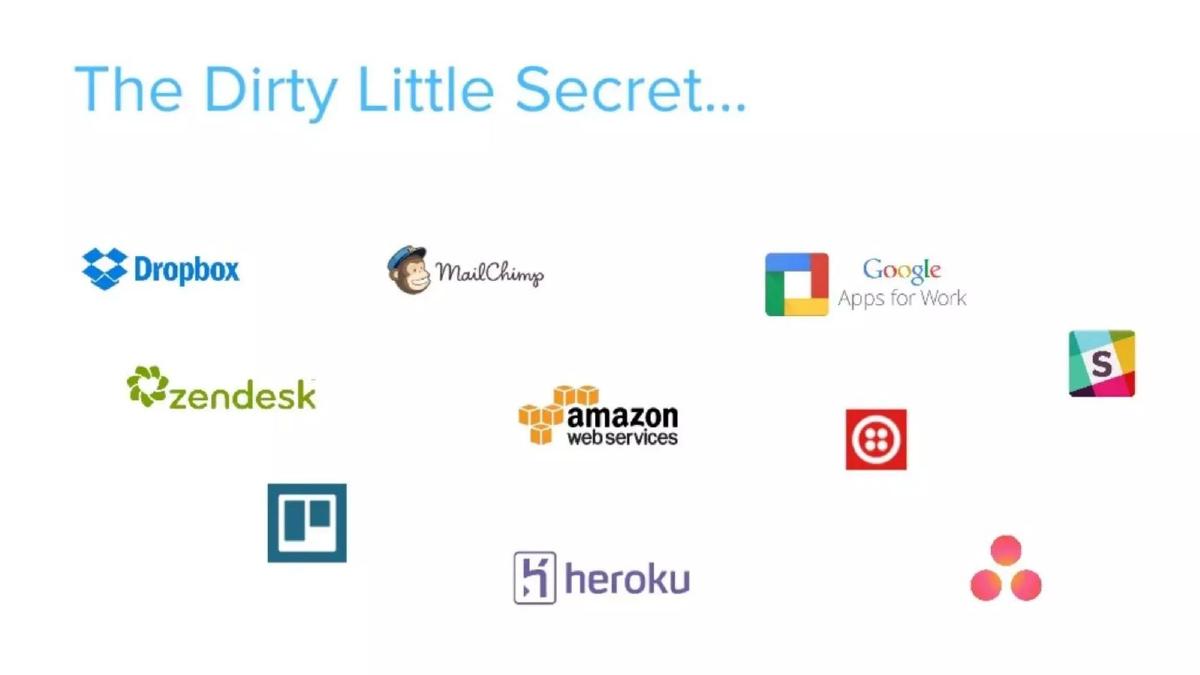
Slide 3 , titled 'The Dirty Little Secret...', lists logos of popular SaaS tools like Dropbox, MailChimp, Zendesk, AWS, Slack, and Asana. The implication is that while these tools are essential, their decentralized nature makes them difficult to track. By naming these specific, high-growth companies, Cardlife hitches its wagon to the success of the very platforms it seeks to manage.
Slides 4-5: Market Size and Initial Traction
Slide 4 addresses the market opportunity. It cites a '$9.9 billion Market' and includes a bar chart showing growth from 2015 to 2018. A small note at the bottom cites Gartner, stating the market would grow by 20.3 percent in 2016 to reach $37.7 billion. The discrepancy between the $9.9 billion headline and the $37.7 billion footnote is not explained, but the upward trajectory of the bars (reaching 55 by 2018) clearly signals a massive tailwind.
Slide 5 provides the first hard metrics for the company. Cardlife claims to be managing '$4.7M+ Monthly Subscriptions' across '3000+ Businesses' and '12,000+ Subscriptions.' These are impressive numbers for a seed-stage startup, suggesting that the '93%' problem identified earlier resonated strongly with their target audience.
Slides 6-7: The Team and The Product
Slide 6 introduces the leadership team. Tony Freed (CTO), Tzachi Davidovich (CEO), and Shlomie Singer (COO) are presented with logos of their former employers: GetTaxi, Fiverr, Startup Weekend, and Oracle. This is a classic 'pedigree' slide, intended to reassure investors that the founders have experience scaling products at recognized tech companies.
Slide 7 explains the solution. It describes Cardlife as a 'Controller' product. The slide shows four iPhone mockups demonstrating the user flow: importing subscriptions via integrations (Yodlee, Xero, NetSuite, QuickBooks), monitoring and tracking through auto-detection, a SaaS dashboard for management, and 'Smart alerts' for overcharges. This slide is the most information-dense, showing exactly how the technology bridges the gap between financial data and subscription management.
Slides 8-9: Growth Velocity and Social Proof
Slide 8 is a pure traction chart. It shows a steep hockey-stick curve, noting '1000+ businesses in 6 weeks after launching.' The X-axis spans from September 16 to October 21, showing a significant inflection point around early October. This slide is meant to prove product-market fit and viral potential.
Slide 9 leverages external validation. It features the Product Hunt logo and the claim 'Top 5 SaaS Product of All Time.' For a startup in 2015, a successful Product Hunt launch was a major milestone, and Cardlife uses this to demonstrate that the tech community and early adopters have already vetted the concept.
Slides 10-11: The Vision and Contact
Slide 10 attempts to expand the scope of the company beyond just a tracker. It labels Cardlife as 'The B2B SaaS Platform,' positioned between users and their software stack. This suggests an ambition to become a central hub for business operations, though the slide is light on details regarding how that platform play evolves.
Slide 11 is the closing slide, providing a contact email and Twitter handle. Notably, there is no 'Ask' here—no mention of the dollar amount being raised or the milestones they hope to achieve with the capital.
What Works in the Cardlife Deck
Clarity of Problem: The deck does an excellent job of articulating a specific, growing pain point. By using the 93% statistic and the 'Dirty Little Secret' framing, they make the need for the product feel obvious and inevitable.
Speed of Traction: The 6-week growth chart is the strongest piece of evidence in the deck. It shows that the founders didn't just have an idea; they had a product that users were actively adopting at a high rate.
Visual Simplicity: The deck is not cluttered. Each slide has one main point, which is ideal for a presentation where the founder is speaking over the slides. The use of recognizable logos (Slack, Dropbox, QuickBooks) provides instant context without needing long descriptions.
What is Missing from the Cardlife Deck
Business Model: This is the most glaring omission. The deck never explains how Cardlife makes money. Is it a subscription fee? A percentage of savings? A lead-gen model for other SaaS tools? Investors are left guessing about the unit economics.
Competitive Landscape: By 2015, other players were entering the SaaS management and 'shadow IT' space. The deck does not mention competitors or explain why Cardlife’s approach (mobile-first, financial integration) is superior to existing manual spreadsheets or enterprise-grade tools.
The Ask: A pitch deck is a tool for a transaction. By omitting the amount of money they are looking for and what they plan to do with it (e.g., hire 5 engineers, expand to the US market), the deck feels incomplete as a fundraising document.
Financial Projections: While the traction is great, there is no forward-looking financial data. There is no indication of what the revenue could look like in 3-5 years if they successfully capture a portion of the $37.7 billion market they cited.
What a Founder Should Copy
The 'Pedigree' Slide: Cardlife’s team slide is a perfect example of how to use logos to build instant credibility. They don't write long bios; they let the Fiverr and Oracle logos do the talking.
The 'Problem' Hook: Starting with a shocking statistic (93%) is a proven way to grab attention. Founders should look for that one 'killer stat' that makes their solution feel like a necessity rather than a luxury.
Integration Logos: Showing the logos of the tools you integrate with (Slide 7) is a shortcut to explaining technical complexity. It tells the investor 'we work with the tools your customers already use' without needing a deep dive into API documentation.
The Product Hunt Flex: If you have had a successful launch on a platform like Product Hunt or Hacker News, dedicate a slide to it. It acts as a third-party endorsement that can be more persuasive than your own internal metrics.
Final Thoughts
The Cardlife deck is a 'momentum deck.' It relies on the speed of their early growth and the massive size of the SaaS market to carry the day. While it lacks the rigor of a late-stage deck, its focus on a singular, painful problem and a fast-growing user base makes it a compelling example of an early-stage seed pitch. However, founders today should be wary of omitting the business model, as the 'growth at all costs' era has been replaced by a focus on sustainable unit economics.
Frequently asked questions
- What problem does Cardlife solve according to the deck?
- Cardlife addresses the lack of visibility in corporate SaaS spending. Slide 2 claims that 93% of businesses do not know how many subscriptions they have or how much they spend. The deck characterizes this as a 'dirty little secret' where companies lose track of payments to providers like Dropbox, Slack, and AWS.
- How does the product actually work?
- Slide 7 illustrates the product as a mobile-first 'Controller.' It uses integrations with financial tools like Xero, QuickBooks, and NetSuite to 'auto-detect' subscriptions. It then provides a dashboard to monitor spending and sends 'smart alerts' to notify users of overcharges or changes in billing.
- What traction did Cardlife have at the time of this pitch?
- The company showed strong early interest. Slide 5 notes they had over 3,000 businesses on the platform managing $4.7 million in monthly subscriptions. Slide 8 shows a growth chart where they crossed the 1,000-business mark just six weeks after their initial launch.
- Who were the founders of Cardlife?
- The team consisted of Tony Freed (Co-founder/CTO), Tzachi Davidovich (Co-founder/CEO), and Shlomie Singer (COO). Slide 6 highlights their backgrounds at notable tech firms including GetTaxi, Fiverr, Startup Weekend, and Oracle, suggesting a mix of technical and operational expertise.
- What is missing from the Cardlife pitch deck?
- The deck is missing several standard components: a business model/pricing slide, a competitive analysis, a detailed financial forecast, and a specific funding ask. It relies heavily on the 'problem' and 'traction' phases of the pitch without explaining how the company will eventually generate revenue or beat competitors.