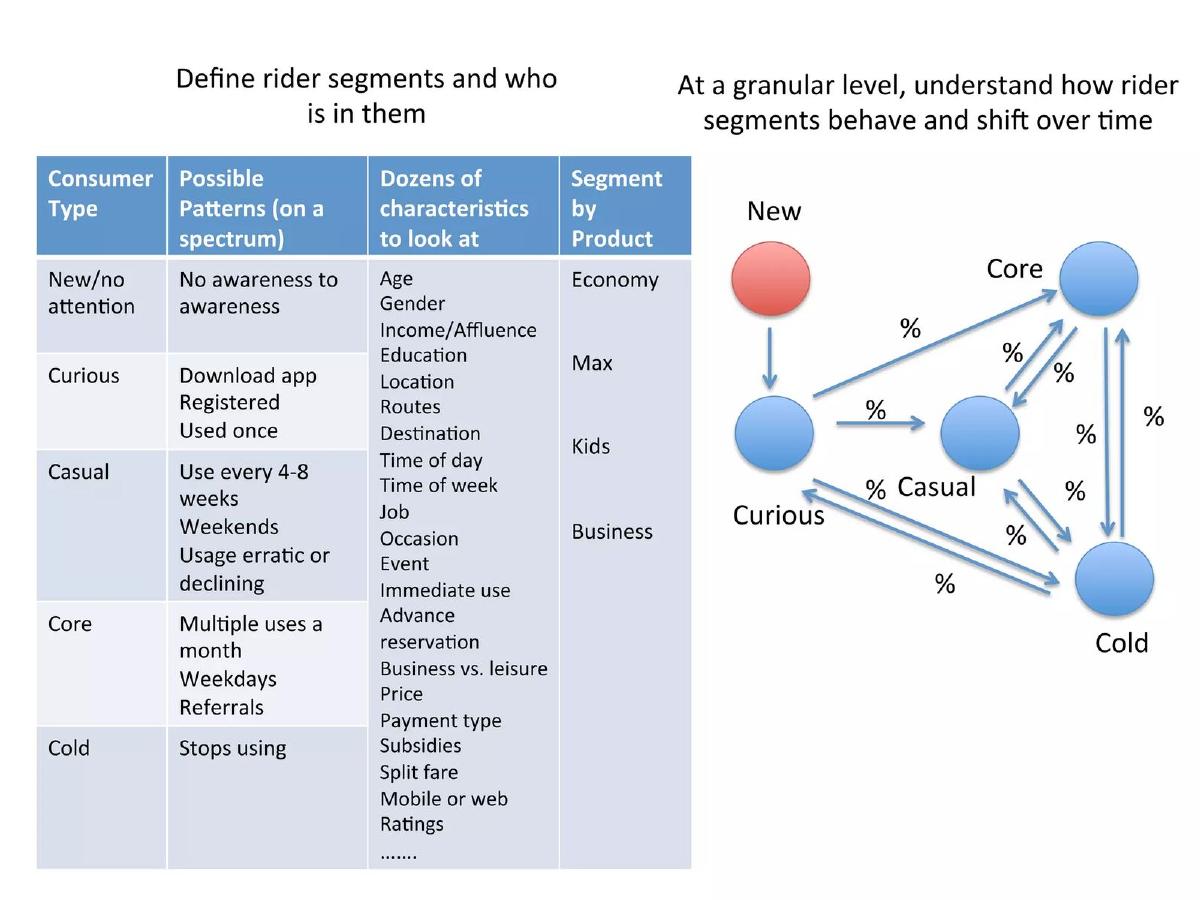
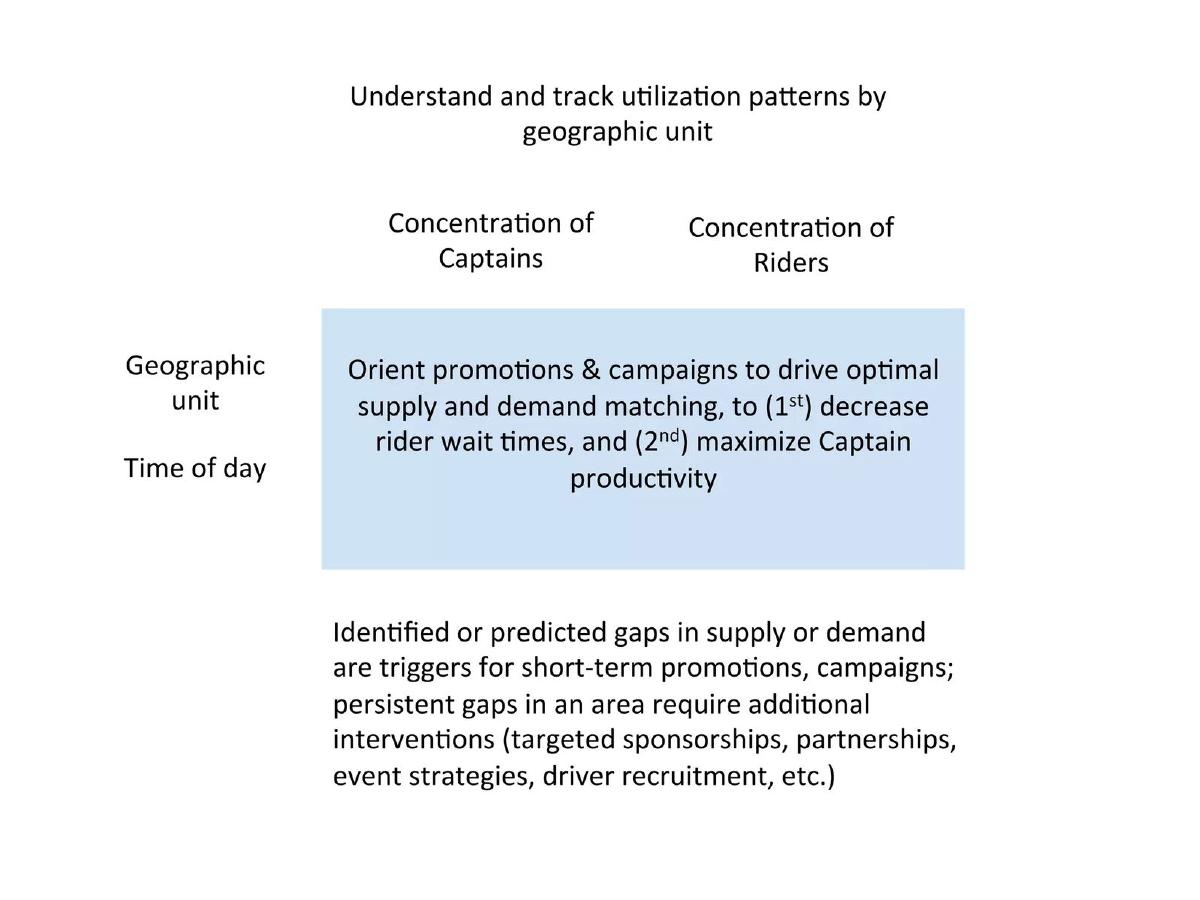
This 38-slide deck (19 slides analyzed) represents a critical moment in Careem's journey, focusing on the 'How to Win a City' strategy. Rather than relying on generic tech metrics, the deck leans heavily into hyper-localization, cultural relevance, and data-driven personalization. It explicitly names Uber as a competitor with 'nearly unlimited capital' but counters that with a deep understanding of local norms, such as mosque destinations and specific safety concerns for single women. The deck outlines a complex ecosystem of 'Captains' (drivers) and riders, proposing innovative monetization t…
Key takeaways
- The deck explicitly identifies Uber as the primary threat, citing their 'nearly unlimited capital' and 'global brand' on Slide 2.
- Careem positions 'home team advantage' and 'custom created maps' as core strategic assets on Slide 5.
- The strategy includes hyper-local destinations like 'mosques' to improve targeting and planning, as shown on Slide 4.
- The deck proposes a 'Careem Plus' subscription model borrowed from Amazon to increase customer lifetime value on Slide 14.
- Safety and cultural respect are prioritized, with specific messaging for 'single women' and 'seniors' outlined on Slide 8.
- A dual-sided marketplace strategy is evident, with a dedicated 'Captain Support Pack' to reduce driver tension over price cuts on Slide 18.
- The deck suggests converting destination data into a new revenue stream via tailored SMS coupons for shops at the rider's destination on Slide 11.
- There is a notable absence of a traditional 'Team' slide or specific financial 'Ask' in the provided 19-slide sequence.
Introduction: The Regional Giant's Playbook
The Careem pitch deck, titled "How to Win a City," is less of a standard startup pitch and more of a strategic manifesto. Dated May 2016, this deck captures the company at a pivotal moment when it was scaling across the Middle East while facing the existential threat of Uber's global expansion. The deck is remarkably honest about the challenges of commoditization in ride-sharing and focuses intensely on how hyper-local execution creates a defensible moat.
Slide 1: Title Slide
The cover slide is minimalist, featuring the title "Careem: How to Win a City" and the name Aakif Ahmad. The date, May 2016, places this deck two years after their initial $1.7M seed round and three years before their $3.1B acquisition. The title sets a clear tone: this is a deck about tactical dominance and local execution.
Slide 2: The Competitive Landscape
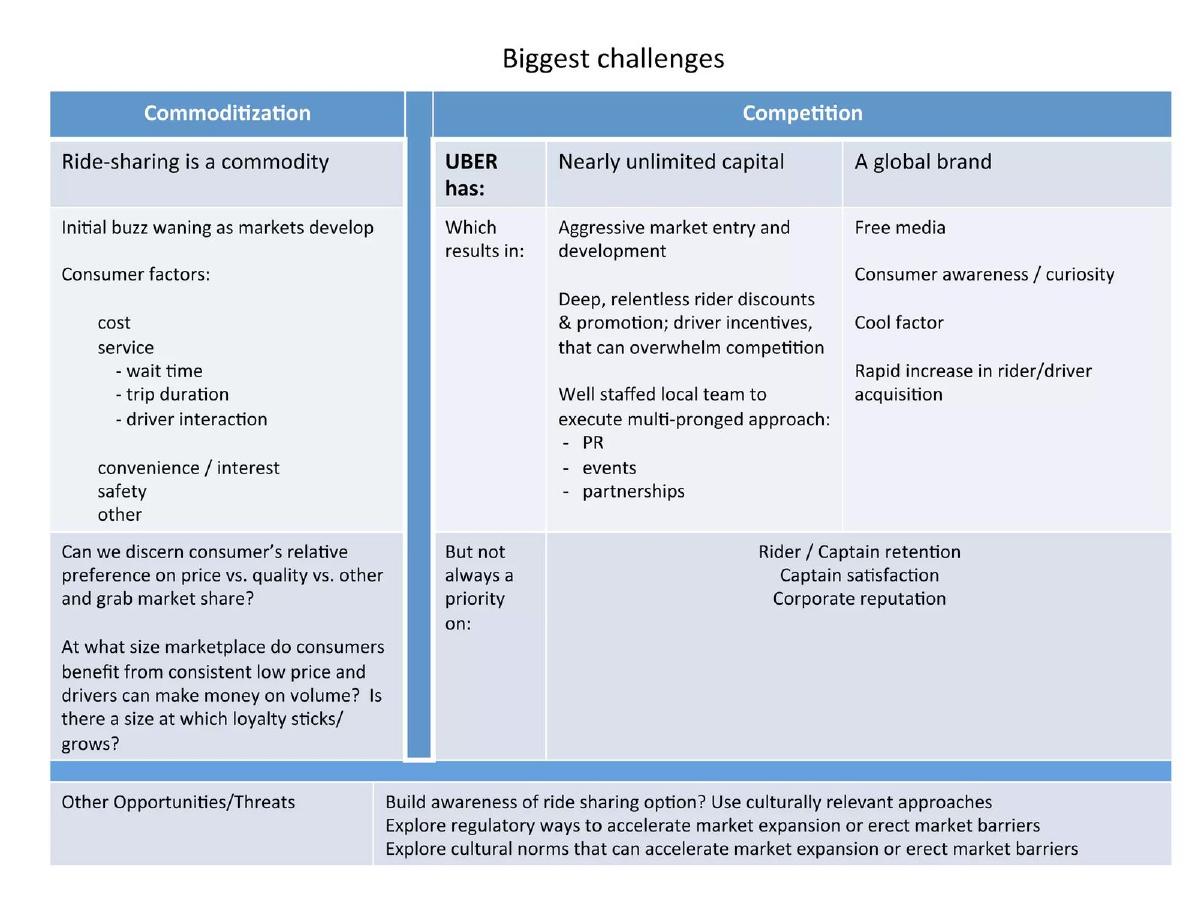
Slide 2, titled "Biggest challenges," is one of the most transparent competitive analyses in fundraising history. It splits the world into 'Commoditization' and 'Competition.' Under the Competition column, it explicitly lists UBER as having "nearly unlimited capital" and a "global brand." However, it identifies Uber's weaknesses: a lack of priority on "Captain satisfaction" and "corporate reputation." Careem positions itself to win on these specific, localized fronts.
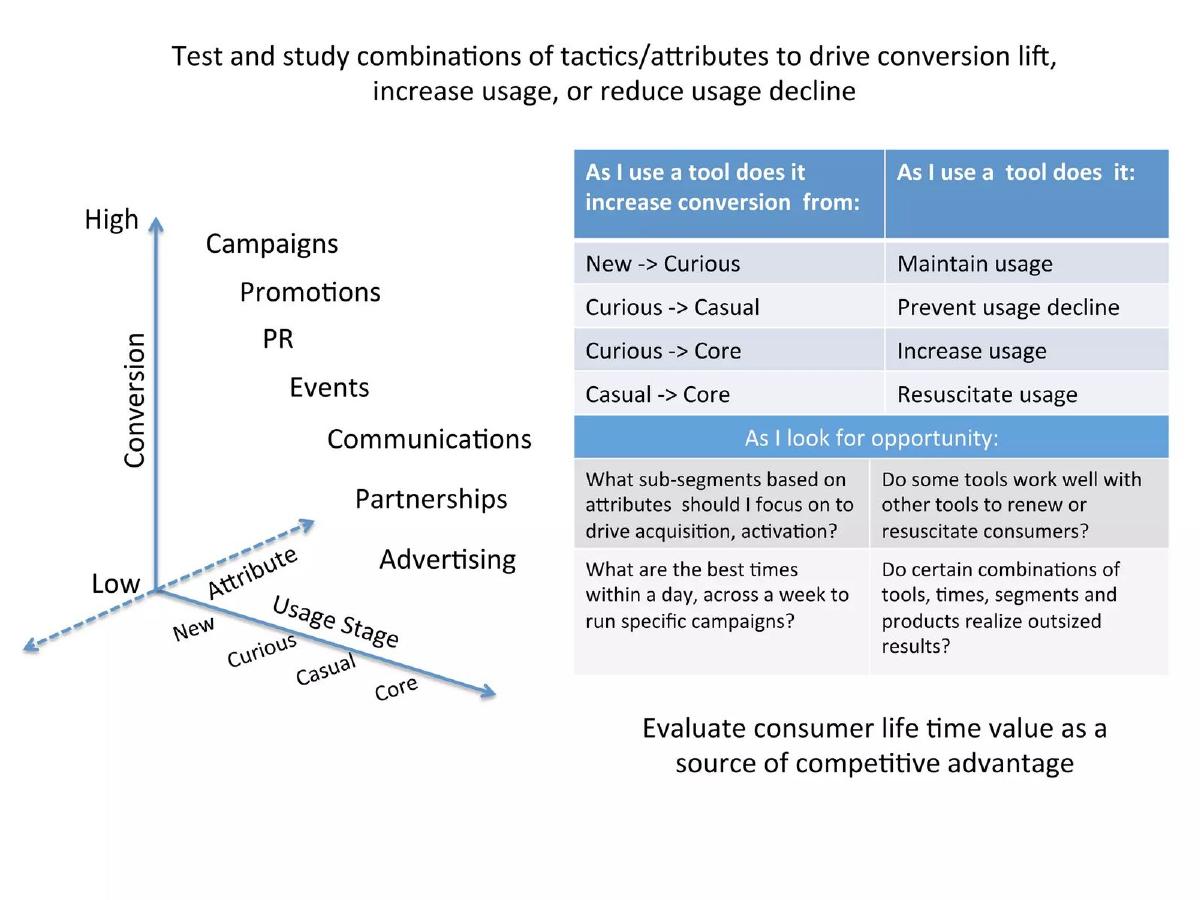
Slide 3: Conversion and Usage Framework
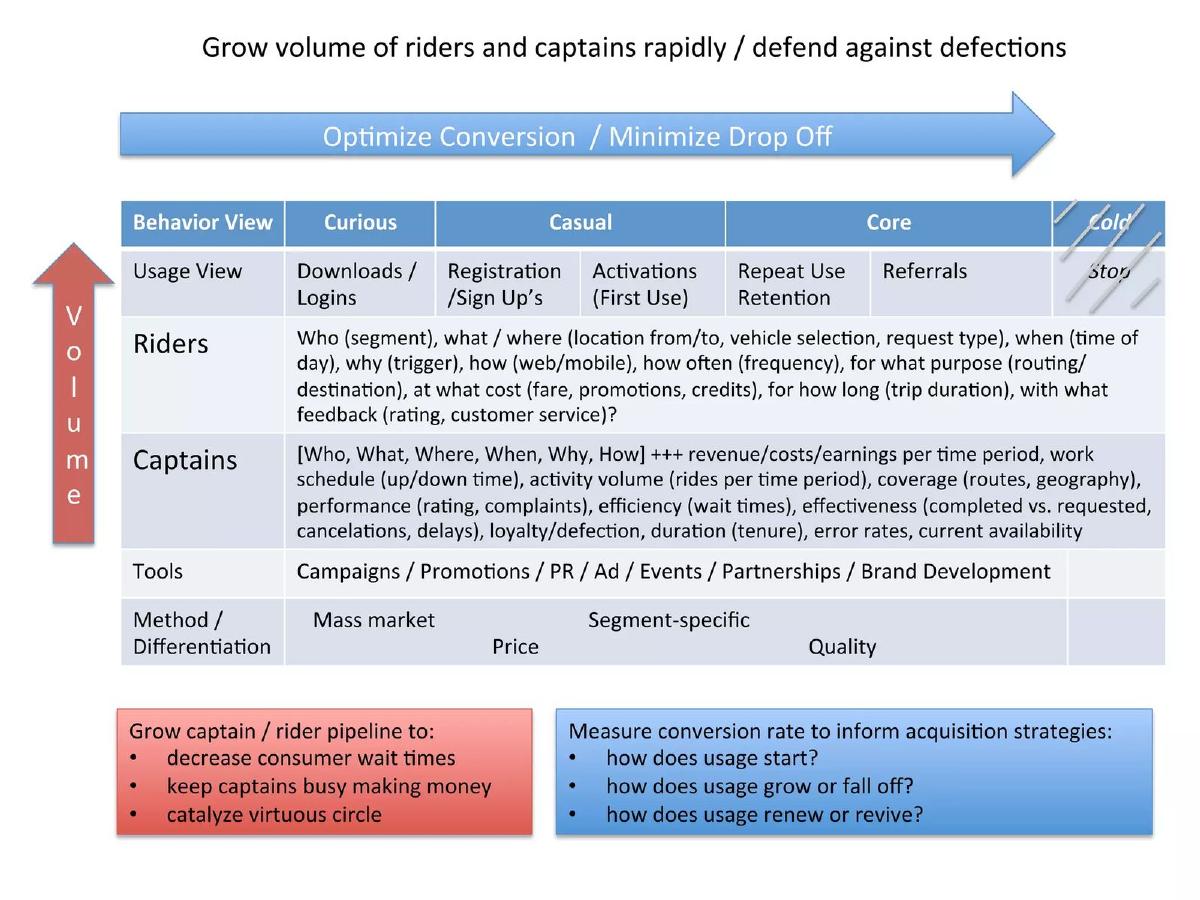
This slide introduces a three-dimensional graph plotting Conversion, Attribute, and Usage Stage . It outlines a sophisticated funnel moving users from "New" to "Curious," "Casual," and finally "Core." The table on the right asks critical questions about how to "resuscitate usage" and evaluate "consumer life time value as a source of competitive advantage." It shows a company focused on data-driven retention rather than just raw acquisition.
Slide 4: Hyper-Local Targeting
Slide 4 demonstrates Careem's "home team advantage." It lists common ride-sharing destinations, including "mosques," "tourist sites," and "cafes." The slide poses a forward-looking question: "Can we predict trips and then suggest nearby Captains?" It also hints at a secondary revenue stream by integrating social media and advertising products based on destination predictions.
Slide 5: Playing to Strengths
This slide lists "Careem assets," emphasizing "Custom created maps" and "1-4 years of user data / analytics in each market." In regions where Google Maps was often incomplete, owning the mapping data was a significant technical moat. They also highlight "Regulatory knowledge" and "Localized teams," reinforcing the idea that a global player cannot simply 'drop in' and win.
Slide 6: The Benefit of Competition
In a clever rhetorical move, Slide 6 argues that a "global competitor entering market" actually helps by building "awareness of the ride-share category." This allows Careem to focus its energy on "differentiated message and brand" rather than the expensive task of educating the public on what ride-sharing is.
Slide 7: Brand Reinforcement
This slide focuses on the "Human touch." It lists brand values like "People not statistics" and "Honor and respect our users." The tools mentioned include "short form, un-planned video testimonials" from both riders and Captains. This is a direct counter-narrative to the perceived cold, algorithmic nature of a global tech giant.
Slide 8: Targeted Campaigns
Slide 8 gets into the weeds of segmentation. It identifies niche segments like "Parents," "Seniors," and "Single women." The message examples are culturally specific, such as "Let Careem take you where you need to go with confidence and trust" for single women, addressing specific regional safety concerns.
Slide 9 & 10: Partnerships and Sponsorships
These slides outline a massive ecosystem of local entities, from "Beauty parlors" to "Universities." The goal is to "Parlay into future delivery service" (Slide 9) and use high-usage apps like "Restaurant reservation apps" or "Weather apps" to trigger co-branded promotions (Slide 10).
Slide 11: Monetizing Destination Data
This is a high-value slide. It explains how Careem can "negotiate targeted ad's" based on where the rider is going. If a passenger is en route to a grocery store, Careem could send a "tailored SMS advertisement and coupon" for specific items while they are still in the car. This transforms the ride into a commerce opportunity.
Slide 12: Fixed Price Strategy
To combat "uncertainty around price," Slide 12 proposes studying high-traffic routes (e.g., a route with 5,000 cars daily) and offering a "fixed price (vs. a range)" for specific times of day. This is presented as a way to maximize new ridership by making the service more predictable than driving one's own car.
Slide 13 & 14: Lifetime Value and Subscriptions
Slide 13 focuses on "consumer life time value," noting that "Competitors do not focus on consumer life-time value." Slide 14 introduces "Careem Plus," a subscription model "borrowed from amazon.com." It suggests usage-based fees and game-ification of incentives to increase Captain activation and rider loyalty.
Slide 15: Relationship Marketing
This slide doubles down on the "local business" identity. It suggests "signature relationship items" like the Captain always opening the door or a "personable and personalized welcome." The goal is to make the consumer feel: "I care about my country, I care about my community and I made a wise choice."
Slide 16, 17 & 18: The Supply Side (Captains)
The final slides in this set focus on the "Captain mind set." Slide 18 is particularly detailed, proposing a "Captain Support Pack" that includes "negotiated discount rates on fuel" and "basic repairs." This is a strategic move to "Reduce Captain tension over price reduction promotions," acknowledging that driver happiness is essential for marketplace stability.
Slide 19: Stimulating Supply
The final slide discusses "new captain acquisition," including a "car financing program" where Captains work for Careem for the life of the loan. It also mentions a "referrals program" based on an "Amway model" (% of revenues of each Captain you recruit). This shows a willingness to use aggressive, non-traditional growth tactics to secure the supply side of the market.
What Works in This Deck
Honesty about Competition: Most decks try to hand-wave away competitors. Careem does the opposite, dedicating entire slides to Uber's strengths. This builds immense credibility with investors because it shows the founders aren't delusional about the fight ahead.
Hyper-Localization: The inclusion of specific regional needs—like mosque destinations, safety for single women, and the lack of reliable local maps—proves that Careem has a 'right to win' in this specific geography that a Silicon Valley firm might overlook.
Dual-Marketplace Focus: The deck gives almost as much weight to the 'Captain' experience as the 'Rider' experience. In ride-sharing, supply is often the harder side to solve, and Careem’s detailed plans for Captain support packs and financing show deep operational thinking.
What is Missing
The Team: In the 19 slides provided, there is no team slide. For a $1.7M seed round, the pedigree of the founders (ex-McKinsey) was a major selling point that is absent here.
Unit Economics: While the deck talks about 'Profitability' as a metric to test (Slide 16), it doesn't show the actual CAC (Customer Acquisition Cost) or LTV (Lifetime Value) figures. It discusses the theory of LTV rather than the reality of their current cohorts.
The Ask: There is no slide detailing the funding requirement, the valuation, or the use of proceeds. This suggests this version of the deck might have been used for strategic partnerships or internal alignment as much as for pure fundraising.
What a Founder Should Copy
The 'Home Team' Narrative: If you are competing against a global incumbent, don't try to out-tech them. Out-local them. Use Careem's approach of identifying cultural nuances that the global player's algorithm will miss.
Strategic Transparency: Follow Careem's lead in Slide 2. List your competitor's 'nearly unlimited capital' as a challenge, then explain why your specific approach makes that capital less effective.
Data as a Product: Careem’s idea to turn destination data into an advertising revenue stream (Slide 11) is a great example of 'Layered Monetization.' Founders should look for ways to turn the data they collect into secondary value for partners.
Frequently asked questions
- How did Careem address the threat of Uber's massive capital?
- Careem acknowledged Uber's 'nearly unlimited capital' on Slide 2 but argued that Uber lacked priority in areas like Captain satisfaction and local corporate reputation. Careem focused on 'cultural relevance' and 'regulatory knowledge' (Slide 5) to build barriers that capital alone could not buy, positioning themselves as the 'home team' with a deeper emotional connection to the community.
- What unique data points did Careem use for their marketing strategy?
- Unlike Western ride-sharing decks, Careem highlighted local-specific destinations such as 'mosques' and 'tourist sites' on Slide 4. They proposed using this destination data to predict trips and send 'tailored SMS advertisements' for the specific stores or restaurants a passenger was currently en route to (Slide 11), effectively turning the car into a targeted marketing platform.
- How did the deck approach driver (Captain) retention?
- Careem treated drivers as a distinct customer segment, referring to them as 'Captains.' Slide 18 details a 'Captain Support Pack' including negotiated discounts on fuel and maintenance to offset the 'tension' caused by rider promotions. They even explored a 'car financing program' where Captains would work for Careem for the life of the loan (Slide 19).
- What was Careem's plan for increasing Customer Lifetime Value (LTV)?
- Slide 14 introduces 'Careem Plus,' a subscription model inspired by Amazon. The goal was to create predictable revenue through monthly fees or usage-based tiers (e.g., X miles per month for Y fee). They also planned to use 'surprise benefits' and fixed rates on high-traffic routes to reward long-term, profitable consumers (Slide 13).
- What is missing from this version of the pitch deck?
- The 19-slide selection is heavily focused on strategy and operations. It lacks a traditional 'Team' slide, a 'Financials' slide showing historical revenue, and a specific 'The Ask' slide detailing how much they were raising at that moment. While the catalogue states they raised $1.7M, the deck itself functions more as a strategic roadmap than a standard Seed-stage pitch.