Fitpal’s 2015 pitch deck is a masterclass in narrative momentum. By framing Latin America’s inactivity as a multi-billion dollar problem for health insurers, the founders positioned their gym-aggregator model as a preventative health solution rather than just a fitness app. The deck moves quickly from a macro-problem (inactivity) to micro-traction (+200k classes taken) and finishes with a massive growth projection ($4.2M) based on a partnership with Colombia’s largest health insurer. While the deck lacks a formal 'Ask' slide and detailed unit economics, the strength of the team—featuring a fo…
Key takeaways
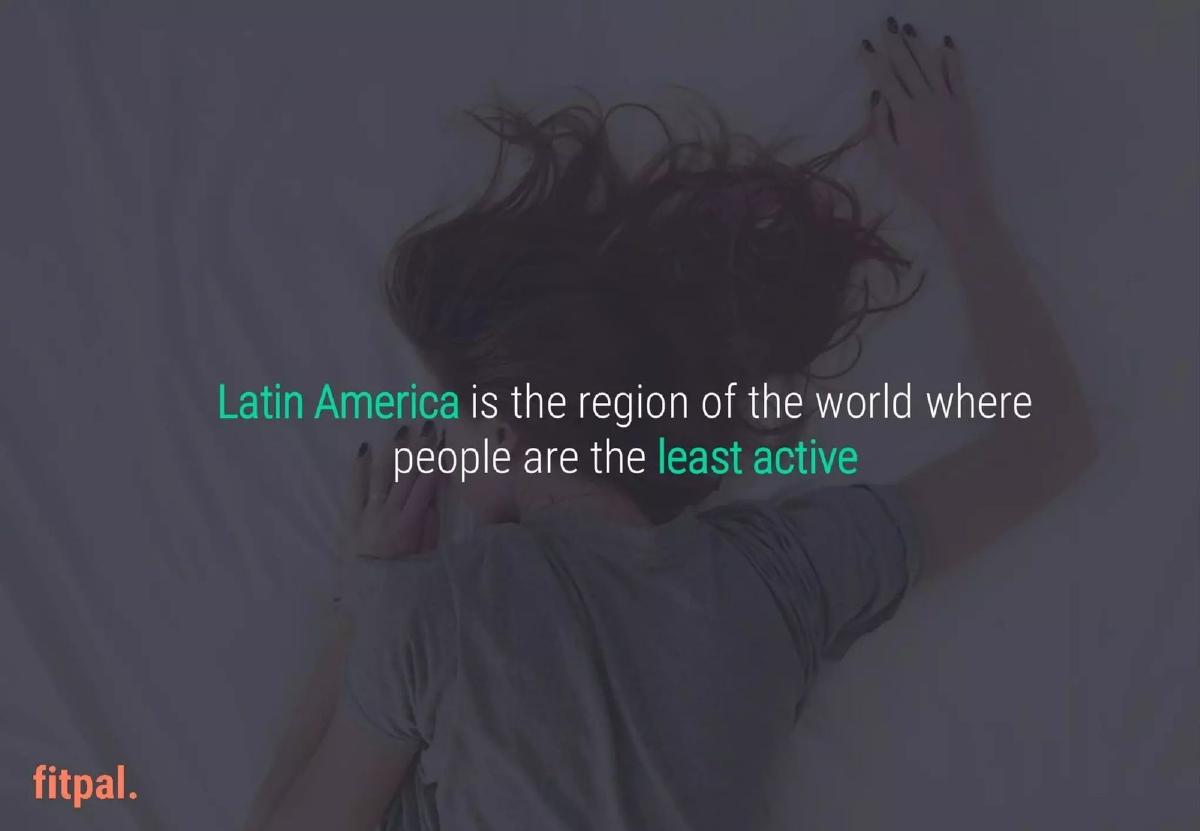
- The deck identifies a specific regional pain point: Latin America is the least active region in the world (Slide 2).
- It quantifies the enterprise opportunity by noting health insurers spend $2 billion annually to encourage movement (Slide 4).
- User engagement is a core metric, claiming users exercise 25% more after joining the platform (Slide 7).
- The platform demonstrated significant supply-side scale with over 470 gyms and 75,000 classes available (Slide 8).
- The revenue slide shows a sharp upward trajectory, reaching a $550k annual run rate (Slide 10).
- The deck projects a jump to $4.2M in revenue driven by a partnership with the largest health insurer in Colombia (Slide 11).
- The team slide leverages 'social proof' by highlighting experience at Rappi, described as Latam's latest unicorn (Slide 12).
- The deck completely omits a specific 'Ask' slide, leaving the $1M target to be inferred or discussed in person.
The Narrative of Regional Transformation
Fitpal’s 2015 pitch deck is a lean, 14-slide presentation that successfully raised $1,000,000. At its core, the deck is not just about a gym membership aggregator; it is about solving a systemic health crisis in Latin America. By positioning the company at the intersection of fitness and insurance, the founders created a compelling case for a high-growth, venture-scale business in a region that was, at the time, just beginning to see major unicorn activity.
The Macro Problem (Slides 1-5)
Slide 1 opens with the brand name and the tagline: "Flexible fitness for everyone." The imagery is dark, focused on a kettlebell, setting a serious tone for the problem to follow. Slide 2 immediately hits a high-level pain point, stating that "Latin America is the region of the world where people are the least active." This is a classic 'Why Now' and 'Why Here' setup.
Slide 3 connects inactivity to health outcomes, calling it the "main cause of chronic diseases." This transition is vital because it moves the business model from discretionary spending (gym memberships) to essential spending (healthcare). Slide 4 provides the 'Money Slide' for the problem: "Health insurers are spending $2 billion / year trying to get people to move." This slide identifies the ultimate payer in the ecosystem, suggesting that Fitpal isn't just selling to consumers, but to the institutions that bear the cost of illness.
Slide 5 adds a touch of empathy and humor, stating "The idea of going to the gym SUCKS," accompanied by an image of an exhausted man. This acknowledges the friction in the current market and sets the stage for Fitpal’s solution.
The Solution and Product (Slides 6-7)
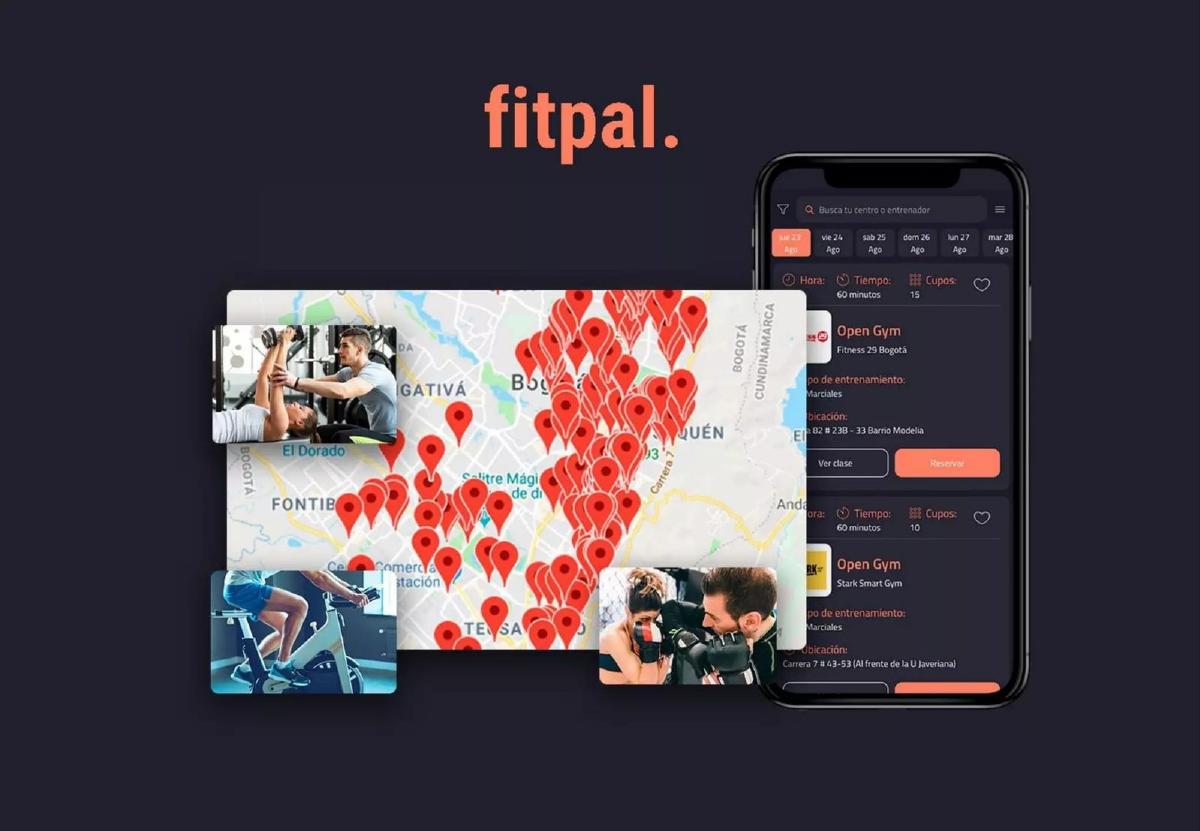
Slide 6 introduces the Fitpal app interface. It shows a map of Bogotá saturated with red pins, indicating high density and availability. The visuals emphasize variety, featuring images of weightlifting, cycling, and boxing. Slide 7 focuses on the impact of the product, claiming that "People exercise 25% more with fitpal." This is a critical engagement metric that validates the company's mission to increase regional activity levels.
Traction and Market Validation (Slides 8-11)
Slide 8 is the primary traction slide. It lists three impressive figures: +470 Gyms , +75k Classes to choose from , and +200k Classes taken by our users . This demonstrates that the two-sided marketplace has achieved liquidity. Slide 9 is a duplicate of Slide 8 but adds a large green circle stating "$1M funding," likely indicating a previous round or the target for the current round, though the deck lacks a formal ask slide.
Slide 10 introduces the financial performance. It shows a revenue graph trending upward to a "$550k Revenue / year" run rate. The graph is simple but effective at showing momentum. Slide 11 is the most aggressive slide in the deck. It shows the revenue line continuing to climb to $4.2M , explicitly linked to a partnership with the "Largest health insurer in Colombia." This provides a clear, logical path to a 7.6x growth spurt, moving the company from a startup to a significant regional player.
The Team and Vision (Slides 12-14)
Slide 12 presents the founders, Julián Torres (CEO) and Santiago Aparicio (CRO). The slide is heavy on pedigree. Torres is noted for founding five companies and his association with InQlab. Aparicio is linked to Rappi , which the slide calls "Latam's latest unicorn," as well as the London School of Economics and IE Business School. This combination of entrepreneurial experience and high-growth startup exposure is a strong signal for investors.
Slide 13 offers a final vision statement: "Improving your quality of life one workout at a time," shown alongside mobile devices and a wearable fitness tracker. Slide 14 is a simple contact slide for Julián Torres.
What Works in the Fitpal Deck
The Insurance Angle: By identifying the $2 billion spent by insurers (Slide 4), Fitpal reframes their TAM (Total Addressable Market) from fitness enthusiasts to the entire insured population of Latin America. · Density Visualization: The map on Slide 6 is an excellent way to show the 'moat' of a local marketplace. A high density of pins suggests that a competitor would have a hard time catching up on the supply side. · Clear Revenue Drivers: Instead of vague promises of growth, Slide 11 ties a specific revenue jump ($550k to $4.2M) to a specific event (the insurer partnership). This makes the projection feel grounded in reality. · Team Pedigree: Mentioning Rappi in 2015 was a massive power move. It signaled that the founders understood how to scale in the specific regulatory and logistical environment of Latin America.
What is Missing
The Ask: There is no slide detailing how much money is being raised in the current round, the valuation, or the specific use of funds. While Slide 9 mentions $1M, it is unclear if that is the goal or a past achievement. · Competition: The deck ignores competitors like ClassPass (which was expanding globally at the time) or local incumbents. Investors generally want to see how a company plans to defend its territory. · Unit Economics: There is no mention of the cost to acquire a user (CAC) or the lifetime value (LTV). In a subscription business, these are the most important metrics for determining if the business is actually healthy. · Market Size (TAM/SAM/SOM): While the $2 billion insurer spend is mentioned, a traditional breakdown of the fitness market size in LATAM is absent.
What a Founder Should Copy
The 'Problem-Payer' Connection: If you are building a consumer product that has a secondary benefit for a large enterprise (like health insurance or corporate wellness), make that connection early. It proves your business has multiple paths to monetization. · Visual Traction: Use maps and simple, large-font numbers to show scale. Slide 8 is a perfect example of how to communicate marketplace liquidity without cluttering the slide with spreadsheets. · Momentum Graphs: Don't just show a number; show a trend. The revenue graphs on Slides 10 and 11 are effective because they show the 'hockey stick' shape that venture investors look for. · Social Proof: If your team has worked at a regional unicorn or attended a top-tier school, put those logos front and center. In early-stage fundraising, the 'who' is often as important as the 'what.'
Frequently asked questions
- What was the primary problem Fitpal aimed to solve?
- Fitpal targeted the health crisis in Latin America, which Slide 2 identifies as the least active region globally. They framed 'not exercising' as the primary cause of chronic disease (Slide 3) and highlighted that health insurers are currently spending $2 billion per year to solve this (Slide 4). By doing so, they moved the conversation from 'fitness app' to 'healthcare cost-saver.'
- How did Fitpal demonstrate product-market fit in the deck?
- They used three key metrics on Slide 8: 470+ partner gyms, 75,000+ available classes, and 200,000+ classes already taken by users. Additionally, Slide 7 claims that users exercise 25% more with Fitpal, suggesting the product successfully changes user behavior, which is the core value proposition for their insurance partners.
- What was the most significant growth driver mentioned?
- The partnership with the 'Largest health insurer in Colombia' mentioned on Slide 11 is the deck's turning point. It shows a revenue leap from a $550k run rate to a projected $4.2M. This B2B2C approach suggests a lower customer acquisition cost and higher scalability than a pure consumer-facing model.
- Who were the founders and what was their background?
- The team consisted of Julián Torres (CEO) and Santiago Aparicio (CRO). Torres is credited with founding five companies and coming from InQlab, an active Colombian incubator. Aparicio brought 'unicorn' experience from Rappi and academic credentials from the London School of Economics and IE Business School (Slide 12).
- What is missing from this deck that a modern founder should include?
- The deck is missing a clear 'Ask' slide detailing how much they are raising and the specific milestones that capital will unlock. It also lacks a competitive landscape analysis and a breakdown of unit economics (LTV/CAC). While the revenue growth is impressive, investors today usually require more detail on the sustainability of those margins.