Fisker’s 2020 SPAC deck is a masterclass in positioning a hardware company as a 'digital car company' to capture tech-sector multiples. The presentation centers on an asset-light strategy, specifically negotiating to use Volkswagen’s MEB platform to reduce development time and costs. By outsourcing manufacturing and logistics to an OEM partner, Fisker projected a path to being cash flow positive by 2023, just one year after the anticipated start of production. The deck successfully raised $2.9 billion in a transaction with Spartan Energy Acquisition Corp., backed by institutional heavyweights…
Key takeaways
- The transaction implied a pro forma enterprise value of $1.9 billion, representing 0.6x projected 2023 revenue (Slide 7).
- Fisker positioned itself as an 'asset-light' manufacturer by seeking to use Volkswagen’s MEB electric vehicle platform to reduce costs and time to market (Slide 13).
- The company projected rapid scaling from 8,000 units in 2022 to 225,000 units by 2025 (Slide 29).
- A core value proposition is the 'Flexible Lease' model, offering a $379 monthly payment with no fixed term and 30,000 miles per year (Slide 17).
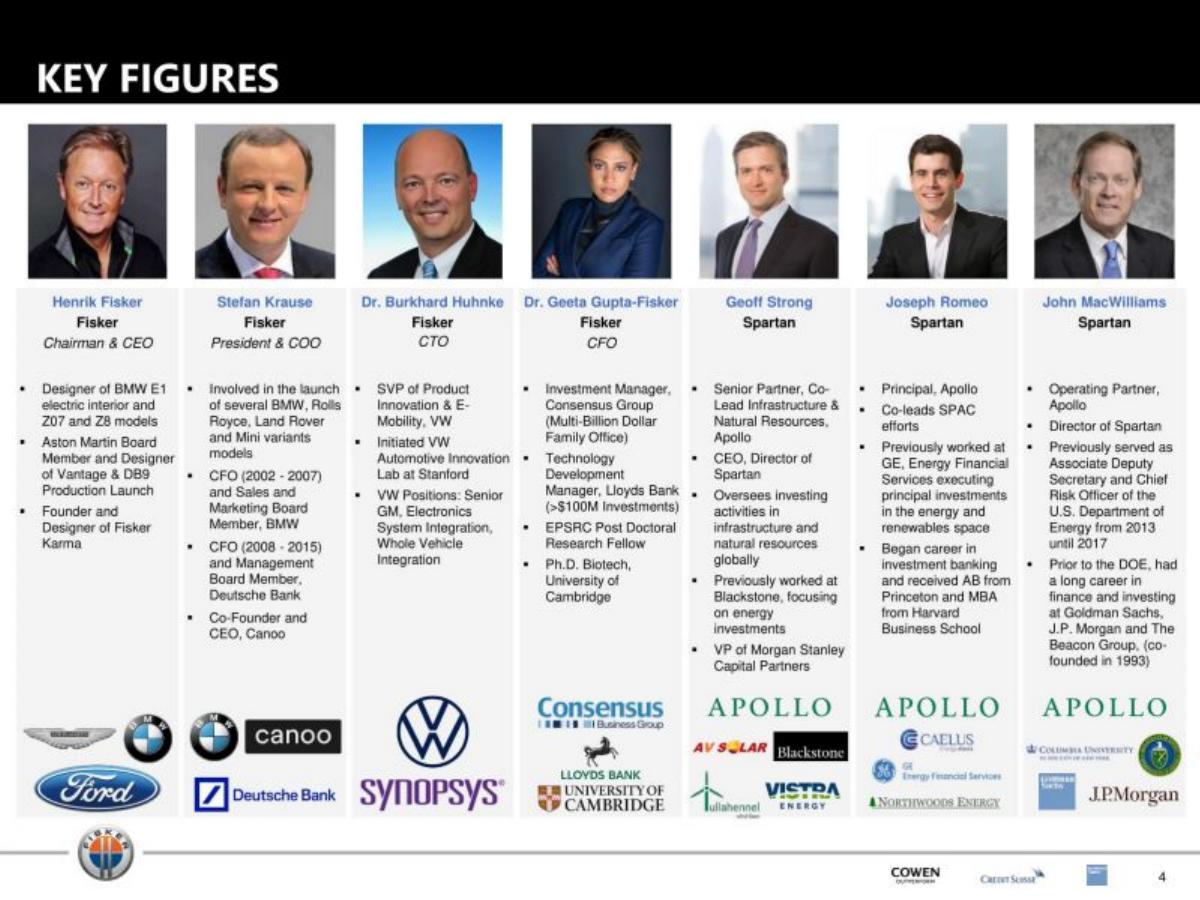
- The deck heavily leverages Henrik Fisker’s design heritage, citing his work on the Aston Martin DB9 and BMW Z8 (Slide 9).
- Financial projections anticipated $13.2 billion in total revenue by 2025, with a 21% Adjusted EBITDA margin (Slide 29).
- The deal was structured to provide approximately $1.0 billion in net proceeds to the company to fund the start of production for the Fisker Ocean SUV (Slide 7).
- Valuation benchmarking compared Fisker’s 0.6x revenue multiple against Tesla’s 4.8x and Nikola’s 15.2x for the year 2023 (Slide 35).
Executive Summary: The Digital Car Company Pivot
Fisker’s July 2020 investor presentation arrived at the height of the SPAC boom, specifically designed to transition the company from a private entity to a publicly traded one via Spartan Energy Acquisition Corp. The deck’s primary narrative is the rejection of the traditional, vertically integrated automotive model in favor of what it calls the "World’s First Digital Car Company." By focusing on design and the user interface while outsourcing the capital-intensive manufacturing and platform engineering, Fisker promised investors a faster, cheaper, and less risky path to EV market share.
Slide 1-3: Branding and Disclaimers
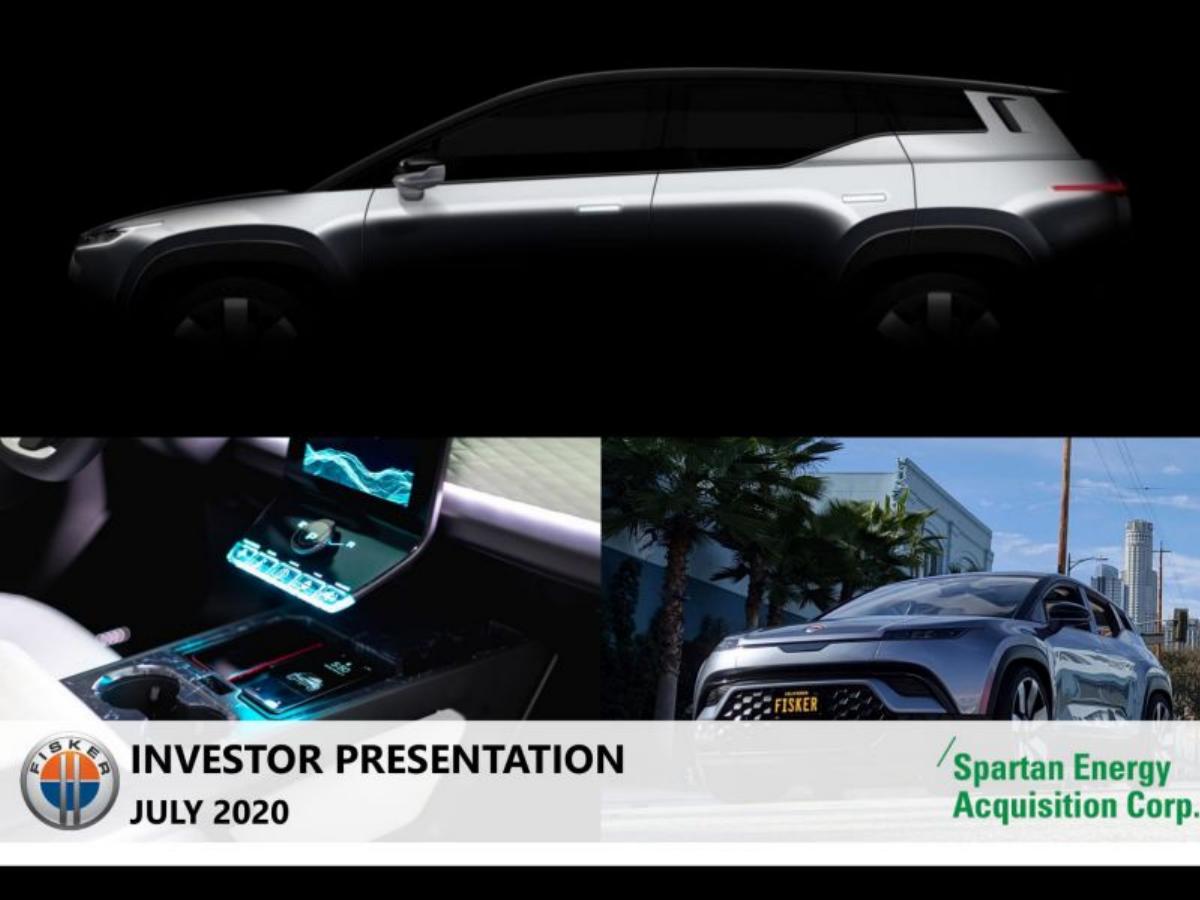
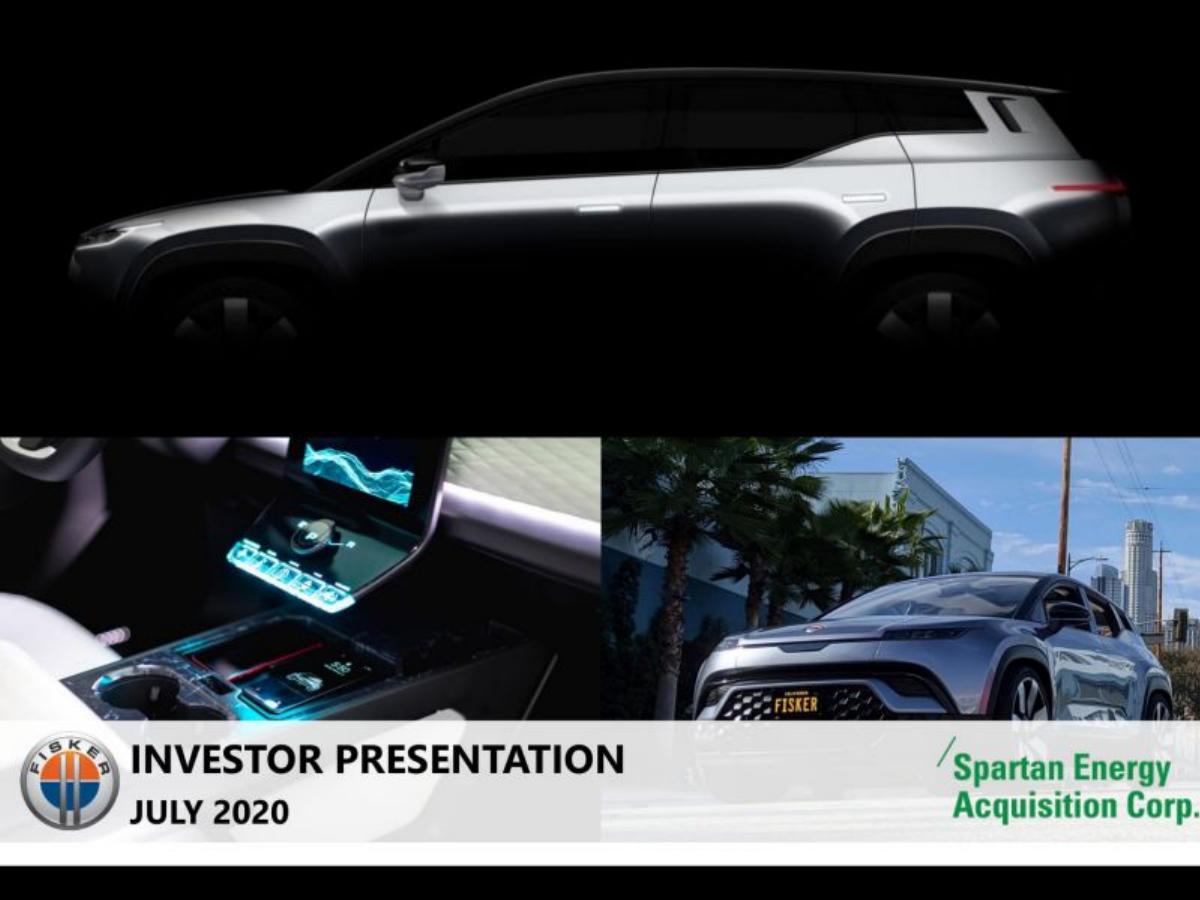
The presentation opens with high-quality renders of the Fisker Ocean, establishing a luxury aesthetic immediately. Slide 3 contains standard, dense legal disclaimers regarding non-GAAP financial measures and forward-looking statements. This is typical for SPAC presentations, which, unlike traditional IPOs at the time, allowed for the inclusion of long-term financial projections.
Slide 5: The Core Thesis
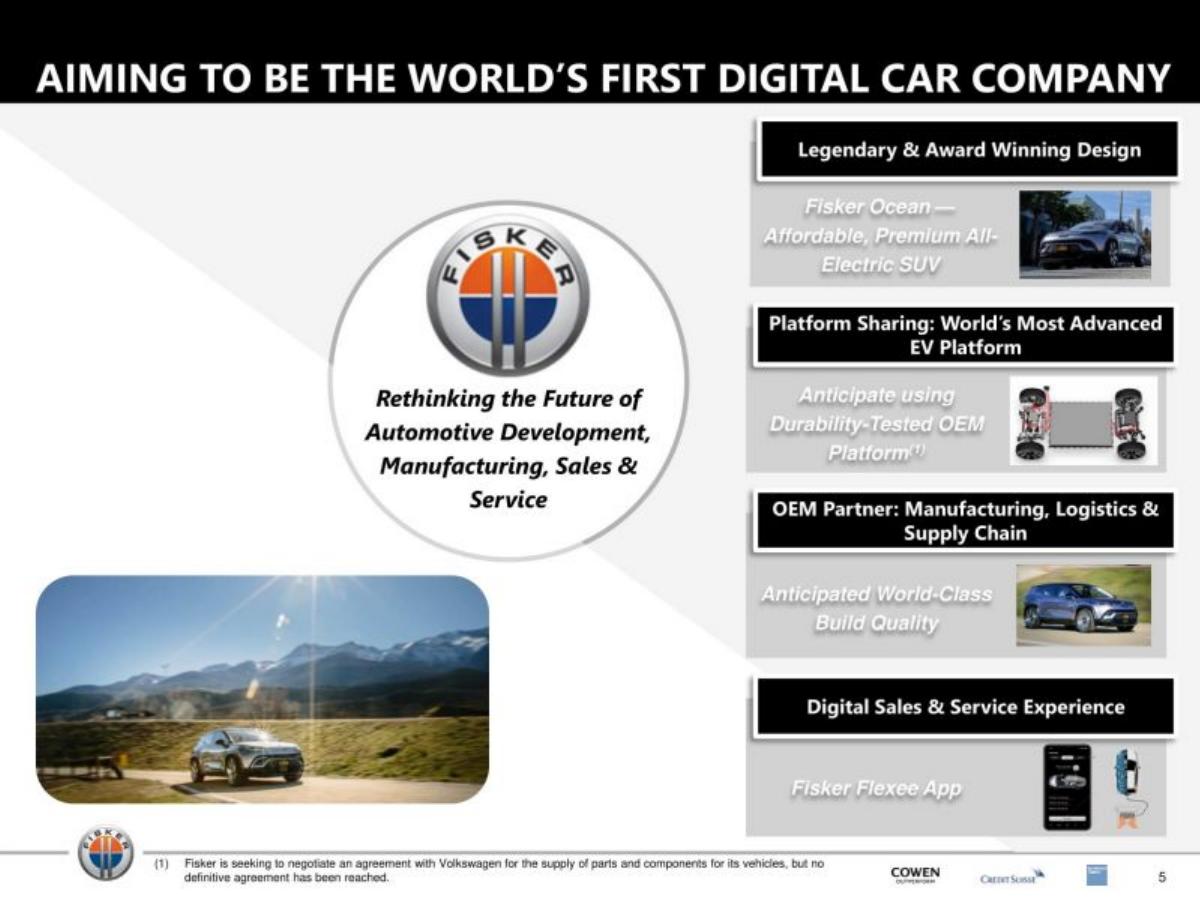
Slide 5, titled "Aiming to be the World’s First Digital Car Company," is the most important slide for understanding the business model. It breaks the strategy into four pillars: Legendary Design, Platform Sharing, OEM Manufacturing Partners, and a Digital Sales/Service experience via the "Fisker Flexee" app. A critical footnote at the bottom reveals a major dependency: "Fisker is seeking to negotiate an agreement with Volkswagen for the supply of parts... but no definitive agreement has been reached." This highlights that the entire "asset-light" strategy was predicated on a deal that was not yet signed.
Slide 7: Transaction Overview
This slide outlines the financial mechanics of the deal. The transaction implied a pro forma enterprise value of $1.9 billion. Key figures include a projected 2023 revenue of $3.3 billion and an Adjusted EBITDA of $441 million. The deal was designed to result in approximately $1.0 billion in net proceeds, which the company stated would "fully fund Fisker to start of production." This is a bold claim in the automotive world, where $1 billion is often considered the bare minimum for a single vehicle program.
Slide 9-11: Design Heritage and Development
Fisker leans heavily on the personal brand of its founder. Slide 9 showcases Henrik Fisker’s portfolio, including the Aston Martin DB9 and BMW Z8, to validate the company's ability to create "Legendary & Award Winning Design." Slide 11 shows the physical progress of the Ocean SUV, including clay models and a "fully drivable prototype" built by VW’s Italdesign. This is intended to prove that the company is beyond the "powerpoint startup" stage, despite not having its own factory.
Slide 13: The Platform Sharing Arrangement
Fisker details the benefits of using Volkswagen’s MEB platform. They claim this allow them to enter the market in "approximately half of the time" and with "costs substantially reduced" compared to a vertically integrated model. By using a "durability-tested" platform, they argue they are de-risking the most technically difficult part of the vehicle: the powertrain and battery integration.
Slide 15-17: Market Opportunity and Leasing
Slide 15 positions the Fisker Ocean against competitors like the Tesla Model Y and Jaguar I-PACE. It highlights a price point of $37.5k to $69k, claiming to be "Truly Affordable." Slide 17 introduces the "Flexible Leasing Strategy," which is a standout feature of their business model. It proposes a $379 monthly payment with no fixed term and a massive 30,000-mile annual allowance. This was a direct attempt to disrupt traditional car ownership and leasing models, though the unit economics of such a generous lease are not detailed on this slide.
Slide 19-23: Supply Chain and Infrastructure
Slide 19 discusses battery supply, again referencing the anticipated VW relationship to secure access to a global supply chain including LG Chem and CATL. Slide 21 provides a timeline, with the "Start of Production" anticipated in Q4 2022. Slide 23 addresses the "charging anxiety" hurdle by showing a partnership with Electrifiy America, providing Ocean owners access to a nationwide fast-charging network.
Slide 25-27: IP and Financial De-Risking
Fisker claims over 150 trademarks and patents globally on Slide 25. Slide 27 summarizes why this model is "de-risked," citing "economies of scale with profitability expected on the first unit produced." This is a significant claim, as most automotive OEMs lose money on every vehicle for the first several years of production. Fisker attributes this to the use of an established supply chain and reduced upfront capital investment.
Slide 29: Summary Financial Projections
This is the "hockey stick" slide. Fisker projects total revenue growing from $600 million in 2022 to $13.2 billion in 2025. They forecast becoming cash flow positive in 2023 ($100 million) and reaching $1.9 billion in free cash flow by 2025. These projections assume a flawless execution of the manufacturing partnership and a rapid consumer adoption of the Ocean, Pickup, and Crossover models.
Slide 31-35: Valuation and Benchmarking
The final section of the deck focuses on investor returns. Slide 31 shows the pro forma capitalization, with existing Fisker shareholders retaining 60% ownership. Slide 33 and 35 are dedicated to "Valuation Benchmarking." They use Tesla’s historical trading multiples to suggest that Fisker is undervalued. Specifically, Slide 35 shows Fisker’s 2023E EV/Revenue multiple at 0.6x, compared to Tesla at 8.2x and Nikola at 15.2x. This framing is intended to make the $1.9 billion valuation feel like a bargain.
What Works in This Deck
Visual Storytelling: The use of high-quality photography and renders makes the product feel tangible and premium, which is essential for a luxury brand. · Clear Differentiation: The "asset-light" and "digital car company" labels clearly distinguish Fisker from both legacy OEMs and other EV startups that were trying to build their own factories (like Rivian or Lucid). · Founder Credibility: By showcasing Henrik Fisker’s specific design successes (Aston Martin, BMW), the deck builds immediate trust in the product’s aesthetic appeal. · Aggressive Competitive Comparison: The leasing slide (Slide 17) provides a very clear, numbers-driven reason why a consumer would choose a Fisker over a Tesla or Jaguar.
What Is Missing or Weak
The VW Contingency: The entire deck relies on a partnership with Volkswagen that was not finalized. The footnote on Slide 5 is a massive red flag for any seasoned analyst, as it indicates the core of the business model was still a "negotiation." · Unit Economics of Leasing: While the $379/month lease is attractive to customers, the deck does not explain how Fisker maintains margins with a 30,000-mile annual allowance and no fixed term, which typically leads to high depreciation costs. · Manufacturing Specifics: The deck mentions an "OEM Partner" for manufacturing but does not name them or provide details on the agreement terms, leaving a gap in the "how" of their production plan. · Software Depth: For a company claiming to be the "first digital car company," there is very little detail on the actual software stack, UI/UX, or proprietary technology beyond high-level bullet points.
What Other Founders Should Copy
The Benchmarking Approach: If you are entering a crowded market, use a slide like Slide 35 to show how your valuation compares to peers on a forward-looking basis. It helps investors justify the entry price. · Focusing on Core Competencies: Fisker’s decision to focus on what they were best at (design) while outsourcing the rest is a smart way to present a lower-CAPEX business model. · Milestone Transparency: The timeline on Slide 21 is excellent. It clearly shows what has been "Executed" versus what is "Anticipated," which builds a roadmap for investors to track progress post-funding.
Frequently asked questions
- What was the primary goal of the Fisker 2020 pitch deck?
- The primary goal was to facilitate a SPAC merger with Spartan Energy Acquisition Corp. to raise the capital necessary to bring the Fisker Ocean SUV to market. The deck aimed to convince investors that Fisker’s asset-light model—outsourcing manufacturing and platform development—minimized the traditional risks and high capital expenditures associated with automotive startups.
- How did Fisker justify its valuation in the deck?
- Fisker used 'Valuation Benchmarking' (Slide 35) to show that its 0.6x 2023E revenue multiple was significantly lower than peers like Tesla (8.2x 2021E revenue) and Nikola (15.2x 2023E revenue). By showing a massive discount to other EV players, they presented the $1.9 billion enterprise value as an attractive entry point for investors.
- What is the 'Asset-Light' model mentioned in the presentation?
- The asset-light model involves Fisker focusing on design, software, and branding while outsourcing the 'heavy' aspects of the business. Specifically, they planned to use an existing OEM's platform (Volkswagen's MEB) and an OEM partner for manufacturing and supply chain management, rather than building their own factories from scratch (Slide 5).
- What were the projected production volumes for the Fisker Ocean?
- According to Slide 29, Fisker projected producing 8,000 units in 2022 (the anticipated start of production year), jumping to 51,000 in 2023, 150,000 in 2024, and reaching a total of 225,000 units across three vehicle models by 2025.
- Who were the key investors and partners identified in the deck?
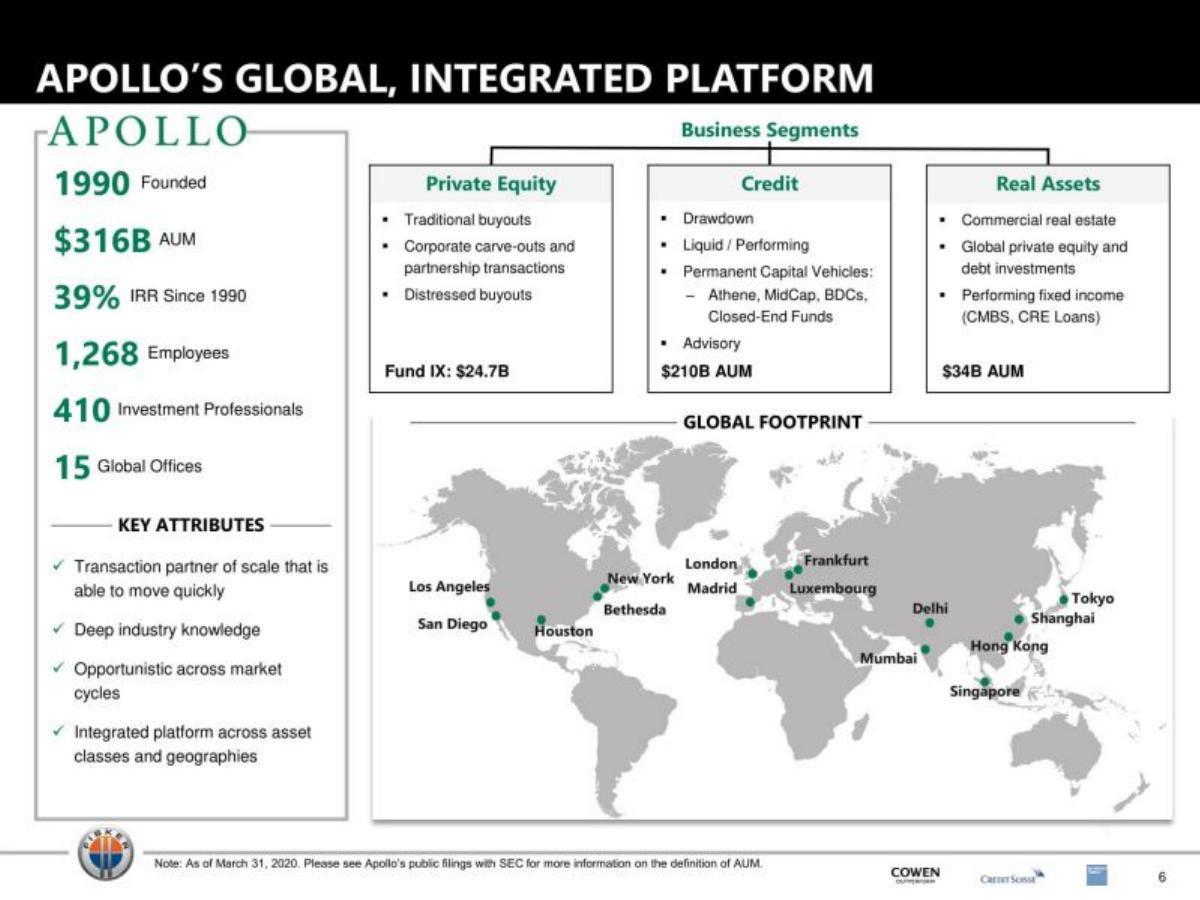
- The transaction was led by Spartan Energy Acquisition Corp (a SPAC sponsored by Apollo Global Management). Institutional investors in the $500 million PIPE included AllianceBernstein and BlackRock. Volkswagen was identified as the primary anticipated platform partner, though the deck noted that a definitive agreement had not yet been reached (Slide 5).