Fittr’s 13-slide deck from late 2012 is a time capsule of early mobile fitness SaaS. The company sought $250,000 to scale a workout generator that utilized what they described as a 'GPU supercomputing cluster' to create individualized plans. The deck focuses heavily on the cost-prohibitive nature of personal trainers—calculating a $300 monthly expense for users—and positions Fittr as a high-tech, low-cost alternative at $8.99 per month. While the deck lacks traditional traction metrics like MRR or user growth rates, it provides a clear competitive landscape and a specific roadmap for the capi…
Key takeaways
- The company identified a $7.3 billion market for training in 2012, noting a 0.2% increase since 2007 (Slide 8).
- Fittr positioned itself as a cheaper alternative to personal trainers, who cost between $25 and $75 per hour (Slide 7).
- The technology stack claimed to use a GPU supercomputing cluster to generate unique workouts from a database of millions of possibilities (Slide 2).
- The revenue model was a subscription service priced at $8.99 month-to-month or $5.49 for a 6-month pre-paid plan (Slide 10).
- The deck explicitly names three competitors: Gain Fitness (1.5M workouts), Fitocracy (600k+ users), and PumpOne (50k downloads) (Slide 8).
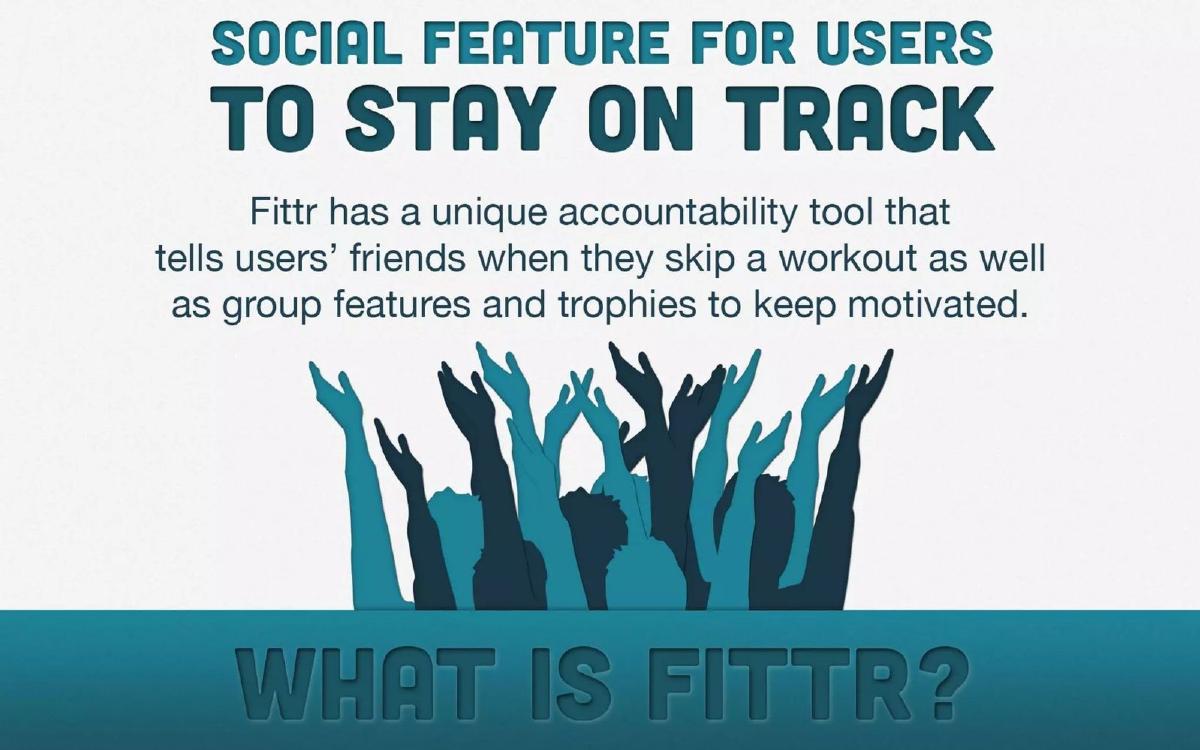
- A unique social feature mentioned is an accountability tool that notifies friends when a user skips a workout (Slide 4).
- The $250,000 investment goal included hiring a developer, server costs, and achieving profitability within one year (Slide 11).
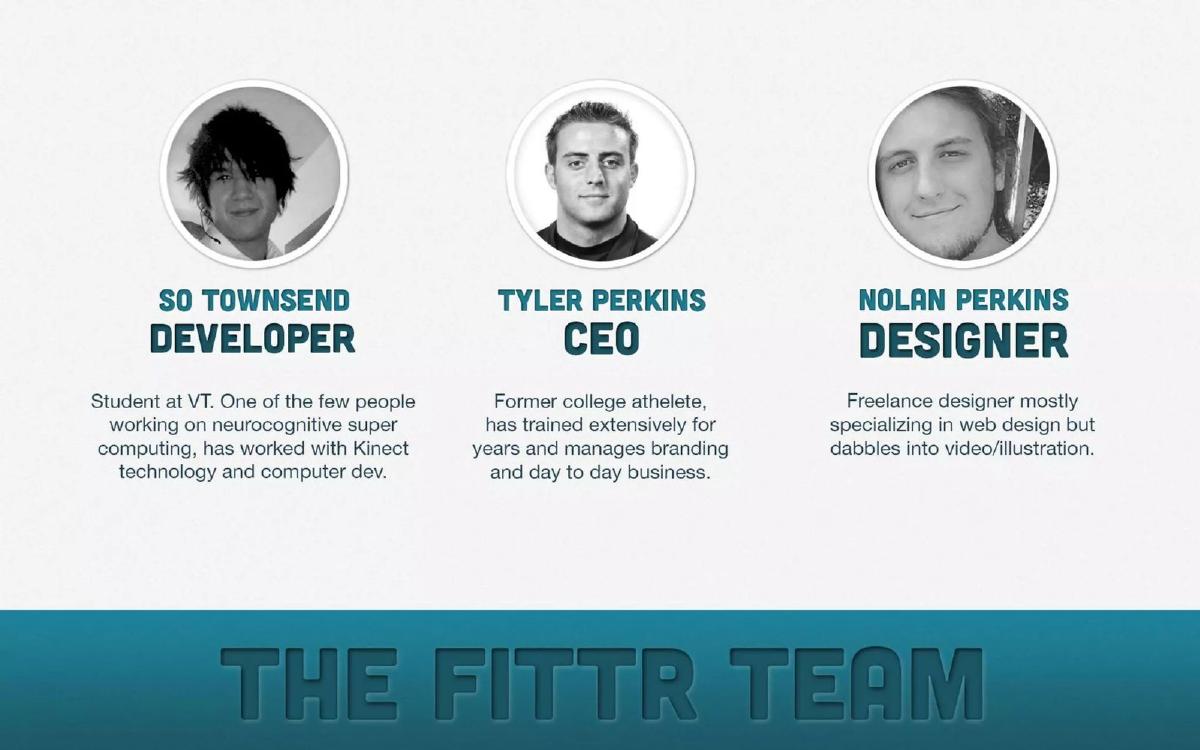
- The team consisted of a developer from Virginia Tech, a former college athlete as CEO, and a freelance designer (Slide 5).
Introduction to the Fittr Pitch Deck
The Fittr pitch deck, dated December 5, 2012, represents an early attempt to merge high-performance computing with consumer fitness. At a time when mobile apps were beginning to disrupt traditional service industries, Fittr targeted the personal training market. The deck is a 13-slide presentation designed to secure a $250,000 seed investment. It relies heavily on the promise of "GPU supercomputing" and "A.I."—terms that were far less common in the consumer app space in 2012 than they are today. The following teardown examines the structure, claims, and omissions of this early fitness-tech pitch.
The Vision and Technology (Slides 1-4)
Slide 1: Title Slide The deck opens with the Fittr logo and the tagline "Lumosity Meets Fitness." This comparison to Lumosity, a popular brain-training app at the time, immediately signals that the product is data-driven and cognitive in its approach to physical health. The slide includes contact information for Tyler Perkins and the date, 12/5/2012.
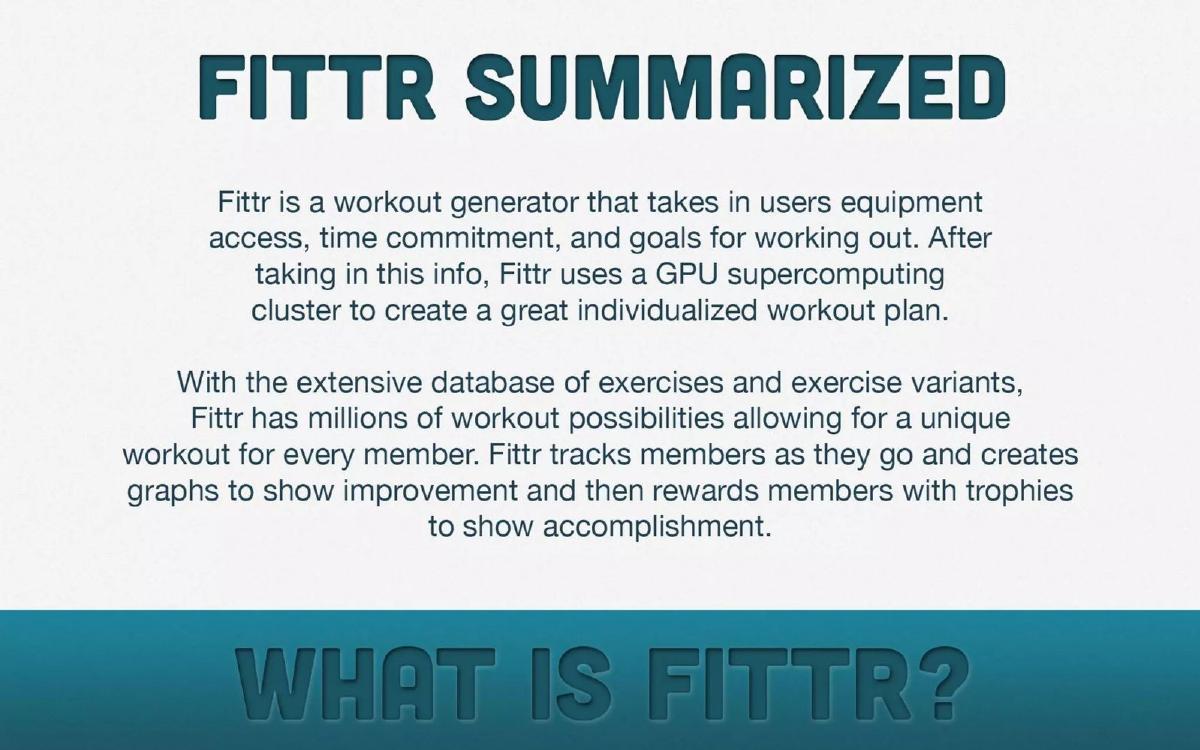
Slide 2: Fittr Summarized This slide defines the product as a "workout generator." It lists the inputs required from the user: equipment access, time commitment, and goals. The technical differentiator is stated clearly: Fittr uses a "GPU supercomputing cluster" to create individualized plans. It mentions an extensive database of exercises allowing for "millions of workout possibilities." The slide also introduces gamification elements, such as tracking improvement via graphs and rewarding members with trophies.
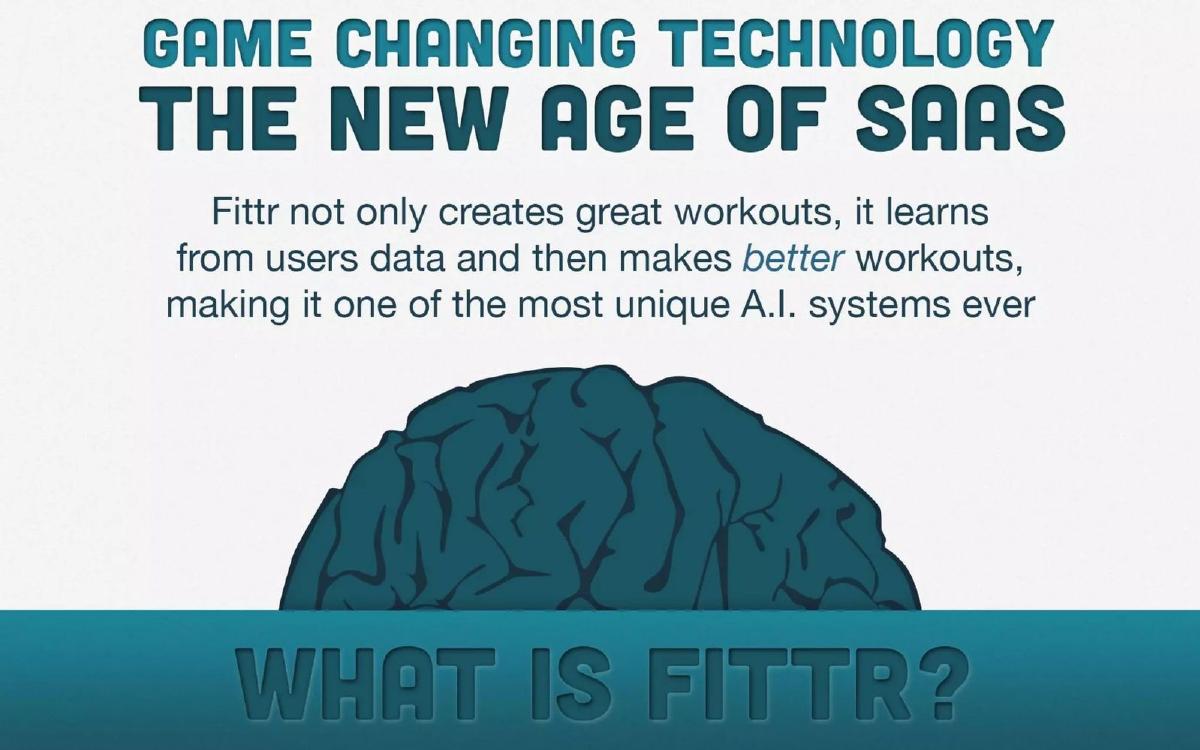
Slide 3: Game Changing Technology Titled "The New Age of SaaS," this slide leans into the artificial intelligence angle. It claims that Fittr learns from user data to make "better workouts," calling it "one of the most unique A.I. systems ever." The use of a brain graphic reinforces the "Lumosity" comparison from the title slide, emphasizing the "smart" nature of the software over simple static workout lists.
Slide 4: Social Feature for Users This slide focuses on retention and accountability. It describes a tool that "tells users' friends when they skip a workout." This aggressive approach to social accountability is positioned as a way to keep users motivated, alongside more standard group features and trophies.
The Team and The Problem (Slides 5-7)
Slide 5: The Fittr Team The team consists of three core members. So Townsend is the Developer, described as a student at Virginia Tech working on "neurocognitive supercomputing" and Kinect technology. Tyler Perkins is the CEO, a former college athlete who manages branding and day-to-day business. Nolan Perkins is the Designer, a freelancer specializing in web design. The team slide establishes a balance of technical capability, domain expertise (athletics), and design.
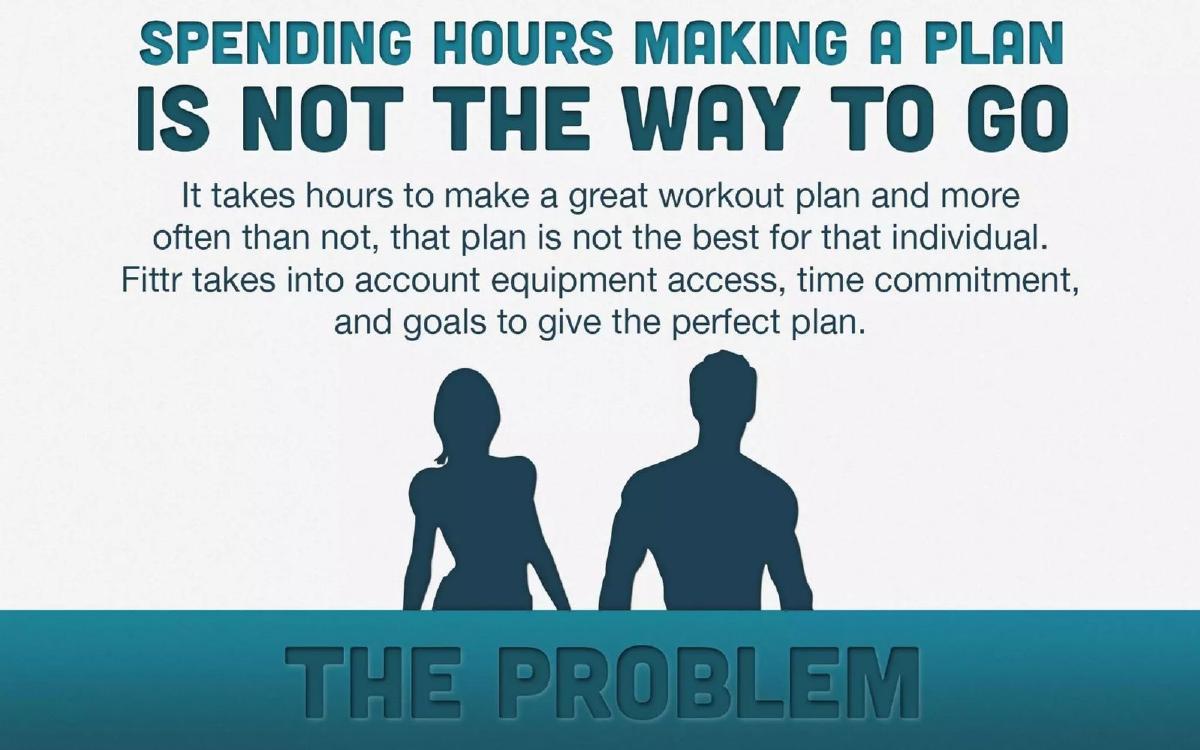
Slide 6: The Problem - Planning The first "Problem" slide argues that manual workout planning is inefficient. It states that it "takes hours to make a great workout plan" and that these plans are often not optimized for the individual. Fittr is presented as the solution that automates this process by accounting for equipment and time constraints.
Slide 7: The Problem - Cost The second "Problem" slide focuses on the financial barrier to fitness. It cites personal trainer prices ranging from $25 to $75 per hour. The slide does the math for the investor: a user working out three days a week would spend over $300 per month. This sets the stage for Fittr’s significantly lower subscription price.
Market and Competition (Slides 8-9)
Slide 8: The Market Fittr identifies a $7.3 billion market for training in 2012. It notes a "0.2% increase since 2007," which it calculates as a "$14,611,200 increase." This slide also lists three direct competitors: Gain Fitness (1.5M workouts built), Fitocracy (600,000+ users), and PumpOne (50,000 downloads in first 30 days). By including competitor metrics, Fittr acknowledges the existing demand in the space.
Slide 9: The Competition This slide is a direct challenge to the incumbents. It claims Fittr "crushes the competition" through "great social features" and an "incredibly advanced process to make workouts." It includes a single iPhone mockup showing a workout list with reps and exercise names like "Dumbbell Curls" and "Barbell Bench."
Business Model and Ask (Slides 10-11)
Slide 10: Pricing Plan The revenue model is a straightforward subscription. Fittr offers two weeks free, followed by a month-to-month price of $8.99 or a 6-month pre-paid option for $5.49 per month. This pricing is positioned to be disruptive compared to the $300/month trainer cost mentioned on Slide 7.
Slide 11: Investing The "Ask" is $250,000. The slide lists eight specific goals for this capital: an SEO campaign, targeted advertising, server costs, creating nutritional plans, hiring a developer for future features, sporting team workout databasing, an Android app, and reaching "profitability within 1 year." This is a very specific roadmap for a relatively small seed round.
Product Visuals (Slides 12-13)
Slide 12: Screenshots (Mobile) This slide provides four mockups of the mobile interface. It shows a user profile with levels and trophies, a social feed, a workout execution screen, and a chat interface with "Alexis," which appears to be an automated assistant or bot that allows users to "type in changes to your workout."
Slide 13: Screenshots (Web) The final slide shows the web landing page, featuring the call to action "Ready to #Change Your Life?" and "Get #Fittr Today!" It reiterates the two-week free trial offer.
What Works in the Fittr Pitch Deck
The Fittr deck is highly effective at establishing a clear price-to-value gap . By explicitly breaking down the cost of a personal trainer ($300/month) on Slide 7 and then presenting their own $8.99/month price point on Slide 10, the founders make a compelling case for the economic necessity of their product. This "10x cheaper" argument is a staple of successful SaaS pitches.
The competitive analysis on Slide 8 is also a strength. Many early-stage decks attempt to claim they have no competition, which often signals a lack of market research. Fittr not only names competitors but provides specific metrics (users, downloads, workouts) for them. This validates the market size and shows that the founders are aware of the landscape they are entering.
Finally, the specificity of the ask on Slide 11 is excellent. Rather than just asking for money to "scale," the team lists concrete milestones like building an Android app and creating nutritional plans. This gives investors a clear picture of what their capital will buy and how it will move the company toward profitability.
What is Missing from the Fittr Pitch Deck
The most glaring omission is traction data . While the deck lists competitor metrics, it provides zero information on Fittr's own user base, growth rate, or engagement levels. Even if the product was in beta, metrics like waitlist size, user retention from a pilot, or early conversion rates from the free trial would have significantly strengthened the pitch.
There is also a lack of unit economics . While the pricing is clear, there is no mention of Customer Acquisition Cost (CAC) or Lifetime Value (LTV). Given that they plan to spend a portion of the $250,000 on SEO and targeted advertising, investors would want to know if the $8.99 monthly fee is enough to cover the cost of acquiring those users while maintaining the "GPU supercomputing cluster" mentioned on Slide 2.
The technical explanation of the "GPU supercomputing cluster" is also thin. In 2012, running a supercomputing cluster for a mobile fitness app was a massive undertaking. The deck fails to explain why such high-level computing is necessary for generating workouts—a task that many competitors were doing with much simpler algorithms—or how they manage the costs associated with such a heavy tech stack.
What a Founder Should Copy from this Deck
Founders should emulate the problem-solution framing used here. The deck identifies two distinct problems: the time it takes to plan (Slide 6) and the cost of professional help (Slide 7). By splitting these, they address both the "convenience" buyer and the "budget" buyer. This dual-pronged approach makes the product feel like a more comprehensive solution.
The use of hashtags and social triggers (Slide 4 and Slide 13) was forward-thinking for 2012. Founders today should similarly look for ways to integrate current social behaviors into their product descriptions. Fittr’s idea of "telling friends when you skip a workout" is a high-conviction feature that shows they understand the psychology of their user base.
Lastly, the clean layout of the team slide (Slide 5) is a good template. It uses high-quality headshots, clear titles, and three bullet points that highlight specific, relevant achievements rather than long-form biographies. It allows an investor to vet the team's pedigree in under ten seconds.
Final Thoughts
Fittr’s 2012 deck is a strong example of a Seed-stage pitch that prioritizes market opportunity and product vision over historical data. While the lack of traction metrics is a weakness, the clarity of the business model and the specific roadmap for the $250,000 ask make it a professional and persuasive document. It successfully positions a technical solution (AI/Supercomputing) against a traditional human-centric problem (Personal Training), a theme that remains highly relevant in the startup world today.
Frequently asked questions
- What was Fittr's core value proposition?
- Fittr aimed to replace expensive personal trainers with an AI-driven workout generator. By inputting equipment access, time commitment, and goals, the system used a GPU supercomputing cluster to create individualized plans. The deck emphasizes that manual planning takes hours and is often suboptimal, whereas Fittr provides a 'perfect plan' instantly for a fraction of the cost of a human trainer.
- How did Fittr plan to use the $250,000 investment?
- The investment goal was divided into operational and growth categories. Specifically, the funds were earmarked for an SEO campaign, targeted advertising, server costs, and the creation of nutritional plans. On the technical side, the capital was intended to hire a developer for future features, build an Android app, and database sporting team workouts, all with the goal of reaching profitability within one year.
- Who were the primary competitors identified in the deck?
- Fittr identified three main competitors in the digital fitness space: Gain Fitness, which had built 1.5 million workouts; Fitocracy, which boasted over 600,000 users; and PumpOne, which had achieved 50,000 downloads in its first 30 days. Fittr claimed to 'crush' these competitors by combining advanced workout generation with social accountability features.
- What social features did the deck highlight?
- Beyond simple gamification like trophies and groups, Fittr highlighted a 'unique accountability tool.' This feature would automatically notify a user's friends if they skipped a scheduled workout. The goal was to use social pressure and peer motivation to ensure users stayed on track with their fitness goals, a feature they believed was unmatched by competitors.
- What was the team's background?
- The founding team included CEO Tyler Perkins, a former college athlete with experience in branding; So Townsend, a developer and student at Virginia Tech with experience in neurocognitive supercomputing and Kinect technology; and Nolan Perkins, a freelance designer specializing in web design and video illustration. The deck emphasizes their technical and athletic backgrounds to establish credibility in the fitness-tech space.