FitzyTV’s 2018 seed deck is a masterclass in identifying a specific consumer pain point: the friction of managing multiple streaming services. With only 12 slides, the company successfully communicated its value proposition as an 'Open Platform for Internet TV.' The deck highlights strong early traction, including 15 million monthly minutes watched and $5,000 in MRR, growing at 30% month-over-month. While the deck is visually lean, it effectively uses industry data to frame a $110B US Pay TV market opportunity. The team slide anchors the pitch with deep domain expertise from HP and Scripps. D…
Key takeaways
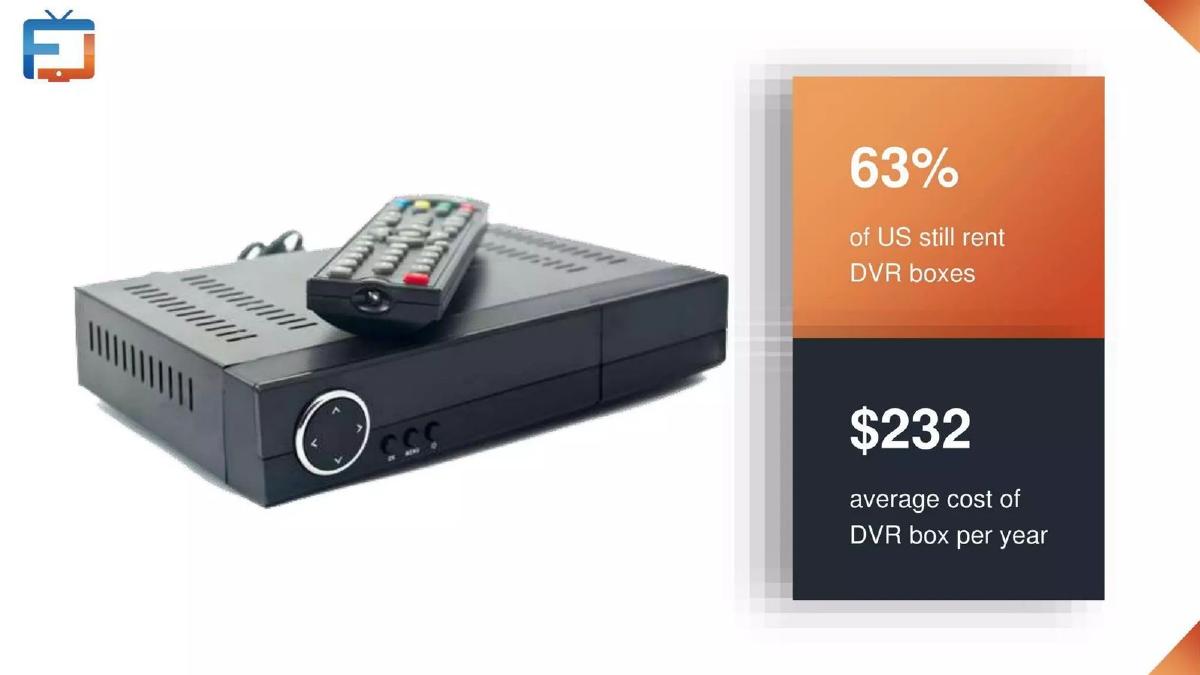
- The company identifies a massive legacy cost, noting on slide 4 that 63% of US households still rent DVR boxes at an average cost of $232 per year.
- Traction is presented with four key metrics on slide 7: 15 million monthly minutes watched, 50,000 registered users, $5,000 MRR, and 30% MoM growth.
- The business model is dual-pronged, featuring a $5/month Cloud DVR subscription and revenue sharing from channel partners (slide 8).
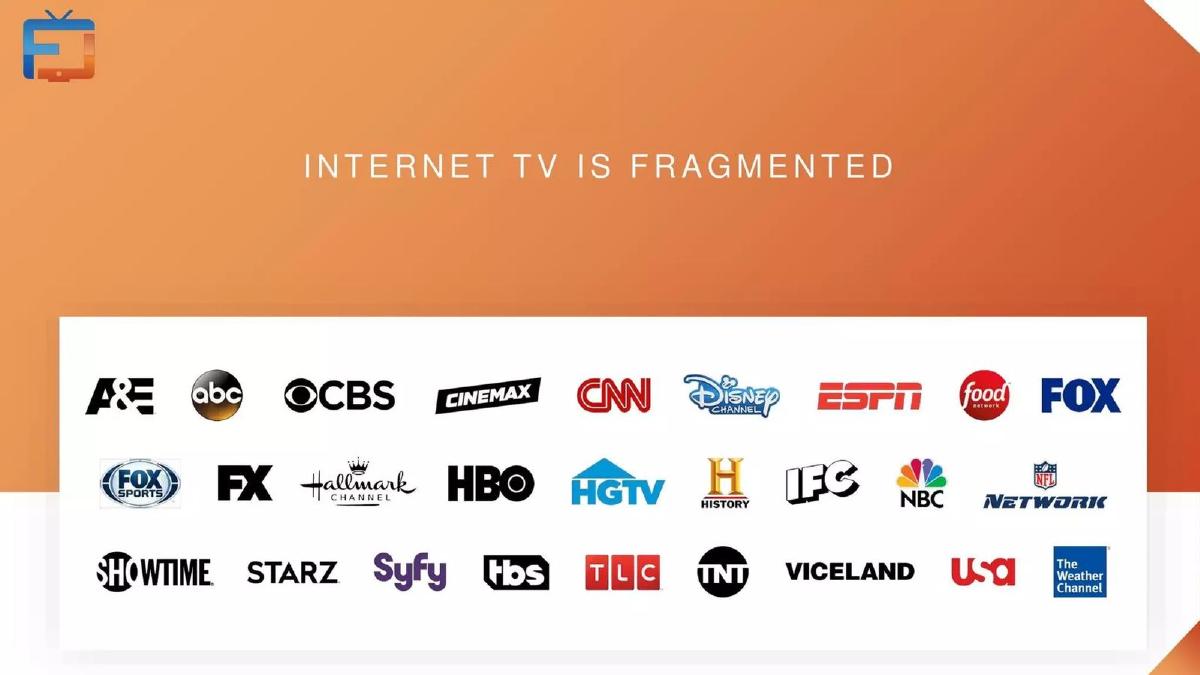
- The deck highlights extreme market fragmentation on slide 5, displaying 27 different network logos to illustrate the consumer's 'app fatigue.'
- Technical defensibility is suggested on slide 9 by contrasting the need to build 9 separate apps against making 1 API call to FitzyTV.
- The market opportunity is quantified on slide 10 as a $45B US DVR market within a larger $110B US Pay TV market.
- The team slide (slide 11) emphasizes relevant experience, noting the CEO developed MediaSmart TVs at HP and the advisor was an SVP at Scripps.
- The deck lacks a formal 'Ask' slide, omitting the specific funding amount sought or the intended use of proceeds.
Introduction: The Aggregator Play
FitzyTV emerged in 2018 during the height of the 'streaming wars.' As every major cable network launched its own standalone app, the consumer experience became increasingly fragmented. This 12-slide deck focuses on the 'aggregator' solution—a single interface to rule them all. With a modest $150,000 raise, this deck demonstrates how to pitch a high-utility consumer app by focusing on cost savings and user engagement metrics.
Slides 1-3: Setting the Scene
Slide 1: Title Slide The deck opens with the FitzyTV logo and the tagline: "Open Platform for Internet TV & Cloud DVR." The background image shows a family using a remote, immediately identifying the target audience and the product category. It is a standard, functional title slide.
Slide 2: Once Upon a Time... This slide uses a silhouette of broadcast towers. It serves as a narrative bridge from the old era of television to the new. There is no data here, only a thematic setup for the transition from hardware-based broadcasting to internet-based streaming.
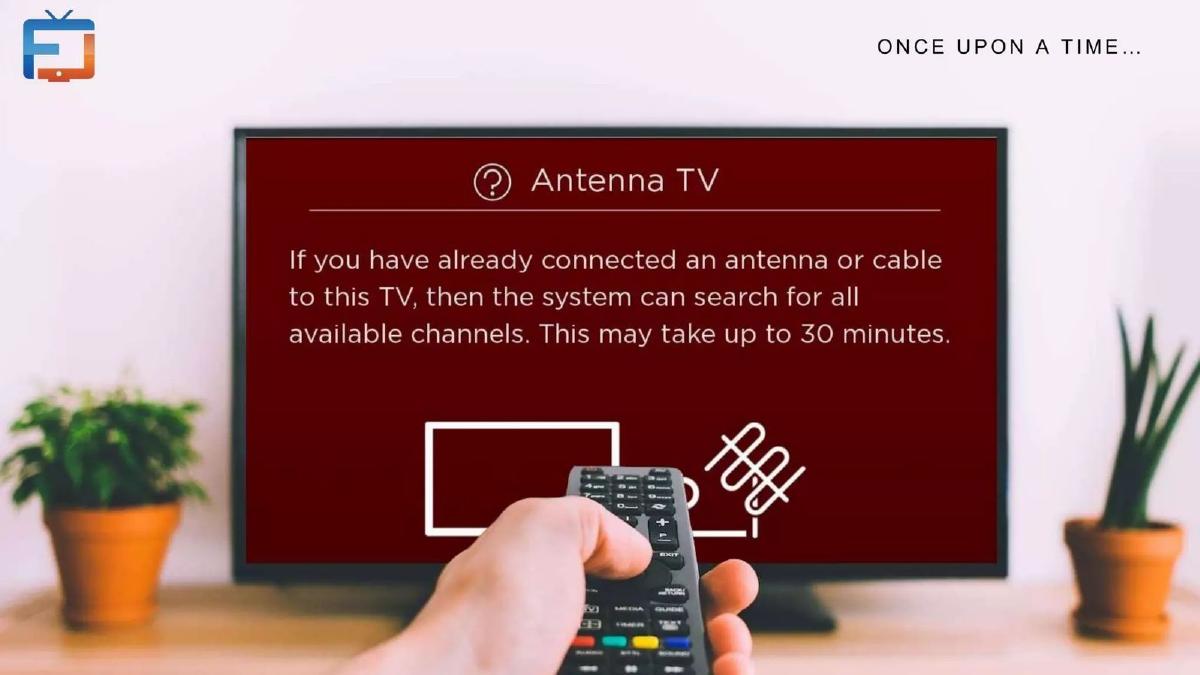
Slide 3: The Antenna TV Problem The narrative continues with a screenshot of a legacy TV interface stating that searching for channels "may take up to 30 minutes." This slide highlights the friction and technical limitations of traditional 'over-the-air' or basic cable setups. It establishes the 'before' state of the consumer journey.
Slides 4-5: The Problem Statement
Slide 4: The Hardware Tax This is the first heavy-hitting data slide. It states that 63% of US households still rent DVR boxes and that the average cost of a DVR box is $232 per year . By quantifying the problem in dollars, FitzyTV makes a compelling case for a software-based alternative. This slide effectively targets the consumer's wallet.
Slide 5: Fragmented Internet TV If slide 4 attacked the old world, slide 5 attacks the new one. It features a grid of 27 logos, including ABC, ESPN, HBO, and HGTV, under the heading "Internet TV is Fragmented." This visualizes the 'app fatigue' that occurs when a user has to jump between dozens of different interfaces to find content. It sets up the need for a unified 'wrapper' or platform.
Slides 6-7: The Solution and Traction
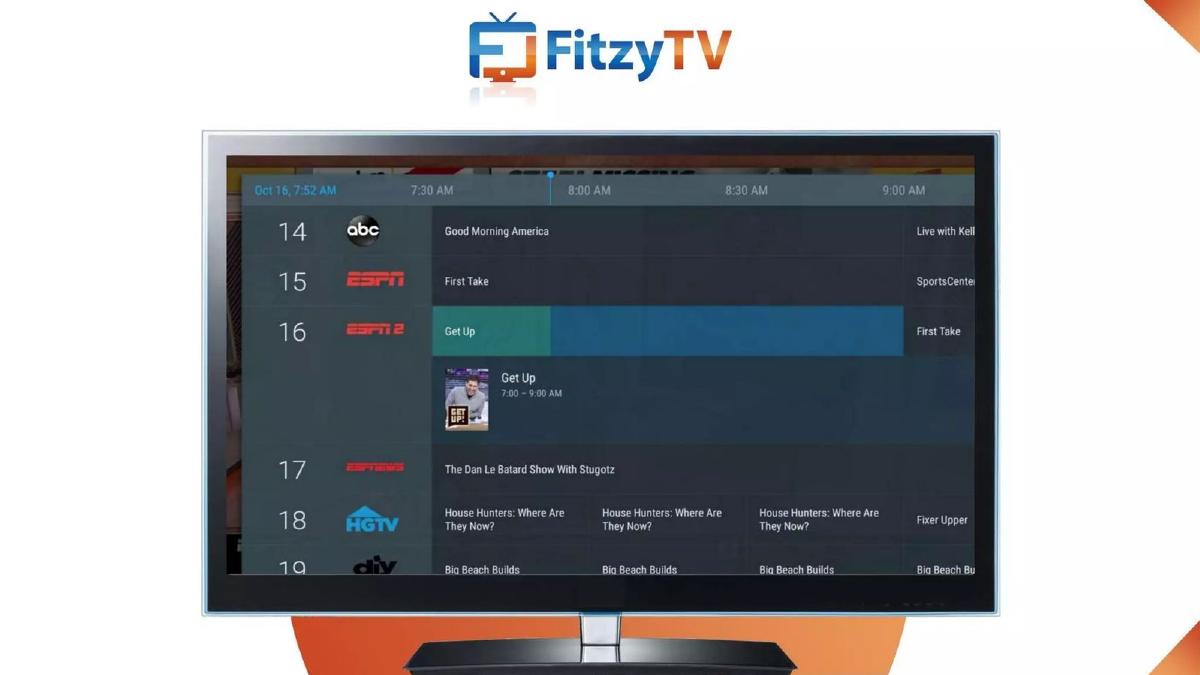
Slide 6: The Product FitzyTV shows its interface on a television screen. The UI looks like a traditional Electronic Programming Guide (EPG), which is a smart move. It suggests that while the backend is revolutionary, the frontend is familiar to anyone who has ever used a cable box. It lists channels like ABC and ESPN, showing how they are unified in one list.
Slide 7: Traction This is the most important slide in the deck for a seed-stage investor. FitzyTV lists four key metrics:
15 Million Monthly Minutes Watched · 50,000 Registered Users · $5,000 MRR · 30% MoM Growth
These numbers prove that the product isn't just a concept; people are actually using it and, more importantly, paying for it. The 30% MoM growth is a classic 'venture scale' indicator.
Slides 8-10: Business Model and Market
Slide 8: Business Model The revenue strategy is simple and transparent. They offer Cloud DVR starting at $5 / mo . This directly undercuts the $232/year ($19/month) hardware rental mentioned on slide 4. Additionally, they mention Revenue Sharing from channel partners , suggesting a B2B2C play where networks pay for placement or integration.
Slide 9: The Developer Value Prop This slide asks: "Build 9 Apps? Or make 1 API call?" It shows logos for Samsung Smart TV, Apple TV, Roku, and others. This indicates that FitzyTV isn't just a consumer app; it's a platform that handles the complex cross-platform distribution for content providers. This adds a layer of technical defensibility to the pitch.
Slide 10: Market Opportunity FitzyTV defines its Total Addressable Market (TAM) and Serviceable Addressable Market (SAM). They cite a $45B US DVR Market and a $110B US Pay TV Market . While these are large, top-down numbers, they are grounded in the specific pain points (DVR costs) identified earlier in the deck.
Slides 11-12: Team and Closing
Slide 11: Our Team The team slide is strong for a seed round. James Fitzgerald (CEO/CTO) is credited with developing MediaSmart TVs at HP and helping a startup grow from 5 to 200 employees. Adam Brougher brings 8 years of digital marketing expertise. Most notably, Michael Smith (Advisor) is the former SVP of Digital Video at Scripps, which owns Food Network and HGTV—networks that were shown on the fragmentation slide. This provides massive industry credibility.
Slide 12: Closing The final slide is a simple call to action: "Come be part of the internet TV revolution," with a contact email. It lacks a specific 'Ask' or 'Use of Funds,' which is a missed opportunity to create urgency.
What Works in This Deck
The deck excels at identifying a clear, expensive problem . By highlighting the $232 annual cost of DVR rentals, they create a 'no-brainer' value proposition for the consumer. If the app costs $5/month ($60/year), the user saves $172 annually. This is a very easy sell to both users and investors.
The traction slide is also a highlight. For a seed round, having 50,000 users and a clear growth trend (30% MoM) removes much of the execution risk. It shows that the team can build a product that people actually want to use.
What is Missing
The most glaring omission is the Fundraising Ask . There is no mention of how much money they are looking for, what the valuation is, or what milestones they intend to hit with the capital. While this might have been intentional for a deck shared on a public platform, it leaves the investor without a clear next step.
Additionally, the deck is light on Competitive Analysis . In 2018, companies like Plex, Channels, and even YouTube TV were competing for the 'unified interface' or 'cloud DVR' space. FitzyTV doesn't explain why their specific technical approach or API-first model is superior to these well-funded incumbents.
What a Founder Should Copy
Founders should copy the visual simplicity of the problem slides . Slide 5, with its wall of logos, perfectly captures the feeling of 'streaming chaos' without needing a single bullet point of text. It's an emotional and logical hook that resonates with anyone who has ever struggled to find a show across multiple apps.
The Team Slide structure is also worth emulating. Instead of just listing titles, they used logos (HP, Scripps, Food Network) to provide instant visual recognition of their expertise. This is much more effective than a paragraph of text that an investor might skim over.
Final Verdict
FitzyTV’s deck is a lean, effective presentation that relies on strong early metrics and deep domain expertise. It successfully frames a software solution as a cost-saving alternative to legacy hardware. While it lacks competitive depth and a clear financial ask, the traction and team were clearly enough to secure their $150,000 seed round in a crowded market.
Frequently asked questions
- How much did FitzyTV raise with this deck?
- According to the catalogue facts, FitzyTV raised $150,000 in 2018 during its Seed stage. Interestingly, the deck itself does not specify the amount being raised or the terms of the round, which is a common omission in decks used for initial conversations or those hosted on public platforms.
- What was the primary problem FitzyTV aimed to solve?
- The deck identifies two primary problems: the high cost of legacy hardware and the fragmentation of modern streaming. Slide 4 points out that Americans spend an average of $232 a year on DVR box rentals, while slide 5 uses a wall of logos to show how difficult it is for consumers to navigate dozens of individual network apps.
- What were FitzyTV's key traction metrics at the time of the pitch?
- On slide 7, FitzyTV reported 15 million monthly minutes watched and 50,000 registered users. Financially, they were generating $5,000 in Monthly Recurring Revenue (MRR) and achieving a 30% Month-over-Month (MoM) growth rate, indicating strong early product-market fit.
- What is the '1 API call' mentioned in the deck?
- Slide 9 presents a B2B or developer-centric value proposition. It suggests that instead of a company building nine separate apps for platforms like Roku, Apple TV, and Samsung Smart TV, they can simply use FitzyTV’s API to reach all those platforms at once, significantly reducing development overhead.
- Who were the key members of the FitzyTV team?
- The team featured James Fitzgerald (CEO/CTO), who previously developed MediaSmart TVs at HP. He was joined by Adam Brougher in Marketing and Michael Smith as an Advisor. Smith brought significant industry weight as the former SVP of Digital Video at Scripps (Food Network, HGTV).