Forethought’s pitch deck is an unconventional, high-narrative presentation that prioritizes personal story and team pedigree over traditional financial metrics. Spanning 21 slides, the deck leans heavily on the founder’s background—citing a Forbes 30 Under 30 nod and experience at Palantir and Dropbox—to establish immediate credibility. The product, 'Agatha,' is framed as a solution to a $100B opportunity within the 'Next Industrial Revolution.' While the deck lacks a formal 'Ask' slide or detailed unit economics, it successfully uses social proof, including a TechCrunch Disrupt win and a ros…
Key takeaways
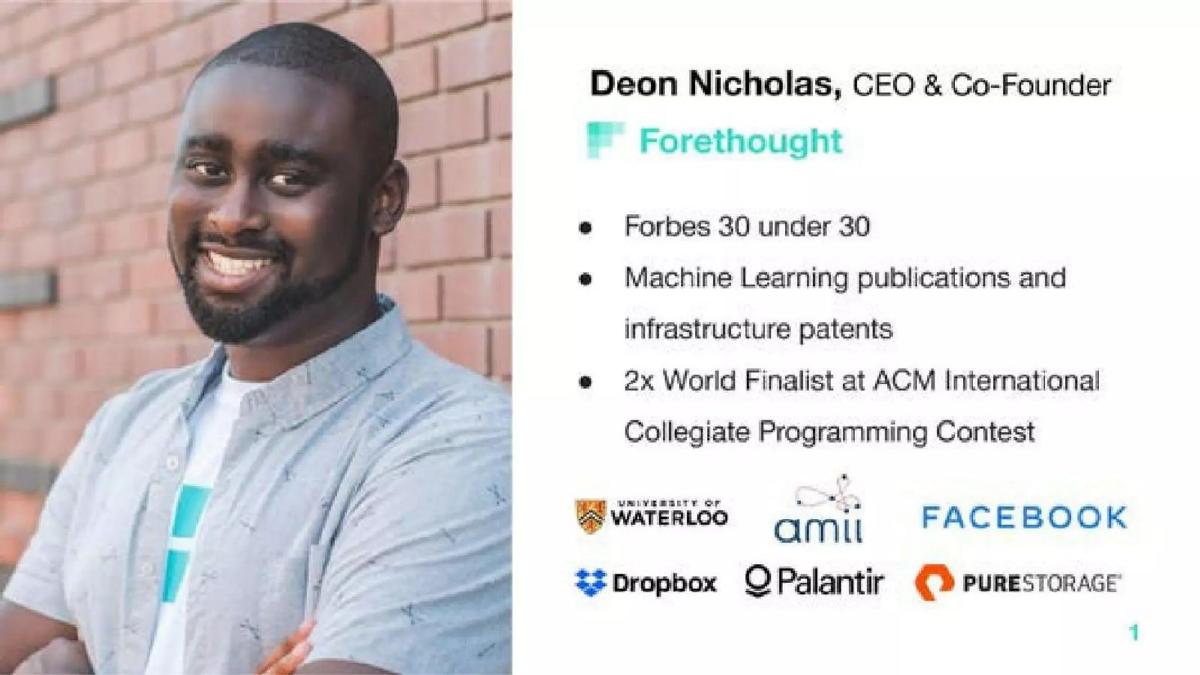
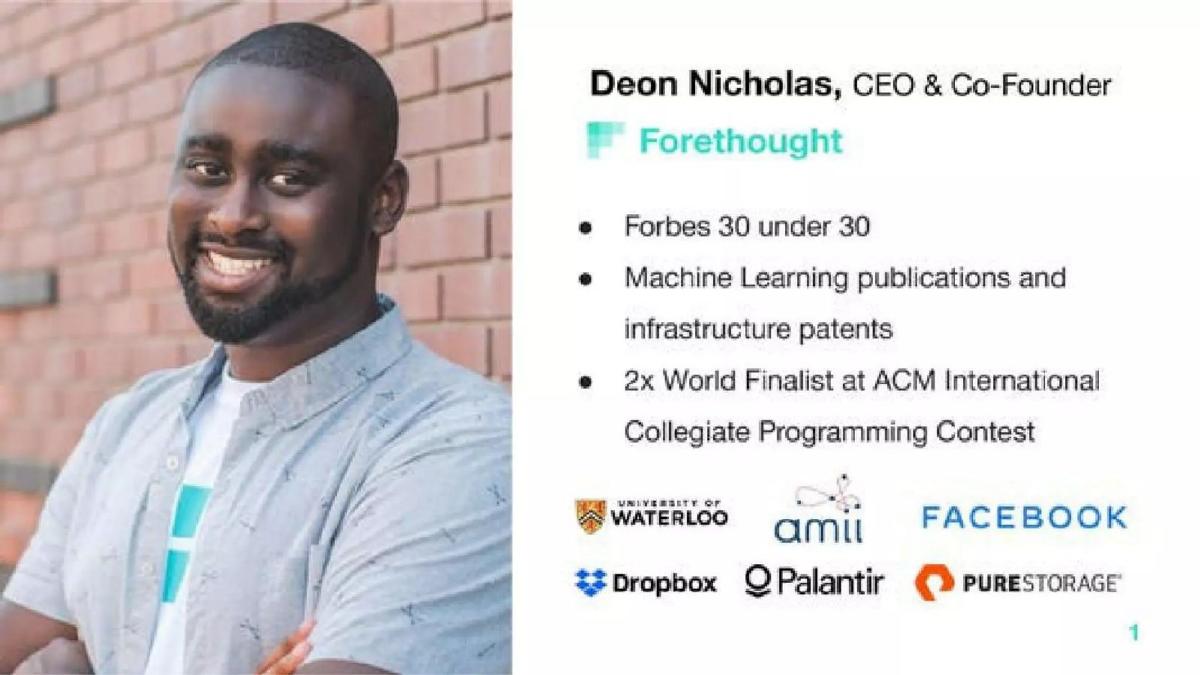
- The deck leads with founder Deon Nicholas's pedigree, highlighting his Forbes 30 Under 30 status and machine learning patents on slide 1.
- Forethought identifies a $100B market opportunity, positioning AI as the core of the '4th Industrial Revolution' on slides 16 and 18.
- The product, Agatha, is categorized into four distinct functions: Solve, Triage, Assist, and Discover, as shown on slide 7.
- Social proof is a central pillar, featuring a TechCrunch Disrupt win on slide 9 and logos from Carta, Instacart, and Gusto on slide 10.
- The 'Squad' slide (slide 11) leverages institutional prestige, displaying logos from MIT, Harvard, Berkeley, Google, and Facebook.
- The deck uses a personal narrative arc, tracing the founder's journey from building AI in high school to the 'Birth of Forethought' on slides 14 and 15.
- Target customers are explicitly identified as COOs and VPs of Customer Support at mid-to-large companies like ESPN and Ticketmaster on slide 21.
- The presentation lacks a specific funding request, financial projections, or a detailed breakdown of current revenue metrics.
Introduction: The Narrative-First Approach to AI
Forethought’s pitch deck, used during their Series funding stages following a 2017 inception, is a compelling example of narrative-driven fundraising. Rather than leading with spreadsheets and churn rates, the company leads with people and potential . With a total of $92,000,000 raised according to catalogue facts, the effectiveness of this approach is undeniable. The deck serves as a bridge between the technical complexity of Machine Learning and the human-centric world of customer support.
Slides 1-4: Establishing Pedigree and Presence
The deck opens not with a product shot, but with a profile of Deon Nicholas, CEO & Co-Founder . Slide 1 is a masterclass in 'Founder-Market Fit' signaling. It lists high-impact credentials: Forbes 30 under 30 , Machine Learning publications and infrastructure patents , and being a 2x World Finalist at the ACM International Collegiate Programming Contest . The bottom of the slide is anchored by logos from University of Waterloo, Facebook, Dropbox, Palantir, and PureStorage , immediately telling investors that the leadership has been vetted by the world's most rigorous engineering cultures.
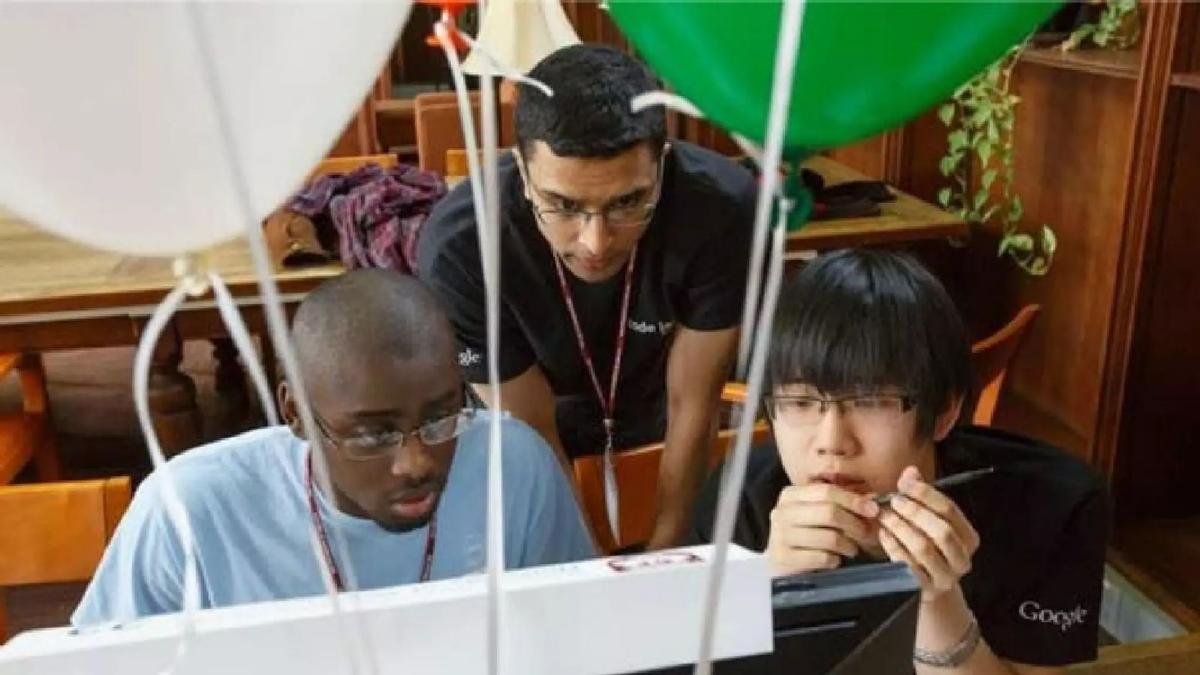
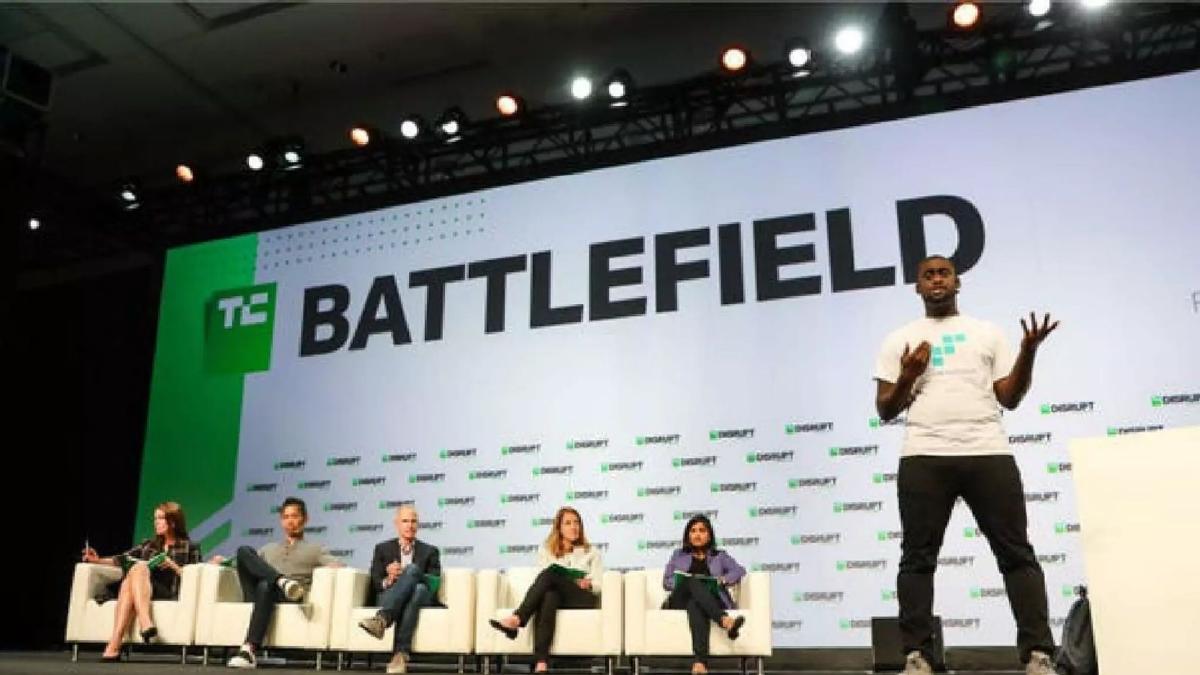
Slides 2 and 3 provide visual context for the company's journey. Slide 2 shows the team in a candid, high-focus environment, while Slide 3 features the founder on the TechCrunch Disrupt Battlefield stage. This sequence establishes that Forethought is not just a theoretical concept but a battle-tested entity with public recognition. Slide 4 is a simple, high-contrast branding slide that transitions the deck from the 'who' to the 'what.'
Slides 5-8: The Vision and the Product (Agatha)
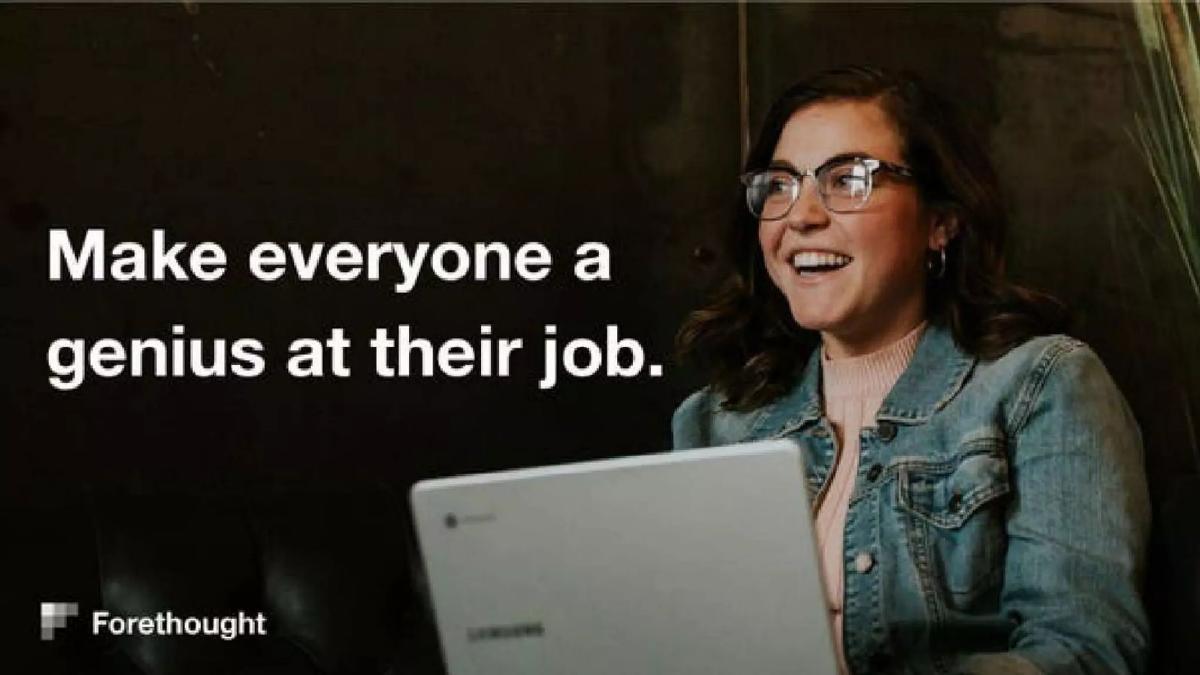
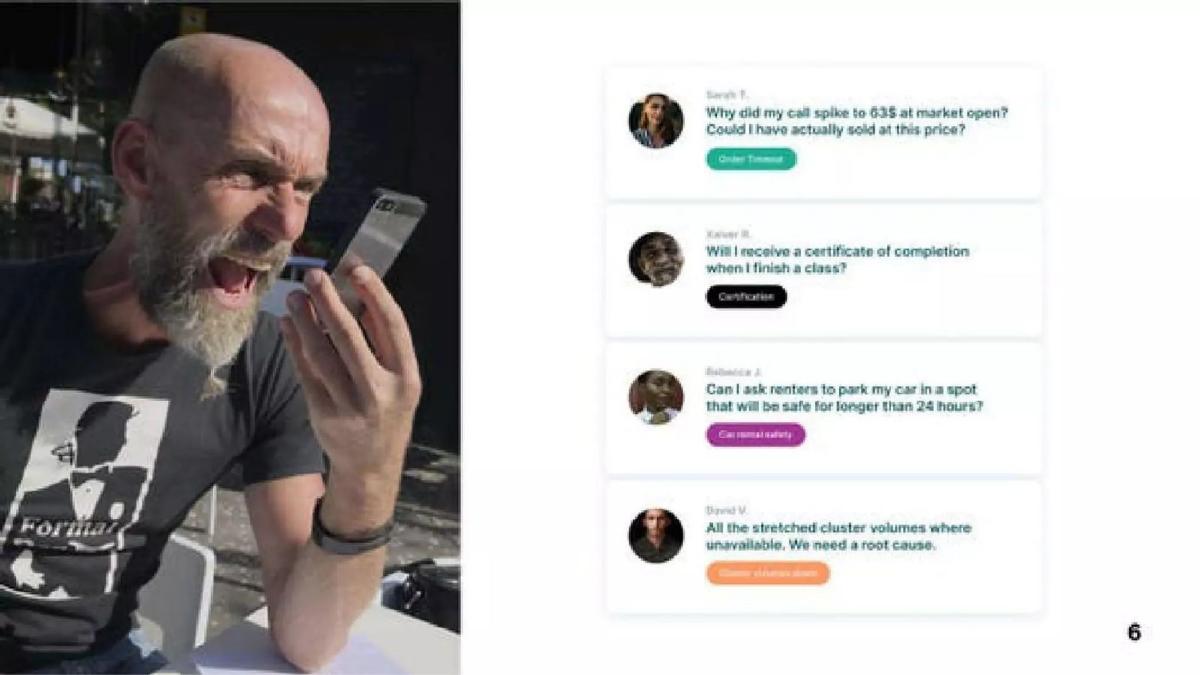
Slide 5 presents the company's mission statement: "Make everyone a genius at their job." This is a critical framing device; it positions their AI not as a replacement for humans, but as an augmentation tool. Slide 6 illustrates the 'pain' through a split-screen visual: an frustrated customer on a call contrasted with a list of complex support queries ranging from stock options to cluster volumes. This highlights the diversity and difficulty of the questions support agents face daily.
Slide 7 introduces Agatha , the AI persona. The product is broken down into four pillars: Solve, Triage, Assist, and Discover . This categorization is vital for enterprise software, as it shows the platform's utility across the entire support lifecycle. Slide 8 provides a UI mockup, comparing Forethought’s internal search capabilities (showing results for 'Exercising employee stock options') against a standard Google search, emphasizing the specialized, internal nature of their intelligence engine.
Slides 9-11: Validation and The Squad
Slide 9 is a 'victory lap' slide, showing the team winning the TechCrunch Disrupt San Francisco cup and a $100,000 check. For a Series-stage deck, this serves as powerful third-party validation. Slide 10, titled "Our Customers," lists heavy hitters including Carta, Instacart, Masterclass, Thumbtack, Gusto, and Typeform . The presence of these logos suggests that the product has already achieved significant market pull among top-tier tech companies.
Slide 11, "The Squad," reinforces the team strength introduced on Slide 1. It features a group photo of the team backed by logos from LinkedIn, Google, Facebook, Dropbox, Qualtrics, MIT, Harvard, Berkeley, and University of Waterloo . This slide is designed to overwhelm the investor with the sheer density of talent at the company, suggesting that the technical execution risk is minimal.
Slides 12-15: The Origin Story
In a departure from traditional deck structure, Forethought places its origin story in the middle of the presentation. Slide 13, "The 6ix," highlights the founder's roots in Toronto and his obsession with making video games and solutions to everyday problems. Slide 14 explains how he got into AI by building a "personal tutor" in high school to generate quizzes from history notes. This narrative arc (Slide 15) leads to the "Birth of Forethought," asking the central question: "Can AI help us become smarter?" By framing the company as the culmination of a lifelong pursuit, the founder builds a sense of inevitability and passion.
Slides 16-18: The Macro Opportunity
Slide 16 is a 'big number' slide: "$100B Opportunity." It lacks a specific breakdown of TAM/SAM/SOM, opting instead for a bold, singular figure to capture the imagination. Slide 18, "The Next Industrial Revolution," places Forethought in a historical context. It maps the 1st Revolution (Steam), 2nd (Electricity), and 3rd (Computing) to the 4th Revolution: Artificial Intelligence . This is a classic 'Why Now?' slide, arguing that we are at a fundamental turning point in human history and Forethought is positioned to lead it.
Slides 19-21: The Future and Go-To-Market
Slide 19, "Change the face of tech," takes a social stance, featuring a young girl with a 'Future Leader' shirt and the text "THIS is what a tech CEO looks like." This slide speaks to the company's values and the founder's intent to inspire the next generation, which can be a powerful motivator for ESG-focused investors. Slide 20 draws a parallel between the Forethought team and a young Bill Gates at Microsoft, further leaning into the 'legendary founder' trope.
The deck concludes with Slide 21, "What's Next." It outlines a go-to-market gameplan focused on hiring a COO and VP of Customer Support and targeting mid-to-large companies like ESPN and Ticketmaster . This provides a clear, albeit high-level, roadmap for how the next round of funding will be deployed to scale the business.
What Works in the Forethought Deck
Extreme Social Proof: Between the TechCrunch win, the customer logos (Instacart, Gusto), and the team's previous employers (Google, Palantir), the deck leaves no room to doubt the company's credibility. · Clear Product Categorization: The 'Solve, Triage, Assist, Discover' framework on Slide 7 makes a complex AI product easy for a non-technical investor to understand and categorize. · Strong Narrative Arc: The transition from a high school 'personal tutor' to a $100B enterprise AI platform creates a compelling 'founder's journey' that is memorable and persuasive. · Visual Simplicity: The deck avoids cluttered slides. Most slides feature a single large image or a few bullet points, ensuring the focus remains on the presenter's narrative during a pitch.
What is Missing from the Forethought Deck
The Ask: There is no slide stating how much money is being raised, the valuation target, or the specific milestones that the new capital will unlock. · Financial Metrics: The deck is devoid of revenue figures, growth rates, churn percentages, or unit economics (LTV/CAC). This suggests the deck was likely used as a 'teaser' or a 'vision' deck rather than a full due-diligence document. · Competitive Landscape: There is no mention of other AI support players or legacy incumbents like Zendesk or Salesforce, leaving the 'moat' to be inferred rather than explained. · Technical Deep Dive: While the founder's ML patents are mentioned, there is very little information on the actual architecture of Agatha or how it integrates with existing enterprise stacks.
What a Founder Should Copy
The 'Pedigree' Slide: If you have a team from top-tier institutions or companies, follow Slide 1's lead. Use logos and specific accolades (like Forbes 30u30) to establish immediate authority. · The 'Why Now' Framework: Slide 18's 'Industrial Revolution' comparison is an excellent way to frame a startup as part of a massive, unstoppable global shift. · Customer Logo Grouping: Grouping customers by brand recognition (Slide 10) is more effective than listing every small pilot. It signals that you can win in the enterprise market. · Humanizing the Tech: Use a personal origin story (Slides 13-14) to explain why you are building this specific product. It makes the mission feel authentic rather than just opportunistic.
Frequently asked questions
- What is the primary value proposition of Forethought according to the deck?
- Forethought positions itself as an AI platform that 'makes everyone a genius at their job' (Slide 5). Specifically, it targets the customer support journey through its product, Agatha, which handles four key areas: solving common cases, triaging tickets, assisting agents with knowledge, and discovering insights (Slide 7). The goal is to infuse intelligence at every stage of the support lifecycle to improve efficiency and customer experience.
- How does the deck handle competition and market differentiation?
- Interestingly, the deck does not include a traditional competitor matrix. Instead, it differentiates through a 'Next Industrial Revolution' framework (Slide 18), positioning Forethought as a leader in the shift toward Artificial Intelligence, following the eras of steam, electricity, and computing. By framing the problem as a $100B opportunity (Slide 16), they focus on the scale of the shift rather than specific feature-by-feature comparisons with rivals.
- What role does the founder's personal story play in the fundraising process?
- The personal story is foundational to this deck. Slides 12 through 15 are dedicated to 'Where did Forethought come from?', detailing the founder's upbringing in Toronto and his early obsession with coding. By describing his first AI program as a 'personal tutor' (Slide 14), he humanizes the technology, making a complex ML product feel like a natural evolution of a lifelong passion for problem-solving.
- Who is the intended customer for Forethought's AI solutions?
- The deck identifies its target audience on Slide 21 as COOs and VPs of Customer Support at mid-to-large companies. They specifically name-drop ESPN and Ticketmaster as examples of the commercial relationships they aim to build. The current customer list on Slide 10—including high-growth tech firms like Carta, Instacart, and Gusto—suggests they initially found traction with tech-forward enterprises before expanding to broader markets.
- What are the most notable omissions in the Forethought deck?
- The deck is notably missing several 'standard' pitch elements: there is no slide detailing the specific amount of capital being raised (the 'Ask'), no financial projections or historical revenue growth charts, and no breakdown of unit economics (CAC/LTV). It relies almost entirely on the strength of the team, the magnitude of the market opportunity, and existing brand validation to drive investor interest.