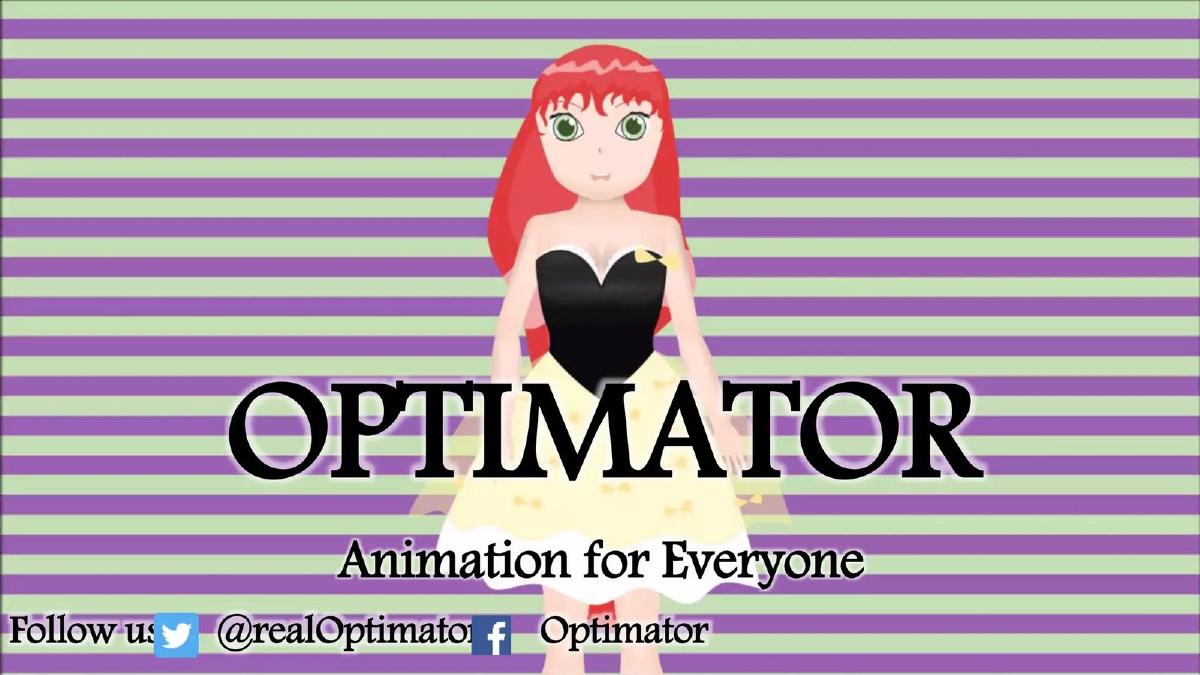
Optimator’s pitch deck is a brief, 8-slide presentation centered on the mission of 'Animation for Everyone.' The company identifies a gap in the market by showcasing the complexity of professional tools like Blender and proposing a simplified interface. The deck relies heavily on a small survey of 30 people to justify the demand for animation. It introduces what the founders call a 'desperate MVP' and a menu-driven UI for compiling scenes and sprites. Revenue projections are vague, showing a range of '$5 to $25' without specifying if this is per user, per asset, or a subscription fee. The dec…
Key takeaways
- The company slogan 'Animation for Everyone' serves as the primary value proposition on slide 1.
- Market validation is based on a very small sample size, citing a survey of only 30 people on slide 2.
- Slide 3 uses a screenshot of Blender to illustrate the high barrier to entry and complexity of current professional animation software.
- The product is self-described as a 'desperate MVP' on slide 4, showing a simple 2D character model.
- The user interface appears to be a basic menu system with options for 'Scenes,' 'Sprite,' 'Sets,' and 'Pieces' as seen on slide 5.
- The revenue model is presented as a price range of '$5 to $25' on slide 6, though the unit of sale is not defined.
- There is no mention of a founding team, their technical expertise, or previous successes in the entire 8-slide deck.
- The deck concludes without a financial ask or a roadmap, instead directing viewers to follow them on Facebook and Twitter (slides 7 and 8).
Slide-by-Slide Analysis
Slide 1: Title and Vision
The deck opens with the company name, Optimator , and the tagline "Animation for Everyone." The background consists of purple and green horizontal stripes with a 2D anime-style female character in the center. Social media handles for Twitter (@realOptimator) and Facebook (Optimator) are included at the bottom. This slide establishes the brand identity but lacks a clear professional tone.
Slide 2: The "Why" and Survey Data
Slide 2 asks, "What's so good about animation anyway?" It features two pie charts overlaid on a dark background. The left chart shows a 93.3% segment and two 3.3% segments. The right chart shows 73.3% and 26.7%. A small note in the bottom right corner states, "In a survey of 30 people." The slide fails to explain what these percentages represent or what questions were asked, making the data contextless.
Slide 3: The Complexity Problem
This slide features a full-screen capture of the Blender interface, showing a complex 3D character rig with various menus, timelines, and transformation tools. There is no text on this slide, but the implication is clear: professional animation software is too complicated for the general public. This serves as the 'Problem' slide in the deck's narrative.
Slide 4: The Desperate MVP
Titled "The desperate MVP," this slide shows a 2D male character standing on a black circular base. The character design is simple, matching the style of the character on the title slide. This is an honest, if unusually phrased, admission that the current product is in a primitive state. It demonstrates that the founders have moved past the idea phase into basic execution.
Slide 5: User Interface Concept
Slide 5 displays a purple rectangular menu with the Optimator name at the top. The buttons include "COMPILE VIDEO," "SCENES," "SPRITE," "SETS," "PIECES," and "QUIT." This suggests a modular approach to animation where users can select pre-made assets (sprites and sets) and combine them into scenes without manual rigging or modeling.
Slide 6: Monetization
Titled "Nice, but where’s the cash?" , this slide features a cartoon of Donald Duck holding money and a screenshot of Minecraft-style characters. Large text reads "$5 to $25." The slide does not clarify if this is a subscription, a per-export fee, or a marketplace price for assets. The use of copyrighted imagery (Disney and Minecraft) is a significant red flag for professional investors.
Slide 7: Call to Action
This slide uses a meme from the movie Finding Nemo with the caption "Now what?" Below the image, it says "Follow Optimator on Facebook!" This is a weak call to action for a pitch deck, as it directs potential investors to a social media page rather than providing contact information or a next step for a funding discussion.
Slide 8: Closing Slide
The final slide repeats the tagline "Animation for Everyone!" and features the company logo: a green checkmark inside a white and purple circle. The social media handles from the first slide are repeated at the bottom. There is no contact information for the founders or a summary of the investment opportunity.
What Works
Clarity of Mission: The tagline "Animation for Everyone" is repeated and clear. The problem—that animation is currently too hard—is effectively communicated through the visual of the Blender interface on slide 3. Even without text, the contrast between the complex professional tool and the simple menu on slide 5 tells a story of simplification.
Honesty regarding Stage: Labeling the product a "desperate MVP" on slide 4 manages expectations. It signals to a viewer that the company is at the earliest possible stage and is focused on building a functional core rather than a polished final product.
What is Missing
The Team: There is no information about who is building Optimator. Investors need to know if the founders have the technical skills to build an animation engine or the industry experience to market it. The absence of a team slide is the most critical failure of this deck.
Market Size (TAM): While the deck mentions a survey of 30 people, it provides no data on the actual market for animation software. There is no mention of the creator economy, the rise of video content on social media, or the potential number of users who would pay $5 to $25 for this service.
The Ask: A pitch deck is a tool to raise money. This deck never mentions how much money is being raised, the valuation, or what the milestones will be for the next 12-18 months. Without an "Ask," it is a product presentation, not a pitch.
Competition: The deck implies Blender is the competition, but it ignores other "easy" animation tools like Canva, Adobe Express, or various mobile animation apps. A slide showing how Optimator differs from these existing consumer-grade tools is necessary.
What a Founder Should Copy
Visual Problem Statement: Using a screenshot of a notoriously difficult piece of software (Blender) to illustrate a problem is a highly effective way to communicate a technical barrier without using words. Founders should look for ways to show, rather than tell, the pain point they are solving.
Simple UI Visualization: Slide 5 does a good job of showing the intended user flow. By breaking the process down into "Scenes," "Sprites," and "Sets," the founders show they have a plan for how to simplify a complex workflow into a few clicks.
Final Summary
The Optimator deck is a conceptual overview of a product rather than a professional fundraising document. While it identifies a legitimate pain point—the high barrier to entry for animation—it fails to provide the business logic necessary to attract investment. The reliance on a survey of 30 people (slide 2) and the use of copyrighted characters (slide 6) suggest a lack of experience in the venture capital ecosystem. To be viable, the founders must add a team slide, define their market size, and clearly state their financial requirements and business model.
Frequently asked questions
- What problem is Optimator trying to solve?
- Optimator aims to lower the barrier to entry for animation. By showing a complex Blender interface on slide 3, they suggest that current tools are too difficult for the average person. Their goal, stated on slide 1, is to provide 'Animation for Everyone,' presumably through a simplified interface that removes the technical overhead of traditional 3D modeling and rigging.
- How does Optimator plan to make money?
- The monetization strategy is unclear but involves a price point between $5 and $25, as shown on slide 6. The slide features characters from Minecraft and a cartoon duck holding cash, but it does not specify if this is a one-time purchase for the software, a per-asset fee, or a monthly subscription cost.
- What is the 'desperate MVP' mentioned in the deck?
- On slide 4, the company displays a simple 2D character standing on a platform labeled 'The desperate MVP.' This suggests the company is in the very early stages of development, likely at the pre-seed or conceptual phase, and is using basic assets to demonstrate the core functionality of their simplified animation engine.
- Is there any evidence of market demand in the deck?
- The deck attempts to show demand on slide 2 using two pie charts. One chart shows 93.3% and the other 73.3%, though the specific questions asked are not listed. The data is weakened by the disclosure that it comes from a survey of only 30 people, which is not a statistically significant sample for a venture-scale business.
- What are the biggest omissions in the Optimator pitch deck?
- The deck omits almost every standard slide required for a professional fundraise. There is no team slide, no market size analysis (TAM/SAM/SOM), no competitor matrix, no financial projections, and no specific 'Ask' regarding how much capital they are seeking or how they will use it. It functions more as a project overview than a business plan.