Phospholutions presents a compelling case for agricultural innovation by addressing the massive inefficiency in global phosphorus use, where up to 90% of conventional fertilizer is wasted. Their core product, RhizoSorb, allows growers to use 50% less phosphorus while maintaining or increasing yields. The deck is notable for its deep dive into unit economics, showing a rare level of transparency regarding how value is distributed across the entire supply chain—from the manufacturer to the retailer and finally the farmer. By utilizing a profit-sharing model rather than a simple commodity sales…
Key takeaways
- Global phosphorus market is expected to reach $70B+ by 2025, yet 90% of conventional fertilizer is wasted (Slides 1-2).
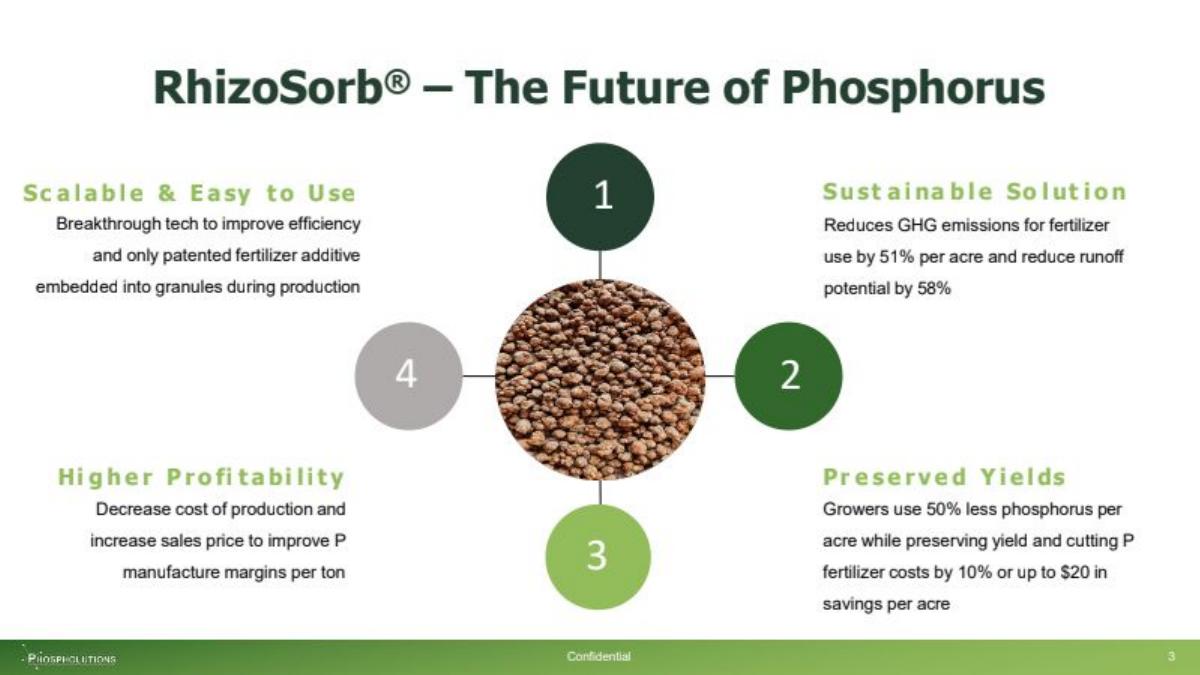
- RhizoSorb technology reduces GHG emissions by 51% per acre and runoff potential by 58% (Slide 4).
- Field trials across 200 locations in 14 states prove that yields are preserved even with a 50% reduction in phosphorus application (Slide 6).
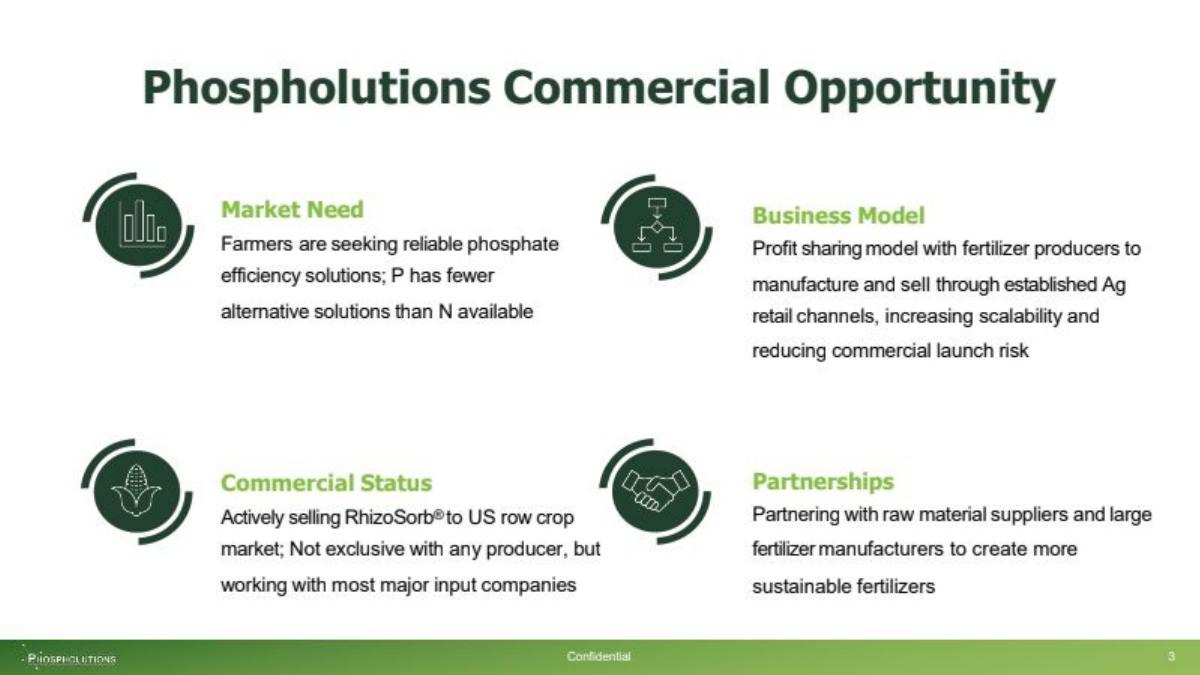
- The business model uses a profit-sharing arrangement with fertilizer producers to increase scalability and reduce launch risk (Slide 3).
- RhizoSorb increases retailer margins from $100 per ton to $150 per ton while maintaining the same margin per acre (Slide 8).
- The company claims an 8% reduction in COGS for producers by decreasing ammonia and phosphoric acid requirements (Slide 9).
- Phospholutions is targeting profitability by 2026 following a planned $30M Series B round (Slide 12).
- The team is heavily weighted toward R&D and technical expertise, featuring multiple PhDs in soil and material sciences (Slide 16).
Executive Summary: A Masterclass in Supply Chain Incentive Alignment
Phospholutions is tackling one of the most significant 'leaky bucket' problems in agriculture: phosphorus waste. Their Series A extension deck, which helped secure $10.15M, is a highly technical and economically dense presentation that moves beyond simple environmental claims into hard unit economics. By focusing on how every player in the value chain—producers, retailers, and growers—makes more money, Phospholutions bypasses the typical 'sustainability tax' associated with green tech.
Slides 1-2: The Macro Problem and Market Opportunity
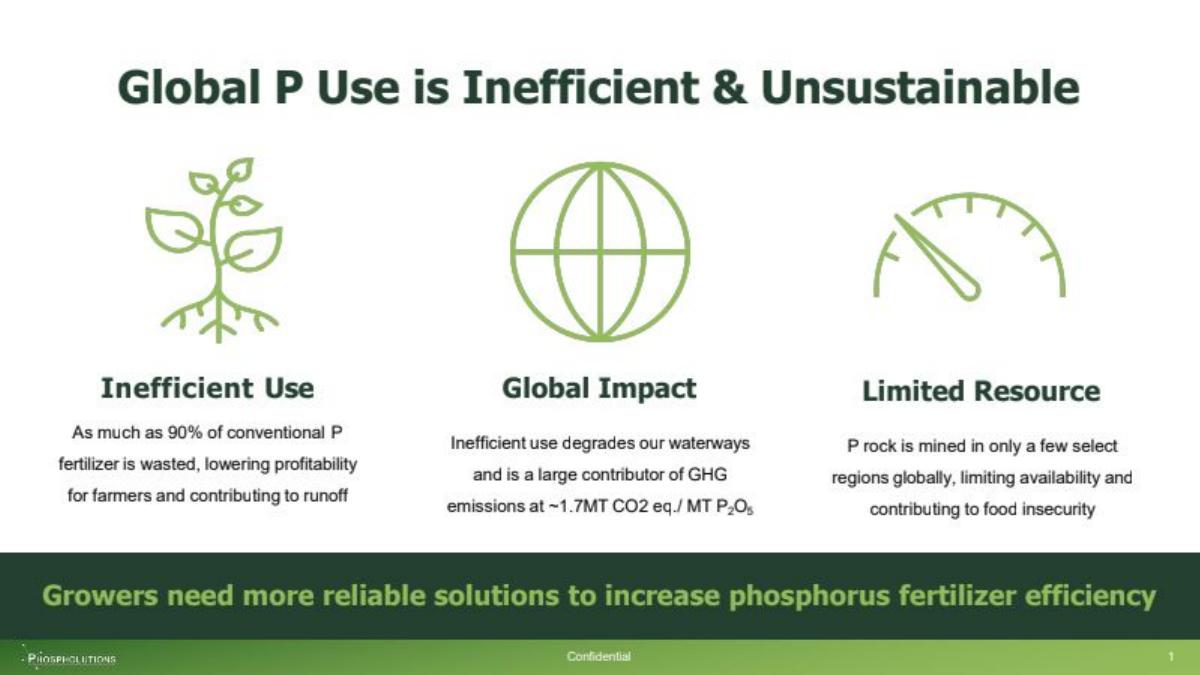
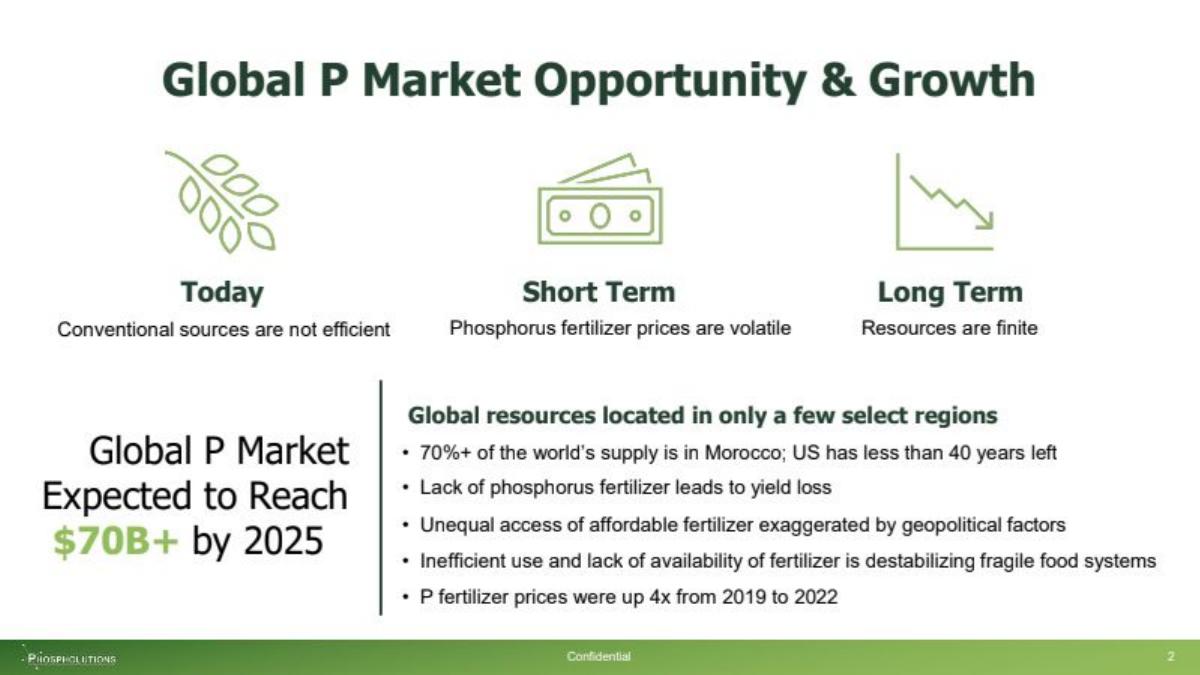
The deck opens with a stark assessment of the status quo. Slide 1 identifies that 90% of conventional phosphorus (P) fertilizer is wasted. This isn't just an environmental issue; it is a direct hit to farmer profitability. The slide also introduces the geopolitical risk: P rock is a limited resource mined in only a few regions. Slide 2 quantifies the opportunity, noting the global P market is expected to reach $70B+ by 2025. Crucially, it mentions that P fertilizer prices increased 4x from 2019 to 2022, creating a sense of urgency for more efficient alternatives.
Slides 3-4: The Commercial Strategy and Product Introduction
Slide 3 is one of the most important in the deck, outlining the 'Phospholutions Commercial Opportunity.' It introduces the profit-sharing model with fertilizer producers. This is a strategic choice to avoid the 'heavy asset' trap of manufacturing, instead opting to 'sell through established Ag retail channels.' Slide 4 introduces RhizoSorb as the 'Future of Phosphorus.' It highlights four key pillars: scalability, sustainability (51% GHG reduction), preserved yields, and higher profitability for manufacturers.
Slides 5-6: Technical Validation and Field Trials
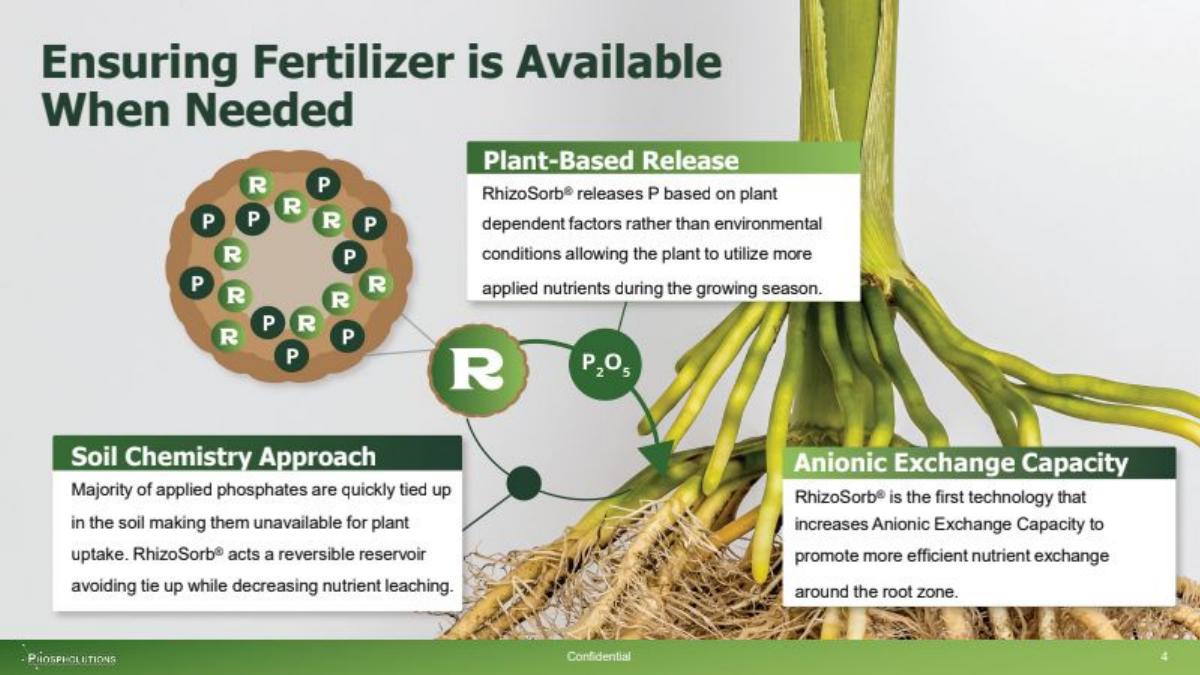
For an AgTech company, data is the only currency that matters. Slide 5 explains the 'Anionic Exchange Capacity'—the mechanism that allows RhizoSorb to release nutrients based on plant needs rather than environmental conditions. Slide 6 provides the proof: 200 trial locations across 14 states. The data shows that even with a 50% reduction in phosphorus, corn and soybean yields actually increased (e.g., +3.6 BU/AC in Iowa trials). This slide effectively de-risks the product for potential investors by showing it has been tested in real-world conditions.
Slides 7-8: Competitive Landscape and Grower Economics
Slide 7 features a standard competitive matrix, positioning RhizoSorb against competitors like Trivar, Avail, and Source. RhizoSorb is the only one checked for 'Upstream Production' and 'Plant Driven Release.' Slide 8 dives into the 'Value Proposition to Grower and Channel.' This is a rare level of detail. It compares MAP (Monoammonium Phosphate) to RhizoSorb. While the cost per ton is higher for RhizoSorb ($1299 vs $951), the cost per acre is lower ($66.90 vs $73.23) because the farmer uses 33% less product. It also shows the retailer makes $150 margin per ton compared to $100 for MAP.
Slides 9-10: Producer Economics and Profit Sharing
Slide 9 targets the phosphate producers. It claims an 8% reduction in COGS by decreasing the need for ammonia and phosphoric acid. It shows that producers can charge a 35% premium while still saving the farmer money. Slide 10 discusses the 'Profit-Sharing Model.' Although specific figures are REDACTED on this slide, the text explains that the model incentivizes both parties to reduce cost and share commodity cycle impacts equally. This is a sophisticated approach to B2B partnerships that goes beyond a simple vendor relationship.
Slides 11-12: Go-to-Market and Fundraising Roadmap
Slide 11 outlines the GTM strategy, including immediate actions like producing 250 tons for a 2023 demo program and selling 5,000 tons for Spring 2024 delivery. Slide 12 provides the historical and future funding roadmap. It shows the progression from a $1.5M Seed in 2019 to the current $9M bridge (noted as $10.15M in catalogue facts) and the upcoming $30M Series B. The goal is clear: profitability by 2026.
Slides 13-15: Financials (Redacted)
Slides 13, 14, and 15 cover 'Short-Term Objectives,' '5-Year Forecast,' and 'Series B Use of Proceeds.' Unfortunately, the content of these slides is entirely REDACTED in this version of the deck. However, their inclusion in the original presentation indicates that the company provided investors with a detailed financial roadmap and a clear plan for how the capital would be deployed to reach the 2026 profitability target.
Slides 16-18: Team, Investors, and Summary
Slide 16 presents the 'World Class Team.' It is led by Hunter Swisher (CEO & Founder) and features a heavy bench of PhDs and MBAs. The organizational chart shows a clear structure with dedicated heads for Sales, Finance, Operations, and R&D. Slide 17 displays the investor logos, including Ag Ventures Alliance, Continental Grain Company, and Bunge, showing strong support from strategic industry players. Slide 18 concludes with a summary of the massive market, breakthrough technology, and significant milestones achieved.
What Phospholutions Does Well
The Phospholutions deck is an excellent example of how to present a complex industrial solution. They don't just talk about 'saving the planet'; they talk about 'margin per ton' and 'cost per acre.' By aligning the incentives of the manufacturer (lower COGS, higher margin), the retailer (higher margin per ton), and the farmer (lower cost per acre, same yield), they create a 'no-brainer' path to adoption. The inclusion of 200 trial locations provides the necessary scientific weight to back up these economic claims.
Omissions and Weaknesses
The most glaring omission in this public version of the deck is the financial data on slides 13-15. While redaction is common for public teardowns, the lack of even high-level revenue targets or burn rate information makes it difficult to assess the company's current scale. Additionally, while the deck mentions 'most major input companies' are working with them, it does not name specific commercial partners on the partnership slide, which would have added a layer of social proof beyond the investor logos.
What Founders Should Copy
Founders in the AgTech or ClimateTech space should study Slide 8 and Slide 9. Most startups fail to understand the 'Channel Value Proposition.' Phospholutions explicitly shows how the retailer—the person who actually has to sell the product to the farmer—makes more money by switching to RhizoSorb. If your product requires a middleman to reach the end customer, you must prove that the middleman wins as much as the end-user does. Furthermore, the use of a profit-sharing model (Slide 10) is a brilliant way to scale without the capital intensity of building your own factories.
Frequently asked questions
- What is the core problem Phospholutions is solving?
- Phospholutions addresses the extreme inefficiency of phosphorus fertilizer. According to slide 1, up to 90% of conventional P fertilizer is wasted, leading to farmer profitability loss, environmental runoff, and high GHG emissions. Additionally, phosphorus is a finite resource with 70% of the world's supply concentrated in Morocco, creating significant supply chain risks.
- How does RhizoSorb work technically?
- RhizoSorb uses a 'Soil Chemistry Approach' to act as a reversible reservoir for phosphates. Slide 5 explains that it increases Anionic Exchange Capacity, allowing for a plant-based release of nutrients. This ensures that the fertilizer is available based on plant-dependent factors rather than environmental conditions, which prevents the nutrients from being 'tied up' in the soil or leaching away.
- What is the specific value proposition for a farmer?
- For the grower, the primary benefit is cost reduction. Slide 8 shows that while RhizoSorb costs more per ton ($1299 vs $951 for MAP), the lower use rate (103 lbs vs 154 lbs per acre) results in a total cost per acre of $66.90 compared to $73.23. This represents a ~10% cost saving per acre while preserving crop yield.
- How does the company plan to scale its manufacturing?
- Instead of building its own massive factories, Phospholutions uses a profit-sharing model with existing fertilizer producers. As stated on slide 3 and 10, they partner with large manufacturers to embed their patented additive into granules during the production process. This allows them to leverage established Ag retail channels and reduce the capital expenditure required for a commercial launch.
- What are the company's upcoming financial milestones?
- Slide 12 outlines a roadmap where the company raised a $9M bridge (this extension) to reach commercial milestones before a planned $30M Series B in 2024. The ultimate goal stated in the deck is to drive revenue growth in US markets to achieve profitability by 2026.