PickMeApp's 14-slide deck outlines a Brazilian ride-sharing platform that leverages a B2B2BC model to offer users free or subsidized rides. By partnering with entertainment venues (bars, restaurants, and clubs), the company creates a 'rebate' system where the destination pays for the user's transport to drive foot traffic. The deck highlights a specific niche in the Brazilian entertainment market, valued at US$63 billion, and claims a low CAC of 0.74 against an LTV of 21.61. While the deck succeeds in explaining a complex multi-sided marketplace, it lacks depth in competitive defensibility ag…
Key takeaways
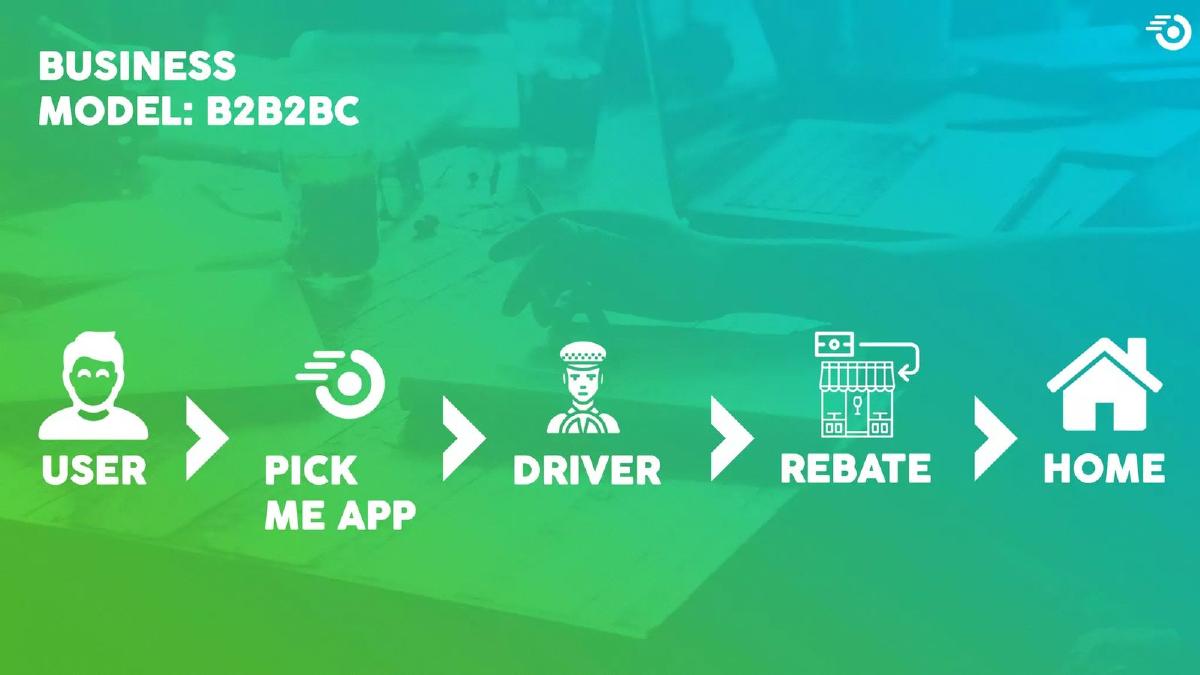
- The business model is defined as B2B2BC, where venues provide rebates to cover ride costs for users (Slide 4).
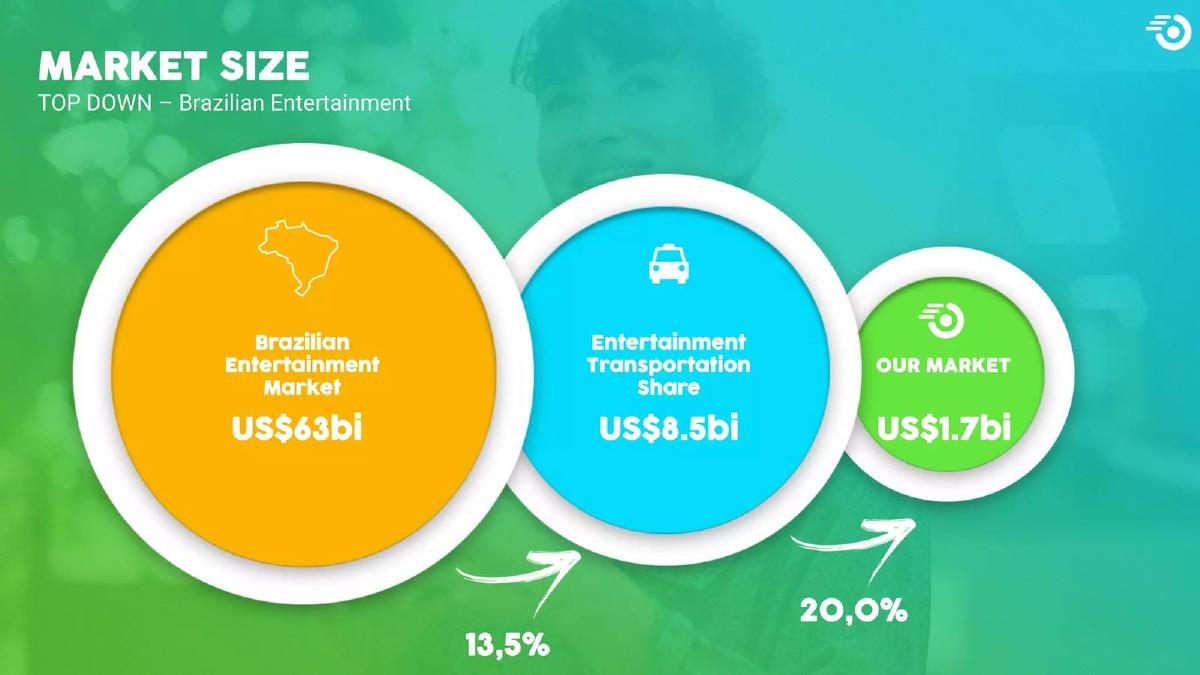
- The startup targets the Brazilian entertainment market, estimating their specific addressable share at US$1.7 billion (Slide 6).
- Unit economics claim an average ride cost of USD 13.14 with a revenue per person of USD 6.01, resulting in a 28% markup (Slide 8).
- Traction data shows 28,567 downloads and 19,574 active users, though monthly revenue is noted at a modest 2,500 (Slide 10).
- The company achieved USD 30,000 in total revenue prior to the 2017 platform updates (Slide 9).
- The funding ask is 200K to engage drivers, develop new features, and boost marketing (Slide 13).
- The team consists of five core members with backgrounds in M&A, finance, and mobile development (Slide 12).
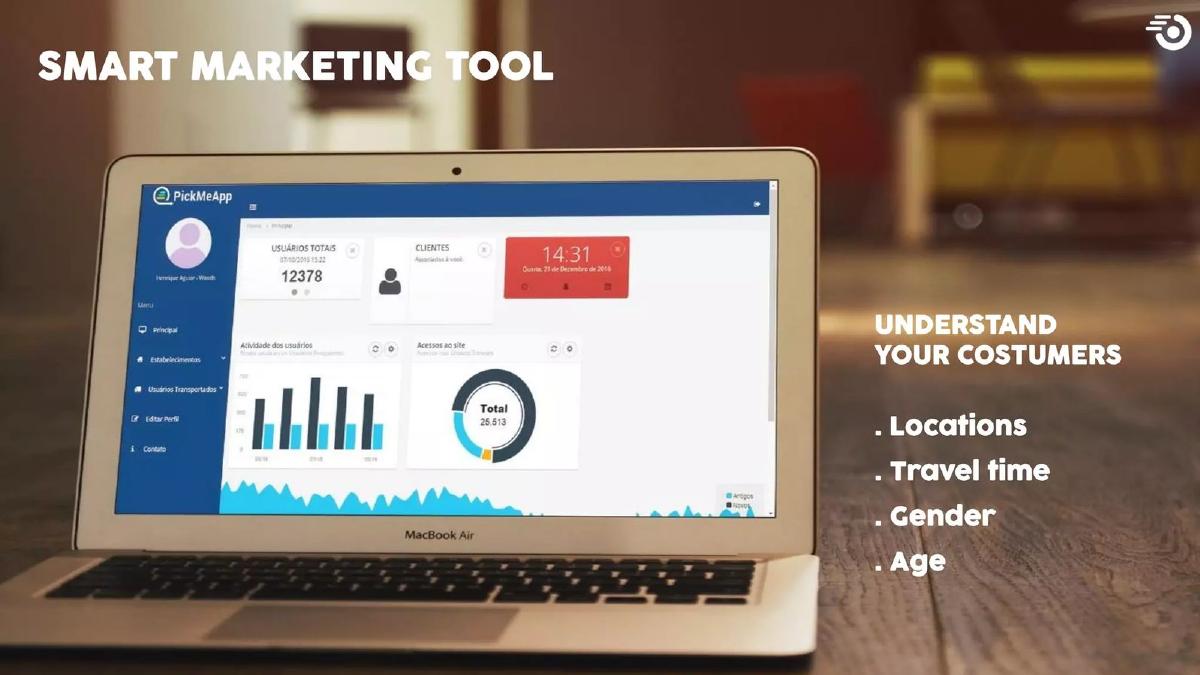
- A 'Smart Marketing Tool' provides venues with customer data including location, travel time, gender, and age (Slide 5).
PickMeApp Pitch Deck Analysis
PickMeApp enters the crowded ride-sharing space with a localized, niche strategy focused on the Brazilian entertainment sector. By shifting the cost of the ride from the passenger to the destination, they attempt to solve the high cost of leisure transportation. This teardown explores how they present this three-sided marketplace to investors.
Slide 1: Title and Hook
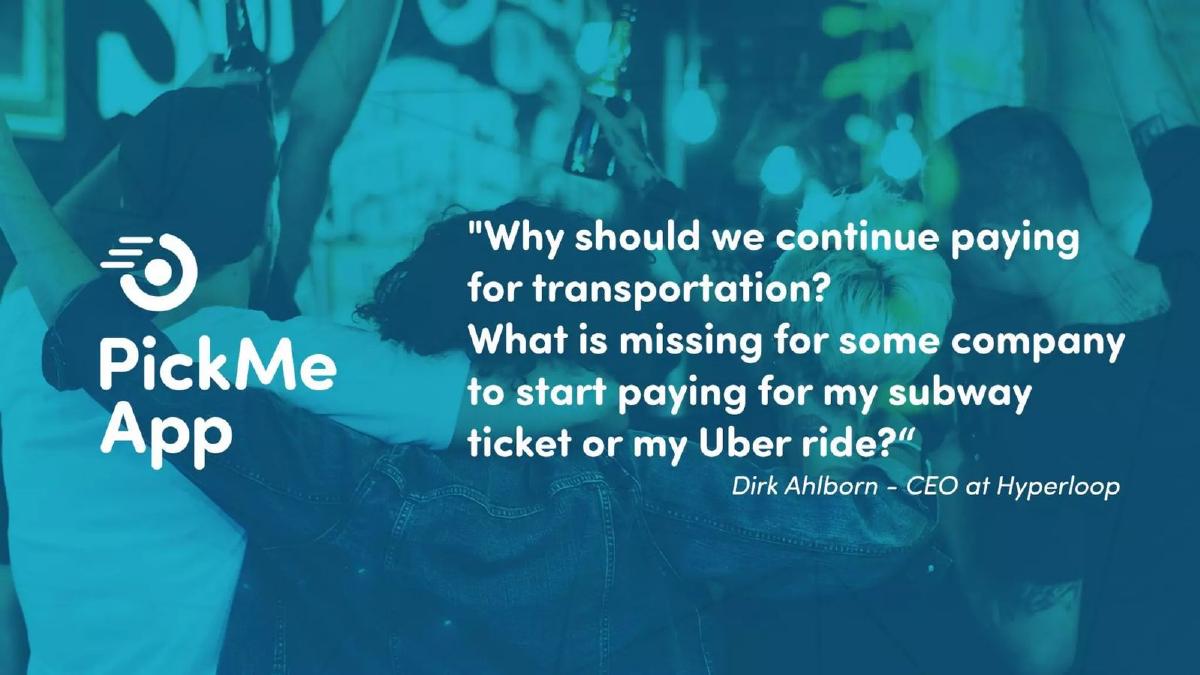
The deck opens with a quote from Dirk Ahlborn, CEO of Hyperloop, asking why transportation isn't subsidized by companies. This is a strong thematic hook. It immediately frames the startup not just as another Uber clone, but as a shift in the economic responsibility of transit. The branding is clean, though the background image is a bit dark.
Slide 2: The Problem Statement
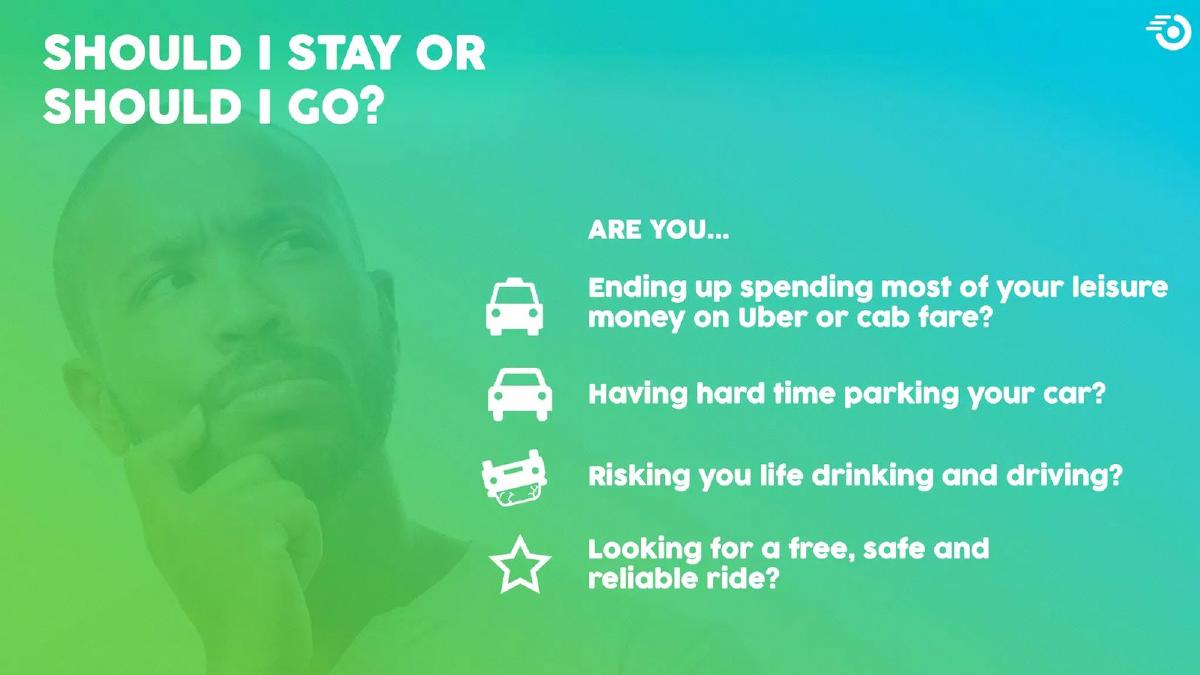
Slide 2 uses a 'Should I stay or should I go?' framing. It identifies four pain points: spending leisure money on cabs, parking difficulties, drinking and driving risks, and the search for free/safe rides. While these are valid, the slide is somewhat generic. The 'risking you life' typo (missing the 'r' in your) is a minor but noticeable professional lapse.
Slide 3: The Solution
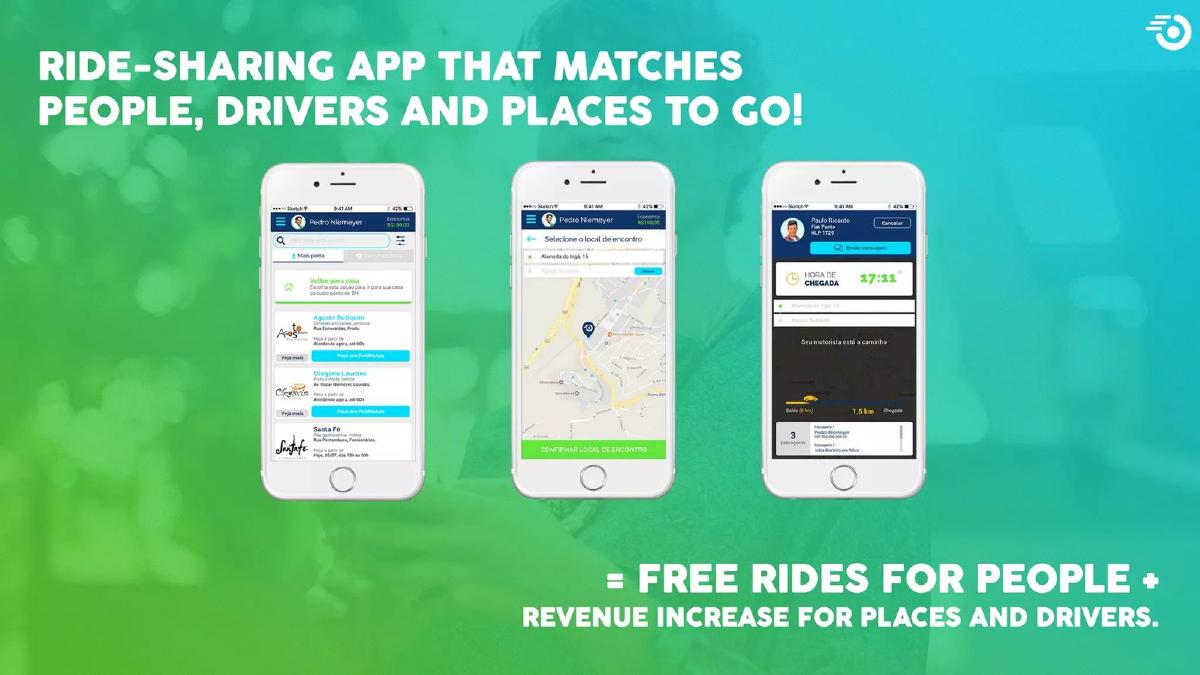
This slide introduces the app interface. It describes the product as a 'Ride-sharing app that matches people, drivers and places to go!' The key takeaway here is the equation at the bottom: Free rides for people + revenue increase for places and drivers. The screenshots show a localized product (in Portuguese), which reinforces their focus on the Brazilian market.
Slide 4: Business Model (B2B2BC)
This is the most important slide for understanding their mechanics. It visualizes a flow: User > PickMeApp > Driver > Rebate > Home. It clarifies that the 'Place' (the B in the middle) is the entity paying for the ride via a rebate. This model turns transportation into a marketing expense for bars and clubs.
Slide 5: The Smart Marketing Tool
To justify why a venue would pay for a ride, PickMeApp offers data. Slide 5 shows a dashboard for business owners to understand customer locations, travel times, gender, and age. This moves the company into the AdTech/MarTech space, providing a 'why' for the B2B side of the marketplace.
Slide 6: Market Size
The deck uses a top-down approach for the Brazilian market. They start with a US$63 billion entertainment market, narrow it to a US$8.5 billion transportation share (13.5%), and claim a target market of US$1.7 billion (20% of that share). These numbers are large enough to be venture-scale, though top-down market sizing is generally less persuasive than bottom-up calculations.
Slide 7: Positioning
The positioning slide attempts to show PickMeApp as the 'everything' solution. They place themselves in the center of Ease (Uber/Lyft), Shared Economy (Airbnb/Wework), B2B (LinkedIn/Slack), and Entertainment (TimeOut). While it shows ambition, it also highlights how many fronts they are fighting on simultaneously.
Slide 8: Revenue Structure
This slide provides specific unit economics. They claim a CAC of 0.74 and an LTV of 21.61. The table breaks down an average ride: Cost is USD 13.14, Revenue is USD 18.38, and Profit per person is USD 1.68 based on 3.06 people per car. The 28% markup is healthy, but the 'per person' metrics assume high vehicle occupancy, which is a significant operational hurdle in ride-sharing.
Slide 9: Timeline
The timeline shows the company's progression from a 2016 app release to 2017 goals. Notable milestones include being named the 22nd most attractive startup in Brazil and achieving USD 30,000 in revenue. It also mentions a partnership with JChebly, which adds institutional credibility.
Slide 10: Traction
Traction is presented with a line graph showing 'Avg daily downloads,' 'Avg daily subscription,' and 'Avg daily users.' The cumulative stats at the bottom are 28,567 downloads and 17,420 rides. The monthly revenue of 2,500 is the weakest point on this slide—it is very low compared to the user base, suggesting that either the monetization is just beginning or the 'free' rides aren't yet generating significant platform fees.
Slide 11: Press and Recognition
This is a standard 'social proof' slide. It features clippings from Estado de Minas, Folha de S.Paulo, and logos from Inovativa and Liga AutoTech. For a regional startup, showing dominance in local press is vital for proving they can win the specific geography before expanding.
Slide 12: The Team
The team slide features five members and one advisor. The CEO, Romulo Carvalho, has 10 years in the entertainment industry, which aligns well with the B2B2BC model. The technical roles (iOS, Android, and Web) are clearly defined, showing they have the in-house capability to build the product.
Slide 13: Funding Ask
The ask is 200K. The slide lists three uses: driver engagement bonuses, technology development, and marketing. 200K is a small round for a ride-sharing company, which usually requires massive capital to subsidize the supply side (drivers). This suggests they are looking for a bridge to a larger Series A.
Slide 14: Contact
The deck ends by repeating the Dirk Ahlborn quote and providing social media handles and an email address. It’s a consistent close that reinforces the 'subsidized transport' vision.
What Works in the PickMeApp Deck
Clear Business Model: The B2B2BC explanation on Slide 4 is excellent. It takes a complex idea and makes it digestible through simple iconography. · Localized Focus: By targeting the Brazilian entertainment market specifically, they avoid a direct 'war' with Uber's general utility and instead focus on a high-intent use case (going out). · Unit Economics: Providing a clear breakdown of ride costs versus revenue per person (Slide 8) shows the founders are thinking about the math of the marketplace, not just the growth.
What is Missing or Weak
Currency Clarity: The deck uses 'US$' and 'USD' in some places but just numbers in others (like the 2,500 revenue on Slide 10). In a Brazilian context, clarity between BRL and USD is crucial for investors to understand the true scale. · Competitive Defensibility: While they show where they sit in the market (Slide 7), they don't explain how they stop Uber from simply launching a 'Venue Partnership' feature that does the exact same thing. · Driver Supply Strategy: Ride-sharing lives and dies by driver availability. The deck mentions 'bonuses' for drivers in the funding ask, but doesn't explain how they will maintain a fleet that can compete with the wait times of larger incumbents.
Founder Takeaways
Use quotes to set the stage: The Hyperloop CEO quote on the first and last slides gives the deck a 'visionary' feel that elevates it above a simple app pitch. · Visualize the money flow: If your business model involves more than two parties (User and Business), you must have a slide like Slide 4 to show who pays whom and when. · Be specific with traction: The combination of downloads, active users, and actual rides (Slide 10) gives a much fuller picture of health than just 'total downloads' alone.
Frequently asked questions
- What is the core value proposition of PickMeApp?
- PickMeApp aims to eliminate the cost of transportation for consumers by having entertainment venues subsidize the ride. The value for the user is a 'free, safe, and reliable ride,' while the value for the venue is increased foot traffic and data-driven marketing insights regarding their customers' demographics and travel habits.
- How does the B2B2BC model actually work in this deck?
- According to Slide 4, the user requests a ride through the PickMeApp platform. A driver completes the trip to a partner venue. The venue then provides a 'rebate' which covers the cost of the transport. This creates a revenue stream for both the driver and the platform while removing the financial barrier for the passenger.
- Is the traction significant enough for a 200K raise?
- The deck reports 28,567 downloads and nearly 20,000 active users (Slide 10). However, the monthly revenue is cited at only 2,500. Depending on whether this is USD or BRL, it represents a very early-stage profile. The 200K ask is relatively modest, suggesting a seed or pre-seed bridge to scale the driver network.
- Who are the primary competitors identified by PickMeApp?
- Slide 7 places PickMeApp at the intersection of several industries. It lists 'Ease' competitors like Uber, Lyft, and Cabify; 'Shared Economy' players like Airbnb and BlaBlaCar; and 'Entertainment' discovery platforms like TimeOut and Sou BH. It positions itself uniquely by adding 'MKT Analytics' to the ride-sharing experience.
- What are the biggest risks missing from the deck?
- The deck does not address the 'cold start' problem of attracting enough drivers to compete with Uber's availability. It also fails to detail the legal or regulatory hurdles of ride-sharing in Brazil or how they prevent venues from churn if the 'rebate' cost exceeds the profit from a new customer.