Tealbook’s Series B deck is a masterclass in brevity and authority. Raising $50M with only nine slides requires a company to have significant momentum and a clear, undeniable value proposition. The deck leans heavily on the 'Big Fat Lie' of procurement software—the idea that existing tools solve data issues—and positions Tealbook as the autonomous layer that fixes it. By showcasing 4.9M+ supplier profiles and 565M+ data attributes, the company proves its technical scale. Furthermore, the inclusion of high-profile logos like GSK and Dropbox, alongside glowing testimonials from industry analyst…
Key takeaways
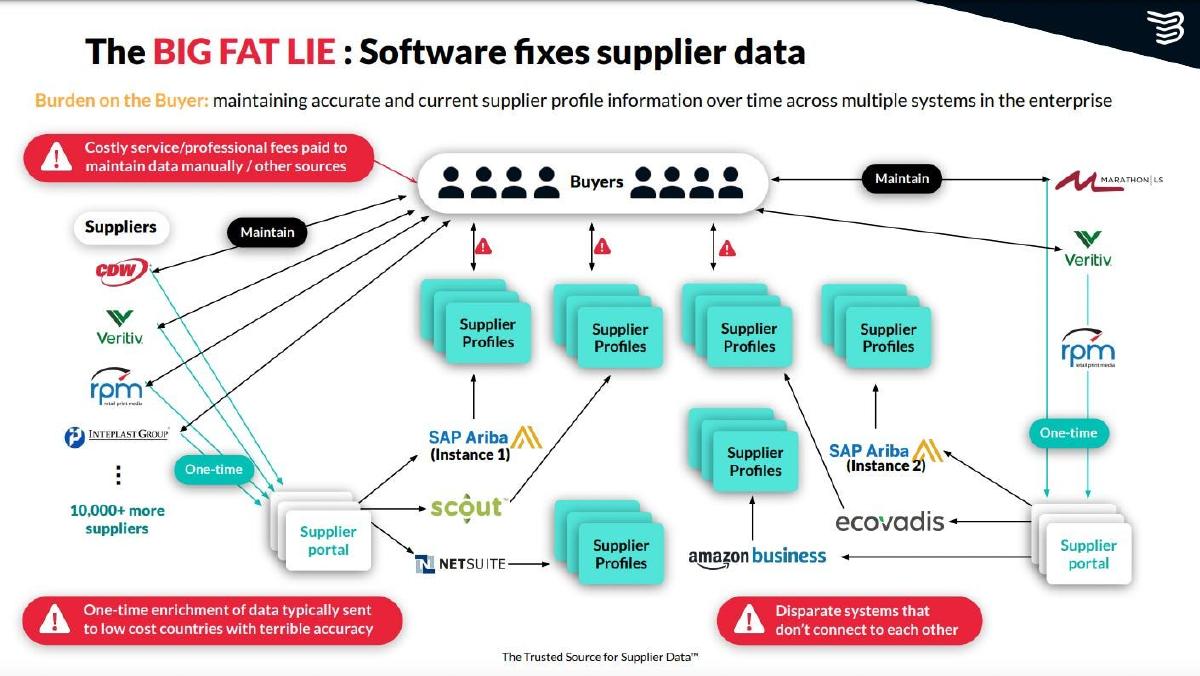
- The deck identifies a specific market failure termed 'The BIG FAT LIE,' arguing that current software creates data silos rather than fixing them (Slide 4).
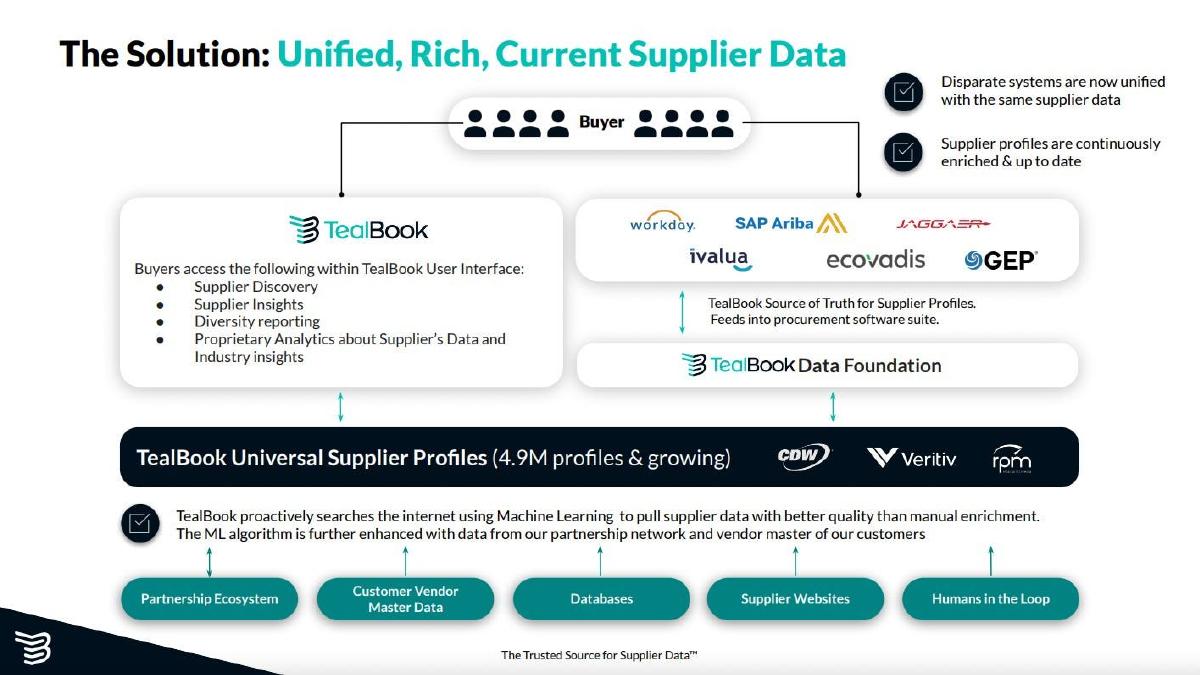
- Tealbook positions itself as a 'Data Foundation' that feeds into existing procurement suites like SAP Ariba, Workday, and GEP (Slide 5).
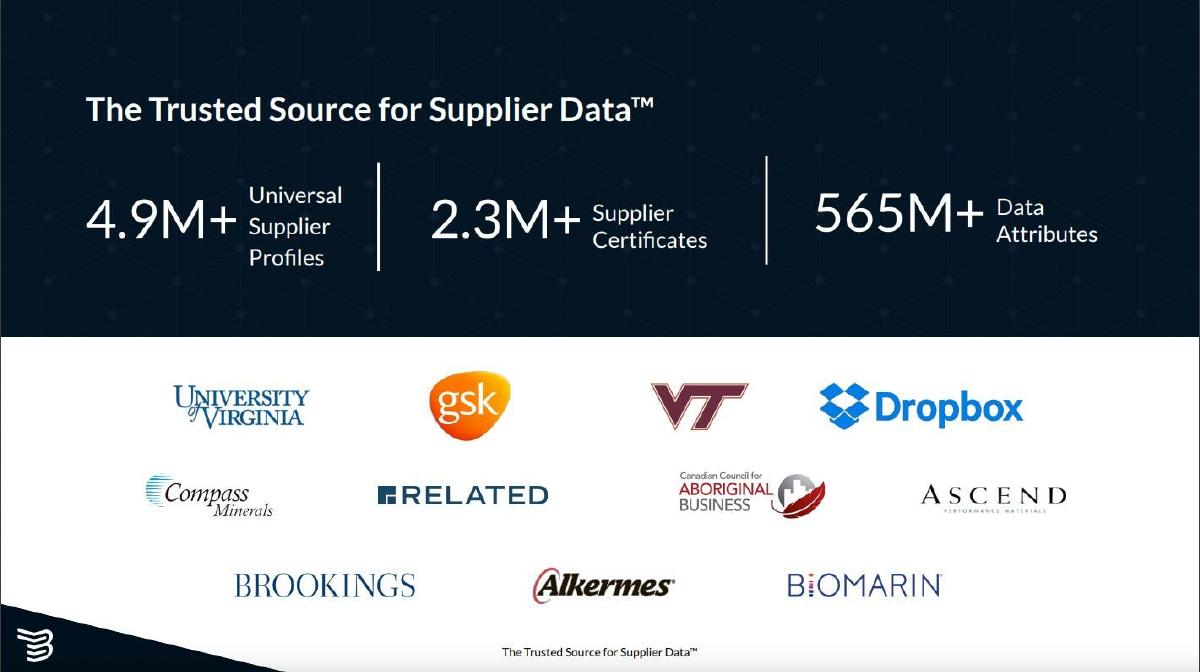
- Scale is a primary selling point, with the company reporting 4.9M+ universal supplier profiles and 565M+ data attributes (Slide 6).
- The company leverages significant enterprise social proof by displaying logos from GSK, Dropbox, and the University of Virginia (Slide 6).
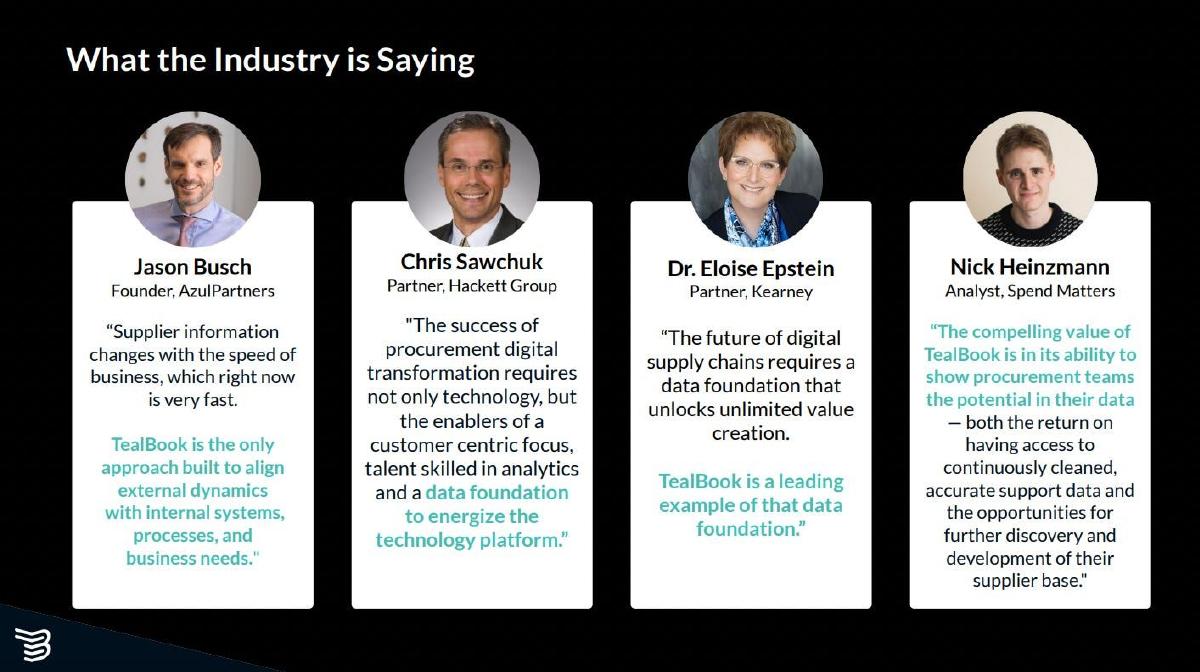
- Industry validation is prioritized through four detailed testimonials from partners and analysts at firms like Hackett Group and Kearney (Slide 7).
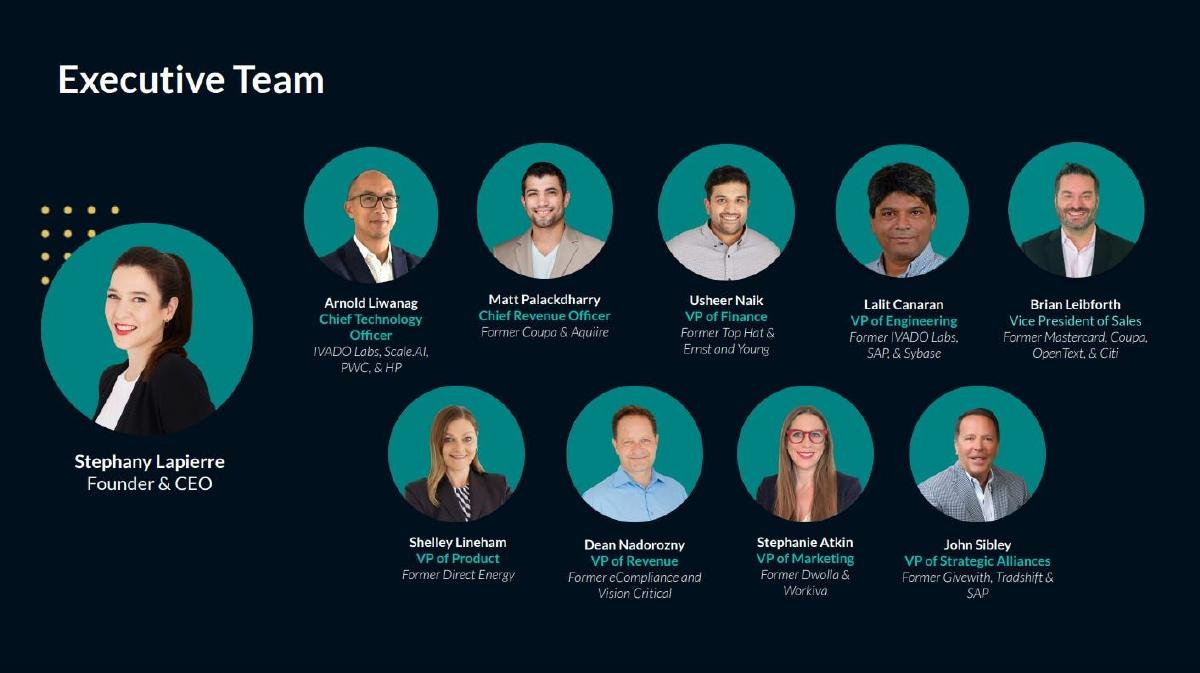
- The executive team slide highlights deep industry experience with former leaders from Coupa, SAP, and Mastercard (Slide 3).
- Tealbook emphasizes its 'Machine Learning' approach to pull data from the internet, reducing reliance on manual entry (Slide 5).
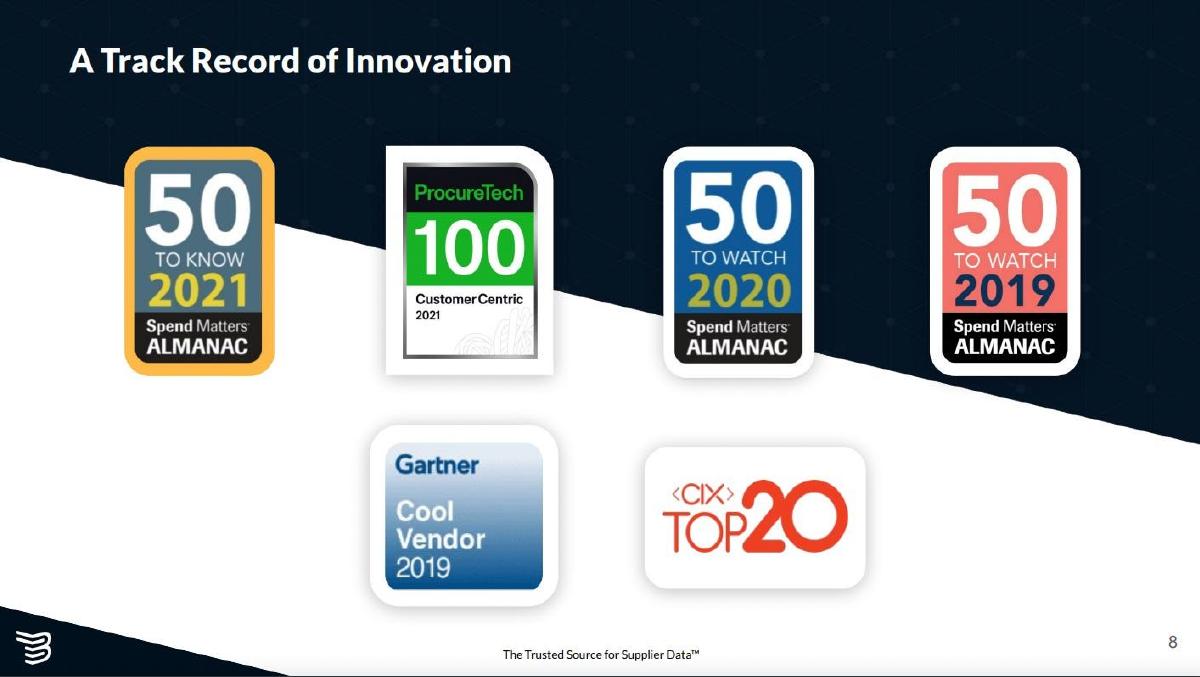
- The deck highlights a consistent track record of innovation with awards from Gartner and Spend Matters spanning 2019 to 2021 (Slide 8).
The Power of Brevity in a $50M Series B
Tealbook’s 2021 Series B deck is a concise 9-slide presentation that focuses on narrative and scale. In the world of procurement and data analytics, the problem is often complexity. Tealbook counters this by presenting a clean, high-level solution to the 'supplier data' crisis. According to publisher reports, this deck helped secure $50M in funding, proving that at the growth stage, the strength of the team and the scale of the data can outweigh the need for a 30-slide exhaustive report.
Slide 1 & 2: The Vision and The Voice
The deck opens with a standard title slide (Slide 1) followed by a powerful quote from Founder & CEO Stephany Lapierre (Slide 2). The quote identifies the 'supplier base' as the 'biggest untapped asset' and sets the stakes: 'hundreds of millions of dollars in value.' This is a strategic move to frame the company not just as a software tool, but as a value-unlocking engine for the enterprise. By putting the CEO front and center, the deck establishes a personal narrative of expertise.
Slide 3: The Executive Team
Slide 3 presents the 'Executive Team.' For a Series B, investors are looking for a team that can scale a global enterprise. Tealbook highlights a deep bench of talent. Notable mentions include Arnold Liwanag (CTO, formerly of PWC and HP), Matt Palackdharry (CRO, formerly of Coupa), and John Sibley (VP of Strategic Alliances, formerly of SAP). The inclusion of 'Former' credits for every executive serves as a shorthand for 'we have done this before at the highest levels of the industry.'
Slide 4: The Problem - The BIG FAT LIE
Slide 4 is the most aggressive and effective slide in the deck. Titled 'The BIG FAT LIE: Software fixes supplier data,' it uses a complex diagram to illustrate the 'Burden on the Buyer.' It highlights the mess of disparate systems (SAP Ariba, NetSuite, Amazon Business) and the 'costly service/professional fees' required to maintain them. The slide uses red warning icons to point out 'terrible accuracy' and 'disparate systems that don't connect.' This creates a visceral sense of frustration that any procurement officer would recognize.
Slide 5: The Solution - Unified Data Foundation
Slide 5 introduces the 'TealBook Data Foundation.' The visual layout is crucial here; it shows Tealbook sitting underneath the major procurement suites (Workday, SAP Ariba, GEP). This positions the company as an essential infrastructure layer rather than a replacement for existing multi-million dollar investments. The slide explicitly mentions '4.9M profiles & growing' and explains that their ML algorithm proactively searches the internet to pull data, contrasting this with the 'manual enrichment' mentioned in the problem slide.
Slide 6: Traction and Social Proof
Slide 6 is a 'numbers and logos' slide. It lists three key metrics: 4.9M+ Universal Supplier Profiles , 2.3M+ Supplier Certificates , and 565M+ Data Attributes . These figures establish the massive scale of their data lake. Below the metrics, a 'who's who' of enterprise logos appears, including GSK, Dropbox, University of Virginia, and Brookings. This slide answers the investor question: 'Does this work, and who is paying for it?'
Slide 7: Industry Validation
Slide 7, 'What the Industry is Saying,' provides four detailed testimonials. Unlike generic customer quotes, these are from industry analysts and partners at firms like AzulPartners, Hackett Group, Kearney, and Spend Matters. For example, Dr. Eloise Epstein of Kearney calls Tealbook a 'leading example' of a data foundation. This third-party validation from respected industry voices is a powerful way to mitigate perceived risk for Series B investors.
Slide 8: The Innovation Track Record
Slide 8 showcases 'A Track Record of Innovation' through a series of awards. It features the 'Spend Matters 50 to Know' for 2021, 'ProcureTech 100,' and 'Gartner Cool Vendor 2019.' By showing awards from 2019, 2020, and 2021, Tealbook demonstrates consistent momentum and long-term recognition by market gatekeepers. It reinforces the idea that the company is not a 'flash in the pan' but a sustained leader in the space.
Slide 9: The Closing Statement
The final slide (Slide 9) is a simple brand reinforcement: 'Unify your systems. Optimize your suppliers. Empower your people.' It returns to the core value proposition without introducing new information, leaving the investor with a clear, three-part summary of what the company does.
What Works in the Tealbook Deck
Aggressive Problem Definition: Calling the industry standard a 'Big Fat Lie' is a bold move that demands attention and forces the investor to take a side. · Infrastructure Positioning: By showing themselves as a 'Data Foundation' that feeds into SAP and Workday, they avoid the 'rip and replace' objection, making their sales cycle appear much easier. · Quantified Scale: Citing 565M+ data attributes (Slide 6) provides a concrete sense of the 'moat' they are building through data accumulation. · Expert Social Proof: Using analyst testimonials (Slide 7) instead of just customer quotes adds a layer of professional authority that is highly valued in B2B enterprise tech.
What is Missing from the Tealbook Deck
Financial Performance: There is no mention of Revenue, ARR growth, or Net Retention. While these were certainly in the data room, their absence in the deck makes it purely a 'vision and product' pitch. · The Ask: The deck does not state how much money is being raised or how it will be used. According to publisher facts, the round was $50M, but a founder using this as a template should include a slide on capital allocation. · Competitive Landscape: While they show how they integrate with big players, they don't show how they compete with other data providers like D&B or specialized diversity data firms. · Unit Economics: There is no information on Customer Acquisition Cost (CAC) or Lifetime Value (LTV), which are usually standard for a Series B teardown.
What Founders Should Copy
The 'Former' Credits: If your team has worked at industry giants, list them clearly under their headshots as Tealbook did on Slide 3. It builds instant credibility. · The Ecosystem Map: Slide 5 is a perfect example of how to show where your product fits in a complex enterprise stack. Use logos of other famous software to orient the investor. · The Awards Slide: If you have won industry awards over multiple years, group them together as in Slide 8 to show a 'track record' rather than a one-time success. · High-Impact Quotes: Don't just use quotes that say 'we like the product.' Use quotes that explain why the product is a strategic necessity for the future of the industry, as seen on Slide 7.
Frequently asked questions
- Why is the Tealbook deck so short at only 9 slides?
- For a Series B round, investors are often already familiar with the company's core metrics through due diligence. This deck serves as a high-level narrative tool to align stakeholders on the vision and market position. By focusing on the 'Data Foundation' problem and their massive data scale, Tealbook establishes authority quickly without getting bogged down in operational minutiae that are likely covered in a separate data room.
- How does Tealbook handle competition in this deck?
- Tealbook takes a unique 'co-opetition' approach. Instead of listing competitors to beat, Slide 5 shows how Tealbook integrates with and enhances major players like SAP Ariba, Workday, and Ivalua. They position themselves as the underlying data layer that makes these expensive enterprise systems actually work, effectively turning potential competitors into distribution partners or customers.
- What is the significance of the 'Big Fat Lie' slide?
- Slide 4 is the 'Problem' slide, but it uses aggressive framing to challenge the status quo. By calling the current state of procurement software a 'lie,' Tealbook creates a sense of urgency and highlights a specific pain point: the 'Burden on the Buyer' to manually maintain data. This sets up their AI-driven, autonomous solution as the only logical alternative to a broken, manual system.
- Does the deck explain how the technology works?
- It provides a high-level conceptual overview on Slide 5. It mentions a 'Machine Learning' algorithm that proactively searches the internet and pulls data from a 'Partnership Ecosystem' and 'Customer Vendor Master Data.' It also acknowledges a 'Humans in the Loop' element, suggesting a hybrid approach to data verification that combines automation with manual oversight for accuracy.
- What major elements are missing from this pitch deck?
- The deck is missing several standard components: a formal 'Ask' (amount being raised), a roadmap, detailed financials (ARR, NRR, CAC), and a competitive landscape matrix. While these omissions are common in decks released publicly after a round, their absence suggests this was a 'vision' deck used to supplement a much deeper, data-heavy fundraising process.